Holon Phantoms Pokemon Cards Value: Complete Price & Grading Guide
Discover the Holon Phantoms Pokemon cards value, top cards worth grading, PSA 10 prices, and whether to buy sealed or singles in this detailed price guide.

Estimated reading time: 15 min
Key Takeaways
- Holon Phantoms Pokemon cards value varies widely by card, condition, and grading tier, with some rare cards commanding prices in the thousands of dollars.
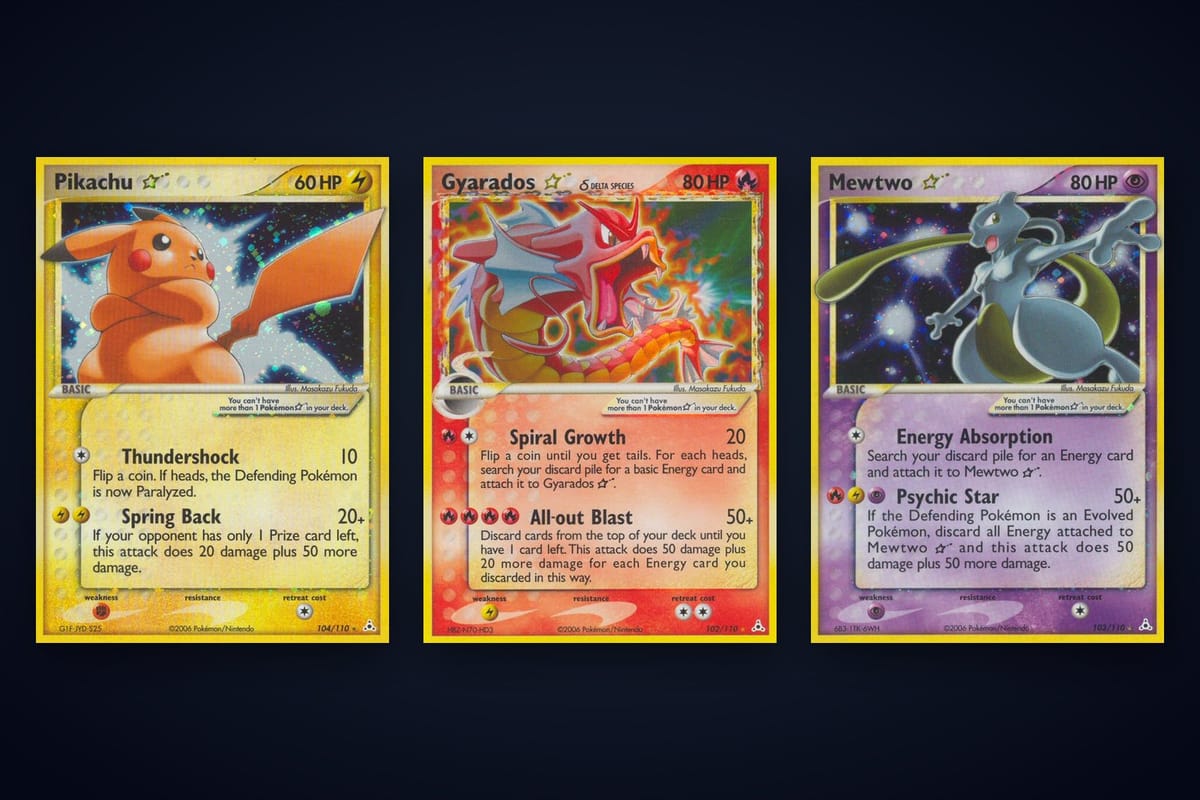
- Key chase cards like Pikachu Star, Mew ex, and Gyarados Star often command higher market prices due to their rarity and collector demand.
- PSA 10 Holon Phantoms cards frequently sell at premiums over raw values, sometimes increasing value by multiple times.
- Japanese Holon Phantom cards can hold higher prices than English versions, often due to lower print runs and unique artwork or card stock.
- Using AI grading tools like Midpoint can help estimate grading potential before costly submissions, potentially saving collectors money and improving submission strategies.
Card values — live data from Midpoint's card database, as of 2026-08-28. Prices move; Midpoint refreshes these daily.
| Card | Raw | PSA 10 | Gem premium | |
|---|---|---|---|---|
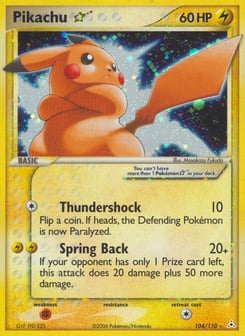 |
Pikachu ☆ #104/110 Holon Phantoms (2006) |
$3,200 | $139,753 | 43.7× |
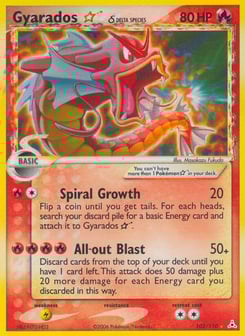 |
Gyarados ☆ δ #102/110 Holon Phantoms (2006) |
— | $72,789 | — |
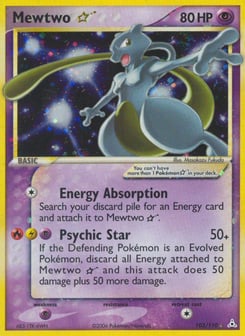 |
Mewtwo ☆ #103/110 Holon Phantoms (2006) |
— | $55,000 | — |
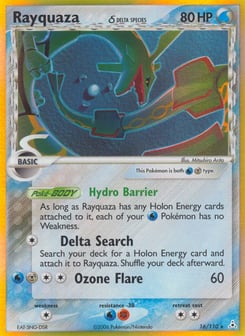 |
Rayquaza δ #16/110 Holon Phantoms (2006) |
$479.93 | $18,285 | 38.1× |
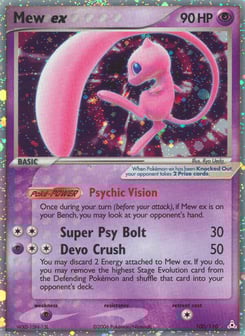 |
Mew ex #100/110 Holon Phantoms (2006) |
$525.31 | $13,865 | 26.4× |
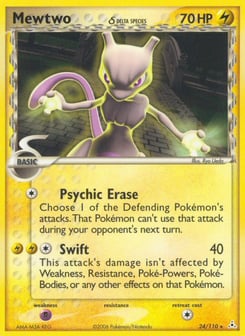 |
Mewtwo δ #24/110 Holon Phantoms (2006) |
$287.50 | $11,753 | 40.9× |
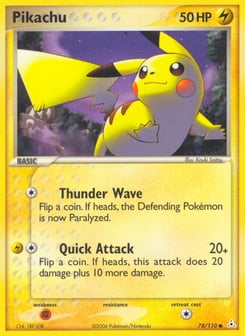 |
Pikachu #78/110 Holon Phantoms (2006) |
$239.99 | $10,524 | 43.9× |
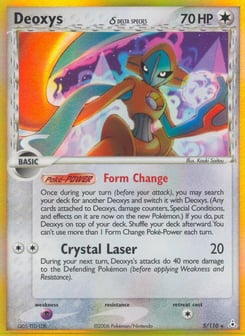 |
Deoxys δ #5/110 Holon Phantoms (2006) |
$349.99 | $9,442 | 27× |
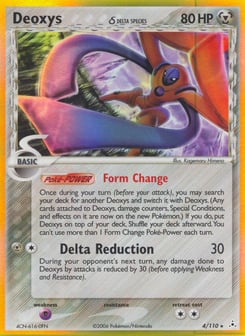 |
Deoxys δ #4/110 Holon Phantoms (2006) |
$240.00 | $7,491 | 31.2× |
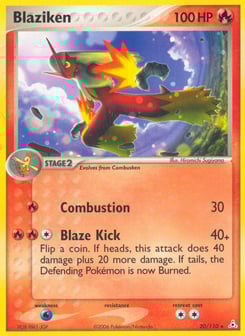 |
Blaziken #20/110 Holon Phantoms (2006) |
$123.24 | $7,000 | 56.8× |
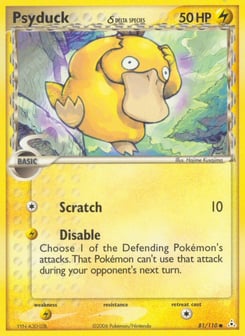 |
Psyduck δ #81/110 Holon Phantoms (2006) |
$20.48 | $6,925 | 338.1× |
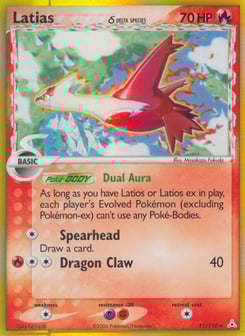 |
Latias δ #11/110 Holon Phantoms (2006) |
$101.57 | $6,116 | 60.2× |
Look up any card's current raw and graded value in Midpoint — and get an estimated grade before you pay to submit.
Table of Contents
- Section 1: Understanding Holon Phantoms Pokemon Cards Value
- Section 2: Most Valuable Holon Phantoms Cards and Variants
- Section 3: Price Breakdown by Card Condition and Grading
- Section 4: Japanese vs. English Holon Phantom Card Values
- Section 5: Sealed Holon Phantoms Products Price Guide
- Section 6: Master Set Value and Buying Strategies
Conclusion
FAQ
Section 1: Understanding Holon Phantoms Pokemon Cards Value
Overview of the Holon Phantoms Set
The Holon Phantoms set, released in 2006 during the EX series era of the Pokémon Trading Card Game (TCG), represents a unique blend of innovative gameplay mechanics and collectible appeal. This mid-era expansion is widely recognized for its introduction of Delta Species cards, which feature Pokémon with unusual typings and distinctive artwork, often showing them as Poison, Metal, or Fighting types regardless of their usual type classification in the Pokémon games. This set comprises 110 cards, including holo rares, reverse holos, secret rares, and Gold Star cards, which were among the earliest iterations of shiny Pokémon in the TCG.
Understanding the value of Holon Phantoms cards involves considering several interrelated aspects: rarity, card condition, grading tier, and language. Due to its mix of rarities and the introduction of unique variants, prices can fluctuate widely. For example, a common holo rare in near mint condition might sell for less than $20, whereas a Gold Star Pikachu in PSA 10 condition has been known to fetch prices in the thousands. The set’s appeal is bolstered by its collectible nostalgia and the relatively low supply of high-grade copies available today.
Key Factors Influencing Card Value
- Card Rarity and Variant: The Holon Phantoms set includes several rarity tiers. Gold Star cards, such as Pikachu Star (#113/110) and Gyarados Star (#114/110), are ultra-rare chase cards with limited print runs. These cards often command higher values, sometimes reaching into the thousands for PSA 10 copies. Secret rares and Delta Species cards also tend to have elevated values due to their scarcity and unique aesthetics.
- Condition and Grading: The condition of a card, often evaluated by professional grading companies like PSA, BGS, or CGC, significantly impacts value. Cards graded PSA 10 (Gem Mint) typically sell for multiple times the value of their ungraded or lower-graded counterparts. For example, a raw near mint Pikachu Star might be valued in the hundreds, but a PSA 10 graded copy can command prices several times higher. Condition factors include centering, surface quality, edges, and corners.
- Print Variants: Different card variants affect desirability. Delta Species cards, with altered typings and distinct artwork, attract a subset of collectors. Reverse holo cards, which have the holofoil effect on the card background rather than the artwork, are generally more valuable than base cards but less than Gold Star cards. Secret rares, identified by their card numbers exceeding the standard set count, are also rarer and more valuable.
- Language and Region: Japanese Holon Phantoms cards often command higher prices than their English counterparts, primarily due to smaller print runs and collector demand. Sometimes, Japanese versions feature subtle artwork or foil variations that increase their appeal.
Using Midpoint to Estimate Value and Grading Potential
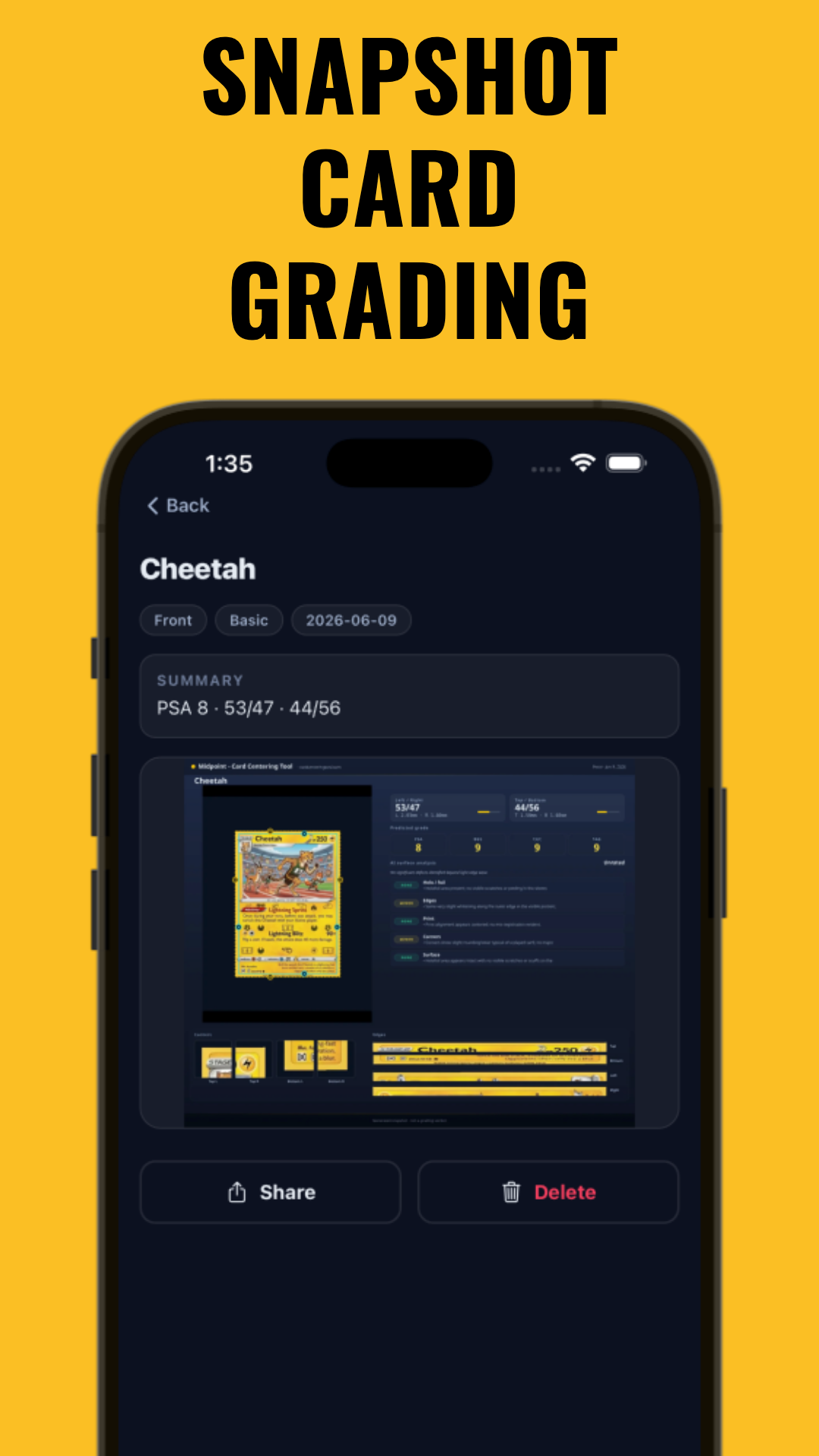
Before submitting cards for professional grading, collectors face significant fees and risks, particularly if the card does not achieve a high grade. The Midpoint app offers an AI-driven solution to help mitigate this risk. Midpoint uses machine learning models trained on hundreds of thousands of graded cards to assess a card’s centering, surface defects, and edges from photographs, estimating its likely grading tier.
For example, Midpoint can analyze the centering ratio (the balance of the artwork within the card borders), surface gloss and scratches, and edge whitening. A card with nearly perfect centering (e.g., 55/45 or better), no visible surface scratches, and sharp edges is more likely to receive a PSA 10 or BGS 9.5. The app provides a confidence score and recommended grading tier, helping collectors decide whether the submission fee is justified.
Utilizing Midpoint’s grading estimate can potentially save collectors money by avoiding unsuccessful submissions and also helps sellers price cards more accurately. The app’s database, as of 2026-08-28, includes over 250,000 graded cards, offering comparative data on Holon Phantoms pricing and grading trends.
Section 2: Most Valuable Holon Phantoms Cards and Variants
Top Chase Cards Worth Collecting
Within the Holon Phantoms set, several cards stand out as primary targets for collectors and investors due to their rarity, artwork, and gameplay significance. These cards often dominate auction listings and private sales, commanding higher premiums in both raw and graded conditions.
- Pikachu Star (Gold Star #113/110): This card is one of the most iconic and valuable of the Holon Phantoms set. Featuring Pikachu in its shiny yellow form with a sparkling star, it has a low population count in PSA 10, making it scarce. Auction records indicate sales ranging from several thousand dollars for PSA 10 copies, with raw near mint copies selling for lower amounts.
- Gyarados Star (Gold Star #114/110): Known for its striking artwork depicting shiny Gyarados in a dynamic pose, this card is also highly sought after. PSA 10 graded copies typically sell for high prices, reflecting its status as a fan favorite.
- Mew ex (EX Holon Phantoms #101/110): A powerful ex-class card, Mew ex is prized for both its gameplay utility and collector appeal. PSA 10 graded copies generally sell for significantly more than raw near mint cards.
- Mewtwo Star (Gold Star #112/110): Another Gold Star highlight, Mewtwo Star commands high prices in PSA 10 condition due to its popularity and rarity.
- Rayquaza/Deoxys Delta Species (Delta Species #109/110): These dual-type Delta Species cards are well-regarded for their unique typings and artwork. PSA 10 copies often fetch higher prices than raw cards.
Variants Affecting Value
- Gold Star Cards: These cards are characterized by a star beside the Pokémon’s name and a shiny variant of the Pokémon. Their scarcity and early place in the Gold Star series make them the most valuable subset within Holon Phantoms. PSA population reports indicate relatively low numbers of PSA 10 copies worldwide, indicating rarity.
- Delta Species Cards: Featuring Pokémon with unusual typings and often vibrant, unique artwork, Delta Species cards appeal to collectors who specialize in themed subsets. These cards, while not as rare as Gold Stars, still command strong prices due to niche demand.
- Holo Rare and Reverse Holo: Holo rares have a foil effect on the Pokémon artwork, while reverse holos have the foil on the card background. These variants typically sell for more than their base counterparts, depending on the card’s popularity.
- Secret Rares: Numbered above the set’s official 110 cards (e.g., #111/110), secret rares are produced in smaller quantities and generally fetch higher prices than standard holo rares.
Which Holon Phantoms Cards Are Worth Grading?
When deciding which Holon Phantoms cards to submit for grading, collectors should focus on cards with strong raw market values and a reasonable chance of earning a grade of PSA 9 or 10. This includes all Gold Star cards, which have the highest value premiums, as well as Mew ex, Mewtwo Star, and high-grade Delta Species cards.
Using AI-powered grading precertification tools such as Midpoint enables collectors to assess centering, surface condition, and edges with objective data before submitting. For example, a Pikachu Star with centering worse than 65/35 or visible surface scratches will likely only earn PSA 8 or lower, diminishing the return on investment from grading fees.
Collectors should also consider population reports published by PSA and other grading companies to understand the relative rarity of high-grade examples, which informs pricing and grading submission strategies.
Section 3: Price Breakdown by Card Condition and Grading
Raw and Ungraded Card Prices
The value of Holon Phantoms cards varies significantly depending on the card’s physical condition without professional grading. Condition categories and their approximate impact on pricing include:
- Near Mint (NM): Cards with no visible wear, sharp corners, and clean surfaces. These typically retain a substantial portion of the PSA 10 value. For example, a raw NM Mew ex might sell for several hundred dollars, compared to higher prices for a PSA 10 copy.
- Lightly Played (LP): Minor imperfections such as slight edge whitening or faint surface marks reduce the card’s value compared to NM condition. LP Pikachu Star cards might fetch lower prices raw.
- Heavily Played (HP): Cards with creases, scratches, or significant whitening may be worth considerably less than top graded prices. For example, a HP Gyarados Star might be worth a fraction of the PSA 10 value.
PSA 10 and Graded Value Premiums
Cards graded PSA 10 represent the highest quality, with near-perfect centering, no surface defects, and sharp edges. For Holon Phantoms, PSA 10 copies attract premiums over raw cards:
- Pikachu Star PSA 10 values can be multiple times raw NM prices, sometimes exceeding several thousand dollars.
- Mew ex PSA 10 cards often command several times the raw value, reaching higher price points.
- Even less rare holo rares can see value increases when graded PSA 9 or 10, as collectors pay for the assurance of condition.
Other Grading Tiers and Their Impact
While PSA 10 is the gold standard, other grading tiers also have distinct impacts on value. PSA 9 cards, often termed 'Mint,' maintain strong prices but typically sell for less than PSA 10 copies. PSA 8 (Near Mint-Mint) cards see further depreciation but still can be worth significantly more than raw cards, especially for chase cards.
Beckett Grading Services (BGS) and Certified Guaranty Company (CGC) offer comparable grading scales, with BGS 9.5 considered roughly equivalent to PSA 10 in terms of value. Some collectors prefer BGS for its subgrades (centering, edges, corners, and surface), providing more detailed condition insights.
Condition Considerations for Grading Worthiness
Cards with centering ratios better than 60/40 and ideally closer to 55/45 or better are prime candidates for high grades. Sharp edges and corners, absence of whitening, and flawless surfaces free from scratches or print defects greatly improve grading outcomes.
Midpoint’s AI-powered centering calculator evaluates the card’s artwork positioning precisely, quantifying this important grading metric. Surface analysis algorithms detect scratches, print spots, and other visual imperfections that might otherwise be overlooked. Utilizing these tools before submission can increase the likelihood of obtaining PSA 9 or 10 grades, minimizing wasted grading fees.
For an in-depth discussion on how centering influences card value, see our detailed guide here.
Section 4: Japanese vs. English Holon Phantom Card Values
Price Differences Explained
Japanese Holon Phantoms cards often command a premium over English-language versions due to several factors:
- Lower Print Runs: The Japanese market sometimes produces fewer copies of certain rare cards, particularly Gold Stars and secret rares, resulting in heightened scarcity.
- Collector Demand: A strong international collector base prizes Japanese cards for their authenticity and aesthetic differences, which can push prices upward.
- Card Stock and Artwork Variations: Japanese cards sometimes have glossier foiling, different fonts, or alternate artwork details that appeal to collectors.
Examples of Price Disparity
- A Japanese Pikachu Star in PSA 10 condition may sell for more than the equivalent English card, sometimes reaching higher prices when demand surges.
- Sealed Japanese booster packs and boxes often fetch higher prices at auction, reflecting scarcity and collector preference. For example, a sealed Japanese booster box can sell for more than English boxes, depending on condition and market trends.
- Japanese Delta Species cards also tend to maintain a premium, with some selling for more than English versions.
Tracking Japanese Holon Phantom Prices
Collectors specializing in Japanese Holon Phantoms should monitor online auction platforms such as Yahoo! Japan Auctions, eBay, and dedicated Pokémon marketplaces. Midpoint’s price tracking tools offer real-time data on sales trends, enabling collectors to identify undervalued cards and time purchases or sales optimally.
The app’s portfolio tracking feature helps users gauge appreciation over time, comparing English and Japanese versions side by side. This data-driven approach allows collectors to make informed decisions, maximizing return on investment.
Section 5: Sealed Holon Phantoms Products Price Guide
Booster Packs and Boxes
Sealed Holon Phantoms products hold a special place in the collecting community, both for their investment potential and the thrill of opening packs for rare pulls. Their prices have generally increased due to diminishing supply and persistent demand.
- Booster Packs: Individual sealed booster packs typically sell within a range that varies based on market conditions and region. Japanese packs tend to be at the higher end of this range.
- Booster Boxes: Sealed booster boxes, containing 36 packs, are rarer and command higher prices. Japanese boxes often fetch premiums, especially if the packaging is in pristine condition.
Value Compared to Singles
Purchasing sealed product generally provides a premium over buying singles due to the chance of pulling rare cards such as Gold Star Pokémon or secret rares. For collectors aiming to complete sets or obtain high-value chase cards, sealed boxes represent both an investment and an opportunity for surprise discoveries.
However, sealed products come with inherent risks. The possibility of no valuable pulls means a collector could pay a premium but receive mostly common cards if opening packs. Conversely, buying singles allows precise acquisition of desired cards and conditions, often at lower total cost but without the excitement of pack openings.
Investment Considerations
Long-term investors often prefer sealed boxes due to scarcity, as unopened products tend to appreciate over time. Storage conditions, such as stable temperature and humidity, are important to preserving box integrity and value.
Collectors seeking specific cards might find buying singles or already graded cards more cost-effective and efficient. Midpoint’s collection tracking and grading estimate tools help balance these approaches by providing data on pricing trends, grading potential, and portfolio value.
Section 6: Master Set Value and Buying Strategies
Estimating Master Set Value
The complete Holon Phantoms set includes 110 cards spanning holo rares, reverse holos, secret rares, and the scarce Gold Star cards. As of late 2026, the estimated market value of a fully graded PSA 10 master set can be substantial, with much of this value concentrated in a handful of ultra-rare chase cards, particularly the Gold Stars.
Master sets assembled with raw NM or lightly played cards typically have lower total values, reflecting the significant premium grading adds. Collectors who prioritize grading often target PSA 9 or 10 versions of key chase cards to maximize set value.
Singles vs. Sealed Product for Completing Sets
- Singles: Buying singles allows collectors to selectively acquire specific cards and target high-grade copies. This approach can reduce total cost and avoid the risk associated with sealed product. However, it requires patience, market knowledge, and sometimes waiting for the right deals.
- Sealed Product: Purchasing sealed booster boxes or packs offers the possibility of pulling rare cards during opening, which can potentially reduce set completion costs. However, this method involves higher upfront costs and the risk of no valuable pulls, especially with chase cards like Gold Stars.
Tips for Smart Buying
- Use tools like Midpoint to pre-grade and estimate card value before submission or purchase, reducing risk and optimizing investment.
- Focus grading submissions on cards with strong PSA 10 premiums to maximize return on grading fees.
- Consider acquiring Japanese printings for their higher appreciation potential and scarcity.
- Balance purchases of sealed product with singles to manage risk, budget, and collection goals effectively.
- Regularly monitor market trends and PSA population reports to identify undervalued cards or emerging opportunities.
For detailed advice on storing Holon Phantoms cards properly to retain value, see our guide How to Store Valuable Cards: The Ultimate Collector's Guide.
Conclusion
The value of Holon Phantoms Pokemon cards is shaped by a complex interplay of card rarity, condition, grading, and regional printing differences. Chase cards such as Pikachu Star, Mew ex, and Gold Star variants often dominate top market prices, especially when graded PSA 10. Japanese Holon Phantom cards frequently command premiums over English printings, reflecting scarcity and collector preference. Sealed products remain attractive investments, though buyers must weigh the excitement of pack openings against cost and risk.
Collectors and investors seeking to maximize returns may benefit from leveraging advanced AI-powered grading tools like Midpoint to assess card centering and surface quality prior to costly grading submissions. Combining precise grading estimates with comprehensive market data can empower smarter decisions in buying, selling, and managing collections, ultimately enhancing the value and enjoyment of Holon Phantoms Pokémon card collecting.
FAQ
Q: What are the most valuable Holon Phantoms cards?
A: The most valuable cards typically include Pikachu Star, Gyarados Star, Mew ex, Mewtwo Star, and Rayquaza/Deoxys Delta Species, with PSA 10 values ranging widely depending on card and condition.
Q: How much is a Pikachu Star from Holon Phantoms worth?
A: In PSA 10 condition, Pikachu Star can be worth several thousand dollars, while raw near mint copies typically sell for lower amounts. Prices fluctuate based on market demand and grading population.
Q: What is the difference between Holon Phantoms and Japanese Holon Phantom values?
A: Japanese Holon Phantom cards often sell for higher prices due to scarcity, collector demand, and sometimes unique card stock or artwork variations compared to English versions.
Q: How much is a sealed Holon Phantoms booster pack or box worth?
A: Booster packs vary in price depending on region and condition, while sealed booster boxes sell for higher amounts, with Japanese boxes often at the higher end.
Q: Is it cheaper to buy the full Holon Phantoms set as singles or sealed product?
A: Buying singles often costs less and allows selective grading, but sealed product offers the chance for high-value pulls and may be better for long-term investment, though with higher upfront cost and risk.
Q: How much do Holon Phantoms cards sell for in PSA 10 condition?
A: Prices vary by card, but top chase cards like Pikachu Star can reach several thousand dollars, with many holo rares and Delta Species cards fetching several hundred to over a thousand dollars depending on rarity and demand.
Free to start
Try the Midpoint app
Grade any card from a photo, see its raw and PSA 10 value, and track what your collection is worth — free.
Get it on iPhoneGet it on Android