Hyperia City Lorcana Cards Value: Top Chases & Grading
Hyperia City Lorcana cards value explained: most valuable cards, raw vs foil prices, PSA 10 gem premium, and which cards are worth grading.

Estimated reading time: 12 min
Key Takeaways
- Hyperia City Lorcana cards value is driven by a small top tier: Enchanted and Iconic chases such as Mickey Mouse - Best in Town and Cinderella - Unintentional Icon. Most of the set is bulk.
- Set value is the sum of individual card market prices, so it moves whenever TCGplayer or Cardmarket data moves. Always check the date on any number you read.
- Raw, foil, alternate-printing and premium-rarity versions can sit in very different price tiers. Know exactly which version you hold.
- A Hyperia City PSA 10 value only matters if the gap over the raw price covers grading fees and the risk of a lower grade.
- Centering is the most checkable flaw before you submit. Measure it first and skip cards that will not clear the bar.
Card values — live data from Midpoint's card database, as of 2026-11-17. Prices move; Midpoint refreshes these daily.
| Card | Raw | PSA 10 | Gem premium | |
|---|---|---|---|---|
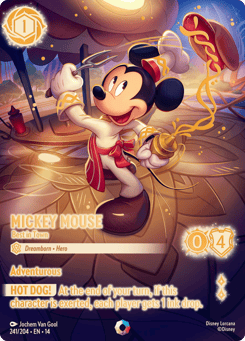 |
Mickey Mouse #241/204 Hyperia City (2026) |
$1,871 | $3,836 | 2.1× |
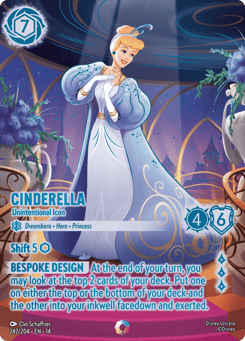 |
Cinderella #242/204 Hyperia City (2026) |
$1,069 | $1,825 | 1.7× |
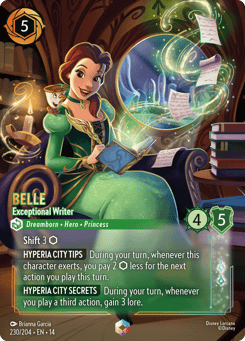 |
Belle #230/204 Hyperia City (2026) |
$231.13 | $787.00 | 3.4× |
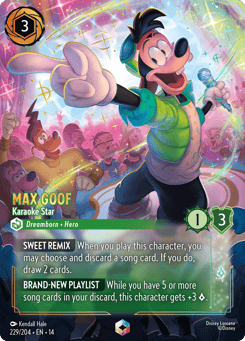 |
Max Goof #229/204 Hyperia City (2026) |
$228.07 | $465.00 | 2× |
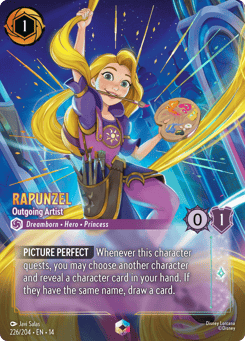 |
Rapunzel #226/204 Hyperia City (2026) |
$169.69 | $415.00 | 2.5× |
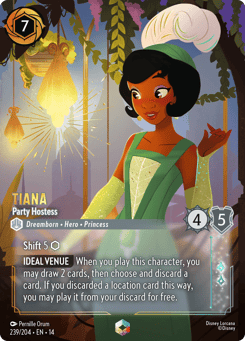 |
Tiana #239/204 Hyperia City (2026) |
$82.69 | — | — |
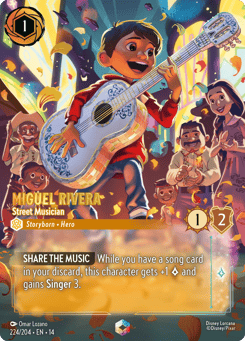 |
Miguel Rivera #224/204 Hyperia City (2026) |
$99.90 | — | — |
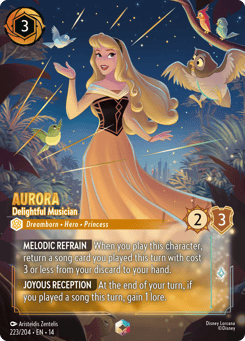 |
Aurora #223/204 Hyperia City (2026) |
$198.70 | — | — |
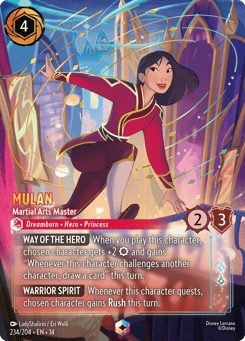 |
Mulan #234/204 Hyperia City (2026) |
$118.91 | — | — |
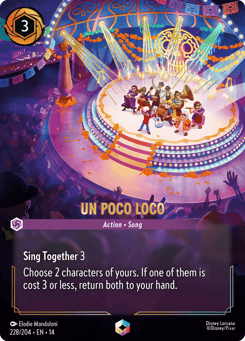 |
Un Poco Loco #228/204 Hyperia City (2026) |
$47.74 | — | — |
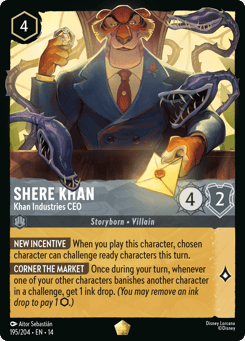 |
Shere Khan #195/204 Hyperia City (2026) |
$7.02 | — | — |
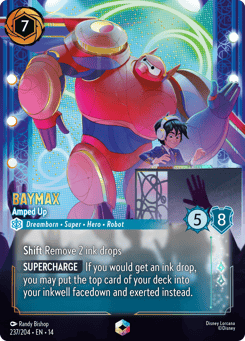 |
Baymax #237/204 Hyperia City (2026) |
$95.43 | — | — |
Look up any card's current raw and graded value in Midpoint — and get an estimated grade before you pay to submit.
Table of Contents
- Section 1: How Hyperia City Lorcana Cards Value Is Calculated
- Section 2: Most Valuable Hyperia City Cards and Top Chases
- Section 3: Rarity Breakdown and Price Tiers
- Section 4: Checklist, Printings, Foils and Set Size Discrepancies
- Section 5: Raw vs Foil vs Premium Rarity Prices
- Section 6: Hyperia City PSA 10 Value and Cards Worth Grading
- Section 7: Singles vs Sealed Product
- Conclusion
- FAQ
Section 1: How Hyperia City Lorcana Cards Value Is Calculated
If you are searching for Hyperia City Lorcana cards value, you want two answers: what the whole set is worth, and which individual cards deserve your attention. This price guide covers both in general terms. It does not list specific prices, so check current TCGplayer or Cardmarket data for exact figures.
Set value is a sum, not a single price
No one "prices" a set. A set total is the sum of every tracked card's market price. That has three consequences:
- A handful of chase cards can account for most of the total, while hundreds of commons add very little.
- The total changes whenever any single card moves, especially the expensive ones.
- Different sites report different totals because they include different cards, printings and finishes.
Where the prices come from
Most Lorcana pricing traces back to two marketplaces. TCGplayer is the main US reference, and its market price is derived from recent completed sales. Cardmarket is the main European reference, with its own averages in euros. The two rarely match exactly, because of regional demand, shipping costs and fees.
Refresh frequency matters too. Marketplace prices update continuously, but aggregator sites refresh on their own schedules, from hourly to daily. That is why a number you saw last week may already be stale. Treat every figure as a snapshot and note the date it was recorded.
Why new-set prices swing
Early in a set's life, supply is still entering the market and pulls are being opened. Prices for chase cards often settle as more product is cracked. Do not anchor on launch-week prices, and do not assume the first number you see is where a card will stay.
For a deeper look at how individual condition factors move price, see this guide on how centering impacts card value.
Section 2: Most Valuable Hyperia City Cards and Top Chases
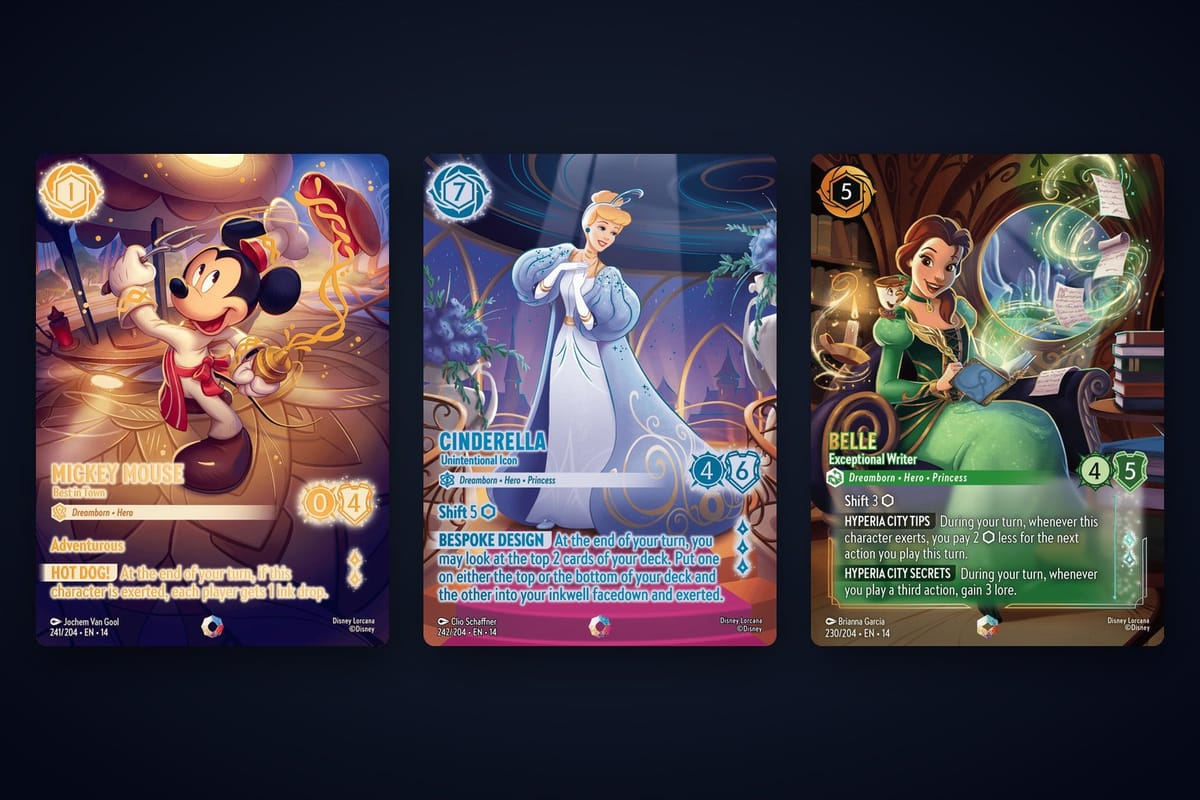
The most valuable Hyperia City cards are almost always the premium-rarity versions of popular characters. Two names dominate the conversation: Mickey Mouse - Best in Town and Cinderella - Unintentional Icon. Exact prices change often, so check current TCGplayer or Cardmarket data rather than any number you find in an old forum thread.
Why Mickey Mouse - Best in Town leads
Mickey is the face of Disney, and Lorcana collectors chase him across every set. A Mickey card with chase-level rarity combines three demand drivers:
- Character popularity: collectors who buy nothing else still want Mickey.
- Scarcity: premium rarities pull at a far lower rate than commons or rares.
- Playability and display value: cards that look striking tend to hold interest longer.
Why Cinderella - Unintentional Icon matters
Cinderella is a perennial fan favorite, and the "Iconic" label signals a premium tier. Iconic cards are positioned as the showpiece of a set, so they attract both players and collectors. Expect this card to stay near the top of any Hyperia City price guide as long as demand holds.
How to read a chase list
When you scan the top of a chase list, ask three questions:
- Is this the Enchanted, Iconic, foil or standard printing? Same name, very different price.
- Is the price based on many recent sales, or only a few? Thin sales make a price unreliable.
- Does the card have competitive play value, or is the price pure collector demand?
Collector-driven prices tend to be more sensitive to condition, which makes them better candidates for grading. Play-driven prices lean on raw copies, since players sleeve and shuffle cards anyway.
Section 3: Rarity Breakdown and Price Tiers
Understanding rarity is the fastest way to estimate whether a card is worth anything. Lorcana sets use a rarity ladder, and Hyperia City follows the pattern with premium tiers on top.
The rarity ladder
- Common: the bulk of any pack. Almost always bulk value.
- Uncommon: slightly scarcer, still usually bulk unless the card is a competitive staple.
- Rare: sometimes playable, occasionally worth a few dollars.
- Super Rare and Legendary: higher-end cards where playable staples and fan favorites can climb.
- Enchanted: the alternate-art premium tier, typically the main chase of a set.
- Iconic: a top-tier rarity reserved for showpiece cards, as with Cinderella - Unintentional Icon.
Which cards are worth more than $10
A useful rule of thumb: in most Lorcana sets, cards worth more than $10 cluster in the premium rarities plus a few playable staples. Check current marketplace data to see which specific Hyperia City entries cross that line. If a card is not Enchanted, Iconic, or a proven tournament staple, assume it is bulk until a price source says otherwise.
What counts as bulk
Bulk cards are those that sell for pennies to low single dollars. They still matter for completing a set or building a deck, but they do not justify grading, individual shipping or protective cases. Sort them by rarity, store them in boxes, and focus your effort elsewhere.
This is where the tier structure pays off. If you hold a stack of Hyperia City pulls, sort by rarity first, then look up only the top tiers. You will save hours and avoid false hope on cards that were never going to be worth much.
Section 4: Checklist, Printings, Foils and Set Size Discrepancies
A complete Hyperia City checklist is more than a numbered list. You need to know how many versions of each card exist and which ones the marketplaces track.
Why card counts differ between sites
Search "how many cards are in Hyperia City" and you may see different answers. The reasons are predictable:
- Base set vs total tracked: the main numbered set is smaller than the full list once premium and alternate cards are added.
- Enchanted and Iconic cards: some sources count them as part of the set, others list them separately.
- Promos and special printings: these may be tracked under the same set name or a separate one.
- Foil finishes: a foil version of a card may be counted as a separate product in price databases even though it shares a card number.
Before you compare totals between two sources, confirm they are counting the same things. Otherwise you are comparing apples to oranges.
Card numbers and variants
Use the card number printed on the card as your anchor. Two cards with the same name but different numbers are usually different printings or rarities. When you look up a price, match the number and finish, not just the name.
Build your own checklist
A simple approach for tracking progress:
- List every card number in the base set.
- Add a second column for foil copies if you collect them.
- Add a third section for premium rarities and variants.
- Note condition beside each entry so you know which ones are candidates for upgrade or grading.
Midpoint's collection tracking lets you log cards and watch the value of your collection over time, which is handy once your list grows beyond a spreadsheet's comfort zone.
Section 5: Raw vs Foil vs Premium Rarity Prices
Two copies of the same character can be worth wildly different amounts. The version is the single biggest variable in any Hyperia City price guide.
Raw non-foil copies
A raw non-foil is the baseline. It is the cheapest version of most cards and the one you will pull most often. For commons and uncommons, this is usually the only version worth thinking about.
Foil copies
Foils carry a premium over non-foils, but the size of the gap varies card by card. For popular characters and playable staples the gap can be meaningful. For unplayed bulk the foil premium may be small in dollar terms. Always compare the foil and non-foil price on the same marketplace and date before deciding which one to chase.
Alternate and premium rarities
Enchanted and Iconic versions sit in a different price universe from standard printings. They are scarcer, they are collected for art, and they attract graders. A common mistake is to see a high price and assume it applies to the standard version. It does not. Verify the exact rarity and finish.
A quick comparison checklist
- Same card number? Confirm it.
- Same finish? Foil and non-foil are not interchangeable.
- Same marketplace? TCGplayer and Cardmarket use different currencies and methods.
- Same date? Prices move.
When prices are available for both raw and graded copies, look at the ratio, not just the dollar gap. A ratio tells you how much extra the market pays for perfection, which feeds directly into the next section. Midpoint's card lookup shows raw versus graded values so you can see that spread in one place.
Section 6: Hyperia City PSA 10 Value and Cards Worth Grading
The Hyperia City PSA 10 value of a card is the price people pay for a gem-mint slabbed copy. The gap between that price and the raw price is the gem premium. Only a few Hyperia City cards will have a premium large enough to justify grading. Check current raw and graded sales data for any card you are considering.
The break-even math
Grading costs money, often tens of dollars per card once you add fees, shipping and insurance, with the exact amount depending on the company and service level. Your expected return is:
- Chance of a top grade times the top-grade price
- plus the chance of lower grades times their prices
- minus the grading cost
- compared against what the card sells for raw today
If the PSA 10 price is only slightly above raw, you are paying fees for little upside. If the gap is large, even a modest chance of a 10 can be worth it. This is how you decide which are the Hyperia City cards worth grading.
Centering comes first
Centering is the flaw you can measure before submitting. A card with off-center borders will struggle to reach a top grade regardless of how clean the surface is. Run it through a tool first. The free centering calculator gives you the ratios, and Midpoint adds AI estimates of PSA, BGS, CGC and TAG grades from centering, corners, edges and surface.

Grading companies are not identical
A 10 at one company is not the same as a 10 at another, and the market may pay differently for each. Read up on grading scale differences by company before choosing where to send a card. If you want a repeatable routine, follow this step-by-step pre-grading guide.
Section 7: Singles vs Sealed Product
Should you buy singles or open sealed boxes? For most people chasing value, singles win. For people who enjoy the opening experience, sealed product has its own appeal.
Why singles usually win for value
Opening packs is a lottery. You may pull a chase card, or you may pull mostly bulk. Buying the exact card you want removes variance. If your goal is a specific Mickey Mouse - Best in Town or Cinderella - Unintentional Icon, buying the single is almost always more predictable than hoping to pull one.
- Cost control: you know the price before you pay.
- Condition control: you can pick copies with good centering by asking for photos or buying from sellers who show the exact card.
- No bulk problem: you do not end up with hundreds of commons you cannot sell.
When sealed makes sense
- You enjoy opening product and treat the cost as entertainment.
- You want to hold sealed boxes as a long-term collectible, accepting storage costs and market risk.
- You want fresh copies to grade yourself, where you can inspect each pull for centering and condition.
Remember that sealed product prices change just like single prices do. Compare the cost of a box with the market value of the cards you would realistically want, and be honest about pull rates and bulk.
Protect what you keep
Whichever route you take, protect the valuable cards. Sleeves, top loaders and a dry, stable environment prevent the edge and surface damage that kills grades. See this guide on how to store valuable cards for practical setups.
Conclusion
Hyperia City Lorcana cards value comes down to a top-heavy structure. A small group of premium cards, led by Mickey Mouse - Best in Town and Cinderella - Unintentional Icon, carries most of the set's worth, while the bulk of the set sits at pennies. Set value is simply the sum of individual market prices, so it shifts as TCGplayer and Cardmarket data shift.
Before you act, confirm the exact version, foil finish and date of every price you rely on. Then look at the raw-versus-graded gap. Only where the gem premium clearly beats grading fees and the real odds of a top grade is submitting worth it. Measure centering first, because it is the cheapest filter you have.
Ready to check your pulls? Try Midpoint to measure centering, estimate grades and track your collection's value before you spend a dollar on submission.
FAQ
Q: What is the most valuable Hyperia City Lorcana card?
A: Premium-rarity cards lead the set, with Mickey Mouse - Best in Town and Cinderella - Unintentional Icon being the names to watch. Their exact prices change, so check current TCGplayer or Cardmarket data.
Q: How much is the complete Hyperia City set worth?
A: A set total is the sum of every tracked card's market price, so it depends on which cards and finishes are included and on the date. Most of the value sits in a small number of chase cards.
Q: What are the chase cards in Hyperia City?
A: The chase cards are the premium rarities, particularly Enchanted and Iconic cards of popular characters such as Mickey Mouse and Cinderella.
Q: Which Hyperia City cards are worth money?
A: Mostly Enchanted, Iconic and other premium-rarity cards, plus a few playable staples. Commons and uncommons are generally bulk value.
Q: How many cards are in the Hyperia City Lorcana set?
A: It depends on the source. Some count only the base numbered set, while others add Enchanted, Iconic, promo and foil versions. Confirm what a source includes before comparing totals.
Q: Are Hyperia City Enchanted and Iconic cards worth collecting?
A: They are the set's showpieces and usually hold the most collector demand. They also tend to be the best grading candidates, but only if centering and condition are strong and the graded premium beats the cost of submission.
Free to start
Try the Midpoint app
Grade any card from a photo, see its raw and PSA 10 value, and track what your collection is worth — free.
Get it on iPhoneGet it on Android