Legend Promos Pokémon Cards Value: Complete Guide & Price Insights
Explore the Legend Promos Pokémon cards value, top cards, grading tips, and market prices for raw and PSA 10 copies in this comprehensive price guide.

Estimated reading time: 15 min
Key Takeaways
- The Legend Promos Pokémon cards value varies widely, with iconic cards like Umbreon and Master’s Key often commanding higher prices and showing notable demand in both raw and graded conditions.
- PSA 10 graded cards frequently sell for multiples of the raw card price, highlighting the grading premium and the importance of condition in the marketplace.
- Centering, edges, and surface condition significantly affect grading and market value—tools like Midpoint can help estimate grades before submission, providing detailed centering measurements and surface defect detection.
- Complete Legend Promos sets are relatively rare and can be valuable, with total values potentially exceeding several thousand dollars, especially when the set contains multiple PSA 9 or PSA 10 graded cards.
- Price comparison across marketplaces such as TCGplayer, Cardmarket, and eBay reveals market fluctuations, regional price differences, and demand patterns that collectors should consider before buying or selling.
Card values — live data from Midpoint's card database, as of 2026-10-25. Prices move; Midpoint refreshes these daily.
| Card | Raw | PSA 10 | Gem premium | |
|---|---|---|---|---|
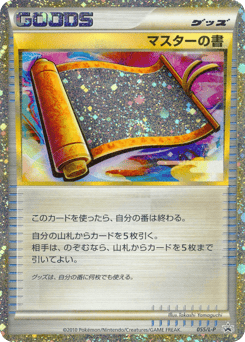 |
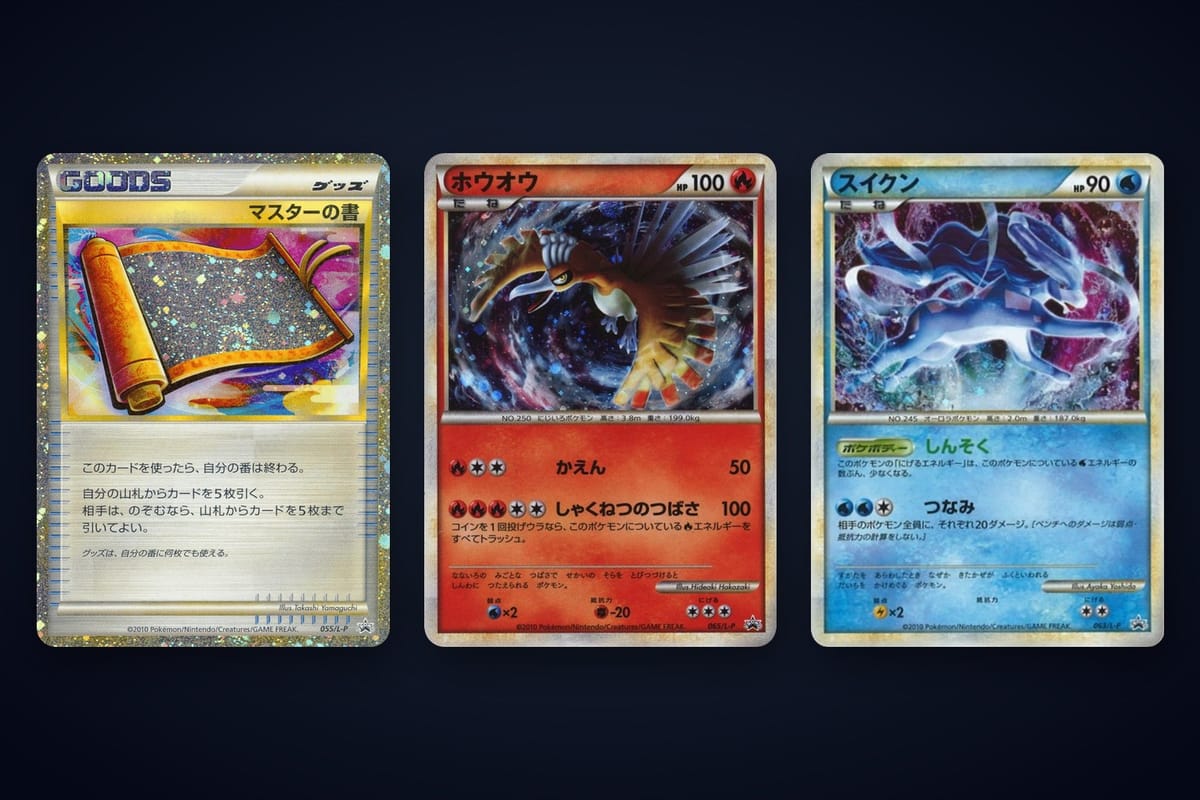
マスターの書 #055/L-P LEGEND Promos (2009) |
$8,291 | $66,168 | 8× |
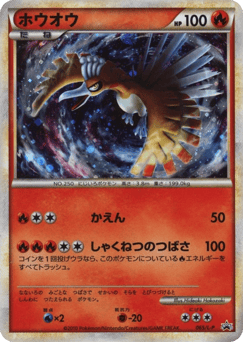 |
ホウオウ #065/L-P LEGEND Promos (2009) |
— | $60,109 | — |
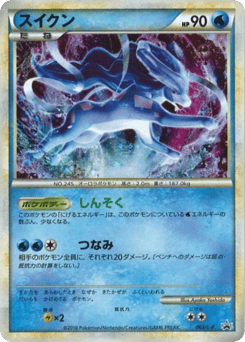 |
スイクン #063/L-P LEGEND Promos (2009) |
$1,913 | $53,113 | 27.8× |
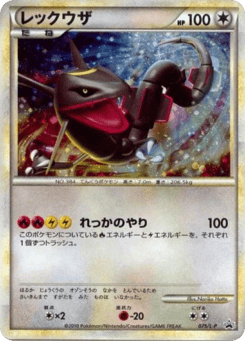 |
レックウザ #075/L-P LEGEND Promos (2009) |
$2,870 | $36,163 | 12.6× |
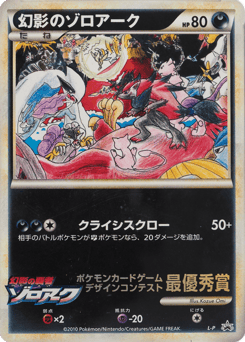 |
幻影のゾロアーク LEGEND Promos (2009) |
— | $24,695 | — |
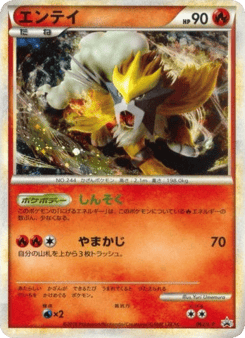 |
エンテイ #062/L-P LEGEND Promos (2009) |
$1,913 | $23,392 | 12.2× |
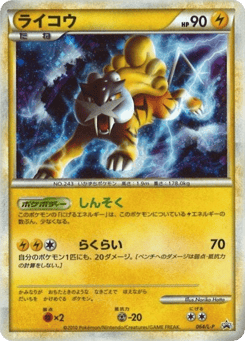 |
ライコウ #064/L-P LEGEND Promos (2009) |
$1,913 | $19,727 | 10.3× |
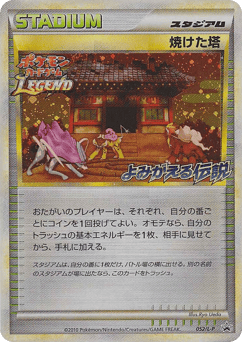 |
焼けた塔 #052/L-P LEGEND Promos (2009) |
$2,551 | $15,432 | 6.1× |
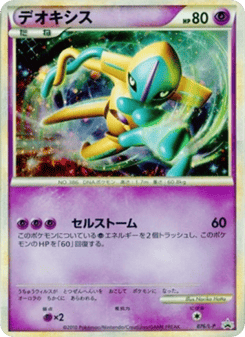 |
デオキシス #076/L-P LEGEND Promos (2009) |
$1,148 | $14,807 | 12.9× |
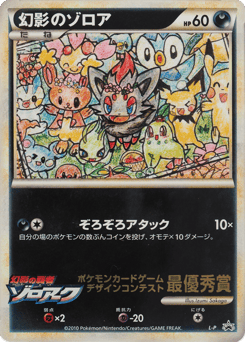 |
幻影のゾロア LEGEND Promos (2009) |
— | $9,868 | — |
 |
トロピカルタイダルウェーブ LEGEND Promos (2009) |
— | $5,043 | — |
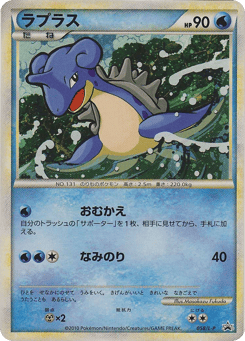 |
ラプラス #058/L-P LEGEND Promos (2009) |
$765.29 | $4,774 | 6.2× |
Look up any card's current raw and graded value in Midpoint — and get an estimated grade before you pay to submit.
Table of Contents
- Section 1: Understanding Legend Promos Pokémon Cards
- Section 2: Most Valuable Legend Promos Cards and Their Market Prices
- Section 3: Legend Promos PSA 10 Value and Grading Premiums
- Section 4: How to Identify Legend Promos Cards Accurately
- Section 5: Factors Affecting Legend Promos Cards Value
- Section 6: Where and How to Buy, Sell, and Authenticate Legend Promos Cards
- Conclusion
- FAQ
Section 1: Understanding Legend Promos Pokémon Cards
Overview of the 2009 Japanese Legend Promos Set
The Legend Promos Pokémon cards, released exclusively in Japan in 2009, represent a unique promotional set valued by collectors for their artistic design and limited availability. Unlike regular expansion sets widely distributed through booster packs, Legend Promos were obtainable primarily at specific events, tournaments, and promotional campaigns organized by The Pokémon Company Japan. This exclusivity contributes to the set's scarcity and desirability.
The set includes a mix of legendary Pokémon and fan favorites, such as Umbreon, Lugia, Groudon, Pikachu, and Ho-Oh, each featuring distinctive artwork that differentiates them from standard releases. The cards are printed with Japanese text and include special promotional markings that indicate their authenticity and origin.
The design aesthetic of the Legend Promos cards emphasizes bold colors and detailed illustrations, often featuring holofoil elements that enhance their visual appeal. The cards were distributed in limited quantities, and many were awarded as prizes, making them sought-after collector’s items.
Card Numbers, Variants, and Rarities
The Legend Promos set comprises over 30 individual cards, each assigned a unique card number, typically displayed in the bottom right corner. These card numbers assist collectors in verifying set completeness and identifying specific variants. Variants within the set include alternate artwork versions, holofoil patterns (such as standard holofoil or reverse holo), and different promotional logos indicating event-specific distributions.
All cards are printed exclusively in Japanese, and they carry distinct promo markings that range from holographic stamps to unique symbols denoting the event or promotion they originated from. For example, some Umbreon cards include a "LEGEND PROMOS" text logo, while others may feature tournament seals.
Rarity tiers within the set mostly fall in the Rare or Rare Holo categories, but some cards are scarcer due to limited print runs or exclusive distribution channels. Collectors should pay attention to these details since variants and rarity can influence market value.
Legend Promos Price Guide: Raw vs Graded Values
Legend Promos Pokémon cards often show a value difference between raw (ungraded) and professionally graded conditions. Raw cards in excellent condition hold notable worth, particularly for sought-after cards like Umbreon or Master’s Key. Submitting cards to reputable grading companies such as PSA (Professional Sports Authenticator) can increase their market value.
For example, the Master’s Scroll card, one of the rarer Legend Promos, may have an average raw price near $120, whereas a PSA 10 graded copy can sell for several times that amount, reflecting a grading premium. This premium reflects buyer confidence in the card’s condition, authenticity, and collector status.
Price guides compiled from recent sales data across multiple marketplaces assist collectors in setting realistic expectations. These guides consider factors like recent sale prices, grading population reports, and market trends to provide an overview of current card values.

Using apps like Midpoint, collectors can analyze card centering, edges, corners, and surface condition to estimate PSA, BGS, CGC, and TAG grades digitally. Midpoint employs AI algorithms to provide precise centering percentages, detect surface imperfections such as scratches or stains, and assess corner sharpness. This digital pre-grading tool helps collectors focus grading efforts on cards with the highest grade potential, potentially avoiding unnecessary grading fees.
Section 2: Most Valuable Legend Promos Cards and Their Market Prices
Top-Tier Legend Promos Cards by Value
Within the Legend Promos set, several cards often demonstrate higher market value, driven by their rarity, artwork appeal, and character popularity. Here are some of the notable Legend Promos cards and their approximate market prices as of late 2026:
- Umbreon (Card #20): Known for its striking artwork and limited promo release. Raw copies in excellent condition may sell for several hundred dollars. PSA 10 graded versions are rarer and can command prices exceeding raw values by multiple times.
- Master’s Key (Card #29): Sought after due to its event-exclusive status. Raw cards may average a few hundred dollars, while PSA 10 graded copies can reach higher prices, reflecting demand and scarcity.
- Master’s Scroll (Card #28): Featuring exclusive artwork, raw cards may sell near triple digits, with PSA 10 grades elevating value significantly.
- Lugia (Card #10): A fan favorite legendary Pokémon with raw prices often in the low hundreds. PSA 10 graded copies commonly fetch higher prices.
- Groudon (Card #11): Raw copies may sell for over a hundred dollars, with PSA 10 graded versions reaching higher values, indicating consistent collector interest.
- Pikachu (Card #1): The franchise mascot’s promo card remains popular, with raw prices typically below $100 and PSA 10 values higher.
- Ho-Oh (Card #12): Valued for its legendary status and artwork, raw prices often hover around the low hundreds, while PSA 10 graded cards can command higher prices.
Price Variations by Marketplace
The Legend Promos market exhibits price variation depending on the marketplace, reflecting differences in buyer demographics, regional demand, and card availability. For example:
- TCGplayer: This U.S.-based marketplace tends to list higher prices for graded Legend Promos cards, owing to strong collector demand and a premium on certified condition. PSA 10 Umbreon cards may average around $1,200 here, with Master’s Key raw cards approaching several hundred dollars.
- Cardmarket: As a widely used European platform, Cardmarket offers competitive pricing on raw Legend Promos cards, often somewhat lower than TCGplayer. For Umbreon PSA 10, prices may be slightly less, and raw Master’s Key cards sell near similar ranges. This pricing difference can provide opportunities for traders.
- eBay: Offers a broad range of listings from raw to graded cards globally. Prices fluctuate more widely, influenced by auction dynamics and seller reputation. Completed listings data is useful for assessing market value.
Examples of Market Price Trends
- Umbreon PSA 10: Maintains a relatively stable average price on major marketplaces, with occasional price fluctuations during Pokémon anniversaries or media releases.
- Master’s Key raw: Prices generally remain steady, with minor fluctuations influenced by event reprints or supply changes.
- Lugia raw: Exhibits consistent pricing across platforms, with PSA 10 copies commanding a premium.
Tracking these trends over time helps collectors and investors make informed decisions.
Section 3: Legend Promos PSA 10 Value and Grading Premiums
The Grading Premium Explained
Professional grading by companies such as PSA often adds a premium to Legend Promos cards, sometimes multiplying raw card prices by several times. This premium arises because grading certifies the card’s authenticity and condition, providing buyers with confidence and reducing risk associated with condition uncertainty.
PSA 10, the highest grade representing "Gem Mint" condition, is particularly prized. Cards achieving PSA 10 status are relatively rare due to stringent criteria regarding centering, surface, edges, and corners. For Legend Promos, where centering tolerances are often tight, achieving PSA 10 can be challenging, increasing desirability and market value.
In addition to condition assurance, graded cards are often easier to sell and attract international buyers willing to pay a premium. Grading also protects the card in tamper-evident holders, preserving condition over time.
Cards Worth Grading in the Legend Promos Set
While grading can enhance value, the cost (typically $30-50 per card depending on service speed) means not all Legend Promos cards justify submission. The most valuable candidates for grading generally include:
- Umbreon (#20): Its high raw value and scarcity make PSA 10 grading potentially profitable.
- Master’s Key (#29): Graded copies command strong premiums.
- Lugia (#10) and Groudon (#11): Both legendaries have consistent demand and grading premiums, making grading worthwhile for well-preserved cards.
- Master’s Scroll (#28): Despite lower raw prices, grading can increase value substantially if PSA 10 is achieved.
Cards with raw values under $100 may not recoup grading fees unless they have exceptional condition or are part of a complete graded set where overall value increases. Collectors should use pre-grading tools like Midpoint to assess grade potential before submission.
How Midpoint Helps Pre-Grade Your Legend Promos
Given grading costs and the risk of receiving lower grades, Midpoint’s AI-driven digital grading tool offers a strategic advantage. By uploading high-resolution card images, Midpoint analyzes centering down to 0.01mm precision, detects surface imperfections such as scratches, print defects, or whitening on edges, and assesses corner sharpness and wear.
This data produces an estimated grade range for PSA, BGS, CGC, and TAG, enabling collectors to decide whether a card is worth submitting for professional grading. For example, a card with centering of 58/42, flawless surface, and sharp corners is a strong PSA 10 candidate, whereas one with off-center borders or edge wear might grade lower.
Using Midpoint helps collectors avoid unnecessary grading submissions, saving money and focusing grading efforts on cards with the highest return potential. Our How to Pre-Grade Your Card guide walks through this process in detail.
Section 4: How to Identify Legend Promos Cards Accurately
Recognizing Key Set Symbols and Card Numbers
Accurate identification is important to avoid counterfeit or misrepresented cards. Legend Promos cards feature distinctive set symbols, often including the text "LEGEND PROMOS" printed near the card number, which is typically found in the lower right corner. The card number format usually follows a "#XX" scheme, matching official set checklists.
Collectors should cross-reference these numbers with verified databases such as Pokellector or official Pokémon card catalogs to confirm authenticity and ensure they are tracking the correct card for their collection.
Language and Promo Markings
Legend Promos cards are exclusively printed in Japanese, characterized by Japanese text (kanji, hiragana, katakana) detailing the Pokémon’s attacks, abilities, and flavor text. The official Pokémon logo placement on the card front and back aligns with known authentic prints.
Promo markings include event logos, holographic stamps, or special seals that authenticate the card’s promotional origin. For example, some cards feature a silver or gold holographic "PROMO" stamp or a tournament logo. Absence of these markings or inconsistent font styles and colors may indicate counterfeit or reprint cards.
Using magnification or UV light can help verify holofoil authenticity and detect printing anomalies associated with fakes.
Release Year and Edition Details
Legend Promos cards were released in 2009, which is verifiable via the copyright year printed on the card’s bottom edge. Some cards may have additional edition indicators or print codes that help distinguish first editions from later reprints or counterfeit versions.
Collectors should consult trusted reference sources, including detailed set guides and photos, to compare card backings, font styles, and holofoil patterns. Apps like Midpoint further assist by providing image-based comparisons against verified authentic cards, supporting confident identification.
Section 5: Factors Affecting Legend Promos Cards Value
Condition and Centering Quality
Card condition remains a primary determinant of Legend Promos value. The four primary grading factors—centering, corners, edges, and surface—are all important. Centering, the alignment of the card’s image within its borders, is especially critical for PSA grading.
PSA guidelines specify that centering must be close to perfect, with tolerances often as narrow as 55/45 or better for a PSA 10. For example, a card with centering skewed 65/35 may receive a PSA 9 or lower despite otherwise flawless condition. This makes precise centering measurement valuable, and tools like Midpoint allow collectors to quantify centering percentages objectively.
Edges and corners should be free of whitening, chipping, or bends, while the surface should be free of scratches, stains, or print defects. Even minor surface imperfections can lower a card’s grade and market value.
Scarcity and Distribution Channels
The limited distribution of Legend Promos cards at specific events and promotions contributes to their scarcity. Cards handed out at national tournaments or exclusive events often have lower print runs, increasing rarity and value. For example, the Master’s Key card was given to participants at a prestigious 2009 tournament, limiting availability.
Moreover, some cards were only available as prizes or via mail-in campaigns, which further constrains their supply. Scarcity combined with demand can drive up prices, particularly for cards with favorable condition and certification.
Popularity of Characters and Demand Trends
Popularity of the Pokémon depicted plays a role in card value. Umbreon, with its fanbase and elegant design, often ranks as one of the highest-valued cards. Similarly, legendary Pokémon such as Lugia, Groudon, and Ho-Oh maintain collector interest.
Demand trends can fluctuate based on external factors like new Pokémon game releases, anniversaries, or media exposure. For example, a new Umbreon-themed game or anime season may reinvigorate interest in the Umbreon Legend Promos card, potentially resulting in price increases.
Grading Company and Population Reports
While PSA is a dominant grading company for Legend Promos cards, other companies such as Beckett Grading Services (BGS), Certified Guaranty Company (CGC), and TAG Grading also offer grading services. Each company has unique grading scales and criteria.
Population reports, which list how many cards have been graded at each level, are useful for understanding scarcity of top grades. For example, if only a limited number of Umbreon PSA 10 cards exist worldwide, their value may be higher than if many were graded at that level.
Collectors should review population reports and grading scale differences, as outlined in our Grading Scale Differences guide, to select the best grading service for their cards and investment goals.
Section 6: Where and How to Buy, Sell, and Authenticate Legend Promos Cards
Best Marketplaces for Buying and Selling
Collectors and investors should be aware of the best venues to trade Legend Promos cards to help ensure fair pricing and authenticity. Key marketplaces include:
- TCGplayer: Popular in North America, TCGplayer offers a wide selection of graded and raw Legend Promos cards, with buyer protections and detailed seller ratings. It is a common platform for PSA graded sales.
- Cardmarket: The leading European marketplace, Cardmarket features extensive raw card inventories and competitive pricing, making it useful for sourcing cards at lower prices or finding specific variants.
- eBay: A global auction and buy-it-now platform providing access to international sellers. Collectors can find rare listings but should exercise caution and verify seller reputation.
Comparing prices across these platforms before buying or selling is advisable to maximize value or minimize costs. Using price tracking tools and completed listings data helps identify fair market prices.
Authentication and Avoiding Counterfeits
Due to the value of Legend Promos cards, counterfeits and altered cards occasionally appear in the market. Authenticating cards involves examining multiple elements:
- Set symbols and print quality: Authentic cards have consistent font, color saturation, and sharp print details. Blurred or inconsistent printing is a red flag.
- Promo markings and holographic elements: Genuine Legend Promos have precise holographic stamps or foil patterns. Fake cards may exhibit dull or incorrect foiling.
- Card stock and texture: Original cards have a specific thickness and texture; counterfeit cards may feel thinner or have different surface finishes.
- Comparisons to verified authentic cards: Side-by-side comparison can reveal subtle differences in color, font, or layout.
Professional grading services provide authentication as part of their process, offering added security for buyers and sellers.
Tracking and Managing Your Legend Promos Collection
Managing a valuable Legend Promos collection benefits from tools that track card values, condition, and grading status over time. Apps like Midpoint offer features to catalog cards, monitor market prices from multiple sources, and digitally grade centering and surface condition.
Midpoint’s portfolio management helps collectors analyze their collection’s total value, identify cards with high resale potential, and plan grading submissions strategically. Alerts on market price changes and new sales data assist in making timely buying or selling decisions.
Conclusion
The Legend Promos Pokémon cards value landscape offers opportunities for collectors and investors. With iconic cards such as Umbreon, Master’s Key, and Lugia often commanding premium prices, understanding grading impacts, market trends, and card condition factors is important for maximizing returns.
Utilizing AI-enabled tools like Midpoint to pre-grade and assess centering, edges, and surface condition before submitting cards for professional grading can help reduce costs and risk. Whether aiming to build a complete set, focus on high-value singles, or trade within the global marketplace, this guide provides information to navigate the Legend Promos market more confidently.
FAQ
Q: How much are Japanese LEGEND Promos Pokémon cards worth?
A: Prices vary by card, condition, and grading, with raw cards often ranging from around $90 to several hundred dollars, and PSA 10 graded copies fetching higher prices depending on the card and market conditions. Premium cards like Umbreon and Master’s Key can command higher prices, especially in top grades.
Q: What is the most valuable LEGEND Promos card?
A: Umbreon (#20) is generally considered among the most valuable, with PSA 10 copies reaching higher price points, followed by Master’s Key and Lugia. Their rarity and demand contribute to these valuations.
Q: How much is a complete LEGEND Promos set worth?
A: A complete set in raw condition can be valuable, potentially exceeding several thousand dollars, with graded complete sets commanding higher prices depending on card grades. High-grade sets are relatively scarce and sought after by collectors.
Q: Which LEGEND Promos cards are worth grading?
A: High-value cards like Umbreon, Master’s Key, Lugia, Groudon, and Master’s Scroll are prime candidates where grading premiums may justify submission costs. Lower-value cards may not be cost-effective to grade unless in exceptional condition.
Q: Are Japanese LEGEND Promos cards more valuable than English cards?
A: Japanese Legend Promos cards are often rarer and have unique artwork, which can lead to higher prices compared to English promo equivalents due to their exclusive distribution and scarcity.
Q: How can I tell if my LEGEND Promos Pokémon card is rare or valuable?
A: Check the card number, promo markings, condition, and language. Use price guides and apps like Midpoint to verify market values and grading estimates. Authenticity and condition are critical to value.
Free to start
Try the Midpoint app
Grade any card from a photo, see its raw and PSA 10 value, and track what your collection is worth — free.
Get it on iPhoneGet it on Android