Best Lighting for Trading Cards: How to Avoid Glare and Achieve Perfect Centering
Discover essential lighting tips for trading card photography to enhance card alignment, avoid glare, and improve color accuracy.

Estimated reading time: 12 minutes
Key Takeaways
- Choosing the best lighting for trading cards is crucial to avoid glare, improve color accuracy, and ensure precise card center alignment for grading or selling.
- Diffusers and modifiers, like softboxes or DIY cloth diffusers, soften harsh light and reduce hotspots on glossy surfaces.
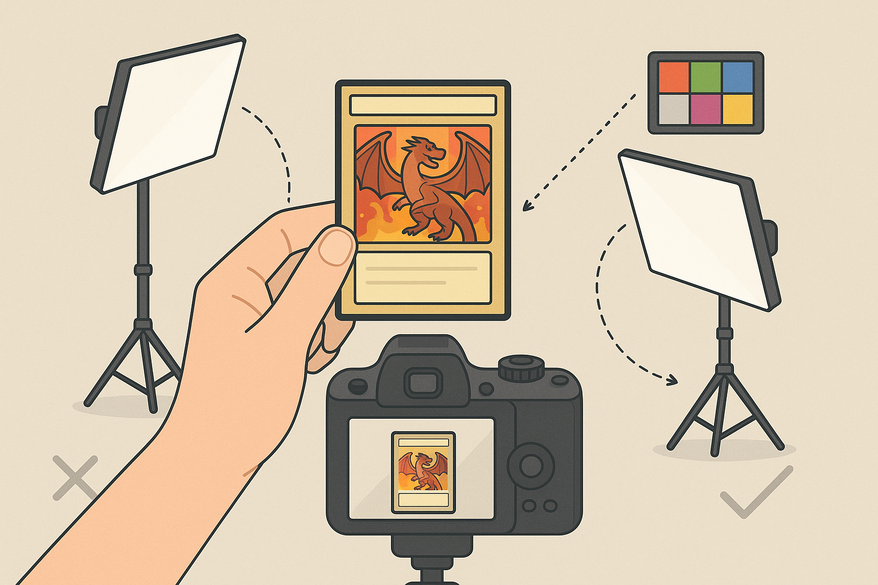
- A symmetrical two-light setup at 45° angles, combined with reflectors, delivers even illumination and reveals fine details, making it easier to achieve accurate card centering.
- Use grid overlays, a tripod or overhead mount, and alignment aids to maintain consistent framing and parallel edges—key for professional card photos.
- Experiment with natural overcast light versus neutral white LED panels to find the best color rendition and centering accuracy for your environment.
Table of Contents
- Importance of Lighting in Trading Card Photography
- Understanding Card Center Alignment
- Essential Lighting Tips for Trading Card Photography
- Natural vs. Artificial Lighting
- The Role of Diffusers and Modifiers
- Lighting Angles and Placement
- Tips on Using Reflectors
- Equipment and Setup Recommendations
- Practical Step-by-Step Guide
- Real-World Examples and Case Studies
- Conclusion and Call to Action
When photographing trading cards, using the best lighting for trading cards is essential to eliminate glare, capture true colors, and achieve precise card center alignment. Whether you're preparing photos for grading, selling on marketplaces, or sharing on social media, proper lighting ensures clarity and accuracy. This guide covers how to set up lighting that reduces reflections and enhances centering accuracy, especially important if you use grading or centering tools like Midpoint to estimate your card’s grade before submission. For a comprehensive overview of shooting cards for grading accuracy, see our trading card photography guide. For tips focused on optimal lighting for centering, check optimal lighting for card centering.
This article explains why lighting matters, how to achieve perfect card center alignment, and the specific lighting setups that work best for trading cards. We cover natural versus artificial light, diffusers, lighting angles, reflectors, and essential equipment. You'll also find a practical workflow and real-world examples. By the end, you'll know how to light your cards like a pro and present them perfectly centered every time.
Importance of Lighting in Trading Card Photography
Lighting controls three critical aspects of your shot:
- Shadow control
Harsh shadows can hide card edges and corners, making assessment of wear or centering impossible. Soft lighting exposes all edges evenly. - Color accuracy
Color temperature—bulbs versus daylight—impacts how true the card’s colors appear. Warm or cool bulbs distort reds, blues, and foil hues. - Clarity and detail
Holo and foil patterns need crisp, bright light to reveal sparkle without whiteout glare. Proper illumination boosts fine-print legibility and helps with precise centering.
Challenges unique to trading cards include:
- Glare from glossy or foil surfaces, especially under harsh or direct light
- Reflections off protective sleeves, top-loaders, and slabs
- Uneven illumination causing one side to look darker or closer than the other, making card centering assessment difficult
Good lighting helps avoid glare and is essential for accurate card center alignment—key factors for grading and professional presentation. The best lighting for trading cards will help you capture every detail and improve your chances of receiving a high grade. For collectors using apps like Midpoint for digital grading or centering analysis, optimal lighting is even more important to ensure reliable results.
Understanding Card Center Alignment
Card center alignment means:
- Edges parallel to the photo frame
- Equal spacing on all four sides
- Uniform visibility of corners without shadow or glare
Why it matters:
- Professional presentation
Centered cards look polished on eBay, Etsy, and Instagram. - Grading accuracy
Graders need straight-on, evenly lit shots to judge centering and edge wear. - Consistent thumbnails
Content creators rely on uniform card placement for branded feeds and catalogs.
Accurate centering evaluation requires evenly lit, straight-on photos. Using the best lighting for trading cards makes this process easier and more reliable, especially when submitting cards for grading or using a centering tool like Midpoint. Well-lit, centered photos also help buyers and graders see every detail, which can impact a card’s value. For a deeper dive into how centering is evaluated for different card types, see our complete guide to card centering by type.
Essential Lighting Tips for Trading Card Photography
Natural vs. Artificial Lighting
Natural lighting
Benefits:
- Soft, neutral color from indirect window or overcast outdoor light
- Minimal equipment needed
Drawbacks:
- Inconsistent due to weather and time changes
- Midday sun causes harsh glare
Artificial lighting
Benefits:
- Control over intensity and color temperature with LED panels, desk lamps, or ring lights
- Consistent results any time of day
Drawbacks:
- Risk of color casts if mixing bulb types
- Hotspots without diffusion
The Role of Diffusers and Modifiers
Diffusers and modifiers convert harsh point light into broad, even illumination. Examples include softboxes, umbrella modifiers, parchment paper, or translucent plastic. Benefits for card photography include:
- Reduced glare on glossy surfaces
- Softened shadows around edges
- Consistent detail for precise alignment and centering
Even DIY diffusers like white cloth or frosted plastic can dramatically reduce hotspots and reflections, helping you achieve the best lighting for trading cards without expensive gear. Proper diffusion reveals subtle surface flaws and supports grading apps or tools in assessing your cards more precisely.
Lighting Angles and Placement
Key setup for glare reduction and balance:
- Two 45° side lights
Place primary lights at 45° angles from left and right, slightly above the card plane. This wrap-around lighting minimizes reflections on foil and holo surfaces and is widely considered the best lighting for trading cards, both for color and centering accuracy. - Avoid direct overhead light
Overhead fixtures produce strong center hotspots and dim edges, which can throw off centering measurements. - Symmetrical two-light setup
Match each light’s intensity and color temperature. Unequal side lighting can make edges look misaligned and affect centering analysis. - Distance and height
Position lights 2–3 feet from the card, 6–12 inches above its surface. This range balances brightness with soft shadows and ensures even centering visibility.
A well-balanced two-light system is often the best lighting for trading cards, helping you see the full card surface and judge centering confidently.
Tips on Using Reflectors
Reflectors bounce light onto darker sides, acting as fill light without extra fixtures. Common tools include white foam board, collapsible silver/white reflectors, or card stock. Positioning tips:
- Opposite the main light to even out shadows
- Under the front edge of the card to lift edge shadows and highlight corner detail
Simple white reflectors mimic a second light source and help maintain accurate card center alignment. For a detailed lighting setup reference, see detailed lighting setup reference. Adding a reflector is a quick way to improve the best lighting for trading cards without investing in extra lights. Reflectors are especially useful for cards with dark or metallic borders, where shadow detail is critical for centering analysis.
Equipment and Setup Recommendations
Essential gear for the best lighting and centering in trading card photography includes:
- Camera or smartphone with grid overlay—use grid lines to align edges and check centering
- Tripod or overhead mount—ensures consistent framing and prevents tilt, crucial for centering analysis
- Neutral white LED light sources—ring lights or LED panels for control
- Diffusers/modifiers—softboxes or translucent panels
- Reflectors—white foam board or collapsible silver/white discs
- Solid background—white or black foam board, mouse pad for uniform surface
- Alignment aids—grid-lined mat or card stand for precision placement and centering
Station layout:
- Card centered on a flat background
- Camera mounted directly above, lens aligned to card center
- Two diffused lights at 45° left and right, slightly elevated
- Reflector opposite the brighter light to fill shadows
- Grid lines visible in the frame to confirm parallel edges and centering
Practical Step-by-Step Guide
Step 1: Prepare card
Remove dusty sleeves and clean surfaces. If photographing in top loaders or slabs, wipe down the plastic to remove fingerprints. Clean cards and holders maximize the benefits of the best lighting for trading cards by reducing distracting smudges and reflections.
Step 2: Position background and camera
Lay a solid white or black background near your mounting point. Set camera height so the lens is centered over the card. Turn on grid lines to align edges perfectly and check for proper centering.
Step 3: Arrange lights
Place two primary lights at 45° angles on either side of the card, slightly above it. Attach diffusers to soften light and minimize glare. Adjust the distance to fine-tune how soft or bright your lighting appears for optimal centering visibility.
Step 4: Add reflectors
Position a white reflector opposite your main light to bounce fill light onto shadows. Experiment with reflector size and angle to equalize brightness on all sides, which helps with centering assessment.
Step 5: Frame and align
Use grid lines to ensure parallel top/bottom and left/right edges. Confirm the card is centered with equal spacing on all sides. Maintain a consistent camera angle perpendicular to the card surface to avoid distortion.
Step 6: Capture multiple shots
Take several photos, adjusting lighting and alignment slightly if needed. Review images for glare, sharpness, and centering accuracy. Use the best shot for grading or listing.
Real-World Examples and Case Studies
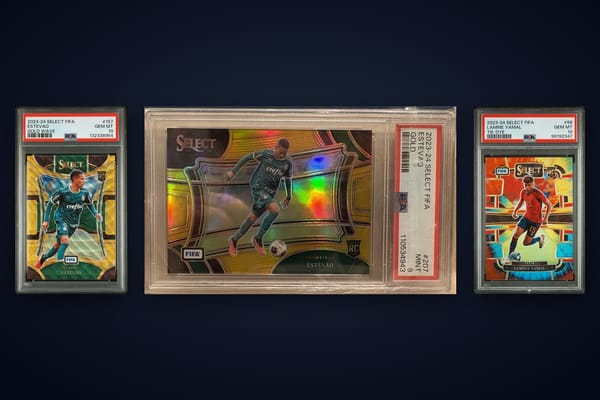
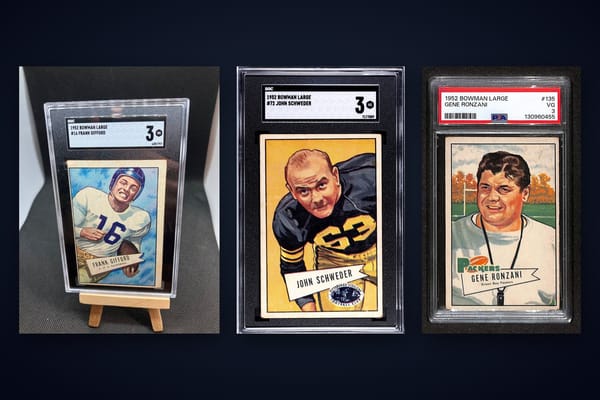
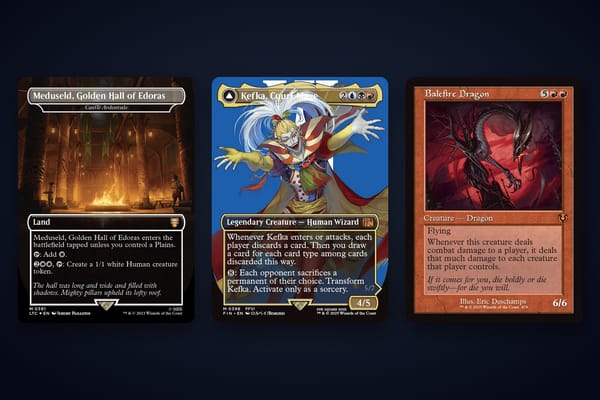
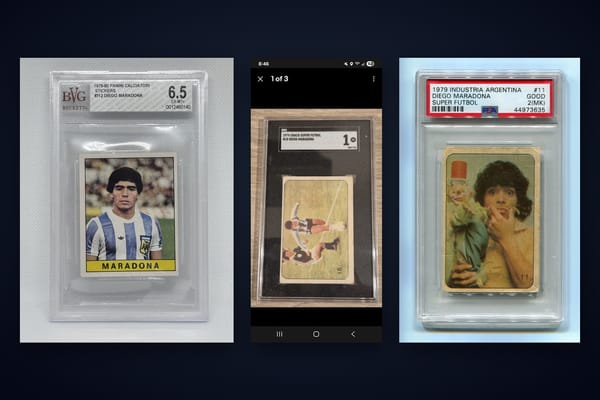
Many collectors have improved their grading submissions and sales by adopting the best lighting for trading cards described here. Proper lighting not only reduces glare but also highlights card condition and centering, helping apps like Midpoint provide more accurate digital grading estimates. Whether shooting Pokémon, sports cards, or Magic: The Gathering, these lighting tips enhance photo quality and increase buyer confidence.
Conclusion and Call to Action
Using the best lighting for trading cards is a simple yet powerful way to improve your card photography for grading, selling, or sharing. A two-light setup with diffusers and reflectors, combined with proper camera alignment, will minimize glare and ensure precise centering. For collectors using digital grading tools like Midpoint, optimal lighting is essential for reliable results. Start experimenting with lighting setups today and see the difference in your card photos and grading accuracy.
Explore Midpoint, the all-in-one trading card app, to leverage AI digital grading, card lookup, and portfolio tracking—all enhanced by perfectly lit and centered photos. Download free on iOS and Android.