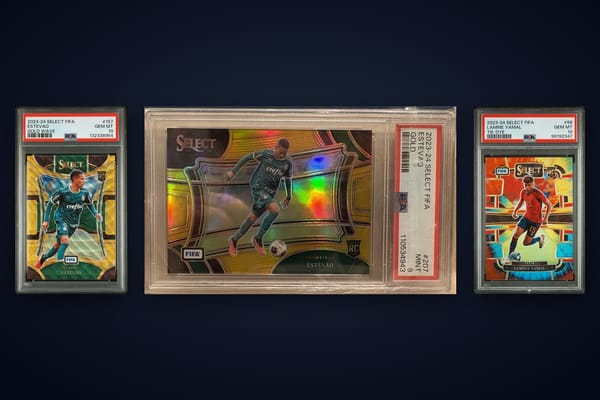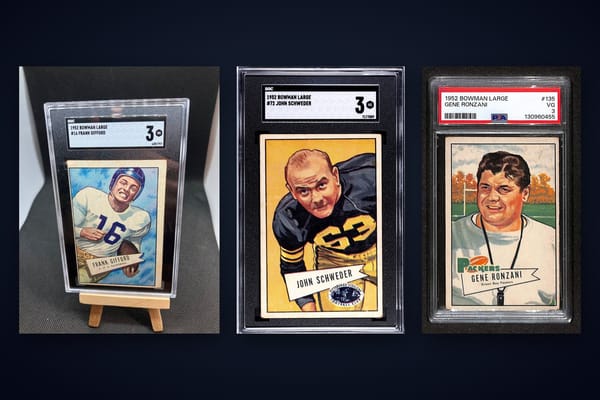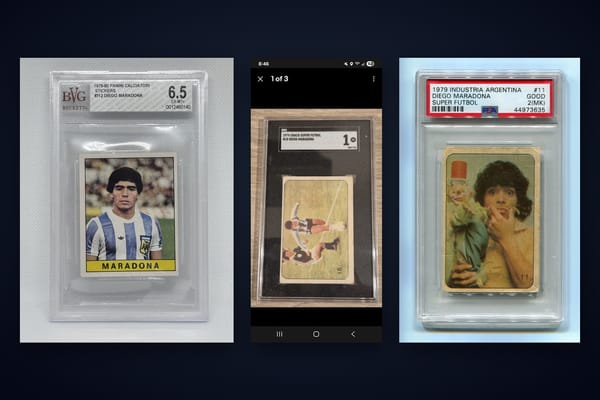
Centering Impact on Autograph Cards: The Definitive Guide
Understand the centering impact on autograph cards for PSA, BGS, CGC, and more. Learn grading quirks for Pokemon, sports, vintage, MTG, One Piece cards and more.


Estimated reading time: 15 min
Key Takeaways
- Centering is a major factor in the grading of autograph cards, impacting both card and autograph grades differently depending on the grading company.
- Sticker and on-card autographs are judged by distinct centering standards, affecting both eye appeal and resale value.
- Each card type—Pokemon, sports, vintage, MTG, Yu-Gi-Oh, One Piece—has specific quirks in how centering is measured.
- Accurate centering measurement before grading can save time and money, especially using digital tools like Midpoint.
- Collectors and investors should understand centering tolerances for gem-mint grades to maximize card value.
Table of Contents
- Section 1: What Centering Means on Autograph Cards
- Section 2: Grading Company Approaches to Centering and Autographs
- Section 3: Sticker Autos vs. On-Card Autos—Centering Differences
- Section 4: Centering Standards by Card Type
- Section 5: Centering, Value, and Collector Preferences
- Section 6: Measuring Centering Before Grading
- Conclusion
- FAQ
Section 1: What Centering Means on Autograph Cards
Understanding Card Centering
Centering refers to the alignment of a card's printed image relative to its physical edges. For standard trading cards, this means measuring the width of the border on the left, right, top, and bottom sides. A card with perfect centering will have borders of identical width on all four sides. This "symmetry" is a hallmark for high grades and is scrutinized heavily by grading companies. For example, a modern Pokemon card with borders measuring exactly 3mm on all sides is considered perfectly centered. In contrast, a card with a left border of 2mm and a right border of 4mm would be considered off-center, which could drop its grade from gem-mint to mint or lower, depending on the company's standards. Centering is one of the four primary grading factors, alongside corners, edges, and surface.
This alignment is not just aesthetic—it is a direct result of the card manufacturing process. Printing misalignments, cutting errors, and even packaging can yield cards with uneven borders, especially in older or mass-produced sets. Collectors often use a centering ratio (e.g., 55/45 or 60/40) to express how much the image is shifted in one direction. For example, a card with a left border of 4mm and a right border of 3mm on a total width of 7mm would have a 57/43 centering ratio.
How Centering Relates to Autographs
On autograph cards, “centering” can mean two different things, each with its own impact on grading and collector perception:
- Card Image Centering: This is the alignment of the card's printed design as described above. It is the primary centering factor for the card grade itself.
- Autograph Placement: This refers to how well the autograph—whether a sticker or on-card signature—is positioned within its designated space. If a sticker is tilted, shifted, or overlaps text, or if an on-card autograph drifts outside the intended box, it affects the visual appeal and, in some cases, the autograph grade.
Each grading company has its own approach to balancing these two factors. For example, a sticker autograph that is perfectly centered on a card that itself is off-center will receive different grades for the card and the autograph. Conversely, an on-card signature that is beautifully centered on an otherwise poorly centered card may still not achieve a top card grade.
Centering’s Role in Overall Grade
- Card image centering is critical for the overall card grade (e.g., PSA 10, BGS 9.5). Even small deviations can reduce a card from gem-mint to mint or lower.
- Autograph centering—especially relevant for sticker autos—impacts the auto grade (e.g., PSA 10 Auto, BGS 10 Auto), but rarely affects the card grade unless it is so poor that it distracts from or damages the card’s design.
For expensive autograph issues, such as a LeBron James rookie auto or a Charizard signed by the original illustrator, understanding these distinctions is crucial before submitting cards for grading. The cost of grading can be significant, and a misunderstanding of how centering is judged can lead to disappointing results and a loss in potential resale value.
Section 2: Grading Company Approaches to Centering and Autographs
PSA Grading: Card vs. Autograph
PSA (Professional Sports Authenticator) is a well-known grading company for both sports and trading cards. PSA evaluates the centering of the card’s printed image as a core component of the overall card grade and grades the autograph separately. For example, a card can receive a PSA 10 (Gem Mint) for the card and a PSA 8 for the autograph if the signature is streaked or poorly placed. Conversely, a perfectly centered autograph but off-center card will result in a lower card grade, regardless of the autograph's quality.
- Gem-Mint Centering (PSA 10): PSA requires front centering of 55/45 or better for a gem-mint grade. This means that the borders on opposite sides must not differ by more than 10%. For the back, the tolerance is looser, allowing up to 75/25. For example, a card with a left border of 3.5mm and a right border of 2.5mm on a total of 6mm would be within the 55/45 standard.
- Autograph Grade: PSA’s autograph grade focuses primarily on signature quality, penalizing streaks, smudges, and fading. Placement only impacts the grade if it affects legibility or is extremely misapplied (e.g., signature runs off the sticker or is mostly off the card).
It’s important to note that PSA does not always penalize a card for a poorly placed sticker unless it damages the card or significantly impairs the visual presentation. However, collectors often value sticker placement highly, so even if the grade is unaffected, the card’s market value may drop.
BGS Grading: Subgrades Matter
BGS (Beckett Grading Services) is known for its detailed subgrades: centering, corners, edges, and surface. This granularity appeals to collectors who want a more nuanced assessment. For autographed cards, BGS assigns a separate autograph grade as well.
- BGS Gem-Mint Centering: BGS requires, for a BGS 9.5 (Gem Mint), the front to be 50/50 one direction and 55/45 the other; the back must be 60/40 or better. This means that a small shift can result in a lower subgrade, which can lower the overall grade due to BGS’s weighted grading formula.
- Sticker Auto: If the signature is cut off, misaligned, or runs off the sticker, the autograph grade is reduced, but the card centering subgrade is not penalized unless sticker placement affects the card’s surface or visible design.
This level of detail allows buyers to target cards with strong subgrades in the areas they care about most. For instance, investors may pay a premium for a BGS 9.5 with 10 subgrades for centering and edges, even if the autograph is a 9.
CGC and TAG: Modern Approaches
CGC (Certified Guaranty Company) and TAG (Transparent Authenticated Grading) both bring modern technology and digital precision to card grading. CGC has gained traction in the TCG (Trading Card Game) world, especially for Pokemon and Magic: The Gathering, while TAG is notable for its transparent, AI-driven process.
- CGC Gem-Mint: CGC’s standard for gem-mint is front centering of 55/45 or better; back centering can be up to 75/25. These standards are published and widely referenced in the community. For autographed cards, CGC grades the card and the autograph separately, with sticker placement affecting only the autograph grade unless the sticker’s misalignment obscures important game text or artwork.
- TAG: TAG uses advanced digital analysis to grade both card centering and auto placement. Their system can detect border ratios to a high degree of precision and can assess the spatial alignment and completeness of an autograph. This level of precision is particularly valuable for high-end or 1-of-1 autograph cards, where minor defects can have major value implications.
The adoption of digital tools and AI-based analysis is changing the landscape of card grading, offering more consistency and transparency. For collectors, this means fewer surprises and greater confidence when submitting cards for grading.
Section 3: Sticker Autos vs. On-Card Autos—Centering Differences
Sticker Autographs
Sticker autographs are widely used in modern sets to streamline the signing process for athletes and artists. The signer autographs sheets of stickers that are later applied to cards. While this allows companies to produce more autographed cards and meet demand, it introduces two unique centering challenges:
- Sticker Placement: If the sticker is applied crooked, too high, or too low, it may overlap important text, card artwork, or even extend beyond the card edge. This rarely impacts the card grade (unless the sticker placement is so poor it damages the card surface), but it can reduce the auto grade and market value. For instance, a misaligned sticker on a Luka Doncic rookie auto can drop the auto grade, and buyers may discount the card even further for poor eye appeal.
- Signature Centering on Sticker: The signer may inadvertently sign off to one side of the sticker, causing part of the autograph to be cut off when applied. Grading companies usually penalize the autograph grade for this, even if the card and sticker are otherwise centered. In extreme cases, a signature that runs off the sticker can result in a "No Grade" or "Authentic Only" designation for the autograph.
In both cases, the card itself may still receive a high centering grade, but the overall desirability and resale value will suffer. Collectors often view well-centered stickers as a mark of quality control and attention to detail by the manufacturer.
On-Card Autographs
On-card autographs are directly signed onto the card surface, typically within a designated space or "auto box." This is often preferred by collectors due to the sense of authenticity and the direct connection to the athlete or artist. Grading considerations for on-card autos include:
- The signature should be reasonably centered within the intended area. If the autograph drifts outside the box or overlaps key artwork, it may receive a lower autograph grade for poor presentation.
- On-card signatures that stray onto important card elements (such as character names, stats, or artwork) can detract from eye appeal and may be noted by graders, but unless the signature obscures vital information, the card centering subgrade is usually unaffected.
- Some sets, like Topps Dynasty in baseball, are known for large, well-designed autograph areas. In these cases, a centered, bold autograph can significantly boost both the auto grade and the perceived value of the card.
On-card autos are also less likely to suffer from placement issues inherent to stickers, but signature quality (such as pen skips or fading) remains a grading factor.
Collector Preference and Value
The market often favors on-card autographs for several reasons: a direct signature is seen as more authentic, the risk of sticker misplacement is eliminated, and the overall presentation is generally superior. For many high-end collectors, a card with an on-card auto that is well centered—both in terms of the card image and the signature—can command a premium. For example, a Michael Jordan on-card auto with strong centering and autograph often sells for more than similar sticker auto issues.
Conversely, sticker autos that are obviously off-center, crooked, or contain incomplete signatures are often avoided by discerning buyers, even when the card and autograph grades are technically high. As a result, manufacturers have begun to take more care in sticker application, and collectors are more diligent in pre-screening cards before grading or purchase.
Section 4: Centering Standards by Card Type
Pokemon Card Centering (Front and Back)
Pokemon cards, especially vintage issues, are known for centering issues. Manufacturing tolerances in the late 1990s and early 2000s were less stringent, so it’s common to find cards with obvious border disparities. For grading:
- Front: Gem-mint requires centering of 55/45 or better with PSA, CGC, and TAG. Some collectors prefer 50/50 centering for "OC-free" cards. For autographed Pokemon cards (often signed by artists at conventions), signature location does not factor into the card grade, but if the signature overlaps key artwork or text, it can reduce the autograph grade or the card’s visual appeal. For example, a signed Base Set Charizard with an autograph running over the attack text may sell for less than one with a neatly centered signature in the art box.
- Back Centering Pokemon: Graders are more lenient, with tolerances up to 75/25. However, in competitive markets (e.g., Japanese or high-end English cards), even back centering is scrutinized. Certain Japanese sets, like the 1997 Pocket Monsters Carddass, are known for strict centering standards and can command premiums for well-centered examples.
For more on how to assess Pokemon centering, see How to Pre-Grade Your Card.
Sports Card Centering
Sports cards, especially from the 1980s and earlier, often feature colored or white borders that make centering flaws immediately apparent. This is particularly true for iconic rookie autograph cards such as Tom Brady, Michael Jordan, or Ken Griffey Jr. For autograph cards:
- Sticker placement is the norm in many modern releases, with high-value cards suffering in price if the sticker is misaligned or overlaps important elements like team logos or serial numbers. Some collectors will avoid cards with even minor sticker placement issues.
- Vintage card centering is important for premium grades. For example, a 1952 Topps Mickey Mantle with 60/40 centering may fetch less than a 55/45 or better. Lower-grade cards can tolerate more variance, but eye appeal still drives value.
See Centering Requirements for Rookie Cards for a detailed breakdown.
Vintage Card Centering
Vintage cards (pre-1980) are often affected by off-center printing and cutting. This was a common issue due to less advanced manufacturing processes. PSA and BGS are generally more forgiving on vintage, but well-centered examples (even with lower technical grades for corners or surface) can command substantial premiums. For autographed vintage cards:
- On-card signatures are heavily preferred. Sticker autos are rare and generally less desirable for vintage issues.
- Centering significantly impacts value because well-centered vintage cards are scarce. For example, a 1960s baseball card with strong centering may sell for more than a poorly centered equivalent, even if the autograph is of equal quality.
- Collectors may accept minor autograph placement flaws on vintage cards if the signature is bold and legible, but extreme misplacement or overlap with key card elements will lower value and desirability.
MTG (Magic: The Gathering) Card Centering
MTG cards, particularly early print runs (Alpha, Beta, Unlimited), are known for inconsistent centering. Autographed MTG cards are typically signed at events and later authenticated, rather than packed out by the manufacturer. For grading:
- Grading companies do not penalize card grades for the location of the signature, but poor autograph placement (e.g., signature over rules text or in a hard-to-see color) can lower the autograph grade if certified. Many collectors prefer signatures in the card's art box or margins for maximum eye appeal.
- Centering standards are strict for high grades: 50/50 is rare, and 55/45 or 60/40 is typical for PSA/BGS/CGC 9s and 10s. A Beta Black Lotus with 60/40 centering may be graded 8.5 or 9, while a 55/45 card could reach 9.5.
Yu-Gi-Oh and One Piece Card Centering
Yu-Gi-Oh and One Piece cards are growing in popularity, and their grading standards are evolving as the markets mature. For autographed versions:
- Certified autographs are less common, but when present, sticker placement is closely analyzed. Misaligned stickers can reduce both the autograph grade and the card’s overall market value.
- Strict front centering standards are enforced for gem-mint grades: 55/45 or better is required, and many collectors aim for as close to 50/50 as possible for their personal collections or resale.
- Some One Piece sets feature full-art designs where even minor centering issues are visible, and a misaligned sticker can be especially distracting.
Each card type has unique quirks—reviewing set-specific standards and printing tendencies before submitting for grading is strongly advised, as it can help avoid costly surprises.
Section 5: Centering, Value, and Collector Preferences
Resale Value Impact
Centering is one of the few visual factors that can be easily seen even in online scans, making it a primary driver of a card’s eye appeal and thus its value. Auction results and market observations indicate that:
- Even with a pristine autograph, an off-center card can sell for significantly less than a well-centered equivalent, especially in high-demand issues like rookie cards or limited print runs. For example, a PSA 10/10 LeBron James rookie auto with 60/40 centering may close for less than a 50/50 example.
- Sticker auto placement further affects value; collectors will often pass on cards with obviously crooked or overlapping stickers, even if the grading company did not penalize the card grade. In some cases, the "market grade" may be lower than the technical grade due to poor aesthetics.
Collectors should always assess centering before purchasing or submitting a card for grading, especially for investment-grade items. A small investment in accurate measurement can yield large returns at sale time.
Collector Preferences
Advanced collectors and investors are increasingly particular about centering. Many now use digital tools or magnified scans to pre-screen cards for centering before committing to a purchase or submission. Preferences include:
- On-card autographs, with signatures centered in the designed space. A well-placed signature on a well-centered card is highly desirable for many collectors.
- Cards with both excellent card and autograph centering, maximizing visual balance and eye appeal. A card with a 55/45 border ratio and a signature well centered in the auto box will often sell for more than a technically higher-graded card with poor centering or signature placement.
- Some collectors even build "OC" (off-center) collections, but these are the exception and usually focus on extreme miscuts or unique errors rather than ordinary centering flaws.
For more on how centering drives price, see How Centering Impacts Card Value.
Insurance and Investment Considerations
For high-value collections, centering is a factor in insurance appraisals and investment-grade purchases. Insurance adjusters and auction houses may require gem-mint centering for top-tier coverage or auction estimates. Additionally, grading companies may note off-center cards in population reports, affecting long-term value and liquidity. For details, see Card Grade Impact on Insurance Value.
Section 6: Measuring Centering Before Grading
Manual Measurement Methods
Before the advent of digital tools, collectors measured centering using rulers or calipers. This involves measuring the width of the left and right (and top and bottom) borders in millimeters, then calculating the centering ratio. For example, a left border of 3mm and a right border of 2.5mm on a card that is 5.5mm wide would yield a ratio of approximately 55/45. This method works, but:
- It is tedious and time-consuming, especially for large submissions or glossy, sleeved, or slabbed cards where glare can obscure borders.
- For autograph cards, sticker or signature placement must also be manually assessed, adding a layer of complexity. For example, if a sticker is placed 1mm too high and overlaps card text, you must factor this into your grading expectations.
- Manual measurements are prone to error if the ruler is not perfectly aligned or if the card has irregular borders (common in vintage or miscut cards).
Collectors submitting cards for grading at $30-$150 per card can quickly lose significant amounts if their measurements are off. Double-checking measurements, or using a second set of eyes, is always recommended if you are measuring manually.
Digital Tools for Precision
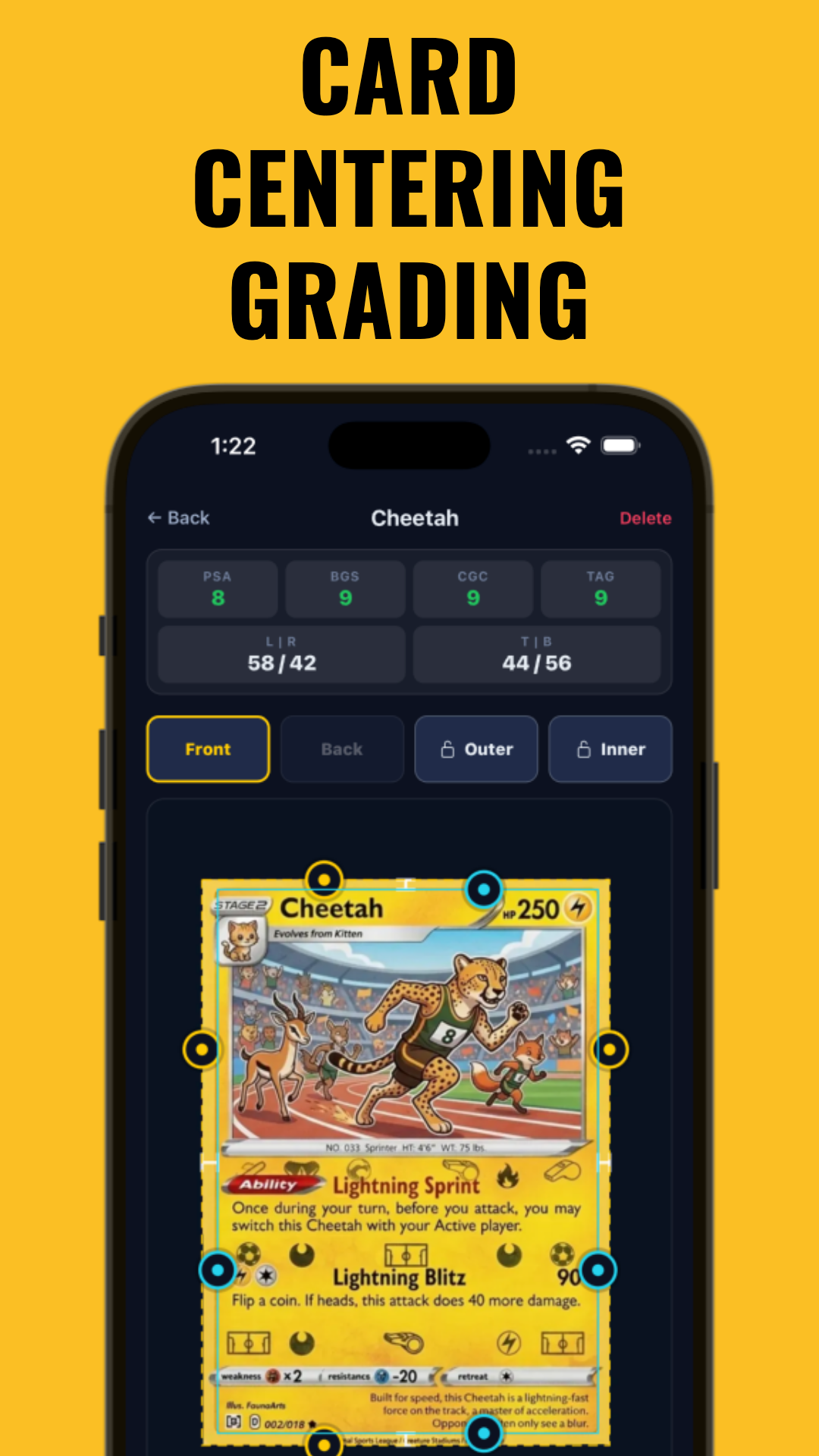
The card hobby has embraced digital tools for more accurate pre-screening. Midpoint allows collectors to upload high-resolution card images, after which its software detects borders and calculates centering ratios. The tool can also simulate how grading companies would evaluate the card based on their published standards, flagging cards that are likely to miss gem-mint thresholds.
For example, after uploading a scan of a 2021 Panini Prizm Justin Herbert auto, Midpoint can display "Front: 54/46, Back: 77/23," and note that the card meets PSA’s gem-mint standard but would miss BGS’s stricter front-back requirement. This allows collectors to select only the best candidates for submission, saving time and money.
Evaluating Autograph Placement
For sticker and on-card autographs, collectors should visually inspect:
- Sticker alignment: Is the sticker placed evenly within the intended area, parallel with card borders, and not overlapping text or art? A sticker placed at a 5-degree angle or 2mm off-center can reduce the autograph grade and visual appeal.
- Signature completeness: Is the entire autograph visible and centered? A signature that runs off the sticker or onto the edge of the card may lose one or more points on the autograph grade.
- On-card autographs: Is the signature within the designated "auto box" or area? Has the signer used an appropriate pen color for the background (e.g., not a black sharpie on a dark background)?
Some digital image analysis tools are beginning to offer quantitative assessments of sticker and signature placement, but this is not yet standard for home use. As technology advances, expect more collectors to leverage these tools to pre-screen autograph centering, just as they do for card image centering. Always double-check both card and autograph alignment before paying for grading, as a single error can cost $30 or more per submission and result in a disappointing grade or lower resale value.
Conclusion
Centering impact on autograph cards is multi-faceted: the card’s image centering determines the card grade, while autograph placement—especially for stickers—affects the auto grade and eye appeal. Each grading company (PSA, BGS, CGC, TAG) and card type (Pokemon, sports, vintage, MTG, One Piece, Yu-Gi-Oh) applies its own tolerances and standards. Knowing these quirks allows collectors to maximize value, minimize grading risk, and build more desirable collections. Save time and money by accurately measuring centering in advance with tools like Midpoint. For more insights, review our detailed guides on accurate card grading estimates and grading scale differences to understand the nuances for your specific cards.
FAQ
Q: Does an autograph need to be centered to get a PSA 10?
A: For a PSA 10 card grade, only the card’s image centering matters. The autograph does not need to be perfectly centered for the card to receive a PSA 10, but a poorly centered autograph may reduce the separate auto grade.
Q: Does off-center sticker auto affect card grade or autograph grade?
A: An off-center sticker auto usually impacts the autograph grade, not the card grade—unless the sticker is so misaligned it damages card surface or obscures important elements.
Q: How do grading companies handle centering on autographed cards?
A: Most grading companies (PSA, BGS, CGC, TAG) treat card image centering as part of the card grade and evaluate autograph placement separately for the auto grade. Sticker misplacement mainly affects the auto grade, not the card grade.
Q: Does centering on an autograph card impact value even if the auto is strong?
A: Yes. Even a perfect autograph can’t overcome poor card centering, which negatively affects both grade and resale value.
Q: How can I tell if my autographed card is centered enough for grading?
A: Measure border widths with a ruler or, for accuracy, use a digital tool like Midpoint’s centering calculator to get instant centering ratios and grade estimates before submitting.
Free to start
Try the Midpoint app
Grade any card from a photo, see its raw and PSA 10 value, and track what your collection is worth — free.
Get it on iPhoneGet it on Android