MTG Card Prices Rising November 2026: Movers & Why
MTG card prices rising November 2026: Star Trek cards, The One Ring, Ms. Bumbleflower and Y'shtola, plus how to spot real spikes and decide buy, hold or sell.

Estimated reading time: 9 min
Key Takeaways
- MTG card prices rising in November 2026 cluster in three areas: Star Trek cards, Commander staples with premium foils, and tournament-driven playables.
- Printing matters as much as the card. Poster foils, raised foils, surge foils and borderless treatments often move differently from the regular version.
- A spike on asking prices is not a spike in value. Completed sales and listing depth tell you whether a move is real.
- Raw and PSA 10 figures in this article's data table are dated as of 2026-11-18. Re-check them before you act, because spikes can reverse in days.
If you are tracking MTG card prices rising November 2026, the real question is which moves are worth acting on. The MTG card market in November 2026 appears to be pushed by new Star Trek demand, Commander combos and tournament results, and each one behaves differently.
Below are the trending MTG cards and categories to watch, and how to read each one. Raw and PSA 10 figures for the biggest 30-day movers are in the dated data table for this article (as of 2026-11-18). This guide covers what may be behind those moves and how to avoid chasing a spike that is already over.
30-day price movers — live data from Midpoint's card database, as of 2026-11-18. Prices move; Midpoint refreshes these daily.
| Card | Raw | PSA 10 | 30-day | |
|---|---|---|---|---|
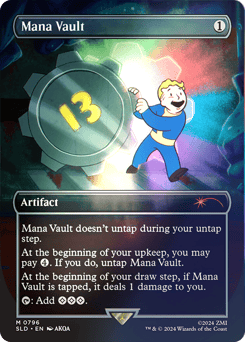 |
Mana Vault #796★ Secret Lair Drop (2019) |
$4,499 | — | +44.3% |
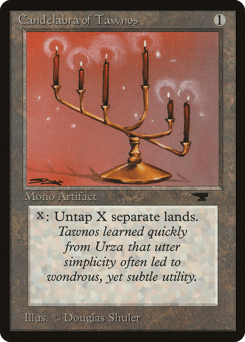 |
Candelabra of Tawnos #43 Antiquities (1994) |
$2,750 | — | +25% |
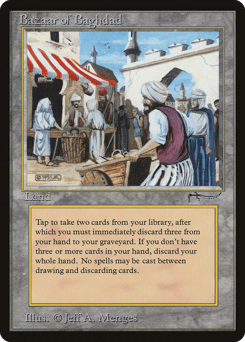 |
Bazaar of Baghdad #70 Arabian Nights (1993) |
$2,400 | — | +12.6% |
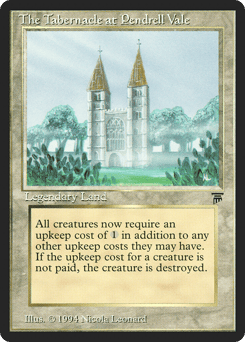 |
The Tabernacle at Pendrell Vale #307 Legends (1994) |
$3,620 | — | +11.7% |
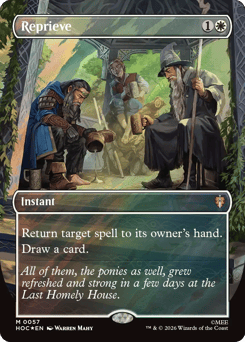 |
Reprieve #57 The Hobbit Eternal (2026) |
$18.31 | — | +7% |
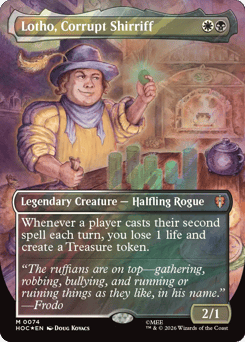 |
Lotho, Corrupt Shirriff #74 The Hobbit Eternal (2026) |
$37.25 | — | +2.4% |
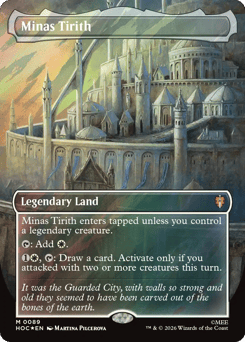 |
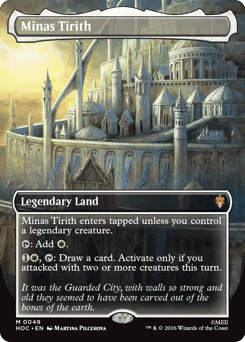
Minas Tirith #89 The Hobbit Eternal (2026) |
$25.55 | — | +2.2% |
 |
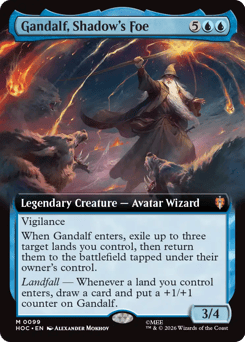
Minas Tirith #49 The Hobbit Eternal (2026) |
$10.91 | — | +1.8% |
 |
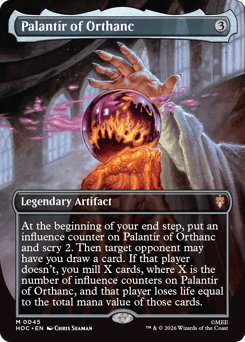
Gandalf, Shadow's Foe #99 The Hobbit Eternal (2026) |
$21.82 | — | +1.8% |
 |
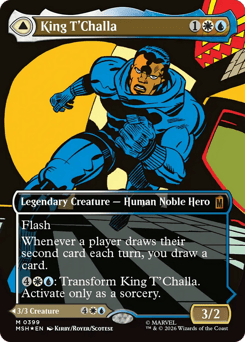
Palantír of Orthanc #45 The Hobbit Eternal (2026) |
$25.59 | — | +1.7% |
 |
King T'Challa // Black Panther, Hope Enduring #399 Marvel Super Heroes (2026) |
$46.27 | — | +1.3% |
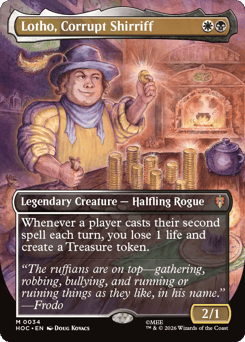 |
Lotho, Corrupt Shirriff #34 The Hobbit Eternal (2026) |
$13.67 | — | +1.2% |
Look up any card's current raw and graded value in Midpoint — and get an estimated grade before you pay to submit.
1. Captain James T. Kirk and the Star Trek Surge
Star Trek cards are a major story in the November 2026 MTG market. Captain James T. Kirk is the headline name, and you may see claims of a jump approaching 500% in a short window. Treat any single huge percentage with caution. A cheap card that doubles or triples looks dramatic in percentage terms even when the dollar move is modest.
Why do licensed cards spike? The same few forces often show up:
- Crossover collectors: Star Trek fans who don't normally buy Magic can compete with regular players for the same limited copies.
- Thin supply: Many sellers list only a handful of copies of a given treatment, so a few purchases can clear the cheap listings.
- Commander playability: Legendary characters can be played as commanders, so demand can come from players as well as collectors.
Before buying any Kirk printing, compare the specific version (regular, borderless, showcase, foil) against recent completed sales, not the cheapest current listing.
2. Jadzia Dax and Other Star Trek Legends
Jadzia Dax is one of the Star Trek names that may be getting attention alongside Kirk in price-mover lists. Secondary characters like her often move later than the headline card. Buyers priced out of Kirk may look for the next-best legendary creature or a cheaper alternate-art version.
That pattern can cut both ways. Cards that follow the leader can run up quickly and also fade quickly if the lead card cools off. Check whether Dax's move is backed by actual sales volume or by a few listings repriced upward.
- Compare the 7-day change with the 30-day change. If almost all the gain happened in the last two or three days, you are likely late.
- Look at foil and non-foil separately. A foil can rise while the non-foil sits flat.
- Ask whether the card is playable or purely a collector piece. Playable demand tends to hold up better.
3. Star Trek Spacecraft Cards
Spacecraft cards are a smaller but telling part of the Star Trek move. Spacecraft are a type of artifact card that is easy to overlook in a set list, yet they carry strong nostalgia for the ships themselves. When fans want "the Enterprise card," they may pay for the specific art and frame.
Spacecraft cards are a good test of whether a price move is collector-driven or play-driven. If a spacecraft card is rising but shows up in few decklists, the driver is likely collectors chasing the art. That kind of demand is fragile. It depends on continued buzz, and it can drop quickly if supply grows from newly opened product.
Watch for how many copies of each treatment are for sale. A small listing count combined with a sudden price jump is the classic pattern of a thin-market spike.
4. Deep Space 9 and Commander Demand
Deep Space 9 cards appear to be Commander-driven movers. In this format, a card doesn't need to win tournaments. It only needs to be a fun, repeatable piece in decks players actually build. Commander demand is broad and steady, which generally makes it a healthier source of price support than a single weekend's buzz.
When a station-style or set-themed card rises, check these signals:
- Is it showing up in many new Commander lists, or only a few?
- Does the effect combine with popular strategies, creating a new combo?
- Is the price move across all printings or just the shiny ones?
If the answer to the first two is yes, the move has more legs. If only the premium treatments are rising, collectors rather than players are leading it.
5. The One Ring Poster Foil
The One Ring is a long-term riser rather than a flash spike, and the poster foil is one example of a premium treatment pulling ahead. A card that is both a Commander staple and a cultural icon can get demand from two groups at once.
The poster foil appeals to collectors because of its size, finish and limited availability compared with standard versions. Sustained month-over-month gains here are a different signal from a one-week jump. They can suggest steady absorption of supply rather than a single buyout.
- Why it matters: Gradual gains over several months are harder to fake than a sudden vertical move.
- What to check: Whether the price is rising across multiple sellers or one listing is dragging the average.
- Risk: At high price levels, a reprint announcement could reduce demand for the standard versions even if the poster foil holds up better.
6. Ms. Bumbleflower Raised Foil
Ms. Bumbleflower raised foil is another reported sustained mover. It shows how a specific finish can outperform the card's baseline price. Raised foils have a tactile, textured surface that many collectors want, and supply is often lower than for regular foils.
Commander interest may also play a role, since players are always testing new synergy strategies. When players look for synergy pieces, even modest increases in decklist adoption can put pressure on foil copies, which are already scarce.
The takeaway is to compare printing-specific prices. If you only look at the card's overall "market price," you can miss that the raised foil is moving on its own track.
7. Y'shtola Surge Foil
Y'shtola surge foil rounds out the trio of longer-term risers with The One Ring and Ms. Bumbleflower. Surge foils are a distinct premium treatment, so they often carry a collector premium over regular foils. That premium can widen when the underlying card gains Commander traction.
The key question is whether the premium is justified. A surge foil can be worth more than a regular foil, but only up to a point. If the gap between the two grows beyond what buyers will pay in completed sales, the premium is vulnerable.
- Track the foil-to-nonfoil ratio over time.
- Note how often the surge foil actually sells versus just being listed.
- Be careful about buying at a peak just because a card's playable version is hot.
8. Urza, Uchuulon and Combo-Driven Commander Cards
New combo strategies can create some of the fastest Commander-driven spikes. Urza and Uchuulon have reportedly been mentioned in connection with this month's combo chatter, though we can't confirm the details here. When a deck list goes viral, players rush to buy the missing pieces, and a card that was a bulk-level inclusion yesterday can be sold out today.
Combo spikes have a common lifecycle. Demand surges, cheap copies disappear, prices jump, and then the market either stabilizes or fades as the novelty wears off. Look at how many different decks use the card, not just the one that went viral.
- Durable: The card is useful in multiple strategies or commanders.
- Fragile: The card matters only in one combo that could be banned or rendered less effective.
9. Tournament-Driven Competitive Staples
Competitive cards rise for a different reason: results. World Championship finishes, Standard decklists and shifts in the metagame can change a card's play rate quickly. When a card appears in many top-finishing lists, players who weren't planning to buy it suddenly need four copies.
That demand is real but can be short-lived. Standard prices respond to what is winning, and the metagame adapts. A card that spiked on a championship weekend may settle once players have their copies and decks evolve. Rotation, bans and reprints are the other big forces.
Competitive staples often have a more reliable floor than collector cards, because players need them. Still, buying after a tournament result means you are paying for information the market has largely already priced in.
10. How to Tell a Real Spike from a Buyout
This is the most useful skill in a market like this. Many trending MTG cards look identical in a price chart whether the cause is genuine demand or one buyer clearing the listings.
Use this checklist before you buy any card that is going up in value:
- Completed sales over asking prices: Sellers can list a card at any price. Only sales show what buyers paid.
- Listing depth: If only two or three copies remain for sale, small purchases move the price a lot.
- Cross-market comparison: Compare TCGplayer market prices with recent eBay sales and Cardmarket. If one market is far higher, you may be seeing a local squeeze.
- Printing-specific data: Make sure you compare the same treatment, such as surge foil against surge foil.
- Seven-day versus monthly change: A sharp 7-day jump with a flat month often means a fresh, fragile spike.
- Reprint risk: Low-printing cards can crash when a reprint is announced.
If you track your own cards, Midpoint lets you look up raw versus graded values and follow your collection's value over time, which makes it easier to see whether a move is lasting.

11. Buy, Hold, Sell or Grade: A Simple Framework
Once you know what is rising and why, decide by card type and your goal.
- Buy: Cards with playable demand, multiple Commander uses and sustained month-over-month gains. Avoid buying the day a card spikes.
- Hold: Long-term risers like premium foils of iconic cards, where collector scarcity may support price.
- Sell: Thin-market spikes, one-combo cards, and anything where the price is far above recent completed sales. Taking profit on a spike can make sense, though no outcome is guaranteed.
- Grade: Only when the PSA 10 premium over raw is large enough to cover fees and risk, and your copy is likely to earn the grade.
Grading is where many collectors lose money. Before you pay to submit, pre-grade the card and check how much centering affects value. Poor centering is one common reason a card misses the top grade. Midpoint can measure centering and estimate PSA, BGS, CGC and TAG grades before you commit. Also remember that top grades mean different things at each company, so compare the right PSA 10 or equivalent.
12. Your November 2026 Watchlist and Future Catalysts
Prices respond to events. Keep an eye on these catalysts through the rest of the month and beyond:
- Star Trek release news: Speculation about future products can push prices up, and a reprint or large print run can cut them down.
- Tournament results: New decklists change play rates and demand for Standard cards.
- Commander adoption: Watch which new combos spread beyond a single viral list.
- Bans and reprints: Both can reset a card's price quickly.
- Newly opened product: More supply on the market often softens early price spikes.
Store anything you plan to hold properly. Premium foils and poster foils are vulnerable to bending and surface wear, so follow a guide to storing valuable cards.
Conclusion
MTG card prices rising in November 2026 are not all the same kind of move. Star Trek cards like Captain James T. Kirk and Jadzia Dax likely reflect crossover collector demand and thin supply. The One Ring poster foil, Ms. Bumbleflower raised foil and Y'shtola surge foil appear to show sustained premium-treatment gains. Combo and tournament cards can spike fast and fade just as fast.
Verify before you buy: check completed sales, listing depth and the specific printing. Use the dated figures as of 2026-11-18 as a starting point, then confirm current prices. To see where your own cards stand, try Midpoint for card lookup, centering measurement, grade estimates and portfolio tracking, free on iOS and Android.
FAQ
Q: Which MTG cards are rising in price in November 2026?
A: The biggest movers appear to fall into three groups: Star Trek cards such as Captain James T. Kirk and Jadzia Dax, Commander cards like The One Ring, Ms. Bumbleflower, Y'shtola, Urza and Uchuulon, and tournament-driven competitive staples. Specific raw and PSA 10 figures are in the dated data table as of 2026-11-18.
Q: Why are Star Trek MTG cards spiking in price?
A: Likely a mix of crossover collector interest, limited supply of premium treatments such as borderless, showcase, extended-art and foil versions, Commander demand for legendary characters, and speculation about future releases.
Q: What caused Captain James T. Kirk to increase nearly 500%?
A: We can't verify that exact figure here, but large percentage jumps on cheap cards usually come from collector demand meeting thin inventory, plus Commander interest. Check completed sales for your specific printing to see whether the move is holding.
Q: Are The One Ring, Ms. Bumbleflower, and Y'shtola good cards to buy now?
A: They have reportedly shown sustained gains in premium versions (poster foil, raised foil and surge foil), which is more encouraging than a one-week spike. But buying after a long run means a higher entry price, and reprints are a risk. Compare recent completed sales and decide based on your time horizon.
Q: Should I buy, hold, or sell MTG cards that are rising in November 2026?
A: Buy cards with real playable demand and steady gains, hold iconic premium foils, and consider selling thin-market or single-combo spikes. Grade only if the PSA 10 premium justifies the cost and your card is likely to earn the grade.
Q: How can I tell whether an MTG price spike is real or caused by a buyout?
A: Compare completed sales rather than asking prices, check how many copies are listed, look at the same printing across TCGplayer, eBay and Cardmarket, and compare the 7-day change to the 30-day trend. A sharp jump with very few listings is often a buyout.
Free to start
Try the Midpoint app
Grade any card from a photo, see its raw and PSA 10 value, and track what your collection is worth — free.
Get it on iPhoneGet it on Android