One Piece Card Prices Dropping November 2026: Dip Guide
One Piece card prices dropping November 2026? See why cards are losing value, how raw and PSA 10 moves differ, and how to buy the dip smartly.

Estimated reading time: 9 min
Key Takeaways
- One Piece card prices are dropping in November 2026, but a dip is not automatically a crash. Check set-wide versus card-specific moves, and liquidity, before you react.
- The usual causes are restocks, reprints, new set releases like OP18, fading hype and sellers undercutting each other.
- Raw, PSA 10, alternate-art, manga, SP, promo and sealed products all behave differently, so compare like with like.
- Buy the dip with a plan: check sold listings, avoid thin markets and scale in gradually.
- A cheap raw copy that centers well can be a smart grading candidate. Measure it before you pay to submit.
If you have noticed One Piece card prices dropping in November 2026, you are not imagining it. Many collectors are watching falling One Piece card prices across older sets and fresh releases alike. This guide breaks down where the One Piece card market in November 2026 is cooling, why One Piece cards are losing value, and how to treat the dip as an opportunity rather than a panic signal.
All specific price figures in this post come from the Midpoint database, as of 2026-11-06, and appear in the data table in this article. We do not quote numbers beyond that data. Where we discuss a trend, we explain how to verify it yourself.
30-day price movers — live data from Midpoint's card database, as of 2026-11-06. Prices move; Midpoint refreshes these daily.
| Card | Raw | PSA 10 | 30-day | |
|---|---|---|---|---|
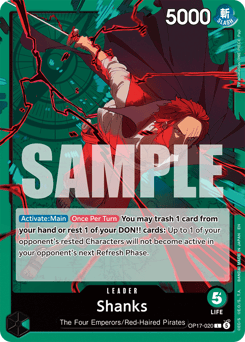 |
Shanks #OP17-020 The World's Strongest Warriors (2026) |
$16.43 | $90.00 | -38.3% |
 |
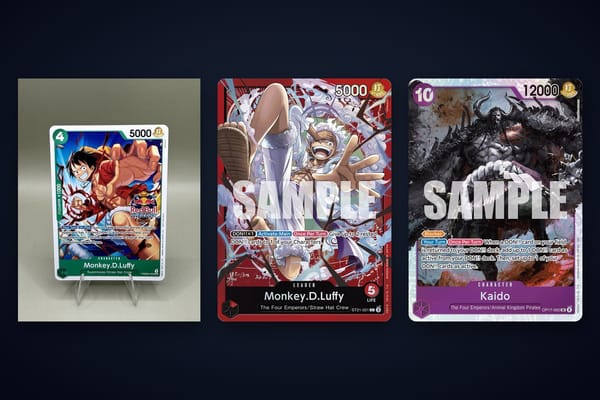
Monkey D. Luffy [Red Bull Double Don!!] PRB02-005 One Piece Promo |
$191.70 | $388.50 | -36.8% |
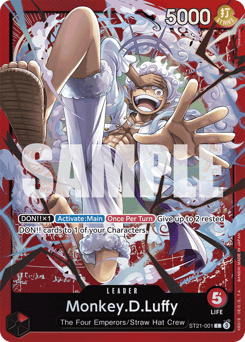 |
Monkey.D.Luffy #ST21-001 EX Gear 5 (2025) |
$50.38 | $102.02 | -31.9% |
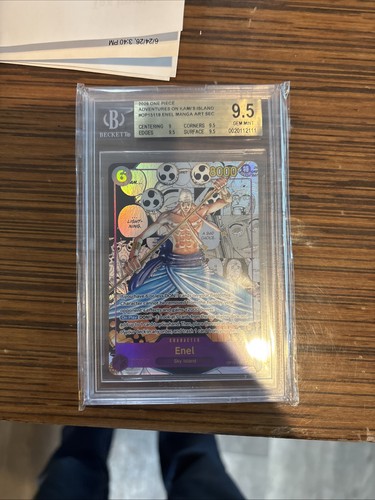 |
Enel [Manga] OP15-118 One Piece Japanese Adventure on Kami's Island |
$676.95 | $785.00 | -25.7% |
 |
Kaido #OP17-062 The World's Strongest Warriors (2026) |
$154.68 | $437.15 | -23.6% |
 |
Monkey.D.Luffy #OP17-079 The World's Strongest Warriors (2026) |
$992.36 | $2,213 | -16.8% |
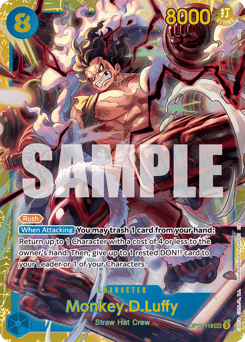 |
Monkey.D.Luffy #OP11-118 A Fist Of Divine Speed (2025) |
$1,310 | $1,693 | -13.1% |
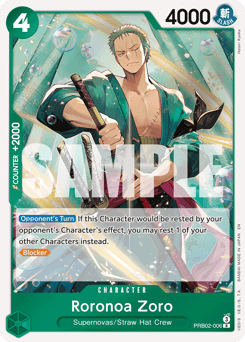 |
Roronoa Zoro #PRB02-006 The Best Vol.2 (2025) |
$906.32 | $1,355 | -12.3% |
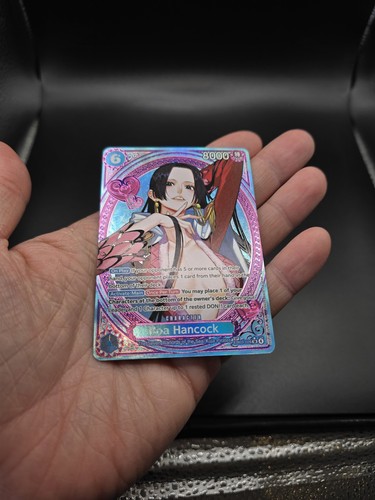 |
Boa Hancock [SP] EB03-026 One Piece Japanese Extra Booster Heroines Edition |
$621.00 | $1,187 | -5.9% |
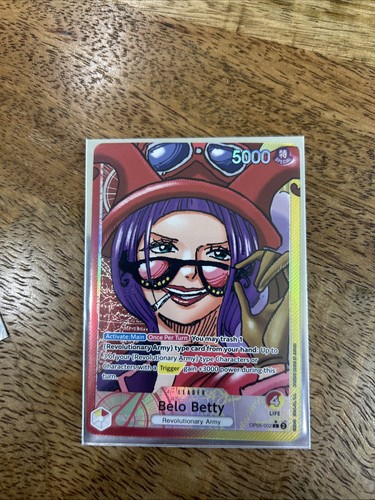 |
Belo Betty [Alternate Art] OP05-002 One Piece Awakening of the New Era |
$29.69 | $56.50 | -5.8% |
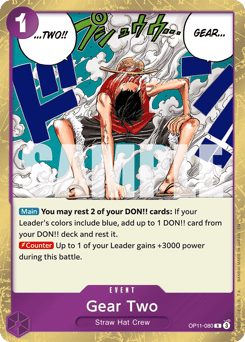 |
Gear Two #OP11-080 A Fist Of Divine Speed (2025) |
$251.31 | $433.08 | -2.7% |
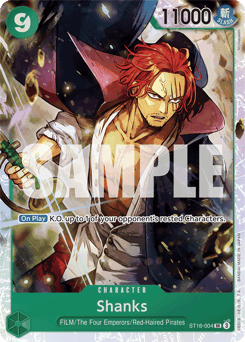 |
Shanks #ST16-004 GREEN Uta (2024) |
$163.41 | $279.21 | -2.6% |
Look up any card's current raw and graded value in Midpoint — and get an estimated grade before you pay to submit.
1. Start With the 7-, 30- and 90-Day Price Trend
The first mistake in any price-drop panic is looking at a single day. As a rule of thumb, a 7-day dip can be noise, a 30-day dip may be a trend forming, and a 90-day dip is more likely a real repricing. Look at all three windows before drawing conclusions.
- 7-day: catches reactions to restocks, tournament results and viral listings.
- 30-day: a useful window for judging a November 2026 cooldown, and the one our table uses.
- 90-day: shows whether a card was already sliding before this month or is only now correcting.
If a card is down on all three windows, the move is more likely structural. If it is down 7 days but flat over 90, you may be looking at a short-term wobble.
2. Know Which Sets Are Taking the Biggest Hits
Price pressure is rarely evenly spread. Older sets such as OP02 and OP08, and more recent releases such as OP15 and OP17, are examples of sets worth checking for declines. Each tends to be affected by a different force.
- Older sets: demand can slow after the initial hype, while reprints and steady supply from opened boxes keep adding copies.
- Recent releases: prices often peak early, then settle as supply catches up with demand.
- Set-wide versus card-specific: if most chase cards in a set slip together, it is likely a supply story. If only one character falls, it is probably a metagame or hype story.
Use the table in this post to see which entries moved most in the last 30 days, raw and PSA 10, as of 2026-11-06.
3. Watch the Fan-Favorite Characters, Not Just the Meta
Characters such as Jewelry Bonney, Vinsmoke Reiju, Nami, Luffy, Buggy and Usopp show up constantly in price conversations because they have large collector followings as well as playable value. That cuts both ways: popular characters can lead rebounds, but they can also carry inflated premiums that deflate when hype fades.
Before assuming any of these is a bargain, ask:
- Is the drop in dollars, in percentage, or both? A $4 card falling 40% is a very different story from a $200 card falling 15%.
- Is this a competitive card whose price follows tournament results, or a collector card driven by art and rarity?
- How many copies actually sold at the new price?
Cards like Nami and Luffy have many printings across sets, so always confirm the exact set code and rarity before comparing prices.
4. Compare Raw vs PSA 10 Performance
Raw and PSA 10 prices often move at different speeds. Raw copies tend to react quickly to new supply because anyone can list a pulled card the same day. PSA 10 copies are limited by grading turnaround, so they can lag, then adjust later.
- Raw can drop first: more sellers, faster listings, more undercutting.
- PSA 10 can hold longer: but it can fall hard if a reprint or population growth weakens the premium.
- The gap matters: when raw falls and PSA 10 does not, the grading spread widens, which can improve the math for submitting a clean copy.
Check the table for each card's raw and PSA 10 figures side by side as of 2026-11-06. Then see our guide on grading scale differences by company so you know what a PSA 10 actually requires compared with other graders.
5. Separate Alt Art, Manga, SP, Promo and Sealed Product
Not every format falls for the same reason. Treat each one as its own market.
- Alternate art: driven by character popularity and set hype. Often volatile at launch, steadier later.
- Manga rares: among the scarcest tiers, so fewer sales per month and wider price swings between individual listings.
- SP cards: sit between standard and top chase, and can be dragged by the main chase cards of their set.
- Promos: depend heavily on how they were distributed. Tournament and event promos behave differently from retail promos.
- Sealed product: reacts to restocks and reprints more than singles. When sealed boxes get cheaper, singles from that set often follow.
6. Understand the Main Causes of Falling Prices
When One Piece cards lose value, it is usually a combination of these forces:
- Restocks: more sealed product on shelves means more pulls and more singles listed.
- Reprints: a reprint of a staple can cut the price of the original quickly.
- New set releases: collectors may move money to the newest chase cards and sell older ones to fund it.
- Increased supply: every opened case adds copies that may never leave the market.
- Fading hype: early spikes rarely last.
- Tournament demand: competitive cards can fall when a deck drops out of the metagame.
- Seller undercutting: on marketplaces, sellers lower prices by small amounts to win the sale, and the market price can follow them down.
Identifying which cause applies to a given card helps you judge whether it is likely to recover.
7. See How OP18 and New Releases Affect Older Cards
A new release like OP18 can change the market in two ways. First, it adds supply as boxes are opened. Second, it can pull attention and spending away from older sets.
The effect on older cards is usually uneven:
- Staple playables from older sets may hold if they stay relevant in decks.
- Collector-focused cards from older sets can drift down as buyers move on.
- Cards that appear in reprints in or alongside new products tend to feel the most pressure.
Release-window dips often ease once the new set's hype settles, but there is no guarantee. Watch the 30-day trend rather than assuming a rebound.
8. Decide: Market Crash or Normal Correction?
A crash is broad, fast and illiquid. A correction is selective and still has buyers. Use these checks:
- Breadth: are most sets falling, or just a few?
- Liquidity: are cards still selling regularly at the new price? Falling prices with healthy sales are more consistent with a correction. Falling prices with almost no sales are a warning sign.
- Trading volume: rising volume at lower prices often means buyers are stepping in.
- Consistency: set-wide drops suggest supply. Single-card drops suggest sentiment or meta.
The data in this post is a snapshot as of 2026-11-06, not a forecast. Whether any cooling becomes a deeper slide depends on continued supply and demand, which nobody can promise.
9. Look for Resilient Cards and Categories
Even when One Piece card prices are dropping, some areas may hold up better. Look for:
- Cards with strong, sustained competitive play.
- Scarce collector cards, such as manga-tier and low-population graded copies, where supply is naturally limited.
- Cards whose 90-day trend is flat or rising while the 7-day is down, suggesting a temporary dip.
Check the table for entries that fell less than their peers over the last 30 days, because resilience is a signal as useful as a steep drop. Our guide to grading low population cards explains why scarcity can support value.
10. Buy the Dip the Smart Way
If you want One Piece cards to buy the dip with, a process beats a gut feeling.
- Check sold listings, not asking prices. Asking prices lag reality. Sold data tells you what buyers actually paid.
- Use dollar-cost averaging. Spread purchases over several weeks so you are not betting everything on the bottom.
- Avoid low-liquidity cards. If you cannot find several recent sales, you may be unable to sell later.
- Compare raw and graded copies. Sometimes a raw copy plus grading costs less than a PSA 10, sometimes not, so work out the numbers.
- Set a ceiling. Decide your maximum price and walk away above it.
Remember that a falling price is not the same as a good price. A card that fell 30% may simply have been overpriced.
11. Grade a Cheap Copy That Centers Well
A dip makes raw copies cheaper, which lowers the cost of entry for grading. The risk is paying a grading fee per card, which varies by company and service level, on a card that comes back a PSA 8 because of centering or other flaws. That is why centering comes first.
Before submitting, measure the borders. Our free centering calculator shows left/right and top/bottom ratios, and Midpoint adds AI estimates of PSA, BGS, CGC and TAG grades from centering, corners, edges and surface. See how centering impacts card value and follow the step-by-step pre-grading guide to avoid wasted submissions.

Compare the raw price you paid, the grading cost, and the PSA 10 value in the table. If the math only works at a perfect grade, be cautious.
12. Monitor One Piece Prices Going Forward
A one-time check will not tell you where the market is headed. Build a routine:
- TCGplayer market values: for a quick raw benchmark.
- Daily movers: to spot sudden drops or spikes early.
- Historical charts: to compare 7-, 30- and 90-day behavior.
- Graded-card sales: to confirm what PSA 10 copies actually sold for.
- Portfolio tracking: to see how your own collection's value changes over time.
Midpoint's card lookup shows raw versus graded values across a large card database, and portfolio tracking lets you follow your collection through the dip.
Conclusion
One Piece card prices dropping in November 2026 is the trend this post examines, using data as of 2026-11-06, but the cause matters more than the headline. Restocks, reprints, new releases like OP18 and fading hype can all push prices down, while resilient and scarce cards may hold up better. Check the 7-, 30- and 90-day trends, verify sold listings, avoid thin markets, and scale in gradually. If you plan to grade a discounted copy, measure centering first with Midpoint so a cheap card does not become an expensive mistake.
FAQ
Q: Are One Piece card prices dropping in November 2026?
A: The Midpoint data table as of 2026-11-06 lists 30-day changes for raw and PSA 10 copies, so you can see which cards are down. Moves are likely to be uneven, so check the specific set, card and rarity rather than assuming the entire market moved together.
Q: Which One Piece cards dropped the most in November 2026?
A: The data table in this post lists the biggest 30-day movers as of 2026-11-06, with raw and PSA 10 values. Older sets like OP02 and OP08 and recent releases like OP15 and OP17 are worth checking for declines, along with popular characters such as Nami, Luffy and Buggy.
Q: Why are One Piece cards losing value right now?
A: Common causes are restocks, reprints, new set releases such as OP18, increased supply from opened product, fading hype, shifts in tournament demand and sellers undercutting each other. Often several of these happen at once.
Q: Is the One Piece card market crashing or just correcting?
A: Look at breadth and liquidity. A correction is selective and cards still sell regularly at lower prices. A crash is broad, fast and illiquid. Set-wide drops point to supply, while single-card drops point to hype or meta changes.
Q: Should I buy One Piece cards during the November 2026 dip?
A: It can make sense if you use a plan: check sold listings, avoid low-liquidity cards, spread purchases over time and compare raw with graded copies. A lower price is not automatically a good price, and nothing here is financial advice.
Q: Will One Piece card prices go back up after the reprints and new set releases?
A: Nobody can promise a rebound. Prices often stabilize once new supply is absorbed and hype settles, and scarce or consistently played cards may recover more easily. Track the 30- and 90-day trends instead of waiting for a specific date.
Free to start
Try the Midpoint app
Grade any card from a photo, see its raw and PSA 10 value, and track what your collection is worth — free.
Get it on iPhoneGet it on Android