
TCG Card Collecting: The Ultimate Guide for 2026 Collectors
Discover how to start TCG card collecting, the best games to collect, grading tips, card values, protection, and investment strategies for Pokémon, MTG, Yu-Gi-Oh, Lorcana & more.


Estimated reading time: 18 min
Key Takeaways
- Understand key differences between TCG card collecting and sports/vintage cards, including gameplay influence and rarity systems.
- Learn how to grade Pokémon, MTG, Yu-Gi-Oh!, One Piece, and Lorcana cards accurately with step-by-step techniques and grading criteria.
- Discover how rarity, edition, condition, and print runs affect card value, with examples spanning multiple TCGs.
- Explore detailed strategies for budgeting, buying singles vs sealed products, acquiring lots, and protecting your collection.
- Use tools like Midpoint for AI-powered grading, centering measurement, portfolio tracking, and bulk evaluation to optimize collecting.
Table of Contents
- Section 1: Understanding TCG Card Collecting
- Section 2: Grading Essentials for Popular TCGs
- Section 3: Major TCG Sets and Valuable Cards to Collect
- Section 4: Budgeting and Buying Strategies
- Section 5: Protecting and Grading Your Cards
- Section 6: Organizing and Cataloging Your Collection
- Section 7: Navigating the Secondary Market and Community Resources
- Conclusion
- FAQ
Section 1: Understanding TCG Card Collecting
What is TCG Card Collecting?
Trading Card Game (TCG) card collecting revolves around cards designed for competitive play in games such as Pokémon, Magic: The Gathering (MTG), Yu-Gi-Oh!, One Piece, and Disney Lorcana. These cards are unique because they blend gameplay functionality with collectible appeal, making them distinct from pure sports or vintage card collecting. Collectors pursue various goals, including obtaining chase cards that are rare or hard to find, alternate art versions that showcase unique artwork, or completing entire sets that represent significant expansions or eras in a game’s history.
TCG collecting also often involves understanding the interplay between a card’s in-game performance and its rarity or desirability as a collectible. For example, a card that is both powerful in tournament play and rare due to limited print runs can command a premium price. This dual nature requires collectors to be knowledgeable not only about card aesthetics and condition but also about the game’s meta and community preferences.
Differences from Sports and Vintage Cards
- Gameplay Focus: Unlike most sports cards, which primarily celebrate athletes and their statistics, TCG cards actively serve as game components with specific abilities, mana costs, or attack powers. This means that a card’s value is influenced not only by rarity but also by its utility in competitive play or casual formats. For a deeper dive into sports card collecting, see our Sports Card Collecting: The Ultimate Guide for Modern & Vintage Collectors.
- Rarity Systems: TCGs incorporate complex rarity systems including holofoils (cards with shiny foil backgrounds), secret rares (cards with unique numbering and visual effects), alternate arts (cards featuring different artwork, often limited), and promotional cards (given out at events or through special products). These rarity types influence collectibility more intricately than the relatively straightforward grading tiers common in sports cards.
- Print Runs: TCGs often have multiple print runs for the same set, including first editions, unlimited editions, and reprints. Some print runs are intentionally limited or exclusive to certain regions or events, creating scarcity. For example, the Pokémon Base Set first edition is generally more valuable than its unlimited counterpart because of its smaller print run and historical significance.
Choosing Your Collecting Goal
Setting a clear collecting goal is fundamental to making strategic decisions about purchases, grading, and storage. Some common objectives include:
- Completing full sets or eras: Collectors may focus on gathering every card from a specific expansion, such as the MTG Alpha Set or Pokémon Neo Genesis, often aiming for graded versions to maximize value.
- Focusing on favorite characters or themes: For example, a collector might pursue all Pikachu variants or all dragons across different sets, which can be rewarding both emotionally and financially.
- Targeting chase cards or alt arts: High-demand chase cards like Pokémon’s Charizard Base Set or an MTG Black Lotus are centerpiece collectibles. Alternate art cards, such as One Piece’s alt arts, also attract significant interest.
- Investing in sealed booster boxes or rare singles: Some collectors prefer unopened products for their potential to appreciate, while others may seek out specific singles to complete decks or collections.
Midpoint’s AI grading and portfolio tracking tools are designed to help collectors monitor their progress toward these goals. By providing real-time value estimates and grading insights for cards across all major TCGs, Midpoint allows users to prioritize investments and make informed decisions on buying, grading, or selling.
Section 2: Grading Essentials for Popular TCGs
General Card Grading Factors
Grading is a comprehensive evaluation of a card’s physical condition, which can impact its market value. The four fundamental factors assessed during grading include:
- Centering: Measures how well the card’s printed image is aligned within its borders, typically expressed as a percentage. For example, a card might be 60/40 centered, meaning one side’s border is 60% of the image width and the other is 40%. Grading companies often consider centering above 60/40 as good, with 70/30 or better necessary for top-tier grades. For detailed techniques on centering across card types, see our Card Centering by Type: The Complete Guide for Pokemon, Sports, and More.
- Corners: Evaluates the sharpness and wear of each of the four corners. Mint condition cards have perfectly sharp corners with no whitening or bends. Even minor wear can reduce a card’s grade by a full point or more.
- Edges: Looks for chipping, whitening, or other damage along the card’s edges. Edge wear is common and often the cause of grade reductions, especially on older cards.
- Surface: Includes scratches, stains, print defects, or any blemishes on the card’s front or back. Holographic cards may have additional surface considerations such as holo scratches or print inconsistencies.
Modern grading services like PSA (Professional Sports Authenticator), BGS (Beckett Grading Services), CGC (Certified Guaranty Company), and TAG apply detailed criteria to assign numeric grades typically on a 1–10 scale. Digital grading tools such as Midpoint use AI algorithms to analyze high-resolution images, measuring centering to the millimeter and detecting surface flaws, offering collectors a cost-effective way to estimate grades before submitting cards professionally.
How to Grade Pokémon Cards
Pokémon cards have grading nuances that collectors should consider:
- Centering: Both front and back centering should be evaluated. Many collectors overlook back centering, but it can affect grading outcomes, especially for Base Set cards where the back features a distinctive Poké Ball design. For instance, a Base Set Charizard with perfect front centering but poor back centering may receive a lower grade.
- Surface: Holofoil cards are particularly prone to surface scratches. It’s common to see fine scratches on rare holo cards, which can reduce the grade despite sharp corners and edges.
- Authenticity: Due to the prevalence of counterfeit Pokémon cards, verifying authenticity before grading is important. Midpoint’s blog provides detailed guides on spotting fakes by examining font styles, holographic patterns, and card stock textures (see here).
For those looking to measure centering precisely, the Midpoint blog offers an in-depth walkthrough on Pokémon card centering measurement (Pokémon Card Centering Guide), highlighting how even slight deviations can affect grading tiers and thus market value.
One Piece Card Grading
One Piece TCG, gaining popularity, presents unique grading considerations:
- Alt Art Cards: These cards often have limited print runs and distinct artwork, making condition important. Even minor edge wear or surface scuffs can reduce value due to their scarcity.
- Edges and Surface Quality: Some One Piece cards may have print inconsistencies or ink smudges, which grading must account for. Cards from early sets can be susceptible to edge whitening.
- Printing Variations: Limited promo cards may have unique foil applications or embossing that require specialized inspection.
Collectors should consult the One Piece TCG Alt Art Value Guide for comprehensive tips on grading and valuing these cards, including example photos illustrating acceptable condition thresholds.
Magic: The Gathering (MTG) Card Grading
MTG cards have grading criteria influenced by their production characteristics and collector interest:
- Border Wear: Black border cards, especially from early sets like Alpha and Beta, are prone to edge wear and chipping, often reducing grades. White-bordered cards from Unlimited sets generally show wear less prominently.
- Reserved List Cards: Cards on the Reserved List are not reprinted, making them sought after. Grading can affect prices; for example, a PSA 10 Black Lotus can sell for very high prices, while a lower grade commands significantly less. See the Reserved List Cards Value Guide for detailed insights.
- Edition Identification: Knowing the exact edition (Alpha, Beta, Unlimited, etc.) is crucial, as some editions are worth multiples of others. Promos and special prints, such as the Judge Foils, require evaluation of foil surface conditions and centering.
Yu-Gi-Oh! and Lorcana Card Grading
Yu-Gi-Oh! cards require precise grading attention:
- Holo Patterns: Yu-Gi-Oh! cards feature various holofoil patterns (e.g., Secret Rare, Ultra Rare) that affect visual appeal and value. Scratches or print defects on the holo area can reduce grades.
- Rarity Identifiers: Set symbols and rarity stamps should be intact without wear or fading.
- Card Texture: Surface texture differences, such as glossy versus matte finishes, impact grading.
Lorcana, as a newer TCG, is still establishing grading standards but currently follows similar criteria focusing on centering, surface, edges, and corners. Given its growth potential, early investments in high-grade Lorcana chase cards may yield future returns. Midpoint supports grading for all these games, providing instantaneous estimates to guide collector decisions.
Section 3: Major TCG Sets and Valuable Cards to Collect
Several Pokémon sets are popular among collectors and often hold value:
- Base Set and Base Set 2: The original Base Set cards, especially first edition prints like Charizard and Blastoise, remain some of the most valuable Pokémon cards ever produced. Base Set 2, while generally less valuable, still holds appeal to collectors completing sets.
- Neo Genesis and Neo Discovery: These second-generation sets introduced new Pokémon and mechanics, with cards like Lugia and Typhlosion commanding premium prices, especially in mint condition.
- XY Evolutions and Legendary Treasures: These sets reprint classic cards with updated art and mechanics, offering nostalgia appeal and valuable chase cards like Mega Charizard EX.
- Recent popular V and VMAX cards: Cards from Sword & Shield expansions such as Vivid Voltage and Shining Fates have introduced highly sought-after V and VMAX cards. The Most Valuable Pokémon V Cards Guide highlights key chase cards and their market trends.
Iconic cards like the Pokémon 151 chase cards such as the holographic Mewtwo remain prized for their scarcity and nostalgic significance, often fetching high prices in excellent condition.
Magic: The Gathering Reserved List and Iconic Cards
The Reserved List is a promise by Wizards of the Coast not to reprint certain cards, ensuring long-term scarcity and collector interest. Cards on this list include legendary artifacts and lands such as:
- Black Lotus: The most famous and valuable MTG card; mint condition PSA 10 copies have sold for very high prices.
- Moxen (Mox Pearl, Mox Jet, etc.): Powerful artifacts integral to early tournament decks.
- Dual Lands: Cards like Underground Sea and Tropical Island are foundational to many competitive decks and highly sought after.
Grading impacts these cards’ market prices significantly; even minor edge wear or surface scratches can reduce value substantially. The MTG Reserved List Cards Value Guide offers detailed pricing tiers and grading effects.
Yu-Gi-Oh! and One Piece Collectibles
Yu-Gi-Oh! collectibles are driven by rarity and edition:
- Limited promos and first editions: Cards distributed at events or in early print runs, like the Blue-Eyes White Dragon first edition, are highly desirable.
- One Piece alt arts and promo cards: These have experienced growing collector interest as the game develops. Early alt art cards often have small print runs, boosting rarity and value. The One Piece Promo Cards Value Guide provides current market pricing and rarity details.
Disney Lorcana Sets to Watch
Being a newer entrant, Disney Lorcana offers opportunities for early collectors to secure chase cards and rare foils before the market matures. Cards featuring popular characters like Mickey and Elsa with limited print foils or alternate arts may appreciate as the player base and collector community grow. Monitoring grading trends and market prices via Midpoint can help identify undervalued cards early.
Section 4: Budgeting and Buying Strategies
Singles vs Booster Packs vs Sealed Products
Choosing how to allocate funds depends heavily on collecting goals, risk tolerance, and desired outcomes:
- Singles: Purchasing individual cards allows collectors to target specific chase cards or complete sets efficiently. While singles can be more expensive per card, they eliminate the risk of duplicate or undesired cards common in boosters. For example, buying a PSA 9 Charizard from Base Set may cost several thousand dollars but guarantees ownership of that card.
- Booster Packs: Opening booster packs is more speculative, as the chance to pull a rare card depends on pack odds. For instance, in many Pokémon expansions, the odds of pulling a rare holofoil card may be approximately 1 in 3-5 packs, while secret rares might be rarer. While boosters offer excitement and potential for high-value pulls, they are generally less cost-effective for targeted collecting.
- Sealed Boxes/Products: Unopened booster boxes or product sets can appreciate over time as they become scarcer. However, these require a larger upfront investment (often $100+ for recent Pokémon boxes, and more for vintage sealed products) and carry risk if demand declines.
Buying Lots and Collections
Acquiring entire collections or lots can be a cost-effective way to build or expand your holdings, especially if you have the expertise or tools to evaluate them quickly. Benefits include:
- Bulk Discounts: Sellers may offer lower per-card prices compared to singles.
- Diversity: You may discover hidden gems or undervalued cards.
- Portfolio Growth: Quickly increase collection size and variety.
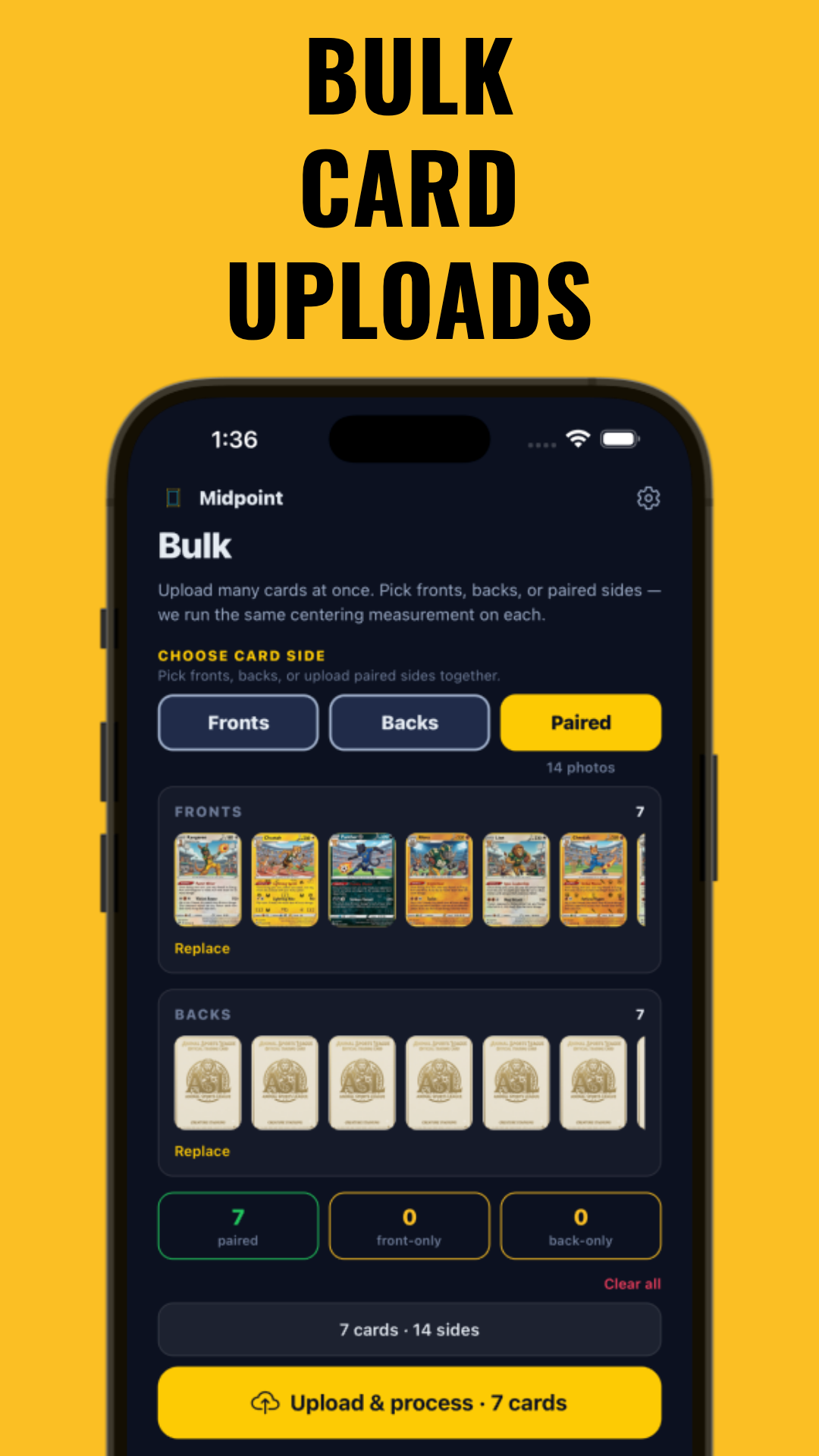
Downsides include the need for time-consuming sorting, grading, and potentially cleaning or repairing cards. Midpoint’s bulk upload and grading tools facilitate rapid assessment of large card batches, allowing you to identify high-value cards and prioritize grading or resale efficiently.
Setting a Budget and Prioritizing
- Allocate funds: Decide what percentage of your budget goes toward singles, sealed products, and grading fees. For example, a collector might allocate 60% to singles, 30% to sealed boxes, and 10% to grading.
- Consider grading costs: Professional grading fees for PSA or BGS range from around $20 to $100+ per card depending on declared value and turnaround time. Budgeting for these costs ensures you can authenticate and protect valuable cards.
- Track market trends: Using Midpoint’s live market data, monitor fluctuations in card prices to time purchases and sales optimally, avoiding buying at market peaks or missing out on dips.
Section 5: Protecting and Grading Your Cards
Card Protection Essentials
- Sleeves: Polypropylene sleeves protect against fingerprints, minor scratches, and environmental factors. Brands like Ultra PRO or Dragon Shield are popular for durability and fit. Sleeves should be snug but not too tight to avoid bending.
- Toploaders: Rigid plastic holders that provide enhanced protection against bending and edge damage. Ideal for high-value singles before submission or display.
- Binders and Boxes: Use binders with acid-free pages or boxes with dividers to organize cards. Store in climate-controlled environments away from sunlight, humidity, and dust to prevent warping or discoloration.
- Additional Tips: Avoid stacking loose cards, handle cards by edges to prevent oils from fingers transferring to surfaces, and consider desiccant packets in storage boxes to reduce moisture.
Professional Grading vs AI Digital Grading
Professional grading companies like PSA, BGS, CGC, and TAG offer authoritative grades that increase market trust and resale value. However, they come with drawbacks:
- Cost: Fees start around $30 per card, increasing with declared card value or expedited services.
- Time: Turnaround can range from weeks to months depending on service level and demand.
- Risk: Cards may be lost or damaged during shipping.
AI digital grading tools like Midpoint supplement this process by:
- Providing immediate, objective estimates of a card’s centering, corners, edges, and surface condition.
- Allowing collectors to decide if the card’s value justifies professional grading fees.
- Measuring centering to the millimeter, a critical factor that often determines whether a card can reach PSA 10 or BGS 9.5+ grades (see centering impact).
Understanding Grading Terms
- First Edition: Denotes cards from the initial print run, commonly marked with a "First Edition" stamp. These are generally the most valuable due to limited supply.
- Unlimited: Subsequent print runs without the first edition stamp, often more abundant but less valuable.
- Special Editions: Includes promo cards, alternate art variants, and limited releases with unique features such as foil patterns or embossing. These editions can command premiums if scarce and in mint condition.
- Mint vs Near Mint: Mint cards show virtually no wear, while Near Mint may have minor flaws like slight edge whitening or faint surface scratches.
- Gem Mint: A PSA term for perfect cards graded 10, indicating flawless condition including centering, corners, edges, and surface.
Section 6: Organizing and Cataloging Your Collection
Methods of Organization
Effective organization streamlines collection management and enhances valuation and trading potential. Common methods include:
- Set or Expansion: Group cards by their release sets, such as Pokémon Base Set or MTG Zendikar Rising, facilitating set completion tracking.
- Color or Card Type: For example, MTG collectors often organize by color (Red, Blue, Green, etc.) or card type (creature, instant, land), aiding deck-building and thematic collecting.
- Rarity or Edition: Separating first editions, promos, or secret rares simplifies grading and insurance valuation.
- Character or Theme: Collectors focused on specific characters like Pikachu or themes like dragons benefit from thematic sorting.
Maintaining clear organization supports quick access, reduces handling risks, and improves portfolio assessments.
Using Apps and Databases
Technology enhances collecting efficiency. Apps like Midpoint offer:
- Cataloging: Instant lookup of over 250,000 cards with raw and graded value data, enabling quick entry and valuation.
- Portfolio Tracking: Monitor total collection value, price fluctuations, and investment performance over time.
- Grading Estimates: Use AI to estimate card condition and decide on professional grading submission.
- Bulk Upload: Import large collections via images or CSV files for rapid evaluation.
Maintaining Accurate Records
Detailed records maximize collection value and simplify transactions. Key information to track includes:
- Purchase date and price, to calculate gains and losses.
- Condition notes and grading results, including submission dates and certified grades.
- Sale history, including buyer info and final sale prices.
- Provenance details, especially for rare or historical cards, which can enhance value.
Digitally maintaining these records within apps like Midpoint ensures easy access and backup.
Section 7: Navigating the Secondary Market and Community Resources
Buying, Selling, and Trading Safely
- Trusted Marketplaces: Use reputable platforms such as eBay, TCGPlayer, or specialized auction houses with buyer protection and verified seller ratings.
- Verification: Always request detailed condition photos and grading certificates for high-value cards to confirm authenticity and state.
- Price Negotiation: Leverage Midpoint’s real-time value estimates to negotiate fair prices and avoid overpaying or underselling.
- Payment Security: Use secure payment methods like PayPal or escrow services to protect transactions.
Community Engagement
Engaging with the collector community offers multiple benefits:
- Local Game Stores: Visiting stores can provide access to exclusive promotions, trading events, and meetups.
- Conventions and Events: Attending TCG conventions or tournaments allows networking with other collectors and access to rare cards.
- Online Forums and Social Media: Platforms like Reddit’s r/pkmntcg, Facebook groups, or Discord servers offer advice, trading opportunities, and market insights.
- Educational Content: Following blogs such as Midpoint’s allows staying informed on grading techniques, market trends, and new set releases.
Price References and Market Trends
Markets for TCG cards fluctuate based on player demand, game popularity, and broader economic conditions. Staying updated is vital for optimal buying and selling:
- Price Guides: Regularly consult price aggregators and guides, including Midpoint, PSA’s Price Guide, and Beckett.
- Auction Results: Track recent auction sales to see realized prices rather than just listed prices.
- Meta Shifts: Changes in game rules or tournament formats can increase or decrease demand for specific cards.
- Special Releases: Announcements of reprints or new products can impact values rapidly.
Using tools with real-time data and alerts, like Midpoint, helps collectors act swiftly and strategically.
Conclusion
TCG card collecting is a multifaceted hobby blending gameplay, artistic appreciation, and investment potential. Gaining a deep understanding of grading nuances across Pokémon, MTG, Yu-Gi-Oh!, One Piece, and Lorcana enables collectors to identify valuable cards and safeguard their investments effectively. Employing AI-powered tools such as Midpoint can streamline grading accuracy, portfolio management, and market analysis, empowering collectors to make informed buying, selling, and trading decisions.
Whether your passion lies in chasing iconic Pokémon 151 cards, securing rare MTG Reserved List gems, or exploring emerging markets like One Piece alt arts and Disney Lorcana foils, adopting a strategic approach to grading, budgeting, and community engagement can help your collection thrive and appreciate over time.
FAQ
Q: What is the best way to start collecting TCG cards on a budget?
A: Begin by focusing on singles of affordable cards within desired sets to build a solid foundation. Avoid opening numerous booster packs initially, as this can be costly and inefficient. Use digital grading tools like Midpoint to assess card condition before investing in professional grading, helping you maximize value for your budget.
Q: Is it better to buy singles or open booster packs when collecting TCG cards?
A: Buying singles is generally more cost-effective and targeted, especially if you’re pursuing specific cards or completing sets. Booster packs offer excitement and the chance to find chase cards but carry the risk of duplicates and lower odds of valuable pulls. Consider your collecting goals and budget when deciding between these options.
Q: How do I know if a TCG card is rare or valuable?
A: Rarity depends on factors such as set symbols, print runs, edition (first edition vs unlimited), and card type (promo, alt art). Value is influenced not only by rarity but also by condition, playability in the game meta, and current demand. Tools like Midpoint provide instant rarity classification and value estimates for many cards, aiding in quick evaluation.
Q: What is the difference between first edition, unlimited, and special edition cards?
A: First edition cards come from the initial, limited print run and typically feature a "first edition" stamp; these usually hold the highest value. Unlimited editions are subsequent print runs without the first edition mark and are generally more common. Special editions include promotional, alternate art, or limited print cards with unique features, often commanding premiums if scarce and in excellent condition.
Q: How should I store TCG cards to keep them in mint condition?
A: Use quality sleeves to protect against fingerprints and minor scratches, and place cards in rigid toploaders to prevent bending and edge damage. Store collections in binders with acid-free pages or protective boxes in climate-controlled environments away from sunlight and humidity. Handle cards by edges and avoid stacking loose cards to minimize wear.
Q: Which TCG is best for collecting: Pokémon, MTG, Yu-Gi-Oh!, One Piece, or Lorcana?
A: Each TCG offers unique collecting opportunities. Pokémon and MTG have large, mature markets with iconic chase cards and strong resale value. Yu-Gi-Oh! has a dedicated following with valuable promos and first editions. One Piece is an emerging market with increasing interest in alt art and promo cards. Lorcana is new, presenting growth potential but less market depth currently. Choose based on your personal interests, budget, and investment goals.



