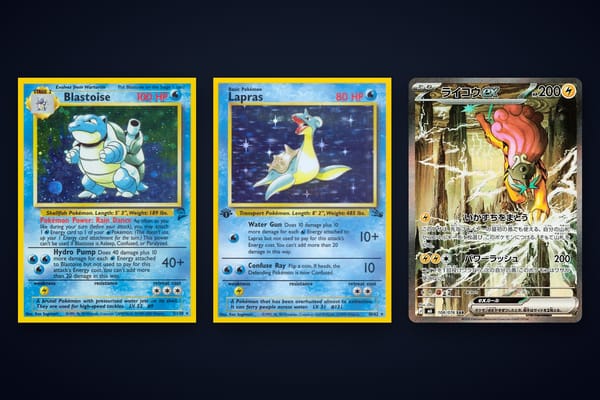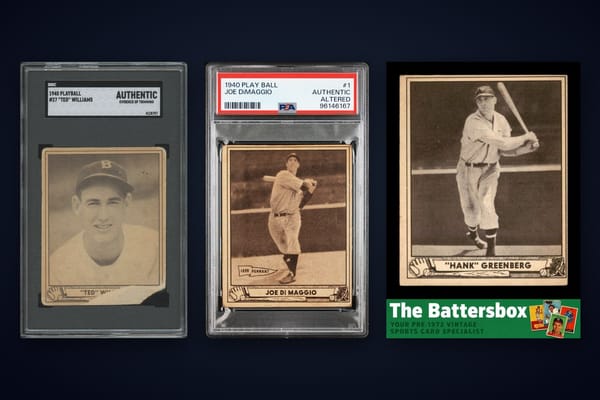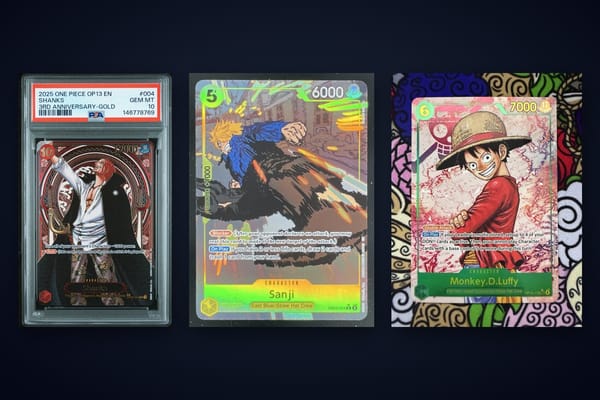
Card Centering by Type: The Complete Guide for Pokemon, Sports, and More
Master card centering by type—Pokemon, sports, vintage, MTG, One Piece & more. Learn grading quirks, front/back differences, and pro tips for collectors.

Estimated reading time: 14 min
Key Takeaways
- Card centering is a critical grading factor that varies by card type and grading company.
- Front and back centering standards differ, especially for Pokémon and sports cards.
- Precise centering calculations use border measurements and tools like Midpoint.
- Gem Mint grades (like PSA 10) require near-perfect centering, but tolerances vary across PSA, BGS, SGC, and others.
- Different TCGs—Pokémon, MTG, Yu-Gi-Oh, One Piece—and vintage cards have unique centering quirks and grading expectations.
Table of Contents
- Section 1: What Is Card Centering and Why Does It Matter?
- Section 2: How to Calculate Card Centering by Type and Tool
- Section 3: Front vs Back Centering Standards Explained
- Section 4: Card Centering Standards by Grading Company
- Section 5: Pokémon Card Centering, Sports Card Centering, and Vintage Card Nuances
- Section 6: Practical Steps—Measuring, Tools, and Visual Checks
- Conclusion
- FAQ
Section 1: What Is Card Centering and Why Does It Matter?
Defining Card Centering
Card centering refers to how evenly the printed design is positioned within the card's outer borders. In other words, it’s the symmetry of the border widths on the left, right, top, and bottom of the card—both front and back. Perfect centering means the border measurements on opposite sides are nearly identical.
For example, if you measure the left and right borders of a Pokémon card and both are 2mm, and the top and bottom borders are also 2mm, the card is perfectly centered. However, if the left border is 1mm and the right border is 3mm, the card is off-center. This principle applies to all trading cards regardless of the franchise—Pokémon, sports, MTG, Yu-Gi-Oh, and One Piece.
Centering is not just a technical measurement, but also impacts the aesthetic appeal. A perfectly centered card will appear more balanced and visually pleasing, which is a major reason why collectors and grading companies place such importance on this attribute.
Why Centering Impacts Grading and Value
Centering is a core criterion for grading companies such as PSA, BGS, SGC, CGC, and others. Poor centering can dramatically lower a card’s grade, even if the card is otherwise flawless (pristine corners, surface, and edges). For highly collected categories—such as Pokémon card centering or sports card centering—centering can be the make-or-break factor for a Gem Mint 10 or Pristine grade.
- Centered cards fetch premium prices at auction and in private sales. A PSA 10 with perfect centering can sell for multiples of the same card in PSA 9 or 8 due solely to centering.
- Collectors of vintage card centering often pay more for "dead centered" examples. For instance, a 1952 Topps Mickey Mantle with strong centering may command tens of thousands of dollars more than an off-center counterpart, even at the same technical grade.
- Modern TCGs like MTG, One Piece, and Yu-Gi-Oh also require strong centering for top grades. In some cases, a card with otherwise flawless attributes but poor centering can only reach a PSA 7 or 8, severely limiting its market value.
In summary, centering is a tangible, measurable aspect that directly correlates to both a card’s grade and its market value, making it essential for collectors and investors alike to understand and properly evaluate centering before grading or purchasing.
Types of Centering Issues
Common centering flaws include:
- Off-center left/right or top/bottom: This is the most frequent flaw, where the printed design is noticeably closer to one card edge.
- Diamond cuts (tilted print relative to card edges): Instead of being parallel to the card’s edges, the printed image is rotated, leading to a diamond-shaped appearance. Diamond cuts are especially common in vintage sports cards and early Pokémon sets.
- Back centering issues (especially for Pokémon and vintage cards): Back centering is often overlooked by beginners but is critical for grading companies. Pokémon cards, in particular, can have a well-centered front and a noticeably off-center back due to separate printing processes.
Other less common issues include misaligned frames, double borders, or irregular border thickness due to print shifts or manufacturing defects. These nuances make it imperative to assess both sides and all borders of the card, especially for high-value submissions.
Understanding the nuances of card centering by type empowers you to pre-grade cards accurately—before spending $30+ on grading fees. You can avoid costly mistakes and maximize your grading ROI by learning to spot centering flaws early in your process.
Section 2: How to Calculate Card Centering by Type and Tool
Border Measurements: The Foundation
Card centering is typically calculated using the widths of the card's borders. The process involves measuring each border (top, bottom, left, right) and comparing the thinner side to the thicker side, often as a percentage. This method applies across all card types but may require special attention for cards with colored, patterned, or irregular borders.
- Left/Right Centering: Measure both left and right borders on the card front. For most modern cards, this involves measuring from the edge of the printed image to the card’s physical edge.
- Top/Bottom Centering: Measure top and bottom borders similarly. Some sports cards have logos or text at the bottom, so measure from the consistent border lines, not from text or artwork elements that may vary by design.
- Repeat for the card back for back centering Pokémon, sports, or vintage cards. Back centering is calculated the same way, but you may need to use the colored border or a printed frame as your reference point.
For cards with irregular shapes or nontraditional borders, like some MTG and Yu-Gi-Oh releases, focus on the main printed frame as your guide. In all cases, consistency in where and how you measure is key to accurate centering calculations.
Mathematical Formula for Centering Percentage
The most common formula for centering is:
- Centering = (Smallest Border) ÷ (Smallest Border + Largest Border) × 100%
For example, if the left border is 2mm and the right is 3mm:
(2 ÷ (2+3)) × 100 = 40%. Grading companies then use ratio standards, such as 55/45, 60/40, 75/25, etc.
Let’s walk through a real example with a hypothetical modern Pokémon card:
- Left border: 2.5mm
- Right border: 2.0mm
- Top border: 2.3mm
- Bottom border: 2.2mm
Left/Right centering: (2.0 ÷ (2.0 + 2.5)) × 100 = 44.4%. That’s a 56/44 ratio, which meets Gem Mint standards for most grading companies.
Always remember to round to the nearest tenth for accuracy, especially when submitting to PSA or BGS, as small differences can push a card below a grade threshold.
Tools for Accurate Centering Measurement
- Manual: Use a ruler or calipers with 0.1mm increments for best accuracy. Calipers are ideal for cards with very thin borders or for vintage cards with worn edges.
- Centering Tools: Dedicated tools (plastic overlays) help, but digital solutions are more precise. Plastic overlays often have border guides and work well for quick checks, but may introduce parallax error if not used perfectly flat and straight.
- Digital Apps: An app like Midpoint calculates centering down to the millimeter, instantly providing PSA, BGS, CGC, and TAG estimates. This is especially valuable for large submissions or high-value cards.
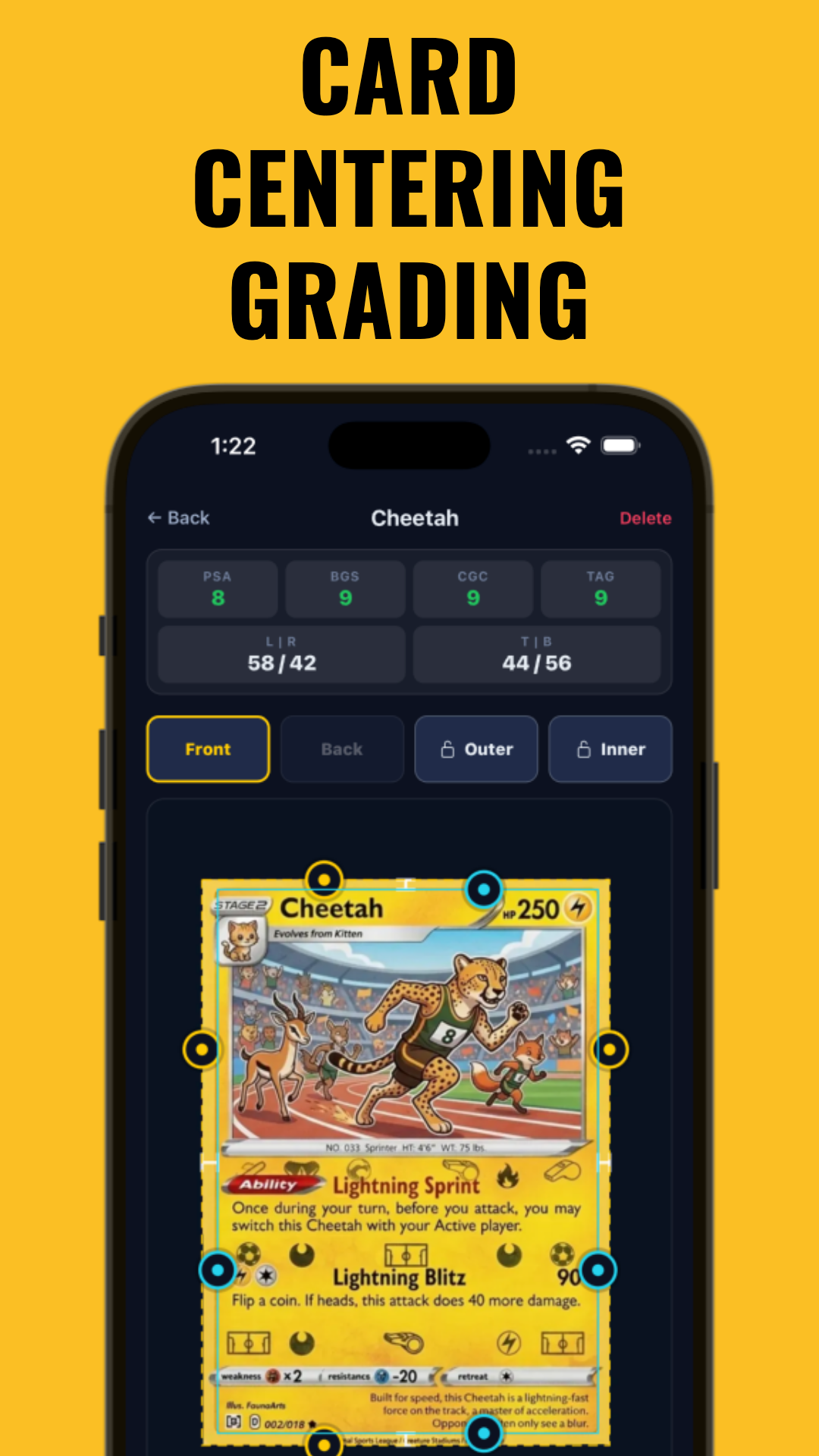
Midpoint and similar digital tools allow users to upload high-resolution images, align digital guides to the card’s borders, and receive instant centering percentages for each side, as well as ratio breakdowns that correspond to major grading company standards. This eliminates guesswork and ensures consistent, repeatable results.
For a step-by-step breakdown, see How to Measure Card Centering: Step-by-Step Precision Guide.
Visual Checks vs Exact Calculations
- Visual checks are fast but prone to error, especially on busy backgrounds or thin borders. For example, vintage Topps cards with colored backgrounds can make it difficult to judge centering without precise measurement tools.
- Digital calculations ensure accuracy, reducing the risk of costly grading surprises. Even experienced graders can be off by several percentage points when eyeballing centering, which can mean the difference between a PSA 9 and a PSA 10.
Some card types (like 1990s sports cards or certain Pokémon sets) have uneven or colored borders that complicate measurement—digital tools excel here. For cards with foil or holographic elements that can distort visual perception, digital measurement is even more important, as reflective surfaces can create illusions of off-centering.
In summary, while visual inspection is a useful first filter, always confirm with a measurement—preferably a digital one—before submitting cards for professional grading.
Section 3: Front vs Back Centering Standards Explained
Why Both Sides Matter—But Not Equally
Most grading companies weigh front centering more heavily than back centering. However, back centering can still lower a card’s grade if it’s significantly off. The standards vary by card type (e.g., Pokémon vs. vintage sports), and by grading service.
- PSA: Front centering is primary, but back centering has minimum thresholds. If the back centering is worse than 75/25, a card cannot receive a PSA 10, regardless of front centering.
- BGS, CGC, SGC: Similar approach, but with different back allowances. For example, BGS 10 requires 60/40 on the back, which is stricter than PSA 10’s 75/25 back allowance.
- Pokémon & One Piece: Back centering is especially scrutinized for modern print runs. Collectors and graders expect higher print quality, so even minor shifts on the back can be the deciding factor for a Gem Mint grade.
For more, see Front vs Back Centering Explained: Card Grading Essentials.
Typical Centering Tolerances
- Front (Gem Mint): PSA 10 requires 55/45 or better; BGS allows 50/50 up to 55/45 for a 10. SGC and CGC use similar ratios for their top grades.
- Back (Gem Mint): PSA allows up to 75/25; BGS up to 60/40 or 75/25 for a 9.5. The back is generally given more leeway because the front is considered the display side.
Back centering Pokémon cards often need to be at least 75/25 for PSA 10 consideration. A card with 55/45 front and 80/20 back will likely receive a PSA 9—even if the rest of the card is flawless.
Understanding the specific ratio thresholds for each grading company is crucial. Submissions with borderline back centering should be reviewed carefully, as a few tenths of a millimeter can drop a grade by a full point or more.
How to Identify Reference Points
- Use the card’s border color, design frame, or artwork edges as measuring guides. For example, Pokémon cards use the blue border, while vintage sports cards use the white or colored border around the image.
- Vintage card centering may require using the printed frame or logo as a reference. Some pre-war cards have uneven or hand-cut edges, so align your measurements to the most consistent design element available.
For cards with complex backgrounds or partial borders, digital overlay tools (like those in Midpoint) allow you to draw reference lines directly on the scan or photo, ensuring accurate and repeatable measurements.
Check out Back Centering Pokémon: The Complete Guide to Card Centering for Grading for in-depth techniques.
Section 4: Card Centering Standards by Grading Company
PSA Centering Standards
- Gem Mint 10: 55/45 or better on front; 75/25 or better on back
- PSA 9: 60/40 or better front; 90/10 or better back
- PSA 8: 65/35 or better front; 90/10 or better back
PSA grading is especially strict for Pokémon card centering and flagship sports releases. Even a slight deviation from 55/45 front centering can result in a lower grade for cards submitted as potential PSA 10s. For vintage cards, PSA may apply some leniency due to the limitations of historical printing processes, but this varies by era and card type.
For example, a 1979 Topps Wayne Gretzky rookie card with 60/40 centering may still receive a high grade, but a modern 2021 Pokémon Charizard with the same centering would almost certainly not achieve a PSA 10.
BGS, SGC, CGC Centering Tolerances
- BGS 10: 50/50 up to 55/45 front; 60/40 back
- BGS 9.5: 60/40 front; 65/35 back
- SGC 10: 50/50 up to 55/45 front; 60/40 back
- CGC 10: 50/50 up to 55/45 front; 60/40 back
Each company publishes detailed grading criteria, but practical tolerances may differ—especially for vintage card centering. For cards with subjective elements, such as variable border patterns or artwork that doesn't extend to the card edge, graders may adjust their evaluation. For a side-by-side comparison, see Card Grade Comparison for Vintage Cards.
It’s important to note that BGS assigns subgrades for centering, so a card can receive a 9.5 overall with a 9 centering subgrade if other attributes are pristine. CGC and SGC have similar practices, sometimes rounding up or down based on the aggregate of subgrades.
Other Graders: TAG, EDGE, and More
- TAG and EDGE use advanced digital measurement, sometimes stricter than legacy graders. Their proprietary systems use computer vision to analyze border thickness to a fraction of a millimeter, often catching centering defects that manual graders may overlook.
- Always check current company standards before submission. Standards are periodically updated as technology and collector expectations evolve.
TAG and EDGE are also more transparent about the quantitative aspects of centering, sometimes providing a centering map or score breakdown as part of the grading report. This can be helpful for understanding exactly how your card was evaluated and for comparing results across different graders.
Which Centering Ratio Is Considered Good?
- 55/45 or better is "good" for most modern TCG and sports cards. This is the typical threshold for Gem Mint grades.
- 60/40 is acceptable for near-mint or vintage grading. Many vintage collectors are satisfied with 60/40 or even 65/35, especially if the card is otherwise in excellent condition.
For a deep dive, visit Centering Tolerance by Grade. Remember, what is "good" is both a technical standard and a market-driven preference—cards with exceptional centering, especially in older sets, can command significant premiums even if the technical grade is not the highest possible.
For a comprehensive comparison of centering standards across PSA, BGS, CGC, SGC, and TAG, see Card Grading Centering Standards: PSA, BGS, CGC, SGC & TAG Compared.
Section 5: Pokémon Card Centering, Sports Card Centering, and Vintage Card Nuances
Pokémon Card Centering & Back Centering Pokémon
Pokémon card centering is among the most scrutinized in the hobby. Both front and back centering play a role in achieving PSA 10 or BGS 10 grades. Back centering Pokémon issues are common due to print alignment shifts. For detailed tips, see How to Grade Pokémon Cards: Centering Guide & Grading Tips.
- Modern Pokémon: Blue border on back is the key reference point. Even a half-millimeter shift is immediately noticeable, as the dark border makes off-centering stand out.
- Vintage Pokémon: Some sets (e.g., Base Set) are notorious for off-center print runs. The 1999 Base Set, in particular, regularly features cards with 70/30 or worse centering, making perfectly centered examples rare and valuable.
Collectors submitting Pokémon cards should always check both sides, as a card with perfect front centering but poor back centering can still be downgraded. For high-value Charizard, Pikachu, or full art cards, use digital tools to measure both sides before submission to maximize your grading outcome.
For a comprehensive overview of centering concepts and their importance for grading and collectors, see Card Centering: The Definitive Guide for Grading and Collectors.
Sports Card Centering
Sports card centering is foundational for vintage baseball, basketball, and modern ultra-premium releases. Early Topps and O-Pee-Chee cards often have severe centering flaws—collectors call "dead centered" cards unicorns. For example, the 1952 Topps set is infamous for poor centering, with estimates that fewer than 10% of surviving cards are within 60/40 centering on both axes.
- Reference the white or colored border as your guide. For Topps and Panini, the border is usually well-defined, while early O-Pee-Chee cards occasionally have rough, inconsistent edges due to cutting machines.
- Diamond cuts (rotated print) are especially common in 1970s-80s sports issues. This can result in a card that appears centered in one direction but is visually crooked overall.
- Modern Panini and Topps use tighter print tolerances, but miscuts still occur. Even in 2023, collectors report pulling cards with 80/20 or worse centering directly from packs.
Modern collectors and investors often use centering as the deciding factor when choosing which rookie cards or parallels to submit for grading. For example, a Zion Williamson Prizm rookie with 50/50 centering can command a 20-30% premium over a similar card with 60/40 centering, even if both are PSA 10s.
Curious about centering tools for sports cards? Read What is a sports card centering tool? or explore our Sports Card Collecting: The Ultimate Guide for Modern & Vintage Collectors for broader insights into sports card collecting and grading.
Vintage Card Centering
Vintage card centering (pre-1980s) is often far from perfect due to print technology limits. Grading companies are sometimes more lenient, but a well-centered vintage card commands a huge premium. In some cases, a PSA 8 with 55/45 centering can outsell a PSA 9 with 70/30 centering, especially for iconic cards like the 1968 Nolan Ryan rookie or the 1954 Hank Aaron.
- Reference points: Borders, logos, or text alignment (some cards have no borders). For example, pre-war T206 tobacco cards rely on the alignment of the player portrait and text, as borders are often irregular or missing altogether.
- Expect 60/40 or even 70/30 centering to be typical. "Dead centered" vintage cards are prized and can sell for multiples of book value.
For a breakdown by era, check Card Centering by Type: Pokemon, Sports, MTG & More. Knowing the expected centering range for a given set helps you spot rare outliers that may be worth a grading premium.
Other TCGs: MTG, Yu-Gi-Oh, One Piece Card Centering
- MTG card centering: Early Magic sets (Alpha, Beta) often have rough cuts and off-centering. Modern sets use tighter QC but still have minor misalignments. For example, Alpha and Beta cards are notorious for being cut askew, with many examples exhibiting 70/30 or worse centering.
- Yu-Gi-Oh and One Piece card centering: Both use thin borders, making even small misalignments visible. One Piece TCG cards are particularly sensitive to print shifts. For all these games, a border discrepancy of even 0.2mm can be enough to drop a card below Gem Mint standards, making precision tools essential for pre-grading.
Knowing the quirks of each card type helps you set realistic grading expectations and spot cards that are truly worth submitting. For example, a 1993 Black Lotus with 60/40 centering is considered exceptional, while a 2022 One Piece card with 60/40 might be just average. Always research set-specific norms before making grading decisions. For a comprehensive overview of trading card collecting, see our TCG Card Collecting: The Ultimate Guide for 2026 Collectors.
Section 6: Practical Steps—Measuring, Tools, and Visual Checks
Step-by-Step Card Centering Measurement
- Place the card in a well-lit, dust-free area. Avoid direct sunlight, which can create glare and distort your view of the borders.
- Use a ruler or calipers to measure each border—record measurements in millimeters. If using a ruler, ensure it has fine increments (0.5mm or better). For best accuracy, measure from the printed border to the card’s physical edge, not the artwork’s edge unless there is no border.
- Calculate centering using the formula: (Smallest Border) ÷ (Smallest Border + Largest Border) × 100%. Repeat for both axes—left/right and top/bottom. Record these numbers for your reference.
- Repeat for top/bottom and left/right, both front and back. This ensures you cover all grading requirements, as back centering is often the deciding factor for high grades.
- Compare ratios to grading company standards for your card type. Use published standards from PSA, BGS, CGC, or your target grader. If your card is on the borderline, consider using a digital tool for confirmation.
For a full workflow, see How to Pre-Grade Your Card: A Step-by-Step Guide. Keeping a log of your centering measurements can be helpful when managing large submissions or tracking trends within a set or print run.
Using Centering Calculators and Digital Tools
- Upload a scan or photo to a digital tool like Midpoint. Use the highest resolution possible for best accuracy; 300dpi or higher is recommended for scans.
- Align the on-screen guide to the card’s borders; the app calculates centering instantly. Most tools allow you to adjust the guides until they precisely match the card’s edges, ensuring even cards with odd shapes or wear can be measured accurately.
- Bulk upload or process entire collections for large grading submissions. Midpoint supports spreadsheet exports and batch processing, making it efficient for dealers or high-volume collectors.
These tools provide instant feedback, reduce human error, and help you decide which cards are worth grading. Some apps also provide side-by-side comparisons to grading standards, so you can instantly see if your card qualifies for Gem Mint, Mint, or lower grades based on centering alone.
For collectors with hundreds or thousands of cards, digital tools can save dozens of hours and prevent expensive grading mistakes. Some services even offer automated centering reports that you can include with your grading submission paperwork.
Visual Checks—When Are They Enough?
- Quick visual checks are okay for low-value cards or casual sorting. For example, when sorting bulk commons or cards not intended for grading, a quick glance is sufficient.
- For serious grading or high-value cards, always use precise measurement—eyeballing is rarely accurate enough for PSA 10 or BGS 10 standards. Even experienced collectors can be off by a few percentage points, which is enough to drop a card below the desired grade.
Practice with both methods to develop a sharp eye, but rely on tools for submissions. Over time, you’ll develop a sense for what "good" centering looks like, but always confirm with measurements for cards you intend to grade or sell as Gem Mint.
Ultimately, combining experience with digital measurement is the best approach—quickly spot-check with your eye, then verify with tools for cards that are borderline or especially valuable.
Conclusion
Card centering by type is one of the most important—and misunderstood—grading factors for collectors of Pokémon, sports, MTG, Yu-Gi-Oh, One Piece, and vintage cards. Each card type and grading company has its own quirks and standards. Mastering precise measurement, understanding front vs back criteria, and using digital tools like Midpoint will help you avoid grading surprises and maximize your card’s value. For deep dives into specific types, explore the linked guides throughout this article and refine your pre-grading process for every submission.
Before submitting cards for grading, take the time to measure both front and back centering, familiarize yourself with the standards of your chosen grading company, and leverage digital apps for efficiency and accuracy. Whether you collect for fun or invest for profit, understanding and mastering card centering will elevate your collection and your results in today’s competitive grading landscape.
FAQ
Q: How do you calculate card centering percentages?
A: Measure the left/right or top/bottom borders in millimeters, then use the formula: (smallest border ÷ (smallest border + largest border)) × 100%. Compare the result to grading standards like 55/45 or 60/40.
Q: What is PSA centering for a gem mint 10?
A: PSA requires 55/45 or better centering on the front and 75/25 or better on the back for a Gem Mint 10 grade.
Q: What is the difference between front and back centering standards?
A: Front centering is judged more strictly and is the primary grading factor; back centering has wider allowances but can still lower the grade if too far off, especially for Pokémon and vintage cards.
Q: How do you measure centering on a card without a tool?
A: Use a precise ruler or calipers to measure each border and apply the centering formula. For high-value cards, a digital tool is recommended for accuracy.
Q: What centering ratio is considered good for grading?
A: 55/45 or better is required for Gem Mint grades by PSA, BGS, SGC, and CGC. 60/40 is generally considered "good" for most grading purposes.
Q: Do different grading companies use different centering standards?
A: Yes. PSA, BGS, SGC, CGC, and newer graders like TAG and EDGE have slightly different centering tolerances, especially between Gem Mint and lower grades. Always check the company’s published standards.
Free to start
Try the Midpoint app
Grade any card from a photo, see its raw and PSA 10 value, and track what your collection is worth — free.
Get it on iPhoneGet it on Android