Wayne Gretzky Cards Worth Money: The Definitive Collector’s Guide
Discover which Wayne Gretzky cards are worth money, rookie card values, PSA 10 impact, and best cards to grade for collectors.

Estimated reading time: 15 min
Key Takeaways
- Wayne Gretzky rookie cards, especially the 1979 O-Pee-Chee and Topps, are among the most valuable, with PSA 10 grades often commanding high prices, sometimes exceeding $300,000 for O-Pee-Chee.
- Condition and grading significantly impact Gretzky card worth, with PSA 10 copies generally selling for substantially more than raw or lower-grade cards, highlighting the importance of centering and surface condition.
- Other valuable Gretzky cards include milestone inserts, signed editions, and rare parallels from the 1980s and beyond, many of which may appreciate when graded.
- Using tools like Midpoint’s AI grading and centering calculator can help collectors assess card condition and decide which cards merit professional grading investment.
- Identifying key rarity factors such as print runs, population reports, and centering precision is important to maximizing investment returns and avoiding grading fees on borderline cards.
Card values — live data from Midpoint's card database, as of 2026-09-16. Prices move; Midpoint refreshes these daily.
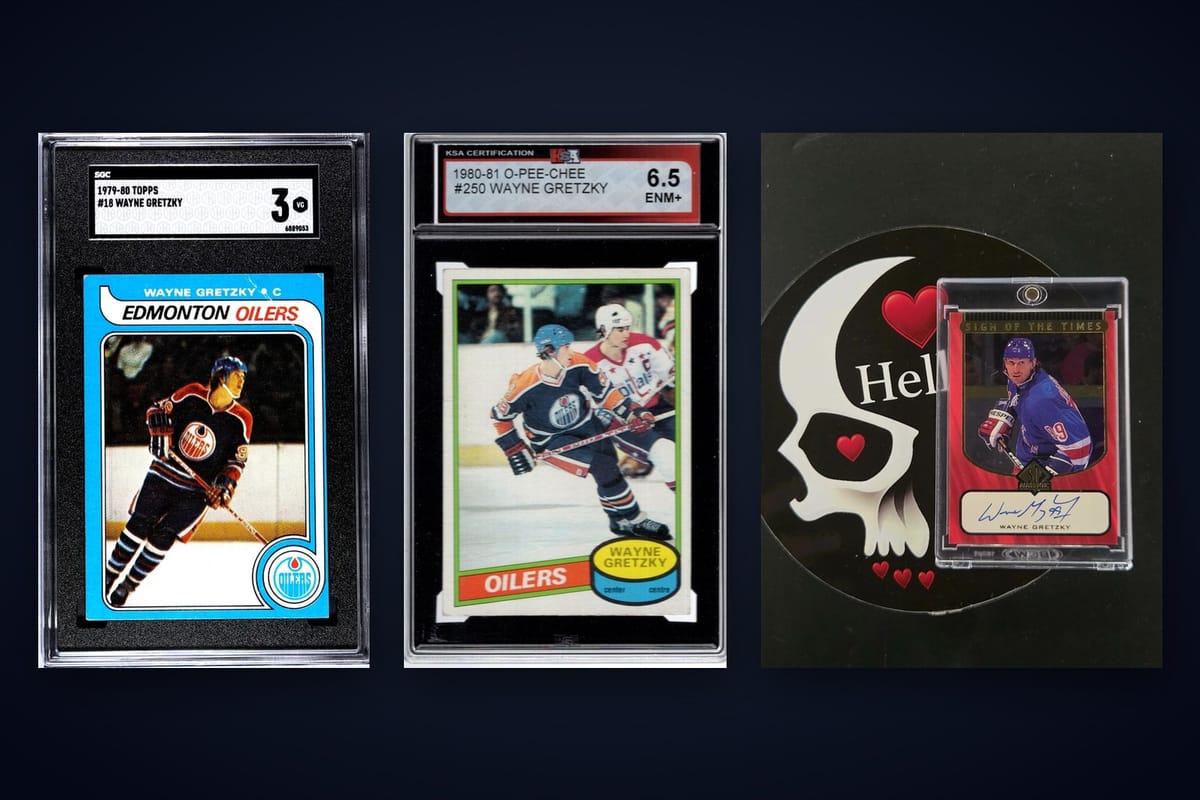
| Card | Raw | PSA 10 | Gem premium | |
|---|---|---|---|---|
 |
Wayne Gretzky #18 1979 Topps |
$645.85 | $56,286 | 87.2× |
 |
Wayne Gretzky #250 1980 O-Pee-Chee |
$65.09 | $41,480 | 637.3× |
 |
Wayne Gretzky #WG 1997 SP Authentic Sign of the Times |
$577.95 | $14,875 | 25.7× |
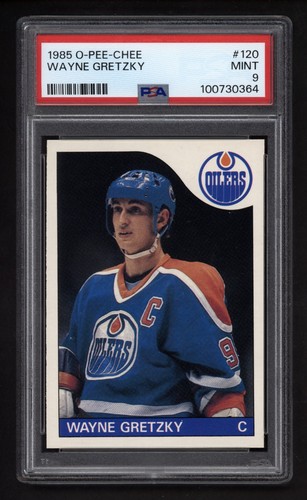 |
Wayne Gretzky #120 1985 O-Pee-Chee |
$28.24 | $7,000 | 247.9× |
 |
Wayne Gretzky #250 1980 Topps |
$42.50 | $6,255 | 147.2× |
![Wayne Gretzky [Refractor] #1 1998 O-Pee-Chee Chrome Blast From the Past card](https://i.ebayimg.com/images/g/~~cAAeSwrOpqNsO6/s-l500.jpg) |
Wayne Gretzky [Refractor] #1 1998 O-Pee-Chee Chrome Blast From the Past |
$800.00 | $5,520 | 6.9× |
 |
Wayne Gretzky #106 1982 O-Pee-Chee |
$20.56 | $4,594 | 223.4× |
![Wayne Gretzky [Mirror Gold] #23 1995 Select Certified card](https://i.ebayimg.com/images/g/dVMAAeSwHQBqj49N/s-l500.jpg) |
Wayne Gretzky [Mirror Gold] #23 1995 Select Certified |
$131.00 | $4,039 | 30.8× |
 |
Wayne Gretzky #OS-WG 2024 Upper Deck Premier Old Style Signature |
$831.82 | $3,466 | 4.2× |
 |
Wayne Gretzky #125 1981 O-Pee-Chee |
$15.04 | $3,117 | 207.2× |
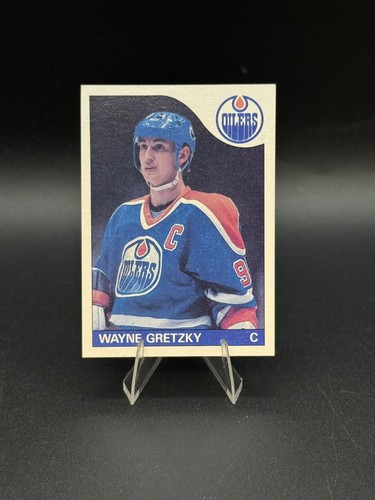 |
Wayne Gretzky #120 1985 Topps |
$14.63 | $3,065 | 209.5× |
 |
Wayne Gretzky #120 1988 O-Pee-Chee |
$9.57 | $3,000 | 313.5× |
Look up any card's current raw and graded value in Midpoint — and get an estimated grade before you pay to submit.
Table of Contents
- Section 1: Understanding Wayne Gretzky Rookie Card Value
- Section 2: The Impact of PSA 10 and Card Grading on Value
- Section 3: Differentiating O-Pee-Chee vs Topps Gretzky Rookie Cards
- Section 4: Beyond Rookies – Other Valuable Gretzky Cards to Collect
- Section 5: Autographed Gretzky Cards and Price Premiums
- Section 6: How to Identify and Grade Valuable Gretzky Cards
- Conclusion
- FAQ
Section 1: Understanding Wayne Gretzky Rookie Card Value
Why the Rookie Card is the Holy Grail
The 1979 Wayne Gretzky rookie card remains a cornerstone of hockey card collecting and investment. This card captures the early stage of Gretzky’s career, during which he set numerous NHL scoring records and earned the nickname "The Great One." His career statistics—2,857 points and 894 goals—are among the highest in NHL history, contributing to his legendary status.
Because rookie cards symbolize the start of a player’s professional journey, the 1979 Gretzky rookie has become highly sought after by collectors and investors. Rookie cards often have lower print runs and greater sentimental value compared to later cards, which can drive their premium in the market.
Top Sets: 1979 O-Pee-Chee vs. 1979 Topps
Among the various Gretzky rookie cards issued in 1979, two sets are most notable: the Canadian-produced O-Pee-Chee and the US-produced Topps cards. Although they share the same player image and basic design, differences in production and distribution affect their collectibility and price.
As of mid-2024, a 1979 O-Pee-Chee Gretzky rookie card in PSA 10 condition has been known to sell for prices that can exceed $300,000, reflecting its relative scarcity and desirability among collectors. The Topps PSA 10 Gretzky rookie card, while also highly sought after, generally sells for lower amounts, often around half the O-Pee-Chee price. This price difference is influenced by estimated print runs and condition survival rates, with O-Pee-Chee cards believed to have had lower print runs and fewer surviving in top condition.
Raw cards—those not professionally graded—typically sell for significantly less, often in the low thousands of dollars depending on condition, centering, and eye appeal. This contrast highlights the importance of condition and grading in determining value.
Value Differences by Set and Condition
- 1979 O-Pee-Chee Wayne Gretzky Rookie Card: Among the most valuable Gretzky cards, especially in PSA 10 grades; population reports indicate PSA 10 examples are relatively scarce.
- 1979 Topps Wayne Gretzky Rookie Card: More common than O-Pee-Chee but still highly prized, with PSA 10 copies commanding strong prices due to Gretzky’s enduring appeal.
- Other 1979 Sets: Cards from Kellogg’s and other less common sets exist but generally have lower monetary value and collector interest, though some rare variants may be exceptions.
Collectors often prioritize high-grade O-Pee-Chee and Topps rookies for investment, as these typically offer the best potential for appreciation and liquidity in secondary markets.
| Card | PSA 10 Value | Raw Value |
|---|---|---|
| 1979 O-Pee-Chee Gretzky Rookie | Up to $300,000+ | Approx. $4,000 - $6,000 |
| 1979 Topps Gretzky Rookie | Up to $150,000+ | Approx. $3,000 - $5,000 |
| 1980 Topps Gretzky Base Card | $1,200 - $2,500 | Under $200 |
Image: The Midpoint card centering grading tool helps measure card centering precisely before grading.

Section 2: The Impact of PSA 10 and Card Grading on Value
Why PSA 10 Is the Gold Standard
PSA 10, which denotes "Gem Mint" condition, represents the highest grade a card can receive from Professional Sports Authenticator (PSA). This grade requires virtually flawless centering (typically between 55/45 and 60/40 or better), sharp corners, pristine edges, and a surface free from imperfections such as print defects, scratches, or stains.
For Wayne Gretzky cards, especially the 1979 rookie cards, achieving a PSA 10 is relatively rare due to the cards’ age and condition challenges. PSA population reports show that only a small percentage of submitted Gretzky rookies receive a PSA 10 grade. This scarcity contributes to the premium collectors are willing to pay.
For example, a 1979 O-Pee-Chee Gretzky rookie card graded PSA 10 can command prices that have been reported upwards of $300,000. The same card graded PSA 9, which allows minor flaws, typically sells for significantly less, often tens of thousands of dollars. This demonstrates the substantial value increase tied to the highest condition tier.
Raw vs Graded Values: A Dramatic Gap
Raw cards, or ungraded cards, carry more risk for buyers due to uncertainty about condition and authenticity. Without third-party grading, buyers often discount cards to account for potential defects, centering issues, or surface wear. This results in raw cards selling for a fraction of the price of high-grade graded cards.
The Midpoint app uses AI technology to provide grading estimates that simulate PSA, Beckett (BGS), CGC, and TAG grading standards. This helps collectors pre-grade their Gretzky cards at home, identifying which cards are good candidates for professional grading and which may not justify the grading cost.
Since professional grading fees, shipping, and insurance can add significant costs, using Midpoint to screen cards before submission can help collectors save money and time.
Best Wayne Gretzky Cards to Grade for Maximum ROI
- 1979 O-Pee-Chee and Topps Rookie Cards: These cards generally yield the highest return on investment when graded PSA 10 due to their iconic status and scarcity.
- 1980s Landmark Inserts and Parallels: Select inserts or special parallel cards from the early 1980s, such as limited print run foil or color variations, may see value increases post grading.
- Milestone and Retrospective Cards: Cards commemorating Gretzky’s NHL records or anniversaries, especially in limited editions, can appreciate in high grades due to collector demand.
Collectors are encouraged to consult reputable grading population reports and use Midpoint’s tools to identify cards with grading potential before incurring grading costs. For detailed steps, see Midpoint’s pre-grading guide.
Section 3: Differentiating O-Pee-Chee vs Topps Gretzky Rookie Cards
Key Visual and Print Differences
While the 1979 O-Pee-Chee and Topps Gretzky rookie cards share a similar design, collectors rely on subtle differences to identify each set correctly—important because these differences influence market value.
O-Pee-Chee cards are Canadian-produced, printed on slightly thicker cardstock with a glossier finish compared to Topps cards. The back of O-Pee-Chee cards includes bilingual (English and French) text disclaimers, with the French language presence unique to O-Pee-Chee and serving as a quick identifier.
Topps cards, produced in the United States, have thinner cardstock and a matte finish. Print quality and color saturation can differ slightly due to printing processes, with O-Pee-Chee often showing sharper images and somewhat different color tones.
Centering on O-Pee-Chee cards tends to be less precise on average than Topps, making PSA 10 O-Pee-Chee cards particularly scarce and valuable. This difference in production quality and distribution numbers contributes to the value gap between the two sets.
Value Implications of the Differences
Because fewer O-Pee-Chee cards survive in top condition, their scarcity often drives prices to roughly double those of Topps rookie cards in PSA 10 grades. Correctly identifying your card is important to avoid undervaluing your asset or misdirecting grading submissions.
For example, a PSA 10 O-Pee-Chee Gretzky rookie card can sell for over $300,000, whereas the Topps PSA 10 equivalent typically sells near $150,000. PSA 9 graded O-Pee-Chee cards also command a premium over Topps PSA 9 cards.
How to Verify Your Card’s Set
- Look for the French-language text on the back—O-Pee-Chee cards include this, Topps do not.
- Feel the card stock thickness and examine the surface glossiness; O-Pee-Chee cards are thicker and glossier.
- Compare the color saturation and edge finishing; O-Pee-Chee cards often have richer colors and cleaner edges.
- Use grading population reports and census data from PSA, Beckett, and CGC to understand rarity and typical grades for each set.
- Utilize Midpoint’s lookup and comparison tool to input card details and receive set identification and current market values.
Verifying these details before grading submission can help collectors avoid costly errors and maximize their card’s market potential.
Section 4: Beyond Rookies – Other Valuable Gretzky Cards to Collect
1980s Base and Parallel Cards
While rookie cards receive the most attention, other Gretzky cards from the 1980s have collector interest. For example, the 1980 Topps Gretzky base card, though more common, can sell for a premium in PSA 10 condition compared to raw copies.
Parallel cards from this era—such as those with foil accents, special borders, or limited color variations—often command higher prices due to reduced print runs and visual uniqueness. For instance, 1981 O-Pee-Chee foil parallels or 1982 Topps "Stars" inserts featuring Gretzky may sell for multiples of their base counterparts when graded highly.
Milestone Insert Cards
Insert cards celebrating Gretzky's career milestones are valued for their commemorative nature and limited availability. Examples include cards marking his record-breaking 802 career goals or surpassing 2,857 total points. These inserts typically have lower print runs than base sets.
Due to their scarcity and fan appeal, milestone inserts in high grades can reach prices in the thousands or more, depending on the specific card and demand.
Special Variants and Low Population Cards
Limited edition variants, error cards, and low population parallels represent a niche segment of Gretzky collecting. For example, miscut or printing error Gretzky cards from the 1980s, while rare, have attracted premiums among specialized collectors.
Population reports from grading services provide insight into the scarcity of these variants. Cards with fewer than 50 graded PSA 10 copies often command premiums, especially if linked to notable production quirks or limited releases.
Collectors interested in these rarities can consult resources like Midpoint’s guide to grading low population cards for strategies on identification and valuation.
Section 5: Autographed Gretzky Cards and Price Premiums
Signed Cards: Authenticity and Value
Autographed Wayne Gretzky cards are often more desirable and can command price premiums over unsigned versions. The extent of the premium depends on autograph authenticity, card condition, and the rarity of the signed variant.
For example, a 1979 O-Pee-Chee Gretzky rookie card with a certified authentic signature in PSA 10 grade has been known to sell for significantly higher amounts than unsigned copies, reflecting combined premiums.
Certification Matters: PSA/DNA and Others
Buyers are cautious about autograph authenticity, increasing demand for certification from reputable third-party authenticators such as PSA/DNA, Beckett Authentication Services (BAS), and JSA. Cards with these certifications generally fetch higher prices than unverified signed cards, which may be discounted due to uncertainty.
When collecting or selling autographed Gretzky cards, seeking certificates of authenticity (COAs) or holograms from trusted sources is advisable. Some grading companies offer combined grading and autograph authentication services—such as Beckett Grading Services (BGS) with its "Dual Autograph" grading—providing additional buyer confidence.
Collecting Signed Gretzky Cards
- Focus on cards signed during official signing events or limited signed parallel editions to ensure higher authenticity and desirability.
- Maintain autographed cards in top condition using protective sleeves and cases to avoid smudging or fading.
- Consider grading signed cards with services that provide separate autograph and card condition grades to maximize market appeal.
Midpoint’s AI grading and centering tools can assist collectors in evaluating the underlying card’s condition before submitting for autograph grading, helping optimize collectible value.
Section 6: How to Identify and Grade Valuable Gretzky Cards
Key Factors Affecting Gretzky Card Value
- Centering: Cards with centering ratios close to perfect (generally 55/45 or better) tend to command premium grades and prices; Midpoint’s centering calculator measures this precisely.
- Corners and Edges: Sharp, undamaged corners and clean edges are important to avoid grade deductions; minor fraying or chipping can lower a card's grade.
- Surface Condition: Absence of scratches, creases, stains, or print defects is crucial; surface flaws are common reasons for grade reductions.
- Rarity and Population: Cards with lower graded population totals often achieve higher values due to scarcity; grading census data can guide submission decisions.
- Set Identification: Correctly distinguishing O-Pee-Chee from Topps, recognizing parallels, inserts, and error cards aids in accurate valuation and grading strategy.
Using Midpoint to Pre-Grade and Evaluate Cards
Midpoint’s AI-powered grading platform analyzes key card attributes including centering, corner sharpness, edge integrity, and surface condition to estimate grades across major grading companies like PSA, BGS, CGC, and TAG.
This technology enables collectors to:
- Determine if a Wayne Gretzky card is a strong candidate for professional grading, avoiding submission of low-grade cards.
- Estimate potential market value based on AI grading and current sales trends, aiding pricing decisions.
- Track and manage a card collection portfolio over time, monitoring value fluctuations and grading status.
Practical Tips for Grading Submission
- Use Midpoint’s free centering calculator to measure your card’s centering before submission, as centering is often the hardest grading criterion to improve post-submission.
- Review differences in grading scales among PSA, BGS, and CGC, especially regarding subgrades and grading philosophies, to choose the best service for your card; see grading scale differences guide.
- Submit only cards likely to achieve high grades (PSA 9 or above) to maximize grading investment returns, as low-grade cards rarely see price appreciation.
- Package and ship cards carefully using recommended protective materials to avoid damage during transit and maintain condition.
Combining these strategies with Midpoint’s tools can help collectors make informed decisions, maximize Wayne Gretzky card values, and reduce the risk of costly grading mistakes.
Conclusion
Wayne Gretzky cards worth money extend beyond his iconic 1979 rookie cards, including various sets, inserts, autographed editions, and rare variants. While the 1979 O-Pee-Chee and Topps rookie cards remain among the most valuable—especially when graded PSA 10—the overall value landscape is nuanced. Factors such as centering precision, surface condition, and autograph authenticity significantly influence card worth.
Tools like Midpoint provide AI-driven grading estimates and precise centering measurements, enabling smarter grading submissions and investment decisions. Whether you are a seasoned hobbyist or new to hockey card collecting, understanding these factors can help you navigate the market confidently, protect your investments, and appreciate the legacy of "The Great One."
FAQ
Q: How much is a 1979 Wayne Gretzky rookie card worth?
A: As of mid-2024, a 1979 O-Pee-Chee Gretzky rookie card graded PSA 10 has been known to sell for over $300,000, while a Topps PSA 10 version typically sells for around $150,000. Raw ungraded copies usually range from $3,000 to $6,000 depending on condition.
Q: What is the difference between the O-Pee-Chee and Topps Gretzky rookie cards?
A: The O-Pee-Chee card is the Canadian version with thicker cardstock, a glossy finish, and a French disclaimer on the back, making it generally rarer and more valuable than the Topps card, which was printed in the USA with thinner, matte stock.
Q: How much does PSA grade affect Wayne Gretzky card value?
A: PSA grading significantly impacts value—PSA 10 graded cards can sell for multiple times more than PSA 9 or raw versions, especially for Gretzky’s rookie cards, due to the scarcity of perfect condition examples.
Q: Which Wayne Gretzky cards are worth the most money besides the rookie card?
A: Valuable Gretzky cards beyond the rookie include 1980s base and parallel cards, milestone insert cards commemorating career records, low population variants, and autographed cards with certification.
Q: Are signed Wayne Gretzky cards worth more than regular cards?
A: Yes, signed cards with verified autographs typically command price premiums over unsigned cards, especially when authenticated by PSA/DNA, Beckett, or JSA.
Q: How can I tell if my Wayne Gretzky card is valuable?
A: Identify the card set (O-Pee-Chee vs Topps) by checking for French text and cardstock differences, evaluate condition factors such as centering and corners, and use tools like Midpoint for AI grading estimates before deciding to grade or sell.
Free to start
Try the Midpoint app
Grade any card from a photo, see its raw and PSA 10 value, and track what your collection is worth — free.
Get it on iPhoneGet it on Android