
When to Sell Cards from a Collection: The Complete Portfolio Guide
Discover when to sell cards from a collection: timing by card type, market signals, condition, grading, and portfolio tracking. Maximize your card collection value.

Estimated reading time: 15 min
Key Takeaways
- Timing your card sales depends on card type, condition, market trends, and personal goals.
- Portfolio tracking and digital cataloging are essential for knowing what and when to sell.
- Player performance, set releases, and major events often signal potential selling windows.
- Grading, card condition, and storage can impact sale timing and price realized.
- Choosing the right selling channel (auction, marketplace, buylist, or consignment) affects speed, fees, and final returns.
Table of Contents
- Section 1: Cataloging and Tracking Your Card Collection
- Section 2: Understanding Card Value and Portfolio Management
- Section 3: When to Sell Cards from a Collection – Timing by Card Type
- Section 4: Market Signals and Event-Driven Selling Opportunities
- Section 5: Sell, Hold, or Grade? Decision-Making for Maximum Value
- Section 6: Selling Strategies: Singles, Lots, or The Whole Collection
- Section 7: Choosing the Best Selling Channel
- Section 8: Insurance, Taxes, and Documentation for Card Collections
- Conclusion
- FAQ
Section 1: Cataloging and Tracking Your Card Collection
Why Cataloguing Matters
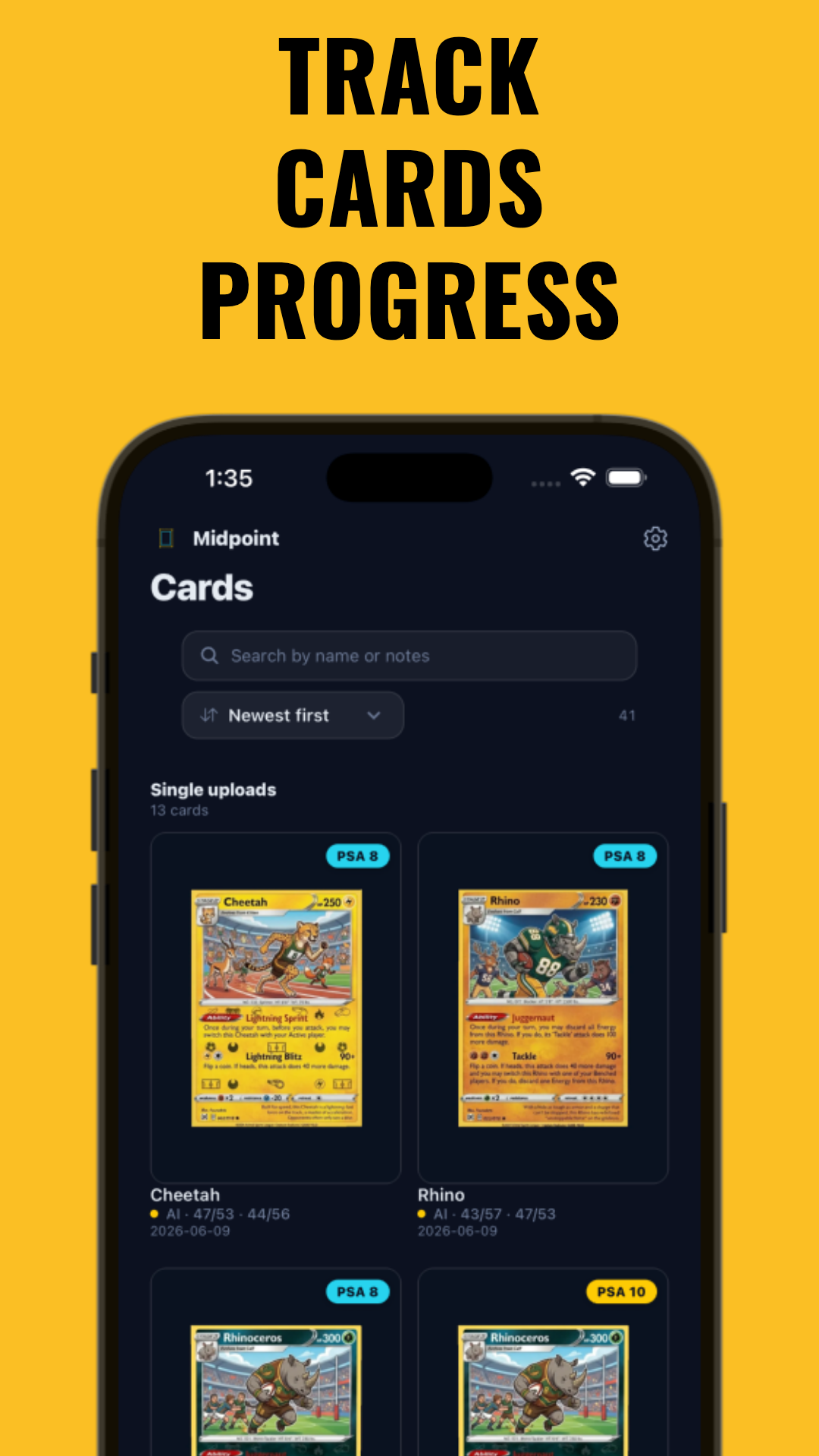
Before you can decide when to sell cards from a collection, you must know exactly what you own. Cataloging is the foundation of smart portfolio management—without it, you risk undervaluing, overlooking, or misplacing valuable cards. A modern card collection app like Midpoint can help streamline this process, letting you digitally catalog cards across Pokémon, Magic: The Gathering, sports, and more.
- Track set, card number, edition, and condition
- Attach images for verification and insurance
- Log purchase price, acquisition date, and sale history
Digital Tools for Tracking Value
Static spreadsheets can be outpaced by apps with built-in collection value tracking. Tools like Midpoint provide real-time market values, estimated grade potential, and historical price movements. This can be useful for both investors and hobbyists, enabling you to spot trends and act accordingly.
- Automated value updates for a large number of cards
- Portfolio tracking: monitor total and per-card value over time
- Export reports for insurance or tax purposes
Efficient Card Organization
Organizing your cards physically and digitally makes it easier to identify hits, mid-tier, and bulk commons—key for deciding what to sell and when. Label boxes by set or era, use sleeves and top-loaders for protection, and maintain a digital catalog for quick reference.
- Separate high-value cards for secure storage
- Group by sport, game, or era in your app
- Flag cards for grading, sale, or long-term hold
Section 2: Understanding Card Value and Portfolio Management
What Drives Card Value?
To maximize returns, you must understand what makes a card valuable. Rarity, demand, player or character popularity, condition, and grading all play a role. Legacy cards (vintage sports, 1st edition Pokémon) often have steady demand, while modern releases can fluctuate more rapidly.
- Scarcity: Low print runs, serial numbering, short prints
- Popularity: Star athletes, iconic Pokémon, trending MTG sets
- Condition: Centering, corners, edges, and surface
- Certification: Graded cards (PSA, BGS, CGC) can command premiums
How to Track a Card Collection Like a Portfolio
Treating your cards as a card portfolio tracker does for stocks can provide new insights. Apps like Midpoint display your total collection’s value, track changes over time, and estimate grading upside. This data-driven approach helps you decide not just when to sell, but which cards might offer the best ROI if graded.
- Monitor price changes and spot market trends
- Set alerts for value milestones or price drops
- Plan insurance coverage based on actual value
Cataloging for Insurance and Estate Planning
Accurate records are vital for insurance claims, inheritance, or selling an entire collection. Documenting card details, images, and graded status helps ensure you’re covered in case of loss or theft. Apps with exportable reports can make this process easier.
- Keep digital and physical backups of your inventory
- Update records after each sale or acquisition
- Review your collection’s insurance value annually (explore how grading affects insurance value)
Section 3: When to Sell Cards from a Collection – Timing by Card Type
Sports Cards
Sports cards are often sensitive to player performance and seasonality. The best time to sell cards from a collection can coincide with:
- Pre-season hype or right after a breakout performance
- Playoffs, championships, trade announcements
- Hall of Fame inductions or retirement
For rookie cards, centering and grading are especially important—see centering requirements for rookie cards for more.
Pokémon, Magic: The Gathering, Yu-Gi-Oh, and TCGs
Trading card games can fluctuate based on set releases, tournament results, and reprint announcements. Consider selling:
- Just before or just after a major tournament (when demand may spike)
- When a card is rumored for a reprint (before prices potentially drop)
- During collector-focused events or anniversaries
Vintage cards (1st edition, shadowless, Alpha, Beta) may have steadier demand, but prices can still change with media exposure or game anniversaries.
Vintage vs. Modern Cards
Vintage cards (pre-1980s sports, 90s Pokémon/MTG) are often less volatile and may benefit from long-term price appreciation. Sell during broad market booms, anniversaries, or after grading upgrades. Modern cards are often best sold when demand peaks—these periods can be short-lived.
- Vintage: Sell after major news, grading, or market-wide upswings
- Modern: Sell during hype cycles, before reprints, or post-event
For more on how centering impacts card value, see this detailed guide.
Section 4: Market Signals and Event-Driven Selling Opportunities
Player and Character Hype
One potential sell signal is a surge in hype—whether from a player’s on-field success, a viral moment, or a character’s rise in pop culture. Monitor sports news, esports, and social media for breakout performances or trending cards.
- Consider selling at the peak of media attention
- Act quickly—hype windows can be brief
Set Releases and Reprint Announcements
In TCGs, new set launches can affect card values. Reprints often depress prices, so consider selling before official announcements. Conversely, if a new set lacks a key reprint, the original may increase in value.
- Monitor official publisher news, leaks, and rumors
- Use a card collection app to watch real-time price moves
Event-Driven Cycles: Playoffs, Holidays, and Conventions
Major sports events, holidays, and conventions (like National Sports Collectors Convention or TCG Worlds) can drive demand. Selling leading up to or during these events may yield premiums, especially for hot rookies or chase cards.
- List cards well in advance of events for best exposure
- Factor in shipping times and market lag
Section 5: Sell, Hold, or Grade? Decision-Making for Maximum Value
When to Hold
It can be tempting to sell into every price spike, but holding can pay off—especially for cards with long-term upside (GOAT athletes, 1st edition TCG cards, low-population parallels). Hold if:
- Card is likely to grade very high, but is currently raw
- Market is in a slump, but card fundamentals are strong
- Potential for future events (anniversaries, retirements, set anniversaries)
When to Sell
Consider selling cards from your collection when:
- Value spikes after a performance or set release
- Rumors of a reprint threaten prices
- You need liquidity or want to rebalance your portfolio
- You inherit or acquire unwanted cards and need to downsize
Grading: A Key Inflection Point
Grading can increase a card’s value—but only if the card is likely to grade highly. Use pre-grading tools (like those in Midpoint) to estimate your card’s PSA/BGS/CGC potential before submitting. This helps you avoid spending on cards unlikely to see a value bump. For a step-by-step approach, see how to pre-grade your card.
- Grade only cards with clear upside (centered, sharp corners, no surface flaws)
- Weigh grading fees vs. expected value increase
Section 6: Selling Strategies: Singles, Lots, or The Whole Collection
Selling Individual Key Cards
High-value cards—especially those that are rare, graded, or in top condition—often fetch the most when sold individually. This approach can maximize return but requires more time and effort for listing, shipping, and communication with buyers.
- List on major marketplaces (eBay, Goldin, TCGPlayer)
- Highlight grading, serial numbers, and provenance
Selling Mid-Tier and Bulk Cards
Mid-tier cards (semi-stars, playable rares) often sell best in small lots or as playsets in the TCG world. Bulk commons and uncommons are rarely worth individual sales; bundle them for local shops or bulk buyers.
- Group by set, theme, or playability
- Price competitively to move inventory quickly
Selling Entire Collections: When and How
If you’ve inherited, are liquidating, or want to exit the hobby, selling the whole collection is fastest. Options include consignment services, auction houses, or local shops. Expect to take a discount to market value for speed and simplicity.
- Inventory and estimate your collection’s value with an app
- Negotiate for premium cards to be sold individually if possible
- Document everything for taxes and insurance
Section 7: Choosing the Best Selling Channel
Online Marketplaces
Platforms like eBay, TCGPlayer, and COMC offer large audiences and competitive prices for key cards, but come with higher fees and the need for careful shipping. Auction houses are best for high-end, graded, or rare items.
- Pros: Maximum exposure, price discovery, global reach
- Cons: Fees (up to 15%), shipping risk, returns
B2B: Buylist & Local Shops
Buylist services (e.g., Card Kingdom, Dave & Adam’s, PWCC Direct) and local card shops offer instant liquidity but lower payouts. These are often used for bulk, mid-tier, or unwanted cards.
- Pros: Fast, easy, no listing required
- Cons: Typically a percentage of market value
Consignment and Specialty Sellers
Consignment lets professionals handle everything for a cut of the sale (often 10-20%). This can be useful for large, valuable collections or estate sales. Research reputation and fee structure before committing.
- Pros: Hands-off, expert marketing, potential for higher prices
- Cons: Fees, longer payout timelines
Tax, Fees, and Shipping Considerations
Account for selling fees, shipping insurance, and potential taxes. Keep detailed records for each sale; many marketplaces now report annual sales to tax authorities. For more on insuring cards, see our guide on how card grade impacts insurance value.
Section 8: Insurance, Taxes, and Documentation for Card Collections
Insuring Your Card Collection
Whether you’re actively selling or holding for the long-term, proper insurance is important. Most homeowner policies don’t cover full collection value; look for specialized collectibles insurance with documentation requirements.
- Use your card collection app to export a detailed inventory
- Update insurance policy as collection value grows
- Store high-value cards in secure, climate-controlled environments
For more, see card grading and insurance value.
Taxes and Record-Keeping
Profits from selling cards may be taxable in many jurisdictions. Keep meticulous records of purchase price, sale date, grading fees, and shipping costs. Many digital platforms provide annual sales summaries—back these up with your own logs.
- Track cost basis for each card
- Document all grading and sale-related expenses
- Consult a tax professional for large or frequent sales
Documentation for Estates and Heirs
If you’re planning for inheritance or handling an estate, detailed documentation helps ensure your collection is properly valued and distributed. Use a card collection app to catalog, value, and export your inventory for legal and tax purposes.
- Update your digital catalog regularly
- Communicate key cards and storage locations to heirs
- Review and update estate plans as collection changes
Conclusion
Knowing when to sell cards from a collection involves a combination of market awareness, portfolio tracking, and strategic decision-making. Start by cataloging your cards with a robust card collection app like Midpoint, track your collection’s value, and use market signals, grading analysis, and event windows to guide your sales. Remember: treat your cards like a portfolio, document everything, and always weigh the costs and benefits before you sell or grade. For more on grading accuracy and maximizing card value, explore our card centering tool guide.
FAQ
Q: What is the best time to sell trading cards?
A: The best time to sell trading cards is generally during periods of high demand—such as after a player's breakout, before a major set reprint, or during events like playoffs and major tournaments. Timing varies by card type, so track market trends and leverage a card portfolio tracker for alerts.
Q: Should I sell my cards now or hold them?
A: Sell if your card’s value has spiked, a reprint is coming, or you need liquidity. Hold if the market is slow, your card is likely to gain value (e.g., star rookie, vintage), or grading could substantially boost its price. Use digital grading estimates to inform your choice.
Q: Is it better to sell a card individually or as part of a lot?
A: High-value or rare cards often sell best individually for maximum return. Mid-tier and bulk cards are often grouped into lots for efficiency. Selling a whole collection is fastest but typically yields a lower per-card price.
Q: How do I know which cards in my collection are worth selling?
A: Use a card collection app to identify valuable cards based on current market prices, rarity, and condition. Focus on graded, rare, or in-demand cards. Catalog your collection and flag hits versus bulk.
Q: Does card condition or grading change when I should sell?
A: Yes. Graded cards, especially those in top condition, are often most valuable during market peaks or after grading upgrades. Sell raw cards before condition deteriorates, and grade only those likely to achieve high marks.
Q: What is the best way to sell an entire card collection quickly?
A: For speed, sell to buylist services, local shops, or via consignment. Prepare a detailed inventory and expect to accept a discount versus selling individually, in exchange for immediate payment and minimal effort.
Free to start
Try the Midpoint app
Grade any card from a photo, see its raw and PSA 10 value, and track what your collection is worth — free.
Get it on iPhoneGet it on Android


