Yoshinobu Yamamoto Cards Worth Money: Ultimate Collector’s Guide
Discover which Yoshinobu Yamamoto cards are worth money, their PSA 10 values, rookie cards to buy, and tips on grading with Midpoint app.

Estimated reading time: 18 min
Key Takeaways
- Yoshinobu Yamamoto cards range from affordable base cards to rare 1/1 superfractors, with rookie cards like 2024 Topps Series 2 #553 attracting collector interest and showing potential for market appreciation over time.
- PSA 10 graded Yamamoto cards, especially autographs and rare parallels, often increase value compared to raw versions, sometimes multiplying raw card prices by several times depending on rarity and demand.
- The most valuable Yamamoto cards to grade typically combine rarity, autograph presence, and mint condition—Topps Chrome Superfractor autographs and Topps Dynasty patch autographs are among the top examples, with some reported to fetch high prices in private sales.
- Japanese and NPB cards such as the 2017 BBM rookie and 2021 Topps Chrome NPB sets hold niche collector value and complement MLB card collections by adding historical context and variety.
- Using Midpoint’s AI grading and centering tools can help pre-assess card condition, potentially maximizing grading investment returns and enabling effective portfolio tracking for collectors and investors.
Card values — live data from Midpoint's card database, as of 2026-09-03. Prices move; Midpoint refreshes these daily.
| Card | Raw | PSA 10 | Gem premium | |
|---|---|---|---|---|
 |
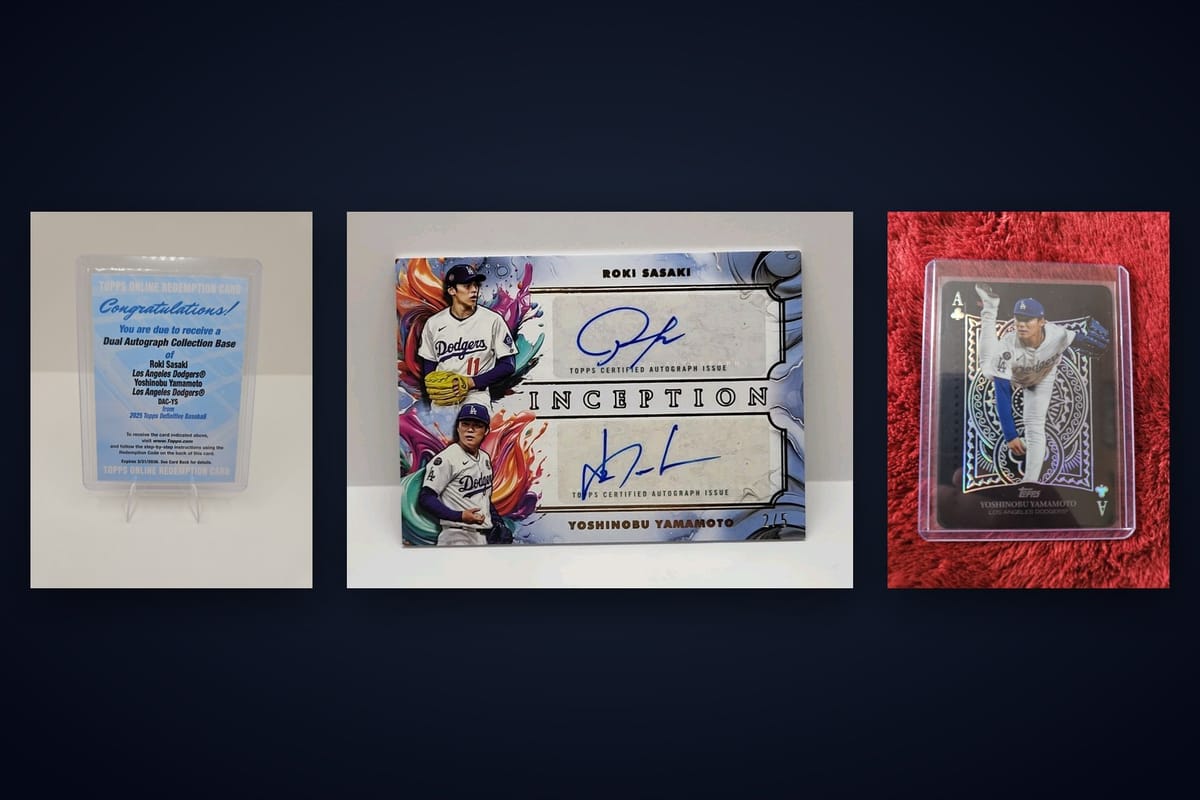
Yoshinobu Yamamoto / Roki Sasaki #DAC-YS 2025 Topps Definitive Dual Autograph |
$1,463 | $6,695 | 4.6× |
 |
Yoshinobu Yamamoto / Roki Sasaki #IDA-SY 2025 Topps Inception Dual Autograph |
$1,400 | $6,576 | 4.7× |
 |
Yoshinobu Yamamoto #AA-11 2026 Topps Series 2 All Aces |
$1,193 | $5,556 | 4.7× |
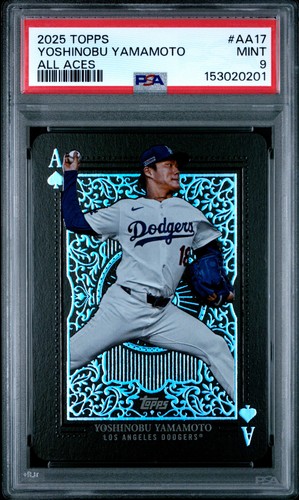 |
Yoshinobu Yamamoto #AA-17 2025 Topps All Aces |
$1,137 | $4,436 | 3.9× |
 |
Yoshinobu Yamamoto / Roki Sasaki [Orange] #DA-YS 2025 Bowman's Best Dual Autograph |
$1,180 | $3,750 | 3.2× |
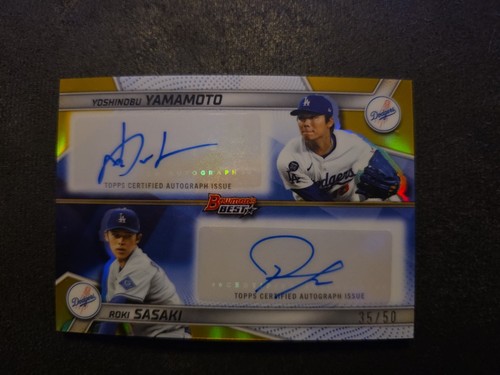 |
Yoshinobu Yamamoto / Roki Sasaki [Gold] #DA-YS 2025 Bowman's Best Dual Autograph |
$820.00 | $3,667 | 4.5× |
 |
Yoshinobu Yamamoto [Special Edition Red Ink] #ROA-YY 2025 Topps Heritage Real One Autograph |
$927.86 | $3,480 | 3.8× |
 |
Yoshinobu Yamamoto #FS-6 2025 Topps Chrome Logofractor Future Stars |
$2.99 | $3,000 | 1003.3× |
 |
Yoshinobu Yamamoto #75YA-YY 2026 Topps 75 Years Of Topps Die-Cut Autograph |
$637.00 | $2,801 | 4.4× |
 |
Yoshinobu Yamamoto [Green Refractor] #AC-YY 2024 Topps Chrome Update Autograph |
$699.99 | $2,407 | 3.4× |
 |
Yoshinobu Yamamoto #T1A-YY 2025 Topps Tier One Tier 1 Autograph |
$553.98 | $2,271 | 4.1× |
 |
Yoshinobu Yamamoto 2025 Topps Archives Signature Series |
$555.55 | $2,210 | 4× |
Look up any card's current raw and graded value in Midpoint — and get an estimated grade before you pay to submit.
Table of Contents
- Section 1: Understanding Yoshinobu Yamamoto Card Values
- Section 2: Most Valuable Yoshinobu Yamamoto Cards to Target
- Section 3: Key Rookie Cards and Their Market Performance
- Section 4: Japanese and NPB Cards - Unique Collecting Angles
- Section 5: Grading Impact - PSA 10 vs Raw and Condition Factors
- Section 6: How to Determine Your Yamamoto Card’s Value
- Section 7: Should You Buy, Hold, or Sell Yamamoto Cards?
- Conclusion
- FAQ
Section 1: Understanding Yoshinobu Yamamoto Card Values
Market Overview as of 2026-09-03
Yoshinobu Yamamoto cards have gained attention as the Japanese ace pitcher has made an impact in Major League Baseball (MLB). Market demand is influenced by his performance, fan interest, and the growing appeal of international players transitioning to MLB. Values vary widely, from entry-level base cards priced under $10, to rare one-of-one superfractor autographed cards that have reportedly sold for high prices. This range reflects factors including card rarity, product prestige, autograph inclusion, and grading status.
Value Ranges Across Card Types
- Base Cards: Entry-level cards such as the 2024 Topps Series 2 #553 serve as foundational pieces for collectors. These raw cards typically trade in the $10–$30 range, with prices generally increasing for higher condition grades and if encapsulated by PSA or BGS as Gem Mint (PSA 10 or BGS 9.5/10).
- Autographed Cards: Autographed cards from premium sets like Topps Dynasty and Bowman Chrome are sought after. Raw autographs usually sell for several hundred to several thousand dollars, and once graded PSA 10 or BGS 9.5, prices can increase significantly, sometimes reaching five-figure sums.
- Parallels & Refractors: Parallels with color variations and refractors introduce scarcity. Serial-numbered parallels, particularly those limited to fewer than 99 copies, can command prices multiple times higher than their base counterparts. For example, a Topps Chrome Refractor serial-numbered /50 could fetch notably more than the base card.
- Rare 1/1 Cards: The top tier of Yamamoto cards includes ultra-rare 1/1 superfractors and logofractor autographs. These cards combine scarcity with premium autograph and design features, with some reportedly surpassing $100,000 in private transactions and auctions.
Midpoint Data Snapshot
Midpoint’s database provides a snapshot of current market prices, enabling collectors to analyze card values by number, product, autograph presence, and grade. This tool allows users to compare raw vs graded prices, identify high-value parallels, and spot emerging opportunities. For example, collectors can filter for PSA 10 graded Topps Chrome autographs and observe price trends over the past 12 months, aiding in timing purchases or sales.
Section 2: Most Valuable Yoshinobu Yamamoto Cards to Target
Top-Tier Autographed Cards
The highest-value Yamamoto cards are predominantly autographed cards from premium and limited-edition products. These cards combine autograph scarcity with low serial numbering and exceptional card design, making them prized in collections and investment portfolios. Notable examples include:
- 2024 Bowman Chrome Superfractor Autographs 1/1: These cards represent the pinnacle of Yamamoto collectibles. As one-of-one superfractors, they feature exclusive refractor technology, pristine card surfaces, and Yamamoto’s autograph. Due to their uniqueness and the cachet of Bowman Chrome autographs, these cards have reportedly achieved sales exceeding $100,000 in auctions and private sales, often attracting strong collector interest.
- Topps Dynasty Patch Autographs: Combining Yamamoto’s signature with game-used material patches embedded in the card, these are highly sought after. PSA 10 graded versions commonly sell for several thousand dollars, with the highest-grade or lowest serial-numbered cards commanding premiums. The intricate patch designs and premium card stock enhance desirability.
- Logofractor 1/1 Autographs: These are unique parallel cards featuring a refracted team logo on the card surface combined with Yamamoto’s autograph. Their serial-numbered 1/1 status ensures scarcity, and they are popular among collectors focusing on unique parallel cards.
High-Value Parallels and Serial-Numbered Cards
Collectors who prefer non-autographed cards can still access valuable Yamamoto cards through parallels and serial-numbered editions. These provide scarcity and visual appeal without the autograph premium. Key examples include:
- Topps Chrome Refractors and Color Parallels: These cards are limited in print run, often numbered to 99 or fewer. Collectors prize refractors due to their vibrant, reflective surfaces, which enhance aesthetics and collectibility. For instance, a Topps Chrome Refractor numbered /50 or less can sell for multiple times the price of its base counterpart, sometimes reaching $150–$200 raw depending on market conditions.
- Topps Update and Bowman Chrome Update Parallels: Released early in the season, these update parallels have shorter print runs, creating scarcity. Early-season parallels often see heightened demand due to their potential as rookie card variants, helping collectors complete sets or focus on investment-grade cards.
Base Cards with Growth Potential
While base cards tend to be the entry point for Yamamoto collectors, some early base cards have shown appreciation, especially when graded. The 2024 Topps Series 2 #553, Yamamoto’s flagship MLB rookie card, is a notable example. Raw cards typically trade for $10–$30, but PSA 10 graded copies have been known to reach higher prices, reflecting a premium.
Collectors may consider acquiring raw base cards in excellent condition for potential future grading, especially if Yamamoto’s career momentum continues. Additionally, base cards from limited print runs or early releases may gain value as collector interest grows.
Section 3: Key Rookie Cards and Their Market Performance
Important Rookie Cards to Know
- 2024 Topps Series 2 #553: Recognized as Yamamoto’s primary MLB rookie card, this card sees significant market demand among entry-level collectibles. Raw versions typically trade between $20 and $40, with PSA 10 graded copies commanding higher prices. The card features a high-quality image and clean design, making it popular among collectors.
- 2024 Topps Update Rookie Debut #US149: This card highlights Yamamoto’s debut moment and is popular due to its limited print run and update set status. It has seen growing demand, especially in high grades, with PSA 10 copies selling for several hundred dollars.
- 2024 Topps Chrome Update Rookie Cards: These cards include refractors and autographs, offering premium rookie card options. Autographed versions graded PSA 10 can command higher prices, driven by the combination of rookie status, autograph, and the prestige of the Chrome brand.
Rookie Card Value Drivers
The primary factors influencing rookie card values include:
- Condition: Cards graded PSA 10 or BGS 9.5 with sharp corners, good centering, and clean surfaces command the highest prices.
- Autograph Status: Signed rookie cards typically sell for multiple times the value of unsigned counterparts.
- Scarcity of Parallels: Limited print runs and low serial numbers increase desirability and value.
- Market Sentiment: Yamamoto’s ongoing MLB success, media coverage, and fan interest can influence demand.
Example Market Pricing (as of 2026-09-03)
- Raw 2024 Topps Series 2 #553: Approximately $25 average, depending on condition.
- PSA 10 2024 Topps Series 2 #553: Approximately $550 average, reflecting a premium over raw.
- Autographed 2024 Topps Chrome Update Rookie: Prices can reach $2,000 or more in PSA 10, with certain refractor parallels potentially higher.
These pricing trends highlight the importance of condition and autograph status in maximizing rookie card value.
Section 4: Japanese and NPB Cards - Unique Collecting Angles
Yamamoto’s 2017 BBM Rookie Card
Before his MLB debut, Yamamoto’s rookie cards from Japan’s Nippon Professional Baseball (NPB) league hold niche appeal. The 2017 BBM rookie card is particularly valued among collectors interested in the player’s Japanese career and international baseball history. While these cards generally trade at lower prices than MLB rookies — typically in the $50–$150 range for raw versions — they offer a unique historical dimension and may appreciate if Yamamoto continues to perform well.
2021 Topps Chrome NPB Cards
Released as part of Topps’ MLB and NPB cross-licensed products, the 2021 Topps Chrome NPB cards document Yamamoto’s transition from Japanese pro ball to MLB. These sets include parallels and autographed versions, with serial numbers often below 99, adding scarcity. PSA 10 graded autographs can sell for several hundred to around $1,000, while raw parallels usually trade between $100 and $300. These cards appeal to collectors who value the narrative of a player’s global journey.
How Japanese Cards Complement MLB Collections
- Japanese cards add historical depth and cultural context to Yamamoto collections, appealing to fans interested in the full scope of his career.
- Market values can be more volatile due to smaller collector bases, but they offer potential long-term upside if Yamamoto continues to achieve MLB success or earns accolades such as All-Star selections or Cy Young awards.
- Parallels and autographs from NPB products often provide more affordable entry points for collectors compared to high-end MLB cards, making them attractive to budget-conscious investors.
- Collectors seeking a comprehensive Yamamoto portfolio often aim to acquire key cards from both Japanese and MLB product lines to showcase the player’s development and international impact.
Section 5: Grading Impact - PSA 10 vs Raw and Condition Factors
Why PSA 10 Matters
Achieving a PSA 10 grade — the highest possible from PSA — is important for maximizing a Yamamoto card’s market value. PSA 10 cards exhibit excellent centering, sharp corners, pristine surfaces, and clean edges. For Yamamoto cards, the price difference between raw and PSA 10 graded versions can be significant, with graded rookies and autographs often selling for multiple times the price of their raw equivalents. For example, a raw 2024 Topps Series 2 #553 may be worth around $25, but a PSA 10 copy can fetch substantially more.
Key Condition Attributes Affecting Grade
- Centering: One of the most influential grading factors, centering measures how well the image is positioned within the card borders. Midpoint’s AI grading tool can measure centering with high precision, helping collectors predict the likely grade before submission. Cards with centering within 55/45 to 60/40 ratios tend to achieve PSA 10, while off-center cards may receive lower grades.
- Corners and Edges: Corners should be sharp and free from fraying or bending. Edges should have clean cuts without chipping or whitening. Even minor imperfections here can lower the grade.
- Surface: The card’s surface should be free from scratches, stains, print defects, or discoloration. Glossy finishes, as found on Topps Chrome, are particularly susceptible to surface wear, making careful handling important.
- Autograph Quality: For signed cards, autograph clarity, ink saturation, and placement impact the overall grade. Smudged or faded signatures can reduce the autograph subgrade in BGS or affect overall PSA grade.
Using Midpoint to Pre-Grade Your Cards
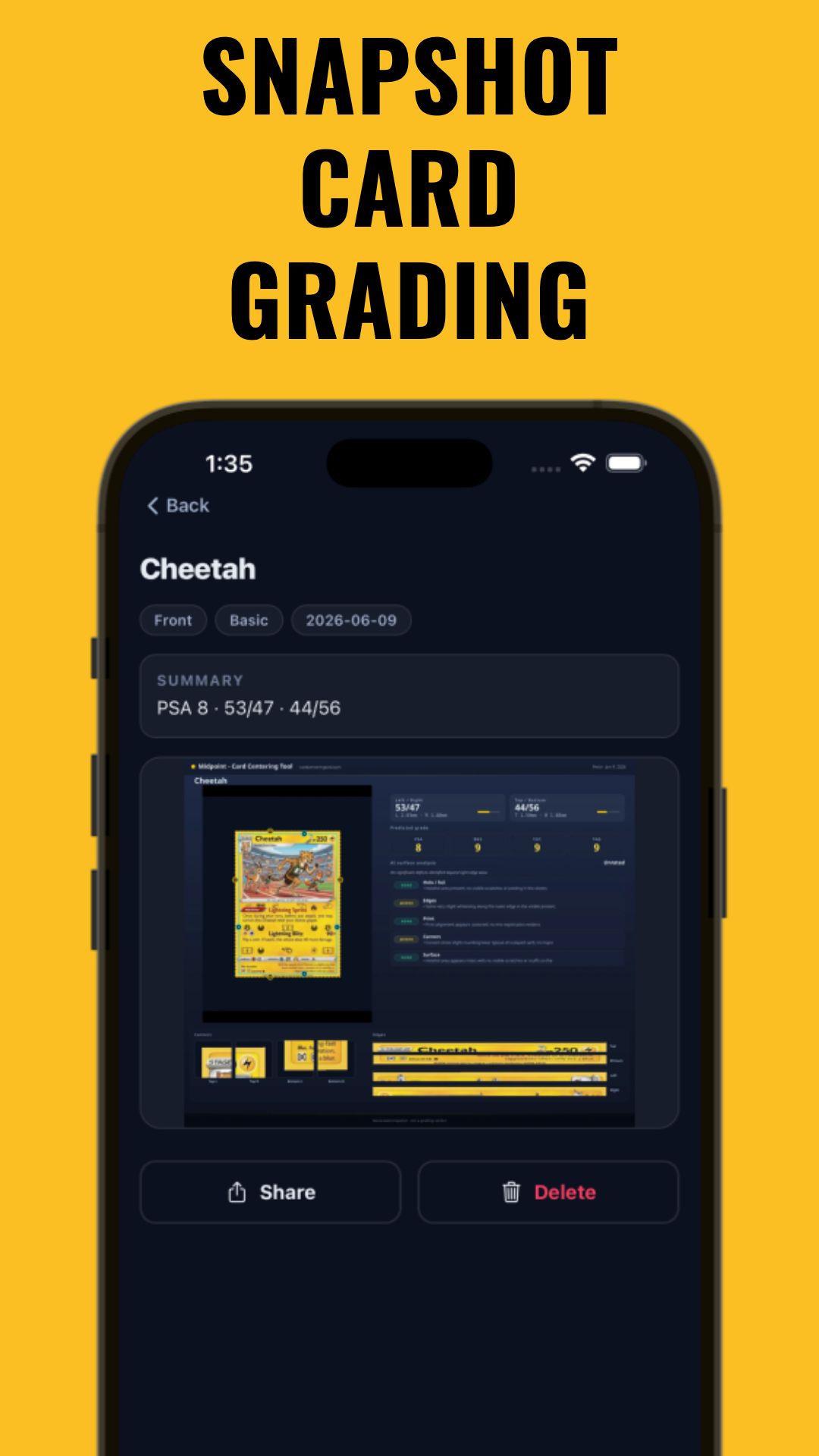
Submitting cards for professional grading can be costly (often $30 or more per card) and time-consuming. To mitigate financial risk, collectors can use Midpoint to obtain grading estimates from top grading companies including PSA, BGS, CGC, and TAG. Midpoint evaluates centering, corners, edges, and surface conditions using AI-driven image analysis, providing realistic grade predictions.
This pre-grading process allows collectors to select only the highest quality cards for submission, improving chances of receiving top grades and optimizing investment returns.
For an in-depth understanding of centering’s effect on card value, see Midpoint’s detailed guide: How Centering Impacts Card Value.
Section 6: How to Determine Your Yamamoto Card’s Value
Important Details for Accurate Valuation
Accurately valuing a Yamamoto card requires attention to several key details:
- Card Number and Set: Different products and years carry varying demand. For example, a 2024 Topps Series 2 #553 commands more interest than a later base card with limited rookie significance.
- Parallel Type and Serial Number: Limited print runs, especially low serial numbers (e.g., /5 or /10), can increase value. A parallel numbered /5 may be worth more than a /50 or base version.
- Autograph Presence: Signed cards typically hold premiums compared to base versions.
- Grading Company and Grade: PSA 10, BGS 9.5/10, and CGC 10 grades carry different market premiums. PSA and BGS are the most widely accepted in the sports card market.
- Recent Sold Listings: Actual completed sales on platforms like eBay or auction houses provide the most reliable pricing benchmarks, as opposed to asking prices which can be inflated.
Using Midpoint’s Card Lookup and Portfolio Tracker
The Midpoint app streamlines valuation by providing lookup access to over 250,000 card listings. Users can view comparative raw vs graded values, serial numbers, autograph status, and recent sales history. This allows for dynamic price discovery and helps collectors monitor their portfolio’s total value over time.
Midpoint’s portfolio tracker offers alerts on price changes, enabling timely decisions on buying or selling. By integrating grading estimates, collectors can also forecast potential value increases post-grading, informing investment strategies.
For hands-on guidance on grading preparation, consult Midpoint’s How to Pre-Grade Your Card step-by-step guide.
Section 7: Should You Buy, Hold, or Sell Yamamoto Cards?
Factors Influencing Investment Decisions
- Performance and Awards: Yamamoto’s MLB success, including potential awards or All-Star selections, can increase collector interest and card demand.
- Playoff and Career Milestones: Exceptional playoff performances or historic moments may cause spikes in card values as collectors seek to commemorate achievements.
- Scarcity and Condition: The limited supply of high-grade autographed cards and 1/1s supports market value and price stability at the top end.
- Market Trends and Speculative Risk: Sports card markets are cyclical and influenced by broader economic factors. Investors should assess current demand and avoid overexposure during speculative bubbles.
When to Buy
Buying opportunities may arise during market dips or when Yamamoto experiences temporary slumps. Raw cards with strong grading potential or undervalued autographs from reputable sellers can be good candidates. Using Midpoint to pre-grade cards before purchase may help maximize grading ROI and minimize risk.
When to Hold or Sell
Holding cards may be appropriate for collectors aiming to capture long-term growth tied to Yamamoto’s career trajectory. Cards showing steady appreciation or with historical significance might be retained. Conversely, consider selling when the market peaks, or if liquidity is needed. Midpoint’s portfolio tracking and price alert features assist in monitoring market conditions and optimizing timing for sales.
Conclusion
Yoshinobu Yamamoto cards represent a diverse and dynamic collecting landscape, spanning affordable rookie cards to rare autographed superfractors commanding high prices. A good understanding of which sets, parallels, and grades command premiums empowers collectors and investors to make informed decisions. Leveraging advanced tools like Midpoint to analyze centering, condition, and grading estimates can enhance strategy and optimize returns.
Focusing on key rookie cards such as the 2024 Topps Series 2 #553, targeting high-value autographs from premium sets, and incorporating Japanese NPB cards for historical breadth allows collectors to build a valuable, well-rounded Yamamoto portfolio. Always verify card values through recent completed sales and utilize Midpoint’s comprehensive data and grading insights to guide buying, grading, and selling actions effectively.
FAQ
Q: How much is a Yoshinobu Yamamoto rookie card worth?
A: The 2024 Topps Series 2 #553 rookie card typically ranges from $20–$40 raw and can sell for several hundred dollars graded PSA 10 as of 2026-09-03. Autographed rookie cards and refractor parallels can command higher prices.
Q: What is the most valuable Yoshinobu Yamamoto card?
A: The 2024 Bowman Chrome Superfractor autograph 1/1 is among the most valuable, with reported sales exceeding $100,000. Other top-tier autographs like Topps Dynasty Patch Autographs also sell for multiple thousands.
Q: Which Yoshinobu Yamamoto rookie card is the best to buy?
A: The 2024 Topps Series 2 #553 is a strong foundational rookie card due to its established market demand and accessibility, while autographed Topps Chrome Update rookies offer higher upside for grading and investment.
Q: How much is a PSA 10 Yoshinobu Yamamoto card worth?
A: PSA 10 graded rookie cards like the 2024 Topps Series 2 #553 can sell for several hundred dollars, while autographed cards can reach higher prices depending on rarity and product.
Q: Are Yoshinobu Yamamoto cards a good investment?
A: They can be, especially high-grade rookies and autographs from premium sets. However, values depend on player performance, scarcity, and grading. Using tools like Midpoint helps assess risk and value for informed investing.
Q: How do I find the value of my Yoshinobu Yamamoto card?
A: Use Midpoint’s card lookup tool to check raw and graded values, recent completed sales, and get grading estimates based on centering and condition, enabling accurate valuation and informed decisions.
Free to start
Try the Midpoint app
Grade any card from a photo, see its raw and PSA 10 value, and track what your collection is worth — free.
Get it on iPhoneGet it on Android