The Ultimate Yu-Gi-Oh! Card Centering Guide: Perfect Your Yu-Gi-Oh! Card Margins
Learn about Yu-Gi-Oh! card centering for grading, trading, and tournament standards. This guide covers measuring tools and best practices.

Estimated reading time: 7 minutes
Key Takeaways
- Card centering is the evenness of the borders around art and text, crucial for grading and tournament use.
- Off-centering can impact a card’s grade, value, and legality in competitive play.
- You can measure centering with an eye test, physical overlays, and digital tools.
- Key tools include acrylic overlays, digital calculators, and specialized web apps.
- Best practices involve proper handling, lighting, documentation, and protective storage.
Table of Contents
- Understanding Card Centering in Yu-Gi-Oh!
- Why Card Centering Matters
- Step-by-Step Card Centering Tips
- Pre-Grading with Card Centering Tool
- Tools and Techniques
- Best Practices and Pro Tips
- Additional Considerations
- Conclusion
Understanding Card Centering in Yu-Gi-Oh!
Card centering refers to how evenly the printed image and text box sit within the four borders of a Yu-Gi-Oh! card. Proper centering means top, bottom, left, and right borders appear equal or nearly so.
Grading Ratios
- PSA/BGS use ratios like 50/50, 55/45, or 60/40 on the front.
- The back often has looser tolerances, like 75/25.
Miscalled or miscut cards can look marked if one border is too thin or missing. In tournaments, a card that stands out face-down can be ruled “marked,” leading to deck checks or even disqualification.
Casual vs. Competitive Standards
- Casual play: Off-centering is generally fine if the card is readable and genuine.
- Competitive play: Strict uniformity is expected. Judges and opponents watch for miscuts that could be used to identify cards in a face-down deck.
Why Card Centering Matters
1. Impact on Grading and Value
- PSA and BGS assign centering as a subgrade, with poor centering potentially dropping a card from Gem Mint to lower tiers.
- Value loss can reach 20–50% if a card is off-centered.
For a detailed comparison of grading tolerances across major graders, see PSA vs BGS vs CGC: Centering Tolerances Compared.
2. Tournament and Trade Disputes
- Marked-card concerns arise when one card’s borders differ from the rest.
- Tournament organizers may require uniform sleeves or judge approval.
- In high-value trades, centering becomes a negotiation point.
Step-by-Step Card Centering Tips
- Prepare a Clean Workspace
Flat desk or playmat, wear cotton or nitrile gloves to avoid fingerprints. - Handle Cards Properly
Hold by edges only. Slide in/out of sleeves slowly to prevent scratches. - Perform an Eye Test
Under bright, even light, compare left vs. right and top vs. bottom borders. If borders look uneven to the naked eye, centering is likely worse than 60/40. - Use a Physical Centering Tool
Acrylic Legends Card Grading Centering Tool:
• Remove protective film for clarity.
• Align one border with reference lines.
• Read scale markings on each side to get unit measurements.
• Use the percentage guide to convert units into ratios (e.g., 60/40). - Use Digital Centering Calculators
For a comprehensive walkthrough on digital centering, see How to Measure Card Centering: A Step-by-Step Guide for Collectors. You can also refer to Is My Card Off-Center? How to Tell Before Grading for tips on borderline submissions. - Compare to PSA/BGS Tolerances
Front: 55/45–60/40 is ideal for Gem Mint. Back: Up to 75/25 is acceptable. - Document Results
Photograph front and back with good lighting. Log ratios and note any visible concerns before grading or trading.
Pre-Grading with Card Centering Tool
To eliminate guesswork and save on grading fees, try Card Centering Tool, a web app that automatically calculates precise centering ratios and flags whether your card meets PSA, BGS, and CGC tolerances before you submit. This tool helps you decide which cards are worth grading and which to skip or sell raw. For a broader understanding of centering across different card games and types, check out this complete guide to card centering by type.
Tools and Techniques
Physical Tools
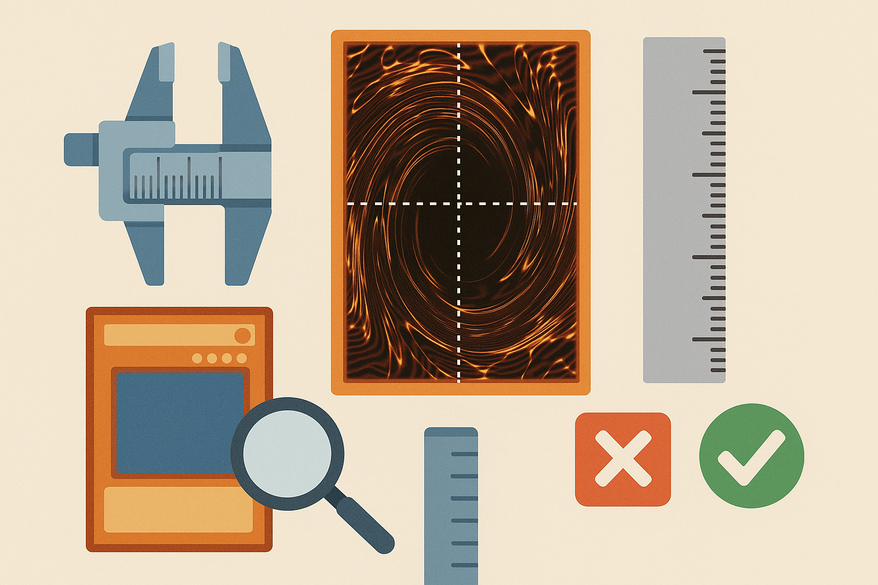
- Acrylic Centering Overlay (Legends Tool): transparent overlay with measurement lines and built-in percentage guide.
- Rulers or digital calipers: measure border widths in millimeters and calculate ratios manually.
Digital Tools
- Jade Lizard Card Centering Calculator: AI-powered, supports multiple grading standards, shows which centering fits which grade.
- CenteringCheck: free web app, quick auto-measurements for trading cards.
Recommendations by Experience Level
- Beginners: Start with the eye test, a simple overlay, and free web tools. Learn visual 50/50 vs. 60/40 centering.
- Experts: Use a combination of acrylic tool and digital calculators to cross-validate. Know each grading company’s thresholds for maximum return on investment. For a deep dive into grading standards and how centering is evaluated by PSA, BGS, CGC, SGC, and TAG, see this comprehensive comparison of card grading centering standards.
Best Practices and Pro Tips
- Evaluate Holistically
Check surface for scratches, edges for whitening, and corners for dings. Centering is one of four grading pillars: centering, surface, edges, corners. For a complete overview of centering’s role in grading and collecting, see the definitive guide to card centering for grading and collectors. - Practice on Low-Value Cards
Train your eye and tool skills with bulk cards before tackling high-value pulls. - Pre-Purchase Checks
Request straight-on photos under good light. Zoom in on borders to assess centering before buying or trading. - Protective Storage
After centering, use penny sleeves and semi-rigid holders to protect corners and edges.
Additional Considerations
Card Condition Maintenance
- Use a microfiber cloth to dust off cards before measurement.
- Work on a soft surface like a playmat to avoid scratches.
Community & Tournament Standards
- Authenticity and uniform sleeves are key for tournaments.
- Cards must not be distinguishable by feel or appearance.
- Judges can rule on severely miscut cards before an event.
Conclusion
This Yu-Gi-Oh! card centering guide showed:
- What centering is: the evenness of borders around art and text.
- Why it matters: it drives grading subgrades, affects card value, and can trigger marked-card rulings.
- How to measure: from eye tests to acrylic overlays and digital calculators.
- Best practices: good handling, holistic grading checks, and protective storage.
Following this guide will boost your grading success and help you make smart decisions when buying, selling, or trading. Share your experiences, photos, and questions in the comments to build community knowledge.
FAQ
How do I know if my card is off-center?
Perform a simple eye test under bright, even light. Compare border widths left vs. right and top vs. bottom. If the borders look noticeably uneven to the naked eye, your card is likely outside ideal centering ratios.
What tools do I need to measure centering accurately?
You can start with an acrylic centering overlay for a quick physical measurement and a free web app like CenteringCheck. For maximum precision, pair a physical overlay with a digital calculator such as the Jade Lizard Card Centering Calculator.
How much value can I lose from poor centering?
Cards with suboptimal centering can lose 20–50% of their market value, especially at high grades where centering is a critical subgrade factor.
Can I still use off-center cards in tournaments?
Casual events may allow slight off-centering, but competitive tournaments require uniformity. Judges can prohibit cards that are visibly miscut or distinguishable face-down.
What is the ideal centering ratio for PSA Gem Mint?
PSA considers 55/45 to 60/40 centering on the front and up to 75/25 on the back as acceptable for Gem Mint submissions.
Free to start
Try the Midpoint app
Grade any card from a photo, see its raw and PSA 10 value, and track what your collection is worth — free.
Get it on iPhoneGet it on Android