Yugioh Card Prices Dropping November 2026: 10 Things to Know
Yugioh card prices dropping in November 2026? See which cards fell, why supply and reprints drive dips, and how to verify a drop before you buy.

Estimated reading time: 8 min
Key Takeaways
- Yugioh card prices dropping in November 2026 likely reflect supply, reprints, and fading hype more than a collapse of the hobby.
- Elfnote Lucina, Armades, Zenna's Deceiving Doll Maidens, Intercept Wave, Blue-Eyes White Dragon, and Bramble Rose Dragon are the names to watch. Exact figures are in the table, as of 2026-11-15.
- Printing, rarity, edition, and condition can matter more than the headline price, so always compare the exact version.
- A percentage drop on a few sales can be noise. Check sales history and listing depth first.
- A cheap copy that centers well can be a smarter dip buy than overpaying for a slab.
If you're tracking yugioh card prices dropping in November 2026, you've probably noticed a lot of red on your watchlist. Falling Yugioh card prices spook some collectors and excite others. This guide explains what could be behind the dip and which cards moved. It also covers how to tell a real decline from a thin-market blip, and how to use the market without getting burned.
The cards and figures here come from Midpoint's own database as of 2026-11-15. The table in this post shows the numbers. The text below explains how to interpret them, and I don't add figures beyond that table.
30-day price movers — live data from Midpoint's card database, as of 2026-11-15. Prices move; Midpoint refreshes these daily.
| Card | Raw | PSA 10 | 30-day | |
|---|---|---|---|---|
 |
Blackwing - Vayu the Emblem of Honor [Ultimate Rare] ANPR-EN005 YuGiOh Ancient Prophecy |
$152.50 | $557.70 | -84.5% |
 |
Breakthrough Skill [Ultimate Rare] CBLZ-EN078 YuGiOh Cosmo Blazer |
$18.99 | $70.00 | -78.8% |
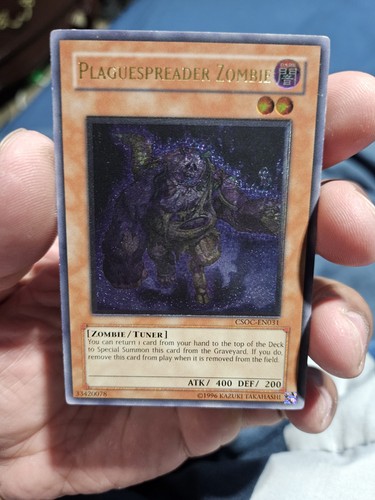 |
Plaguespreader Zombie [1st Edition] CSOC-EN031 YuGiOh Crossroads of Chaos |
$390.20 | $1,063 | -76.1% |
 |
Saggi the Dark Clown KC01-EN021 YuGiOh 25th Anniversary Ultimate Kaiba Set |
$74.56 | $140.00 | -70.8% |
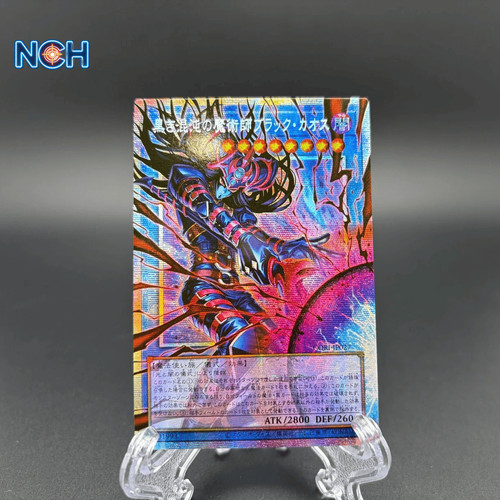 |
Magician of Dark Chaos - Black Chaos [Prismatic Secret Rare] CORI-JP027 YuGiOh Japanese Chaos Origins |
$343.49 | $584.00 | -64.2% |
 |
Tri-Blaze Accelerator [Ultimate Rare 1st Edition] FOTB-EN041 YuGiOh Force of the Breaker |
$15.00 | $280.00 | -62.3% |
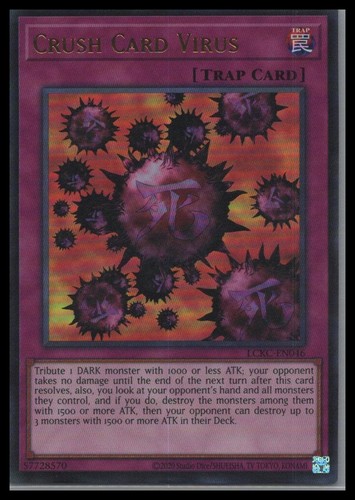 |
Crush Card Virus KC01-EN053 YuGiOh 25th Anniversary Ultimate Kaiba Set |
$22.00 | $67.67 | -58.7% |
 |
Booster Pack YuGiOh Duelist Pack: Chazz Princeton |
$12.78 | — | -57.4% |
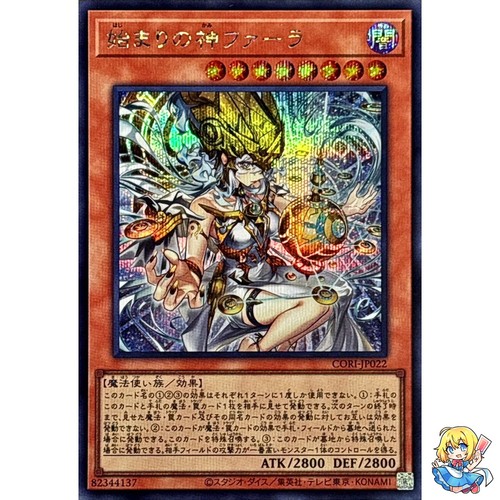 |
Phara the Primordial Goddess [Prismatic Secret Rare] CORI-JP022 YuGiOh Japanese Chaos Origins |
$309.20 | $1,038 | -57.2% |
 |
Volcanic Rocket [1st Edition] FOTB-EN000 YuGiOh Force of the Breaker |
$56.46 | $759.00 | -55.4% |
 |
Cyberdark Horn [Ultimate Rare] CDIP-EN001 YuGiOh Cyberdark Impact |
$57.43 | — | -55.2% |
 |
Elfnote Tinia [Starlight Rare] BPRO-EN011 YuGiOh Burst Protocol |
$23.04 | — | -53.8% |
Look up any card's current raw and graded value in Midpoint — and get an estimated grade before you pay to submit.
1. The Yugioh Card Market in November 2026: What the Dip Looks Like
The Yugioh card market in November 2026 looks like a broad cool-off rather than one crash. When many singles slip at once, the cause is often structural: more copies, less excitement, or both. A single bad week on one card says very little.
Read the table in this post as a 30-day snapshot, not a verdict. A card near the top of the decliners list may simply have spiked earlier, and one near the bottom may have been flat for months.
- Look at direction and size. A slow slide across weeks means more than a one-day drop.
- Separate raw from PSA 10. Raw and graded prices can move for different reasons.
- Note the date. Everything here is as of 2026-11-15, and prices can change quickly.
2. Elfnote Lucina and Armades: Newer, Hype-Driven Names Cooling Off
Elfnote Lucina and Armades are among the cards flagged in the November decliners data. Check the table for the exact 30-day moves. Cards like these can move on short-term demand: a deck gets attention, singles climb, and then supply catches up.
When a card's price was driven by hype, falling prices can mean it is returning to its baseline. That doesn't make it a bargain. It may mean the premium for being new or buzzy is wearing off.
- Check whether the card is actually seeing tournament play, or just social media talk.
- Compare against the card's earlier price range, not just last month's peak.
- Ask whether more copies are likely to enter the market.
3. Zenna's Deceiving Doll Maidens and Intercept Wave: Playables Under Pressure
Zenna's Deceiving Doll Maidens and Intercept Wave are playable cards, so their prices depend on deck demand as much as collector interest. When a deck fades or a card becomes easier to find, playable prices can fall without any change in the card itself.
This is why a falling playable is a different situation from a falling collectible. A playable can rebound if the metagame shifts back, but there's no guarantee. A collectible tends to recover only if collector attention returns.
- Check deck demand: look at recent tournament results and deck lists.
- Check supply: a flood of listings is bearish even when demand is steady.
- Don't assume a rebound: a cheap playable can stay cheap.
4. Blue-Eyes White Dragon and Bramble Rose Dragon: Iconic and Rarity Cards Aren't Immune
Blue-Eyes White Dragon is one of the most recognizable Yugioh cards ever printed, and it still shows up in the decliners data. That surprises people. Iconic status supports demand, but it doesn't stop prices from moving when supply is high or the market cools.
Bramble Rose Dragon is also in the data. Like Blue-Eyes, the question is which version dropped, since a single name covers many printings. A Blue-Eyes price can mean wildly different things depending on set, rarity, and edition.
- An iconic card has deeper demand, but it also often has many printings.
- Falling Blue-Eyes prices may reflect common printings, not rare ones.
- Always confirm which printing the number refers to before reacting.
5. Price Differences by Printing, Rarity, Edition, Set, and Condition
The same card name can be worth very different amounts depending on the exact copy. When people say yugioh cards are losing value, they usually mean one specific version.
- Printing and set: an original set copy and a recent reprint are different products.
- Rarity: Secret Rare, Ultra Rare, and Common versions trade in separate price tiers.
- Edition: 1st Edition, Unlimited, and Limited copies carry different premiums.
- Raw condition: Near Mint, Lightly Played, and Moderately Played can be far apart in price.
- PSA-graded condition: a PSA 10 trades differently from a PSA 9, and both differ from raw.
Before you compare any two prices, make sure you are comparing the same version in the same condition.
6. How Reprints, Tins, and Increased Supply Push Singles Lower
Supply is a major force behind falling Yugioh card prices. When a card is reprinted, in a set, a tin, or another product, more copies reach the market, and prices often respond.
Tins deserve a mention because they put cards into many hands at a low entry price. Cards that appear in them often settle at lower prices, especially for the common-rarity versions.
- More copies usually means a lower price, unless demand grows just as fast.
- Original printings can hold up better because their supply is fixed, though this isn't guaranteed.
- Be wary of cards with a long reprint history, since another reprint is always possible.
7. Forbidden and Limited List Changes, New Sets, and Metagame Shifts
The Forbidden and Limited List can move prices fast. A card that gets banned or limited can lose competitive demand quickly. A card that moves to a looser status can gain it. Neighboring cards in the same deck often move too, because a deck's whole demand can shift at once.
New set releases work similarly. A new set can push attention toward fresh cards and away from older ones. Older staples can slip as players move toward new strategies.
- Check the latest list announcement for any card you hold.
- Identify which decks depend on that card.
- Watch the metagame after a set release, not only before it.
Don't assume that a list change fully explains a price move. Confirm with sales data.
8. Real Decline or Thin Market? How to Spot Low-Volume Swings
A big percentage drop sounds dramatic, but on a thinly traded card it can come from just a few sales. A card that sells twice a month can swing wildly on one cheap sale. That's a thin-market swing, not a trend.
A genuine decline usually shows up as many sales at lower prices, across a sustained period. It often shows up in raw and graded versions together, and in multiple conditions.
- Count the sales. More sales behind the move means more reliability.
- Check the spread. If recent sales vary widely, the average means little.
- Compare to similar cards. If related cards fell too, it's more likely real.
9. How to Verify Prices Before You Buy: TCGplayer and Sales History
Before buying any card in a dip, take a few minutes to verify. A listed price is not the same as a sale price.
- Open the card's TCGplayer page and check recent sales, not just the market price.
- Review listing depth: how many copies are for sale, and how far apart are the prices?
- Check price history to see whether the drop is part of a long slide or a recent spike reversing.
- Match the exact printing, edition, and condition to your target copy.
- Cross-check with a second source, such as the card lookup in Midpoint, which shows raw versus graded values.
If sales are sparse, treat any number as a rough estimate and be patient.
10. Is It a Good Time to Buy? Opportunities, Risks, and Grading a Cheap Copy
Falling prices create chances, but not automatically good ones. For iconic cards and long-term favorites, a dip can be a reasonable entry point if you plan to hold. For competitive staples, the question is whether the deck still has demand. For sealed product, ask whether a reprint is coming.
The risks of buying the dip are real:
- Continued reprints can push prices lower still.
- Fading hype means a card may not return to its peak.
- Poor liquidity can make a card hard to sell later.
- Condition issues can erase the savings from a cheap raw copy.
- Overpaying for graded cards is easy when you don't compare against raw prices.
One smart approach is to buy a cheap raw copy and check whether it could grade well. Centering is one of the factors graders weigh, and it's something you can measure before you pay. Our guide on how centering impacts card value explains why, and how to pre-grade your card walks through the full check.

Midpoint measures centering and gives estimated PSA, BGS, CGC, and TAG grades before you pay grading and submission fees. Compare the raw and PSA 10 values for the card, then decide whether grading makes sense. It helps to understand how grading scales differ by company too. If you do buy, protect it with proper card storage.
Conclusion
Yugioh card prices dropping in November 2026 may reflect supply, reprints, and cooling hype across many cards, from Elfnote Lucina and Armades to Blue-Eyes White Dragon. The dip is real in places, but each card needs its own check. Match the exact version, confirm the sales volume, and think about liquidity before you buy.
Used carefully, falling prices can be a good moment to pick up cards you wanted anyway. Skip the panic, verify the data, and let measured condition guide your choices. You can try Midpoint free on iOS and Android to check centering and track your collection's value over time.
FAQ
Q: Why are Yu-Gi-Oh card prices dropping in November 2026?
A: Common causes include increased supply from reprints and tins, fading hype around newer cards, and metagame or Forbidden and Limited List shifts that reduce deck demand. The effect varies card by card, so check the specific version you care about.
Q: Which Yu-Gi-Oh cards dropped the most in November 2026?
A: In Midpoint's data as of 2026-11-15, the cards flagged include Elfnote Lucina, Armades, Zenna's Deceiving Doll Maidens, Intercept Wave, Blue-Eyes White Dragon, and Bramble Rose Dragon. See the table in this post for the exact raw and PSA 10 moves.
Q: Is now a good time to buy Yu-Gi-Oh cards during the November 2026 price dip?
A: It can be, if you verify recent sales, match the exact printing and condition, and accept the risks of further reprints and poor liquidity. Cards you plan to hold long term are better dip candidates than short-term flips.
Q: Are Blue-Eyes White Dragon, Dark Magician Girl, and Red-Eyes Black Dragon prices falling?
A: Blue-Eyes White Dragon appears in the November decliners data as of 2026-11-15. I don't have figures for Dark Magician Girl or Red-Eyes Black Dragon here, so look them up by exact printing in a card lookup tool before drawing conclusions.
Q: How do reprints and Forbidden and Limited List changes affect Yu-Gi-Oh card prices?
A: Reprints add supply, which usually lowers prices. List changes can cut or raise competitive demand for a card and the decks built around it. Both effects can be uneven across printings and rarities.
Q: How can I tell whether a Yu-Gi-Oh price drop is real or caused by low sales volume?
A: Look at the number of recent sales, the spread between them, and the listing depth. A real decline shows many sales at lower prices over time, often across related cards. A thin-market swing rests on a few sales and can reverse quickly.
Free to start
Try the Midpoint app
Grade any card from a photo, see its raw and PSA 10 value, and track what your collection is worth — free.
Get it on iPhoneGet it on Android