Baseball Card Prices Dropping November 2026: 10 Key Factors
Baseball card prices dropping November 2026? See why prices cool off, how to verify a real drop, and how to buy the dip by grading a well-centered raw copy.

Estimated reading time: 9 min
Key Takeaways
- Much of the November softness likely comes from seasonal demand fading after the World Series, plus supply pressure and lockout uncertainty. It is not necessarily a crash.
- Falling baseball card prices tend to hit hype-driven modern cards, prospects and sealed wax harder than vintage.
- Verify any drop with completed sales, several recent transactions, bid counts and listing volume, not a single asking price.
- A dip can be a good time to buy a cheap raw copy that centers well and compare grading fees with the expected PSA value.
30-day price movers — live data from Midpoint's card database, as of 2026-11-20. Prices move; Midpoint refreshes these daily.
| Card | Raw | PSA 10 | 30-day | |
|---|---|---|---|---|
 |
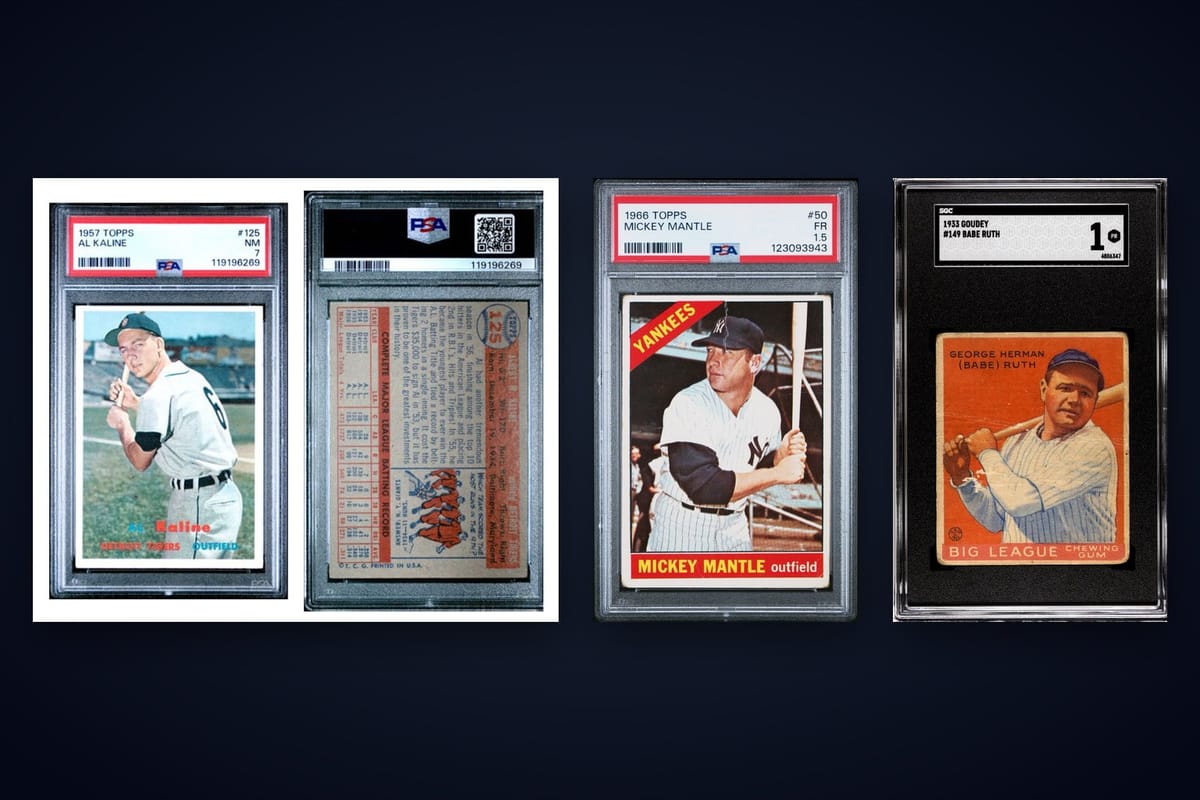
Al Kaline #125 1957 Topps |
$38.75 | $8,964 | -12.4% |
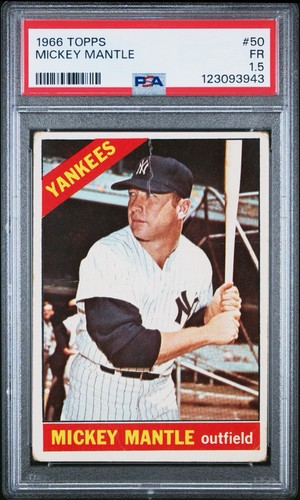 |
Mickey Mantle #50 1966 Topps |
$209.50 | $32,171 | -12.1% |
 |
Babe Ruth #149 1933 Goudey |
$6,100 | $2,458,725 | -6.8% |
 |
Shohei Ohtani #RA-SO 2018 Topps Chrome Rookie Autograph |
$10,902 | $23,840 | -5.2% |
 |
Mets Rookie Stars: Nolan Ryan #177 1968 Topps |
$620.00 | $106,676 | -5.1% |
 |
Reggie Jackson #260 1969 Topps |
$169.50 | $73,008 | -3.5% |
 |
Shohei Ohtani #433 2020 Topps Heritage |
$32.50 | $385.00 | -2% |
 |
Jacob Misiorowski [75th Anniversary] #10 2026 Topps Flagship Real One Autograph |
$427.41 | $1,829 | -1.1% |
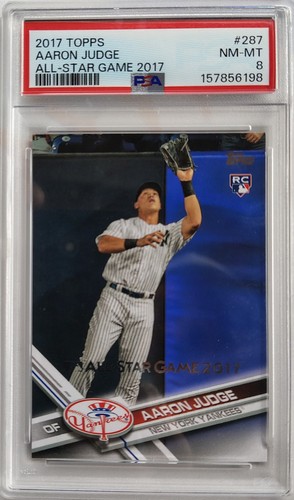 |
Aaron Judge [Catching All Star Game] #287 2017 Topps |
$33.69 | $280.35 | 0% |
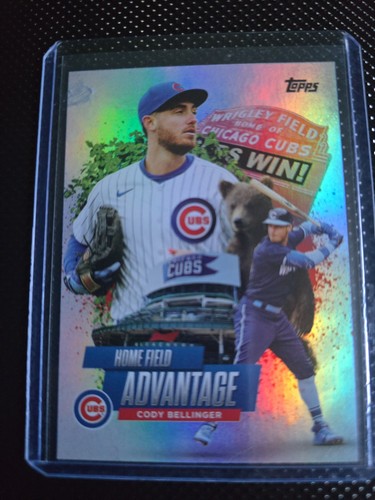 |
Cody Bellinger #HA-13 2025 Topps Home Field Advantage |
$19.99 | $180.00 | 0% |
 |
Roberto Clemente #164 1955 Topps |
$2,043 | $697,500 | 0% |
 |
Munetaka Murakami [Blue Refractor] #CRA-MM 2026 Bowman Chrome Rookie Autograph |
$1,675 | $7,507 | 0% |
Look up any card's current raw and graded value in Midpoint — and get an estimated grade before you pay to submit.
Introduction
If you have noticed baseball card prices dropping in November 2026, you are not imagining it. Lots of collectors are asking the same thing: are baseball cards losing value, or is this the usual post-season cool-off?
This guide breaks down what typically drives a baseball card market slump in November 2026, how to check whether a price drop is real, and how to use the dip. This post does not cite specific card prices or sales figures, so check current completed sales for any card you are tracking.
1. The Post-World Series Attention Fade
One likely driver of falling baseball card prices in November is simple: attention moves on. During the postseason, casual buyers search for stars, watch highlights, and click "buy it now." Once the World Series ends, that traffic tends to fade.
Modern stars are among the most exposed because their prices lean on current hype. When a player is not on TV every night, fewer people may pay a premium for their cards.
- What it looks like: asking prices linger, bids come in lower, and listings take longer to sell.
- What to do: treat a November price as a seasonal data point, not a permanent reset. Compare it with the same cards before the playoffs.
2. Lower Buyer Demand and Quieter Breakers
Breakers and box-openers are a major source of demand for modern cards, especially base rookies, parallels and autographs. When break activity slows in the offseason, demand for singles that breakers typically buy to fill out sets or resell can slow too.
Fewer buyers means sellers compete on price. That alone can make baseball cards look like they are losing value even if collector interest has not changed.
- Cheaper, mid-tier parallels may feel it first.
- Cards that sell frequently show the drop faster because there are more sales to reflect it.
3. Supply Pressure: Print Runs, New Releases and Reprints
Supply is the quiet force behind many dips. Modern baseball products are printed in large quantities, and new releases keep adding more copies of the same players and the same rookies.
When a new set drops, collectors can choose between an older card and a fresh one of the same player. Older modern cards can soften as a result. Reprints, re-issues and similar variations can add to the pile.
- High print runs: more copies mean buyers can wait for a better price.
- New releases: new sets can pull cash and attention away from earlier ones.
- Reprints and look-alikes: they can dilute demand for a specific card.
4. Rising Graded Populations
Every time a collector sends in a card and it comes back a PSA 10, the population grows. For popular modern cards, high-grade populations tend to climb over time, and a PSA 10 can stop being as scarce as it was at launch.
That is one reason a PSA 10 of a heavily graded modern card can drift down even when the player is still doing well. If you are curious how different companies treat top grades, see this guide to grading scale differences by company.
For scarce cards, the opposite can apply. Our guide to grading low population cards explains why low-pop copies can hold value better.
5. MLB Lockout Uncertainty
Labor talk is another source of caution. The current collective bargaining agreement is widely reported to expire in December 2026, and any talk of a lockout may make some collectors and dealers more careful with modern inventory.
In practice, uncertainty could show up in three ways:
- Dealer offers: dealers who fear a slow winter may offer less for modern stock.
- Collector sentiment: some buyers may hold cash until they know what the next season looks like.
- Prospect and rookie cards: these depend on future playing time, so they may feel doubt most.
This is sentiment, not a verified price event. Treat it as one possible reason a card is cooling, not the only one.
6. Modern Hype Cards Versus Vintage Resilience
Not every part of the baseball card market moves together. Vintage cards generally trade on rarity, history and long-term collector demand, so they tend to be less sensitive to a quiet offseason. Modern prospect, rookie and hype-driven cards trade more on momentum, so they can swing harder.
- Most exposed: prospects, current-season rookies, short-term hype parallels.
- Often steadier: established Hall of Fame names, vintage stars, cards with real scarcity.
Even so, vintage is not immune. Weak-condition vintage can be soft, and sales can be thin. Always check completed sales.
7. Raw Versus Graded: PSA 10 and PSA 8 Gaps
When you look up a card, the gap between raw and graded values tells you a lot. In a dip, the spread between a raw copy and a PSA 10 can shift because high-grade copies carry the supply and hype risk, while raw copies are priced more by what a buyer thinks they might grade.
Condition-adjusted gaps matter too. A PSA 8 often trades at a very different level from a PSA 10, and in a soft market the premium for perfection can compress or widen depending on how many 10s exist.
- Look up both the raw and graded values for the same card, not just one.
- Compare PSA 10 against PSA 8 or 9 to see whether you are paying for perfection or for the player.
- Check recent completed sales for the raw and PSA 10 comparison on the specific card you care about.
You can look up raw vs graded values across a large card database in Midpoint.
8. How to Verify a Real Price Drop
A scary headline or one cheap listing is not a market. Before you decide a card has fallen, run a quick check:
- Use completed sales, not active asking prices. Sellers can ask anything.
- Look at several recent transactions, not just the last one. One sale can be a fluke, a damaged copy or a mislabeled grade.
- Compare against the seven-day high to see how far prices really moved.
- Check bid counts. A sale with one bid is weaker evidence than one with many.
- Watch listing volume. A flood of new listings can point to supply pressure; thin listings with low prices can suggest weak demand.
- Match the grade and variant exactly. A PSA 9 and a PSA 10 are different markets.
If several recent sales line up lower, with healthy bids and rising listings, the drop is likely real. If only one sale is low, wait.
9. How to Buy the Dip: Liquid Players, Centering and Grading Math
If you want baseball cards to buy the dip, be selective. A falling price is only an opportunity if the card can recover or at least resell.
Choose liquid players. Favor names that sell often and have broad collector demand. Stars like Ohtani are the kind of name that tends to trade frequently, which makes pricing easier to verify. That is a liquidity point, not a claim about a specific price move.
Evaluate raw centering first. Centering is one of the easier flaws to judge before buying, and it can affect the grade a lot. Our guide on how centering impacts card value shows why. You can measure with the free centering calculator or run a full estimate in Midpoint.
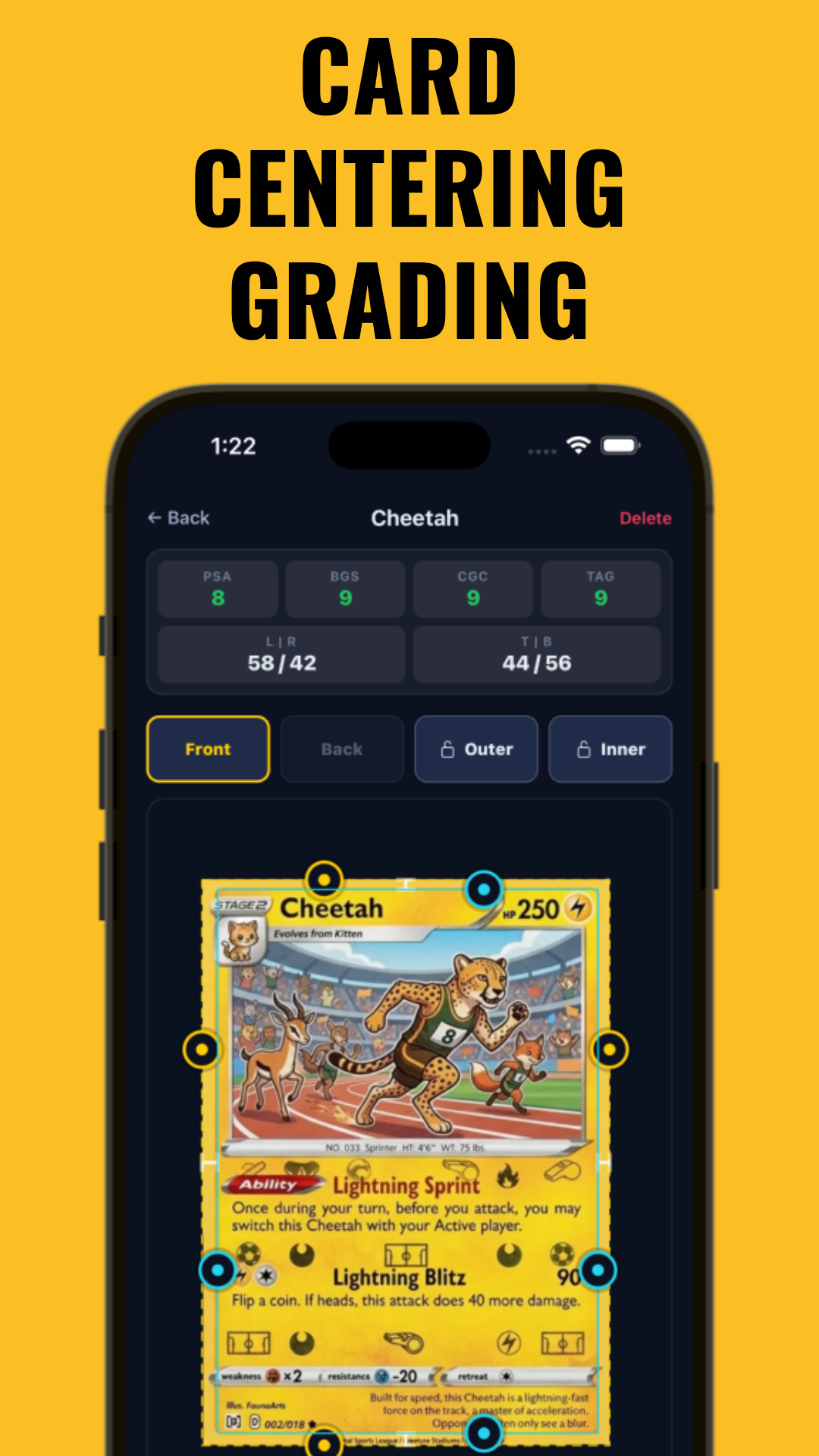
Do the grading math. Compare the cost of buying raw, the grading fee (which varies by company and service tier, and can be $30 or more per card), and the expected value at the grade you realistically think it will earn. If a raw copy only pays off when it hits a PSA 10, the odds need to be good. Walk through our step-by-step pre-grading guide before you submit.
10. Black Friday and Holiday Opportunities for Sealed Wax
November often brings discounts. Retailers and hobby shops commonly run Black Friday sales on boxes and cases, and holiday releases can add more supply for gift-buying.
The question is whether sealed wax is holding value or just being discounted. Check this before buying:
- Compare box prices to recent completed sales, not to the original retail price.
- Watch for new-release supply. A freshly released box can be cheaper next month.
- Think about your goal. If you want to rip and enjoy, a discount is a win. If you want to flip, margins can be thin in a soft market.
If you buy singles from your breaks, track them as you go, and store them well. Our guide on how to store valuable cards helps protect condition.
Conclusion
Baseball card prices dropping in November 2026 is likely a mix of seasonal fade, supply pressure, growing graded populations and offseason uncertainty. It is rarely one single cause. Vintage tends to be steadier, while hype-driven modern cards, prospects and sealed boxes often feel it first.
Verify before you react, and buy selectively. Pick liquid players, check centering on raw copies, and do the grading math. To estimate a PSA, BGS, CGC or TAG grade before you pay to submit, try Midpoint, free on iOS and Android.
FAQ
Q: Why are baseball card prices dropping in November 2026?
A: Common causes include fading World Series attention, lower buyer demand, quieter breaker activity, new-release and reprint supply, rising graded populations, and uncertainty around a possible MLB lockout. Together they can push many modern cards down.
Q: Which baseball cards are losing the most value right now?
A: Hype-driven modern cards, prospects, recent rookies and heavily graded PSA 10s are usually the most exposed. Check recent completed sales for the specific cards you follow.
Q: Is this a real baseball card market crash or just a seasonal offseason dip?
A: Much of it may be seasonal, since demand typically softens after the postseason. Treat it as a crash only if lower prices persist across many cards and sales after the holidays and into the new season.
Q: Should I buy baseball cards while prices are falling?
A: It can be a good time if you are selective. Focus on liquid players, verify prices with completed sales, check centering on raw cards, and compare grading fees with the expected graded value. Avoid buying just because something is cheaper.
Q: Are raw baseball cards or PSA 10 cards dropping more in value?
A: It depends on the card. PSA 10s of heavily graded modern cards often feel supply pressure, while raw prices follow what buyers think a copy might grade. Look up both values for the same card to see the gap.
Q: How can I tell whether a baseball card price decline is real?
A: Use completed sales, check several recent transactions and the seven-day high, look at bid counts and listing volume, and match the exact grade and variant. One low sale is not a trend.
Free to start
Try the Midpoint app
Grade any card from a photo, see its raw and PSA 10 value, and track what your collection is worth — free.
Get it on iPhoneGet it on Android