Baseball Cards Worth More Graded: 11 Key Factors & Examples
Discover which baseball cards are worth more graded, the PSA 10 premium, and how to decide whether to grade or sell raw for maximum profit. Real card value data inside.

Estimated reading time: 10 min
Key Takeaways
- PSA 10 graded baseball cards can command values significantly higher than their raw counterparts, especially for vintage and iconic rookie cards.
- Not every card is worth grading—factors like centering, corners, and era matter most.
- Raw vs graded value gaps are largest on rare, low-population cards in pristine condition.
- Base cards and low-value modern cards rarely justify grading fees.
- Tools like Midpoint let you estimate centering and PSA grades before you submit.
When it comes to baseball cards worth more graded, not all cards are created equal. The difference between raw vs graded baseball cards can be substantial—sometimes thousands or even hundreds of thousands of dollars for a PSA 10, compared to a fraction of that for the same card ungraded. But how do you know which cards are truly the best baseball cards to grade for profit? Let’s break down the numbers, the key condition factors, and the types of baseball cards that see the biggest jump in value when graded, using real pricing data as of 2026-08-09 from Midpoint’s database.
Raw vs PSA 10 value (biggest grading premium) — live data from Midpoint's card database, as of 2026-08-09. Prices move; Midpoint refreshes these daily.
| Card | Raw | PSA 10 | Gem premium | |
|---|---|---|---|---|
 |
Whitey Ford #207 1953 Topps |
$52.55 | $104,400 | 1986.7× |
 |
Derek Jeter [Foil] #279 1993 SP |
$131.21 | $255,024 | 1943.6× |
 |
Hank Aaron #390 1963 Topps |
$115.19 | $210,000 | 1823.1× |
 |
Willie Mays #1 1966 Topps |
$33.50 | $51,041 | 1523.6× |
 |
Robin Yount #223 1975 Topps |
$33.50 | $50,933 | 1520.4× |
 |
Eddie Murray #154 1978 O Pee Chee |
$28.98 | $41,480 | 1431.3× |
 |
1973 Rookie Third Basemen #615 1973 Topps |
$150.00 | $204,000 | 1360× |
 |
Carl Yastrzemski #287 1961 Topps |
$80.20 | $97,600 | 1217× |
 |
Bill Mazeroski #24 1957 Topps |
$51.40 | $60,000 | 1167.3× |
 |
Phillies 1966 Rookie Stars #254 1966 Topps |
$30.23 | $33,600 | 1111.5× |
 |
Pete Rose #559 1972 Topps |
$37.05 | $38,400 | 1036.4× |
 |
Tony Gwynn #143 1983 O Pee Chee |
$32.02 | $32,940 | 1028.7× |
Look up any card's current raw and graded value in Midpoint — and get an estimated grade before you pay to submit.
1. Vintage Baseball Cards: Where Grading Multiplies Value
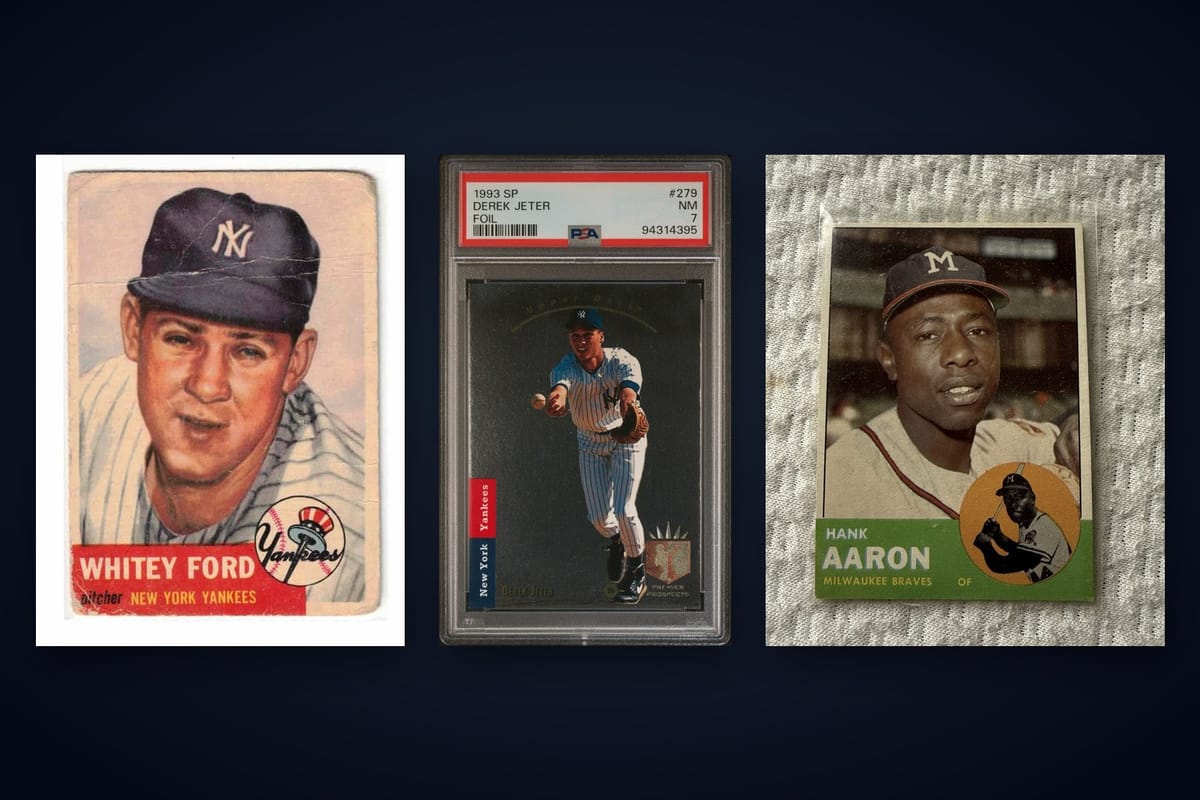
Vintage baseball cards—typically pre-1980—often see the most dramatic increase in value when graded, especially in PSA 10 condition. For example, consider the Whitey Ford #207 (1953 Topps): raw it’s valued at $52.55, but a PSA 10 is worth $104,400. That’s a significant premium. Similarly, the Hank Aaron #390 (1963 Topps) jumps from $115.19 raw to $210,000 as a PSA 10.
Why the huge gap? Vintage cards in pristine condition are extremely rare due to decades of handling, poor storage, and lower print quality. High-grade survivors draw strong demand from collectors and investors alike.
- Focus on rookie cards, stars, and low-population issues from the 1950s-1970s.
- Check for strong centering, sharp corners, and minimal surface flaws before submitting.
2. Modern Era Cards: When to Grade For Profit
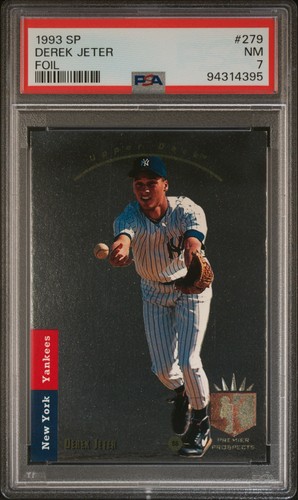
Modern cards (post-1980) can sometimes see a significant bump from grading, but only select types—usually short prints, parallels, autographs, or ultra-high-demand rookies. The Derek Jeter [Foil] #279 (1993 SP) is a classic example: raw at $131.21, but a PSA 10 is worth $255,024. The scarcity of gem-mint foils and high-profile rookie status drive this.
Most base cards, even of stars, don’t get a big premium unless they grade out at a true gem level. Always check population reports before investing in grading modern cards, and avoid low-value base issues.
- Look for low-pop, in-demand rookie cards, short prints, or scarce parallels.
- Pristine surface and edges are crucial for modern issues to justify grading costs.
3. Rookie Cards: The Biggest Grading Bumps
Rookie cards, especially of Hall of Famers and all-time greats, often yield the largest raw vs graded value spreads. The Robin Yount #223 (1975 Topps) is a notable case: raw value of $33.50, but a PSA 10 sells for $50,933. The Tony Gwynn #143 (1983 O Pee Chee) moves from $32.02 raw to $32,940 graded.
The combination of rookie status and high grade creates a strong potential for value appreciation. These cards are cornerstones for both collectors and investors seeking upside.
- Prioritize rookies of players with Hall of Fame or legendary status.
- Use a pre-grading tool like Midpoint to assess gem potential before spending on grading fees.
4. Raw vs Graded: Understanding the Premium
The "gem premium"—how much more a PSA 10 sells for compared to raw—can be substantial for the right card, but is based on rarity, demand, and condition. For example, the Pete Rose #559 (1972 Topps) is $37.05 raw, $38,400 graded. These large spreads are possible because so few copies exist in flawless condition, and because top-graded cards are highly sought after by serious collectors.
For most cards, however, the spread is much smaller—sometimes not enough to cover grading, shipping, and insurance fees. Always compare recent raw and PSA 10 sales for your specific card before submitting. If you want to understand how centering impacts these premiums, see this centering guide.
- Use recent sales data (not just price guides) to evaluate real-world premiums.
- Calculate your potential ROI after all costs before sending bulk submissions.
5. Condition Factors: Centering, Corners, Edges, Surface
The four main condition factors—centering, corners, edges, and surface—are what grading companies evaluate, and even a minor flaw can mean the difference between a PSA 9 and a PSA 10 (and thousands of dollars). For example, the Willie Mays #1 (1966 Topps) is worth $33.50 raw but $51,041 as a PSA 10—a significant jump, but only if the card is virtually perfect.
Tools like Midpoint help collectors measure centering and estimate grade with AI before risking grading fees. This can help weed out cards unlikely to gem, saving you money.

- Check for sharp, 90-degree corners and smooth, undamaged edges.
- Inspect under strong light for scratches, print defects, or stains.
- Measure centering down to the millimeter for older cards—see the Card Centering Tool guide.
6. Card Types: Rookies, Stars, Parallels, and Autographs
Not all cards benefit equally from grading. The biggest bumps tend to go to:
- Rookie cards of stars and Hall of Famers
- Key vintage stars (even non-rookies)
- Low-population parallels or inserts
- Certified autographs in pristine condition
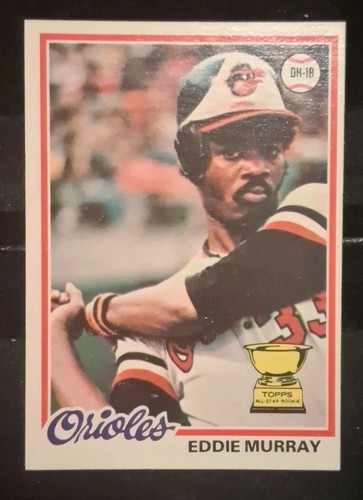
For example, the Eddie Murray #154 (1978 O Pee Chee) rookie jumps from $28.98 raw to $41,480 in PSA 10. Meanwhile, common base cards, especially from overproduced eras, rarely justify grading unless they are essentially flawless and very low population.
7. How to Estimate Raw Value vs Graded Comps
Before submitting, always check recent sold listings (not just asking prices) for both raw and graded versions of your card. This gives you a real-world snapshot of the gem premium and helps avoid costly mistakes.
Midpoint’s database provides live raw and graded prices for over 250,000 cards. For example, the 1973 Rookie Third Basemen #615 (1973 Topps) is $150 raw but $204,000 in PSA 10. If your card won’t likely grade gem, you may be better off selling raw.
- Search recent eBay or Midpoint sales for your exact card and grade.
- Factor in grading fees, shipping, insurance, and turnaround times.
8. Grading Fees, Shipping, and Membership Costs
Grading isn’t free. PSA, BGS, CGC, and other companies charge per card—often $25-$50 or more for standard service, plus shipping and insurance both ways. Some require annual memberships. Bulk or economy services can save money, but have longer turnaround times and lower declared value limits.
Before submitting, carefully add up all costs to determine if your card is truly one of the best baseball cards to grade for profit. Sometimes, the margin disappears after fees.
- For a $30 grading fee, your card should sell for at least $100 more graded than raw to justify the risk and wait.
- Don’t forget to insure valuable packages both ways—see the insurance guide for details.
9. When Low-Value Base Cards Are Not Worth Grading
Most base cards, especially from the 1980s-1990s "junk wax" era or modern flagship products, are not worth grading unless you have a truly flawless copy. The grading fee alone often exceeds any potential premium.
Instead, focus on stars, rookies, and rare inserts with real collector demand. Remember: grading isn’t a lottery ticket—if the raw vs graded value gap isn’t big and your card isn’t perfect, selling raw is often smarter.
- Only grade base cards if pop reports show very few PSA 10s and sustained demand.
- Consider selling bulk lots of raw base cards to maximize time and profit.
10. Choosing the Right Grading Company
PSA is widely regarded as the standard for maximizing resale value on most baseball cards, especially vintage and rookies. BGS and CGC can be good choices for modern cards or when subgrades matter. Some cards (rare parallels, autos) may do better with specialized graders.
Check population reports and recent sales by grading company before submitting. For a deep dive on grading scale differences, see this guide.
- PSA 10s often command the highest prices for most vintage and flagship rookies.
- For autographs or thick cards, company policies/holders may affect value.
11. Iconic Examples: Cards With Massive PSA 10 Premiums
Let’s recap a few baseball cards that are worth far more graded than raw, using data from Midpoint as of 2026-08-09:
- Whitey Ford #207 (1953 Topps): $52.55 raw → $104,400 PSA 10
- Derek Jeter [Foil] #279 (1993 SP): $131.21 raw → $255,024 PSA 10
- Hank Aaron #390 (1963 Topps): $115.19 raw → $210,000 PSA 10
- Willie Mays #1 (1966 Topps): $33.50 raw → $51,041 PSA 10
These are the cards that define the gem premium—and why high-grade, iconic cards (especially rookies and stars) are among the best bets for grading. Use tools like Midpoint to pre-grade before you submit. For safe storage, see this collector's guide.
Conclusion
The baseball cards worth more graded share a few critical traits: iconic players, rookie status, vintage years, and pristine condition. The difference between raw vs graded baseball cards can be substantial, but only if you choose wisely and understand the true cost of grading. Always compare raw and PSA 10 prices, factor in all expenses, and use digital grading tools like Midpoint to help inform your decisions. Happy collecting—and may your next submission be a gem!
FAQ
Q: What baseball cards are worth more graded than raw?
A:
A: The cards that see the biggest jump in value when graded are typically vintage stars, Hall of Fame rookies, and rare, low-population issues in pristine condition. For example, Whitey Ford’s 1953 Topps #207 rises from $52.55 raw to $104,400 in PSA 10. Modern base cards usually don’t justify the cost unless they’re rare or flawless.
Q: Is it worth grading vintage baseball cards?
A:
A: Grading vintage baseball cards can dramatically increase value—especially if the card is in excellent condition. High-grade vintage cards are rare and highly sought after. However, cards with heavy wear or poor centering may not be worth the grading fee.
Q: How much more is a PSA 10 baseball card worth than raw?
A:
A: For some iconic cards, a PSA 10 can be worth over 1,000 times the raw value. For instance, the 1993 SP Derek Jeter Foil rookie goes from $131.21 raw to $255,024 in PSA 10 (as of 2026-08-09). Most cards, though, have smaller premiums—always check recent sales.
Q: What condition does a card need to be in to grade well?
A:
A: To grade well (PSA 9 or 10), a card must have sharp corners, clean edges, strong centering, and a flawless surface—no scratches, stains, or print defects. Even slight flaws can bring the grade (and value) down. Digital tools like Midpoint help assess centering and condition before submission.
Q: Should I grade a cheap baseball card or sell it raw?
A:
A: Usually, it’s better to sell low-value or common cards raw. Grading fees typically outweigh the potential value increase unless the card is extremely rare or in perfect condition with high demand.
Q: How do I know if my card will get a PSA 10?
A:
A: It’s tough to guarantee a PSA 10, but you can improve your odds by checking for flawless centering, sharp corners, clean edges, and a perfect surface. Use high-resolution scans and grading tools like Midpoint for a digital assessment before sending.
Free to start
Try the Midpoint app
Grade any card from a photo, see its raw and PSA 10 value, and track what your collection is worth — free.
Get it on iPhoneGet it on Android