Basketball Card Prices Dropping November 2026: 9 Moves
Basketball card prices dropping in November 2026? Learn why prices fall, how raw and PSA 10 cards differ, and how to buy the dip or grade a well-centered copy.

Estimated reading time: 9 min
Key Takeaways
- If basketball card prices are dropping in November 2026, read it card by card rather than as one market-wide number. Raw cards, PSA 10s, parallels and base cards move differently.
- Supply is the usual culprit: new releases, bigger hit counts, big print runs and more seller inventory. Hype fading on rookies can matter too.
- Completed sales, listing counts and time-to-sell tell you more than asking prices.
- A dip can be a chance to buy a cheap raw copy that centers well and grade it, but only after you measure centering and condition first.
Many collectors are asking the same thing about the basketball card market in November 2026: are basketball card prices dropping, and is this a trap or an opportunity? This guide gives you nine practical moves for reading falling basketball card prices, spotting basketball cards losing value, and deciding whether to buy, sell, hold, grade or wait.
One note on data: this post does not quote specific prices or percentages, and it does not invent any. For any card you own or want, verify the current number yourself using the steps below, because a market in motion makes old numbers stale fast.
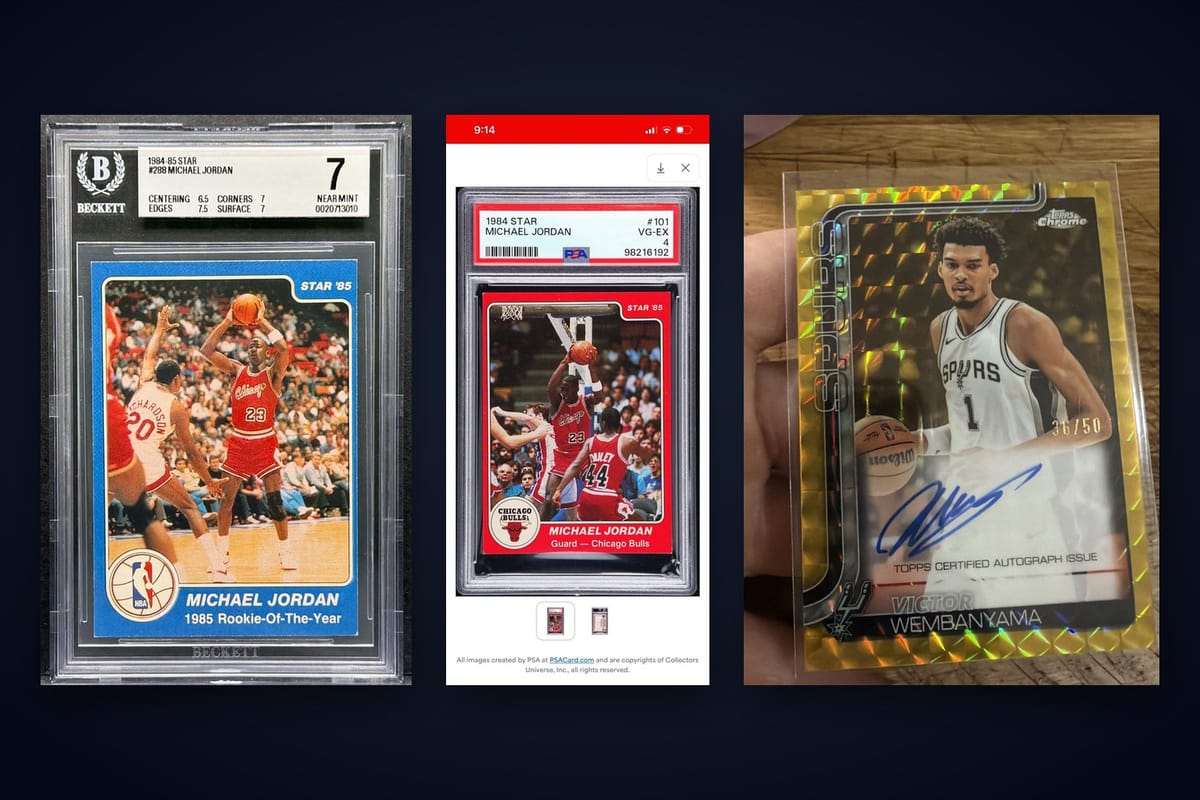
30-day price movers — live data from Midpoint's card database, as of 2026-11-08. Prices move; Midpoint refreshes these daily.
| Card | Raw | PSA 10 | 30-day | |
|---|---|---|---|---|
 |
Michael Jordan #288 1984 Star |
$224.50 | $95,551 | -84.7% |
 |
Michael Jordan #101 1984 Star |
$3,500 | — | -64.8% |
 |
Victor Wembanyama [Refractor Gold] #TCA-VW 2025 Topps Chrome Autograph |
$12,100 | $49,589 | -29.8% |
 |
Shaquille O'Neal #1 1992 Upper Deck |
$15.00 | $2,900 | -29.5% |
 |
Stephen Curry #M-3 2025 Topps Chrome Update Minionfractor |
$8,695 | $33,375 | -24.9% |
 |
Shaquille O'Neal [Trade Card] #1 1992 Upper Deck |
$12.17 | $1,966 | -21.1% |
 |
Michael Jordan #21 1989 Fleer |
$23.96 | $3,150 | -19.8% |
 |
Kobe Bryant #138 1996 Topps |
$106.56 | $2,198 | -18.8% |
 |
Michael Jordan #26 1990 Fleer |
$11.25 | $658.50 | -15.2% |
 |
Bill Russell #77 1957 Topps |
$1,011 | $287,762 | -14.4% |
 |
Shaquille O'Neal #A 1992 Hoops Draft Redemption |
$99.97 | $1,200 | -10.4% |
 |
Michael Jordan #5 1990 Fleer All-Star |
$11.52 | $1,957 | -9.5% |
Look up any card's current raw and graded value in Midpoint — and get an estimated grade before you pay to submit.
1. Check the 30-Day Trend Before You React
A weekly decline can look scary and still be noise. The first move in any basketball card market November 2026 check is to compare three windows: the last week, the last 30 days and year-to-date. A card that is down this week but flat for the month is a very different story from one that has slid steadily since spring.
Here is a simple way to frame it:
- Weekly drop, flat monthly: often short-term noise or a single cheap sale.
- Monthly drop, flat year-to-date: may be a cooling after a spike, sometimes a return to normal.
- Weekly, monthly and year-to-date all down: a more likely real downtrend, often driven by supply or fading demand.
Confirm the trend for any card you care about in Midpoint's card lookup and in completed sales before you act.
2. Split Raw Cards From PSA 10s
The most common mistake when reading falling basketball card prices is mixing raw and graded numbers. They can behave differently, and a dip in one does not guarantee a dip in the other.
- Raw cards can react quickly to new supply, because anyone can pull a copy from a pack and list it. Prices can sag within days of a release.
- PSA 10 copies depend on how many gem-quality copies exist. Strong demand can hold the price up even when raw softens.
- The spread between raw and PSA 10 shows whether grading still pays. If the spread shrinks, the math on submitting a card gets worse.
When both raw and PSA 10 prices fall, that points to broad weakness rather than a grading-specific issue. When only raw falls, a flood of new supply is a likely suspect.
3. Trust Completed eBay Sales, Not Asking Prices
Sellers can ask anything. Completed sales tell you what buyers actually paid. Whenever you judge whether basketball card prices are dropping in November 2026, anchor on sold listings.
Track these four signals on completed eBay data:
- Average sale price over the last 30 days compared to the prior 30.
- Sales volume: how many copies actually sold. A price on two sales is weak evidence.
- Bid activity: auctions with many bids suggest real demand; one-bid endings suggest the opposite.
- Active listings: a growing pile of unsold copies is a bearish signal.
Compare auction results to Buy It Now results too. If fixed-price listings sit far above recent auction closes, the asking price is likely unrealistic and the true market is probably lower.
4. Understand the Supply Factors Behind Falling Prices
Much price cooling comes down to supply. When more cards exist than buyers want, prices tend to slide. The usual drivers:
- New releases: a big new basketball release puts fresh base cards, parallels, autographs and relics on the market at once.
- Increased hit production: more autographs and relics per box means each one is less scarce.
- Large print runs: unnumbered base cards and common inserts can be produced in huge quantities.
- Seller inventory: after a release, box breakers and flippers list singles quickly, and early prices are often the highest.
Newly opened packs typically push raw singles down first. Sealed boxes sometimes move opposite to singles for a while: if singles are cheap, fewer people open boxes and sealed prices can firm up, while a flood of hits can cool singles further. Watch both, but do not assume one predicts the other.
5. Separate Stars From Rookies When Basketball Cards Lose Value
Established stars and brand-new rookies lose value for different reasons.
Established stars such as LeBron James, Stephen Curry, Luka Dončić and Victor Wembanyama have deep collector bases. Their cards tend to be more stable in a broad dip, but they are not immune. Age, injuries, trades and playoff results all feed into price. A star's base cards can still slide when supply is heavy.
Rookies and prospects such as AJ Dybantsa, Darryn Peterson, Cameron Boozer and Caleb Wilson are priced largely on projection. That makes them volatile:
- Hype before a release can inflate prices, and they often cool when real supply arrives.
- A strong early game can spike demand overnight, and a slow start can drain it.
- Their prices rest on future performance, so there is more room to fall than for proven players.
If you hold rookie cards, ask whether you are holding a player or a story. Stories can fade faster than careers.
6. Compare Base Cards, Parallels, Autographs and Relics
Not every card type falls equally. Scarcity often protects value better.
- Base cards: the most exposed. High supply means they are often the first to slide, and they may not recover without a player breakout.
- Numbered parallels: a /99 or /25 has a hard cap on supply, so it tends to hold better, though thin sales mean wider price swings.
- Autographs: more hits per box can dilute value, especially for sticker autos and for lesser-known players.
- Relics: memorabilia cards can be abundant hits, so plain jersey swatches can be pressured.
- Inserts: popular inserts can hold up, while generic ones tend to track base cards.
The more distinctive and limited the card, the more likely buyers still compete for it during a dip.
7. Read Liquidity and Demand Indicators
A price is only real if you can sell at it. Liquidity tells you how easy that is, and it often turns before price does.
- Time to sell: if a card that used to sell in days now sits for weeks, demand may be thinning.
- Number of listings: a rising count with flat sales is a warning sign.
- Auction bids: fewer bidders per auction means less competition to lift the final price.
- Price spreads between comparable cards: if two near-identical copies sell at widely different prices, the market is uncertain. Condition, centering and eye appeal usually explain the gap.
Wide spreads can create opportunity for patient buyers, because careful selection of a clean copy can beat the average price.
8. Use Basketball Cards to Buy the Dip, Selectively
Basketball cards to buy the dip share a few traits. This is a framework, not a promise of a rebound, since no one can guarantee recovery.
- Proven demand: players with a long collector base and steady sales volume.
- Limited supply: numbered parallels and low-population cards rather than commons.
- Fundamentals still intact: the player is healthy, producing and relevant.
- Price below recent sold range: confirmed by completed sales, not a lone cheap listing.
One dip play for grading-minded collectors is to buy a cheap raw copy that centers well and grade it. Centering is the flaw that is easiest to check before buying. Ask for clear front and back photos, then measure the borders. Midpoint's free centering calculator shows the ratios, and our guide on how centering impacts card value explains why it matters so much for the PSA 10 premium.
Pre-grade the corners, edges and surface as well. Our step-by-step pre-grading guide walks through it. A card that looks well-centered in a listing can still have soft corners or surface scratches that cap it at a PSA 8 or 9.
9. Decide: Buy, Sell, Hold, Grade or Wait
With basketball card prices dropping, there is no single right answer. Match the action to your goal.
- Sell if the card is a hype-driven rookie you hold only for profit, supply keeps growing, and the 30-day trend is clearly down. Selling now into weakness stings, so decide whether you need the cash.
- Hold if it is a core player or limited parallel you like, and you are not forced to sell. A paper loss only becomes a realized loss if you sell into it.
- Buy if it fits the dip criteria above and you can afford to wait months.
- Grade only if the raw copy measures well on centering and the PSA 10 premium over raw clearly exceeds grading fees and the risk of a lower grade. Our grading scale comparison helps you pick between PSA, BGS, CGC and TAG.
- Wait if a big release just landed. Early singles prices are often the most unstable.
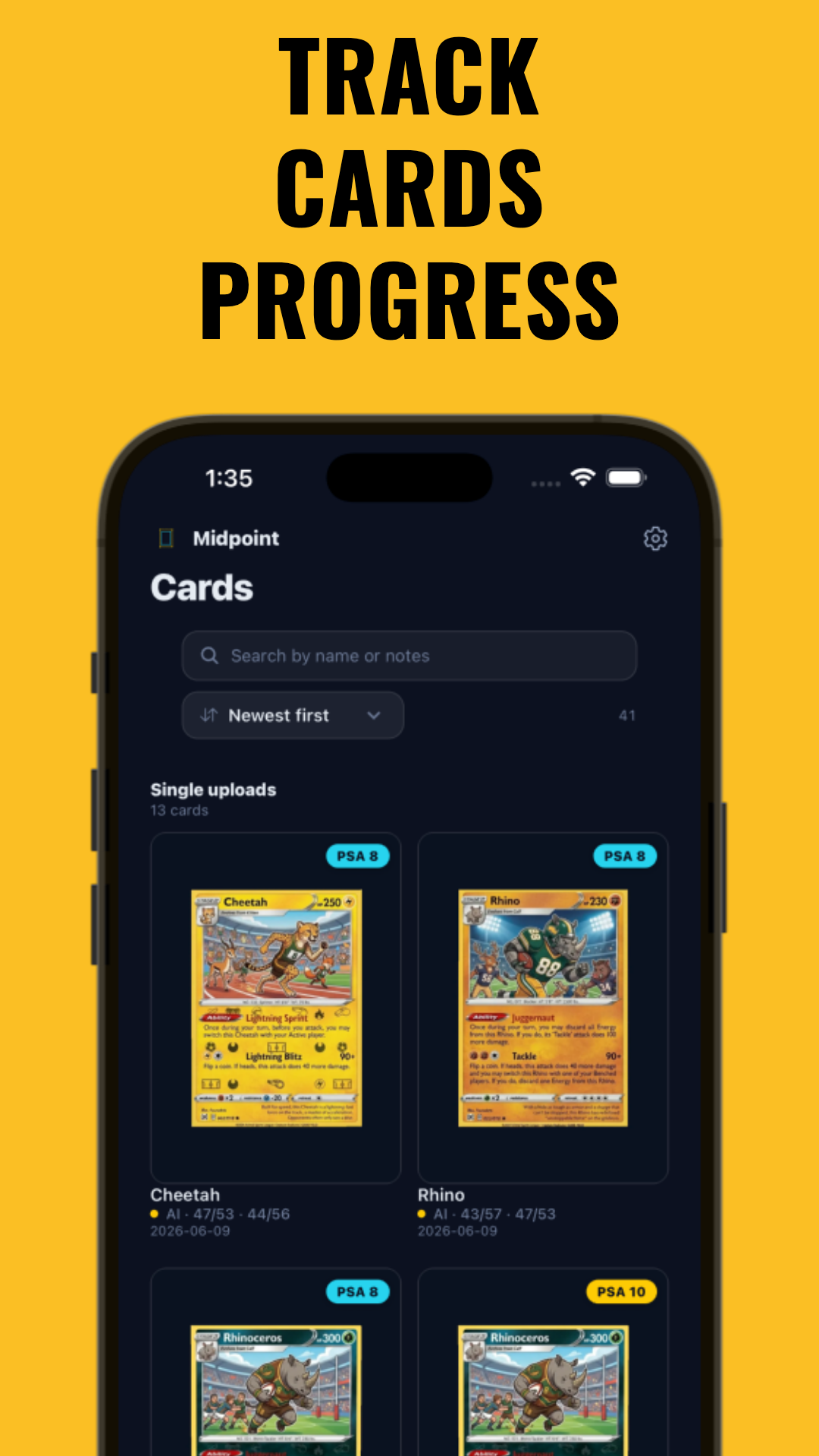
Whatever you choose, track the result. Midpoint's portfolio view shows your collection's value over time, so you can see what a dip actually does to your holdings instead of guessing.
Conclusion
Falling basketball card prices in November 2026 are not a reason to panic or to rush in. Check the 30-day trend, split raw from PSA 10, and rely on completed sales and liquidity rather than asking prices. Supply from new releases and hype fading on rookies often explain much of the weakness, while scarce, well-centered cards of proven players tend to hold up better.
If you want to act on a dip, measure before you buy. Midpoint is free on iOS and Android and gives you centering measurements, AI grade estimates, raw versus graded values and portfolio tracking, so you know what a card is worth before you spend $30+ on grading.
FAQ
Q: Are basketball card prices dropping in November 2026?
A: It varies by card, and some collectors may be seeing cooling in certain segments. Compare the 7-day, 30-day and year-to-date trends for the specific card, and check completed sales.
Q: Why are basketball card prices falling right now?
A: The usual reasons are supply-related: new releases, more hits per box, large print runs and growing seller inventory. Fading hype on rookies can add to it.
Q: Which basketball cards are losing value the most in November 2026?
A: Cards with the most supply and the most hype tend to fall most: base cards, common inserts and unnumbered rookie cards. Check completed sales and 30-day trends for the specific cards you care about.
Q: What basketball cards are worth buying while prices are down?
A: Look for proven players, limited numbered parallels and cards priced below their recent sold range. For grading, choose raw copies that measure well on centering, then check corners, edges and surface before you buy.
Q: Should I sell my basketball cards now or wait for prices to recover?
A: It depends on your goals. If you need cash or hold a hype-driven rookie in a clear downtrend, selling may make sense. If you hold core players or scarce parallels and are not forced to sell, waiting avoids locking in a loss. Recovery is never guaranteed.
Q: Are new-release Topps basketball cards a good investment?
A: Treat new-release cards as speculative. Large supply often pressures early prices, and base cards are the most exposed. Limited parallels and standout rookies carry more upside but also more risk. Never invest more than you can afford to hold for a long time.
Free to start
Try the Midpoint app
Grade any card from a photo, see its raw and PSA 10 value, and track what your collection is worth — free.
Get it on iPhoneGet it on Android