Card Border Centering Impact: How Border Design Shapes Visual Balance
Explore card border centering impact to understand how border size, style, and placement shape visual balance in UI, business cards, and collectibles.

Estimated reading time: 7 minutes
Key Takeaways
- Border design influences perceived centering and balance.
- Consistent margins improve readability and convey professionalism.
- High-contrast or thick borders magnify off-centering errors.
- Accurate centering is critical for UI cards, business cards, and collectibles.
- Practical techniques—from CSS flexbox to optical adjustments—ensure perfect alignment.
Table of Contents
- Defining Card Border Centering Impact
- Why Border, Centering, and Visual Balance Matter
- Impact on User Experience and Aesthetics
- Understanding Card Border Design for Better Centering Impact
- Centering in Card Design: Principles and Practice
- Impact of Card Borders on Centering Accuracy
- Practical Techniques and Best Practices for Card Centering
- Case Studies and Examples of Centering Impact
- Try Card Centering Tool for Precise Measurements
- Conclusion: Mastering Card Border Centering Impact
Defining Card Border Centering Impact
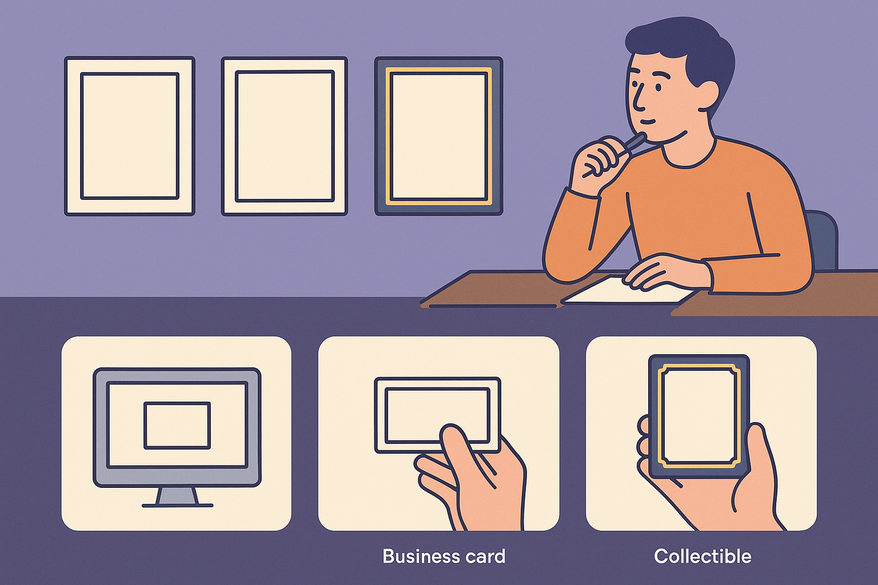
Card border centering impact measures how a card’s border size, style, and placement influence how centrally its content appears within the frame. Whether you’re crafting digital UI cards or printing business and trading cards, proper centering enhances readability, conveys professionalism, and—for collectors—preserves grading value.
Why Border, Centering, and Visual Balance Matter
- Thickness and contrast: Border weight and color amplify any trim shifts.
- Equal frame widths create a stable, centered look; uneven frames cause apparent content shifts.
- Balanced cards feel premium and are easier to scan in both UI and print.
- Off-center borders can reduce a trading card’s grade and market value—learn more in PSA vs BGS vs CGC: Centering Tolerances Compared.
Impact on User Experience and Aesthetics
- Professionalism: A centered layout looks intentional and trustworthy.
- Readability: Even margins guide the eye naturally across content.
- Premium feel: Symmetry communicates quality.
- Grading value: Precise centering can mean the difference between a PSA 10 and a PSA 9.
Understanding Card Border Design for Better Centering Impact
What Is a Card Border?
A card border is the visual frame—whether a printed edge, stroke, or margin—that surrounds your content. It defines the reference for centering and frames your focal elements.
Common Border Elements
- Outer stroke: The perimeter outline.
- Inner padding: Space between the stroke and content.
- Background fill: Color or texture within the frame.
- Corner style: Sharp or rounded edges alter perceived softness.
Key Design Variables and Their Influence
- Color contrast: High contrast highlights small misalignments; low contrast conceals them.
- Thickness: Thicker borders shrink the content area and magnify off-centering.
- Style: Dashed or decorative frames can distort balance.
Centering in Card Design: Principles and Practice
Defining Centering Principles
Centering aligns and distributes visual weight both horizontally and vertically. You can choose:
- Symmetrical centering: Equal left/right and top/bottom margins for perfect balance.
- Intentional asymmetry: Using the rule of thirds for dynamic layouts.
Why Centering Matters
Consistent margins make scanning easier and anchor the design. For trading cards, accurate front-to-back centering ratios ensure you meet grading cutoffs—see our step-by-step measurement guide for collectors.
Examples of Correct vs. Incorrect Centering
- Correct: A trading card with a front border ratio of approximately 50/50 appears balanced.
- Incorrect: A card with a 70/30 left/right ratio looks shifted to one side.
Impact of Card Borders on Centering Accuracy
Grading standards compare opposite border widths; top grades demand a 55/45 or better front ratio and 75/25 or better back ratio. Thick, high-contrast borders can exaggerate minor trim shifts.
Common Designer Challenges
- Trim shifts: Printed cards may move slightly during cutting.
- Heavy borders: Thick frames can overpower content, requiring optical compensation.
- Optical vs. geometric centering: Shadows or graphics may need nudges to appear visually centered.
Practical Alignment Tips
- Center relative to the inner content area, not just the outer stroke.
- Apply equal inner padding on all sides unless designing asymmetrically.
- Use optical adjustments: slightly nudge elements to counterbalance heavy borders or strong visuals. For more on spotting and preventing centering errors, check our guide.
Practical Techniques and Best Practices for Card Centering
Digital Design Techniques (CSS) for Centering Inside Bordered Cards
1. Flexbox example with box-sizing: border-box
.card {
  display: flex;
  justify-content: center;  /* horizontal */
  align-items: center;      /* vertical */
  border: 2px solid #000;
  box-sizing: border-box;   /* include border in size */
}

2. Grid example with place-items: center
.card {
  display: grid;
  place-items: center;      /* center both axes */
  border: 4px solid #333;
  box-sizing: border-box;
}
Step-by-Step Centering Accuracy Checklist
- Define your reference frame: trim edge, inner border, or content area.
- Measure numerical centering: compare border-width ratios or padding values.
- Test optical centering: blur or squint at your design and adjust until it “feels” centered.
- Verify consistency across border variants.
- Review on multiple mediums: different screen sizes and printed proofs.
Case Studies and Examples of Centering Impact
Trading-Card Centering & Grading: Perfect borders (≈50/50 front) can be the difference between a PSA 10 and a PSA 9. Unequal borders—even with flawless surfaces—often knock you out of Gem Mint.
Try Card Centering Tool for Precise Measurements
If you want to remove the guesswork from your centering decisions, Card Centering Tool provides automatic, sub-millimeter measurements and flags PSA, BGS, and CGC tolerances before you submit. See it in action below:
Conclusion: Mastering Card Border Centering Impact
Card borders define the frame by which content centering is judged. Thickness, style, and symmetry directly influence both geometric and perceived centering. Unequal or heavy borders can make even precisely aligned content look off-center, while consistent borders reinforce balance and clarity.
By understanding and applying these principles—from design variables to practical CSS techniques—you’ll master the card border centering impact, achieving layouts that are balanced, professional, and visually engaging.
FAQ
- What is card border centering impact? It’s the effect border size, style, and placement have on how centrally content appears within a card’s frame.
- Why do border thickness and contrast matter? Thicker or high-contrast borders amplify slight misalignments, making off-centering more noticeable.
- How can I measure centering accuracy for physical trading cards? Compare opposite border ratios—front ratio should be around 50/50 or within 55/45 for top grading.
- What digital tools help with centering? CSS flexbox and grid techniques (with box-sizing: border-box) allow precise horizontal and vertical alignment.
- What is optical centering? Optical centering involves visually adjusting elements to appear centered, compensating for design weights or optical illusions.
Free to start
Try the Midpoint app
Grade any card from a photo, see its raw and PSA 10 value, and track what your collection is worth — free.
Get it on iPhoneGet it on Android