Centering Threshold for Mint Grade: Complete PSA, BGS, CGC, SGC Standards Guide
Discover centering thresholds for Mint and Gem Mint grades across PSA, BGS, CGC, SGC, TAG. Compare centering tolerances and learn to measure like the pros.

Estimated reading time: 15 min
Key Takeaways
- Each grading company sets specific centering thresholds for Mint (9) and Gem Mint (10) grades.
- Centering tolerances differ between the card's front and back, and per grader.
- Measuring centering accurately is important for predicting your card’s grade and value.
- Tools like Midpoint can assist with centering analysis before submitting for grading.
- Understanding centering standards may help avoid grading mistakes and disappointment.
Table of Contents
- Section 1: What Is the Centering Threshold for Mint and Gem Mint Grades?
- Section 2: PSA, BGS, CGC, SGC, and TAG Centering Standards Explained
- Section 3: How to Measure Card Centering Like a Pro
- Section 4: Front vs. Back Centering—Why Both Matter
- Section 5: Common Centering Mistakes and Calculator Pitfalls
- Section 6: Comparing Graders—Who’s Most Lenient or Strict?
- Section 7: Visual Guides and Acceptable Centering Ratios
- Section 8: Using Tools like Midpoint to Pre-Grade Your Cards
- Conclusion
- FAQ
Section 1: What Is the Centering Threshold for Mint and Gem Mint Grades?
Defining Centering Thresholds
The "centering threshold for Mint grade" refers to the maximum allowable variation in border width between a card’s edges—both horizontally and vertically—before the card is downgraded from Gem Mint (10) to Mint (9) or below. Each grading company publishes specific tolerances, usually described as ratios (e.g., 60/40 means one border can be up to 60% of the total width, the other 40%).
- Gem Mint (10): The card must be nearly perfectly centered, with tight tolerances (commonly 55/45 or better on the front, 60/40 or better on the back).
- Mint (9): Centering can be slightly more off (typically 60/40 front, 65/35 or 70/30 back), but not excessively so.
Why Centering Matters
Centering is a major grading subgrade and can be the sole reason a card misses a Gem Mint grade. Even if your card is flawless otherwise, off-center borders can drop it to Mint or lower. The difference can mean a significant change in value, especially for high-end cards or vintage issues.
Thresholds Are Not Universal
Each grader (PSA, BGS, CGC, SGC, TAG) enforces different centering requirements. It’s important to know the exact tolerance for the company you plan to submit to—a Gem Mint card at one company might only score Mint at another due to stricter front or back centering standards. Always check each grader’s published standards, as they may update policies over time.
Section 2: PSA, BGS, CGC, SGC, and TAG Centering Standards Explained
PSA Centering Standards
- Gem Mint 10: 55/45 or better (front), 60/40 or better (back)
- Mint 9: 60/40 or better (front), 65/35 or better (back)
- If either axis (horizontal or vertical) exceeds the threshold, the card is downgraded.
BGS Centering Requirements
- Pristine 10: 50/50 centering (front), 60/40 (back)
- Gem Mint 9.5: 55/45 (front), 60/40 (back)
- Mint 9: 60/40 (front), 65/35 (back)
CGC Centering Standards
- Gem Mint 10: 55/45 (front), 60/40 (back)
- Mint 9: 60/40 (front), 65/35 (back)
SGC Centering
- Gem Mint 10: 55/45 (front), 60/40 (back)
- Mint 9: 60/40 (front), 65/35 (back)
TAG Grading Centering
- Gem Mint 10: 55/45 (front), 60/40 (back)
- Mint 9: 60/40 (front), 65/35 (back)
Summary Table
- All major graders require 55/45 or better for Gem Mint on the front; differences between companies are generally minor.
- Back centering tolerances are always looser than the front.
- Vintage cards may have more lenient standards—consult each grader’s rules.
For a deep dive on the impact of centering on grade and value, see this detailed guide on centering and value.
For a comprehensive breakdown of how PSA, BGS, CGC, SGC, and TAG define and enforce their centering standards, see our Card Grading Centering Standards comparison guide.
Section 3: How to Measure Card Centering Like a Pro
Manual Measurement Techniques
To estimate if your card meets the Mint or Gem Mint centering threshold, measure the width of each border (left/right, top/bottom) and compare the ratios:
- Step 1: Use a ruler or digital caliper to measure all four borders in millimeters.
- Step 2: Add the left and right borders (or top and bottom) to get total width (or height).
- Step 3: Divide each border’s width by the total to get percentages (e.g., Left: 3mm, Right: 2mm, Total: 5mm → 60/40).
Front and back must be measured separately, as centering can vary.
Using Digital Tools
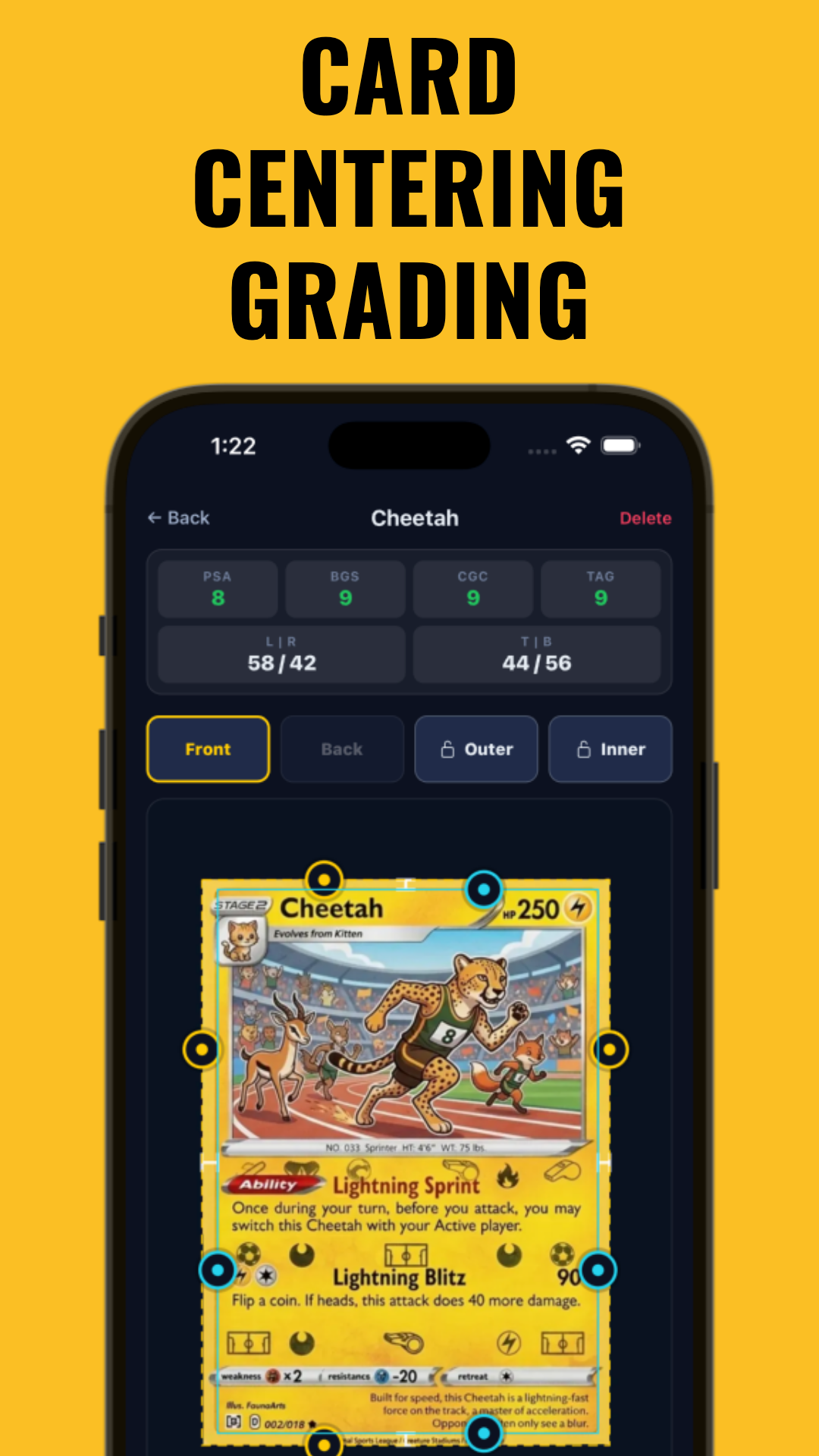
Manual calculations can be prone to error and parallax. Digital centering tools like Midpoint streamline the process—simply upload a card scan or photo, align the borders, and get instant ratio readouts for front and back centering. This can help reduce guesswork and provide a grading company-specific estimate.
Common Calculation Mistakes
- Not measuring at the narrowest points of the border
- Forgetting to account for slanted or skewed scans
- Confusing horizontal with vertical centering
For step-by-step instructions, see How to Measure Card Centering: Step-by-Step Precision Guide.
Section 4: Front vs. Back Centering—Why Both Matter
Front Centering: The Primary Focus
All major graders (PSA, BGS, CGC, SGC, TAG) generally weight the card’s front centering more heavily than the back. The eye is naturally drawn to the card’s face, making front centering the first thing both collectors and graders notice. For Gem Mint, the front usually must meet the stricter 55/45 threshold.
Back Centering: Often Overlooked but Still Crucial
Back centering tolerances are slightly looser (60/40 or 65/35 for Mint grades). However, if the back is severely off-center—even if the front is within tolerance—the grade may be affected. Some graders (like PSA) state that back centering alone can drop a card to Mint or lower.
- Example: A card with 55/45 centering on the front and 75/25 on the back will not receive a Gem Mint grade; it likely drops to Near Mint-Mint (8) or even lower.
One Axis vs. Both Axes
Graders check both horizontal and vertical centering. If only one axis is off (e.g., 60/40 left/right but 50/50 top/bottom), the lowest axis determines the centering grade. Both axes must be within the threshold.
Section 5: Common Centering Mistakes and Calculator Pitfalls
Misreading Border Ratios
Collectors sometimes reverse the ratios (e.g., thinking a 60/40 card is better than a 55/45 one), or measure the wrong axis. Remember: lower numbers mean more off-center. 55/45 is better (more centered) than 60/40.
Calculator and App Issues
- Some free online calculators don’t account for skewed or rotated images, leading to inaccurate ratios.
- Some tools don’t distinguish between front and back centering or between axes.
Physical Measurement Errors
- Cards with miscut or naturally uneven borders may fool both manual and digital measurements.
- Failing to crop images precisely or including shadow/edge can throw off results.
For best results, use advanced tools like Midpoint’s centering calculator that corrects for image skew and provides grading-specific feedback. Avoid relying solely on ruler or phone-based calculators unless you’re experienced.
Section 6: Comparing Graders—Who’s Most Lenient or Strict?
PSA vs. BGS vs. CGC vs. SGC vs. TAG
While the published thresholds for Mint and Gem Mint centering appear similar (mostly 55/45 or 60/40 front, 60/40 or 65/35 back), there are subtle differences in enforcement and subgrade weighting:
- PSA: Sometimes perceived as slightly more lenient, especially on vintage cards. May allow "eye appeal" to influence a borderline card.
- BGS: Applies subgrades for centering; one poor axis can lower the overall grade. BGS 10 requires 50/50 centering on the front.
- CGC: Similar to PSA/BGS for thresholds, and provides subgrades. CGC’s centering grade can be precisely tracked.
- SGC: Standards mirror PSA closely; known for consistency but not as widely used for modern cards.
- TAG: Newer entrant, uses scanning to enforce their centering tolerances (55/45 front, 60/40 back for Gem Mint).
Which Grader Is Most Lenient?
For modern cards, PSA is sometimes regarded as more forgiving, but this is mainly anecdotal—official standards are very close. For vintage, PSA may allow slightly worse centering due to print era issues. BGS is strictest at the top end (Pristine 10), requiring 50/50 front centering, which is rare.
For a technical comparison of grading tech, see our AI-focused analysis.
For a detailed breakdown of how PSA, BGS, CGC, and SGC grades compare—including centering and other subgrades—see our Card Grade Comparisons guide.
Section 7: Visual Guides and Acceptable Centering Ratios
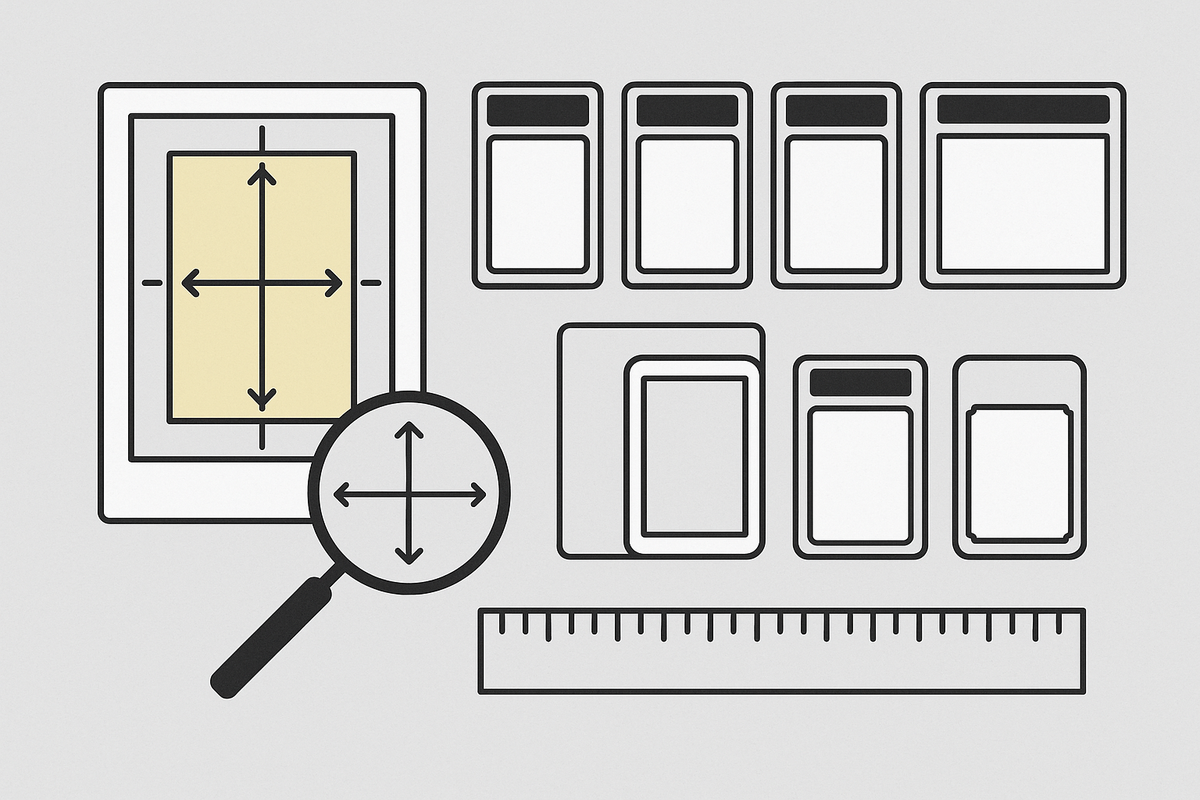
What Does 55/45 or 60/40 Look Like?
It’s difficult to visualize centering ratios without side-by-side examples. Here’s a reference:
- 50/50: Borders are perfectly even—rare outside of modern cards.
- 55/45: Minor difference; one side is 10% wider than the other. Hard to spot without tools.
- 60/40: Noticeable, but still visually appealing. Still Mint grade for most companies.
- 70/30: Clearly off-center, but some graders allow this for the back at lower grades.
- 75/25: Major off-centering; will rarely grade higher than Near Mint (8).
Charts and Examples
- Many grading guides provide visual charts showing border width at different ratios. Use a digital overlay or centering app for quick comparison.
- Always look at both axes—cards can be 55/45 horizontally and 60/40 vertically, in which case the worst ratio is what counts.
Acceptable Tolerances by Grade
- Gem Mint (10): 55/45 or better (front), 60/40 (back)
- Mint (9): 60/40 (front), 65/35 (back)
- Near Mint-Mint (8): 65/35 (front), 70/30 (back)
- Below 8: 70/30 or worse—visibly off-center
Section 8: Using Tools like Midpoint to Pre-Grade Your Cards
Why Pre-Grading Matters
Submitting a card for grading typically costs $20–$50 per card, with no guarantee of a high grade. Using a centering tool before submission can help you avoid disappointment and unnecessary expense. Accurately measuring centering is an important step in pre-grading your card—if a card fails the centering threshold for Mint, you may want to reconsider your submission.
How Midpoint Works
- Upload a scan or photo of your card (front and back recommended).
- The tool detects card edges, corrects skew, and calculates border ratios for each axis.
- Receive instant estimates for PSA, BGS, CGC, TAG, and SGC centering standards.
- Results show whether your card meets Gem Mint or Mint thresholds per grader.
Benefits Over Manual Methods
- Millimeter-level accuracy—no guesswork
- Company-specific results—see which graders your card may qualify for
- Bulk analysis for entire collections
- Visual overlays and comparison charts
Try Midpoint online and check out their free centering calculator for an estimate before spending on grading.
Conclusion
Understanding the centering threshold for Mint and Gem Mint grades is important for maximizing your card’s value and avoiding grading surprises. While PSA, BGS, CGC, SGC, and TAG have similar—but not identical—centering standards, knowing each company’s tolerances can give you an advantage. Use precise measurement techniques and digital tools like Midpoint to help ensure your cards have a shot at top grades. For more on how centering affects value and detailed measurement strategies, explore our related guides.
FAQ
Q: What is the centering threshold for a Mint 9 card?
A: Most graders require 60/40 or better centering on the front (horizontal and vertical), and 65/35 or 70/30 or better on the back for a Mint (9) grade. Always check each grader’s exact published standards before submitting.
Q: Does a card need to be perfectly centered to get a PSA 10?
A: No, but it must be close—PSA allows centering as off as 55/45 on the front and 60/40 on the back for a Gem Mint 10. Perfect 50/50 is rare and not required.
Q: Is 60/40 centering enough for a Gem Mint grade?
A: For most graders, 60/40 is acceptable for the back but not the front. The front usually requires 55/45 or better for Gem Mint; 60/40 front centering typically results in a Mint (9) grade.
Q: How do you measure card centering correctly?
A: Measure each border in millimeters, calculate the percentage each border contributes to the total width or height, and compare to grading standards. Digital tools like Midpoint can help automate the process and reduce error.
Q: What is the difference between front centering and back centering in grading?
A: Graders set stricter centering thresholds for the front (e.g., 55/45) and allow more leeway on the back (e.g., 60/40 or 65/35). Both must meet minimum standards for top grades.
Q: Which grading company has the strictest centering standards?
A: BGS is generally strictest at the Pristine 10 level (requiring 50/50 front centering). For Gem Mint (10), all major graders use similar 55/45 thresholds. Enforcement and subgrade weighting may vary.
Free to start
Try the Midpoint app
Grade any card from a photo, see its raw and PSA 10 value, and track what your collection is worth — free.
Get it on iPhoneGet it on Android