Collectibles Grading Software: AI-Powered Tools for Accurate Card Assessment
Discover how collectibles grading software uses AI to estimate PSA/BGS grades, detect counterfeits, and track collections for sports and trading cards.


Estimated reading time: 18 min
Key Takeaways
- Collectibles grading software often leverages AI to analyze card centering, corners, edges, and surface condition for grade predictions, utilizing machine learning models trained on datasets of graded cards.
- Leading apps support PSA, BGS, CGC, and TAG grading standards, offering pre-submission estimates that can help collectors make cost-effective decisions and optimize submission strategies.
- Bulk grading and batch processing can streamline large collection assessments with faster results, supporting high-throughput workflows and inventory management.
- Some advanced software includes counterfeit and alteration detection using AI-driven anomaly identification, authentication workflows, and real-time submission tracking to enhance collector confidence.
- Comprehensive cataloging and portfolio tracking features help collectors monitor market values, grading populations, and collection growth, often supported by integration with marketplace data and pricing trends.
Table of Contents
- Section 1: Understanding AI-Powered Card Grading
- Section 2: Key Condition Criteria in Grading Software
- Section 3: Grading Standards and Prediction Accuracy
- Section 4: Bulk Grading and Collection Management
- Section 5: Authentication and Counterfeit Detection
- Section 6: Submission Workflows and Marketplace Integrations
- Section 7: Cataloging, Portfolio Tracking, and Market Value Insights
Conclusion
FAQ
Section 1: Understanding AI-Powered Card Grading
AI and Image-Based Grading
Collectibles grading software today often utilizes artificial intelligence (AI) algorithms combined with computer vision techniques to analyze high-resolution photographs of trading cards and other collectibles. Unlike traditional manual grading, which relies on expert human evaluators, AI grading tools use trained machine learning models to assess multiple condition parameters simultaneously. These models are developed by training on large datasets of labeled card images—graded by industry professionals—fed into deep learning systems. This training enables the AI to recognize patterns and defects that correspond to specific grade tiers.
By examining detailed features captured in the images, these tools estimate grading parameters traditionally assessed by professional services like PSA, BGS, CGC, and TAG. This approach enables collectors to receive instant, objective, and reproducible grading estimates without physically submitting their items. The digital nature of the process also allows for scalability and accessibility previously unavailable in the collectibles market.
How AI Evaluates Card Images
The AI systems typically process images through several computational stages. Initially, image pre-processing algorithms correct for lighting variations, perspective distortion, and color calibration to standardize inputs. Then, specialized convolutional neural networks (CNNs) detect and segment the card area, isolating borders, corners, and surface regions.
The systems analyze centering by measuring the relative position of the printed image within the card’s borders, often down to a fraction of a millimeter. For corners and edges, edge detection filters and texture analysis identify rounding, fraying, or chipping. Surface condition is evaluated using texture mapping and gloss analysis to detect scratches, stains, print defects, and other imperfections.
Machine learning models trained on thousands of graded cards learn to identify subtle defects such as whitening, surface micro-scratches, print misalignments, or gloss inconsistencies. These features are weighted according to their impact on grade by referencing professional grading criteria, enabling a digital grade prediction that aims to closely mirror human expert evaluations.
Benefits of AI-Powered Grading Software
- Cost Efficiency: Users can preview estimated grades, potentially avoiding unnecessary grading fees, which can range widely depending on service speed and card value.
- Speed: Instant results can reduce waiting times associated with traditional grading, which can take weeks or months during peak submission periods.
- Consistency: Automated grading can reduce subjective bias and inconsistency among graders, helping ensure that repeated scans of the same card yield stable grade predictions.
- Accessibility: Collectors can evaluate cards anywhere using smartphone cameras, removing some geographic and logistical barriers to professional grading.
- Data-Driven Decisions: Instant feedback allows collectors to decide which cards to submit, sell, or hold with more information based on predicted grades and market value trends.
Midpoint is an example of such an app, offering AI digital grading on popular collectibles including Pokémon, Magic: The Gathering, Yu-Gi-Oh!, Lorcana, and major sports cards. It provides instant PSA, BGS, CGC, and TAG grade estimates based on detailed condition analysis. See the Midpoint website for more details and to explore a free trial.
Section 2: Key Condition Criteria in Grading Software
Centering Measurement
Centering is one of the most critical grading criteria and refers to how well the card’s printed image aligns within its borders. Even minor misalignments affect the visual appeal and perceived quality of a collectible. For example, PSA’s grading scale penalizes centering deviations beyond 60/40 or 55/45 ratios.
Advanced grading software measures centering down to the millimeter or sub-millimeter level by calculating the distances from the printed image edges to the card’s borders on all four sides. This precision can surpass what can be reliably judged by the naked eye. The measurement involves:
- Detecting the card outline and cropping the image to isolate the card.
- Locating the image boundaries within the card using contrast and color segmentation.
- Calculating horizontal and vertical centering ratios by dividing the distances between edges.
This centering data is then matched against grading thresholds defined by PSA, BGS, CGC, and TAG to assign a centering sub-grade or incorporate centering into the overall grade. Even a 1-2 millimeter off-center print can cause a downgrade of one or more grade points, which can significantly impact market value.
Corners and Edges Analysis
AI grading tools assess the sharpness and integrity of corners and edges using high-resolution image analysis. The algorithms detect rounding by calculating the curvature radius of each corner, identifying fraying or chipping by analyzing pixel disruptions along edges, and whitening by detecting color shifts caused by surface wear.
A perfectly sharp corner will have a tight, well-defined angle with consistent color, whereas a damaged corner shows diffuse edges or white spots due to paper fiber exposure. Edge wear detection algorithms identify chip patterns, micro-tears, and whitening by comparing edge pixel data against reference images of pristine cards.
Corners and edges contribute substantially to a card’s overall grade, as collectors often prioritize these features when assessing condition. AI-enhanced analysis allows grading software to assign nuanced subgrades for corners and edges, similar to BGS’s multi-criteria grading approach.
Surface Condition Assessment
The card’s surface is analyzed for scratches, stains, print defects, gloss retention, and other imperfections. Surface flaws can be challenging to detect, as they may be subtle or require specific lighting angles to visualize.
Some grading software incorporates specialized edge detection and surface grading modules that highlight subtle defects invisible to casual inspection. Techniques include:
- Gloss Analysis: Measuring light reflection patterns to assess if the card’s surface gloss is intact or dulled by wear.
- Texture Mapping: Using texture filters to detect micro-scratches or scuffs.
- Color Consistency Checks: Identifying stains or discoloration by detecting color anomalies inconsistent with authentic cards.
- Print Defect Recognition: Spotting misprints, ink smudges, or registration issues that affect grade.
By combining these analyses, grading software can provide a detailed surface condition profile that is integrated into the overall grade prediction.
- Centering: Precision measurement with AI tools like Midpoint’s centering calculator, accurate to 0.1mm.
- Corners: Detection of rounding, fraying, and whitening using curvature and color analysis.
- Edges: Identification of chips, wear, and print inconsistencies through edge pixel profiling.
- Surface: Analysis of scratches, stains, gloss, and print defects via texture and light reflection mapping.
For an in-depth explanation on the impact of centering, see the comprehensive guide on How Centering Impacts Card Value.
Section 3: Grading Standards and Prediction Accuracy
Supported Grading Scales
Top collectibles grading software supports the major grading standards used industry-wide: PSA (Professional Sports Authenticator), BGS (Beckett Grading Services), CGC (Certified Guaranty Company), and TAG (Trading Card Authentication Group). Each of these companies applies slightly different grading scales and sub-grade criteria, reflecting their unique methodologies and market positioning.
For example, PSA uses a 1-10 numeric scale with emphasis on centering, edges, corners, and surface, while BGS provides subgrades for each category and an overall grade. CGC and TAG have additional criteria for specific collectible types, such as comics or gaming cards. Leading software replicates these approaches by implementing customized grading algorithms tailored to each company’s published standards and historical grading data.
This compatibility allows collectors to align software predictions with the actual professional service they plan to use, enabling strategic submission planning and expected value estimation.
Pre-Grading Workflows
Pre-grading with software tools lets collectors assess their cards before committing to professional submission. This workflow helps identify cards likely to receive high grades (e.g., PSA 9 or 10), which are more likely to appreciate in value, potentially avoiding costly grading fees on lower-value items that may receive mid or low grades.
Collectors can also group cards by predicted grade tiers to optimize submission packages, as some grading companies offer tiered pricing based on declared values or grade guarantees. For example, submitting a batch of cards estimated at PSA 9+ can qualify for faster turnaround or discounted fees.
Pre-grading also enables sellers to list cards with AI-verified grade estimates, which may increase buyer confidence and potentially accelerate sales.
Accuracy and Limitations
While AI grading software has made notable progress, it is not a replacement for human graders. Factors such as authenticating autographs, detecting ultra-fine surface imperfections, or evaluating rare printing anomalies still require expert evaluation. Additionally, lighting conditions, image quality, and card handling during photography can impact AI grading accuracy.
However, modern tools can achieve useful accuracy in condition grading and offer reliable grade predictions, especially for centering and visible damage. Some independent validation studies have demonstrated AI grading accuracy rates exceeding 85% agreement with professional graders on mid-to-high grade cards, though results may vary by software and card type.
Collectors should use AI grading as a complementary tool to inform decisions rather than as a definitive final grade. Combining AI results with professional grading and personal inspection ensures the best outcomes.
For a detailed comparison of grading scales and their meaning, visit the post on Grading Scale Differences by Company.
Section 4: Bulk Grading and Collection Management
Batch Scanning and Processing
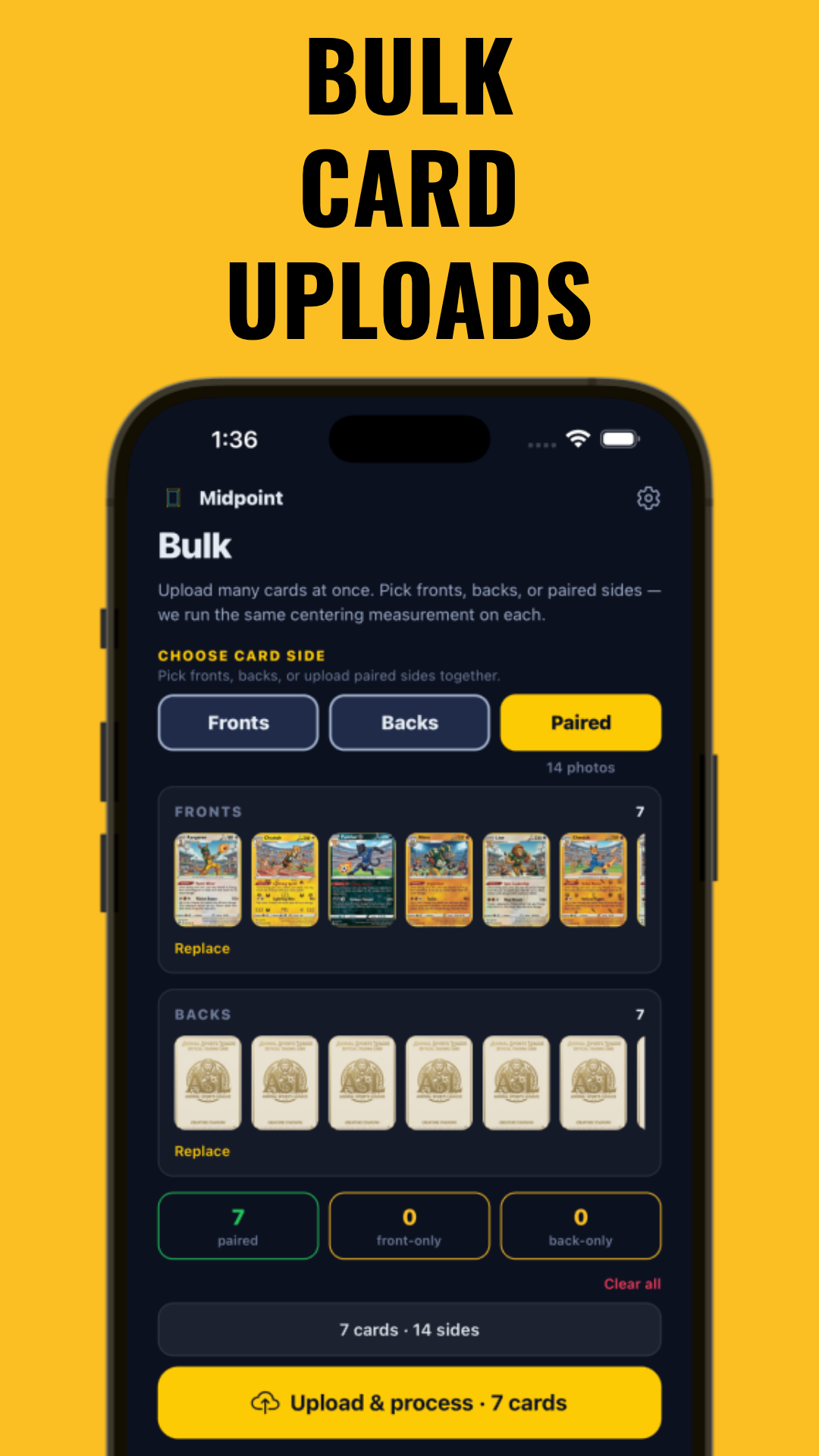
For collectors with large inventories—often numbering in the thousands—bulk grading capabilities can be essential to efficiently assess collection condition and value. Leading software like Midpoint supports batch uploads of card photos, enabling users to submit hundreds or thousands of images simultaneously.
The batch processing pipeline typically includes:
- Automated image quality checks to flag blurry or poorly lit photos.
- Parallel AI grading of each card image using cloud-based infrastructure.
- Generation of detailed reports with predicted grades, subgrades, and value estimates.
- Option to export data in spreadsheet or database formats for inventory tracking.
This can accelerate the workflow for collection assessment and resale planning, reducing hours or days of manual grading to minutes or hours. Batch grading also enables collectors to monitor condition trends across sets, identify cards needing professional regrading, or flag items for sale.
Inventory and Cataloging Features
Beyond grading, software often includes inventory management tools to catalog cards by set, condition, market value, purchase price, acquisition date, and other metadata. Features may include:
- Searchable databases with filters for rarity, grading status, and card attributes.
- Custom tagging and notes for provenance or special characteristics.
- Photo storage with image galleries for each card entry.
- Integration with barcode scanning or QR code systems for physical collection management.
This helps collectors maintain organized records and track their collection’s composition and growth over time, facilitating insurance documentation and portfolio analysis.
Portfolio Value Tracking
Integrated market data allows portfolio tracking features that monitor your collection’s estimated value in real time based on recent auction results, sales data, and grading population reports. This is useful for insurance, resale, or investment decisions.
Midpoint, for example, provides raw versus graded value comparisons across 250,000+ cards, enabling users to see how grading impacts worth. Collectors can generate value trend charts by card type, set, or grade tier to identify high-potential assets or undervalued holdings.
Section 5: Authentication and Counterfeit Detection
Alteration and Forgery Identification
Counterfeit and altered cards pose risks for collectors and investors, potentially resulting in financial loss and market distrust. Some modern collectibles grading software incorporates authentication modules that analyze image anomalies, printing inconsistencies, and known counterfeit markers to help mitigate these risks.
AI models are trained on datasets of authentic versus fake or altered cards, learning to detect subtle differences such as:
- Color mismatches due to incorrect printing inks or fading.
- Inconsistencies in printing dot patterns or halftones visible under magnification.
- Evidence of tampering on edges or corners inconsistent with authentic wear patterns.
- Surface texture anomalies caused by repainting, whitening, or patching.
By flagging suspicious items early, collectors can avoid costly submissions and seek expert authentication before investing.
Integration with Professional Authentication Services
Some platforms facilitate submission workflows that include authentication steps with PSA, BGS, or CGC, aiming to provide a seamless experience from digital grading to official certification. This integration may include:
- Automated pre-submission authentication checks.
- Direct submission scheduling and label printing.
- Status updates and certificate tracking within the app.
Collecting this data within a single system can enhance provenance tracking and give collectors greater confidence in the legitimacy of their cards.
Real-World Detection Examples
- Spotting color mismatches or print defects indicative of altered cards, such as a color-shifted logo or inconsistent card text.
- Detecting tampering on edges or corners inconsistent with authentic wear; for example, artificially rounded corners or added whitening that does not match authentic aging.
- Using AI surface analysis to highlight suspicious gloss or texture anomalies, such as unnatural shine patterns caused by repainting.
Section 6: Submission Workflows and Marketplace Integrations
Streamlining Grading Submissions
Collectibles grading software often includes submission workflow features that help users prepare cards for professional grading services. Key functionalities may include:
- Batch label printing with barcodes or QR codes for efficient sorting and tracking.
- Submission checklist management to help ensure cards meet grading service requirements.
- Status tracking dashboards showing current grading progress, estimated turnaround times, and completion notifications.
- Automated alerts for grading results or required actions.
These tools can reduce manual effort, minimize submission errors, and improve transparency throughout the grading lifecycle.
Integration with Marketplaces and Auction Platforms
Seamless API integrations with marketplaces, auction tools, and catalog systems enable collectors to list cards with verified grade estimates quickly. This transparency can increase buyer confidence and potentially boost sales prices by reducing uncertainty regarding condition.
For example, integration may allow:
- Automatic import of graded card data into listing platforms like eBay, TCGPlayer, or specialized auction houses.
- Real-time synchronization of inventory and pricing updates based on market conditions.
- Direct linking of AI-verified grade reports to listings for buyer verification.
Example: Midpoint’s Submission and Tracking Features
Midpoint offers utilities to export grade estimates in bulk, track submission progress with integrated status updates from grading services, and integrate with popular trading card marketplaces. These features aim to make managing a collection’s grading lifecycle efficient and connected, saving time and reducing administrative overhead.
Section 7: Cataloging, Portfolio Tracking, and Market Value Insights
Comprehensive Collection Management
Effective collectibles grading software often doubles as a collection management system. Users can catalog cards by type, rarity, condition, grading status, acquisition details, and provenance, ensuring easy retrieval and detailed valuation reporting. Advanced search filters and custom tags allow collectors to organize cards by themes, investment strategies, or personal preferences.
Photo galleries and notes sections support documenting special characteristics such as autographs, limited editions, or historical significance. Cloud synchronization enables multi-device access and backup, while sharing options facilitate collaboration with fellow collectors or advisors.
Market Value Estimation and Trends
Software platforms continuously update card market values based on recent sales data, grading population reports, and auction results. Dynamic pricing models incorporate factors such as grade scarcity, player popularity, and set demand to provide timely value assessments.
Collectors can track value fluctuations over time, identify emerging trends, and make informed decisions about buying, selling, or insuring their items. Detailed analytics may include:
- Historical price charts segmented by grade or card variation.
- Comparisons of raw versus graded card values.
- Market supply and demand indicators based on grading population reports.
- Alerts for significant market movements or rare card discoveries.
Multi-Category Support
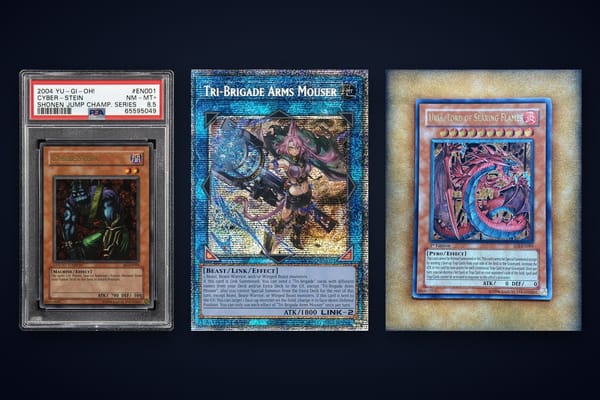
Leading apps support various collectible categories beyond sports cards, including trading card games like Pokémon, Magic: The Gathering, Yu-Gi-Oh!, Lorcana, as well as other collectibles such as coins, comics, and watches. This versatility allows collectors with diverse interests to manage all assets within a single platform, benefiting from consistent grading methodologies and unified portfolio tracking.
For collectors interested in maintaining condition and value, proper storage is crucial. Explore our Ultimate Collector's Guide to Storing Valuable Cards for best practices including temperature control, humidity management, and protective casing recommendations.
Conclusion
Collectibles grading software has transformed how collectors evaluate, authenticate, and manage their trading cards and other valuable items. By leveraging AI-powered condition analysis—including precise centering measurement, corner and edge detection, and surface grading—these tools provide instant, reliable grade estimates aligned with industry standards like PSA, BGS, CGC, and TAG. This innovation can deliver cost and time savings, improved consistency, and greater accessibility for collectors of all levels.
Bulk grading and cataloging features streamline large collection management, while authentication modules enhance confidence by detecting counterfeits and alterations before submission. Integrated submission workflows and marketplace APIs further empower collectors to optimize their portfolios and sales strategies, closing the loop from acquisition to disposition.
If you want to experience precise, AI-driven grading and comprehensive collection tracking, consider trying Midpoint — a free app supporting major trading card categories and grading standards with a user-friendly interface and powerful backend analytics.
FAQ
Q: How does collectibles grading software determine a card’s grade from a photo?
A: It uses AI algorithms and computer vision to analyze images for centering, corners, edges, and surface conditions. These machine learning models are trained on thousands of professionally graded cards to predict grades that aim to closely align with expert evaluations.
Q: Which grading standards does collectibles grading software support?
A: Most support industry-leading standards such as PSA, BGS, CGC, and TAG, providing tailored grade estimates that replicate each company’s unique grading criteria and scales.
Q: Can grading software estimate value before I submit items to PSA or BGS?
A: Yes, software like Midpoint offers market value estimates based on predicted grades and real-time sales data, helping collectors decide which cards are worth submitting for professional grading.
Q: Is there software that can grade bulk lots of cards or coins quickly?
A: Yes, many grading apps support batch scanning and bulk upload features, leveraging cloud processing to efficiently analyze large collections with useful accuracy.
Q: Does collectibles grading software detect counterfeits or altered items?
A: Advanced platforms include authentication modules that analyze image anomalies, print inconsistencies, and known counterfeit markers to flag suspicious items for further expert review.
Q: What features should I look for in collectibles grading and cataloging software?
A: Look for AI-powered condition analysis, support for major grading standards, bulk grading capabilities, counterfeit detection, submission tracking, marketplace integrations, detailed inventory management, and real-time market value analytics.
Free to start
Try the Midpoint app
Grade any card from a photo, see its raw and PSA 10 value, and track what your collection is worth — free.
Get it on iPhoneGet it on Android