
LeBron James Cards Worth Money: Collector’s Guide to Value, Grading & Investment
Discover which LeBron James cards are worth money, top rookie cards, PSA 10 prices, grading tips, and what drives value—plus data-backed investment insights.

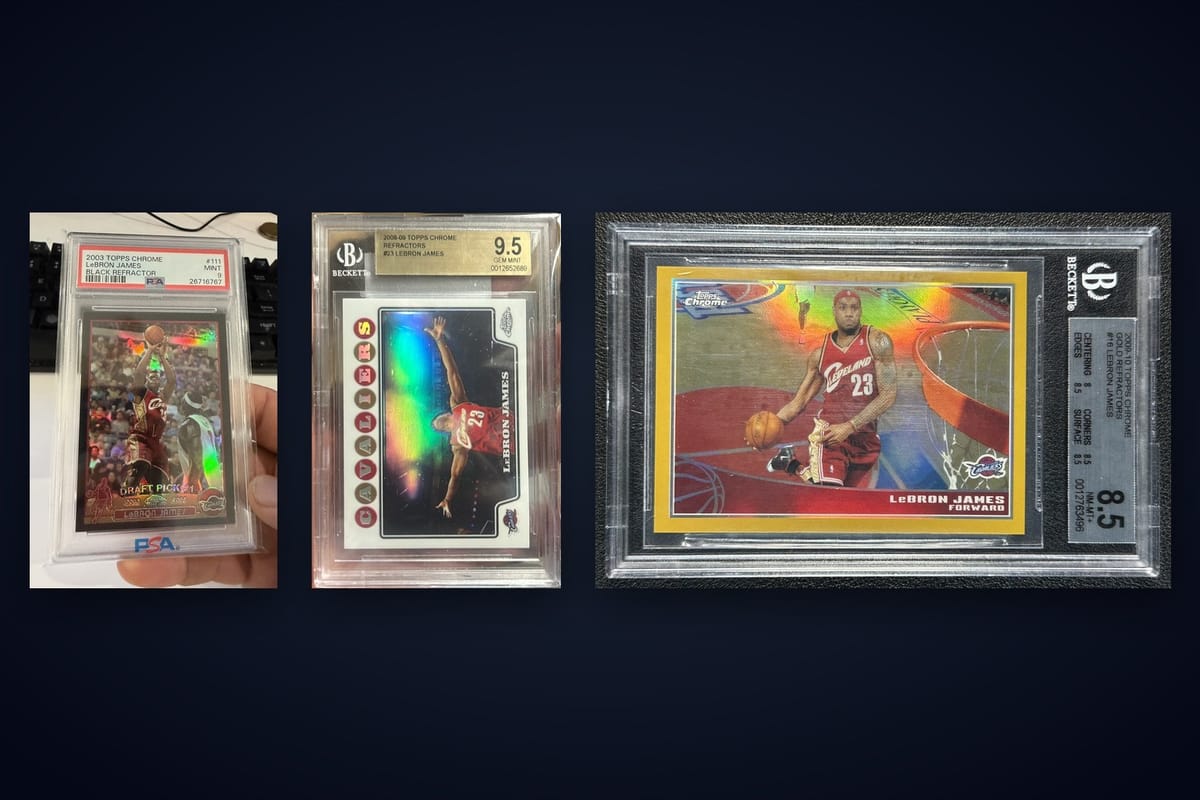
Estimated reading time: 14 min
Key Takeaways
- LeBron James cards worth money include both rookie and modern parallels, with certain PSA 10s commanding high prices.
- Factors like rarity, condition, grading, autograph, and patch greatly impact card values.
- Flagship rookie cards, especially in high grades, are among the most valuable LeBron James cards ever sold.
- Gem premium (PSA 10 vs. raw) varies widely by card, making grading strategy important for collectors and investors.
- Understanding grading, population reports, and collector trends is essential for maximizing value and making informed decisions.
Card values — live data from Midpoint's card database, as of 2026-08-16. Prices move; Midpoint refreshes these daily.
| Card | Raw | PSA 10 | Gem premium | |
|---|---|---|---|---|
![LeBron James [Black Refractor] #111 2003 Topps Chrome card](https://i.ebayimg.com/images/g/FO4AAeSw8fBqUcHg/s-l500.jpg) |
LeBron James [Black Refractor] #111 2003 Topps Chrome |
$1,091 | $480,000 | 440× |
![LeBron James [Gold Refractor] #23 2008 Topps Chrome card](https://i.ebayimg.com/images/g/WooAAeSwizZqUE9N/s-l500.jpg) |
LeBron James [Gold Refractor] #23 2008 Topps Chrome |
$150.00 | $94,100 | 627.3× |
![LeBron James [Gold Refractor] #16 2009 Topps Chrome card](https://i.ebayimg.com/images/g/TlMAAeSw2Mxqckqj/s-l500.jpg) |
LeBron James [Gold Refractor] #16 2009 Topps Chrome |
$10,000 | $85,100 | 8.5× |
![LeBron James [Refractor] #133 2003 Finest card](https://i.ebayimg.com/images/g/Dy0AAeSwiT9p3ZOJ/s-l500.jpg) |
LeBron James [Refractor] #133 2003 Finest |
$3,263 | $45,600 | 14× |
![LeBron James [Autograph] #A1 2003 Upper Deck Rookie Exclusives card](https://i.ebayimg.com/images/g/WakAAeSwqAlozro1/s-l500.jpg) |
LeBron James [Autograph] #A1 2003 Upper Deck Rookie Exclusives |
$4,050 | $42,000 | 10.4× |
 |
LeBron James #18 2013 Panini Innovation Kaboom |
$2,570 | $30,000 | 11.7× |
![LeBron James [Orange Refractor] #23 2007 Topps Chrome card](https://i.ebayimg.com/images/g/RC4AAOSwTn5hKl0J/s-l500.jpg) |
LeBron James [Orange Refractor] #23 2007 Topps Chrome |
$900.00 | $24,500 | 27.2× |
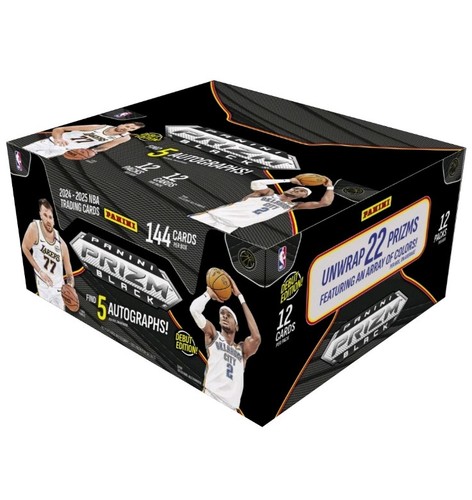 |
LeBron James #1 2024 Panini Prizm Black Manga |
$12,826 | $16,200 | 1.3× |
![LeBron James [Gold Refractor] #102 2003 Topps Pristine card](https://i.ebayimg.com/images/g/QfgAAeSwcd9ouKJS/s-l500.jpg) |
LeBron James [Gold Refractor] #102 2003 Topps Pristine |
$3,336 | $16,200 | 4.9× |
![LeBron James [Gold] #221 2003 Topps card](https://i.ebayimg.com/images/g/mRMAAeSwIaBpZxko/s-l500.jpg) |
LeBron James [Gold] #221 2003 Topps |
$191.47 | $15,600 | 81.5× |
 |
LeBron James #FD7 2016 Panini Studio From Downtown |
$1,250 | $13,066 | 10.5× |
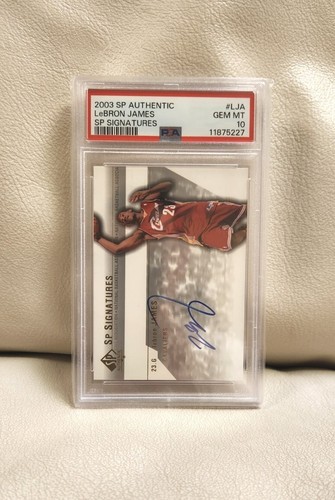 |
LeBron James #LJ-A 2003 SP Authentic Signatures |
$6,700 | $13,000 | 1.9× |
Look up any card's current raw and graded value in Midpoint — and get an estimated grade before you pay to submit.
Table of Contents
- Section 1: Why LeBron James Cards Are Worth Money
- Section 2: The Most Valuable LeBron James Cards Ever Sold
- Section 3: Iconic LeBron James Rookie Cards & Their Value
- Section 4: Key Value Drivers—Rarity, Grading, Autographs, & More
- Section 5: Grading LeBron James Cards—PSA 10, BGS, CGC & Value Impact
- Section 6: Investment Trends & Collectability Across LeBron’s Career
- Conclusion
- FAQ
Section 1: Why LeBron James Cards Are Worth Money
The Allure of LeBron James in the Hobby
For two decades, LeBron James has been at the center of the basketball card world. His cards are worth money because he’s not only a generational talent but a global icon who has redefined the NBA. Collectors see him as the link between Michael Jordan and the modern era—his cards symbolize greatness and history.
- Longevity: Four NBA titles, four MVPs, and all-time scoring leader status.
- Cross-generational appeal: Fans of all ages chase LeBron’s cards—from rookie year to Lakers era.
- Record-breaking sales: Multiple LeBron cards have sold for six and even seven figures, setting hobby benchmarks.
Modern Card Market Dynamics
The boom in sports card collecting, especially post-2020, has kept demand high for legends like LeBron. Key drivers include:
- Low print runs and serial-numbered parallels fuel FOMO.
- Digital marketplaces and grading have made buying/selling easier and more transparent.
- Investment potential draws both collectors and alternative asset investors.
In recent years, the explosion of online auctions, live breaks, and social media hype has brought a new wave of collectors into the hobby. The growing interest from international buyers, particularly from China and Europe, has also elevated the global demand for LeBron cards. Platforms like eBay, Goldin, and PWCC have reported increased numbers of bidders for high-end LeBron pieces, showing just how far the market has evolved. This means that even base cards in good grades have seen price increases, not just the ultra-rare inserts.
What Sets LeBron Cards Apart?
LeBron’s cards span three major franchises (Cavaliers, Heat, Lakers) and countless sets. But what really sets them apart:
- Rookie cards from 2003 remain the gold standard.
- High-end parallels, autographs, and patch cards (often from Upper Deck Exquisite, Topps Chrome, and Panini brands) are especially prized.
- Grading amplifies value: the difference between a raw card and a PSA 10 can be significant, as you’ll see in the data below.
Another factor is LeBron's continued relevance on and off the court. His achievements, such as breaking the NBA all-time scoring record, winning Finals MVPs with three different franchises, and his off-court ventures (like "Space Jam" and social activism) keep him in the public eye. This sustained presence helps ensure that his cards remain culturally and financially significant, unlike players whose appeal may fade after retirement.

Section 2: The Most Valuable LeBron James Cards Ever Sold
Headline Sales & Modern Benchmarks
LeBron James cards worth money regularly appear in auction headlines. As of 2026-08-16, the LeBron James [Black Refractor] #111 (2003 Topps Chrome) in PSA 10 condition reportedly sold for $480,000, while its raw counterpart has been listed around $1,091—a gem premium of over 400x. This isn’t an outlier: several LeBron cards have achieved five- and six-figure PSA 10 sales.
- 2003 Topps Chrome #111 Black Refractor: PSA 10 $480,000 | Raw $1,091
- 2008 Topps Chrome #23 Gold Refractor: PSA 10 $94,100 | Raw $150
- 2003 Finest #133 Refractor: PSA 10 $45,600 | Raw $3,263
- 2003 Upper Deck Rookie Exclusives #A1 Autograph: PSA 10 $42,000 | Raw $4,050
- 2013 Panini Innovation Kaboom #18: PSA 10 $30,000 | Raw $2,570
Beyond these headline figures, there have been reported private sales and auction listings for LeBron cards that reach into the millions, particularly for one-of-one logoman patches and Upper Deck Exquisite autographed rookie patch cards. While those sales are less publicized due to their private nature, they demonstrate the ceiling for the highest-end LeBron cards.
Why Do Some Cards Sell for So Much?
It’s not just about LeBron’s greatness—the biggest sales are driven by a combination of card rarity, low population in top grades, eye appeal, and collector demand. Cards with on-card autographs, limited serial numbers, or unique parallels (like Refractors and Golds) can command significant premiums.
For instance, the Black Refractor version of the 2003 Topps Chrome #111 is limited to 500 copies, but far fewer exist in PSA 10 condition due to centering and print quality issues common in that era. Collectors are willing to pay substantial premiums for these "perfect" examples, as they represent the pinnacle of both the player and the product line. The same is true for Gold Refractors (typically /50) and rare inserts like Kabooms or Downtowns, which are released in small quantities each year and are highly sought after for their design and scarcity.
Modern & Non-Rookie Gems
While rookie cards dominate, certain modern issues like 2024 Panini Prizm Black Manga #1 (PSA 10 $16,200 | Raw $12,826) and 2016 Panini Studio From Downtown #FD7 (PSA 10 $13,066 | Raw $1,250) show that collector appetite for special inserts/parallels remains strong well into LeBron’s career.
Modern inserts like Kaboom and Downtown have become "chase cards" for contemporary collectors, often mirroring the excitement that rookie refractors brought in the early 2000s. The relatively low population in high grade, coupled with vivid artwork and widespread social media attention, means these cards can rapidly appreciate in value—sometimes even outperforming base rookie cards in raw form.
These headline sales set the tone for the entire LeBron market and influence values down the line for lesser parallels, inserts, and even base cards. For details on how centering and condition drive these premiums, see this guide on centering’s impact on card value.
It’s also worth mentioning that auction timing, provenance (card’s history or if owned by a notable collector), and even the story behind a specific card can affect realized prices. For example, cards pulled from famous box breaks or those featured in media often carry a "story premium" in addition to their physical traits.
Section 3: Iconic LeBron James Rookie Cards & Their Value
Flagship Rookie Cards—The Cornerstones
Among all LeBron James cards worth money, his 2003 rookie cards are the undisputed kings. The most famous is the 2003 Topps Chrome #111, especially in its refractor and black refractor versions. These set the standard for modern basketball collecting.
- 2003 Topps Chrome #111 Black Refractor: PSA 10 $480,000 | Raw $1,091
- 2003 Finest #133 Refractor: PSA 10 $45,600 | Raw $3,263
- 2003 Upper Deck Rookie Exclusives #A1 Autograph: PSA 10 $42,000 | Raw $4,050
- 2003 Topps Pristine #102 Gold Refractor: PSA 10 $16,200 | Raw $3,336
- 2003 Topps #221 Gold: PSA 10 $15,600 | Raw $191.47
Other notable rookies include the 2003 Upper Deck Exquisite Collection, which features the highly coveted Rookie Patch Autograph (RPA). Some of these have reportedly sold for over $1 million in private deals. While Exquisite was produced in extremely low numbers, even lesser-known sets such as Bowman Rookies & Stars or Fleer Tradition have seen significant appreciation, especially in top condition.
Understanding Rookie Card Value Gaps
Notice the sharp jump from raw to PSA 10 values—especially for flagship rookies. For example, the Topps #221 Gold in PSA 10 is worth $15,600, while a raw copy is just $191.47. That’s an 81x gem premium. Why? Rookie cards are often heavily handled, and few survive in pristine condition.
Furthermore, many collectors in 2003 didn't use modern protective supplies like penny sleeves and top loaders as consistently as today. Print defects, off-centering, and chipping were common, making high-grade examples exponentially rarer. The PSA 10 population for many of these flagship rookies is often just a handful compared to thousands of raw copies circulating in the market. For collectors and investors, this extreme scarcity in top grade is a primary value driver.
Which LeBron Rookie Cards Are Worth the Most?
- Low-numbered parallels (like Black or Gold Refractors) from 2003 Topps Chrome and Pristine are the most valuable.
- Autographed Upper Deck rookies (especially bold, on-card autos) are highly prized.
- Condition is everything: PSA 10 population is minuscule compared to the total print run.
For example, the 2003 Upper Deck Exquisite RPA is typically serial-numbered to 99, and the 2003 Topps Chrome Black Refractor is /500. But for each, the number of PSA 10s may be in the single digits. This makes these cards true grails for both player collectors and high-end investors.
For a deeper dive on storage and preservation, check out this collector's guide to storing valuable cards.
Section 4: Key Value Drivers—Rarity, Grading, Autographs, & More
Rarity & Scarcity
Scarce cards, especially those with low serial numbers or rare parallels, naturally command higher prices. For LeBron:
- Color parallels: Black, Gold, and Orange Refractors are produced in very limited quantities.
- Serialized cards: The fewer copies exist, the higher the demand among set collectors and player collectors alike.
For example, the 2003 Topps Chrome Gold Refractor is limited to just 50 copies, while the Black Refractor is /500. Modern parallels like Prizm Gold (typically /10) and one-of-one "Black" versions are even scarcer, leading to fierce competition among high-end collectors. These cards often become the centerpiece of any collection, and auction houses frequently use their sale prices as benchmarks for the broader market.
Grading and Condition
Raw vs. graded value is a central theme in LeBron James card collecting. High grades (especially PSA 10) can multiply value dramatically. For instance:
- 2008 Topps Chrome #23 Gold Refractor: Raw $150 | PSA 10 $94,100 (627x increase)
- 2007 Topps Chrome #23 Orange Refractor: Raw $900 | PSA 10 $24,500 (27x increase)
This is why pre-grading and centering analysis are crucial—just a single flaw can mean tens of thousands lost in value. Tools like Midpoint’s Free Centering Calculator help maximize your grading outcomes before submitting to PSA, BGS, or CGC.
Collectors should pay close attention to centering, corners, edges, and surface—common problem areas for both older and modern cards. For instance, even a tiny print line or manufacturing dimple can result in a PSA 9 instead of a PSA 10, which might mean a 50% or greater drop in value for high-end LeBron cards. Pop report analysis—seeing how many cards exist at each grade—can inform whether submitting your card for grading is likely to pay off.
Autographs, Patches, and Unique Features
On-card autographs and prime memorabilia patches add major appeal. The 2003 Upper Deck Rookie Exclusives Autograph #A1 (PSA 10 $42,000) and 2003 SP Authentic Signatures #LJ-A (PSA 10 $13,000) exemplify this premium. Look for bold signatures and original, untampered patches for lasting value.
Modern collectors are increasingly cautious of patch authenticity, as some cards have been altered or "patched up" after the fact. Provenance and original pack-pulled condition matter. LeBron’s early rookie autographs were often stickers, but the true grails are on-card autos—where LeBron himself signed directly on the card. These are typically found in high-end Upper Deck products from 2003.
Other unique features that drive value include low serial numbers (1/1, /10, /23), special print runs (like "First Off The Line" exclusives), and unique artwork (Kaboom, Downtown). The combination of rarity, visual appeal, and direct player association (auto or memorabilia) can lead to exponential value increases over time.
Section 5: Grading LeBron James Cards—PSA 10, BGS, CGC & Value Impact
The Power of PSA 10 and Gem Premiums
LeBron James PSA 10 cards are the hobby’s gold standard. The gap between PSA 10 and raw value is often substantial. For example, the 2003 Topps Chrome Black Refractor jumps from $1,091 raw to $480,000 PSA 10—a 440x increase. This "gem premium" is even higher for certain cards, like the 2008 Topps Chrome Gold Refractor (627x).
- Why does this happen? Few cards survive in perfect condition. Centering, surface, corners, and edges must all be flawless.
- Population reports: PSA, BGS, and CGC publish how many cards get each grade. For LeBron’s top rookies, PSA 10s are often single- or double-digits in population.
Population reports are a crucial resource. For example, a card with a PSA 10 pop of 10 but a total print run of 500 demonstrates just how difficult it is to find perfect copies. Collectors often check pop reports before buying or submitting for grading, as a sudden increase in high grades can affect long-term values. The "pop control" phenomenon—where collectors hold cards back from grading to keep populations low—also plays a role.
Should You Grade Your LeBron James Card?
Grading is often worth it for rare, valuable LeBron cards—especially rookies and low-numbered parallels. But not all cards need to be graded. Consider:
- Is the card rare or sought-after?
- Does it appear flawless under close inspection?
- Are recent gem premiums high for this card?
Use digital tools like Midpoint to estimate centering, surface, and likely grade before spending $30+ per submission. For a step-by-step guide, see how to pre-grade your card.
Collectors should also factor in grading fees, turnaround time, and the current market climate. During hobby booms, gem premiums may be higher, while market corrections can compress the gap between raw and graded prices. Timing your submissions and sales to correspond with high demand (for example, after a LeBron milestone or playoff run) can maximize returns.
Comparison of Grading Companies
While PSA is the market leader, BGS and CGC also grade LeBron cards. Each has slightly different standards, and collectors may pay a premium for PSA 10s due to higher demand and liquidity. For deeper insight, explore grading scale differences by company.
BGS (Beckett Grading Services) is favored for its subgrades (centering, corners, edges, surface), which can provide more nuanced information about why a card received a particular grade. BGS "Black Label" 10s are extremely rare and can fetch premiums even above PSA 10s in some cases. CGC, a newer entrant to the sports card space, is respected for its consistency and competitive pricing. However, the highest liquidity and auction results tend to favor PSA, making it the preferred choice for most LeBron investors. Savvy collectors sometimes cross cards between companies to maximize value, but this process carries risk and cost.
Section 6: Investment Trends & Collectability Across LeBron’s Career
Three Eras, Three Markets
LeBron’s card market is unique in spanning three distinct team eras—Cavs, Heat, and Lakers—each with its own collector base and signature cards:
- Cleveland Cavaliers (2003–2010, 2014–2018): Rookie cards, early Topps Chrome, Upper Deck Exquisite, and gold parallels are the most coveted.
- Miami Heat (2010–2014): Key inserts, championship-year parallels, and early Panini releases.
- Los Angeles Lakers (2018–present): Modern parallels, rare inserts like Prizm Black Manga, and "career achievement" sets.
Within each era, certain cards have become "must-haves" for fans of that team. For instance, Cavaliers-era Exquisite RPAs and Topps Chrome refractors are iconic, while Miami Heat collectors may target championship-year cards like 2012 Prizm Gold. Lakers-era cards, especially those marking record-breaking achievements, have surged in value following LeBron’s historic milestones. Some collectors focus exclusively on a single era, while others build comprehensive "LeBron through the years" portfolios.
Price Ranges for Raw vs. Graded LeBron Cards
Across all eras, the trend holds: raw cards are accessible, but PSA 10s can be out of reach for most. For example:
- 2013 Panini Innovation Kaboom #18: Raw $2,570 | PSA 10 $30,000
- 2024 Panini Prizm Black Manga #1: Raw $12,826 | PSA 10 $16,200
Even modern cards, like the 2024 Black Manga, can show strong gem premiums if the card is tough to grade or highly in demand.
This pricing gap is not limited to high-end cards. Even base cards from LeBron’s rookie year, which were produced in larger quantities, can command high prices in PSA 10. For example, a 2003 Topps #221 base rookie in PSA 10 has sold for over $2,000, whereas the same card raw might fetch $100–$200. This accessibility for raw cards makes them popular entry points for new collectors, while graded gems remain aspirational targets.
Long-Term Collectability & Investment Potential
LeBron’s legacy as an all-time great gives his cards a "blue chip" quality. The most valuable LeBron James cards are likely to remain desirable for years to come, especially:
- Rookie cards in top grade
- Low-numbered parallels and rare inserts
- On-card autos and premium memorabilia
Collectors increasingly use apps like Midpoint to track their LeBron portfolio’s value, analyze price trends, and determine which cards are worth grading for maximum return.
Market data suggests that LeBron’s top rookie cards have outperformed many traditional investments over the last decade. While the hobby is subject to cycles, the long-term outlook for true grail cards—those that are low-pop, high-demand, and iconic—remains strong. As LeBron’s post-playing career as a media figure and philanthropist continues to grow, his cultural relevance could further support his card market’s staying power. Investors looking for liquidity and long-term appreciation often favor LeBron rookies, rare parallels, and high-grade autographs as "anchor" holdings within a broader sports card portfolio.
Conclusion
LeBron James cards worth money span from iconic rookie year refractors to modern, ultra-rare inserts. The most valuable LeBron James cards ever sold share a few key traits: low population in top grades, strong collector demand, and standout features like autographs or unique parallels. For anyone pursuing the best LeBron James cards to grade, knowledge is power—understand gem premiums, use digital grading tools, and stay current on market trends. With the right approach, your LeBron collection can be both a passion and a serious investment.
Remember, the gap between raw and graded values means that attention to detail—centering, surface, corners, and edges—can be the difference between a card worth hundreds and one worth hundreds of thousands. As LeBron’s legacy grows, his cards will continue to be chased by collectors and investors alike. Leverage modern tools, research population reports, and stay informed about market trends to make the most of your LeBron James card journey.
FAQ
Q: What is the most valuable LeBron James card?
A: As of 2026-08-16, one of the most valuable LeBron James cards is the 2003 Topps Chrome #111 Black Refractor in PSA 10 condition, which has reportedly sold for $480,000.
Q: Are LeBron James cards worth money?
A: Yes, many LeBron James cards are worth significant amounts, especially rookie cards, rare parallels, and PSA 10s. Some have sold for tens or even hundreds of thousands of dollars.
Q: Which LeBron James rookie cards are worth the most?
A: The 2003 Topps Chrome #111 Black Refractor, 2003 Finest #133 Refractor, and 2003 Upper Deck Rookie Exclusives Autograph #A1 are among the most valuable LeBron rookie cards.
Q: How much is a 2003 Topps Chrome LeBron James card worth?
A: As of 2026-08-16, a 2003 Topps Chrome #111 Black Refractor has been listed at around $1,091 raw and reportedly sold for $480,000 in PSA 10 condition.
Q: What makes a LeBron James card valuable?
A: Value is driven by rarity, condition, grade (especially PSA 10), autograph or patch features, and collector demand. Population reports and scarcity also play major roles.
Q: Should I grade my LeBron James card?
A: If your card is rare, valuable, and in excellent condition, grading can significantly boost its value. Pre-grading tools can help you decide before submitting to PSA, BGS, or CGC.
Free to start
Try the Midpoint app
Grade any card from a photo, see its raw and PSA 10 value, and track what your collection is worth — free.
Get it on iPhoneGet it on Android


