The Dark MTG Cards Value: Price Guide & Grading Picks
The Dark MTG cards value explained: most valuable cards, raw vs PSA 10 gem premium, and which cards are worth grading. Prices as of 2026-11-22.

Estimated reading time: 11 min
Key Takeaways
- The Dark MTG cards value is concentrated in a small group of staples: Goblin Wizard, City of Shadows, Blood Moon, Ball Lightning, and Maze of Ith lead the set.
- The 1994 set has 119 cards. Most of them are bulk-level or modest in price, so grading rarely pays off on commons.
- The gap between a raw Near-Mint copy and a PSA 10 gem is where the real money is. Centering on black-bordered cards is often what decides it.
- Always compare the raw and graded figures in the data table (dated 2026-11-22) against grading fees before you submit.
- Authenticity and condition matter more here than on modern cards, because old black-bordered cards are easy to fake, easy to damage, and hard to grade well.
Card values — live data from Midpoint's card database, as of 2026-11-22. Prices move; Midpoint refreshes these daily.
| Card | Raw | PSA 10 | Gem premium | |
|---|---|---|---|---|
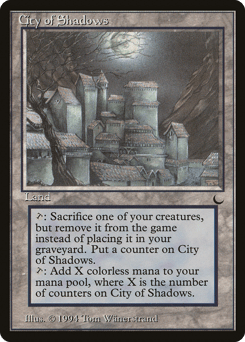 |
City of Shadows #116 The Dark (1994) |
$71.80 | — | — |
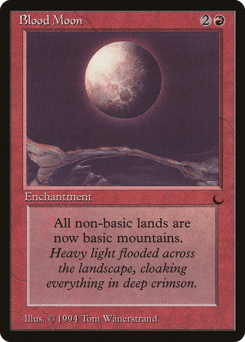 |
Blood Moon #58 The Dark (1994) |
$69.08 | — | — |
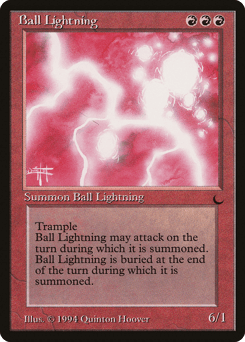 |
Ball Lightning #57 The Dark (1994) |
$50.57 | — | — |
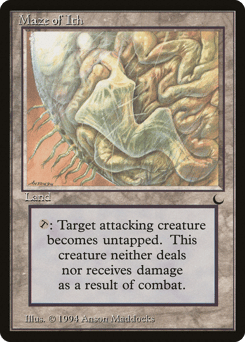 |
Maze of Ith #117 The Dark (1994) |
$36.46 | — | — |
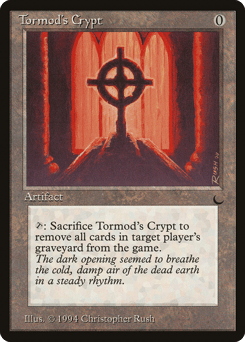 |
Tormod's Crypt #112 The Dark (1994) |
$30.58 | — | — |
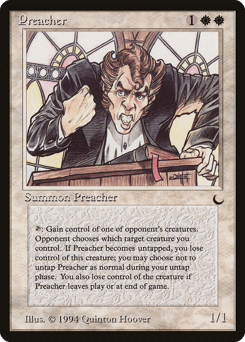 |
Preacher #16 The Dark (1994) |
$29.92 | — | — |
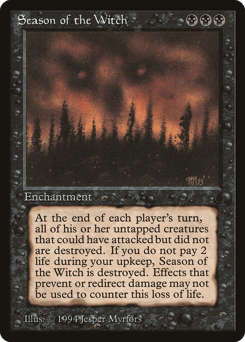 |
Season of the Witch #52 The Dark (1994) |
$24.40 | — | — |
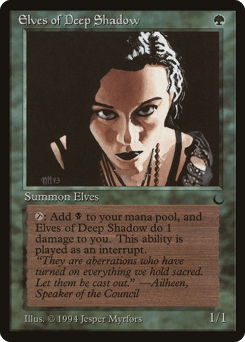 |
Elves of Deep Shadow #76 The Dark (1994) |
$21.04 | — | — |
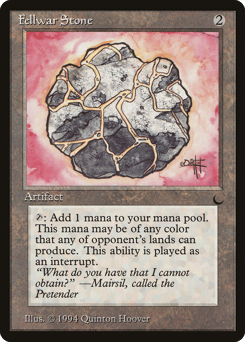 |
Fellwar Stone #102 The Dark (1994) |
$18.63 | — | — |
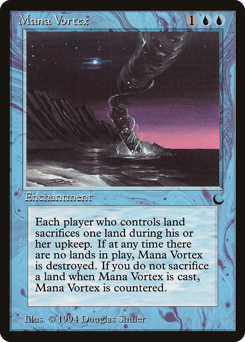 |
Mana Vortex #31 The Dark (1994) |
$14.29 | — | — |
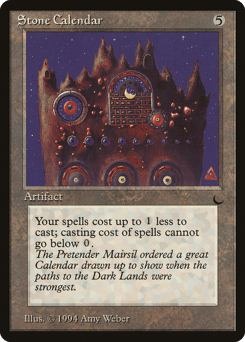 |
Stone Calendar #111 The Dark (1994) |
$14.19 | — | — |
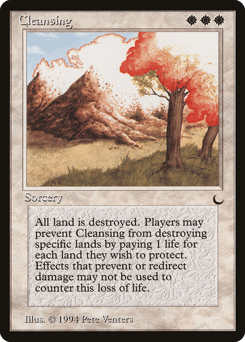 |
Cleansing #4 The Dark (1994) |
$13.03 | — | — |
Look up any card's current raw and graded value in Midpoint — and get an estimated grade before you pay to submit.
Table of Contents
- Section 1: The Dark Set Overview
- Section 2: The Dark Price Guide and Most Valuable Cards
- Section 3: What Drives The Dark MTG Cards Value
- Section 4: Condition and The Dark PSA 10 Value
- Section 5: The Dark Cards Worth Grading
- Section 6: Authenticity and Original Printings
- Section 7: Buying, Selling and Collection Value
If you are trying to pin down the dark mtg cards value, you need three things: a list of which cards matter, a clear picture of how condition changes the price, and a way to decide whether a copy deserves a grading submission. This guide covers all three for Magic: The Gathering's 1994 expansion The Dark. Every specific price in the data table that follows this first section is dated as of 2026-11-22, and I deliberately avoid quoting numbers outside it, because old-card prices move.
Section 1: The Dark Set Overview
The Dark is an early, black-bordered Magic expansion released in 1994. It follows the first wave of core sets and Arabian Nights and Antiquities, and it sits in the era where print quality, card stock, and cutting were far less consistent than today.
Set details and the 119-card checklist
The Dark contains 119 cards. The checklist spans commons, uncommons, and rares across all five colors, plus artifacts and a handful of utility lands. It is a gothic, shadowy set, which is where the name comes from.
When you sort the checklist by card number, rarity, and price, the pattern is clear:
- A few cards carry nearly all of the value.
- A middle tier of playable or nostalgic cards trades at modest premiums.
- The rest are affordable, collector-grade filler.
Why the set still matters
The Dark is not as famous as Alpha, Beta, or Legends, but it is a real piece of Magic history. Several of its cards became staples in Commander, Cube, and eternal formats, which keeps demand alive decades later. Cards such as Maze of Ith, Blood Moon, and Ball Lightning have been discussed in competitive and casual circles for years.
Foils, variants and sealed product
There are no foil versions of original The Dark cards, since foils did not exist in Magic in 1994. That simplifies pricing: your main variables are condition, grading, and whether a card is an original printing or a later reprint. Sealed product and complete-set value are covered in Section 7.
The table above this paragraph in the finished post lists current raw and graded figures by card. Use it as your The Dark price guide for the rest of this article.
Section 2: The Dark Price Guide and Most Valuable Cards
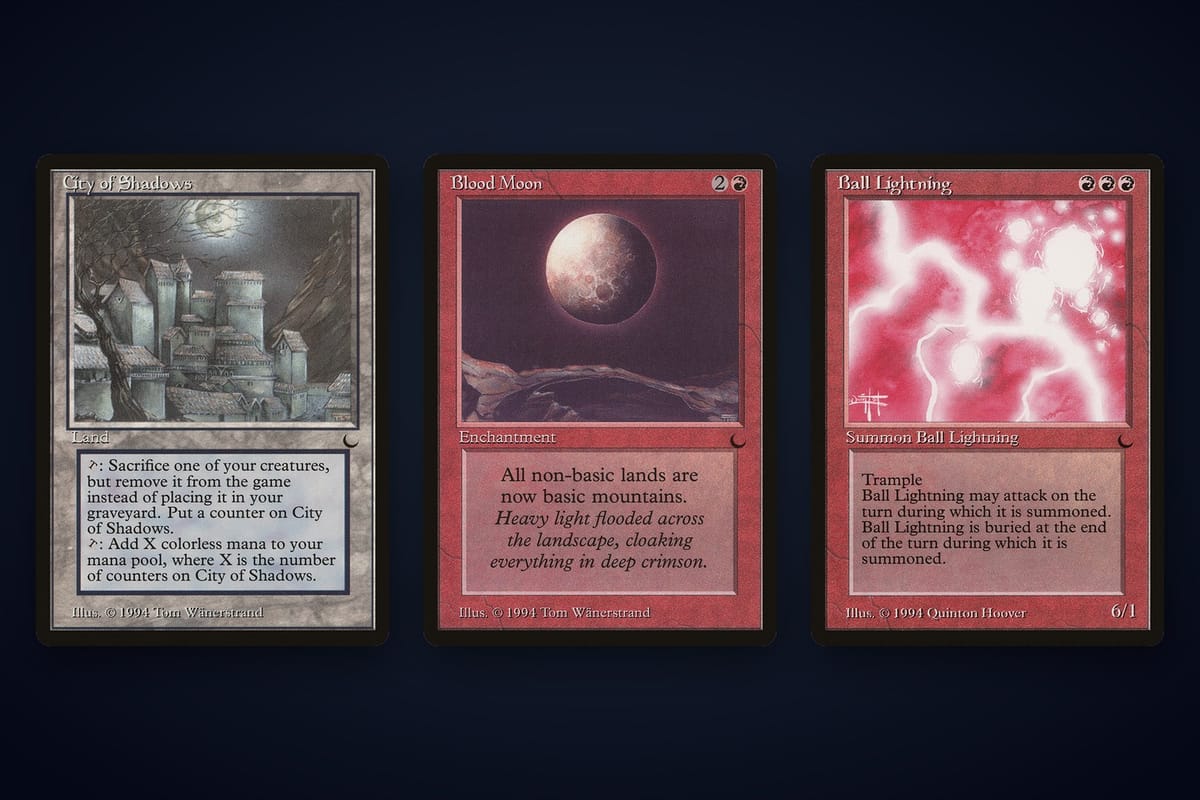
Based on the dated data table, the most valuable The Dark cards are led by Goblin Wizard, City of Shadows, Blood Moon, Ball Lightning, and Maze of Ith. I will not reproduce the table here, but I will explain why each one earns its place.
The top cards, one by one
- Goblin Wizard: A rare with a small but passionate collector base. Its value rests on rarity and its place in the early Goblin lineup rather than raw playability.
- City of Shadows: A land with a distinctive effect that appeals to collectors and some Commander players. Lands from the early era tend to hold demand.
- Blood Moon: A format-warping enchantment. Because it actually shapes games in Commander, Cube, and eternal formats, its demand is partly driven by play, not only nostalgia.
- Ball Lightning: An iconic red creature that combines historic status with a strong collector following.
- Maze of Ith: A utility land that is famous for neutralizing a big attacker. It has strong all-around demand from both players and collectors.
Reading the price tiers
Do not treat all 119 cards equally. In practice you should sort the checklist into three groups:
- Chase cards: The few that dominate total set value.
- Playable staples: Cards with ongoing Commander, Cube, or eternal demand.
- Collector filler: Commons and uncommons with low prices, even in Near Mint.
Dated prices and recent movers
Prices in the table are as of 2026-11-22. Treat them as a snapshot. Staples with active play, such as Blood Moon and Maze of Ith, tend to move with Commander popularity and reprint news. Collector-driven cards move with auction results, especially in graded copies. To follow movement over time, log your cards in a portfolio tracker instead of rechecking marketplace listings by hand.
Section 3: What Drives The Dark MTG Cards Value
Old Magic cards do not price randomly. A handful of factors explain almost every gap you will see in a The Dark price guide.
Rarity and print run
Rarity is the starting point. Rares are scarcer than uncommons, and uncommons are scarcer than commons. But rarity alone is not enough, because a rare nobody wants stays cheap. The Dark also had a limited print run by modern standards, so surviving high-grade copies are far fewer than the total number printed.
Player demand and Commander usage
Playability props up value in a way pure collectibility cannot. Cards with lasting use in Commander, Cube, or eternal formats (think Blood Moon and Maze of Ith) have a built-in buyer pool of players who want a copy and do not care about a grade. That demand supports the raw price and makes the card easier to sell.
Historical significance and nostalgia
Early-era status counts. Collectors who started playing in the 1990s buy the cards they remember, such as Ball Lightning. That nostalgia premium is real, though it is harder to predict than playability.
Condition and survival rate
Many The Dark cards were played, shuffled, and stored without sleeves. That makes clean copies harder to find. Black borders show whitening and chipping immediately, and a single nick on a corner can drop the grade.
- Centering: Early print runs were often off-center. See how centering impacts card value for why it matters so much.
- Corners and edges: Black borders make wear obvious.
- Surface: Scratches, print lines, and indentations lower grades.
Scarcity of supply on the market
If few copies list at once, one sale can reset the market. That is why price history on thin cards can look jumpy. Always check several recent sales, not a single listing.
Section 4: Condition and The Dark PSA 10 Value
Condition is where The Dark PSA 10 value separates from everything else. The premium for a top grade is often the largest single multiplier on a card, and it is why the raw-versus-graded columns in the data table matter.
Near Mint, played, damaged and graded copies
Here is the typical condition ladder for a vintage Magic card:
- Near Mint (NM): Minimal wear. On a 1994 black-bordered card, true NM is uncommon.
- Lightly Played to Moderately Played: Visible edge whitening, minor creasing. These copies carry meaningful discounts.
- Heavily Played and Damaged: Creases, water damage, or inking issues. Cheap, but sometimes the only way to afford a chase card.
- Graded copies: Slabbed by PSA, BGS, CGC, or TAG, often at a premium over raw NM.
The gem-premium gap
The gem-premium gap is the difference between a raw NM price and a PSA 10 price. On modern cards, gems can be relatively common, so the gap is often smaller. On 1994 cards, a PSA 10 is genuinely hard to produce, so the gap can be very wide. The data table shows this for each listed card as of 2026-11-22.
Why centering decides so many grades
On a card with a thin black border, a small shift looks dramatic. Centering thresholds for top grades vary by company (PSA, for example, allows roughly 55/45 on the front for a 10). For a breakdown of how each company treats this, read grading scale differences by company.
You can measure your own copy in seconds with the free centering calculator before spending anything on submission.
Do not confuse gem with slab
A PSA 9 is still a strong result. Do not assume that anything under a 10 loses money. Compare the PSA 9 and PSA 10 columns in the table to see where the real jump is.
Section 5: The Dark Cards Worth Grading
Not every card belongs in a slab. To decide which The Dark cards are worth grading, run a simple math test before you submit.
The grading break-even test
Grading fees are not trivial. Depending on the service level, a per-card cost can climb past $30 once you add shipping and insurance. Ask three questions:
- What is the raw NM price today?
- What is the likely graded price at the grade you expect (PSA 8, 9, or 10)?
- Does the graded price exceed the raw price by more than fees, shipping, and a margin for risk?
If the answer is no, leave the card raw.
Cards that usually pass the test
From the data set, the strongest grading candidates are the headline cards: Goblin Wizard, City of Shadows, Blood Moon, Ball Lightning, and Maze of Ith. Their graded premiums usually justify the fee if the copy looks clean. Check the exact raw and graded values in the table dated 2026-11-22 before you decide.
Cards that usually do not
- Commons and low-priced uncommons, where the fee exceeds the card's value.
- Any copy with obvious whitening, creases, or heavy off-centering.
- Cards whose graded and raw prices barely differ in the table.
Pre-grade before you pay
The cheapest grade is the one you never submit. Pre-grade each candidate by examining centering, corners, edges, and surface under good light. Our step-by-step pre-grading guide walks through it.
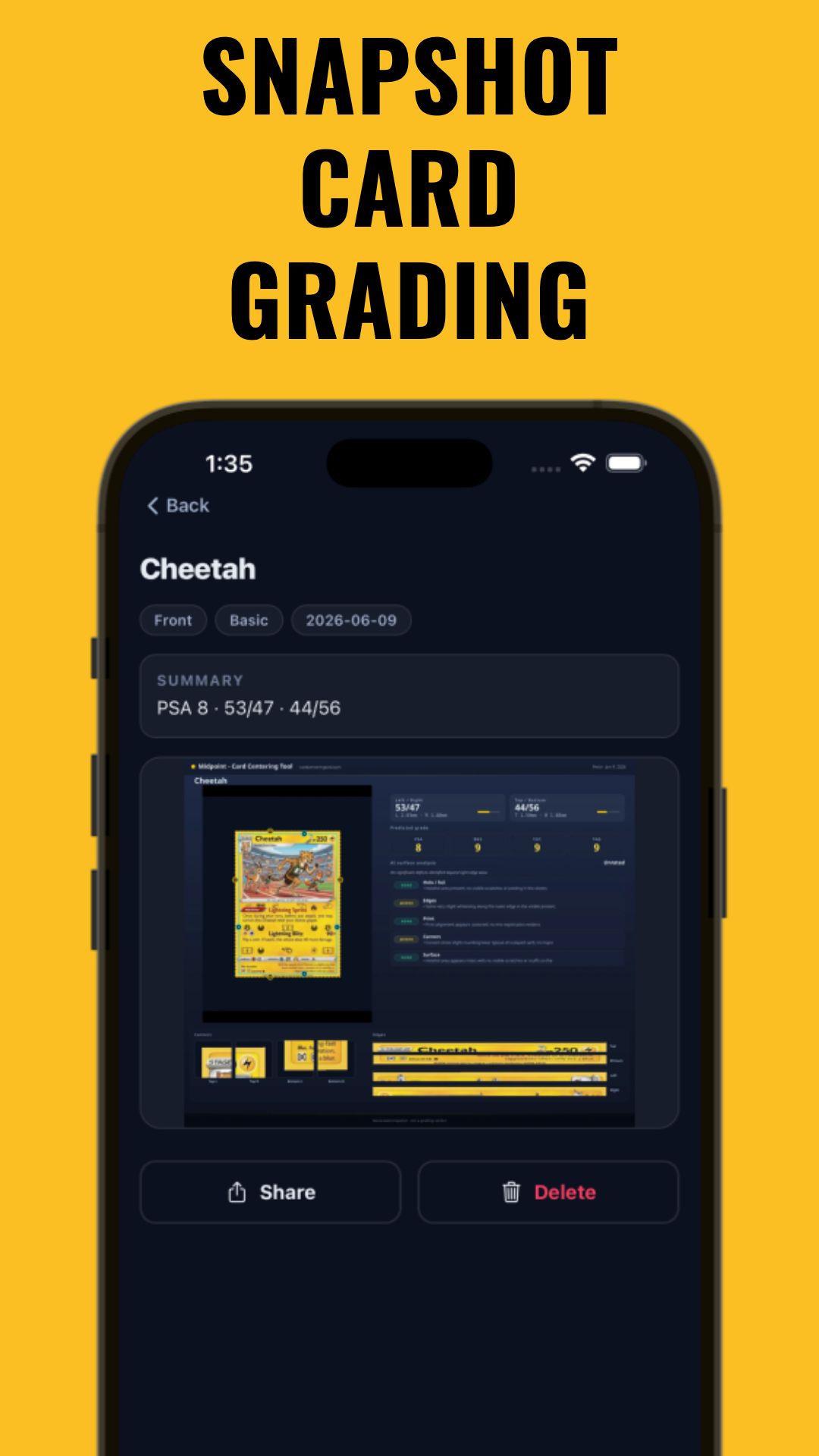
Midpoint gives you an estimated PSA, BGS, CGC, and TAG grade from centering, corners, edges, and surface, so you can skip submissions that would not clear break-even.
Section 6: Authenticity and Original Printings
Value means nothing if the card is not real. Old Magic cards are a target for counterfeits, and a few reprints can be confused with originals.
Spotting original The Dark printings
Original The Dark cards are black-bordered and carry a 1994 copyright line. Compare any card you are unsure about to a known genuine copy.
- Border color: Originals are black. A white-bordered version of a card is a different product, not a The Dark original.
- Card stock and finish: Genuine cards have a specific feel and gloss. Fakes often feel too slick or too stiff.
- Print pattern: Under magnification, real cards show a rosette dot pattern. Many fakes show a different texture.
- Text and symbol: Check fonts, copyright text, and the expansion symbol against a trusted image.
Reprints that look similar
Some early cards were reprinted in later products, sometimes with different borders. Those reprints trade at different prices from originals. Always confirm the exact printing before you compare it to a price guide. A listing that names a card without naming the set may not be the original.
Use grading as authentication
Third-party grading doubles as authentication. If you buy a high-value card raw, you carry the risk of a fake. A slab from a reputable grader reduces that risk, which is part of why graded copies command a premium.
Protect what you own
Once you have verified a card, store it correctly. Sleeves, top-loaders, and stable humidity matter for black-bordered cards, which show edge wear easily. See how to store valuable cards for a full setup.
Section 7: Buying, Selling and Collection Value
Knowing a card's value is only useful if you can transact at that price. Here is how to buy and sell The Dark cards sensibly.
Where to buy and sell
- Marketplaces: Online marketplaces offer the widest audience and the clearest recent-sales data. Watch seller fees, which come out of your proceeds.
- Auction platforms: Good for high-grade slabs and rarer cards. Final prices reflect real demand.
- Local game stores and buylists: Fast and convenient, but buylist offers are normally well below market value. Use them for speed, not for top dollar.
- Collector communities: Trades and private sales can beat marketplace prices, but verify the card and the counterparty first.
Net proceeds matter
Always compute your net: sale price minus platform fees, payment fees, shipping, and insurance. On low-priced cards, fees can swallow most of the sale. On expensive cards, insure shipments and use tracking.
Complete sets, collections and sealed product
Expected total set value is dominated by the chase cards. A complete 119-card set is worth far more than the sum of its commons, and a good chunk of that total sits in just the few headline cards. If you are assembling a set, buy the expensive cards first in the best condition you can afford, then fill the rest with clean, affordable copies. Sealed product from this era is rare, and authenticating it is a specialist task, so do not buy it without provenance.
Is The Dark worth collecting or investing in?
It can be a rewarding collection, but treat it as a hobby first. Old cards can be illiquid, and prices can stall. Spread purchases over time, favor cards with ongoing demand, and never spend what you cannot hold for years. Insurance values also shift with grading; see how card grade impacts insurance value if you hold slabs.
Track the value over time
Log each card, its condition, and what you paid. Midpoint's portfolio tracking shows your collection's value over time, so you can see which The Dark cards are moving without checking listings every week.
Conclusion
The Dark MTG cards value comes down to a few simple ideas. The set has 119 cards, but a handful, including Goblin Wizard, City of Shadows, Blood Moon, Ball Lightning, and Maze of Ith, drive most of the money. Condition separates raw copies from graded gems, and on 1994 black-bordered cards, a PSA 10 is genuinely difficult to produce.
Before you submit anything, check the raw and graded figures in the table (as of 2026-11-22), subtract fees, and pre-grade the card honestly. Centering is the first thing to measure and the cheapest to check. When the math works and the card looks clean, grade it. When it does not, keep it raw and enjoy it.
Ready to check your copies? Try Midpoint to measure centering, estimate PSA, BGS, CGC, and TAG grades, and track your collection's value.
FAQ
Q: What is the most valuable card in The Dark MTG set?
A: Goblin Wizard, City of Shadows, Blood Moon, Ball Lightning, and Maze of Ith are the cards that lead the set by value. Check the data table in this guide for the exact raw and graded figures as of 2026-11-22, since the top spot can change with recent sales.
Q: How much are The Dark MTG cards worth?
A: It varies widely. A few headline cards carry most of the value, while many commons and uncommons are inexpensive. Condition and grade change the price significantly, so use the dated table in this guide and compare recent sales for your specific copy.
Q: What are the most expensive cards from The Dark?
A: The most expensive cards are generally Goblin Wizard, City of Shadows, Blood Moon, Ball Lightning, and Maze of Ith. Graded high-grade copies usually cost much more than raw Near Mint copies.
Q: How many cards are in The Dark MTG set?
A: The Dark has 119 cards. It was released in 1994 and is a black-bordered early Magic expansion with no foil versions.
Q: Is The Dark MTG set worth collecting or investing in?
A: It is worth collecting if you enjoy early Magic history, and a few cards have lasting demand from Commander and eternal players. As an investment it carries risk, since vintage cards can be illiquid. Buy in good condition, favor in-demand cards, and only spend what you can hold long term.
Q: What determines the value of old The Dark Magic cards?
A: Rarity, print run, condition, player demand, Commander usage, and historical significance all matter. Condition is especially important on black-bordered 1994 cards, where centering, whitening, and surface wear heavily affect the grade and the price.
Free to start
Try the Midpoint app
Grade any card from a photo, see its raw and PSA 10 value, and track what your collection is worth — free.
Get it on iPhoneGet it on Android