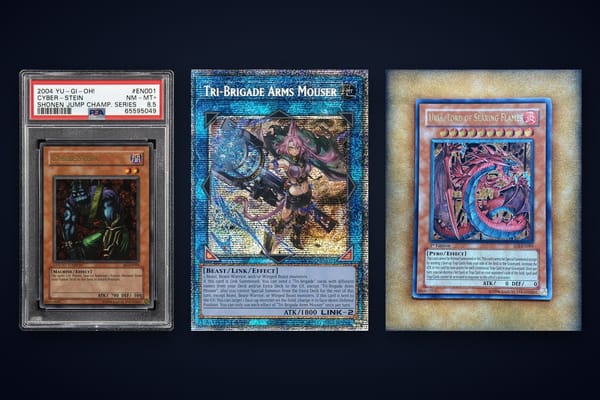
Yugioh Card Prices Dropping November 2026: 9 Cards to Watch
Yugioh card prices dropping in November 2026: see which cards fell, why prices cool, how to spot thin-market dips, and how to buy the dip smartly.

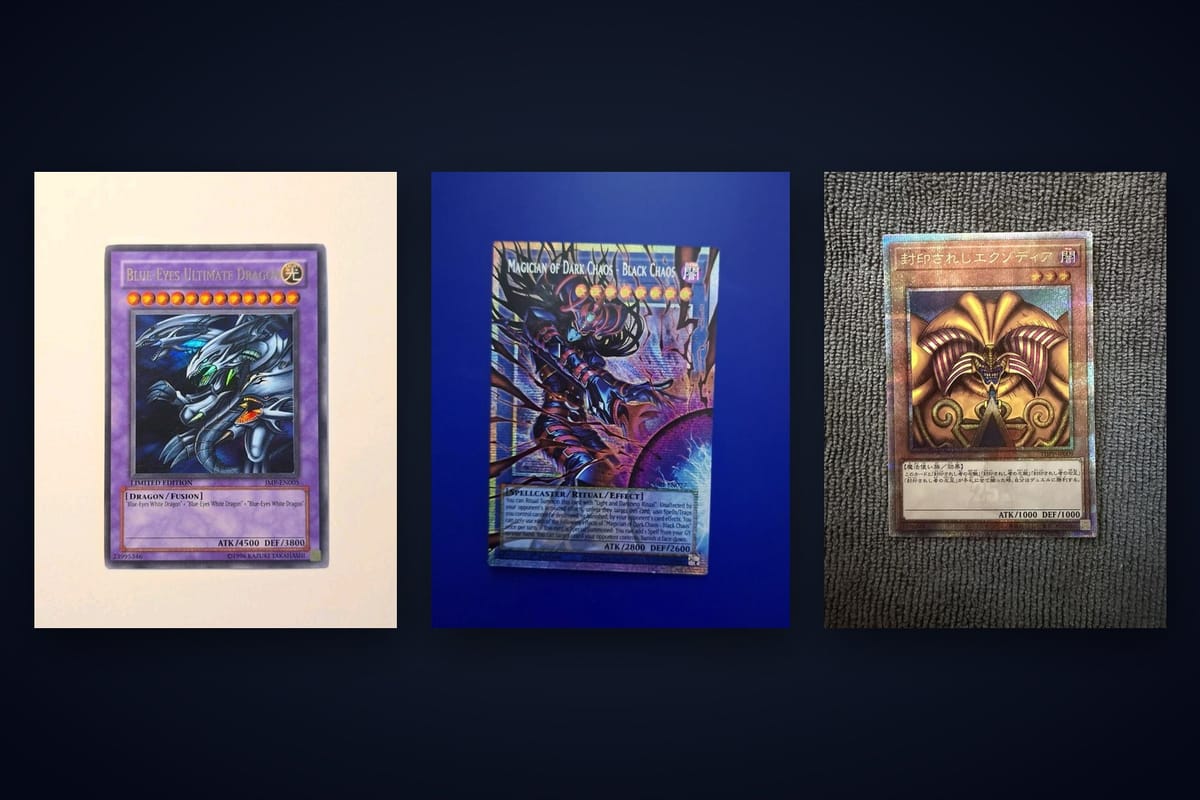
Estimated reading time: 9 min
Key Takeaways
- Yugioh card prices dropping in November 2026 is a market-wide story, but the size of each drop depends on the card, the printing and how many copies actually sell.
- Cards named in reports of November 2026 price declines include Elfnote Lucina, Armades, Zenna's Deceiving Doll Maidens, Intercept Wave and Blue-Eyes White Dragon. Verify each against current sales data.
- Reprints, new set releases, Forbidden and Limited List changes, metagame shifts and extra supply are the usual reasons Yugioh cards lose value.
- A big percentage drop on a thin market can be noise. Check sales volume before you panic or buy.
- A dip is only an opportunity if the card has real demand and a copy you can verify, including centering if you plan to grade it.
If you are tracking yugioh card prices dropping in November 2026, you probably want three answers. Which cards fell, why they fell, and whether the fall is a bargain or a trap?
This guide walks through the falling Yugioh card prices flagged this month, as of 2026-11-08. It also shows how to separate genuine declines from low-volume noise, and how to use a dip, including grading a cheap copy that centers well. I haven't quoted exact previous prices, current TCGplayer market prices or percentage declines in the text, so no number gets stale or misquoted. Check a live price tracker for the current figures on each card.
30-day price movers — live data from Midpoint's card database, as of 2026-11-08. Prices move; Midpoint refreshes these daily.
| Card | Raw | PSA 10 | 30-day | |
|---|---|---|---|---|
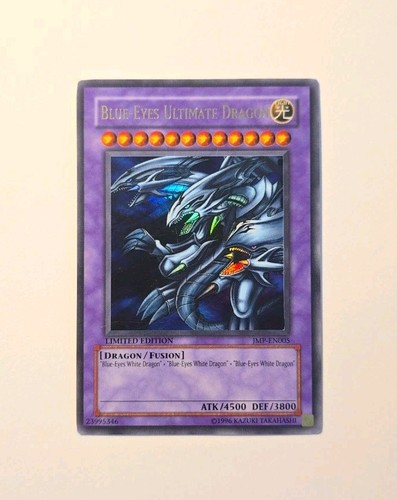 |
Blue-Eyes Ultimate Dragon JMP-EN005 YuGiOh Shonen Jump Promo |
$15.98 | $1,613 | -9% |
 |
Magician of Dark Chaos - Black Chaos [Extended Art Starlight Rare] CORI-EN027 YuGiOh Chaos Origins |
$431.13 | $2,972 | -8.7% |
 |
Exodia the Forbidden One [Quarter Century Secret Rare] TDPP-JP009 YuGiOh Japanese Legend of Duelist Quarter Century Premium Pack |
$25.15 | $168.58 | -2.6% |
 |
Favorite HERO Flame Wingman [Overframe Grand Master Rare] LOCH-JP005 YuGiOh Japanese Limit Over Collection: Heroes |
$3,495 | $22,998 | -0.3% |
 |
Infinite Impermanence OP17-EN002 YuGiOh OTS Tournament Pack 17 |
$90.29 | $500.00 | 0% |
 |
Blue-Eyes Ultimate Dragon RP01-EN000 YuGiOh Retro Pack |
$25.00 | $1,625 | 0% |
 |
Blue-Eyes Ultimate Dragon [1st Edition] GFP2-EN181 YuGiOh Ghosts From the Past: 2nd Haunting |
$76.94 | $1,568 | +12% |
 |
Exodia the Forbidden One DDS-003 YuGiOh Dark Duel Stories |
$127.24 | $2,758 | +14.4% |
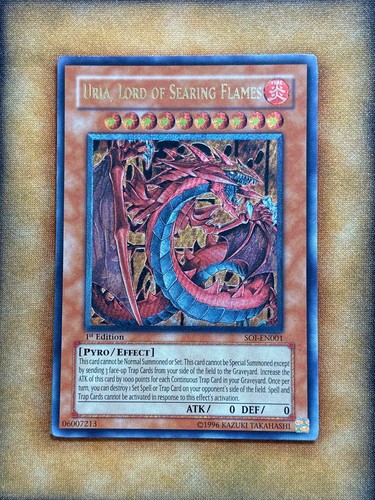 |
Uria, Lord of Searing Flames [Ultimate Rare 1st Edition] SOI-EN001 YuGiOh Shadow of Infinity |
$950.00 | $34,379 | +15.3% |
 |
Tri-Brigade Arms Mouser [Starlight Rare] DOOD-EN051 YuGiOh Doom of Dimensions |
$30.09 | $171.35 | +25.9% |
 |
Cyber-Stein SJC-EN001 YuGiOh Shonen Jump Championship |
$4,532 | $42,698 | +49.6% |
Look up any card's current raw and graded value in Midpoint — and get an estimated grade before you pay to submit.
1. Check the Overall Yugioh Card Market in November 2026 First
Before you look at any single card, look at direction. A card falling in a rising market is a different story from a card falling in a market where most cards are sliding.
Whichever tracker you use, pull up these four things:
- Market index: is the overall Yugioh index up, flat or down?
- 7-day change: shows whether the move is fresh or already fading.
- 30-day change: shows whether it is a trend or a blip.
- Risers vs. fallers: do falling cards outnumber rising cards? If they do, the dip is broad. If not, it is a few cards getting hit.
A broad decline often points to supply or sentiment. A narrow decline often points to something card-specific, such as a reprint or a list change.
2. Elfnote Lucina: A Drop You Should Check by Edition
Elfnote Lucina is one of the cards reported among the November 2026 decliners. Before relying on any quoted drop, confirm the previous price, current TCGplayer market price, edition, rarity and set for the listing being tracked.
Before you treat that drop as a signal, ask what the listing actually represents:
- Which rarity is it? Higher rarities tend to be thinner and swing harder.
- Is it a first edition, unlimited or limited printing?
- Did a newer set add another version of the card to the market?
If the answer to the last question is yes, the drop may be reprint pressure rather than weaker demand. Reprint pressure can cool a card for a while, though what happens afterward varies.
3. Armades: Separate Supply Pressure From Lost Demand
Armades also shows up among the cards reported as losing value this month. Falling Yugioh card prices like this have two common causes, and they look different once you dig in.
- Supply-driven: more copies enter the market through new product or reprints, and price falls even though players still want the card.
- Demand-driven: the card stops seeing play, or collectors lose interest.
Check recent sold listings and see whether the card is still moving at a steady pace. A card that keeps selling at lower prices is a real repricing. A card that barely sells at all is a different situation, covered in section 4.
4. Zenna's Deceiving Doll Maidens: Watch Liquidity and Thin-Market Warnings
Zenna's Deceiving Doll Maidens is another card reported among the November 2026 declines. Treat any large percentage move on a card like this with some caution until you confirm how many copies are actually changing hands.
A single sale can shift a thin market's price. If only a handful of copies sold in the last 30 days, a steep percentage drop may only reflect one low sale or one seller lowering a listing. Look for several consistent sales at the new price before you call it a trend.
5. Intercept Wave: Older Staples Move on Reprints and Format Changes
Intercept Wave is also reported among the cards that have fallen in price. Older staples tend to react to a few specific things:
- A reprint in a new set that makes copies easier to get.
- A Forbidden and Limited List update that changes how many copies players can run.
- A metagame shift that pushes the card out of top decks.
If you are considering Intercept Wave as a dip buy, ask which printing you are looking at. The cheapest version is often the one hit hardest by reprints, while scarcer printings can hold up better. Check the exact figures for the specific version you are tracking.
6. Blue-Eyes White Dragon: A Collector Icon on the Decline List
Blue-Eyes White Dragon appearing among the reported November 2026 price drops is a useful reminder that even the most recognizable card in the game has dozens of printings. A drop on one listing says little about all the others.
Check these details before you read anything into it:
- Set and edition: early printings and modern reprints trade in very different price ranges.
- Rarity: a common reprint and a premium rarity behave differently.
- Condition and language: English, Japanese and other languages are separate markets.
Collector demand for an iconic card tends to be steadier than demand for a tournament staple. Even so, one version can fall while another holds.
7. Why Yugioh Cards Are Losing Value: Reprints, New Sets and the Banlist
Falling Yugioh card prices rarely have a single cause. These are the usual suspects:
- Reprints: more supply generally pushes the price of a singles card down, especially a staple that now has a cheaper version.
- New set releases: when new sets arrive, players and sellers may shift attention and money to the new cards, and older singles can soften.
- Forbidden and Limited List changes: a restriction can lower demand, and a release from the list can raise it.
- Metagame shifts: when a deck falls out of favor, its key cards often cool off.
- Hype fading: early spikes after a reveal often settle once supply catches up.
Knowing which cause applies helps you judge whether the card is likely to recover, though no outcome is guaranteed. Supply-driven drops are the ones most worth watching.
8. Sets and Sealed Product: How New Releases Affect Singles
Sealed product performance can feed into singles prices. When a new product is released or approaches release, a few things tend to happen:
- Buyers spend on the new product, so money may move away from older singles.
- Opened product increases the supply of the cards inside it.
- Any reprinted cards inside can pull down the price of their older versions.
If a card on your watchlist is part of a recent or upcoming product, expect some pressure until the market absorbs the extra supply.
9. Rarity, Edition, Condition and Language: Why the Same Card Has Many Prices
When people say a Yugioh card is losing value, they usually mean one specific listing. The same card name can carry very different values depending on:
- Rarity: secret, ultra and common printings are different markets.
- Edition: first edition, unlimited and limited prints are priced separately.
- Condition: near mint and played copies can be far apart.
- Language: a Japanese copy and an English copy do not trade at the same price.
Before you compare a market price to your own copy, match the edition, rarity, set and condition exactly. For graded copies, a PSA 10 and a raw copy are two distinct markets, and the gap between them depends on how hard a card is to get into top condition. Our guide on grading scale differences by company explains how top grades compare.
10. How to Verify a Yugioh Price Drop Is Real
A drop only matters if the price behind it is trustworthy. Use more than one source:
- TCGplayer market price: a good starting point for raw copies, and it is based on recent sales rather than just asking prices.
- eBay completed sales: shows what buyers actually paid, including graded copies.
- Daily price trackers: help you see the shape of the trend over weeks.
- Recent transaction volume: the key check. Many sales at a lower price is a real decline. A few sales is a warning.
Percentage changes on cheap or rarely traded cards can look dramatic. Always ask how many copies sold before you act on one.
11. Yugioh Cards to Buy the Dip: A Simple Filter
Falling prices create opportunities only when the card has something going for it. Run any candidate through this checklist:
- Strong demand: is it still played or still wanted by collectors?
- Low supply: a scarce printing may be more likely to rebound than a heavily reprinted one.
- Competitive relevance: is the card still in decks, or is the dip a sign it has left them?
- Temporary pressure: is the drop tied to a reprint or release that will fade?
Compare these cards against the ones still climbing this month, including the most valuable Yugioh cards. If risers share traits your dip candidate lacks, such as steady demand or limited supply, be careful. Nobody can promise a rebound, so only spend what you are comfortable holding.
12. Grade a Cheap Copy That Centers Well
A dip can also be a cheap way to pick up a raw copy worth grading. Centering is one of the factors that affects a grade, and it is one you can check before you buy or submit. Our post on how centering impacts card value covers how much it matters.
A simple process:
- Ask sellers for clear, straight-on photos of the front and back.
- Measure the border ratios on each side. You can try the free centering calculator.
- Check corners, edges and surface for flaws.
- Estimate the grade before paying for submission, as shown in our step-by-step pre-grading guide.
Midpoint measures centering and gives an estimated PSA, BGS, CGC or TAG grade from centering, corners, edges and surface, so you can screen copies before you spend on grading fees.

Conclusion
Yugioh card prices dropping in November 2026 is a mix of real repricing and thin-market noise. Cards such as Elfnote Lucina, Armades, Zenna's Deceiving Doll Maidens, Intercept Wave and Blue-Eyes White Dragon are worth watching, but every one needs a check on edition, rarity, volume and cause before you act.
Verify prices across TCGplayer and eBay sold listings, favor scarce cards with lasting demand, and check centering before you buy a copy to grade. Try Midpoint to measure and estimate grades before you commit.
FAQ
Q: Why are Yu-Gi-Oh card prices dropping in November 2026?
A: The usual causes are reprints, new set releases, Forbidden and Limited List changes, metagame shifts and added supply. Which one applies depends on the card, so check its printing and recent sales.
Q: Which Yu-Gi-Oh cards dropped the most in price this week?
A: Cards reported among the decliners include Elfnote Lucina, Armades, Zenna's Deceiving Doll Maidens, Intercept Wave and Blue-Eyes White Dragon. Check a live tracker such as TCGplayer for the exact previous price, current market price and percentage change, as of 2026-11-08 and beyond.
Q: Is now a good time to buy Yu-Gi-Oh cards after the November 2026 price drop?
A: It can be, for cards with steady demand, limited supply and a drop caused by temporary reprint pressure. Avoid cards whose declines come from thin sales or lost competitive relevance, and only spend what you are comfortable holding.
Q: Are Yu-Gi-Oh reprints causing card prices to fall?
A: Often, yes. More copies in circulation generally pushes singles prices down, especially for staples with a cheaper new printing. Scarcer older printings can hold up better.
Q: Which Yu-Gi-Oh cards are expected to go up in price after November 2026?
A: Nobody can predict this reliably. Cards with lasting demand, low supply and competitive or collector appeal are better candidates than heavily reprinted cards. Compare against the cards currently rising and verify each one with sales data.
Q: How can I check the current value of my Yu-Gi-Oh cards?
A: Match your card's exact set, edition, rarity, condition and language, then compare TCGplayer market prices with eBay completed sales. A card lookup and portfolio tracker such as Midpoint can show raw and graded values and track your collection over time.
Free to start
Try the Midpoint app
Grade any card from a photo, see its raw and PSA 10 value, and track what your collection is worth — free.
Get it on iPhoneGet it on Android