Babe Ruth Cards Worth Money: Collector’s Guide to Value, Grading, and Investment
Discover which Babe Ruth cards are worth money, how condition and grading affect value, and the most valuable Babe Ruth cards to collect and grade.

Estimated reading time: 17 min
Key Takeaways
- Babe Ruth cards are among the most valuable and iconic in the hobby, with some PSA 10s reportedly selling for over $2 million as of 2026-08-09.
- Card value heavily depends on condition, grade, rarity, and set—raw vs. PSA 10 values can differ by over 400x in some cases.
- The 1933 Goudey and 1948 Leaf are among the most valuable Babe Ruth cards, but affordable options exist for budget collectors.
- Grading can dramatically increase card value; tools like Midpoint can help estimate potential grades before submission.
- Authentication is crucial—learn to spot reprints and fakes to protect your investment.
Card values — live data from Midpoint's card database, as of 2026-08-09. Prices move; Midpoint refreshes these daily.
| Card | Raw | PSA 10 | Gem premium | |
|---|---|---|---|---|
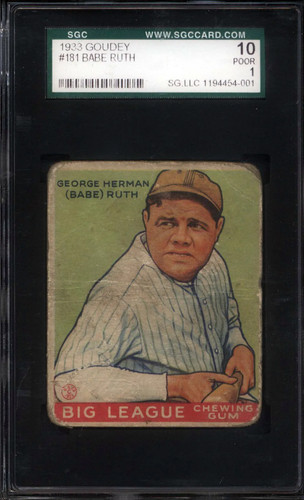 |
Babe Ruth #181 1933 Goudey |
$5,313 | $2,127,736 | 400.5× |
 |
Babe Ruth #3 1948 Leaf |
$2,701 | $747,572 | 276.8× |
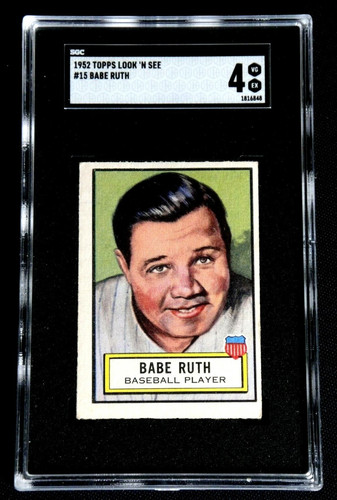 |
Babe Ruth #15 1952 Topps Look 'n See |
$406.01 | $93,684 | 230.7× |
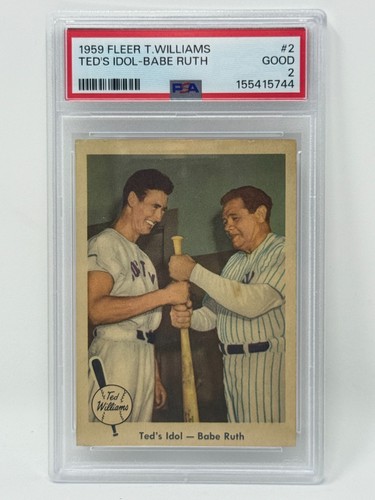 |
Ted's Idol-Babe Ruth #2 1959 Fleer Ted Williams |
$79.43 | $15,369 | 193.5× |
 |
Babe Ruth #3 1961 Golden Press |
$81.44 | $15,005 | 184.3× |
 |
Babe Ruth #3 1960 Fleer |
$74.52 | $12,208 | 163.8× |
 |
Babe Ruth #75 1961 Fleer |
$75.14 | $8,700 | 115.8× |
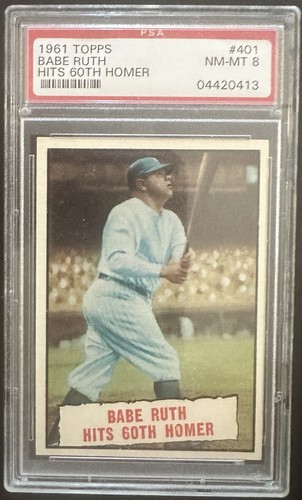 |
Babe Ruth #401 1961 Topps |
$44.58 | $7,309 | 164× |
 |
Babe Ruth #AK-13 2026 Topps All Kings |
$1,442 | $6,522 | 4.5× |
![Babe Ruth [Babe Hits 60] #139 1962 Topps card](https://i.ebayimg.com/images/g/Og8AAeSwCQJqd0tm/s-l500.jpg) |
Babe Ruth [Babe Hits 60] #139 1962 Topps |
$25.21 | $4,079 | 161.8× |
 |
Babe Ruth #474 1973 O Pee Chee |
$28.26 | $3,215 | 113.8× |
 |
Babe Ruth #AA-3 2025 Topps All Aces |
$635.88 | $1,850 | 2.9× |
Look up any card's current raw and graded value in Midpoint — and get an estimated grade before you pay to submit.
Table of Contents
- Section 1: Why Babe Ruth Cards Are Worth Money
- Section 2: Most Valuable Babe Ruth Cards by Set and Year
- Section 3: Condition, Grading, and Value Multipliers
- Section 4: Babe Ruth Rookie Card Value and Early Releases
- Section 5: Affordable Babe Ruth Cards for Budget Collectors
- Section 6: Authenticity—How to Spot Real vs. Reprint Babe Ruth Cards
- Conclusion
- FAQ
Section 1: Why Babe Ruth Cards Are Worth Money
The Legacy of The Sultan of Swat
Babe Ruth isn’t just a baseball legend—he’s an American icon whose name transcends sports. His cards represent a cornerstone of sports memorabilia, attracting collectors, investors, and historians. As the hobby matures and the appetite for iconic figures grows, demand for authentic, high-grade Ruth cards has increased. This demand translates directly into tangible value, especially for cards from the 1930s and 1940s.
Rarity and Historical Significance
Not every Babe Ruth card is created equal. The most valuable Babe Ruth cards are rare, often originating from limited print runs or early sets. The 1933 Goudey and 1948 Leaf issues, for instance, are both scarce and historically important. The scarcity of high-grade examples, especially those graded PSA 8-10, leads to competitive bidding at auction and high prices.
Market Performance and Investor Appeal
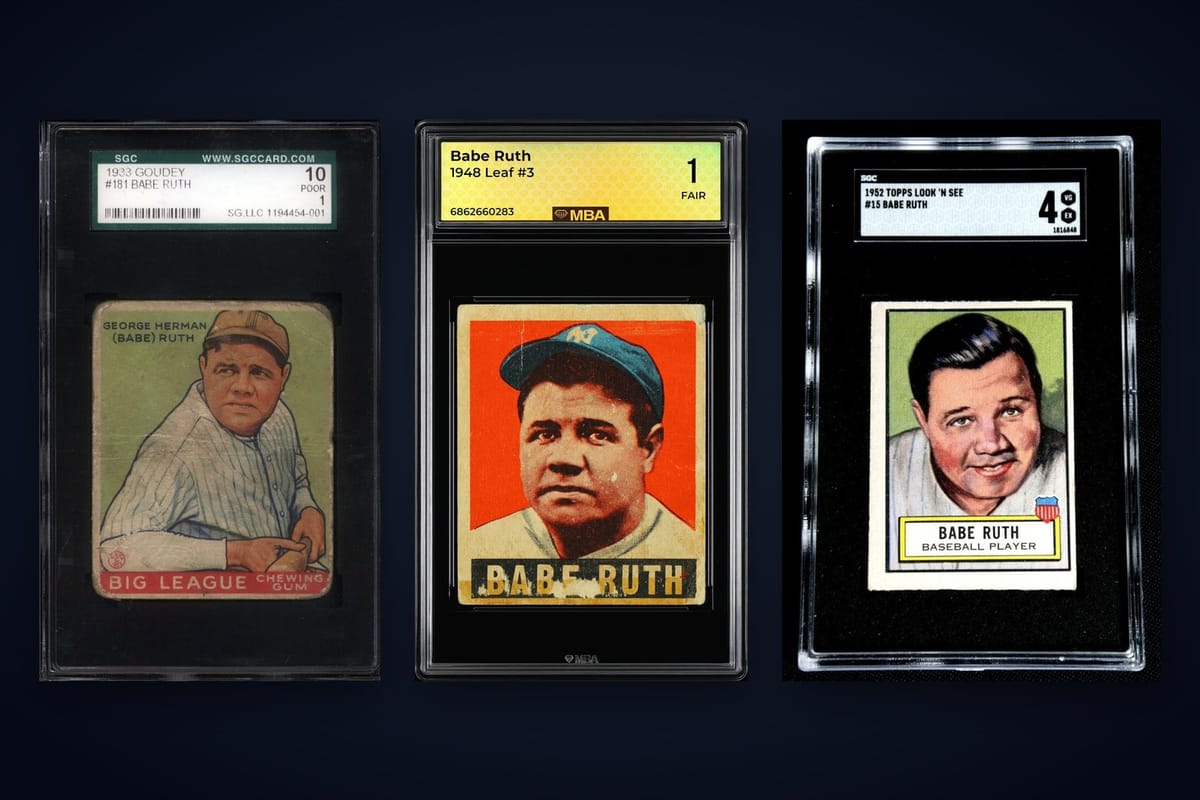
Card values are not static; they fluctuate with trends, athlete popularity, and broader market sentiment. In recent years, the best Babe Ruth cards to grade have often outperformed the market average. For example, as of 2026-08-09, a 1933 Goudey Babe Ruth #181 in PSA 10 condition reportedly reached $2,127,736, while the same card raw trades for $5,313. This 400x+ premium demonstrates both the power of grading and the enduring appeal of Ruth’s legacy.
For more on how technical factors like card centering drive value, see How Centering Impacts Card Value: A Detailed Guide.

Section 2: Most Valuable Babe Ruth Cards by Set and Year
Iconic Goudey and Leaf Releases
When collectors discuss Babe Ruth cards worth money, two names often rise to the top: the 1933 Goudey and 1948 Leaf sets. These cards are flagship Ruth issues for serious collectors and investors. As of 2026-08-09:
- 1933 Goudey Babe Ruth #181: Raw $5,313 | PSA 10 $2,127,736 | Gem premium 400.5x
- 1948 Leaf Babe Ruth #3: Raw $2,701 | PSA 10 $747,572 | Gem premium 276.8x
Both cards are rare in any condition, and exceedingly scarce in high grades. PSA 10 examples are highly sought after and are considered blue-chip assets in the hobby.
Other High-Value Vintage Cards
Though the Goudey and Leaf sets dominate headlines, several other issues command significant value:
- 1952 Topps Look 'n See Babe Ruth #15: Raw $406.01 | PSA 10 $93,684
- 1959 Fleer Ted Williams “Ted’s Idol – Babe Ruth” #2: Raw $79.43 | PSA 10 $15,369
- 1961 Golden Press Babe Ruth #3: Raw $81.44 | PSA 10 $15,005
Later post-war issues, while more affordable raw, can still deliver impressive returns if graded Gem Mint.
Modern Inserts and Limited Releases
Even modern cards can be among the most valuable Babe Ruth cards, particularly low-numbered inserts or commemorative sets like:
- 2026 Topps All Kings Babe Ruth #AK-13: Raw $1,442 | PSA 10 $6,522
- 2025 Topps All Aces Babe Ruth #AA-3: Raw $635.88 | PSA 10 $1,850
While the gem premiums are far lower than vintage, these offer a modern way to own a Ruth card with potential for appreciation.
For a deeper dive on how AI is changing card valuation and grading approaches, see AI-Focused Comparison: How AI Transforms Card Centering Analysis.
Section 3: Condition, Grading, and Value Multipliers
Raw vs. Graded Babe Ruth Card Prices
The value of any Babe Ruth card is largely determined by its condition and, crucially, its third-party grade (PSA, BGS, CGC, TAG). The difference in price between a raw card and a PSA 10 can be substantial. Take the 1933 Goudey #181: $5,313 raw versus $2,127,736 in PSA 10 as of 2026-08-09—a gem premium of 400.5x.
- 1948 Leaf #3: $2,701 raw to $747,572 PSA 10 (276.8x)
- 1952 Topps Look 'n See #15: $406.01 raw to $93,684 PSA 10 (230.7x)
These multipliers illustrate why collectors focus on surface, centering, corners, and edges. Even a single flaw can reduce value by a significant percentage.
What Makes a PSA 10 So Valuable?
PSA 10, or "Gem Mint," means virtually flawless. For vintage cards, population counts of PSA 10s are often in the single digits. This extreme rarity, paired with high demand, creates high values. For modern cards, PSA 10s are more common, but for any Ruth card, a Gem Mint grade is highly desirable.
Should You Grade Your Babe Ruth Card?
If your card has eye appeal, sharp corners, and strong centering, grading can increase its worth. Before paying for grading, use digital pre-grading tools like Midpoint to estimate your likely grade. This can save you money and help you prioritize which cards to submit. For a step-by-step approach, check out How to Pre-Grade Your Card: A Step-by-Step Guide.
Section 4: Babe Ruth Rookie Card Value and Early Releases
What Is a Babe Ruth Rookie Card?
A true Babe Ruth rookie card comes from his earliest playing days. The most recognized are the 1914 Baltimore News and 1916 M101-4/5 Sporting News issues. However, these are so rare that most hobbyists never see them in any grade. As of 2026, there are no recent public sales for these ultra-scarce cards in PSA 10.
Value of Early Ruth Cards
While these rookie cards can command seven-figure prices in high grade, the majority of collectors focus on more obtainable Goudey and Leaf cards. Still, even lower-grade examples of Ruth’s earliest cards are worth tens or hundreds of thousands, especially if authenticated.
The 1933 Goudey: The Most Popular Vintage Ruth
For most collectors, the 1933 Goudey is the "rookie-era" Ruth card worth targeting. With a PSA 10 value reportedly at $2,127,736 as of 2026-08-09, it’s the crown jewel for many. Even raw, it’s a five-figure card. The Goudey #181 is widely traded, well-documented, and remains a centerpiece of vintage collections.
Want to understand how centering standards differ for rookie cards? See Centering Requirements for Rookie Cards: The Ultimate Guide.
Section 5: Affordable Babe Ruth Cards for Budget Collectors
Post-War and Modern Options
You don’t need six-figure budgets to own a piece of baseball history. Several Babe Ruth cards are accessible to newer or budget-conscious collectors. For example, as of 2026-08-09:
- 1960 Fleer Babe Ruth #3: $74.52 raw, $12,208 PSA 10
- 1961 Fleer Babe Ruth #75: $75.14 raw, $8,700 PSA 10
- 1961 Topps Babe Ruth #401: $44.58 raw, $7,309 PSA 10
- 1962 Topps [Babe Hits 60] #139: $25.21 raw, $4,079 PSA 10
- 1973 O Pee Chee Babe Ruth #474: $28.26 raw, $3,215 PSA 10
While these aren’t original playing-era cards, they are all officially licensed vintage issues that highlight Ruth’s legacy. Collectors can build a robust Ruth portfolio without breaking the bank.
Modern Inserts and Commemoratives
Modern sets like Topps All Kings and All Aces offer affordable entry points. The 2026 Topps All Kings #AK-13 trades at $1,442 raw and $6,522 PSA 10—high, but a fraction of vintage Goudey prices. These cards allow collectors to chase high grades with less risk and enjoy the thrill of the Ruth collecting chase.
Tips for Collecting on a Budget
- Focus on eye appeal over grade—well-centered lower-grade cards can still display beautifully.
- Target post-career issues from the 1950s-1970s for the best value per dollar.
- Use digital apps like Midpoint to track your collection’s value and spot undervalued opportunities.
Section 6: Authenticity—How to Spot Real vs. Reprint Babe Ruth Cards
Why Authentication Matters
Because of the high value of Babe Ruth cards, the market is flooded with reprints, counterfeits, and altered cards. Failing to authenticate can turn a dream find into a costly mistake. Professional grading companies (PSA, BGS, CGC, TAG) provide authentication as part of their service, but it’s important to develop your own eye for fakes.
Key Signs of a Real Babe Ruth Card
- Paper Quality: Vintage cards use thick, matte stock; modern reprints are often glossier or thinner.
- Print Techniques: Early cards have distinct halftone dot patterns. Examine under magnification.
- Color and Registration: Many reprints have colors that are too bold, or blurry print lines.
- Back Printing: Original backs often have uniform aging or toning; reprints may look too new or off-color.
Use Technology to Assist
Today’s collectors have more tools than ever:
- Compare your card to verified images in collector databases or the Midpoint app.
- Check precise dimensions—authentic cards should match the set standard within fractions of a millimeter.
- Consult with experts or use reputable grading services when in doubt.
For more on insurance and the role of grading in protecting authenticity and value, see Card Grade Impact on Insurance Value: The Ultimate Guide.
Conclusion
Babe Ruth cards have a unique place in the hobby, combining historic importance, rarity, and enduring demand. Whether you’re chasing a million-dollar Goudey or collecting affordable post-war tributes, understanding the nuances of condition, grading, and authenticity is essential. The difference between a raw and Gem Mint card can be substantial—so use every tool at your disposal, from seasoned dealer advice to digital apps like Midpoint for grading estimates, value tracking, and authentication help. With care, diligence, and a bit of luck, your Babe Ruth collection can become both a source of pride and a valuable asset for years to come.
FAQ
Q: What Babe Ruth cards are worth the most money?
A: The 1933 Goudey Babe Ruth #181 and 1948 Leaf Babe Ruth #3 are among the most valuable, with PSA 10 examples reportedly selling for $2,127,736 and $747,572, respectively, as of 2026-08-09.
Q: How much is a 1933 Goudey Babe Ruth card worth?
A: As of 2026-08-09, the 1933 Goudey Babe Ruth #181 is valued at $5,313 raw and $2,127,736 in PSA 10 condition—a gem premium of over 400x, according to reported sales.
Q: What is Babe Ruth's rookie card worth?
A: True Babe Ruth rookie cards, such as the 1914 Baltimore News or 1916 Sporting News issues, are exceedingly rare and can sell for over $1 million in high grades. The more attainable 1933 Goudey #181 has reportedly fetched up to $2.1 million in PSA 10.
Q: How do I know if my Babe Ruth card is real or a reprint?
A: Look for vintage paper stock, correct print patterns, and authentic back aging. When in doubt, compare to certified images and consider professional grading for authentication.
Q: Does grading increase the value of a Babe Ruth card?
A: Grading can significantly boost value for high-grade examples. For instance, a raw 1933 Goudey #181 is $5,313, but PSA 10 is reportedly $2,127,736 as of 2026-08-09.
Q: What makes one Babe Ruth baseball card more valuable than another?
A: Value depends on rarity, condition, grade (especially Gem Mint/PSA 10), historical significance, and set. Scarce, early, and high-grade cards tend to fetch the highest prices.
Free to start
Try the Midpoint app
Grade any card from a photo, see its raw and PSA 10 value, and track what your collection is worth — free.
Get it on iPhoneGet it on Android