Baseball Card Prices Dropping November 2026: 9 Dip Plays
Baseball card prices dropping November 2026? See why falling prices happen, how to verify a real dip, and how to buy the dip by grading a well-centered copy.

Estimated reading time: 9 min
Key Takeaways
- Baseball card prices dropping in November 2026 fits a familiar pattern: postseason demand fades, and the offseason is quiet until spring training.
- One low sale proves nothing. Confirm a drop with several sold listings, seven-day highs, bid counts and listing supply.
- Raw cards and PSA 10s often move differently, so compare the same grade and condition every time.
- Buying the dip works best when you pick a cheap raw copy, check its centering first, and only then decide whether grading is worth the fee.
If you are watching baseball card prices dropping November 2026, you are not imagining it. Many collectors see softer sold prices once the season ends and the World Series buzz fades.
This guide covers what the baseball card market looks like in November 2026 and why falling baseball card prices happen. It also shows how to tell a real slide from noise, and how to turn a dip into a smart buy. All card figures come from Midpoint's own database as of 2026-11-08.
30-day price movers — live data from Midpoint's card database, as of 2026-11-08. Prices move; Midpoint refreshes these daily.
| Card | Raw | PSA 10 | 30-day | |
|---|---|---|---|---|
 |
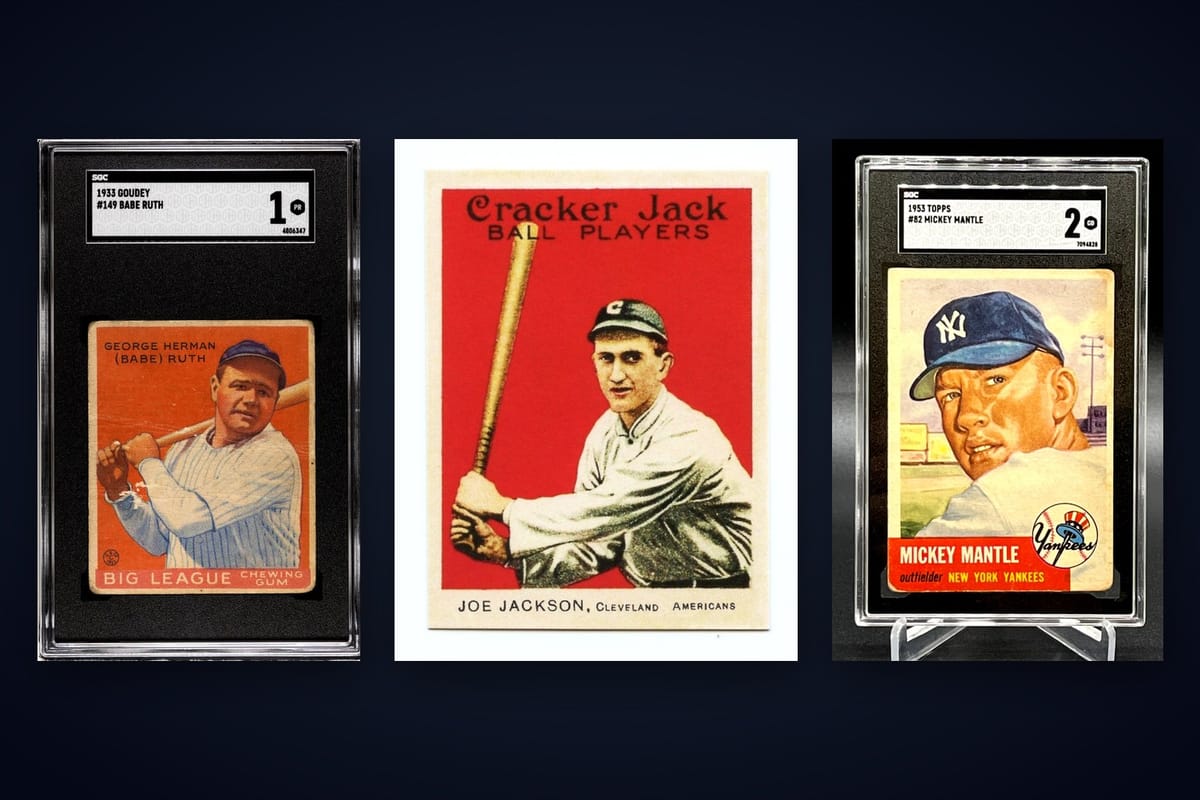
Babe Ruth #149 1933 Goudey |
$6,100 | $2,457,592 | -66.6% |
 |
Joe Jackson #103 1915 Cracker Jack |
$29,700 | — | -63.5% |
 |
Mickey Mantle #82 1953 Topps |
$2,126 | $501,973 | -31.5% |
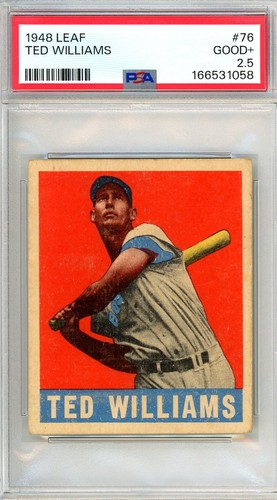 |
Ted Williams #76 1948 Leaf |
$1,490 | $408,296 | -14.2% |
 |
Michael Jordan #SP1 1991 Upper Deck |
$22.74 | $1,275 | -6.1% |
 |
Bo Jackson #697 1990 Score |
$13.94 | $797.50 | -6% |
 |
Joe DiMaggio #26 1939 Play Ball |
$1,738 | $605,324 | -5.9% |
 |
Henry 'Hank' Aaron #128 1954 Topps |
$2,780 | $633,046 | -5.5% |
 |
Jackie Robinson #79 1948 Leaf |
$10,065 | $2,758,244 | -4.6% |
 |
Hank Greenberg #62 1934 Goudey |
$1,166 | $465,722 | -4% |
 |
Al Kaline #125 1957 Topps |
$34.66 | $9,906 | -2.5% |
 |
Shohei Ohtani #433 2020 Topps Heritage |
$31.98 | $385.00 | -2% |
Look up any card's current raw and graded value in Midpoint — and get an estimated grade before you pay to submit.
1. Start With the 30-Day Movers (As of 2026-11-08)
The data table above shows which baseball cards moved most over the last 30 days, using Midpoint's database as of 2026-11-08. Read it as a map of where to look first, not as a verdict on any card.
When you scan it, check these things:
- Raw vs PSA 10: a card can look weak raw and hold up graded, or the reverse.
- Direction and size of the move: a modest slide on a deep-supply card is a different story from a sharp drop on a thin market.
- Card type: flagship rookies, parallels, autographs, inserts and vintage rarely move in lockstep.
A number in a table is a snapshot. The sections below explain why it moved and how to check it.
2. The Postseason Hangover: Why Active-Player Cards Cool
Baseball demand is closely tied to the calendar. During the season, hot streaks, awards races and October runs send buyers to active players. When the final out is recorded, that attention often drops.
That is a common reason baseball cards lose value in November. Nothing is wrong with the player. The urgency has left the market.
- Playoff-driven cards tend to cool first, because buyers paid a premium for the moment.
- Offseason news such as trades, free agency and award announcements can still cause short spikes.
- Quiet weeks mean fewer buyers per listing, which can push a few sold prices lower.
3. Supply and Reprints: The Other Side of Falling Baseball Card Prices
Demand is only half the equation. When more copies of a card are listed than buyers want, prices slide even if interest is steady.
Watch for these supply pressures:
- Sellers cashing out after the season, especially those who bought in-season hype.
- New product releases that give collectors fresh cards to chase instead of older ones.
- Reprints and re-issued designs that can dilute the appeal of the original.
- Grading returns that can add more graded copies to the market at once.
If a card is falling and listings are piling up, that points to a supply-driven dip. If listings are thin and the price is still falling, demand is probably the cause.
4. Hype Fading on Rookies and Prospects
Rookies and prospects are among the most sentiment-driven cards in baseball. Their prices often include a bet on what the player might become.
A prospect who had a quiet finish, an injury, or a delayed call-up can see that premium shrink quickly. A rookie who had a breakout year may hold up better, because the story is already proven.
- Flagship rookies usually have a deep buyer pool, which can make prices steadier.
- Low-numbered parallels and autographs can swing hard on single sales because few copies trade.
- Retired and vintage stars follow a different rhythm and are less tied to the MLB calendar.
Check the movers table for the names that fell and ask which bucket each belongs in. The answer changes how worried you should be.
5. Lockout Risk: The Wildcard in the Baseball Card Market for November 2026
The league's collective bargaining agreement is scheduled to expire on December 1, 2026, and talk of a possible lockout has been part of the offseason conversation. No one can say how it plays out, so treat any prediction cautiously.
Here is how a work stoppage could affect cards in theory:
- Sentiment: uncertainty can make some buyers sit on the sidelines, which softens prices.
- Listings: some sellers may list early to raise cash, which adds supply.
- Recovery: interest in sports often returns when games do, but that is a pattern, not a promise.
Do not build a whole strategy on a headline. Use it as one reason to size purchases carefully.
6. Verify the Drop: Is It Real or Just One Low Sale?
This is the step most people skip. A single cheap sale can be a rushed seller, a mislisted card, or a damaged copy. Before you call it a trend, run a quick check.
- Pull several sold listings, not asking prices, for the same card and the same grade.
- Compare seven-day highs against recent lows. A tight range suggests a real level, while a wide range suggests noise.
- Check bid counts and auction volume. Many bids at a lower price show real demand, while one bid at a low price is weaker evidence.
- Look at listing supply. A flood of new listings can explain a drop on its own.
- Match condition. A well-centered copy and an off-center one of the same card can sell at very different prices.
For a deeper look at the condition side, see how centering impacts card value.
7. Raw vs PSA 10: Where the Dip Hits Hardest
Raw and graded prices can respond to different forces. Raw cards carry condition uncertainty, so buyers may discount them more when demand cools. Graded copies, especially top grades, tend to trade on population and perceived scarcity.
That gap is where the opportunity can live. When the raw price falls but the PSA 10 price holds, the spread between them widens, and grading becomes more attractive if your copy can hit the top grade.
Compare the raw and PSA 10 columns in the table above for each mover. A card whose raw price fell more than its graded price may be a better dip candidate than one where both fell together.
Keep in mind that grading companies do not score identically. Our guide to grading scale differences by company explains what a top grade means at each one.
8. How Baseball Compares With Other Sports and Collectibles
Baseball is strongly seasonal. Basketball and football have their own peaks, and trading card games such as Pokémon and Magic tend to follow release cycles instead of a league calendar.
So a November cooldown in baseball does not automatically mean the whole hobby is weak. It may simply mean baseball is in its quiet stretch while other categories are busy.
- Compare within a category first. Check how other baseball cards are trading before concluding anything about the hobby overall.
- Do not chase a rotation blindly. Moving money between categories just because one is hot can mean buying at someone else's peak.
- Remember the offseason is when baseball attention is naturally lowest.
9. Buy the Dip: Grade a Cheap Copy That Centers Well
If you want baseball cards to buy the dip, the smartest plan is not buying the biggest name at a small discount. It is buying a cheap raw copy of a card you like and checking whether it is gradeable.
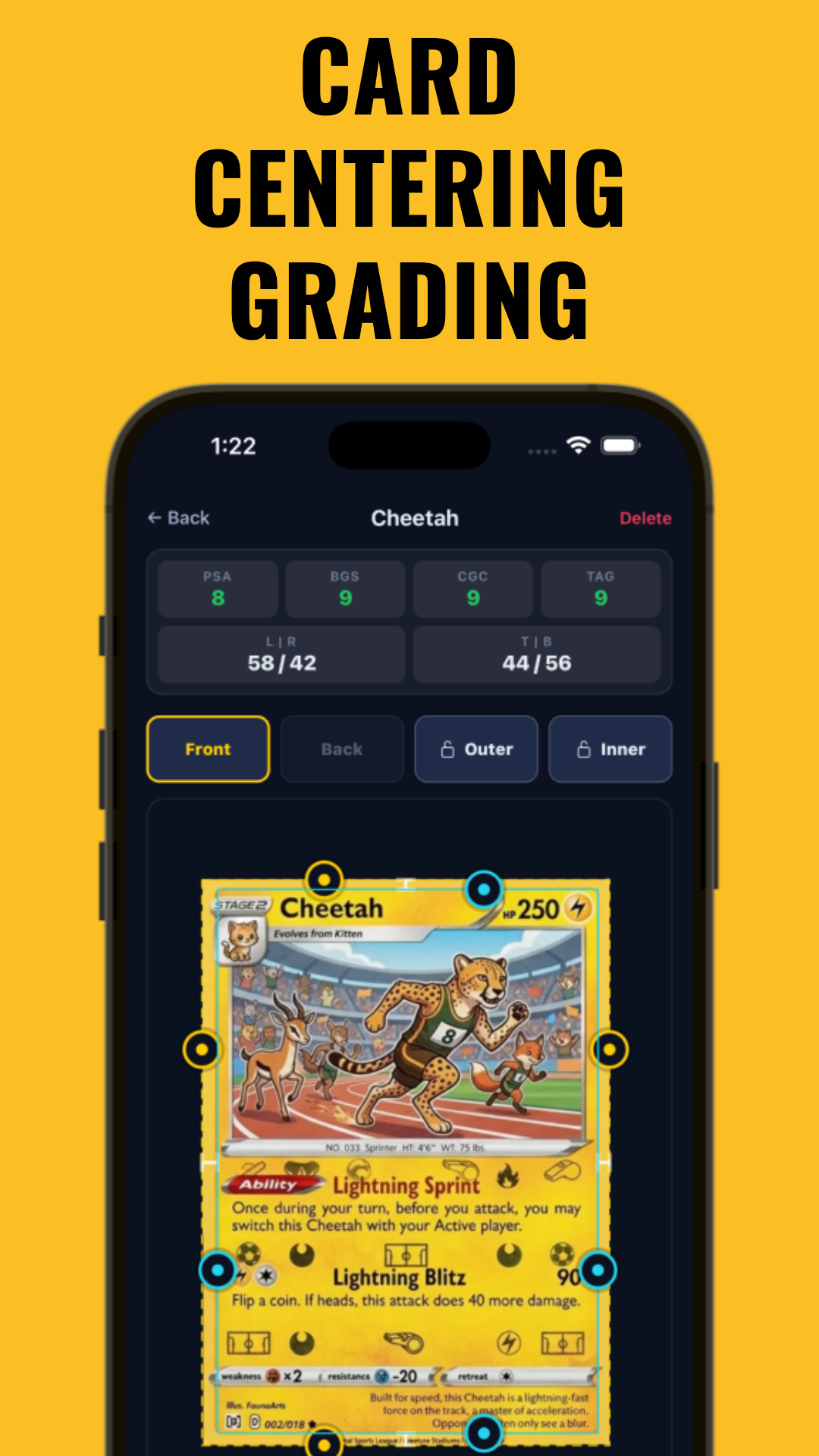
Centering is the first hurdle, and it is one you can check before paying anything. Midpoint lets you measure centering to the millimeter and get an estimated PSA, BGS, CGC and TAG grade before you spend $30+ on a submission. You can also try the free centering calculator for a quick read.
A simple dip-buying routine:
- Pick a card from the movers table whose raw price has softened.
- Buy a copy with clear, front-and-back photos, or inspect it in person.
- Measure centering, then check corners, edges and surface.
- Only submit it if the estimate supports the grading cost.
Not sure how to run the check? Follow our step-by-step pre-grading guide. You can download Midpoint free on iOS and Android.
10. Buy, Sell, Hold or Wait: Your November Playbook
The right move depends on why you own the card and how it fits your budget.
- Buy: if you want a player or set for the long run, a verified dip on a deep-supply card can be a reasonable entry. Spread purchases out rather than buying all at once.
- Sell: if you hold in-season hype cards you no longer believe in, a quiet November may be a weak time to sell, but waiting is not guaranteed to help either.
- Hold: if the thesis behind the card has not changed, a seasonal dip alone is not a reason to exit.
- Wait: if you cannot verify the drop with multiple sold listings, wait for more data.
As spring training and the 2027 season approach, baseball attention usually returns. That has been the typical seasonal rhythm, though there is no guarantee for any one card. Meanwhile, store what you hold properly. Our guide to storing valuable cards covers the basics.
Conclusion
Baseball card prices dropping in November 2026 is best read as a seasonal cooldown with some supply and sentiment effects layered on top. Use the movers table as a starting point, verify any drop with sold listings and volume, and separate raw weakness from graded weakness.
The best way to use a dip is patiently: choose cards you believe in, buy copies that look gradeable, and check centering before paying for grading. A little measurement up front can save you real money.
FAQ
Q: Are baseball card prices dropping in November 2026?
A: Many cards are softer than they were during the season, and the 30-day movers in Midpoint's database as of 2026-11-08 show where. Not every card is falling, so check the specific card, grade and recent sold listings.
Q: Why are baseball card prices going down after the MLB season?
A: Postseason attention fades, fewer buyers are active, and some sellers cash out, which raises supply. Together these often soften prices for active players until spring.
Q: Is now a good time to buy baseball cards before the 2027 season?
A: It can be, if you verify the dip and buy cards you want to hold. Spread out your purchases, since a possible lockout adds uncertainty.
Q: Which baseball cards are losing value the fastest in November 2026?
A: Check the movers table above for the exact cards and figures as of 2026-11-08. In general, hype-driven rookies, prospects and playoff-driven cards tend to cool fastest.
Q: Will baseball card prices go back up when the 2027 MLB season starts?
A: Baseball interest typically rises as spring training and opening day approach, but that is a seasonal pattern, not a guarantee. Player performance, supply and any labor disruption all matter.
Q: How can I tell whether a baseball card price drop is real or just a single low sale?
A: Compare several sold listings of the same card and grade, look at seven-day highs, bid counts and listing supply, and match condition. If multiple sales agree, the drop is likely real.
Free to start
Try the Midpoint app
Grade any card from a photo, see its raw and PSA 10 value, and track what your collection is worth — free.
Get it on iPhoneGet it on Android