Basketball Card Prices Dropping November 2026: What to Do
Basketball card prices dropping in November 2026? See what's cooling, why raw and PSA 10 prices fall, and how to buy the dip or grade a well-centered copy.

Estimated reading time: 9 min
Key Takeaways
- Basketball card prices dropping in November 2026 may reflect a cooling in specific segments rather than a market-wide crash. Test that claim with your own sold data.
- Modern rookies, new releases, unnumbered base cards and common inserts are the most exposed. Established vintage cards tend to move more slowly.
- Raw and PSA 10 prices can diverge sharply in a dip. Always price both before you buy, sell or grade.
- Verify any decline with completed sales, medians, sample size and time-to-sell, never asking prices.
- A cheap raw copy with strong centering can be a smart dip play, but only if the grading math works.
Basketball card prices dropping in November 2026 is the headline some collectors are reacting to, and it deserves a calmer read than panic suggests. Basketball cards losing value may be real in some corners of the hobby. In others, prices may simply be catching their breath after a hot stretch.
This guide walks through the November 2026 basketball card market in 11 practical steps: what may be cooling, why it happens, which categories are vulnerable, and how to use falling basketball card prices instead of getting burned by them. This post does not include specific price figures, so check current completed sales for any card you care about.
30-day price movers — live data from Midpoint's card database, as of 2026-11-15. Prices move; Midpoint refreshes these daily.
| Card | Raw | PSA 10 | 30-day | |
|---|---|---|---|---|
 |
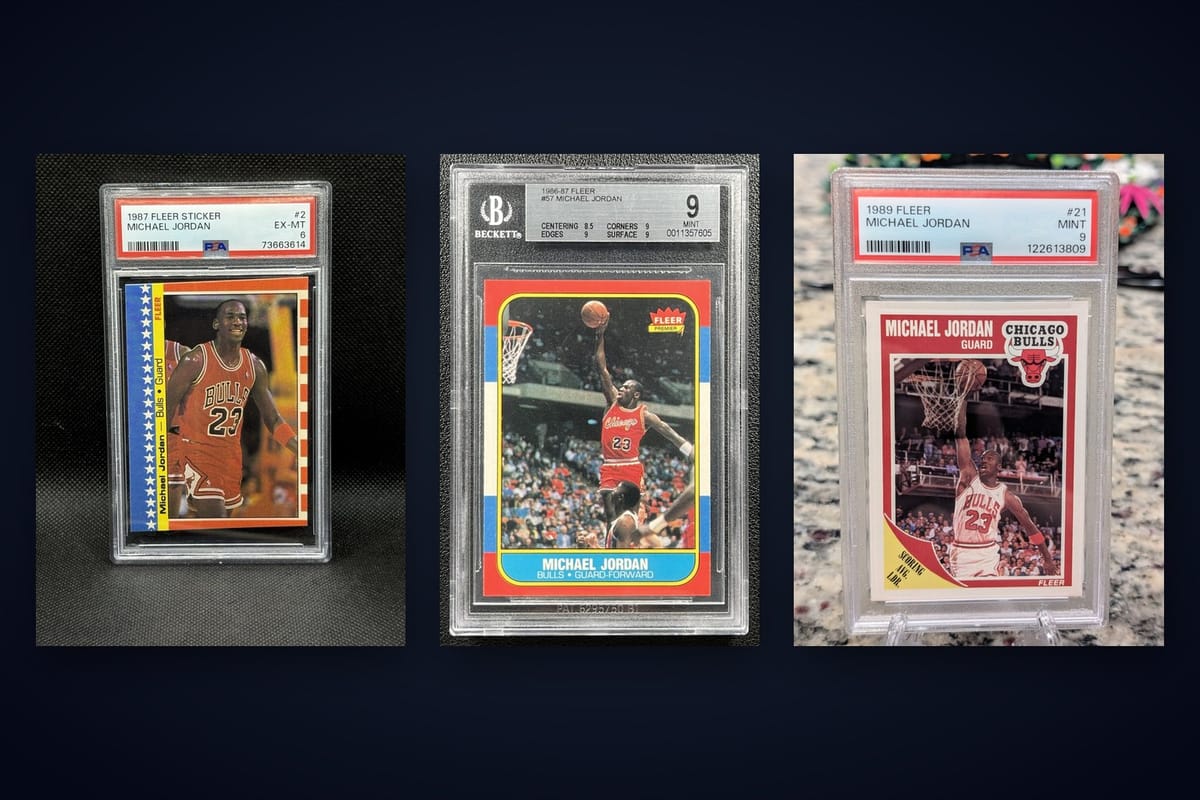
Michael Jordan #2 1987 Fleer Sticker |
$225.00 | $13,918 | -81.6% |
 |
Michael Jordan #57 1986 Fleer |
$3,792 | $251,307 | -36.6% |
 |
Michael Jordan #21 1989 Fleer |
$23.58 | $2,575 | -31.8% |
 |
Stephen Curry #M-3 2025 Topps Chrome Update Minionfractor |
$8,695 | $33,375 | -23% |
 |
Michael Jordan #5 1990 Fleer All-Star |
$10.66 | $1,663 | -19.6% |
 |
Kobe Bryant #138 1996 Topps |
$106.56 | $2,198 | -8.2% |
 |
Shaquille O'Neal #A 1992 Hoops Draft Redemption |
$99.87 | $1,275 | -5.6% |
 |
LeBron James [X-Fractor] #127 2025 Topps Chrome |
$30.00 | $288.93 | -3.7% |
 |
Ja Morant #GC-11 2025 Topps Chrome Update Glass Canvas |
$80.00 | $404.89 | -2.9% |
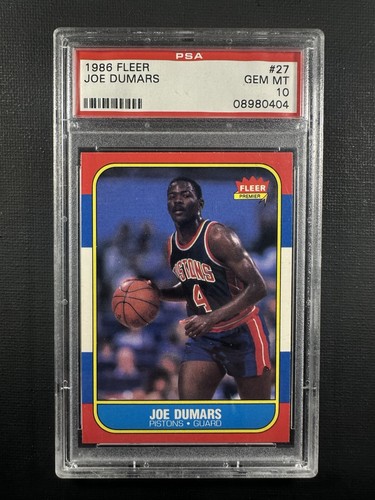 |
Joe Dumars #27 1986 Fleer |
$21.50 | $1,265 | -2.7% |
 |
Shaquille O'Neal [Members Only] #21 1992 Stadium Club Beam Team |
$600.16 | $21,097 | -2% |
 |
Dennis Rodman #43 1988 Fleer |
$23.82 | $3,435 | -1.9% |
Look up any card's current raw and graded value in Midpoint — and get an estimated grade before you pay to submit.
1. Read the November 2026 Basketball Card Market: Cooling, Not Crashing
A crash means nearly everything falls together, fast, across eras and price tiers. A cooling means some segments soften while others hold flat or even rise. A selective cooling is the more likely picture than a crash, but you should confirm it yourself with sold data.
Look at four windows side by side:
- 7-day: noisy, easily distorted by one or two sales.
- 30-day: the best window for spotting a real trend.
- 3-month: shows whether this is a pullback from a recent peak.
- Year-to-date: tells you if a card is down from its high or simply back to where it started.
A card that is down over 7 days but up year-to-date is a different story from one that is down on every window. Never judge a market from a single timeframe.
2. Modern Rookies and New Releases: Where Falling Prices Hit First
Hype-driven rookies are often the first to feel a cooling market. Cooper Flagg is an example of a name carrying heavy expectations, which can mean a lot of the future is already priced in. When early-season results are merely good rather than spectacular, even blue-chip rookie cards can drift lower as buyers wait for a better entry.
The same pressure can reach established modern stars. Nikola Jokić and Ja Morant are names collectors often watch for this reason: modern cards of current stars tend to have plenty of supply, so shifts in demand, injuries or headlines can show up quickly in prices.
Check recent completed sales for raw and PSA 10 prices on these cards rather than trusting a headline.
3. Vintage vs. Modern: Why Michael Jordan Cards May Be Steadier
Vintage cards have a built-in advantage: supply is essentially fixed. No new 1986 Fleer Michael Jordan cards are being produced, and the surviving population can only shrink through damage and collection absorption.
Modern cards face the opposite problem. Every new product adds more rookies, parallels and autographs of the same players, so supply keeps growing even as demand shifts.
- Vintage Jordan and other established legends: tend to move slower, supported by long-term collectors and scarcity.
- Allen Iverson and Shaquille O'Neal: 1990s stars sit in the middle. Their key cards are scarcer than modern issues, but their mass-produced inserts and parallels behave more like modern cards.
Slower movement doesn't mean immune. It means a vintage card's price is usually less dependent on what happens this week.
4. Supply Pressure: New 2026-27 Releases, Print Runs and Parallels
A simple explanation for falling basketball card prices is more cards. The 2026-27 season brings new products, and each release competes for the same collector dollars.
Three supply forces stack on top of each other:
- High print runs: when a product is produced in large quantities, common cards have little scarcity to defend their price.
- Excessive parallels: dozens of colors and patterns dilute the premium any single version once carried.
- Increased grading supply: as more copies are graded, the number of PSA 10s of a given card rises, which can pressure what a PSA 10 is worth.
When a dip appears right after a big release, supply is the first suspect.
5. Demand Pressure: Fading Rookie Hype, Injuries and Early-Season Play
Supply is only half the equation. Demand moves with the story around a player.
- Fading hype: rookie cards often spike on draft night or summer league buzz, then settle as reality sets in.
- Injuries: a missed stretch of games can cool demand quickly, especially for players whose value rests on future promise.
- Early-season performance: a slow start can erase a premium, while a breakout can reverse a dip overnight.
These effects are player-specific, which is why a broad market claim rarely explains an individual card's move. Separate the market from the player before you decide anything.
6. Which Basketball Card Categories Are Most Vulnerable
Not every card type is equally exposed when prices cool. Roughly from most to least vulnerable:
- Base cards and common inserts: large supply, easy substitutes, little to hold the price.
- Unnumbered rookies: popular but plentiful, and heavily dependent on hype.
- Numbered parallels: the serial number helps, but low-demand players still struggle.
- Autos: more resilient for strong names, though weaker player autos can sit unsold.
- Low-population cards: generally the most defensible, though thin markets can mean fewer sales and bigger price swings.
If you hold a pile of modern base cards, the downside risk is higher than for a short list of scarce cards. For more on thin-supply cards, see this guide to card grading for low population cards.
7. Raw vs. PSA 10: The Gap Widens in a Dip
During a downturn, the gap between a raw card and its PSA 10 version can become the most interesting number on the page. Collectors may keep paying up for perfect slabs while ungraded copies get cheaper, or the reverse if a surge of PSA 10s floods the market.
Check both prices for every card you care about:
- A wide gap can mean grading offers real upside, if your copy can earn the top grade.
- A narrow gap means little reward for grading risk, so buying raw makes less sense.
- A PSA 10 price falling faster than raw can signal grading-supply pressure.
Compare recent sold prices for raw and PSA 10 copies before deciding where to put your money.
8. How to Verify a Real Decline (Use Sold Data, Not Asking Prices)
Asking prices are wishes. Completed sales are facts. Before you believe any price drop, run this checklist:
- Completed sales only: ignore active listings.
- Median, not average: one outlier sale can skew an average badly.
- Sample size: three sales prove little; a dozen or more starts to mean something.
- Listing volume: rising active listings with flat sales can signal growing supply.
- Seller inventory: a few sellers dumping stock can create a temporary dip.
- Time-to-sell: if cards that used to sell in days now sit for weeks, demand may be weakening even before prices move.
A genuine decline shows up across several of these signals at once. A single weak signal is usually noise.
9. Seasonal and Release-Calendar Effects: Thanksgiving and Black Friday
November brings its own pressures. New product launches can pull collectors toward fresh boxes. Holiday spending competes with card budgets. Black Friday promotions can pull dollars into sealed product rather than singles.
That can soften prices for a few weeks, then prices may recover as spending patterns reset. Some sellers also discount to raise cash for holiday expenses, which can create short-lived bargains.
Treat seasonal softness as a reason to watch more closely, not a reason to assume a permanent reset. Note the calendar when you compare prices year over year.
10. Buy, Sell, Hold or Wait: Playing Basketball Cards to Buy the Dip
A dip is only an opportunity if the card is likely to recover, and no rule guarantees that. Use these as general guidelines:
- Buy: scarce, established cards of proven stars that are down on the 30-day and 3-month windows but healthy year-to-date.
- Sell: cards you only held for a hype spike, especially unnumbered modern rookies with rising supply.
- Hold: long-term core cards where nothing about the player or scarcity has changed.
- Wait: cards still falling on every window. Don't catch a falling card; wait for sales to stabilize.
A good stabilization signal is several consecutive sales at similar prices with a faster time-to-sell. Buying one tier down in price during a dip, or choosing raw over PSA 10, can lower your risk further. Use a portfolio tracker such as Midpoint to watch your collection's value over time instead of reacting to each headline.
11. Grade a Cheap, Well-Centered Copy: Do the Math First
A dip can make raw copies cheap enough to justify grading, but only when the card has a realistic shot at a high grade. Centering is a quick filter, since it's the one factor you can measure before you spend anything. For why this matters, read how centering impacts card value.
Run the numbers like this:
- Estimate the chance of a PSA 10 and of lower grades from centering, corners, edges and surface.
- Multiply each probability by the current sold price at that grade.
- Subtract the raw purchase price, grading fees (which vary by service level and can run $30 or more per card), shipping and insurance.
If the expected profit is thin or negative, skip it. A PSA 10 price that falls after more copies hit the market can erase your margin before the card even returns.
Midpoint measures centering down to the millimeter and gives estimated PSA, BGS, CGC and TAG grades before you submit, so you can screen cards cheaply. Here is what the grading summary looks like:
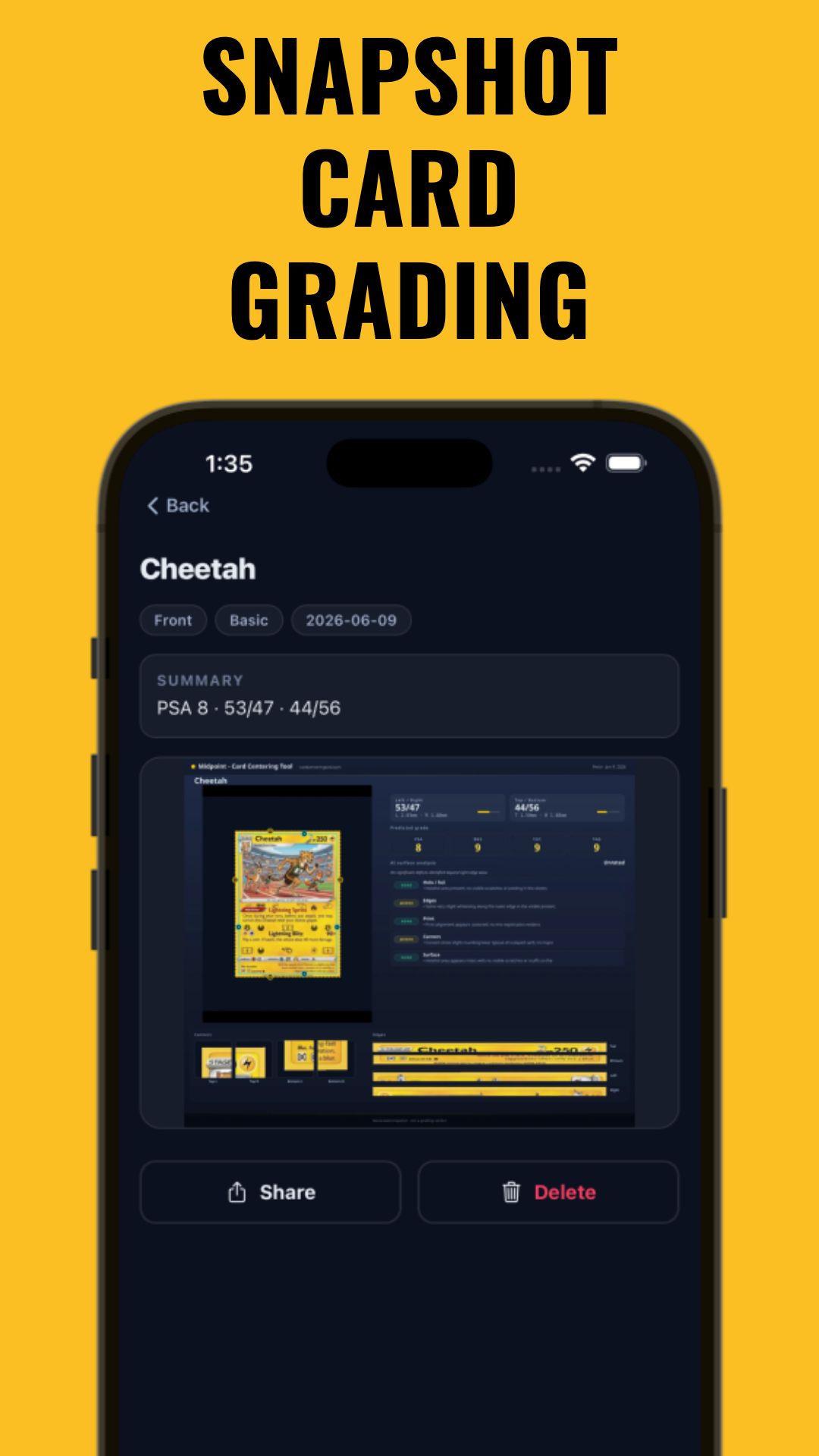
For a step-by-step process, follow this guide on how to pre-grade your card.
Conclusion
Basketball card prices dropping in November 2026 is more likely selective cooling than a crash, if sold data confirms it: new releases, high print runs, too many parallels, more graded copies and fading rookie hype can all push down certain segments, while scarce and established cards tend to hold up better. Verify every move with completed sales, medians and time-to-sell, compare raw against PSA 10, and only buy the dip when a card has real scarcity behind it.
If you're considering grading a discounted copy, measure centering first. Midpoint is free on iOS and Android and helps you estimate grades before you spend a dollar on submission.
FAQ
Q: Are basketball card prices dropping in November 2026?
A: Some segments may be cooling, especially modern rookies, new releases and common cards. That is different from a market-wide crash. Check 7-day, 30-day, 3-month and year-to-date sold data for any card you own.
Q: Why are basketball card prices falling right now?
A: Possible drivers include new 2026-27 releases, high print runs, too many parallels, growing grading supply, fading rookie hype, injuries and early-season performance. November's release calendar and holiday spending can add short-term pressure.
Q: Which basketball cards are losing the most value in November 2026?
A: Base cards, common inserts and unnumbered modern rookies are usually the most exposed. Check recent completed sales for raw and PSA 10 prices on specific cards.
Q: Should I buy basketball cards during the November 2026 dip?
A: Only when the card is scarce, the player's long-term demand is intact and sold prices have stabilized. Avoid cards still falling on every time window, and compare raw against PSA 10 before you commit.
Q: Are modern rookie basketball cards or vintage cards safer to hold?
A: Vintage cards, such as Michael Jordan's, tend to be steadier because supply is fixed and collector demand is long-standing. Modern rookies depend more on hype, performance and ongoing print runs, so they carry more risk.
Q: Should I sell, hold or grade my basketball cards while prices are dropping?
A: Sell hype-driven cards you don't believe in, hold scarce core cards, and grade only when centering and condition give a realistic shot at a high grade. Calculate expected profit after fees first, and pre-grade with a tool like Midpoint.
Free to start
Try the Midpoint app
Grade any card from a photo, see its raw and PSA 10 value, and track what your collection is worth — free.
Get it on iPhoneGet it on Android