Soccer Card Prices Rising November 2026: 9 Trends to Watch
Soccer card prices rising November 2026: which players, sets and card types are moving, how raw and PSA 10 values differ, and whether to buy, hold, sell or grade.

Estimated reading time: 9 min
Key Takeaways
- Any rise in soccer card prices in November 2026 is likely tied to some mix of World Cup afterglow, demand for young stars like Lamine Yamal, and thin supply on serial-numbered cards, but it varies card by card and you should check it yourself.
- Verify any price with completed sales, sale volume and population counts. Asking prices and headlines lag or exaggerate reality.
- Raw cards and PSA 10s can move very differently. A grade is only worth paying for if the card can realistically hit it.
- Post-tournament corrections, reprints and low liquidity are the main risks, so size your positions accordingly.
The soccer card market in November 2026 is in an unusual spot. The 2026 FIFA World Cup, scheduled for June 11 to July 19, has finished, the club season is in full swing, and collectors are asking the same question: are soccer card prices rising for real, or is it leftover hype?
This guide walks through what drives trending soccer cards, which players and card types are worth watching, and how to decide whether to buy, hold, sell or grade. We don't quote exact prices here, because a number that isn't backed by a dated sale is just noise. Instead, you get a checklist for confirming values yourself, so you can trust what you act on.
30-day price movers — live data from Midpoint's card database, as of 2026-11-01. Prices move; Midpoint refreshes these daily.
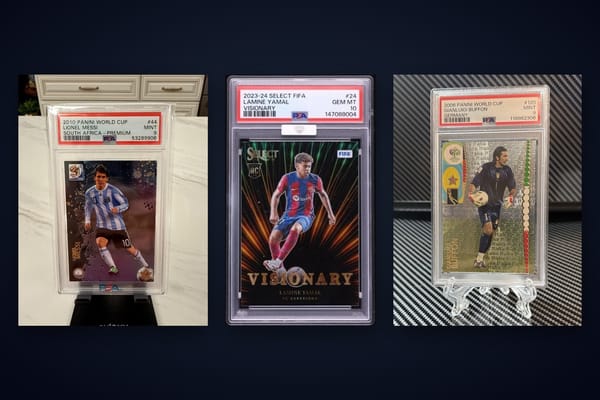
| Card | Raw | PSA 10 | 30-day | |
|---|---|---|---|---|
 |
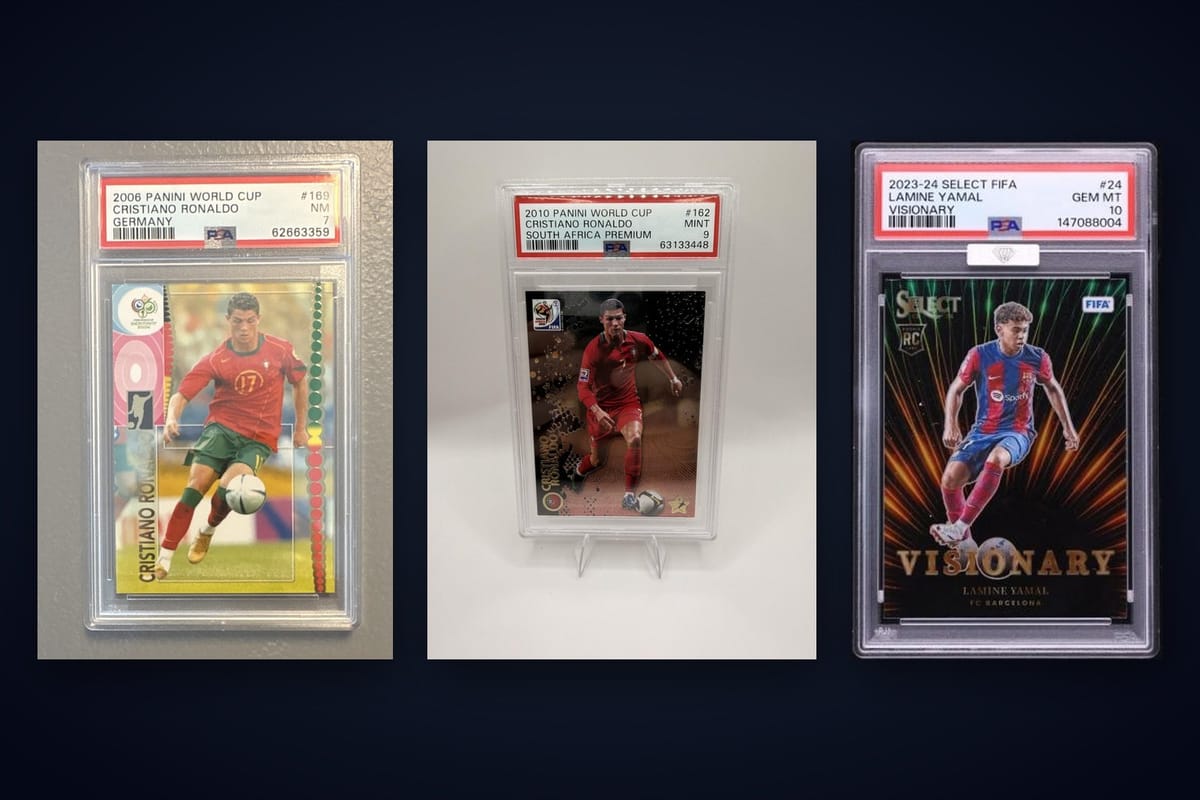
Cristiano Ronaldo #169 2006 Panini World Cup Germany |
$353.06 | $3,350 | +1.2% |
 |
Cristiano Ronaldo #162 2010 Panini World Cup South Africa |
$100.00 | $795.50 | 0% |
 |
Lamine Yamal #24 2023 Panini Select FIFA Visionary |
$265.15 | $1,200 | 0% |
 |
Gianluigi Buffon #120 2006 Panini World Cup Germany |
$16.75 | $275.23 | 0% |
 |
Thierry Henry #109 2006 Panini World Cup Germany |
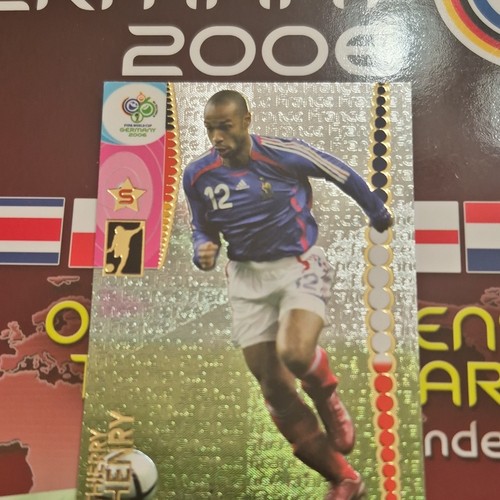
$14.28 | $239.95 | 0% |
 |
David Beckham #93 2006 Panini World Cup Germany |
$15.38 | $170.00 | 0% |
 |
Lamine Yamal #108-BIS 2023 Panini Megacracks La Liga |
$536.11 | $10,100 | 0% |
 |
Zinedine Zidane [Gold] #206 2022 Panini Chronicles Serie A |
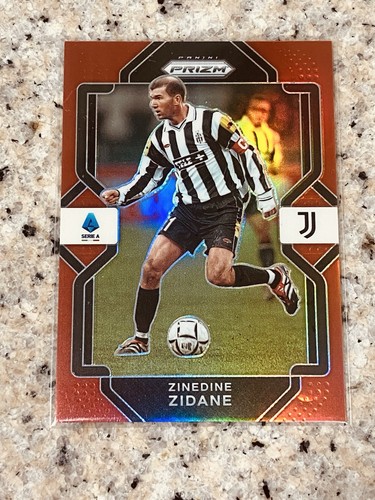
$2,964 | — | 0% |
 |
Zinedine Zidane #164 1998 Panini France World Cup Stickers |
$46.00 | $2,000 | 0% |
 |
Maradona #312 1979 Panini Calciatori |
$1,385 | $225,700 | 0% |
 |
Lionel Messi [Silver] #1 2026 Panini Prizm Monopoly FIFA World Cup |
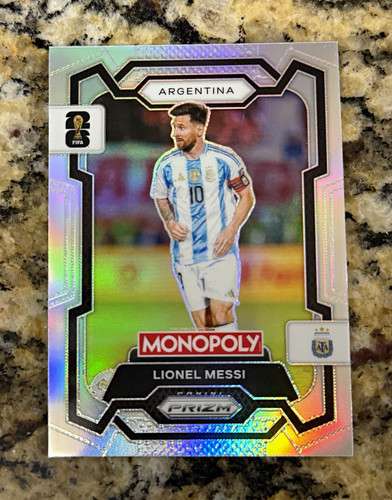
$37.50 | $625.00 | 0% |
 |
Zinedine Zidane #23 2024 Panini Donruss Kaboom |
$530.88 | $1,656 | 0% |
Look up any card's current raw and graded value in Midpoint — and get an estimated grade before you pay to submit.
1. Verify Prices With Completed Sales First
Every headline about soccer cards going up in value starts with a price. Before you believe it, confirm it. Asking prices on listings show what sellers hope for, not what buyers pay.
Use this quick verification routine:
- Filter to sold or completed listings. Ignore active listings entirely.
- Match the exact card. Same player, set, parallel, serial number and grade. A base Prizm and a Silver Prizm are different markets.
- Look at volume. One sale is an anecdote. Five to ten sales across several weeks show a trend.
- Check the date range. Compare the last 30 days against the 30 before that, not against a peak from June or July.
- Look at population reports. A card with few graded copies behaves differently from one with thousands.
A card lookup tool helps here. Midpoint's card lookup shows raw versus graded values across more than 1.5 million cards, so you can compare an ungraded copy to a PSA 10 side by side before deciding anything.
2. Kylian Mbappé: The Consistent Headliner
Mbappé is one of the most liquid names in soccer cards. Liquidity matters: lots of buyers and sellers mean prices reflect real demand, and you can exit a position without waiting weeks.
When Mbappé cards move, check which version is moving. Early-career cards and low-numbered parallels tend to react most. Common base cards often barely budge because supply is huge.
- Watch sold prices for numbered parallels (for example /99, /50, /25) separately from base cards.
- Compare raw to PSA 10 spreads. A wide spread suggests grading could pay off, but only if copies exist in strong condition.
3. Lionel Messi: Legacy Demand Doesn't Disappear
Messi cards sit in a different category from prospects. Demand comes from long-term collectors, not just tournament timing. That tends to make the market steadier, but it also means a hot week doesn't automatically become a lasting price floor.
The practical approach is to track Messi cards you actually want to hold. Look at multi-year trends, not 30-day spikes. Older inserts and autographs with real scarcity are the cards collectors tend to keep rather than flip.
- Prioritize cards with clear provenance, such as set, serial number and a verified autograph.
- Be careful with unlicensed or ambiguous items, which carry more risk than checklist cards from major sets.
4. Cristiano Ronaldo: Attention Moves the Market
Ronaldo cards respond to news cycles, goals, milestones and tournament appearances. That's why they appear so often in lists of trending soccer cards. Attention creates short-term demand, but short-term demand often fades.
If you see a surge, ask whether it's driven by a few high-end sales or broad buying across many price tiers. Broad buying is a stronger signal. A few big sales can distort an average.
- Compare the last 30 days against the 90-day picture.
- Check whether lower-priced copies are also selling faster, not just the premium ones.
5. Lamine Yamal and Breakout Prospects
Lamine Yamal represents the other side of the market: a young star whose future value may already be partly priced in. Prospect-driven demand can be explosive, and it can reverse just as fast if form dips or an injury hits.
For breakout names, the best-performing cards are often early-career cards from major sets and low-numbered parallels. The cost of being early is volatility. The cost of being late is paying a premium for a price that has already run.
- Early entry: smaller budgets, higher risk, bigger potential swing.
- Late entry: safer story, thinner upside.
- Watch other rising talents too. Prospect demand can spread from one star to other names on the same team or in the same age group.
6. Rookie and Prospect Cards: Still the Core Bet?
Rookie cards remain the foundation of most soccer card strategies, but the idea of a "rookie card" is looser in soccer than in US sports. Young players often have several early-career cards across leagues and sets, so check which one the market treats as the key card.
Rookie cards tend to be sensitive to news, both good and bad. That makes them useful for upside and risky for anyone who can't stomach swings.
- Identify the market's preferred early card for each player by comparing sold volume.
- Avoid assuming every early card is equally valuable. Print runs differ widely.
7. Autographs, Serial-Numbered Parallels and Short Prints
When broad demand rises, scarce cards often benefit the most because there are simply fewer copies to buy. That's why autographs, numbered parallels and short prints show up so often among soccer cards going up in value.
Scarcity cuts both ways, though. Fewer copies mean fewer sales, and fewer sales mean noisier pricing. One sale can look like a trend.
- For a /10 or /5 card, treat any single sale as a data point, not a price.
- Check authenticity and the card's numbering carefully, especially for autographs.
- Expect wider bid-ask spreads when you want to sell.
For rare cards, our guide to grading low population cards explains how thin populations affect value.
8. Sets Driving Price Gains: Prizm, Topps Chrome UEFA, Donruss and Megacracks
Set choice shapes both the ceiling and the liquidity of a card. These are the families collectors keep coming back to:
- Panini Prizm: a widely followed modern soccer line, with deep parallel ladders and strong graded demand.
- Topps Chrome UEFA: popular for club-competition rookies and refractor parallels.
- Panini Donruss: a long-running soccer line, including past World Cup issues, that tends to be more sensitive to tournament hype and the post-event cooldown. Check which manufacturer holds the license for current World Cup products.
- Panini Megacracks: a favorite among Spanish-league collectors and a useful read on young talent.
Tournament-linked products can see sharper swings than flagship sets. A product that was exciting in June may look different once the event is over, so compare today's sold prices to the pre-event baseline rather than to the peak.
9. Raw vs PSA 10: Where the Premium Lives
The gap between a raw card and a PSA 10 is one of the most important numbers in the market. A big gap can mean grading is profitable. It can also mean the PSA 10 is rare for good reason, usually because the card is hard to find in perfect condition.
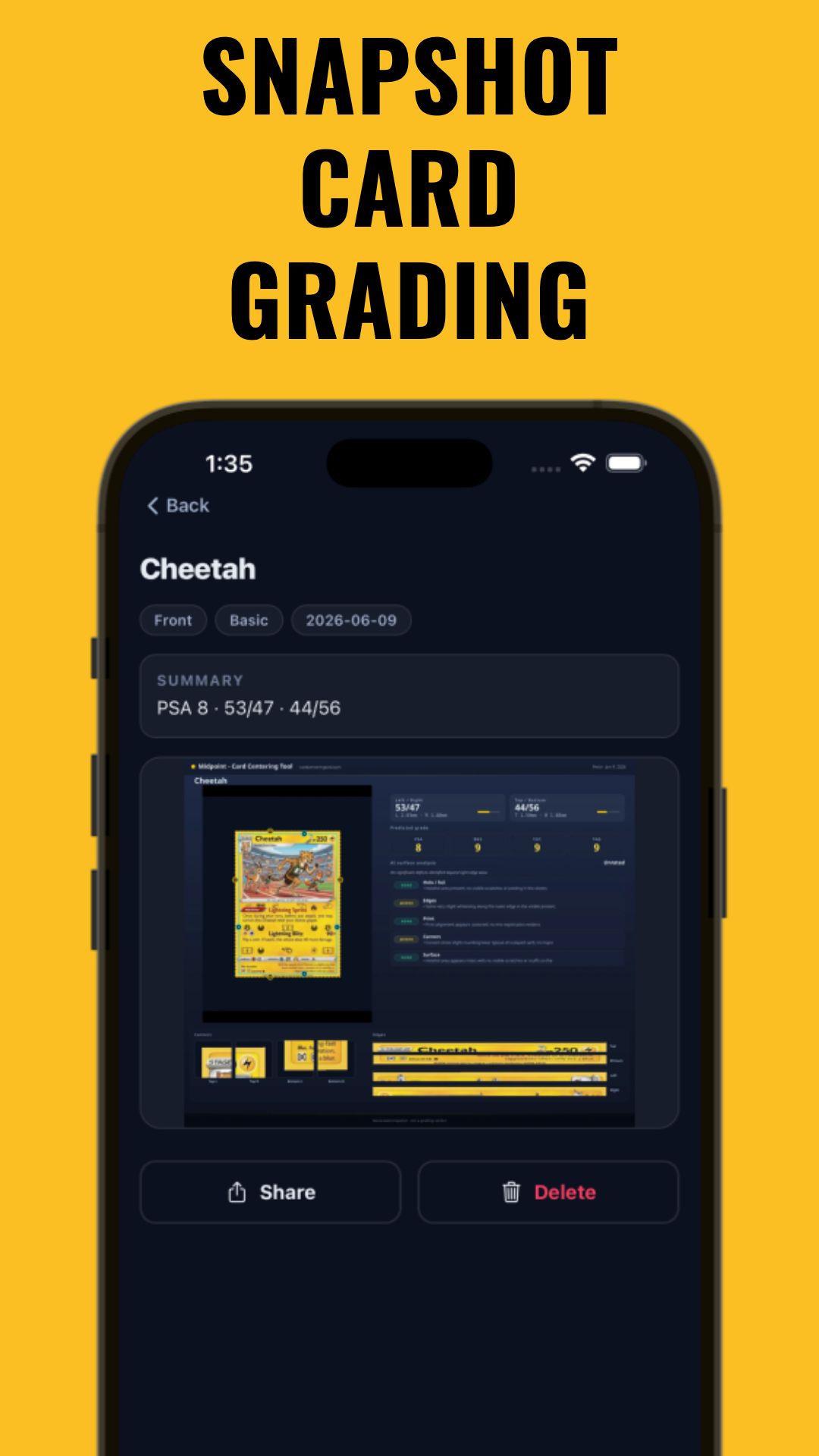
Before you submit, estimate the grade honestly. Centering is a common issue that sinks otherwise clean soccer cards, especially on borderless or chrome-style designs. Learn how centering impacts card value and how grading scales differ by company.
- Measure centering, then inspect corners, edges and surface under good light.
- Compare the PSA 9 and PSA 10 values. If the 9 doesn't cover your grading cost, a miss hurts.
- Use the free centering calculator to check before you pay grading fees, which vary by company and service level.
10. Risks: Reprints, Run-Ups and Post-Tournament Corrections
Rising prices attract buyers, and buyers attract supply. Watch for these risks:
- Post-tournament corrections: prices pumped by event excitement can cool once attention moves on.
- Reprints and new releases: new products can add supply and soften prices for similar cards.
- Speculative run-ups: when prices jump with little sale volume, a pullback is common.
- Low liquidity: some cards sell slowly, so the price you see may not be the price you get.
- Player-specific risk: injuries, transfers and form change demand quickly.
Don't put money into a single player or set. Spread across names, price tiers and card types, and keep cash for dips.
11. Buy, Hold, Sell or Grade: A Simple Framework
Here's a practical decision guide for the current market:
- Buy when sold prices are rising on healthy volume, the card has long-term demand, and you can afford to hold through a dip.
- Hold when you own legacy names or scarce cards and the thesis hasn't changed. A short-term dip alone isn't a reason to sell.
- Sell when a spike is built on a handful of sales, a card has run well past its 90-day trend, or you simply need liquidity. Taking profit can be reasonable, but selling too early has its own cost.
- Grade when the raw-to-graded spread is wide and your pre-grade check suggests a realistic shot at a top grade.
Follow our step-by-step pre-grading guide before submitting. Tracking your collection over time also shows which holdings are actually earning their place.
Conclusion
Rising soccer card prices in November 2026 may be a real signal in some corners and noise in others. The cards with the strongest case are those with broad demand, genuine scarcity and healthy sale volume. The weakest are those riding a single spike.
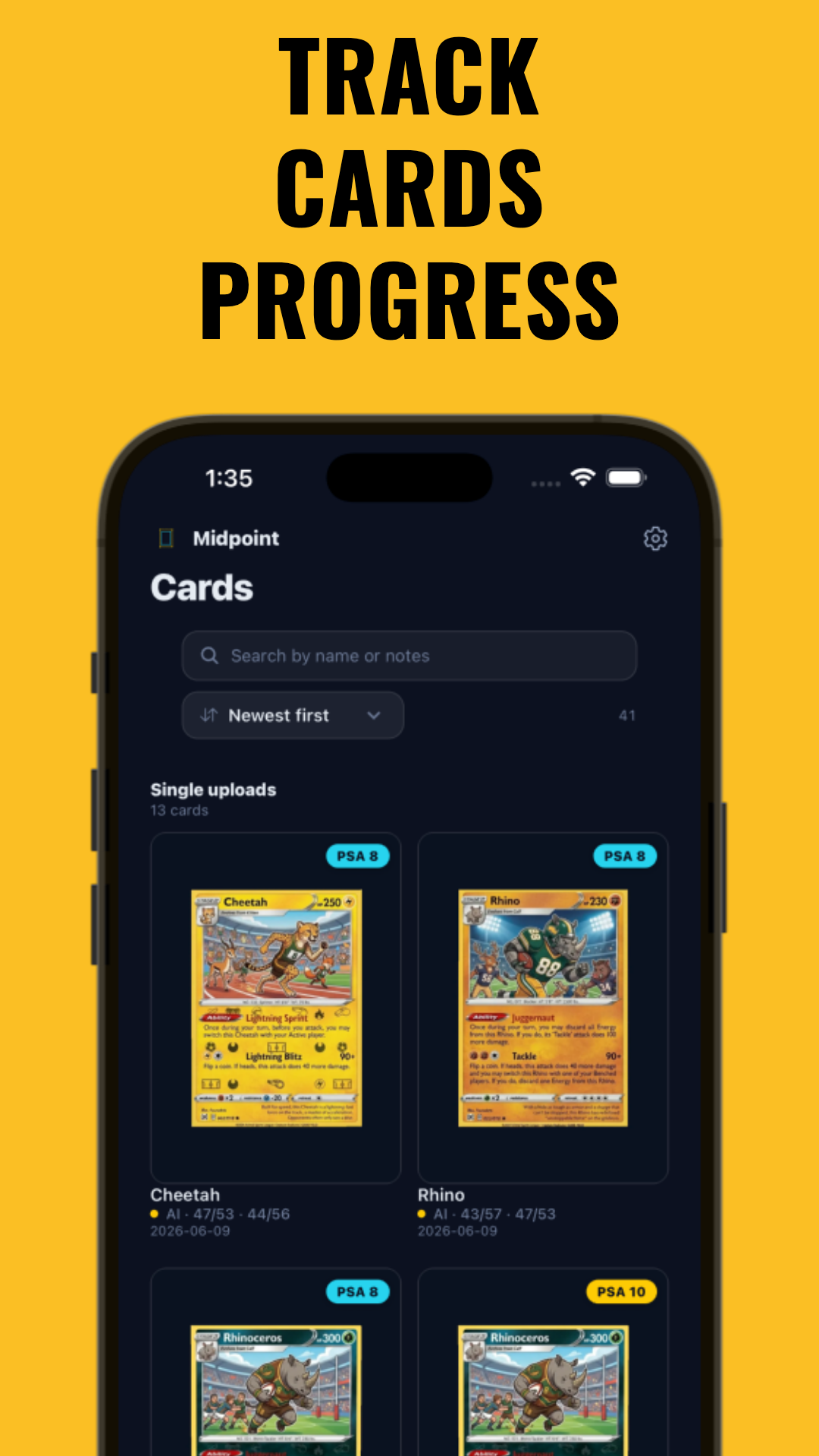
Verify before you act: completed sales, volume, population and the raw-versus-graded spread. Then match your move to your goals. If you're weighing a submission, try Midpoint, free on iOS and Android, to measure centering and estimate PSA, BGS, CGC and TAG grades before you spend on grading.
FAQ
Q: Why might soccer card prices be rising in November 2026?
A: Several forces can overlap: lingering excitement from the 2026 World Cup, strong demand for young stars like Lamine Yamal, and limited supply of scarce cards such as numbered parallels and autographs. Not every card is rising, so check completed sales for the exact card you care about.
Q: Which soccer cards are increasing in value before or after the 2026 World Cup?
A: Scarce cards (numbered parallels, autographs, short prints) and early-career cards of high-profile or breakout players often react first. Tournament-linked sets can swing more sharply and may cool after the event, so compare current sold prices to the pre-event baseline.
Q: Which soccer players have the hottest cards right now?
A: Kylian Mbappé, Lionel Messi, Cristiano Ronaldo and Lamine Yamal draw a lot of attention, along with other rising prospects. Confirm heat with sale volume across multiple weeks rather than a single high sale.
Q: Are soccer rookie cards still the best investment in 2026?
A: Rookie and early-career cards remain a core strategy because they carry the most upside, but they also carry the most volatility. Figure out which early card the market treats as the key one, and balance it with established names.
Q: Should I buy, sell, hold or grade soccer cards before the World Cup?
A: With the tournament scheduled for June 11 to July 19, 2026, the question now is what to do after it. Buy only on solid volume, hold legacy and scarce cards, sell spikes built on thin sales, and grade only when the raw-to-graded spread and your pre-grade check support it.
Q: How can I check the real current value of a soccer card?
A: Look at completed sales for the exact card, grade and parallel, check how many sales occurred and when, and review population data. A tool like Midpoint lets you compare raw and graded values in one place.
Free to start
Try the Midpoint app
Grade any card from a photo, see its raw and PSA 10 value, and track what your collection is worth — free.
Get it on iPhoneGet it on Android