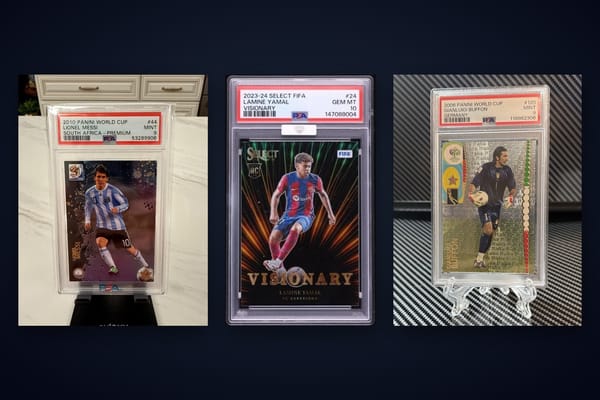
1971 Topps PSA 9 vs PSA 10 Value: Is the Premium Worth It?
1971 Topps PSA 9 vs PSA 10 value explained: why the 10 premium is so steep, which cards jump most, and when a PSA 9 is the smarter buy.

Estimated reading time: 8 min
Key Takeaways
- Bottom line: for most 1971 Topps cards, a PSA 9 is the smarter buy. The 1971 Topps PSA 10 premium is driven by scarcity and by one fragile feature: the black borders.
- The 9-to-10 gap is a multiple, not a small step. Measure it as PSA 10 price divided by PSA 9 price, card by card.
- Cards with black-border chipping, off-center printing and rough cuts tend to show the biggest jumps, because a 10 is so hard to find.
- A PSA 10 only makes sense when you want a registry-level trophy or the premium is small relative to the card's value.
- Before paying to grade a raw copy, check centering and edges. They decide whether you get a 9, a 10, or neither.
This guide compares 1971 Topps PSA 9 vs PSA 10 value: what the price gap looks like, why it exists, and whether a 9 is worth it for 1971 Topps. The quick answer is that the 1971 set is especially unforgiving of imperfection compared with many other vintage issues. A PSA 9 already carries a premium over lower grades, and a PSA 10 sits in a category of its own.
One note on numbers. The PSA 9 and PSA 10 values in this guide's data table are from Midpoint's database as of 2026-11-22. Vintage prices move with every auction, so I explain how to read the gap rather than quote figures that go stale. Always check the current values for your specific card.
Card values — live data from Midpoint's card database, as of 2026-11-22. Prices move; Midpoint refreshes these daily.
| Card | Raw | PSA 10 | Gem premium | |
|---|---|---|---|---|
 |
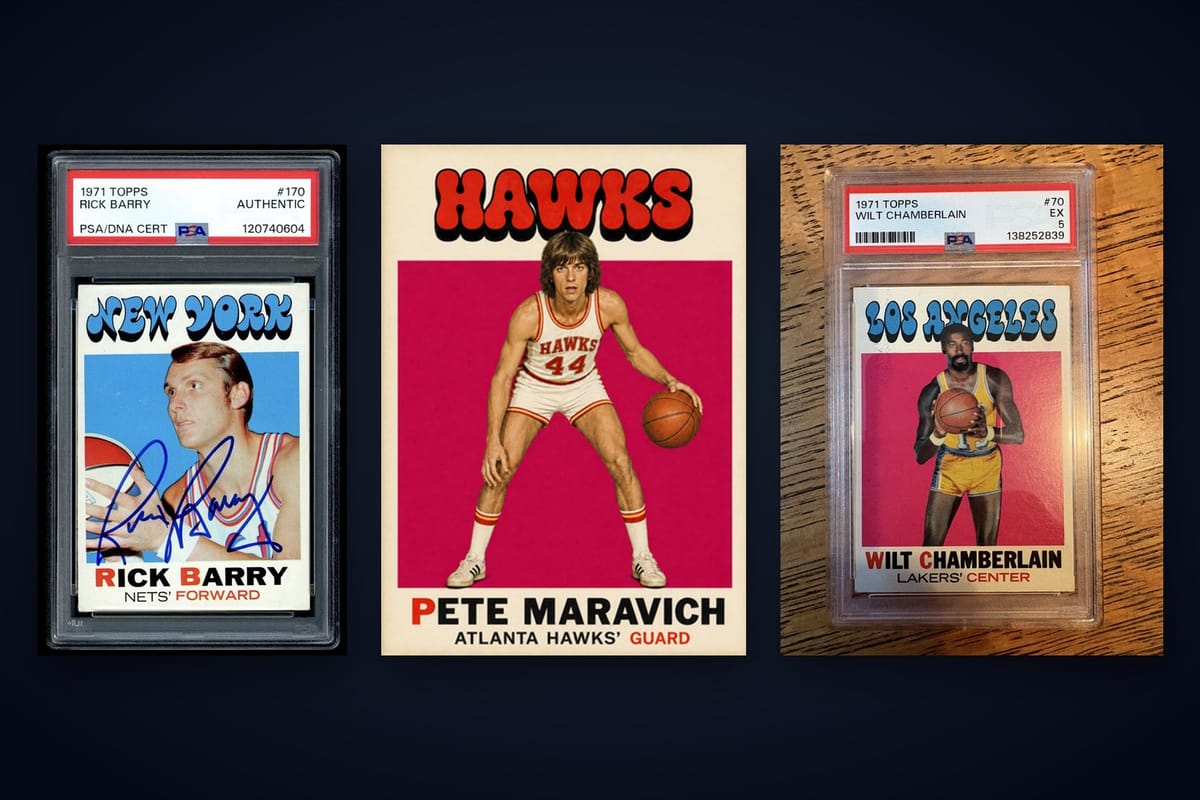
Rick Barry #170 1971 Topps |
$40.00 | $33,600 | 840× |
 |
Pete Maravich #55 1971 Topps |
$45.20 | $25,904 | 573.1× |
 |
Wilt Chamberlain #70 1971 Topps |
$73.95 | $11,250 | 152.1× |
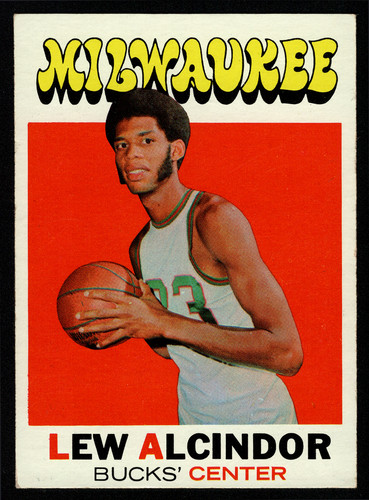 |
Lew Alcindor #100 1971 Topps |
$108.28 | $8,695 | 80.3× |
 |
Dan Issel #200 1971 Topps |
$25.72 | $6,555 | 254.9× |
 |
Jerry West #50 1971 Topps |
$34.58 | $5,187 | 150× |
 |
NBA Playoffs Game 1 #133 1971 Topps |
$7.25 | $4,750 | 655.2× |
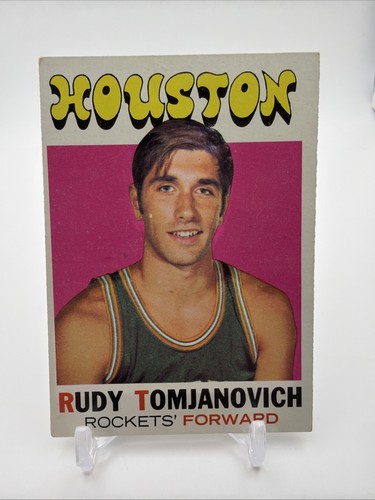 |
Rudy Tomjanovich #91 1971 Topps |
$13.68 | $4,079 | 298.2× |
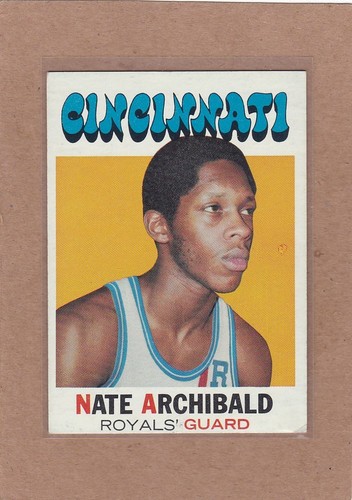 |
Nate Archibald #29 1971 Topps |
$22.50 | $2,591 | 115.1× |
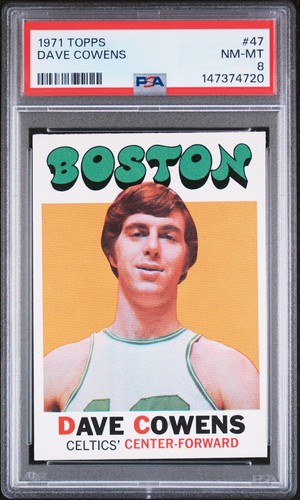 |
Dave Cowens #47 1971 Topps |
$19.99 | $2,412 | 120.7× |
 |
Charlie Scott #190 1971 Topps |
$18.10 | $2,279 | 125.9× |
 |
Earl Monroe #130 1971 Topps |
$10.64 | $2,100 | 197.4× |
Look up any card's current raw and graded value in Midpoint — and get an estimated grade before you pay to submit.
Quick Comparison: PSA 9 vs PSA 10 for 1971 Topps
| Dimension | PSA 9 (Mint) | PSA 10 (Gem Mint) |
|---|---|---|
| Price level | Strong premium over 8 and below, but accessible for most collectors | Typically a large multiple of the PSA 9 (see the data table, as of 2026-11-22) |
| Availability | Hard to find, but listings appear regularly for most cards | Extremely scarce for most cards in the set |
| Black-border tolerance | Allows a very minor flaw | Essentially clean edges and corners are expected |
| Centering tolerance | Slightly more forgiving than a 10 | Needs tight centering |
| Price volatility | More stable, with more comparable sales | Can swing widely because few sales exist |
| Liquidity | Easier to buy and resell | Fewer buyers at the top of the market |
| Best for | Value-focused collectors and set builders | Trophy collectors and registry competitors |
Why 1971 Topps Is So Hard to Grade
The 1971 Topps baseball set, 752 cards in all, is famous for its black borders. They look dramatic in a set, but they show every flaw. That is the root of the whole 1971 Topps grading value story.
The usual trouble spots:
- Edge chipping: white flecks along the black border show up even on cards that look sharp from a distance.
- Corner wear: soft or lightly rounded corners expose the paper stock under the ink.
- Centering: many 1971 cards came off the sheet off-center, so a copy with even borders stands out.
- Print defects: dots, snow and uneven ink can appear on the photo or the border.
- Surface scuffs: the dark border shows handling marks and fingerprint-style gloss changes.
These factors often combine to hold a card at an 8 or below. A PSA 9 means the card has at most a very minor flaw. A PSA 10 means nearly all of those problems are absent at once, which is why it is so rare.
How PSA looks at it
PSA weighs centering, corners, edges and surface together, and a weakness in any one area can hold the grade down. Centering alone can cap a card, however pristine the rest. If you want the detail on how that works, read our guide on how centering impacts card value. For how PSA's top grades differ from BGS and CGC, see grading scale differences by company.
The PSA 9 vs PSA 10 Price Difference for 1971 Topps
Most buyers get the gap wrong because they look at the dollar difference alone. Use two numbers instead:
- Dollar gap: PSA 10 price minus PSA 9 price. This is what you pay extra.
- Multiple: PSA 10 price divided by PSA 9 price. This shows how much the market rewards perfection for that specific card.
The data table in this guide lists PSA 9 and PSA 10 values as of 2026-11-22, so you can do this math for each card.
Where the 9-to-10 jump is biggest
The premium tends to be most extreme in a few kinds of cards:
- Hall of Famer stars such as Nolan Ryan, Johnny Bench and Reggie Jackson. Demand is deep, and a 10 is a prize.
- Key rookies and notable cards, such as Ted Simmons, where collectors compete for the best copy.
- High-number cards from the late series, which are often scarcer in top condition.
- Commons, where a PSA 9 may be cheap but a PSA 10 can be priced far above it, because so few exist to meet demand.
On commons the multiple can look dramatic even when the dollar gap is small. On stars, the multiple may be smaller, but the dollar gap is the one that hurts.
Why centering decides the outcome
On a black-border card, centering is visible at a glance. A 60/40 left-to-right split looks worse than it would on a white-border card, and PSA's 10 standard allows little room. Many cards that would otherwise grade 9 or 10 end up lower because of the centering. That makes a well-centered 1971 card worth more to buyers, and it drives much of the 1971 Topps PSA 10 premium.
You can measure this yourself with a free centering calculator before you decide to submit a card.
PSA 10 Scarcity and Population: Why the Premium Exists
The price gap reflects supply. In the 1971 Topps set, PSA 10s are extremely scarce relative to the number of cards graded. For many cards the top grade is rare, and for some cards the PSA 9 is already the realistic ceiling.
Here is how to use the PSA population report without relying on a stale number:
- Look at the PSA 9 count and the PSA 10 count separately. The ratio tells you how rare the top grade is.
- Check the total graded. A card with few graded copies overall can have unreliable pricing, because one sale moves the average.
- Confirm nothing is higher. PSA 10 is the top of the scale, so the question is how many 10s there are, not whether higher grades exist.
- Recheck before you buy. Populations generally grow as more cards are submitted.
When a PSA 10 has only a handful of examples, price becomes a matter of who is bidding that week. That is why recent sales matter more than a price-guide figure. For more on how thin populations behave, see our guide to card grading for low population cards.
Do not trust a single estimate
Price guides are helpful starting points, but a PSA 10 may sell only occasionally. Compare several recent sales, including the date, the venue (auction house, eBay, or a private deal) and the realized price. If a guide value and the last sale disagree widely, the sale wins. Look for buyer's premiums and fees as well, since those change what the card truly cost.
Is a PSA 9 Worth It for 1971 Topps?
Often, yes. A PSA 9 gives you a high-grade card with a verified Mint label, a deeper pool of sales to compare, and an easier exit if you decide to sell.
The case for the 9:
- You pay for a strong, near-flawless card without paying the full scarcity premium of a 10.
- There are more comparable sales, so you can judge fair value.
- The resale market is wider.
- A 9 is a realistic target for a well-preserved raw copy; a 10 usually is not.
The case for the 10:
- You want the best-graded copy for a registry set or a long-term trophy.
- The premium is small compared with the card's overall value and your budget.
- You are buying a card where a 10 is exceptionally rare and the market consistently rewards it.
A simple rule is to treat the 10 as a luxury purchase. If you can't justify the extra dollar gap as something you would pay just to own the best one, buy the 9.
Insurance and resale
A higher grade also raises the amount you would insure the card for, which affects your costs. Our guide on how card grade affects insurance value explains this in more detail.
Should You Grade a Raw 1971 Topps Card?
If you own a raw copy, the question is whether grading beats selling it as is. Do the math in four steps:
- Estimate realistic grade odds. Be honest. Most raw 1971 cards land at 8 or below, and a 10 is a long shot.
- Look up the value of each grade (8, 9 and 10) in the data table or Midpoint's card lookup.
- Subtract costs: grading fee, shipping, insurance and selling fees.
- Compare the expected result with your raw sale price.
If the likely outcome is an 8, grading may not pay for itself. If the card could plausibly reach a 9, grading often makes sense for stars and key cards, where the 9 premium is large in dollars. Never plan around a 10.
Pre-grade before you submit
The fastest way to avoid a bad submission is to inspect centering and edges first. Our step-by-step pre-grading guide walks through the process. Midpoint can measure centering and give an estimated PSA grade from corners, edges and surface, so you know what to expect before paying a fee.

Try Midpoint on a raw 1971 card and check the estimate against the value table before you submit.
Which Should You Choose?
- Set builders on a budget: buy PSA 9s. You get strong cards, easier comparison sales and less price risk.
- Hall of Fame star collectors: a PSA 9 is the sweet spot. Pay for a 10 only if the multiple is modest and you want the best one.
- Registry competitors and trophy buyers: pursue the PSA 10, but verify the population and recent sales first.
- Investors focused on resale: favor the 9. It is easier to price and sell. Weigh the 10 only if the premium is low relative to its scarcity.
- Owners of raw copies: measure centering first. Submit only cards with a realistic chance at a 9, and treat a 10 as a bonus.
- Commons: a PSA 9 is usually enough. A PSA 10 common is often a pure collector premium.
In short, the 1971 Topps PSA 10 premium reflects true rarity, but not every collector needs to pay it. Verify the data as of today, compare recent sales, and choose the grade that fits your goals.
FAQ
How much is a 1971 Topps PSA 9 worth?
It depends on the card. Commons, stars, Hall of Famers and rookies all have very different PSA 9 values. The data table in this guide lists PSA 9 values as of 2026-11-22, and you can look up any card in Midpoint for the current number.
How much is a 1971 Topps PSA 10 worth?
A PSA 10 is worth a large multiple of the PSA 9 for most cards, because so few exist. See the data table for specific values as of 2026-11-22 and compare them with recent sales, since sales are infrequent.
Why is there such a big price difference between a PSA 9 and PSA 10 for 1971 Topps cards?
The black borders show every chip, corner flaw and centering issue, so very few cards reach a 10. Low supply and strong collector demand push the price far above the PSA 9.
How many PSA 10 1971 Topps cards exist?
Very few relative to the number graded, and the count varies by card. Check PSA's population report for the exact number on your card, since it changes as more cards are submitted. PSA 10 is the highest grade, so nothing ranks above it.
Which 1971 Topps cards are worth the most in PSA 9 or PSA 10?
Hall of Famers and stars such as Nolan Ryan, Johnny Bench and Reggie Jackson, along with key rookies, tend to lead the set. The data table shows the current PSA 9 and PSA 10 values for each as of 2026-11-22.
Is it better to buy a PSA 9 or PSA 10 1971 Topps card?
For most buyers, a PSA 9 is better value, with more comparable sales and an easier resale. Choose a PSA 10 only if you want the top-graded copy and the premium fits your budget.
Free to start
Try the Midpoint app
Grade any card from a photo, see its raw and PSA 10 value, and track what your collection is worth — free.
Get it on iPhoneGet it on Android