Lorcana Card Prices Dropping November 2026: 10 Smart Moves
Lorcana card prices dropping in November 2026? See why Lorcana cards are losing value, what to check in raw vs PSA 10, and how to buy the dip smartly.

Estimated reading time: 9 min
Key Takeaways
- Lorcana card prices dropping in November 2026 looks more like a market-wide cooling than one bad card, with supply, new-set cycles and fading hype as likely drivers.
- Raw and PSA 10 prices move differently. Always compare both before you decide to buy, sell or grade.
- A dip rewards patience: buy cards you actually want, in stages, and verify condition and centering first.
- Grading a cheap, well-centered copy can be a smart play, but only if the grade premium still covers the fee.
Lorcana card prices dropping in November 2026 has collectors asking the same question: is this a panic, or an opening? This guide breaks the Lorcana card market in November 2026 into ten practical steps, from reading the 30-day movers to deciding which cards to buy on the dip.
The table in this post uses figures from Midpoint's own database, all dated as of 2026-11-26. We only state numbers that appear in that table. For everything else, we explain the pattern and give you a method, not a guess.
30-day price movers — live data from Midpoint's card database, as of 2026-11-26. Prices move; Midpoint refreshes these daily.
| Card | Raw | PSA 10 | 30-day | |
|---|---|---|---|---|
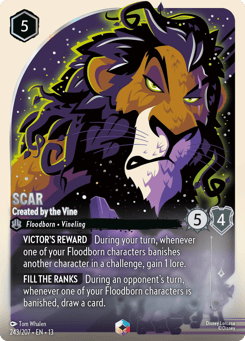 |
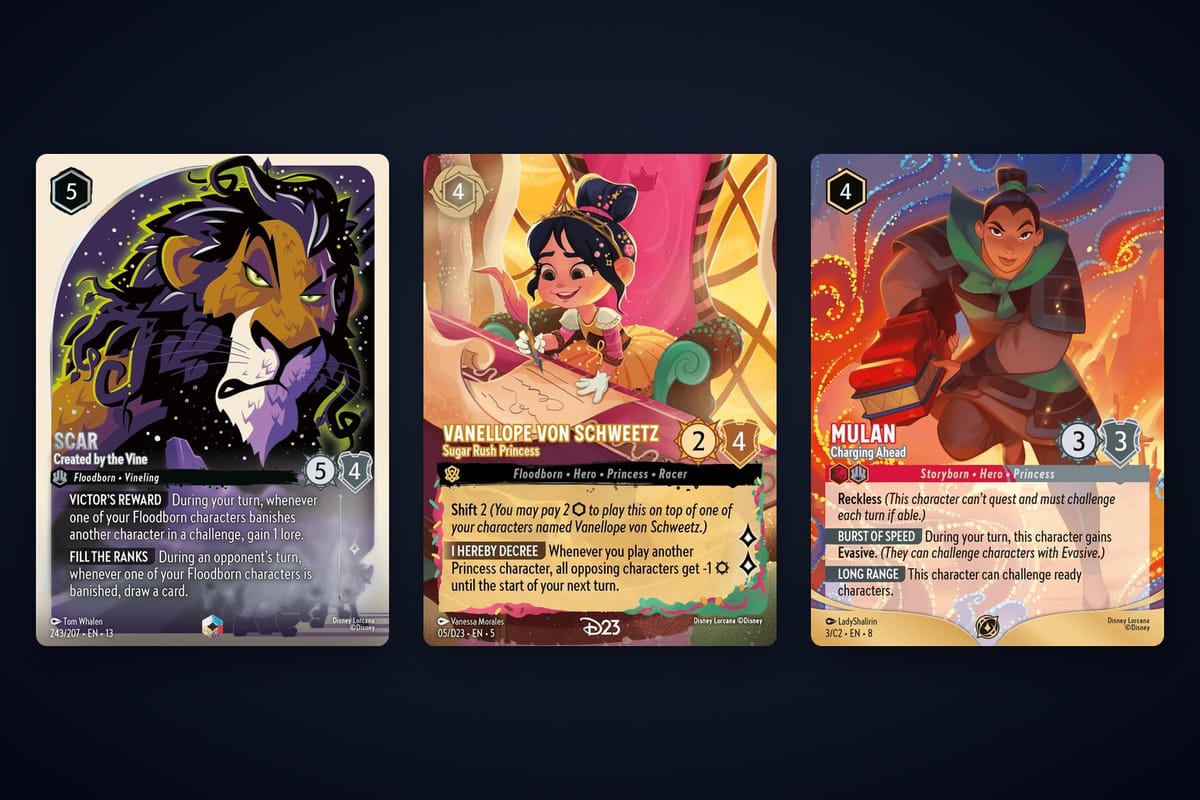
Scar #243/207 Attack of the Vine! (2026) |
$77.08 | $291.50 | -91.4% |
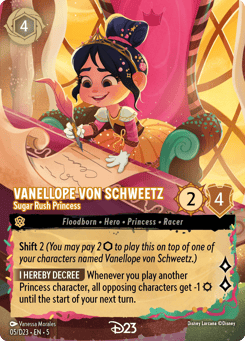 |
Vanellope von Schweetz #05/D23 D23 Collection 2024 (2024) |
$43.84 | $63.10 | -59.8% |
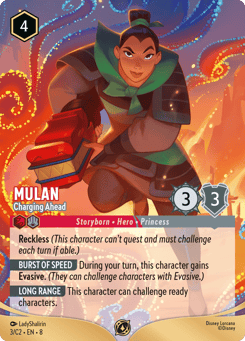 |
Mulan #3/C2 Challenge Promos 2 (2025) |
$39.66 | $404.88 | -56% |
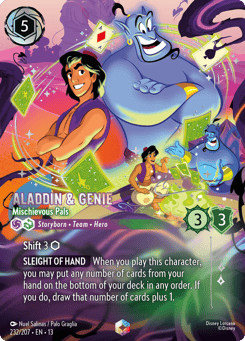 |
Aladdin & Genie #232/207 Attack of the Vine! (2026) |
$149.29 | $458.56 | -54.1% |
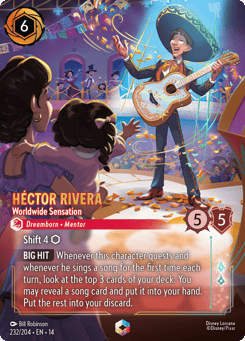 |
Héctor Rivera #232/204 Hyperia City (2026) |
$49.55 | — | -49.2% |
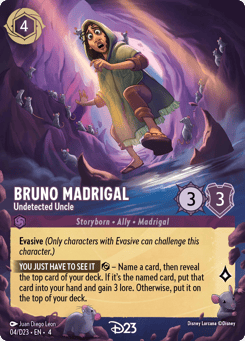 |
Bruno Madrigal #04/D23 D23 Collection 2024 (2024) |
$27.11 | $47.82 | -49.1% |
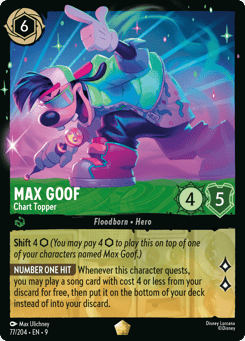 |
Max Goof #77/204 Fabled (2025) |
$37.34 | $73.12 | -47.4% |
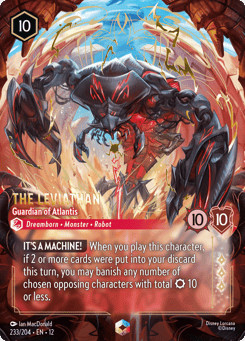 |
The Leviathan #233/204 Wilds Unknown (2026) |
$68.73 | $276.36 | -45.5% |
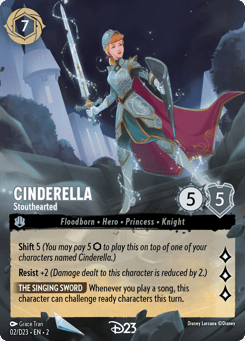 |
Cinderella #02/D23 D23 Collection 2024 (2024) |
$57.34 | $106.33 | -45.5% |
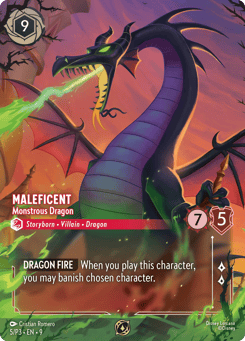 |
Maleficent #5/P3 Promo Expansion 3 (2025) |
$48.19 | $171.67 | -45.4% |
 |
Let it Go #10/C2 Challenge Promos 2 (2025) |
$100.64 | $443.77 | -43.6% |
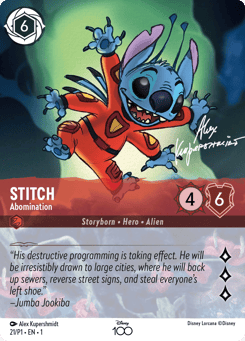 |
Stitch #21/P1 Disney100 (2023) |
$21.77 | $131.34 | -40.4% |
Look up any card's current raw and graded value in Midpoint — and get an estimated grade before you pay to submit.
1. Start With the 30-Day Movers, Raw and PSA 10
The first step with any falling Lorcana card prices is to separate the noise from the trend. A single day's dip can be one low sale. A 30-day slide across many cards is a market signal.
Use the data table in this post as your starting point. It lists the cards that fell the most over the last 30 days as of 2026-11-26, with raw and PSA 10 values side by side. Look at three things:
- Size of the drop: a big percentage fall on a cheap card matters less than a modest fall on a card you own several copies of.
- Raw vs PSA 10 direction: if both fell, demand may be cooling. If only one fell, the cause is probably more specific.
- Starting price: expensive cards can lose a lot of dollars without being a bargain yet.
2. Understand Supply and Pack-Opening Volume
A common reason Lorcana cards lose value is simple: more copies exist than buyers want. Every sealed case that gets opened pushes more singles onto the market, and sellers list them at the same time.
Early in a set's life, prices are often propped up by scarcity. As opening volume climbs, the common and uncommon singles tend to go first, then the mid-tier rares. Chase cards often hold up longest because pulling them is still rare, but they are not immune.
- Watch how many copies are listed, not just the price. A rising listing count with a falling price means sellers are competing.
- Check whether the card is in a main set that is still widely available at retail.
- Be careful with cards that rely on a single hyped use in competitive play.
3. Factor In Reprints and New-Set Release Cycles
Lorcana releases new sets on a regular cadence, and each release tends to pull attention and money away from older sets. Collectors rotate their budget into what is new. That is a normal part of this cycle, not necessarily a sign the game is dying.
Reprints add pressure. If a playable card appears again in a later product, the original supply is no longer fixed, and its price can step down quickly. Promo and special-product versions behave differently, since their supply depends on how they were distributed.
- Before buying a dipped card, check whether a reprint is plausible or already announced.
- Older sets often soften around new releases, though how they behave afterward varies.
- Treat sealed product from a past set as a long-term hold, not a quick flip.
4. Recognize Hype Fading and Cooling Collector Demand
Prices often spike when a set launches, then drift lower as the novelty wears off. That is hype fading, and it is a common reason for falling Lorcana card prices.
Signs the drop is hype-driven rather than structural:
- The card is a fan favorite or a character everyone talked about at launch, but it has no clear gameplay role.
- Sold prices fall steadily week over week instead of in one jump.
- Social media chatter has moved to the next release.
Hype-fade drops can last a while. Collector demand may return when a new product reignites interest in a particular character or story, but you cannot time it, so do not count on it.
5. Watch Mid-Market Cards, Where Dips Hurt Most
Mid-market cards, the ones roughly between a few dollars and a few dozen, are where many collectors feel the pain. They are expensive enough to matter in a binder and common enough that supply is deep.
They also tend to be fairly liquid. That works both ways: you can sell easily, but sellers undercut each other fast. If you hold a lot of these, go through the table and compare your copies against the cheapest listings, not the headline price.
- Sort your collection by value and review the middle band first.
- Decide which cards you would happily keep at a lower price.
- Sell duplicates, not your favorites, if you want to reduce exposure.
6. Check Whether Enchanted and Iconic Cards Are Falling Too
Premium tiers like Enchanted and Iconic cards often behave differently from the rest of the market. Their supply is generally tighter, and demand leans toward collectors who want the top version of a character rather than deckbuilders.
That does not make them immune. In a broad cooldown they can soften too, though often less sharply and with thinner sales data, so one cheap listing can distort the picture. Check the table for any Enchanted or Iconic entries and compare their raw and PSA 10 columns.
- Thin markets mean fewer sales, so wait for several recent sold listings before trusting a price.
- Condition matters more at the top. A poorly centered chase card typically trades at a discount.
- Cards in this tier may be likelier to hold value, but "likelier" is not a guarantee.
7. Compare TCGplayer, Cardmarket and eBay Sold Prices
A market price is not the same as what a card just sold for. Marketplace averages smooth out recent moves, so in a falling market they can lag behind real sales.
Build a quick three-point check before any purchase:
- TCGplayer market price: a useful baseline for US raw singles.
- Cardmarket: a good gauge for European demand, often priced differently.
- eBay sold listings: a strong read on what buyers actually paid, especially for graded copies.
If recent eBay sales are below the market price, the market price is probably still catching up. Wait or bid lower. Midpoint's card lookup shows raw vs graded values together, which makes this comparison faster.
8. See What PSA 10 Prices Are Telling You
Graded prices hint at whether collectors still value condition. When a card's PSA 10 value drops alongside its raw price, the whole card may be weakening. When only raw falls, the gap between raw and PSA 10 grows, and grading can look more attractive.
The grading premium is the gap between a raw copy and a PSA 10, minus costs. In a downturn, that premium can shrink, because buyers may pay less for graded copies while grading fees stay the same. Run the math before you submit anything:
- Take the PSA 10 value and subtract the raw price and the grading fee, plus shipping.
- Weigh that gap against a realistic chance of a 10, not a hopeful one, and remember lower grades will sell for less.
- Check how scarce top grades are for that card. Our guide on grading low population cards explains why this matters.
9. Pick Lorcana Cards to Buy the Dip, Not Everything
A dip is not a sale on every card. The best Lorcana cards to buy the dip share a few traits: you want them, supply is not rising quickly, and the price has fallen without a clear reason like an imminent reprint.
A simple approach for singles and sealed:
- Singles you will keep: buy in two or three stages instead of all at once, in case prices fall further.
- Chase cards: inspect centering and surface in photos first. A cheap copy with poor centering is cheap for a reason.
- Sealed boxes: only buy if you have storage space and can wait. Sealed product generally suits patient holders.
- Waiting: if the 30-day trend is still steadily down, holding cash is a legitimate position.
Nobody can promise where prices go after November 2026. Spend only what you would be fine seeing dip again.
10. Grade a Cheap Copy That Centers Well
Here is where a dip can help you. When a raw price falls, the cost of a candidate for grading falls too, so you risk less on each attempt. If you can find a copy with excellent centering, that helps its odds of a high grade, though corners, edges and surface matter too, while your entry price is low.
Centering is one of the easiest grade factors to check before you buy. Read how centering impacts card value, then measure it yourself with the free centering calculator. For a fuller check, Midpoint gives AI estimates of PSA, BGS, CGC and TAG grades from centering, corners, edges and surface before you pay to submit.

- Photograph the card flat, in even light, with the whole border visible.
- Compare the estimate with the PSA 10 value in the table. If the premium is thin, skip it.
- Follow our step-by-step pre-grading guide for corners, edges and surface.
Keep in mind that each company scales grades differently. See our breakdown of grading scale differences before choosing where to submit.
Conclusion
Lorcana card prices dropping in November 2026 is best read as a cooling market, likely shaped by supply, release cycles and fading hype. The winners during a dip are collectors who compare raw and PSA 10 values, check recent sold prices, and buy cards they genuinely want.
Use the table above as of 2026-11-26, track your own collection's value over time, and only grade copies where the math and the centering both work. A calm, measured approach beats chasing every falling card.
FAQ
Q: Why are Lorcana card prices dropping in November 2026?
A: Likely causes include rising supply from pack openings, the pull of newer set releases, possible reprints and cooling collector demand after launch hype. Together these can put downward pressure on many singles at once, though the exact mix varies by card.
Q: Which Lorcana cards have lost the most value this month?
A: The data table in this post lists the biggest 30-day decliners, raw and PSA 10, as of 2026-11-26. Check it for exact figures, and compare against recent sold listings before you act.
Q: Are Disney Lorcana cards going up or down right now?
A: Many cards are trending down over the last 30 days, but the picture varies by card, rarity and whether you look at raw or graded values. Look at each card's own trend rather than the market as a whole.
Q: Is now a good time to buy Lorcana cards during the November 2026 dip?
A: It can be, for cards you want to keep and that have no obvious reprint risk. Buy in stages, check condition and centering first, and avoid spending money you are not comfortable seeing fall further.
Q: Are Lorcana Enchanted and Iconic cards also losing value?
A: Premium cards often fall less sharply because supply is tighter, but they can soften too. Their sales are thin, so wait for several recent sold listings before trusting any single price.
Q: Will Lorcana card prices continue to fall after November 2026?
A: No one can say for sure. Prices may keep sliding while supply is high and new sets pull attention, or stabilize as openings slow. Track the 30-day trend and recent sales instead of relying on predictions.
Free to start
Try the Midpoint app
Grade any card from a photo, see its raw and PSA 10 value, and track what your collection is worth — free.
Get it on iPhoneGet it on Android