Card Collection App: Track, Organize, and Maximize Your Collection Value
Discover the best card collection app to track, organize, and value your trading card portfolio, plus tips on grading, storage, and when to sell.


Estimated reading time: 18 min
Key Takeaways
- Use a comprehensive card collection app like Midpoint for grading estimates and portfolio tracking, which can save time and help improve the accuracy of your collection management.
- Organize your collection by set, rarity, condition, and type to streamline management and valuation, which helps in quick retrieval and better decision-making.
- Track market values using integrated market data to make informed decisions on when to sell or hold cards and to monitor investment growth effectively.
- Proper storage and insurance documentation help protect your investment against loss, damage, and theft, preserving card condition and financial value over time.
- Leverage digital tools to catalog cards, track duplicates, maintain wantlists efficiently, and use analytics for portfolio optimization.
Table of Contents
- Section 1: Getting Started with Card Collection Apps
- Section 2: Organizing Your Collection Effectively
- Section 3: Tracking Collection Value and Market Prices
- Section 4: Grading and Pregrading Cards
- Section 5: Best Practices for Storing and Insuring Cards
- Section 6: Managing Your Portfolio for Investment Purposes
- Section 7: Advanced Features and Marketplace Integration
Conclusion
FAQ
Section 1: Getting Started with Card Collection Apps
What Is a Card Collection App?
A card collection app is a digital tool designed to help collectors catalog, organize, and track trading cards across multiple games and sports. These apps typically include extensive card lookup databases, grading estimation based on images and condition, value tracking with market data, and portfolio management tools that summarize your collection’s status.
For example, Midpoint supports a large number of unique cards from popular games and sports, such as Pokémon, Magic: The Gathering (MTG), Yu-Gi-Oh, Lorcana, One Piece, and major sports cards like baseball, basketball, and football. This broad coverage helps collectors with diverse interests manage their cards within a single platform.
Why Use a Card Collection App?
Managing a large card collection manually using spreadsheets or physical logs can be tedious, error-prone, and inefficient. Key challenges include tracking condition accurately, valuing cards correctly, and keeping up with market price fluctuations. Dedicated card collection apps simplify these tasks by automating data entry (often via photo recognition), providing AI-powered grading estimates, and integrating market data for valuation.
For instance, Midpoint’s AI-driven grading estimates analyze card photos to predict PSA, BGS, CGC, and TAG grades, helping collectors decide which cards might be worth submitting for professional grading. The app also aggregates price data from major marketplaces to give current value estimates, allowing collectors to monitor their portfolio's worth.
Key Features to Look For
- Card Scanning and Photo Recognition: Quickly identify cards by scanning or photographing them. Advanced apps like Midpoint use AI to auto-populate detailed card information, reducing manual entry errors.
- Grading Estimates: AI digital grading tools provide preliminary grades based on condition, centering, edges, corners, and surface quality, offering an estimate before professional grading.
- Collection Value Tracking: Market price integration lets you see your collection’s current value and track changes over time, useful for investment insight.
- Detailed Organization: Sort and filter cards by set, rarity, condition, and type to maintain an orderly collection and facilitate trading or deck-building.
- Backup & Export: Secure your data via backups and export options (CSV, JSON), enabling offline access and data portability.
- Multi-Game and Multi-Sport Support: Manage cards from different games and sports within one app, avoiding the need for multiple tools.
Section 2: Organizing Your Collection Effectively
Why Organization Matters
Proper organization is fundamental for managing a card collection efficiently. It enables quick access to cards, accurate valuation, and facilitates trading or sales. Organizing also helps identify duplicates and gaps in your collection, which is useful for set completion and deck-building in competitive play.
For example, knowing exactly which rares or ultra-rares you own and their condition allows you to prioritize grading submissions and investment focus. Similarly, tracking duplicates can prevent unnecessary repurchases and promote smart trades with other collectors.
Methods to Organize Cards
- By Set and Edition: Group cards based on their release sets or expansions. This helps collectors track progress toward set completion, identify valuable first editions or limited runs, and maintain historical context.
- By Rarity: Separating cards into common, uncommon, rare, and ultra-rare categories allows collectors to focus on higher-value cards and manage inventory efficiently.
- By Condition and Grade: Classify cards based on condition tiers (e.g., Mint, Near Mint, Excellent) or grading estimates. This ensures that cards are stored and valued according to their quality.
- By Type or Game: For collectors of multiple games or sports, segmenting by game (e.g., Pokémon, MTG, sports cards) or by card type (creatures, spells, players) streamlines collection navigation and specific game-related tasks.
- By Ownership Status: Tag cards as owned, wishlisted, or available for trade/sale, making it easier to manage transactional decisions.
Using Midpoint for Organization
Midpoint’s card collection tracking screen supports bulk uploads via CSV or direct photo scans, enabling quick addition of large numbers of cards. It provides sorting capabilities by condition, grading potential, set, and rarity, so collectors can tailor organization to their needs.
The app’s AI grading and centering measurement tools analyze photos to assign condition levels with precision. For example, centering can be measured down to 0.1 mm differences, a factor in grading that can affect card value.
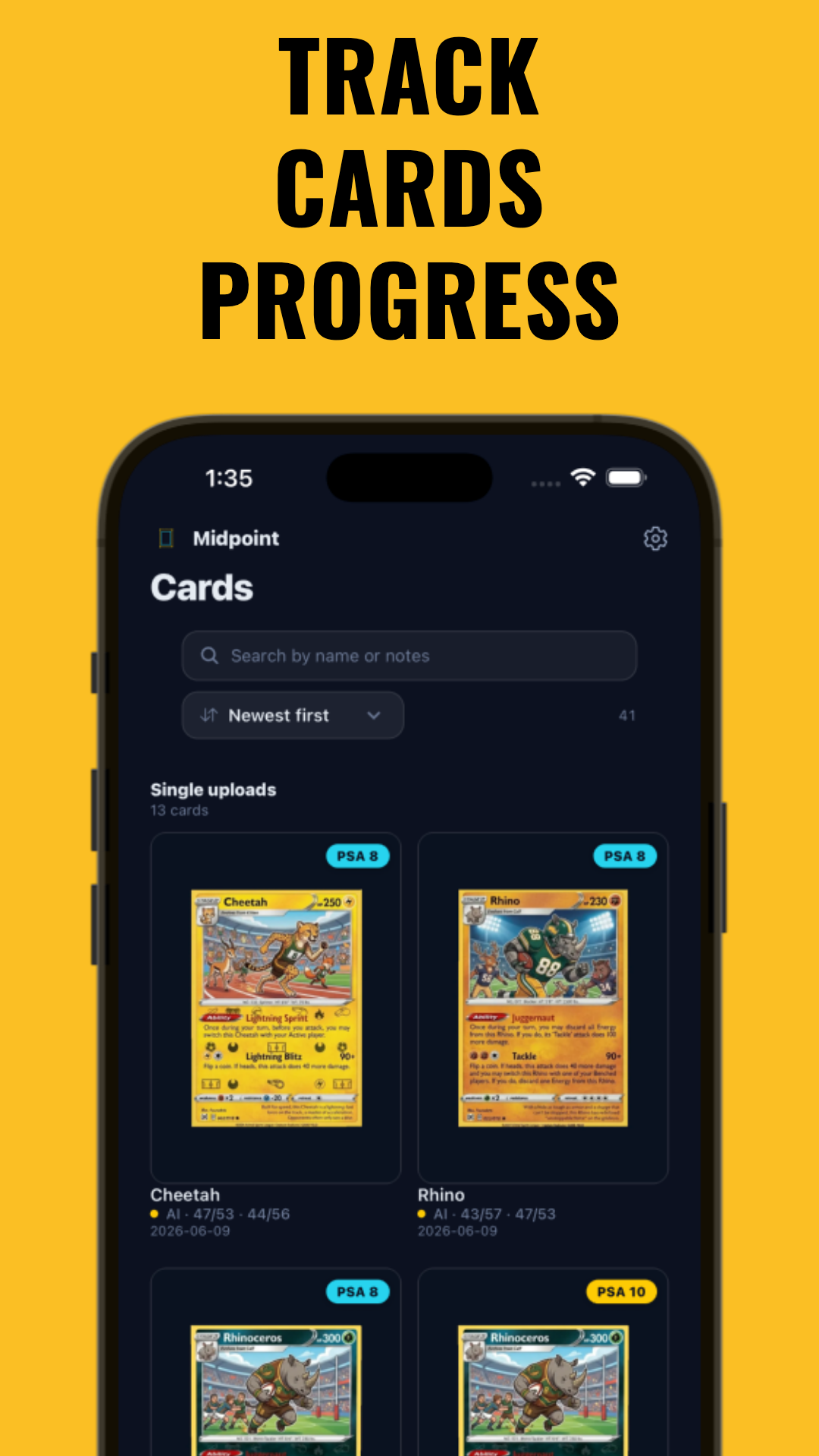
Additionally, Midpoint allows tagging duplicates and creating wantlists. Wantlists help collectors track missing cards needed to complete sets or decks, while duplicate tagging aids in identifying surplus cards suitable for trade or sale.
By leveraging these features, collectors can maintain a well-organized collection that reflects card quality and investment potential.
Section 3: Tracking Collection Value and Market Prices
Why Track Collection Value?
Tracking the value of your collection over time is useful for both casual and investment-oriented collectors. It provides insight into which cards appreciate or depreciate, informs buying and selling decisions, and supports insurance documentation.
Market prices for trading cards fluctuate due to factors such as supply and demand, player popularity, meta shifts in games, and grading trends. For example, a rare Pokémon card may increase in value after a tournament win or a limited reprint.
Tools for Real-Time Price Tracking
- Card Lookup with Market Data: Apps like Midpoint aggregate prices from multiple marketplace sources (eBay, TCGPlayer, StockX) to provide raw and graded card prices side-by-side.
- Portfolio Analytics: Dashboards display your collection’s total market value, average card value, and contribution of individual cards to portfolio worth.
- Price History: Historical price charts allow analysis of price trends over months or years, helping identify optimal buy/sell windows.
- Alerts and Notifications: Set up price alerts for specific cards to be notified of significant market movements.
Using Midpoint’s Portfolio Tracker
Midpoint consolidates your entire collection’s market values and grading estimates into a unified portfolio view. This dynamic tracker updates as market prices change, providing valuation and enabling data-driven decisions.
- Spot Undervalued Cards: Identify cards with grading upside or market anomalies where the current price is below expected value.
- Decide When to Sell: Use price peaks, historical highs, or personal financial goals to time sales for maximum return.
- Monitor Profit/Loss: Track gains or losses on cards bought and sold, useful for tax reporting or investment analysis.
- Insurance Documentation: Generate up-to-date inventory reports with current market values for insurance claims or policy updates.
For collectors interested in insurance, understanding market value is important. Midpoint’s data can be used alongside guides like Card Grade Impact on Insurance Value to help ensure accurate valuation and coverage.
Section 4: Grading and Pregrading Cards
Importance of Grading
Professional grading by companies such as PSA, BGS, CGC, and TAG standardizes a card’s condition assessment, offering buyers confidence and often increasing the card’s market value. High-grade cards can sell for multiples of ungraded counterparts.
For example, a PSA 10 (Gem Mint) card typically commands a premium price compared to raw versions with uncertain condition.
Pregrading with AI Tools
Since professional grading can be costly — commonly $30 or more per card plus shipping and insurance — using AI-based pregrading tools helps collectors estimate whether a card might be worth submitting.
AI pregrading analyzes images for centering, edges, corners, surface scratches, and print defects. This enables collectors to prioritize sending only their best candidates for grading, potentially reducing expenses and turnaround time.
Midpoint’s Digital Grading Features
Midpoint leverages AI to deliver grading estimates aligned with official standards. It measures centering with precision, as centering can influence up to a full grade difference. For example, a card centered 55/45 versus 60/40 can impact the grade outcome.
Besides centering, the AI evaluates corner sharpness, edge wear, and surface condition from photos supplied by the user.
The grading summary screen provides an overall estimated grade and condition category, helping collectors make informed decisions about grading submissions, selling raw, or holding cards.
By focusing grading efforts on cards with the highest grading potential, collectors can aim to maximize the value and return on investment for their collection.
Section 5: Best Practices for Storing and Insuring Cards
How to Store Valuable Cards
Maintaining card condition is important to preserving value. Key storage recommendations include:
- Use high-quality protective sleeves made from acid-free, non-PVC materials to prevent chemical damage.
- Encapsulate valuable cards in rigid top loaders or magnetic cases to shield against bending and physical wear.
- Store cards in temperature- and humidity-controlled environments — ideally between 65-75°F and 40-50% humidity — to help prevent warping, mold, and fading.
- Avoid exposure to direct sunlight or fluorescent lighting, which can cause color fading and degrade card surfaces.
- Organize cards in archival-quality storage boxes or binders designed specifically for trading cards, ensuring cards do not rub against each other.
- Limit handling and always wash hands before touching cards to avoid oils and dirt transfer.
- Consider desiccant packs in storage containers to help control moisture levels.
For a comprehensive guide, see How to Store Valuable Cards.
Documenting Your Collection for Insurance
Insurance providers typically require detailed proof of your collection’s existence, condition, and value. Use a card collection app like Midpoint to generate inventories that include:
- High-quality photos of each card showing front and back condition.
- AI-generated grading estimates or official grades if available.
- Purchase receipts or provenance details, if possible.
- Current market values and total portfolio worth.
Regularly update your inventory records to capture new acquisitions, grading results, and market price changes. This helps ensure that your insurance coverage reflects the replacement cost of your collection.
Choosing Insurance Options
- Explore specialized collectibles insurance policies that cover loss, theft, damage, and depreciation.
- Review homeowner’s or renter’s insurance endorsements for collectibles, assessing coverage limits and deductibles.
- Understand valuation methods — some policies use actual cash value while others reimburse replacement value.
- Use your app’s portfolio tracker and inventory reports as documentation evidence during claims to help expedite the process.
- Keep physical copies of inventory and digital backups stored securely offsite or in the cloud.
Section 6: Managing Your Portfolio for Investment Purposes
Are Trading Cards a Good Investment?
Trading cards have gained popularity as alternative investments, with some cards appreciating substantially in recent years. However, like all collectibles, they come with risks such as market volatility, condition sensitivity, and fluctuating demand.
Success requires realistic expectations, diversification across card types and grades, and ongoing market research. Long-term holding strategies often outperform speculative flipping unless you have deep market expertise.
Consider trading cards as part of a balanced portfolio, and avoid investing funds you may need in the short term.
How to Treat Your Collection Like a Portfolio
- Catalog Your Collection: Maintain detailed records of every card owned, including grading status, acquisition cost, and purchase date.
- Track Market Values: Use market data to monitor appreciation or depreciation, identifying growth trends or risk areas.
- Decide When to Sell: Establish target prices or market conditions that trigger sales, balancing maximizing return with portfolio liquidity needs.
- Manage Risk: Protect your investment through insurance, secure storage, and limiting exposure to physical damage.
- Rebalance Portfolio: Periodically review and adjust holdings to optimize potential returns and reduce risk.
Using Midpoint as a Card Portfolio Tracker
Midpoint’s portfolio features provide a comprehensive view of your collection’s investment potential. You can:
- Analyze total collection value and breakdown by game, set, or rarity.
- Evaluate grading potential to identify cards with high upside if professionally graded.
- Monitor market trends and price fluctuations to time purchases and sales strategically.
- Generate reports for tax or insurance purposes.
- Integrate insights from detailed guides such as How to Pre-Grade Your Card and Grading Scale Differences by Company to refine your grading and investment strategy.
This analytical approach can help transform collecting from a hobby into a disciplined investment practice.
Section 7: Advanced Features and Marketplace Integration
Wishlist, Wantlist, and Duplicate Tracking
Advanced card collection apps allow users to maintain wishlists or wantlists to track cards needed to complete sets or decks. This feature helps prioritize purchases and avoid duplicates.
Simultaneously, duplicate tracking identifies surplus cards, facilitating informed trading or selling decisions. For example, Midpoint enables tagging and filtering by duplicates, so you can quickly find cards to trade or list for sale.
Buy, Sell, and Trade Marketplaces
Some apps integrate marketplace features that enable users to buy, sell, or trade cards directly within the platform, streamlining transactions and reducing friction.
While Midpoint currently focuses on grading and portfolio management rather than direct marketplace functions, its comprehensive market data and portfolio analytics empower collectors to engage confidently with external marketplaces like eBay, TCGPlayer, or StockX.
Export, Backup, and Data Portability
Data security is important for collectors. Look for apps offering robust backup and export features to protect against data loss. Export options in formats like CSV or JSON allow you to keep offline copies, migrate data between platforms, or submit data for appraisal and insurance purposes.
Midpoint supports data portability, allowing users to export their entire collection database easily. Regular backups and cloud syncing help ensure your data is safe even if devices are lost or damaged.
Multi-Game and Multi-Sport Support
Collectors often have diverse interests spanning multiple trading card games and sports. Managing these disparate collections in one app is convenient.
Midpoint supports a wide range of card types, including Pokémon, Magic: The Gathering, Yu-Gi-Oh, Lorcana, One Piece, and major sports cards (baseball, basketball, football, hockey, and more). This unified platform reduces the need for multiple apps and provides a holistic view of your entire card portfolio.
Conclusion
Using a dedicated card collection app can be very helpful for serious collectors and investors alike. From cataloging and organizing to grading and portfolio tracking, these tools provide clarity and control over your collection’s value and condition, saving time and reducing errors.
Midpoint combines AI-driven grading estimates, precise centering measurement, and market tracking across a wide range of trading cards. Its portfolio tracker transforms how you view and manage your collection, supporting smarter decisions on grading, selling, and storage.
By adopting these strategies and tools, you can treat your collection not just as a hobby but as a well-managed portfolio with clearer insights and growth potential. This approach aims to maximize enjoyment and financial return while helping safeguard your investments.
FAQ
Q: What is the best card collection app for Pokémon, MTG, or sports cards?
A: Midpoint is an all-in-one card collection app supporting Pokémon, Magic: The Gathering, Yu-Gi-Oh, Lorcana, One Piece, and major sports cards. It offers AI digital grading, portfolio tracking, and market value updates, making it suitable for diverse collectors.
Q: Which card collection app has the best scanner for identifying cards from photos?
A: Midpoint includes photo recognition and card scanning features that identify cards and provide condition and grading insights, helping reduce manual entry time and errors.
Q: Can a card collection app track market value and price history?
A: Yes, Midpoint tracks market prices and portfolio value changes over time, helping collectors make informed decisions about buying, selling, or holding cards. It also shows historical price trends and alerts.
Q: Does a card collection app support exporting or backing up my collection?
A: Midpoint offers export and backup features to help keep your collection data safe, portable, and accessible across devices. You can export data in formats like CSV or JSON for offline storage or migration.
Q: Which app is best for tracking wantlists, duplicates, and set completion?
A: Midpoint supports collection organization, including tagging duplicates, creating wantlists, and tracking set completion status for efficient management and trading.
Q: Are there card collection apps that also let you buy, sell, or trade cards?
A: While Midpoint focuses on grading and portfolio management, it provides data to help collectors engage confidently with marketplaces that facilitate buying, selling, or trading cards.
Free to start
Try the Midpoint app
Grade any card from a photo, see its raw and PSA 10 value, and track what your collection is worth — free.
Get it on iPhoneGet it on Android