Centering for Refractor Cards: The Complete Guide
Master centering for refractor cards. Learn how PSA, BGS, CGC judge centering on Pokémon, sports, MTG, One Piece & vintage cards. Pro tips and tools inside.

Estimated reading time: 14 min
Key Takeaways
- Centering for refractor cards can significantly affect your grade—knowing how to measure both front and back is important.
- Different grading companies (PSA, BGS, CGC) set distinct centering tolerances, especially for Chrome, Pokémon, MTG, and vintage cards.
- Refractor patterns, card shine, and print placement can make centering harder to judge than with base cards.
- Specialized tools and digital apps like Midpoint can provide centering measurements down to the millimeter.
- Strong centering can increase resale value, especially for rookie refractors and key Pokémon, MTG, or sports cards.
Table of Contents
- Section 1: What Are Refractor Cards? Differences from Base Chrome
- Section 2: How Centering Is Measured on Refractor Cards
- Section 3: Grading Company Centering Standards (PSA, BGS, CGC)
- Section 4: Unique Centering Challenges with Refractors
- Section 5: Inspecting Front and Back Centering by Card Type
- Section 6: Tools and Methods for Accurate Centering Analysis
- Section 7: Centering’s Impact on Grading and Value
- Section 8: Good vs Bad Centering – Real Examples
- Conclusion
- FAQ
Section 1: What Are Refractor Cards? Differences from Base Chrome
Understanding Refractor Cards
Refractor cards are a staple in modern trading card games and sports card collecting. Unlike standard base Chrome cards, refractors feature a special layer that creates a rainbow-like shine when tilted under light. This effect is achieved by applying a thin film during the manufacturing process, producing the signature "refractor" appearance.
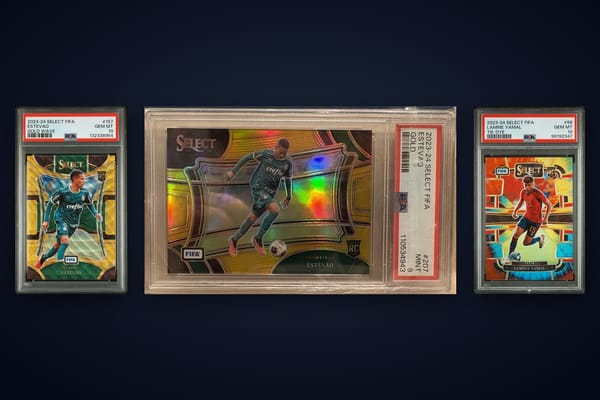
- Sports Card Centering: Topps Chrome baseball, basketball, and football sets are prime examples of refractor technology. These cards stand out for their reflective surfaces and parallel variants.
- Pokémon Card Centering: Since 2020, Pokémon TCG has released select refractor-style cards (sometimes called "reverse holo" or "full art"), which can command premium prices in top condition.
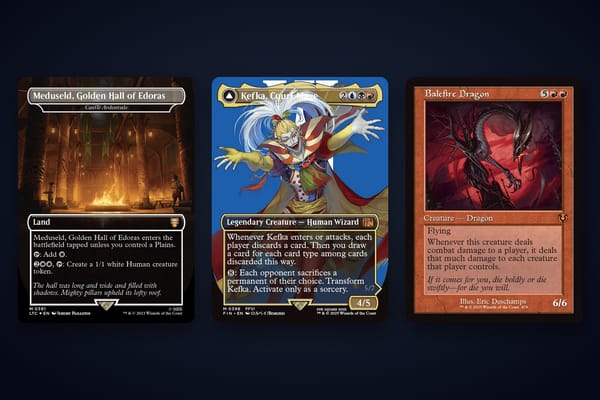
- MTG Card Centering: Magic: The Gathering introduced "foil" cards, a close cousin to refractors, with similar shine and centering challenges.
How Refractors Differ from Base Chrome
While both refractors and Chrome cards start with similar card stock, refractors add an extra visual layer, making defects like off-centering, print lines, or edge issues sometimes more obvious (or sometimes harder to spot, depending on the pattern). This difference is important when pre-grading cards for submission to PSA, BGS, or CGC.
- Base Chrome: Purely silver finish, often easier to see centering lines but shows surface scratches more readily.
- Refractor: Rainbow or patterned shine can obscure borders, complicating centering checks—especially on busy designs or colored parallels.
Why Centering Matters More on Refractors
Because refractors are often the most desirable pulls from packs (rookies, limited parallels, secret rares), their value depends heavily on eye appeal and centering. Poor centering can drop a refractor’s grade from a PSA 10 to a 9 or below, significantly reducing resale value. This makes accurate centering measurement essential for refractors, whether you collect Pokémon, sports, MTG, One Piece, or vintage card types.
Section 2: How Centering Is Measured on Refractor Cards
The Basics of Card Centering Measurement
Card centering refers to how evenly the printed image is positioned within the card’s physical borders. For refractor cards, both front and back centering are judged—sometimes to different standards.
- Front Centering: Measured by comparing the width of the borders (top/bottom and left/right). Even slight differences can be detected by graders.
- Back Centering: While often slightly more lenient, it still impacts the overall grade—especially for Pokémon and MTG cards, where back design is prominent.
How to Measure Centering (Step-by-Step)
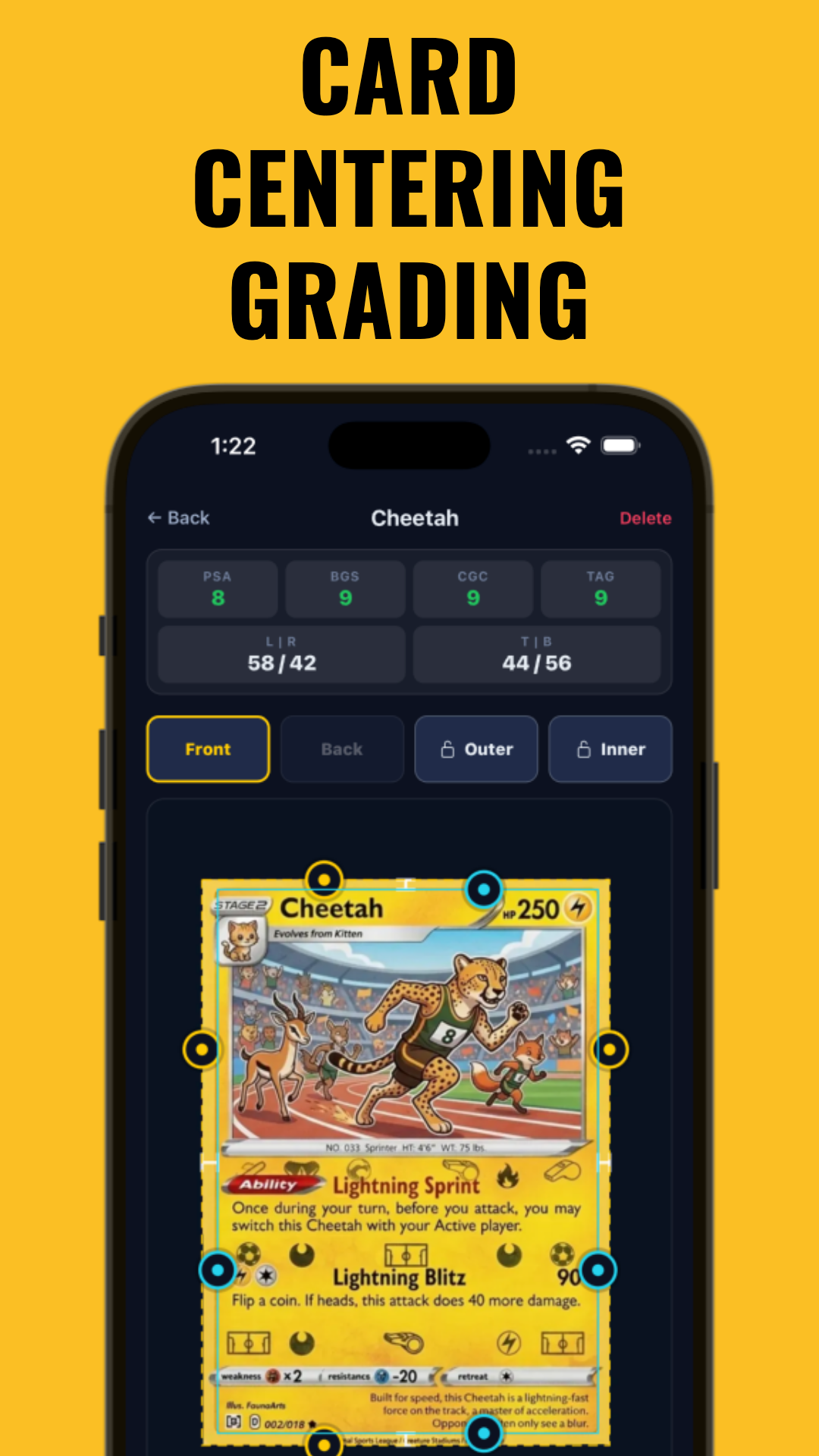
- Use a millimeter ruler, centering tool, or digital app (like Midpoint) to measure from the image edge to the card border on all sides.
- Calculate the centering ratio: for each pair (e.g., left/right), divide the smallest border width by the largest, then multiply by 100 to get a percentage (e.g., 55/45).
- Repeat for top/bottom and for both front and back.
Measuring Centering on Specialty Cards
Some cards—especially older vintage releases, modern Chrome sports sets, and Pokémon full art cards—have uneven print areas or artwork that extends to the edge. In these cases, graders focus on the border around the main image or logo, not the colored foil area. For detailed instructions, see our step-by-step guide to pre-grading.
Section 3: Grading Company Centering Standards (PSA, BGS, CGC)
PSA Centering Tolerances
PSA’s standards for refractor cards are strict, especially for modern issues:
- PSA 10 (Gem Mint): 55/45 or better on the front, 75/25 on the back.
- PSA 9 (Mint): 60/40 or better on the front, 90/10 on the back.
- These ratios apply to most trading cards—Pokémon, sports, Magic, One Piece, Yu-Gi-Oh—unless otherwise noted.
For a breakdown across companies, see our post on grading scale differences by company.
BGS (Beckett) Standards
- BGS 10: 50/50 (perfect centering) on the front, 60/40 on the back.
- BGS 9.5: 55/45 on the front, 65/35 on the back.
- BGS 9: 60/40 on the front, 90/10 on the back.
CGC Grading Rules
- CGC 10: 50/50 to 55/45 on the front, 60/40 on the back.
- CGC 9.5: 60/40 front, 75/25 back.
- CGC is prominent for Pokémon card centering, MTG card centering, and One Piece grading.
Note: Each company may adjust standards for vintage card centering or rare print runs. Always check the latest guidelines before submission.
Section 4: Unique Centering Challenges with Refractors
Why Refractor Centering Is Harder to Judge
Refractor cards present unique centering challenges due to their shine, patterns, and manufacturing quirks. The reflective layer can distort the appearance of borders, making them harder to measure by eye or with basic tools.
- Shine & Pattern: Rainbow or mosaic patterns on refractors can obscure where the border ends and the image starts, complicating visual inspection.
- Edge-of-Sheet Issues: Cards cut from the edges of print sheets (especially in Topps Chrome) can exhibit worse centering and more border variation than cards from the sheet center.
- Surface Flaws: Refractors are prone to print lines, roller marks, and surface dimples, which can distract from centering assessment.
Print Sheet Placement
The placement of a card on the original print sheet can impact centering consistency:
- Edge or corner cards may have thinner borders on one or two sides.
- These cards are more likely to grade lower for centering, regardless of how sharp the corners or clean the surface are.
Grader Technique and Human Error
Even professional graders can struggle with refractor centering, especially under harsh or inconsistent lighting. That’s why many collectors now use digital solutions or apps—like Midpoint—to double-check centering before submitting cards for expensive grading.
Section 5: Inspecting Front and Back Centering by Card Type
Pokémon Card Centering & Back Centering Pokémon
Pokémon card centering is scrutinized by collectors and graders. The blue border on the back makes any off-centering stand out—one reason PSA and CGC grades can drop quickly for back centering issues. For modern full-art or refractor-style Pokémon, border thickness varies card-to-card, but the grading standards are the same as for sports cards.
- Use a digital centering tool to measure both sides. Even a 1mm difference can affect whether a card receives a PSA 10 or 9.
- Back centering Pokémon cards is as important as front for high grades.
Sports Card Centering (Topps Chrome, Prizm, etc.)
Sports card centering, especially for rookie refractors, is a top factor in grading. Chrome cards often show thicker borders on one side due to print sheet alignment. For high-value cards, even 60/40 centering can reduce value compared to a 50/50 example.
- Check both front and back using a ruler or digital app.
- Edge-of-sheet issues are more common on Topps Chrome and Panini Prizm refractors.
MTG, One Piece, Yu-Gi-Oh, and Vintage Card Centering
MTG card centering (especially for foils), One Piece card centering, and Yu-Gi-Oh refractors all face similar issues:
- Older/vintage cards can have wider centering tolerances (sometimes 70/30 or worse accepted as “mint” in 1980s/1990s issues).
- Modern foils and refractors require strict centering to achieve top grades.
- Always check both front and back, especially with international print runs where standards may drift.
Section 6: Tools and Methods for Accurate Centering Analysis
Manual Tools: Ruler, Loupe, and Visual Checks
- Millimeter Ruler: Simple, effective, but can be inaccurate due to human error—especially with shiny refractor surfaces.
- Loupe/Magnifier: Useful for seeing border edges, but can distort perspective if not held flat.
- Visual Checks: Quick, but unreliable for high-value cards due to optical illusions from patterns or foil shine.
Digital and App-Based Centering Tools
- Scanners: Flatbed scanners can digitize cards for measurement in graphic software, but require time and calibration.
- Card Centering Apps: Solutions like Midpoint allow users to upload a card photo, auto-detect edges, and provide centering ratios—removing some human error. These tools can be especially accurate for refractors, Pokémon, and sports cards.
- Bulk uploading and processing saves time for large collections.
New Technologies: AI and Advanced Detection
AI-driven centering tools (see our AI-focused comparison) can measure centering to high precision, even adjusting for warped borders or complex patterns. These are useful for pre-grading high-value refractor or vintage cards where small differences matter.
For a practical walkthrough, see the in-depth guide to card centering tools.
Section 7: Centering’s Impact on Grading and Value
How Centering Affects Grading Outcomes
Centering is one of the "big four" grading criteria (alongside corners, edges, surface). For refractor cards—especially rookie cards or high-pop Pokémon/MTG foils—centering can be the single factor that keeps a card from gem mint status.
- PSA, BGS, CGC all use subgrades or checklists where poor centering can drop a card from a 10 to a 9 or lower, regardless of perfect corners or surface.
- On modern cards, most value is concentrated in PSA 10/BGS 9.5/CGC 10 grades—so even minor centering flaws can have a significant financial impact.
Resale Value Differences
- For key rookie refractors, off-center (OC) qualifiers can reduce value substantially compared to a perfect 10.
- Pokémon and MTG collectors often pay a premium for visually perfect centering, even within the same numeric grade.
- Vintage card centering can impact insurance value; see our insurance value guide for details.
When to Prioritize Centering Over Other Flaws
For refractors, prioritize centering first, then corners and edges. Surface flaws are more common but less penalizing (unless severe). For a deeper exploration, check how centering impacts card value.
Section 8: Good vs Bad Centering – Real Examples
Good Centering Examples
- Modern Topps Chrome Refractor: Borders are even on all sides (within 0.5mm). Centering ratio is 50/50 or 55/45. Card is eye-appealing and likely to grade PSA 10.
- Pokémon Full Art Refractor: Both front and back show equal blue borders, with at most 1mm difference left-to-right or top-to-bottom.
- MTG Foil: Consistent border width and logo placement—no left/right bias.
Bad Centering Examples
- Edge-of-Sheet Chrome Rookie: Left border is visibly thinner than right (e.g., 65/35 or worse). Card will not grade higher than PSA 8 or BGS 8.5, regardless of surface.
- Pokémon Back Centering: Blue border is much thicker on one side—obvious at a glance, and likely to result in a lower CGC or PSA grade.
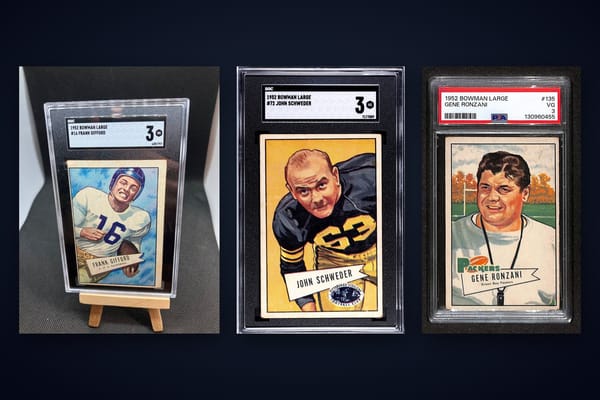
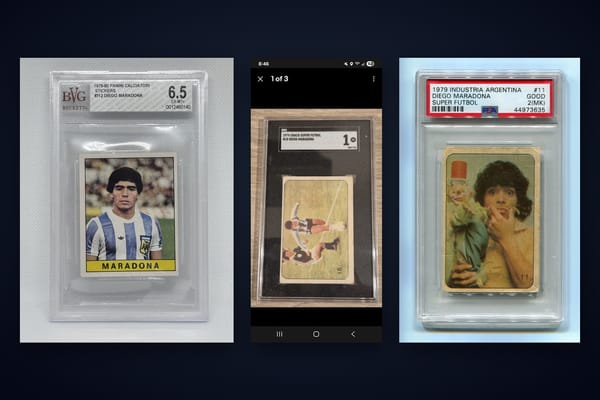
- Vintage Card: Early Topps or MTG cards with borders pushed to one corner (common in 1970s–1980s issues); collectors expect some tolerance, but prices can drop for severe off-centering.
Visual Versus Measured Centering
Always measure centering with a tool or app. Visual impressions can be fooled by refractor shine, busy patterns, or colored borders. For the most accurate results, use the Midpoint digital centering tool and compare to grading standards before submitting your card.
Conclusion
Centering for refractor cards is both an art and a science. Whether you're collecting Pokémon, sports, MTG, One Piece, or vintage cards, centering is a key driver of grading outcomes and long-term value. With the rise of refractor and Chrome card technology, measuring centering accurately—using advanced tools and apps—has never been more important.
If you’re preparing to grade your best pulls, use trusted resources, measure both front and back, and always double-check with a digital tool like Midpoint before sending cards to PSA, BGS, or CGC. For more details on pre-grading and centering techniques, explore our guides to how to pre-grade your card and accurate card centering estimates.
FAQ
Q: How do you measure centering on refractor cards?
A: Measure the border width on each side (top/bottom, left/right) using a ruler or digital centering tool. Calculate the centering ratio (e.g., 55/45). Repeat for both front and back. Digital apps like Midpoint can provide precise, millimeter-level accuracy.
Q: What is considered good centering for PSA 10 on Chrome refractors?
A: For PSA 10, centering must be 55/45 or better on the front and 75/25 or better on the back. These are strict standards, especially for modern refractors.
Q: Does centering matter more on refractors than on base cards?
A: Refractor cards can highlight centering flaws due to their shine and pattern, making off-centering more noticeable and more likely to affect grading and resale value.
Q: How do you check centering on the back of a Chrome card?
A: Measure the borders on the back the same way as the front, using a ruler or digital app. Pokémon and MTG cards especially require close back centering for top grades.
Q: What tools are best for measuring card centering accurately?
A: Digital centering apps like Midpoint, which use AI and millimeter measurement, are among the most accurate. Manual rulers and loupes work but are less precise—especially on shiny refractor surfaces.
Q: Why are some Topps Chrome refractors off-center more often than others?
A: Cards printed at the edge or corner of the original print sheet can have worse centering. Manufacturing tolerances and sheet alignment impact consistency, and refractor shine can make these defects stand out.
Free to start
Try the Midpoint app
Grade any card from a photo, see its raw and PSA 10 value, and track what your collection is worth — free.
Get it on iPhoneGet it on Android