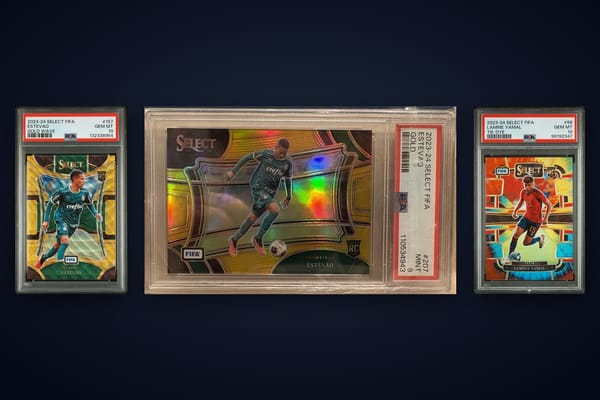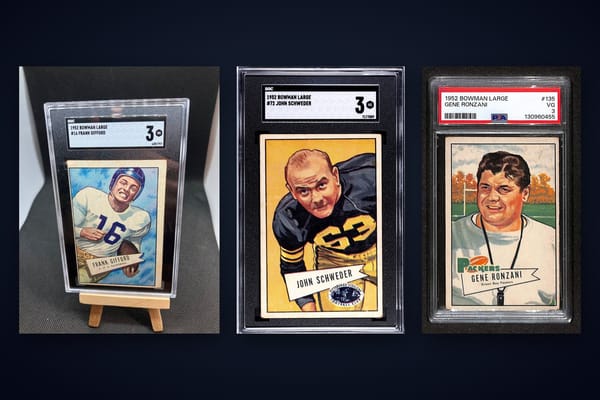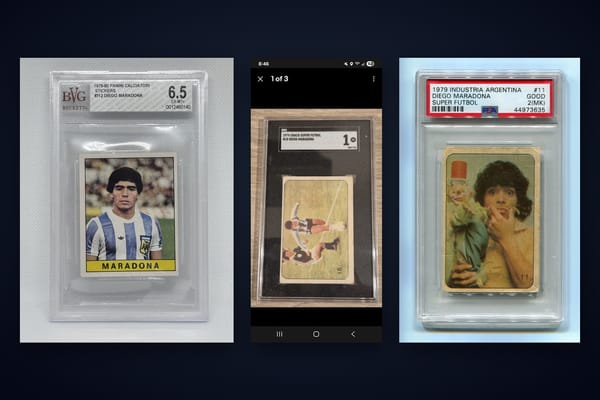
Comparing Card Grades for Sports Cards: PSA vs BGS vs CGC vs SGC
Comprehensive guide to comparing card grades for sports cards—PSA, BGS, CGC, SGC. Learn about grading scales, resale value, and how centering affects grades.


Estimated reading time: 15 min
Key Takeaways
- Understand the differences between PSA, BGS, CGC, and SGC grading scales.
- Learn what separates Gem Mint vs Pristine grades and why centering matters.
- Discover how resale value, market liquidity, and turnaround times vary by grading company.
- Know which grading service is best for vintage, modern, autographs, and thick cards.
- Gain practical tips for choosing the right card grader based on your collecting or selling goals.
Table of Contents
- Section 1: Understanding Card Grading Scales
- Section 2: Comparing PSA, BGS, CGC, and SGC—A Deep Dive
- Section 3: Gem Mint vs Pristine—What Sets the Top Grades Apart?
- Section 4: The Real Impact of Centering on Grades and Value
- Section 5: Resale Value, Liquidity, and Market Preferences
- Section 6: Choosing the Right Grading Company for Your Cards
- Conclusion
- FAQ
Section 1: Understanding Card Grading Scales
Grading Scales Explained
Sports card grading companies use numeric scales to evaluate a card’s overall condition. The most common scales are:
- PSA (Professional Sports Authenticator): 1-10 scale, with 10 as Gem Mint.
- BGS (Beckett Grading Services): 1-10 scale, with subgrades and two elite 10s: Gold Label and Black Label Pristine.
- CGC (Certified Guaranty Company): 1-10 scale, offering Gem Mint and Pristine 10.
- SGC (Sportscard Guaranty Corp): Unique 1-10 scale with half grades, 10 being Gem Mint.
Each company has specific criteria for centering, corners, edges, and surface. Small differences in grading standards can have a big impact on a card’s final grade—and its value. For example, one company's tolerance for a tiny print defect or slightly off-center image may differ from another's, affecting the grade outcome. PSA, for instance, is often described as being strict on surface but more lenient on centering compared to BGS, while SGC may be somewhat more forgiving on minor corner wear in vintage cards, though these reputations can vary over time and with individual graders.
Subgrades and Their Importance
BGS and CGC offer subgrades for centering, corners, edges, and surface, providing more transparency. PSA and SGC do not provide subgrades. Subgrades can help buyers understand what kept a card from achieving a higher overall grade. For example, a BGS 9.5 with subgrades of 10 for corners, edges, and surface, but 9 for centering, tells you precisely why it did not receive a 10 overall. This level of detail is appreciated by many collectors and is especially valuable for high-end cards, where a single subgrade can make a significant price difference.
- BGS: Subgrades shown on label (0.5 increments), giving clear feedback and sometimes leading to "quad 9.5" or "true gem" distinctions.
- CGC: Subgrades available at extra cost, displayed on the label for added transparency, especially useful for newer collectors or those seeking to maximize resale value.
- PSA/SGC: No subgrades, just overall grade, resulting in a simpler, cleaner label but less detailed feedback.
Comparing Top Grades
The highest attainable grade is not identical across companies. For example:
- PSA 10: Gem Mint (highest regular grade)
- BGS 10: Pristine (with Black Label as perfect subgrades; a BGS Black Label 10 requires four 10 subgrades, making it one of the strictest standards in the hobby)
- CGC Pristine 10: Highest, above Gem Mint 10, with extremely tight standards for centering and no visible flaws under 5x magnification
- SGC 10: Gem Mint (no Pristine distinction; their 10 is equivalent to Gem Mint in other scales)
This means cgc pristine 10 vs gem mint 10 or psa 10 vs bgs 10 are not apples-to-apples comparisons—the standards differ for each. For instance, a PSA 10 may allow for very slight centering issues (up to 60/40), while a BGS Black Label 10 requires perfect 50/50 centering. As a result, the population of BGS Black Labels is much lower than PSA 10s for most modern cards. Collectors should be aware of these nuances when comparing "top grades" between companies. For a comprehensive breakdown, see our Card Grade Comparisons: PSA vs BGS vs CGC vs SGC Explained guide.
Section 2: Comparing PSA, BGS, CGC, and SGC—A Deep Dive
Turnaround Times and Submission Costs
Submission speed and cost matter, especially for bulk submissions or high-value cards. Here’s a quick breakdown (as of 2024):
- PSA: $19-$75+ per card, 10-65 business days, with express and super express tiers for faster service at premium cost. Bulk specials may drop the per-card fee for large submissions.
- BGS: $18-$125+ per card, 10-60 business days, with an additional $15-20 per card for subgrades. Super express is available for urgent submissions, but at a high cost.
- CGC: $15-$60+ per card, 10-30 business days; subgrades add $5-10 per card. CGC is often among the fastest for standard submissions, especially for trading card games (TCG) and new sports releases.
- SGC: $18-$40 per card, 5-20 business days, known for consistent turnaround and customer service, especially during high demand periods when others experience delays.
Turnaround times and pricing may fluctuate, so always check each company’s current rates and specials. For example, PSA frequently offers bulk deals at industry events, while SGC may run promotional rates for certain sports or eras. Also, note that declared value affects pricing; high-value cards (e.g., $2,500+) are subject to premium pricing tiers across all grading companies.
Population Reports and Transparency
Population reports reveal how many cards exist at each grade. PSA is the industry leader for population data, followed by BGS and SGC. CGC is newer in sports cards, so reports are still growing. High pop counts can impact value, especially for flagship rookie cards. For example, the 2018 Topps Update Ronald Acuña Jr. PSA 10 has a population over 20,000, which affects its resale value compared to a card with a population under 1,000. Low population Pristine and Black Label grades often command significant premiums due to rarity.
Transparency in population data is important for collectors assessing market supply and demand. PSA offers a robust online pop report tool, while BGS and SGC provide searchable databases. CGC's pop report is expanding rapidly, especially as more sports submissions are processed. Checking these reports before submitting or buying a card can help inform your investment decisions.
Grading Consistency and Reputation
Collectors value consistency. PSA is known for strict but consistent grades, especially for modern cards. BGS is favored for detailed subgrades and consistency in high grades. CGC is gaining trust for transparency and rapid turnaround. SGC is respected for vintage and pre-war cards due to historical expertise.
Consistency is also critical when considering crossing cards between companies. For example, a PSA 10 may not always cross to a BGS 9.5 or 10 due to differences in grading criteria. Experienced collectors often "pre-grade" their cards using tools and reference standards to understand how a card might fare at different companies. Additionally, each company’s reputation can influence buyer confidence and price realized at auction.
Visual Appeal: Slab Design and Protection
Slab thickness, label design, and tamper-proof technology differ:
- PSA: Sleek, thin slabs; iconic red label; strong market recognition. PSA’s slabs are lightweight and easy to store in bulk, which appeals to both collectors and dealers.
- BGS: Thicker, crystal-clear slabs; detailed labels with subgrades. BGS slabs are heavier and have a "premium" feel, making them popular for displaying high-end cards. Their UV protection is a plus for long-term preservation.
- CGC: Modern, clear slab; blue label for sports; optional subgrades. CGC slabs are known for their clarity and stackability, and the blue label differentiates sports cards from their TCG offerings (which use a green label).
- SGC: Black insert, green label; sharp contrast for vintage aesthetics. The black insert makes the card "pop," especially for older cards with white borders. SGC’s slabs are also tamper-evident and offer solid protection against wear and humidity.
Some collectors choose a grading company partly based on slab aesthetics, preferring a certain look for their display cases or Instagram photos. Others prioritize protection and label clarity for insurance or resale purposes.
Section 3: Gem Mint vs Pristine—What Sets the Top Grades Apart?
Gem Mint vs Pristine: Defining the Difference
The distinction between gem mint vs pristine is subtle yet significant. "Gem Mint" (PSA 10, BGS 9.5, CGC 10) indicates a nearly flawless card—tiny flaws may be present under close inspection. "Pristine" (BGS 10, CGC Pristine 10) is an even higher standard, requiring perfection in all areas.
- Gem Mint: Minor manufacturing or handling imperfections allowed (e.g., 55/45 centering or a tiny print dot). For PSA 10, the card must have sharp focus, no staining, and only slight printing imperfection is tolerated if it doesn't detract from the overall appeal.
- Pristine: No visible flaws, sharper centering standard (e.g., BGS Black Label requires four perfect subgrades: centering, corners, edges, and surface must all be 10s with no visible defects under magnification). These cards are virtually perfect under 5x magnification and are exceedingly rare.
For example, a card with barely perceptible edge roughness might earn a PSA 10 but would not qualify for BGS or CGC Pristine 10. This makes Pristine cards highly sought after by condition-sensitive collectors and investors.
PSA 10 vs BGS 10 vs CGC Pristine 10
Here’s how the top grades stack up for collectors:
- PSA 10: Most liquid, highest demand, but not as strict as BGS/CGC Pristine. PSA 10s often outnumber BGS 10s by a significant margin on popular modern rookie cards.
- BGS 10 Gold Label: Pristine, very tough to achieve; Black Label is even harder (all four subgrades must be 10). For example, out of thousands of 2018 Topps Chrome Shohei Ohtani rookies graded, only a small number achieve Black Label status.
- CGC Pristine 10: Equivalent to BGS Pristine; even fewer cards qualify. CGC Pristine 10s, especially with four subgrades of 10, are extremely low population.
Collectors often debate psa 10 vs bgs 10—one offers marketability, the other a higher technical standard. BGS Black Label vs Gold Label is another level, with Black Label being the rarest. For high-end modern cards, a BGS Black Label or CGC Pristine 10 can command a significant premium over a PSA 10, depending on demand and scarcity.
Which Grade Is Hardest to Get?
Based on published pop reports and grading standards, the order of difficulty (hardest to easiest) for a true Pristine/Black Label grade is generally considered to be:
- BGS Black Label 10 (rarest, strictest on centering and all subgrades; for some ultra-modern cards, the population may be under 1% of all submissions)
- CGC Pristine 10 (nearly as rare, especially with subgrades; even fewer than BGS 10 in some releases due to strict surface standards)
- BGS Gold Label 10 (slightly more attainable than Black Label, but still a fraction of submissions reach this level)
- PSA 10 (hard, but pop counts are higher for modern cards; some sets see PSA 10 rates over 30%, while Black Label rates are much lower)
For vintage cards, even PSA 10s are extremely rare due to decades of handling and printing imperfections. For modern ultra-high-end, Black Label and Pristine 10s are considered the pinnacle of perfection and often become centerpiece cards in elite collections. For more on the difficulty of achieving top grades, see Which Grade Is Hardest to Get? Comparing PSA, BGS, and CGC Card Grades.
Section 4: The Real Impact of Centering on Grades and Value
Centering as a Deciding Factor
Centering is often the most critical subgrade in determining whether a card achieves a top grade. For example, PSA 10 requires 60/40 or better centering on the front; BGS 10 requires 50/50 to 55/45. A card with perfect corners but off-center will not receive a Gem Mint or Pristine grade.
- Modern cards: Centering flaws are more obvious and can significantly affect value. With full-bleed designs and colored borders, even slight shifts are noticeable and penalized heavily by graders and buyers alike.
- Vintage cards: Some leniency; focus may be on surface and corners instead. For example, a 1952 Topps Mickey Mantle with 70/30 centering may still obtain a PSA 7 if the rest of the card is immaculate. However, the best-centered vintage examples command large premiums.
Graders use precise measurement tools, sometimes digital, to assess centering. A card otherwise deserving of a PSA 10 can be downgraded to a 9 simply due to centering, impacting its value by hundreds or thousands of dollars for high-profile rookies. For a detailed look at centering standards across grading companies, see Card Grading Centering Standards: PSA, BGS, CGC, SGC & TAG Compared.
How to Measure Centering Accurately
Accurate centering measurement is essential before submitting a card. The Midpoint app allows collectors to measure centering down to the millimeter, predicting whether cards are likely to achieve PSA, BGS, or CGC 10s. For example, the app can analyze a scan or photo, calculate the border ratios, and deliver a centering score for both front and back. This level of accuracy is crucial for cards with tight centering standards, such as the 1986 Fleer Michael Jordan rookie or modern Prizm parallels.
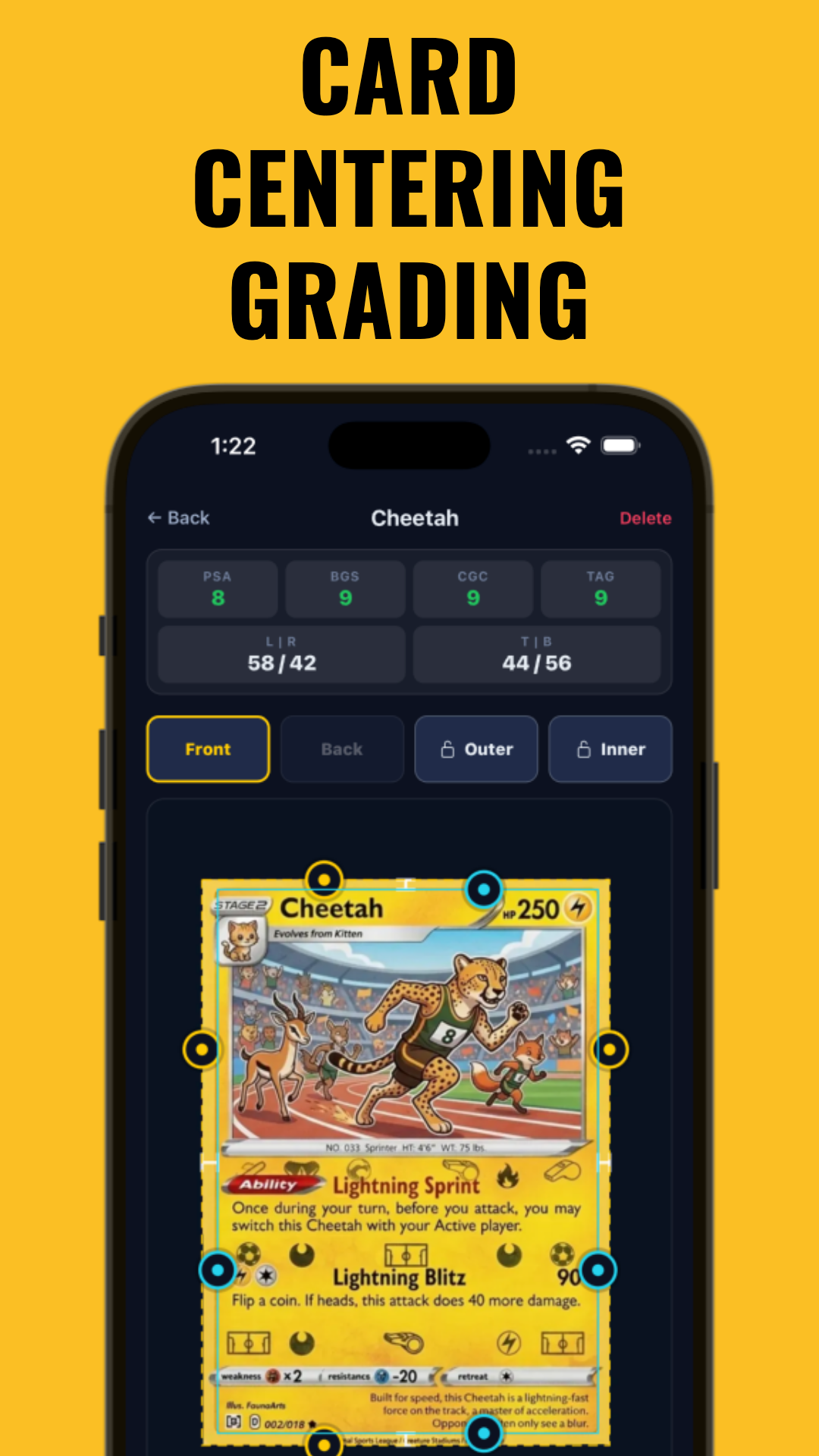
For a detailed walkthrough, see How to Measure Card Centering: Step-by-Step Precision Guide. Many successful submitters use Midpoint or similar tools to "pre-grade" their cards and weed out those unlikely to achieve top grades, saving time and money on grading fees.
Centering and Card Value
Well-centered cards consistently sell for a premium. Even a PSA 9 with perfect centering often outsells a PSA 9 with poor centering. This is especially true for iconic rookie cards from the 1980s and 1990s, where print runs had frequent centering issues. For example, a 1989 Upper Deck Ken Griffey Jr. PSA 10 with near-perfect centering may command a notable premium over one with centering at the minimum standard. Collectors and investors specifically seek "OC" (off-center) qualifiers in pop reports to understand scarcity and price accordingly.
- High-end buyers inspect centering before purchase, sometimes rejecting PSA 10s or BGS 9.5s they consider "weak" on centering.
- Pop reports for centered ("OC" qualifiers) are much lower, making well-centered vintage cards especially prized. For some pre-1980s sets, the population of centered PSA 8s or 9s may be a small percentage of total submissions.
For a deeper dive, see How Centering Impacts Card Value: A Detailed Guide. Ultimately, centering is one of the easiest factors for buyers to judge from photos, so it plays an outsized role in realized prices—even among cards with identical numeric grades.
Section 5: Resale Value, Liquidity, and Market Preferences
Which Grading Company Adds the Most Resale Value?
Resale values depend on collector trust, liquidity, and perceived grading strictness. PSA is widely regarded as leading in resale value, especially for modern flagship rookies:
- PSA 10: Commands high prices and fast sales for most sports cards. For example, a PSA 10 Luka Doncic Prizm rookie typically sells at a premium over its BGS 9.5 counterpart and often more quickly at auction.
- BGS 9.5/10: Often close to PSA for premium cards, sometimes more for Black Label. BGS slabs are preferred for patch/autograph cards in basketball and football due to thick slabs and subgrades.
- CGC: Gaining traction, especially with Pristine 10s in new releases. CGC Pristine 10s can sometimes outpace PSA 10s for new TCG or emerging sports products due to their strictness and low population.
- SGC: Preferred for vintage; modern resale value is improving. SGC is becoming more accepted for modern cards as collectors diversify their collections, but still trails PSA in most modern categories.
In certain high-end auctions, BGS Black Labels and CGC Pristine 10s have achieved strong prices for ultra-modern cards due to their rarity. However, for the majority of mainstream cards, PSA 10 is often considered the standard for maximizing resale value and liquidity.
Market Liquidity by Grading Company
Liquidity refers to how quickly a card can be sold at or near market value. PSA slabs tend to move fastest—eBay and auction houses are dominated by PSA-graded cards, which often receive more views and bids. For example, during peak sports seasons, PSA 10 rookies of popular players can sell within hours of listing at market price. BGS slabs are common for high-end patch/autograph cards, especially in basketball and football, and are favored in high-end auction houses.
SGC is dominant for pre-1980s cards, with many vintage set registries requiring SGC-graded examples. CGC is fastest-growing for TCG and new sports releases, with their slabs being accepted at major shows and online marketplaces. Some platforms, like PWCC and Goldin, now allow direct listing of all four major grading companies, improving liquidity for non-PSA slabs.
When Grading Adds Value vs Selling Raw
Grading adds value when:
- The card is a rookie, star, or rare parallel. Graded rookies of top players (e.g., Mike Trout, Patrick Mahomes) or limited print-run parallels (e.g., Gold Prizms) command premium pricing.
- Condition is likely Gem Mint or better. Raw cards in true Gem Mint condition can see a substantial increase in value once graded, especially if submitted to the right company for the card type.
- Raw value is near or above the grading fee. If the card is worth $50+ raw and grading costs $20, a Gem Mint outcome is likely to justify the expense.
For heavily played, low-value, or off-center cards, selling raw may be wiser. For example, a modern base card with surface scratches or print lines likely won't grade above PSA 8 and is best sold raw. Tools like Midpoint can help you estimate your card’s likely grade before you spend on grading—see Estimate Your Card: A Practical Guide Before Grading. Pre-grading with apps or professional reviewers can prevent unnecessary grading fees and disappointment.
Section 6: Choosing the Right Grading Company for Your Cards
Best Grading Company by Card Type
- Vintage (Pre-1980): SGC is often preferred for classic look and historical expertise; PSA is also strong for iconic rookies. For example, a 1955 Topps Roberto Clemente rookie in an SGC slab is highly respected in vintage circles, but a PSA slab may be preferred for set registry collectors.
- Modern Rookies: PSA for resale, BGS for thick patch/autos, CGC gaining ground for new sports and TCG. For example, a National Treasures RPA (Rookie Patch Auto) is often graded by BGS due to their thick slabs and detailed subgrades, while flagship rookies like Topps Chrome or Prizm are typically sent to PSA.
- Autographs and Patch Cards: BGS is favored for subgrades and thicker slabs. BGS will grade both the card and the autograph separately, providing dual grades that are highly sought after in the hobby.
- Thick or Oversized Cards: BGS handles these well, followed by SGC. BGS offers custom holders for booklet cards and extra-thick memorabilia issues, ensuring protection and display appeal.
Factors to Consider
- Goal: Are you selling, keeping, or investing? Sellers typically choose PSA for liquidity, while long-term investors may opt for BGS or CGC Pristine for maximum upside if the card is perfect.
- Turnaround Time: Does speed matter for your situation? If you need cards back for a show or quick sale, SGC and CGC often offer the fastest standard turnaround.
- Subgrades: Do you want detailed feedback (BGS/CGC) or just the grade (PSA/SGC)? Subgrades help justify pricing and can be persuasive in high-end auctions.
- Slab Aesthetics: Which slab/label fits your collection or market? Vintage collectors may prefer SGC’s black insert, while modern collectors might like PSA’s clean red label or BGS’s premium look.
For step-by-step help pre-grading your cards, see How to Pre-Grade Your Card: A Step-by-Step Guide. If you’re new to grading, consider starting with lower-value cards to learn the process before submitting high-end items.
Using Tools to Make an Informed Choice
Apps like Midpoint provide instant centering and grade estimates for PSA, BGS, CGC, and TAG. For example, by uploading a scan, you can see centering scores, surface recommendations, and even receive suggestions about which grading company is likely to yield the best result based on your card's condition and market trends. Knowing your card’s likely outcome before submission can save money and disappointment. Advanced users leverage these tools in combination with population reports and recent sales data to optimize their grading strategy, and some even build spreadsheets of centering and surface grades as part of their pre-submission process. This data-driven approach is especially helpful for large submissions or investors aiming for maximum ROI.
Conclusion
Comparing card grades for sports cards involves far more than just a number on a slab. Each grading company—PSA, BGS, CGC, SGC—has unique standards, strengths, and communities. Understanding the differences between Gem Mint and Pristine, the role of centering, and the resale value landscape gives collectors a powerful edge. By using tools like Midpoint to measure centering and estimate likely outcomes, you can maximize your grading investment and make informed decisions for your sports card collection. For more insights, explore our guides on accurate card grading estimates and how AI transforms card centering analysis.
FAQ
Q: Which card grading company adds the most resale value?
A: PSA is widely recognized for adding the most resale value, especially for modern and iconic rookie cards. Their slabs are the most liquid on the secondary market, followed by BGS (particularly for high-end or patch/autograph cards). SGC leads for vintage, and CGC is rising rapidly for new sports cards and TCG.
Q: Is PSA better than BGS or SGC for sports cards?
A: "Better" depends on your goals. PSA is preferred for resale value and liquidity, especially for modern cards. BGS is favored for detailed subgrades and high-end patch/autos. SGC is top choice for vintage cards. Each has strengths in different niches.
Q: What is the cheapest sports card grading company?
A: As of 2024, CGC typically offers the lowest per-card grading fees, starting around $15. SGC and BGS are slightly higher, while PSA is usually the most expensive. Always check for bulk specials or promotions.
Q: Which grading company is best for vintage cards?
A: SGC is the most respected for pre-1980s vintage cards due to its long history and distinctive black slabs. PSA is also widely accepted for vintage, especially for flagship rookie cards.
Q: Do subgrades matter when grading sports cards?
A: Subgrades provide detailed feedback on centering, corners, edges, and surface—helpful for understanding why a card received its overall grade. They matter most to buyers of high-end cards or those comparing BGS or CGC slabs.
Q: How long do PSA, BGS, and SGC grading take?
A: Typical turnaround times as of 2024: PSA (10-65 days), BGS (10-60 days), SGC (5-20 days). Actual times vary based on service level and demand.
Free to start
Try the Midpoint app
Grade any card from a photo, see its raw and PSA 10 value, and track what your collection is worth — free.
Get it on iPhoneGet it on Android