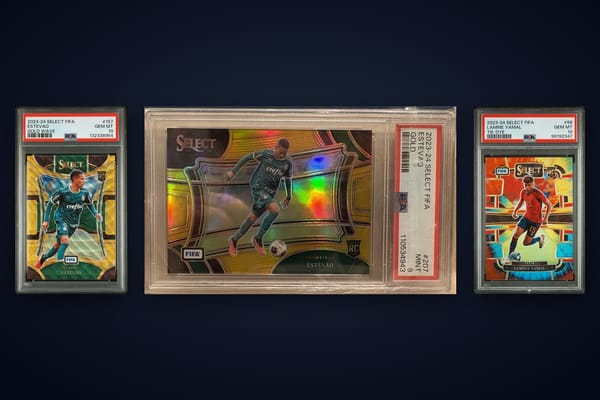
Estimate Your Card: A Practical Guide Before Grading
Estimate your card's centering and grade before submitting for PSA, BGS, CGC, or TAG. Save money with precise pre-grading using Midpoint's card centering tool.

Estimated reading time: 7 min
Key Takeaways
- Estimate your card's grade before paying for professional grading.
- Accurate centering measurement is crucial for PSA, BGS, CGC, and TAG grades.
- Tools like Midpoint streamline the pre-grading process and save money.
- Understanding centering helps prevent costly grading surprises.
Table of Contents
- Section 1: Why Estimate Your Card Before Grading?
- Section 2: The Impact of Centering on Card Grades
- Section 3: Tools and Methods to Estimate Your Card
- Section 4: Step-by-Step Guide to Estimating Your Card
- Section 5: Maximizing Your Grading Investment
- Conclusion
- FAQ
Section 1: Why Estimate Your Card Before Grading?
Save Money and Avoid Surprises
When you estimate your card’s potential grade before sending it to PSA, BGS, CGC, or TAG, you protect yourself from spending $30+ on grading fees for cards that may not meet your standards. Pre-grading helps you:
- Eliminate cards unlikely to achieve your desired grade.
- Prioritize submissions based on potential value.
- Set realistic expectations for auction or resale.
Quick Assessment is Key
With accurate tools, instant feedback on centering and grade estimates is at your fingertips. This efficiency is crucial for both casual collectors and serious investors.
Section 2: The Impact of Centering on Card Grades
What is Card Centering?
Centering refers to how well the printed image is aligned within the card's borders. Major grading companies weigh centering heavily because off-center cards are less visually appealing and considered lower quality.
- PSA: Deductions for off-centering are strict, especially for high grades.
- BGS: Centering is a separate subgrade, directly impacting the final grade.
- CGC and TAG: Both use precise centering metrics as part of their grading criteria.
Why Centering Matters
Poor centering can drag a card’s grade down even if corners, edges, and surface are flawless. If you want to maximize your card’s value, you must estimate your card's centering with precision. For a deeper look at how centering affects card value, see How Centering Impacts Card Value: A Detailed Guide.
Section 3: Tools and Methods to Estimate Your Card
Manual Methods
Historically, collectors have used rulers, calipers, and even their eyes to judge centering. While these methods can work, they’re time-consuming and prone to error.
- Ruler method: Measuring border widths by hand.
- Visual check: Estimating alignment based on experience.
Digital Tools: Fast and Accurate
Modern card collectors benefit from apps like Midpoint, which measures centering down to the millimeter in seconds:
- No guesswork: Get instant, objective centering analysis.
- Multi-grader estimates: Instantly see likely PSA, BGS, CGC, and TAG outcomes based on measurements.
- Data-driven decisions: Optimize which cards to submit and which to hold back.
Section 4: Step-by-Step Guide to Estimating Your Card
1. Prepare Your Card
Ensure your card is clean and well-lit. Place it on a flat surface to avoid shadows or distortions.
2. Measure Centering
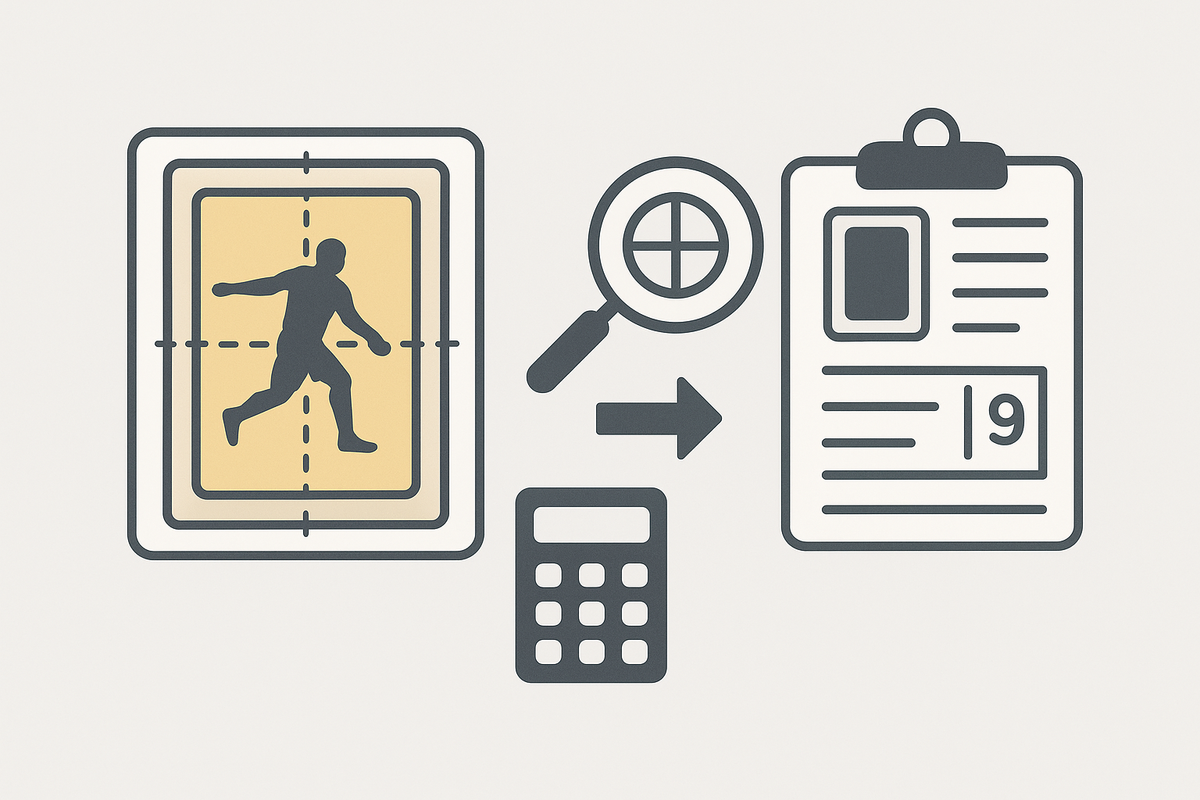
Use a tool like Midpoint for precise measurement. It analyzes your card’s borders and computes centering percentages for all four sides.
- Upload or scan your card image into the app.
- Adjust borders as prompted to get accurate readings.
- Review centering results for both vertical and horizontal axes.
3. Interpret Grade Estimates
Midpoint translates your centering data into predicted grades for PSA, BGS, CGC, and TAG. This helps you decide if your card is likely to achieve a desired grade or if it’s better to wait or trade.
4. Make Submission Decisions
If centering is strong and other aspects (corners, edges, surface) are solid, submit your card. For a complete pre-grading workflow, see How to Pre-Grade Your Card: A Step-by-Step Guide.
Section 5: Maximizing Your Grading Investment
Reduce Risk and Increase ROI
By estimating your card’s grade beforehand, you:
- Avoid unnecessary grading fees on low-potential cards.
- Identify top candidates for professional grading and resale.
- Negotiate or trade more confidently with data-backed estimates.
Streamline Your Collection
Using a tool like Midpoint not only saves money, but also helps you better curate your collection. For collectors looking to refine their technique, our Step-by-Step Precision Guide offers additional methods for card centering measurement.
Conclusion
Estimating your card’s grade with precision is essential for modern collectors. Accurate centering analysis, especially using digital tools like Midpoint, ensures you only invest in grading when it truly adds value. By making informed decisions before submission, you save money, avoid disappointment, and maximize your card investment potential.
FAQ
Q: Why should I estimate my card’s grade before submitting?
A:
Estimating your card’s grade helps you avoid wasting money on grading fees for cards unlikely to achieve your target grade, and helps you prioritize high-value submissions.
Q: How accurate is digital centering measurement?
A:
Digital tools like Midpoint offer millimeter-level precision, reducing human error and providing reliable centering data for PSA, BGS, CGC, and TAG grading standards.
Q: What if my card has great centering but other flaws?
A:
While centering is important, corners, edges, and surface also affect grading. Use centering estimates as part of a full pre-grading assessment.
Q: Can I trust app-based grade estimates?
A:
App estimates aren’t guarantees, but they are based on published grading standards and real measurement data, making them a valuable tool for decision-making.
Free to start
Try the Midpoint app
Grade any card from a photo, see its raw and PSA 10 value, and track what your collection is worth — free.
Get it on iPhoneGet it on Android