Football Card Prices Dropping November 2026: 9 Smart Moves
Football card prices dropping November 2026? See how to read the 30-day losers, why prices cool off, and how to buy the dip or grade a well-centered copy.

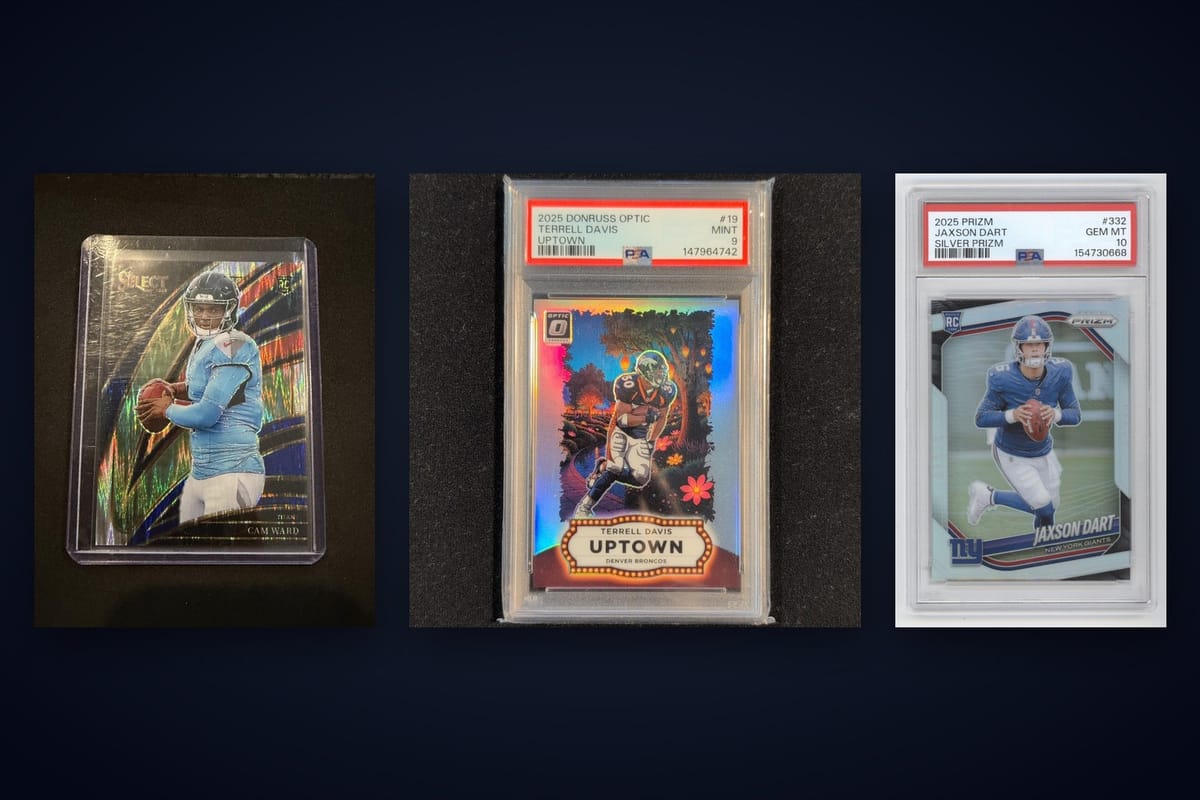
Estimated reading time: 9 min
Key Takeaways
- Football card prices dropping in November 2026 is not an evenly spread story, and the losses vary a lot by card. Check the 30-day losers table in this post (data as of 2026-11-15) before you decide anything.
- Compare short-term and 30-day moves, and compare raw prices with PSA 10 prices. A dip in one is not always a dip in the other.
- Supply, new releases, hype fading and player news are common reasons football cards lose value.
- A falling price is only an opportunity if the card is also well centered. Measure centering before you pay to grade.
If you have noticed football card prices dropping in November 2026, you may be seeing a real trend. The football card market in November 2026 has some cards sliding over the last 30 days, in both raw and PSA 10 form. The data table in this article lists which ones moved the most, as of 2026-11-15.
A table of losers tells you what happened, not what to do. The nine steps below explain why prices cool off, how to separate real value loss from noise, and how to use falling football card prices without panic selling or catching a falling knife.
This is a market check, not financial advice. Prices move daily, so treat every figure as a snapshot.
30-day price movers — live data from Midpoint's card database, as of 2026-11-15. Prices move; Midpoint refreshes these daily.
| Card | Raw | PSA 10 | 30-day | |
|---|---|---|---|---|
 |
Cam Ward [Black Prizm] #226 2025 Panini Select |
$15,500 | $68,285 | -22.5% |
 |
Terrell Davis #19 2025 Panini Donruss Optic Uptown |
$126.02 | $932.00 | -14.3% |
 |
Jaxson Dart [Silver] #332 2025 Panini Prizm |
$57.50 | $574.59 | -8% |
 |
Tom Brady #236 2000 Bowman |
$1,550 | $15,572 | -7% |
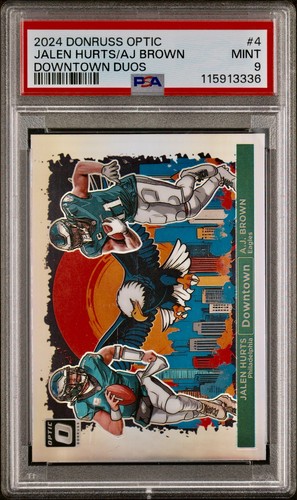 |
A.J. Brown / Jalen Hurts #4 2024 Panini Donruss Optic Downtown Duos |
$420.00 | $588.16 | -4.4% |
 |
Drake Maye #17 2025 Panini Phoenix Resurgent Snow Globe |
$45.25 | $211.16 | -3.1% |
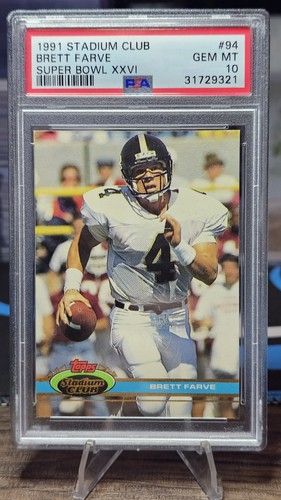 |
Brett Favre [Super Bowl XXVI] #94 1991 Stadium Club |
$13.88 | $5,211 | 0% |
 |
Tom Brady [Black Image Variation] #401 2025 Topps Chrome |
$9,100 | $40,975 | 0% |
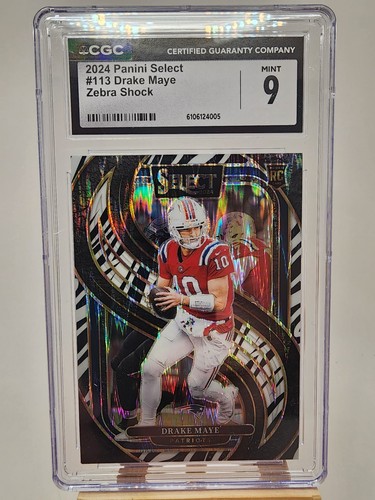 |
Drake Maye [Zebra Prizm Shock] #113 2024 Panini Select |
$444.10 | $1,501 | 0% |
 |
Puka Nacua [Choice Nebula] #102 2025 Panini Mosaic |
$1,263 | — | 0% |
 |
Deion Sanders #263 1993 Fleer |
$15.20 | $579.38 | 0% |
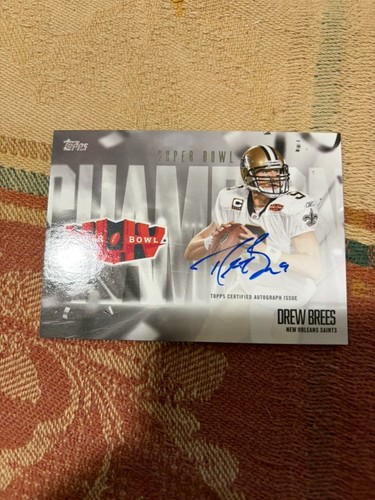 |
Drew Brees #SBCS-DB 2026 Topps Flagship Super Bowl Champion Signature |
$225.38 | $1,094 | 0% |
Look up any card's current raw and graded value in Midpoint — and get an estimated grade before you pay to submit.
1. Start With the 30-Day Losers (Raw and PSA 10)
Open the data table in this post and sort it by percentage change. Every entry shows the card, the version (raw or PSA 10), the prior price and the current price, as of 2026-11-15. Do not skim for names you recognize. Read the numbers.
Three things to look at for each entry:
- Percentage drop vs. dollar drop. A cheap card can drop a large percentage and barely matter. An expensive card with a smaller percentage drop can cost you far more.
- Raw vs. PSA 10 for the same card. If both fell, the cooling may be demand-driven. If only the PSA 10 fell, look at supply and population.
- How far the card sits from its prior price. A big gap can mean a real reset or a thin market where a few sales moved the average.
Use the table as a watchlist, not a shopping list.
2. Check Whether the Decline Is Broad or Concentrated
Football cards losing value is a different problem when it hits everything than when it hits one corner of the hobby. Before reacting, sort the losers by four buckets:
- Price tier. Are the biggest drops in high-value cards while cheaper cards hold steady?
- Position. Are quarterbacks overrepresented, or do running backs and receivers show up too?
- Set. Do the drops cluster in one product line, such as a recent flagship release?
- Grade. Are PSA 10s falling faster than raw copies?
If the losers cluster in one bucket, you may have a segment correction. If they are scattered everywhere, you may have a general cooling. A segment correction can be a buying opening. A general cooling usually calls for patience.
3. Look at Quarterback Cards Individually
Quarterbacks often carry the most hype and the biggest premiums, so their prices can swing hard. That is why names like Caleb Williams, Justin Herbert, Drake Maye and CJ Stroud draw so much attention in any market check.
Do not assume all quarterback cards move together. Look each one up and ask:
- Is the drop in the raw price, the PSA 10 price, or both?
- Is this a rookie card, a parallel or a base card? Rookie parallels often swing more than base cards.
- Did the player's price fall while others at the position rose?
If some quarterbacks are rising while others fall, the market is being selective, not uniformly bearish. Selective markets reward collectors who do their homework.
4. Match Price Moves to Player Performance and Team Results
Football card prices often respond quickly to on-field news. The season is short, so each game carries weight.
Common triggers behind a cooling price:
- Injuries. A season-ending injury can reset demand overnight, though a recovery story can later pull it back.
- Team results and playoff odds. Falling playoff odds often take hype with them.
- Midseason narratives. A rookie who started hot can see prices rise on expectation, then fall when numbers normalize.
- Contract and trade news. A change of team or role can shift long-term demand.
Ask whether the news changed the player's long-term outlook or only the weekly mood. Short-term mood dips can recover. A changed career outlook usually does not.
5. Account for New Product Releases and Supply
Supply is a quiet reason behind many falling football card prices. When a flagship product like Prizm, Donruss Optic or Topps Chrome Football hits the market, new copies of current players enter circulation at once.
That can have two effects:
- Raw prices soften as more copies compete for the same buyers.
- Early PSA 10 prices can fall as the first graded copies arrive and the population count climbs.
This is why a card's price often looks highest right after a rookie hype cycle and lower once break boxes have been opened and the cards are widely available. Check whether the losers in the table share a set or release window. If they do, supply is a likely driver, not a verdict on the player.
6. Compare Raw Prices to PSA 10 Premiums
The gap between a raw card and its PSA 10 is the real economics of grading. When prices fall, that gap often changes shape.
When you look up a card, compare:
- The raw price today
- The PSA 10 price today
- The gap between them, and whether it has narrowed or widened
A narrowing gap is a warning. If the PSA 10 premium shrinks while grading fees stay the same, your margin shrinks too. A widening gap, where the raw price fell more than the PSA 10, can make a cheap raw copy more attractive to grade.
Population growth matters here. The more PSA 10s exist, the less rare each one feels.
7. Grade a Cheap, Well-Centered Copy (Not a Random One)
This is a good use of a dip. A lower raw price reduces your entry cost, but only the right copy turns that into a gain.
Centering is a common reason a copy misses a gem grade, and you can check it before spending anything. Our guide on how centering impacts card value explains why, and the step-by-step pre-grading guide walks through the full process.
A practical checklist for any cheap copy:
- Measure centering front and back. Use the free centering calculator for a quick check.
- Inspect corners and edges under bright light.
- Scan the surface for print lines, scratches and dimples.
- Do the math: raw cost + grading fee + shipping vs. the PSA 10 price and the realistic odds of landing it.
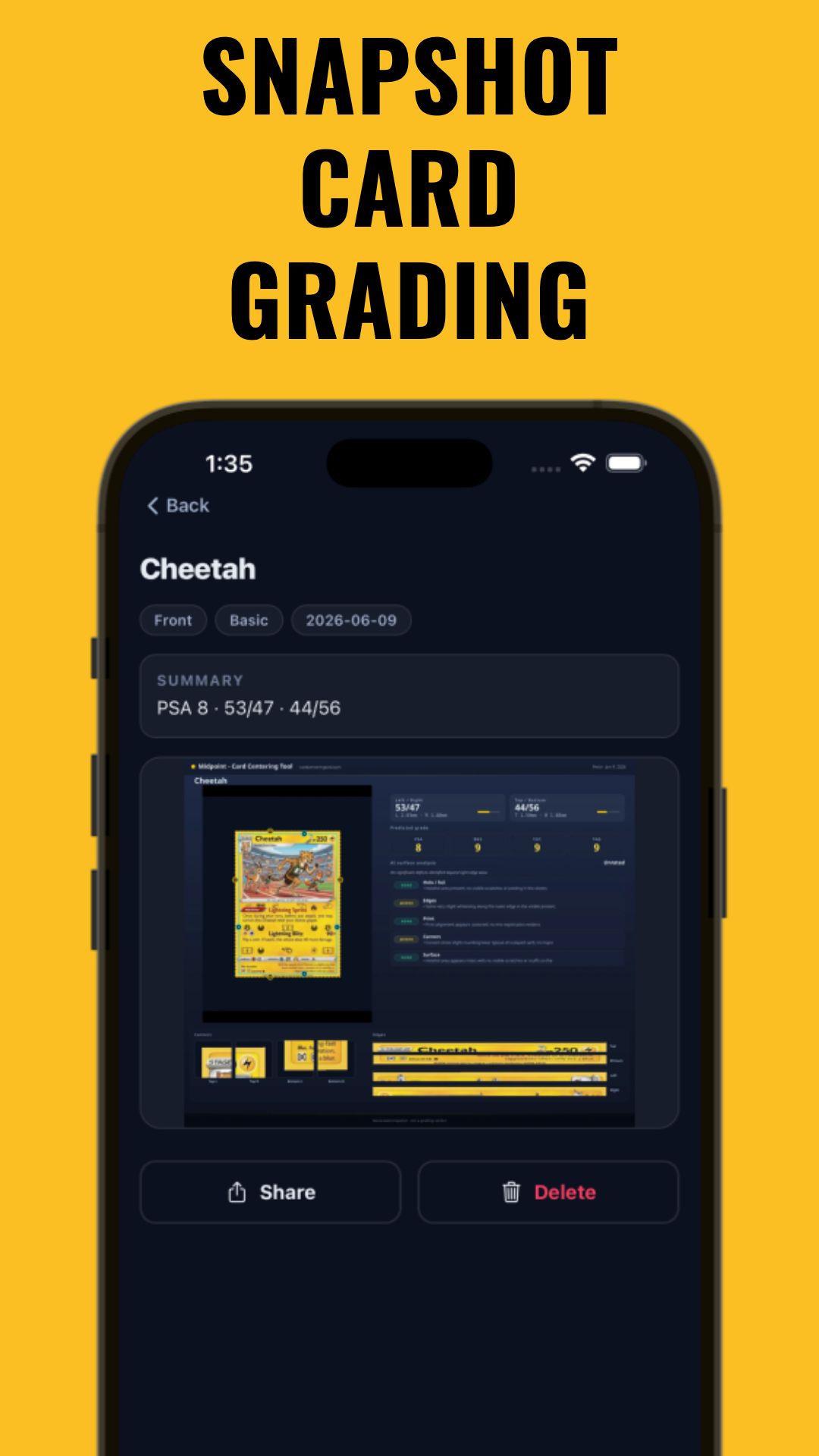
Midpoint gives you an estimated PSA, BGS, CGC and TAG grade from centering, corners, edges and surface, so you can skip the cards that will not make the cut before paying grading and shipping fees.
8. Know Which Football Cards to Buy the Dip On
Football cards to buy the dip are not simply the biggest losers. A big drop on a card with no demand is a value trap. Use a filter:
- The reason for the drop is temporary. Supply from a new release or a quiet game week is temporary. A career-altering injury may not be.
- Both raw and PSA 10 prices show the dip. That suggests broad demand softening, which can reverse.
- Sales are frequent. A card that sells often gives you reliable pricing and an easy exit.
- You would still want it if it dropped again. Never buy more than you can hold through another dip.
Spread purchases over several weeks instead of buying everything at once. If prices keep sliding, you average in at lower levels. If they bounce, you still own some.
9. Decide to Sell, Hold or Buy (and Mind the Fees)
The right move depends on why you own the card, not just on the chart.
- Sell if the card is one of the concentrated losers, the cause looks lasting, and you need the cash or want to reduce risk.
- Hold if you collect the player or team and the drop reflects supply or short-term mood.
- Buy if the card passes the dip filter above and you have a long enough horizon.
Fees and timing matter more in a soft market:
- Selling fees and shipping take a bigger share of a smaller sale price.
- Thin markets mean a low-bid auction can set a new low for the card.
- Seasonality matters. Football interest tends to follow the season, so ask whether demand is likely to improve around the playoffs or fade after the season ends.
Track what you own so you know your real exposure. Midpoint's portfolio tracking shows your collection's value over time, and card lookup shows raw vs graded values across over 1.5 million cards. If you need a place to start, Midpoint is free on iOS and Android.
Conclusion
Football card prices dropping in November 2026 is a signal to look closer, not to react blindly. Read the 30-day losers as of 2026-11-15, work out whether the drop is broad or concentrated, and match each move to supply, player news or hype fading.
Then decide with a plan: sell the cards with lasting problems, hold the ones you love, and buy the dip only where the reason is temporary and the copy is strong. Check centering first, and understand the grading scale differences by company before you submit. Do that, and a falling market becomes a more useful one for careful collectors.
FAQ
Q: Are football card prices dropping in November 2026?
A: The data table in this post shows the football cards that fell the most over the last 30 days, in both raw and PSA 10 form, as of 2026-11-15. The drops are not uniform, so check whether your specific card is affected.
Q: Why are football card prices falling right now?
A: Common causes are extra supply from new releases, rising PSA 10 populations, hype fading after a hot start, and player news such as injuries or team results. Often several of these combine.
Q: Which football cards are losing the most value in November 2026?
A: See the table in this article for the biggest 30-day losers, with prior price, current price and percentage change as of 2026-11-15. Sort by both percentage and dollar drop to see the full picture.
Q: Are quarterback cards going down in value?
A: Some may be, but quarterbacks do not all move together. Look up each player's raw and PSA 10 prices individually, since some may fall while others hold or rise.
Q: Should I sell my football cards now or wait?
A: It depends on why the card is falling and why you own it. Sell if the cause looks lasting or you need to cut risk. Hold if the drop looks temporary and you collect the player. Factor in selling fees, since they take a bigger share of a lower price.
Q: Is November a good time to buy football cards?
A: It can be, if prices have cooled for temporary reasons like supply or short-term mood. Buy selectively, spread purchases out, and check centering and condition first if you plan to grade.
Free to start
Try the Midpoint app
Grade any card from a photo, see its raw and PSA 10 value, and track what your collection is worth — free.
Get it on iPhoneGet it on Android