
Grading Consistency Across Companies: Comparing PSA, BGS, and CGC Standards
Explore grading consistency across companies—PSA, BGS, CGC. Compare Gem Mint vs Pristine, centering standards, and what separates top card grades.


Estimated reading time: 15 min
Key Takeaways
- Grading consistency across companies is complex, with distinct standards for top grades like Gem Mint and Pristine.
- Centering is a critical factor and often the deciding subgrade for higher value cards.
- PSA, BGS, and CGC each use different rating scales, with varying definitions for their highest grades.
- Managerial training, standardized rubrics, and calibration meetings are important for reducing subjectivity in card grading—just as in any evaluative process.
- Tools like Midpoint can help collectors assess centering and grading likelihood before submitting cards to grading companies.
Table of Contents
- Section 1: Understanding Grading Consistency Across Companies
- Section 2: Standardized Rating Criteria and Rubrics
- Section 3: Rating Scales—Gem Mint vs Pristine vs Black Label
- Section 4: The Role of Centering in Grading Consistency
- Section 5: Tools, Technologies, and Rater Calibration
- Section 6: Cross-Company Comparisons, Data Checks, and Consistency Metrics
- Conclusion
- FAQ
Section 1: Understanding Grading Consistency Across Companies
What is Grading Consistency?
Grading consistency across companies refers to the degree to which grading standards and outcomes align among leading card grading companies—most notably PSA, BGS, and CGC. Collectors rely on these companies not only for authentication but also for standardized assessment of a card’s condition, value, and investment potential.
- Consistency means fewer surprises and more predictable outcomes when submitting the same card to different graders.
- Inconsistency can lead to wide swings in value, uncertainty in the market, and frustration for collectors and dealers alike.
Why Does Consistency Matter?
The value of a graded card is often tied directly to its assigned grade. For example, the difference between a PSA 10 and PSA 9 can mean significant differences in value. If graders apply standards unevenly, it undermines market trust and can distort insurance valuations (see how grade impacts insurance value for more).
Major Grading Players
- PSA (Professional Sports Authenticator): Known for strict surface and centering standards, especially at the top grades.
- BGS (Beckett Grading Services): Renowned for subgrades (centering, corners, edges, surface) and the coveted Black Label.
- CGC (Certified Guaranty Company): Newer to the trading card space but recognized for tight tolerances and the rare Pristine 10.
Consistency Challenges
- Subjectivity in grader interpretation of standards
- Differences in equipment, training, and even lighting conditions
- Varying emphasis on subgrades—centering, corners, surface, edges
Understanding these nuances is key to navigating the hobby and making sound grading decisions.
Section 2: Standardized Rating Criteria and Rubrics
How Grading Companies Define Their Criteria
Each grading company publishes its own set of grading rubrics, often with subtle but important differences. These rubrics define the expected quality for each grade tier—Pristine, Gem Mint, Mint, Near Mint, and so on.
- PSA: Uses a 10-point scale, with definitions for each grade (e.g., PSA 10 Gem Mint, PSA 9 Mint).
- BGS: Uses a half-point 10-point scale, with subgrades and special Black/Gold Labels for elite cards.
- CGC: Also offers subgrades, with distinctions for Pristine 10 and Perfect 10.
Behaviorally Anchored Rating Scales
Grading companies often use behaviorally anchored scales—specific, observable criteria for each subgrade (e.g., “centering must be at least 55/45 or better on the front for a Gem Mint 10”). This approach is similar to best practices in HR performance management, aiming to reduce ambiguity and improve rater alignment.
Rubric Examples
- Centering: PSA 10 requires 55/45 on the front, 75/25 on the back. BGS 10 requires 50/50 to 55/45. CGC Pristine 10 is 50/50 to 55/45, with Pristine 10+ (Perfect) needing 50/50 front and back.
- Corners: PSA allows “only the slightest touch of wear,” while BGS and CGC require “sharp to the naked eye.”
- Surface: All three penalize print lines or scratches, but their tolerance for micro-defects varies.
Documentation and Transparency
Documentation is key. Companies publish their standards, and collectors can access detailed guides to understand how their cards will be judged. For more about how grading scales differ, see Grading Scale Differences by Company.
Section 3: Rating Scales—Gem Mint vs Pristine vs Black Label
Top Grades Explained: Gem Mint vs Pristine 10 vs Black Label
One of the most common questions is the distinction between CGC Pristine 10 vs Gem Mint 10, PSA 10 vs BGS 10, and the elusive BGS Black Label. Here’s how they compare:
- Gem Mint vs Pristine: Gem Mint (PSA 10, BGS 9.5/10, CGC 10) is near-flawless, but Pristine (BGS 10, CGC Pristine 10) is held to an even higher standard—often requiring perfect centering, corners, edges, and surface.
- BGS Black Label vs Gold Label: Black Label is awarded only when all four subgrades are a perfect 10. Gold Label is for overall 10s with at least one subgrade below 10.
- Which grade is hardest to get? BGS Black Label and CGC Perfect 10 are among the rarest, reflecting the most stringent criteria. PSA 10s are more common, but still highly valued.
Score Definitions Matter
Each company defines its top grades slightly differently. For example:
- PSA 10: Centering tolerance up to 55/45 front, 75/25 back; slight print imperfections allowed.
- BGS 10: Centering 50/50 to 55/45 both sides, no visible flaws; Black Label requires all subgrades at 10.
- CGC Pristine 10: 50/50 to 55/45 centering, sharp corners, no print defects; CGC Perfect 10 is even more demanding.
Comparing PSA 10 vs PSA 9
The jump from PSA 9 to PSA 10 is often due to centering or a barely perceptible flaw. PSA 9s may have up to 60/40 centering and “slight” imperfections—sometimes indistinguishable to the naked eye.
Understanding these nuances is critical for collectors, especially when deciding where to submit a high-value card. For a deeper exploration, see How Centering Impacts Card Value. For a comprehensive breakdown of how PSA, BGS, CGC, SGC, and TAG define their centering standards, see Card Grading Centering Standards: PSA, BGS, CGC, SGC & TAG Compared.
Section 4: The Role of Centering in Grading Consistency
Centering as a Deciding Factor
Centering is one of the most important—and most measurable—criteria in the grading process. It is often the difference between a Gem Mint and Pristine grade, or between a PSA 10 and PSA 9.
- PSA: Centering must be 55/45 or better for a 10, up to 60/40 for a 9.
- BGS: 50/50 to 55/45 for a 10, 60/40 for a 9.5, 65/35 for a 9.
- CGC: Similar to BGS, but Pristine 10 requires 50/50–55/45.
Why Centering is So Critical
- It’s objectively measurable—unlike surface or corners, which can involve more judgment.
- Off-centering is immediately noticeable and affects eye appeal and value.
- Modern technology (like AI and digital tools) makes precise measurement possible, which may help reduce grader subjectivity.
Using Technology for Better Measurement
Apps like Midpoint let users measure centering before submitting cards—helping avoid costly surprises and predict grading outcomes. By comparing digital centering results to published grading standards, collectors can make informed decisions and potentially save on submission costs.
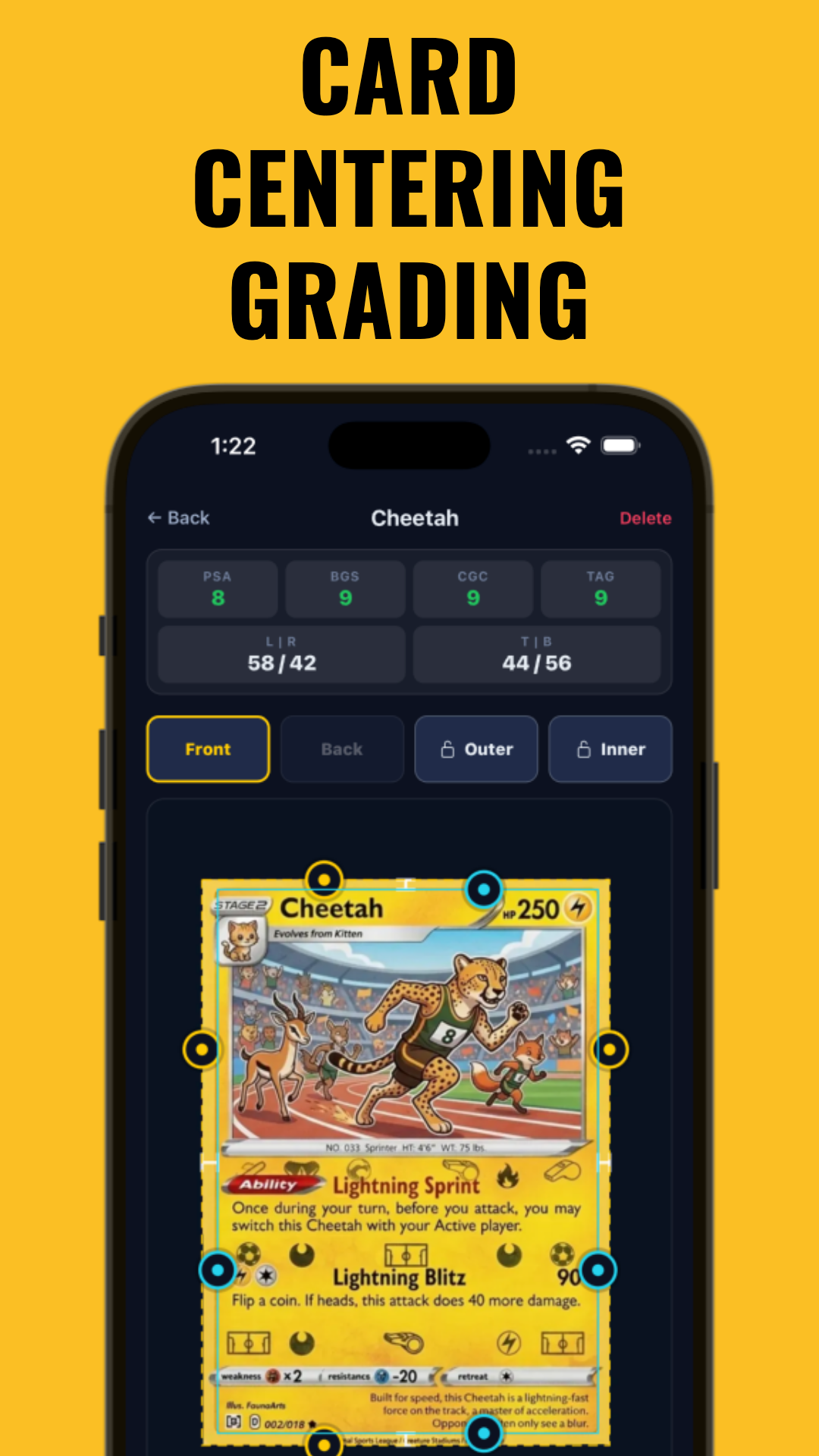
To learn more about how such tools work, check out this in-depth guide on accurate card grading estimates. For a complete guide to centering standards and nuances across Pokemon, sports, and other card types, see Card Centering by Type: The Complete Guide for Pokemon, Sports, and More.
Section 5: Tools, Technologies, and Rater Calibration
Manager Rater Training and Reducing Subjectivity
Just as in corporate performance reviews, grading companies invest in rater training to help evaluators interpret rubrics consistently. This includes:
- Workshops on interpreting behaviorally anchored standards
- Practice sessions with known card samples
- Regular calibration meetings between teams
Calibration Meetings Across Teams
Calibration is the process of comparing grades across different raters and teams to identify discrepancies and align on standards. For card grading companies, this might mean:
- Reviewing batches of cards graded by multiple individuals
- Spot-checking high-value submissions
- Adjusting training or documentation based on observed variance
Performance Management Software and Automation
Some grading companies use software to centralize review data, track rating distributions, and flag outlier evaluators. Automation tools can:
- Provide feedback on centering and other measurable subgrades
- Track grader consistency over time
- Help reduce grade inflation, supporting the rarity and meaning of top grades
Such approaches mirror best practices in HR and academic assessment, where centralized data platforms and periodic calibration are important for fair, unbiased evaluation.
Section 6: Cross-Company Comparisons, Data Checks, and Consistency Metrics
Comparing Employee (or Card) Performance Across Companies
Fair comparison across companies requires normalization of standards. For cards, this means understanding how a PSA 10 compares to a BGS 10 or CGC Pristine 10—not just in name, but in actual criteria and rarity. For a detailed breakdown of how PSA, BGS, CGC, and SGC grades stack up, see Card Grade Comparisons: PSA vs BGS vs CGC vs SGC Explained.
- PSA vs CGC: Both grade on a 10-point scale, but CGC’s Pristine 10 is generally considered rarer than PSA’s Gem Mint 10. CGC’s subgrades add granularity, but may make perfect scores harder to obtain.
- PSA 10 vs BGS 10: BGS 10 (especially Black Label) is stricter than PSA 10 in centering and subgrade requirements.
- Gem Mint vs Pristine: Pristine is a higher standard—usually only achieved when all subgrades are perfect or near-perfect.
Handling Role Leveling and Performance Bands
In corporate reviews, companies use role leveling and performance bands to ensure fair comparisons across departments or subsidiaries. Card grading companies do something similar by publishing detailed subgrade requirements and using calibration meetings to maintain parity across graders, shifts, and even locations.
Data Checks, Tracking Distributions, and Spotting Evaluator Variance
- Companies monitor the distribution of grades (e.g., what % of submissions are PSA 10s vs 9s) and investigate anomalies.
- Evaluators whose grades consistently differ from their peers may receive retraining or review.
- Statistical tools and AI-driven analysis can help spot possible inconsistencies or even fraud.
Multi-Rater or 360-Degree Feedback
Some companies use multiple raters per card, especially for high-value or controversial submissions. This “multi-rater” approach, akin to 360-degree feedback in HR, helps ensure one grader’s bias doesn’t unfairly affect the outcome.
For more on how technology is transforming these processes, explore how AI transforms card centering analysis.
Conclusion
Grading consistency across companies is important for collectors, investors, and the broader trading card market. While PSA, BGS, and CGC each bring their own culture, scales, and cut-offs, the industry as a whole is moving toward greater transparency, standardization, and fairness—especially for the most valuable grades like Gem Mint, Pristine, and Black Label.
Centering remains the most measurable and often decisive subgrade, and the use of technology—from digital measurement tools to AI-powered analytics—may help reduce subjectivity and improve outcomes. By understanding the subtle differences in grading standards, using digital tools like Midpoint for pre-grade estimates, and staying informed on calibration practices, collectors can make more confident, data-driven decisions about where and when to submit their cards.
FAQ
Q: How do you make performance ratings consistent across different managers?
A: In card grading, as in corporate reviews, consistency is supported through standardized rubrics, rater training, calibration meetings, and the use of technology to measure objective criteria (like centering). Companies like PSA, BGS, and CGC use published standards and sometimes require multiple graders to review the same card to reduce individual subjectivity.
Q: What is calibration in performance reviews and how does it work?
A: Calibration in grading means comparing results across raters, teams, or locations to align on standards. This can involve reviewing sample cards as a group, discussing differences, and updating documentation or training to support future consistency. It’s a step for maintaining grading integrity.
Q: How do companies reduce bias and subjectivity in employee evaluations?
A: Companies reduce bias by using behaviorally anchored rating scales, clear documentation, and training. In card grading, this is complemented by digital measurement tools and, in some cases, AI—especially for objective factors like centering and surface.
Q: What rating scale is best for consistent performance reviews?
A: The best scales are those with specific, observable criteria for each level—like the 10-point (with subgrades) used by BGS and CGC, or PSA’s defined standards for centering, corners, edges, and surface. Subgrades add nuance and help pinpoint why a particular grade was assigned.
Q: How do you compare employee performance fairly across departments or companies?
A: In card grading, this means understanding the published standards of each company and using objective criteria (e.g., centering ratios). Tools like Midpoint’s free centering calculator can make it easier to predict grades across companies before submission.
Q: How do you prevent grade inflation in performance reviews?
A: Grade inflation is addressed by monitoring rating distributions, retraining evaluators who give too many top grades, and periodically updating standards. Companies may also use multi-rater or double-blind grading for high-value cards to help ensure only the truly best receive elite grades like PSA 10 or BGS Black Label.
Free to start
Try the Midpoint app
Grade any card from a photo, see its raw and PSA 10 value, and track what your collection is worth — free.
Get it on iPhoneGet it on Android