Hockey Card Prices Dropping November 2026: 11 Smart Moves
Hockey card prices dropping November 2026? See why prices cool, how raw and PSA 10 differ, and how to buy the dip or grade a well-centered cheap copy.

Estimated reading time: 9 min
Key Takeaways
- Hockey card prices dropping in November 2026 looks like a market-wide cooldown with several possible contributors, such as a post-summer correction, fading rookie hype, and more supply, rather than a single event.
- Raw cards and PSA 10 copies don't always fall at the same pace, so compare both columns in the data table as of 2026-11-08.
- Never trust a headline or a single listing. Confirm every drop with recent sold listings for your specific card.
- A dip can be a good time to buy a raw copy that centers well and has a shot at a high grade.
- Measure centering before you pay to grade, so a bargain doesn't turn into a sunk cost.
If you've noticed hockey card prices dropping in November 2026, you're not imagining it. The hockey card market in November 2026 appears to be cooling after a busy stretch, and plenty of collectors are asking whether hockey cards are losing value for good or just taking a breather.
This guide walks through why falling hockey card prices can happen, how to check the numbers yourself, and which moves make sense whether you buy, hold, or sell. The data table above shows the raw and PSA 10 moves for specific cards as of 2026-11-08. Everything below explains how to read it. I don't quote figures beyond that table, because the right answer always depends on your card's recent sales.
30-day price movers — live data from Midpoint's card database, as of 2026-11-08. Prices move; Midpoint refreshes these daily.
| Card | Raw | PSA 10 | 30-day | |
|---|---|---|---|---|
 |
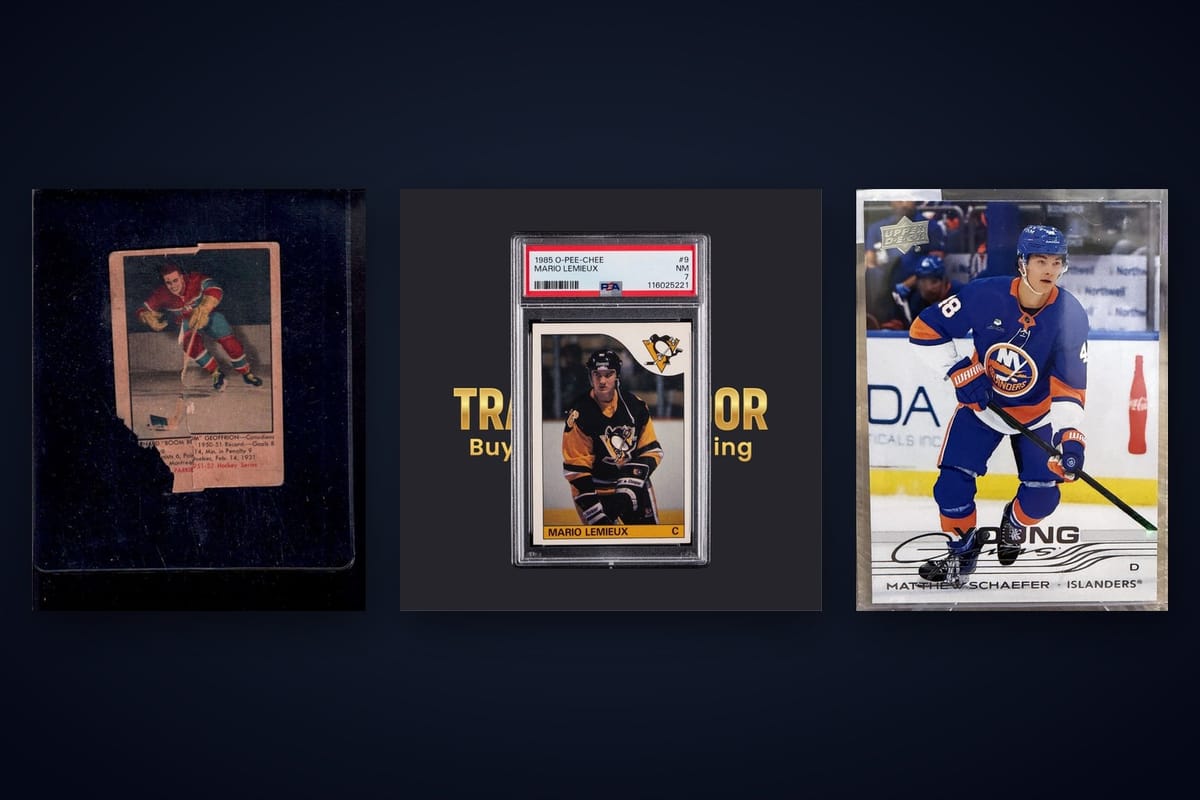
Boom Boom Geoffrion #14 1951 Parkhurst |
$163.10 | $40,995 | -25.8% |
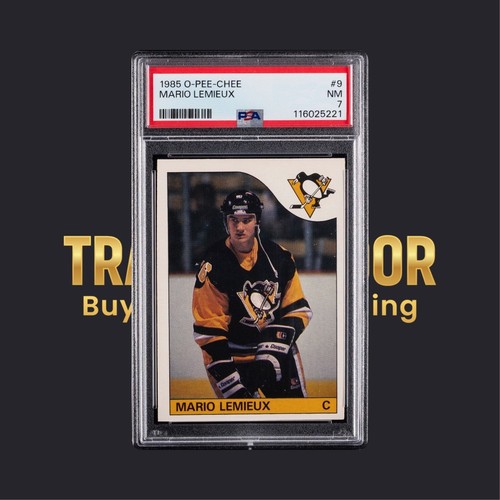 |
Mario Lemieux #9 1985 O-Pee-Chee |
$193.90 | $33,600 | -3.5% |
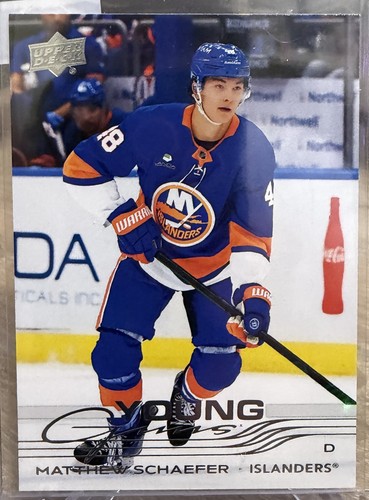 |
Matthew Schaefer #451 2025 Upper Deck Series 2 |
$164.08 | $828.91 | -2.5% |
 |
Wayne Gretzky #250 1980 O-Pee-Chee |
$100.30 | $41,066 | -1% |
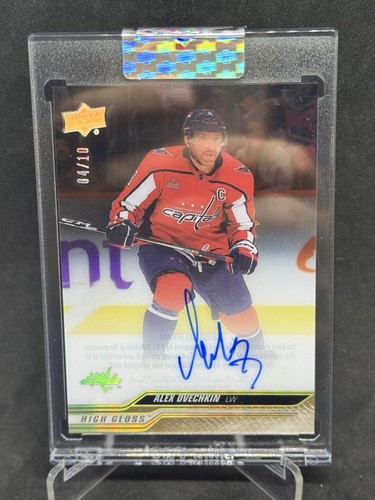 |
Alex Ovechkin #CC-AO 2023 Upper Deck Clear Cut |
$440.55 | $1,555 | -0.6% |
 |
Nick Suzuki #OR-4 2024 Upper Deck Outburst Retro Young Gun |
$130.57 | $371.23 | 0% |
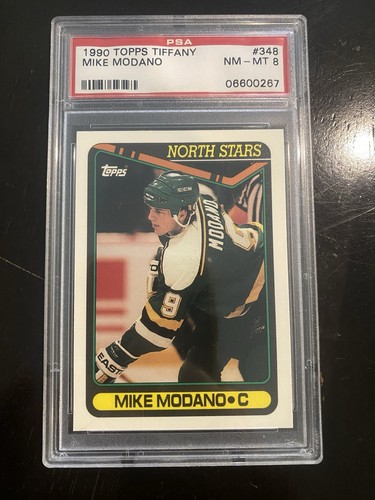 |
Mike Modano #348 1990 Topps Tiffany |
$55.27 | — | 0% |
 |
Ed Litzenberger #61 1959 Topps |
$10.50 | $2,075 | 0% |
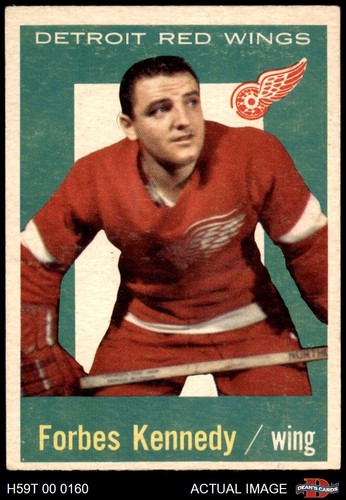 |
Forbes Kennedy #52 1959 Topps |
$14.04 | $2,230 | 0% |
 |
Mike Modano #188 1990 Bowman Tiffany |
$12.67 | $1,285 | 0% |
 |
Bill McNeill #41 1959 Topps |
$11.00 | $2,244 | 0% |
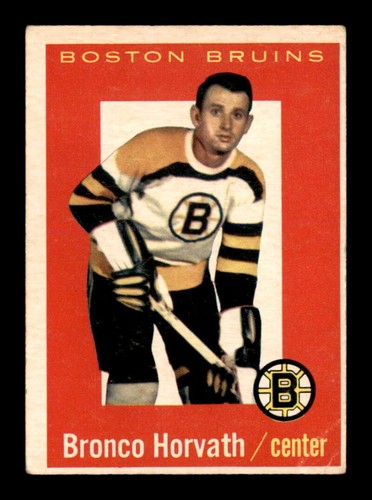 |
Bronco Horvath #56 1959 Topps |
$12.78 | $2,631 | 0% |
Look up any card's current raw and graded value in Midpoint — and get an estimated grade before you pay to submit.
1. Start With the Last-30-Day Data Table
Before reading opinions, look at the numbers. The table above lists cards that moved over the last 30 days, with raw and PSA 10 values as of 2026-11-08. That is your baseline, and it beats any forum thread claiming "everything is crashing."
When you scan it, look for three things:
- Size of the move: Is it a small pullback or a steep drop?
- Raw versus PSA 10: Did both columns fall, or only one?
- Pattern by card type: Are rookies falling faster than veterans, or the reverse?
Treat a snapshot as a starting point. A 30-day move can reverse in the next 30, which is why the verification steps later in this list matter.
2. Understand the Post-Summer Price Correction
Hockey card prices can run hot around the offseason, the draft, and big summer releases. Once the NHL season is underway, speculation tends to give way to actual performance and the premium paid on hype can start to fade.
That is what a post-summer correction looks like. Buyers who paid up in the summer on potential meet sellers who want out, and asking prices may reset lower. It doesn't mean the cards are worse. It means the market may be repricing them against real results.
- Offseason prices tend to reflect anticipation.
- In-season prices tend to reflect production and supply.
- The gap between the two is the "correction."
3. Compare Raw vs PSA 10 Declines
A common question is whether grading premiums are shrinking. The honest answer is that it varies card by card, so check both columns in the table instead of assuming.
Here is how the two can behave:
- Raw cards: More supply, more sellers, and often a faster reaction to sentiment. Raw prices can move first.
- PSA 10 copies: Thinner supply and buyers who want the top grade can cushion drops, but when demand dries up they can fall too.
If a PSA 10 holds its value while the raw price falls, the grading premium has widened, which may make grading a cheap raw copy more attractive. If both fall together, the whole card is cooling. See how top grades differ by company if you're deciding which slab to chase.
4. Watch Rookie Cards: Where Hype Can Fade Fastest
Rookie cards carry the most expectation, so they have the most to lose when expectation cools. Once the season starts and early performance is on the table, the hype premium on new names gets tested every night.
Young names like Connor Bedard and Alexis Lafreniere are the kind of cards whose prices can be heavily sentiment-driven. I'm not quoting a figure for either, so check the table and recent sold listings for the exact card, parallel, and grade you care about.
- Rookie prices are often the most sentiment-driven.
- A slow stretch of games can trim demand quickly.
- Low-numbered parallels can hold up better than base cards, but not always.
5. Don't Assume Veteran Stars Are Safe
Established stars like Leon Draisaitl have deeper collector bases, but veteran cards can still lose value when the broader market cools. Strong demand doesn't make a card immune to a market-wide pullback.
Veteran cards tend to move differently from rookies. They have a longer sales history, so price swings are easier to judge against past sales. If a veteran star is dipping, ask whether the drop is specific to the player or part of a general slowdown. If many players are down together, it's a market story. If one player is down alone, look for a player-specific reason.
6. Factor In Supply, Overproduction and Print-Run Dilution
Scarcity drives value. When more copies of a player's cards enter the market, each one may be worth less to the next buyer. Falling hockey card prices can trace back to supply as much as demand.
Supply grows in a few ways:
- New products with the same player across many sets and parallels.
- Collectors cracking boxes and listing hits at once.
- More sellers cashing out as prices slide, which can push prices down further.
Print-run dilution is the quiet version of this. A player can have more cards in circulation than their top-grade demand can absorb, even when the card itself is great.
7. Plan Around the Upcoming Black Diamond Release
New Upper Deck releases can land in the middle of a cooldown, and a Black Diamond release is one collectors may be watching. Check Upper Deck's official release calendar for the confirmed date. New product adds fresh supply and can pull attention (and budget) away from older cards.
Collectors sometimes see a short-term effect: some money shifts from singles to boxes, and early listings from the new set can soften prices on related players. Whether that is a brief wobble or a longer drag depends on how the set sells through.
- Don't panic-sell right before a release without checking recent sales.
- Watch how related-player cards trade in the week after launch.
- Be cautious about chasing new-set hype at launch prices.
8. Verify Every Drop With Sold Listings
A price guide or a headline is not proof. Sold listings are. Here's a simple routine to confirm falling hockey card prices for any card:
- Filter to sold, not active. Asking prices are wishes. Completed sales are reality.
- Match exactly: same player, set, parallel, serial number, and grade.
- Check at least five recent sales and note the trend in dates, not just the lowest price.
- Compare raw and graded separately.
- Look at the player trend: Is the whole player down, or just one card?
Then compare your findings to the table as of 2026-11-08. If sold listings and the table agree, the drop is real.
9. Hockey Cards to Buy the Dip: Target Well-Centered Raw Copies
A dip can be a good moment to buy, but only if you buy smart. The best value is often a raw copy that centers well, because centering can cap or unlock the grade. Grading fees vary by company and service level and add up per card, so you want to be confident before you submit.
Here's a simple process:
- Pick a card from the table where the raw price has fallen but the PSA 10 premium holds.
- Ask the seller for clear front and back scans.
- Measure the borders with the free centering calculator before you buy or submit.
- Only grade copies that clear your centering threshold.
Midpoint also gives you an estimated PSA, BGS, CGC, and TAG grade from centering, corners, edges, and surface, so you can pre-grade a bargain copy before paying. For a full walkthrough, see how to pre-grade your card.

10. Decide: Buy, Hold, or Sell
No single answer fits every collector. Use this quick framework against the data table:
- Buy: You want the card long term, the drop is confirmed by sold listings, and you can afford to wait.
- Hold: You like the player, you didn't overpay, and you have no urgent need for cash. Selling into a dip locks in the loss.
- Sell: The card was bought mainly on hype, supply is rising, and a new release is about to compete with it.
Whatever you decide, protect what you keep. Damaged cards lose value in any market, so see how to store valuable cards.
11. Know What Could Reverse the Downturn
Dips don't last forever, but no one can promise a rebound date. These are factors that can turn a cooldown around:
- On-ice performance: Strong play can revive rookie and star demand.
- Supply drying up: When sellers run out, prices can stabilize.
- Playoff and award momentum: Late-season runs can lift interest.
- Top-grade scarcity: Cards that are hard to get in a PSA 10 may recover faster than easy ones.
Cards with a real top-grade shortage, which you can read about in how centering impacts card value, may be the likeliest to bounce first, though there are no guarantees. Track your own cards over time and let the numbers, not the noise, guide you.
Conclusion
Hockey card prices dropping in November 2026 may come down to a post-summer correction, fading rookie hype, extra supply, and new releases like the upcoming Black Diamond drop. Check the table as of 2026-11-08, confirm with sold listings, and compare raw against PSA 10 before you act.
If you're looking for hockey cards to buy the dip, focus on well-centered raw copies and measure before you grade. You can do that with Midpoint, free on iOS and Android.
FAQ
Q: Why are hockey card prices dropping in November 2026?
A: Several forces may overlap: a post-summer correction after offseason hype, fading rookie excitement once the NHL season begins, more supply from new products and sellers, and anticipation of new releases like the upcoming Black Diamond set. Check the data table as of 2026-11-08 for specific cards.
Q: Which hockey cards are losing the most value right now?
A: Look at the data table for the biggest 30-day moves in raw and PSA 10 values. Rookie and young-star cards tend to be the most sentiment-driven, but veterans can fall too. Confirm any drop with recent sold listings for the exact card and grade.
Q: Are Connor Bedard hockey cards still dropping in price?
A: It depends on the specific card, parallel, and grade. Check the table and recent sold listings rather than relying on a general claim.
Q: Should I buy hockey cards during the November 2026 market dip?
A: It can be a good time if you are buying for the long term, have verified the drop through sold listings, and target well-centered copies. Avoid chasing hype, and consider waiting to see how the upcoming Black Diamond release affects prices.
Q: Are PSA 10 hockey cards declining as much as raw cards?
A: Not always. Raw prices often react faster because supply is larger, while PSA 10 copies can hold up better when top-grade supply is thin. Compare the raw and PSA 10 columns in the table for each card.
Q: Will hockey card prices recover after the November 2026 decline?
A: Nobody can guarantee it. Recovery usually depends on player performance, shrinking supply, playoff momentum, and top-grade scarcity. Track sold listings and your portfolio over time to see whether the trend is turning.
Free to start
Try the Midpoint app
Grade any card from a photo, see its raw and PSA 10 value, and track what your collection is worth — free.
Get it on iPhoneGet it on Android