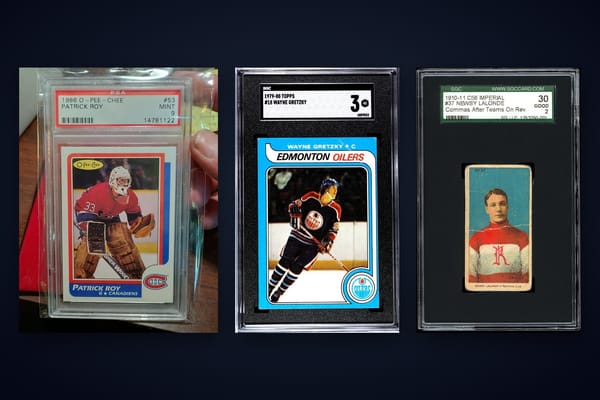
Hockey Card Prices Dropping November 2026: 9 Moves to Make
Hockey card prices dropping November 2026? See why hockey cards are losing value, what to check in sold sales, and how to buy the dip smartly.

Estimated reading time: 9 min
Key Takeaways
- Falling hockey card prices rarely hit every card equally. Raw, PSA 10, rookies, veterans, and inserts can each move differently.
- The usual causes of a cool-off are fading rookie hype, extra supply from new releases, and heavy grading volume. They are not always a sign the hobby is collapsing.
- Completed sales tell you what a card is worth. Asking prices do not.
- A dip is the best time to grade a cheap raw copy that centers well, but only if you measure first.
If you have noticed hockey card prices dropping in November 2026, you are not alone in wondering about it. Many collectors are asking the same question: are hockey cards losing value across the board, or only in certain corners of the market?
This guide walks through ten things to check in the hockey card market this November. The data table in this post lists the specific cards and values we track in Midpoint's database as of 2026-11-18. Use it alongside the sections below to separate real value shifts from noise.
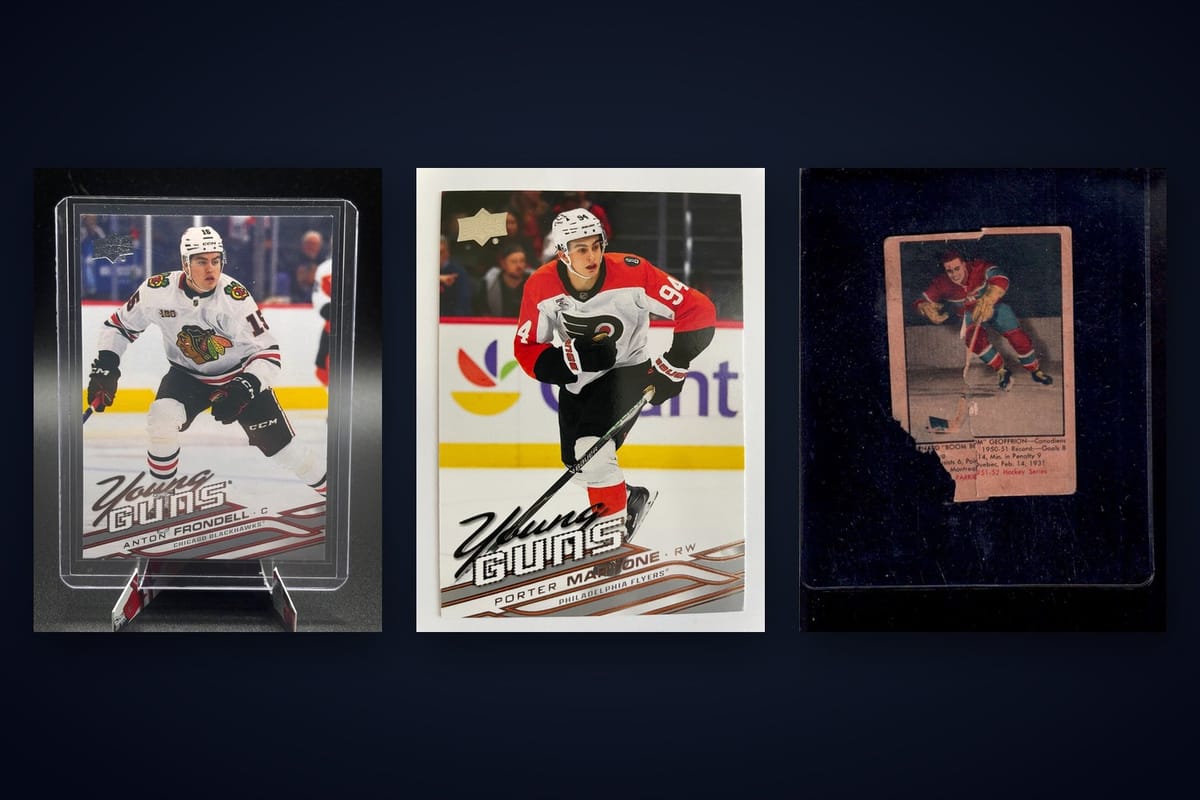
30-day price movers — live data from Midpoint's card database, as of 2026-11-18. Prices move; Midpoint refreshes these daily.
| Card | Raw | PSA 10 | 30-day | |
|---|---|---|---|---|
 |
Anton Frondell #201 2026 Upper Deck |
$24.93 | $155.15 | -49.4% |
 |
Porter Martone #209 2026 Upper Deck |
$35.00 | $259.67 | -37.5% |
 |
Boom Boom Geoffrion #14 1951 Parkhurst |
$163.10 | $41,028 | -25.8% |
 |
Guy Lafleur #148 1971 O-Pee-Chee |
$109.01 | $13,781 | -22.6% |
 |
Wayne Gretzky #18 1979 O-Pee-Chee |
$821.85 | — | -21.1% |
 |
James Hagens #206 2026 Upper Deck |
$47.81 | $259.29 | -17.7% |
 |
Adam Fantilli #711 2023 Upper Deck |
$16.93 | $94.01 | -16.1% |
 |
Wayne Gretzky #51 1984 Topps |
$13.44 | $1,414 | -6.7% |
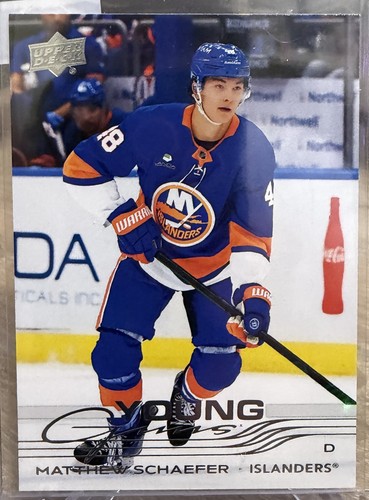 |
Matthew Schaefer #451 2025 Upper Deck Series 2 |
$164.08 | $828.91 | -2.5% |
 |
Wayne Gretzky #250 1980 O-Pee-Chee |
$94.40 | $41,050 | -1% |
 |
Ed Litzenberger #61 1959 Topps |
$10.50 | $2,075 | 0% |
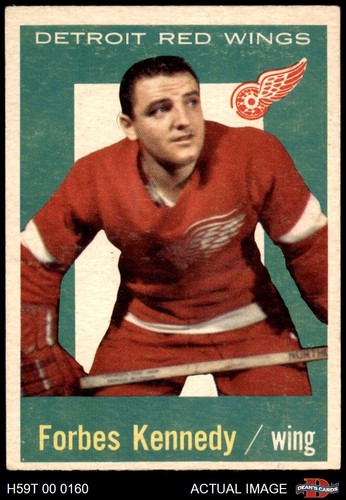 |
Forbes Kennedy #52 1959 Topps |
$14.04 | $2,230 | 0% |
Look up any card's current raw and graded value in Midpoint — and get an estimated grade before you pay to submit.
1. Check Whether the Hockey Card Market Dip Is Broad or Card-Specific
The first step when you see falling hockey card prices is to ask how wide the drop is. A broad correction pulls down almost everything, including stars, commons, and sealed product. A card-specific drop shows up in a handful of players, sets, or grades while the rest holds steady.
Work through the table in this post and sort the cards by type. Look for patterns rather than single outliers:
- Same player, several card types: suggests a demand issue with that player.
- Same set, several players: suggests a supply or product issue.
- Only one grade or one parallel: suggests a population or pricing quirk, not a market-wide trend.
Do not treat one low sale as a trend. One auction ending at an odd hour can look like a crash when it is just a quiet Tuesday night.
2. Compare Raw Cards and PSA 10 Hockey Cards Separately
Raw and graded prices often move for different reasons, so track them separately. Raw prices reflect what buyers will risk on an ungraded card. PSA 10 prices reflect the premium for a verified gem, and that premium depends on how many copies exist.
When a card's PSA 10 price falls faster than its raw price, the cause is often more graded copies hitting the market. When raw drops faster, buyers may be getting pickier about condition or simply spending less.
- Record the raw and PSA 10 values for the same card from the table.
- Note the gap between them. A shrinking gap can signal oversupply of high grades.
- Check other graded options too, such as PSA 9, BGS 9.5, or SGC and CGC slabs, since some buyers shift to cheaper grades during a dip.
For a refresher on how grades compare across companies, see our guide to grading scale differences by company.
3. Watch 2026-27 Rookie Cards and Prospects First
Rookies and prospects are often among the first cards to slide when hype fades. Their prices are built on expectation: what the player might become, not what he has done. Expectations can reset quickly when early-season performance, ice time, or injuries do not match the buzz.
Rookie card prices often peak around a product's release, when the player is the story. As supply builds and collectors move on to the next chase, that premium can bleed away.
- Compare rookie prices in the table with where similar cards traded earlier in the year.
- Check whether the player has an NHL role yet or is still a prospect. Prospects carry more risk.
- Be wary of paying peak-hype prices for base rookies with large print runs.
A falling rookie price is not automatically a bargain. It becomes one only if the player's long-term outlook is intact and the card is scarce relative to demand.
4. See How Veteran Stars Like McDavid, Crosby, Draisaitl, and Lafrenière Are Holding Up
Veteran stars are usually steadier than rookies, but they are not immune. Connor McDavid, Sidney Crosby, Leon Draisaitl, and Alexis Lafrenière all have cards in the data we track, and each plays a different role in the market.
- McDavid and Crosby: established names with deep collector bases. Their key cards tend to be anchored by long-term demand, so check whether any drop is in the card or just in a particular grade.
- Draisaitl: a proven star whose prices can be more sensitive to team and season narratives.
- Lafrenière: a former top pick whose market reflects how his career expectations have shifted over time.
Look up each player's cards in the table and compare them with each other. If stars are down together, that may point to a broad pullback. If only one is down, the cause is likely player-specific.
5. Factor In Supply, Overproduction, and New Upper Deck Releases
Supply is one of the most common reasons hockey cards lose value. When a new set drops, thousands of new copies of the same players enter the market. If demand does not rise with them, prices ease.
New 2026-27 Upper Deck releases can pressure prices in a few ways:
- New rookie cards compete with older cards of the same player for the same dollars.
- Reprints and similar-looking parallels can split demand among more versions.
- Opened boxes flood the secondary market with copies from people who want quick cash rather than a long hold.
Cards with limited print runs or true scarcity tend to hold better than base cards from large releases. Before you buy, ask how many copies could realistically exist.
6. Separate Base Cards, Inserts, Parallels, Autographs, and Memorabilia
Not every card type reacts to a downturn the same way. The table mixes card types so you can compare them directly.
- Base cards: the most exposed to oversupply. They often have the thinnest margins and the weakest resale.
- Inserts: more resilient when the design and chase are popular, but weaker when the insert is common.
- Parallels: value depends on the numbering. Lower print runs usually protect value better.
- Autographs: often more stable because they are limited, though sticker autos can be harder to sell in a soft market.
- Memorabilia cards: demand can be uneven. Patch quality and player matter a lot.
If you are shopping a dip, scarcer card types usually give you more protection than base cards.
7. Consider NHL-Season Timing and Changing Collector Demand
Hockey card demand often follows the calendar. Interest can swell around releases, early-season storylines, and playoff runs, then soften when attention moves elsewhere. November falls early in the NHL season, after the opening-week buzz has settled and well before the playoffs.
Collector attention also shifts across the wider hobby. Dollars that went to hockey may move to other sports or to Pokémon and other trading card games, and that can lower prices in a specific niche without any change in the cards themselves.
- Track player performance and injuries, which can move individual card prices quickly.
- Note that holiday spending can pull budgets away from cards or boost them, depending on the year.
- Do not assume a seasonal dip will reverse on a fixed schedule.
8. Understand How Grading Volume, Population Reports, and Condition Affect Value
Grading changes what a card is worth. When many collectors submit the same card, population reports rise, and a PSA 10 becomes less rare. That alone can pull down graded prices even when demand is unchanged.
Condition is the other half. Centering, corners, edges, and surface decide the grade, and centering is often the factor that holds back a card that otherwise looks perfect. Our guide on how centering impacts card value explains why even a small shift can move a grade, and the price that goes with it.
Before you pay to submit, pre-grade the card. Our step-by-step pre-grading guide shows how, and the free centering calculator gives you quick numbers.
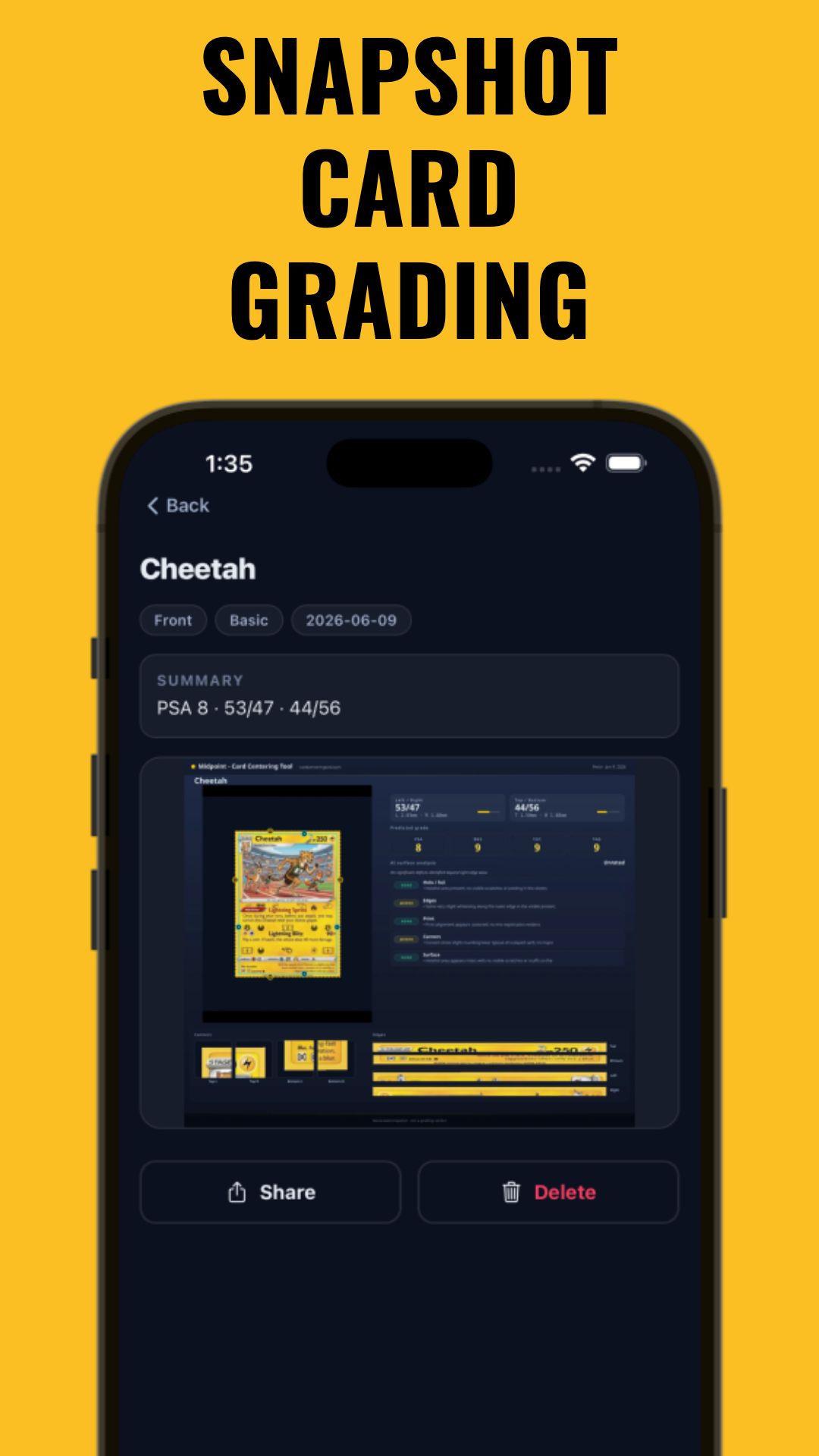
With Midpoint, you can measure centering and get estimated PSA, BGS, CGC, and TAG grades before you pay grading fees on a submission.
9. Decide Whether to Buy the Dip, Hold, or Sell
Hockey cards to buy the dip are the ones that have fallen for reasons unrelated to the player's long-term value. Your decision depends on what you own and why you collect.
- Buy: consider scarce cards of proven stars when prices have eased because of general softness, not because of a player-specific problem.
- Hold: if you collect for enjoyment or hold long-term, a short-term dip is often not a reason to sell. Selling at a low locks in the loss.
- Sell: consider selling if you hold hype-driven rookies or base cards from large print runs and the buzz has clearly faded.
Dips also create a grading opportunity. A cheap raw copy that centers well can be worth grading if it looks like a candidate for a high grade. Measure the front and back centering first, and check the surface for scratches and print lines. For scarce cards, our guide to grading low population cards covers what to consider.
Do not buy more than you can afford to see fall further. No one can reliably call the bottom.
10. Verify Hockey Card Values With Completed Sales, Not Asking Prices
Asking prices are wishes. Completed sales are facts. In a falling market, the gap between the two can grow, because sellers often hold out for old prices while buyers pay current ones.
Here is a simple process for checking any hockey card:
- Search for the exact card, including set, parallel, numbering, and grade.
- Filter for sold or completed listings only.
- Compare several recent sales, not just the highest or lowest.
- Match condition carefully. A raw card is not a PSA 10, and a PSA 9 is not a PSA 10.
- Check the sale dates. A sale from months ago may not reflect today's market.
Midpoint's card lookup shows raw and graded values across a large database of cards, which gives you a quick starting point before you check recent sales yourself. All values in this post are as of 2026-11-18, and prices can change quickly.
Conclusion
If hockey card prices are dropping in November 2026, the details matter. Falling hockey card prices often come from fading rookie hype, extra supply, and heavy grading, and they can land differently on raw cards, graded cards, rookies, and veterans. Use the data table to see which cards are moving, check completed sales before you act, and measure centering before you grade.
If you want to put a dip to work, start with the Midpoint app. It is free on iOS and Android.
FAQ
Q: Why are hockey card prices dropping in November 2026?
A: Common causes include fading rookie hype, more supply from new releases, and growing graded populations. Demand may also be shifting to other sports or games. The effect varies by card, so check the table and recent sold sales.
Q: Which hockey cards are losing the most value right now?
A: Rookies, prospects, and base cards from large print runs are usually the most exposed. Use the data table in this post, dated 2026-11-18, to compare raw and graded values by card.
Q: Are 2026-27 hockey rookie cards a good buy during the November 2026 dip?
A: Sometimes, but be selective. Rookies depend on hype, so favor scarce versions of players with a clear NHL role, and avoid overpaying for common base cards. Check completed sales first.
Q: Are Connor McDavid and Sidney Crosby cards losing value too?
A: Look up their specific cards in the table. Established stars tend to be steadier than rookies, but individual cards and grades can still move. Compare each card's raw and graded values rather than assuming.
Q: Should I buy, sell, or hold hockey cards while prices are falling?
A: It depends on your goals. Long-term collectors often hold, buyers can target scarce cards of proven players, and sellers may want to exit hype-driven cards. Do not spend more than you can afford to see drop further.
Q: How can I check the current value of a hockey card using recent sold sales?
A: Search for the exact card and filter for sold or completed listings. Compare several recent sales that match the same grade and condition, and ignore asking prices. Midpoint's card lookup can give you a starting point.
Free to start
Try the Midpoint app
Grade any card from a photo, see its raw and PSA 10 value, and track what your collection is worth — free.
Get it on iPhoneGet it on Android