How Card Grades Affect Resale Value: Complete Guide & Comparison
Discover how card grades affect resale value. Learn PSA vs BGS vs CGC, Gem Mint vs Pristine, grading price gaps, and when grading adds value to your cards.

Estimated reading time: 14 min
Key Takeaways
- Card grades can significantly impact resale value, with price gaps often widening at the top tiers.
- PSA, BGS, and CGC each have distinct grading scales—knowing the differences is important for maximizing value.
- Gem Mint, Pristine, and Black Label grades are rare and can command major premiums, but are difficult to achieve.
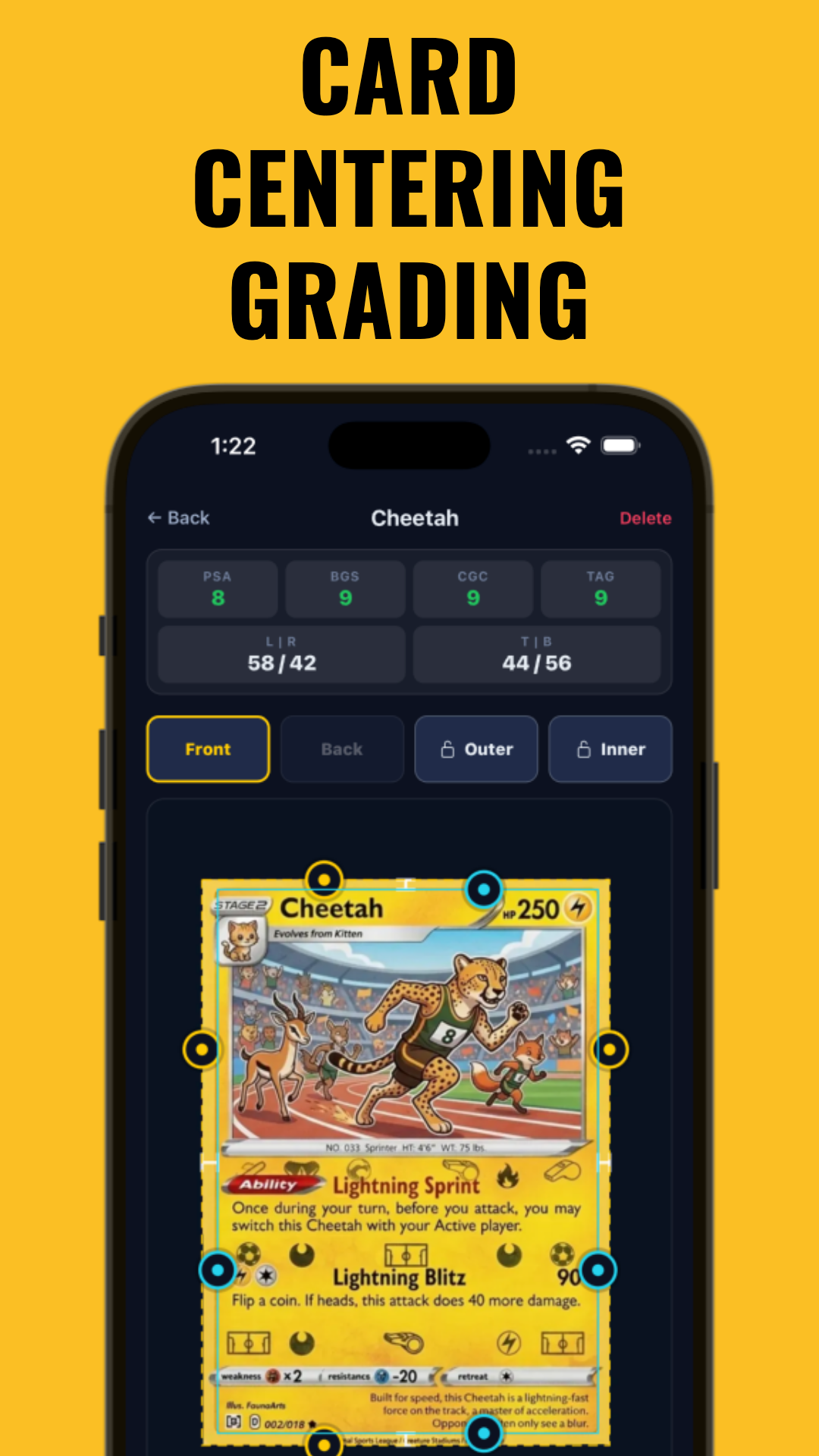
- Centering is a pivotal factor in grading outcomes—precise measurement tools like Midpoint help estimate grades before submission.
- Not all cards are worth grading; factors like rarity, raw value, and market demand determine if grading is profitable.
Table of Contents
- Section 1: Why Card Grades Change Resale Value
- Section 2: PSA, BGS, and CGC Grading Scales & Price Tiers
- Section 3: Gem Mint vs Pristine vs Black Label: Grade Differences Explained
- Section 4: When Grading Adds Value—and When It Doesn’t
- Section 5: Raw vs Graded Card Price Comparison
- Section 6: Rarity, Population Reports, and Scarcity at Each Grade
- Section 7: Grading Math: Fees, Shipping, and Break-Even Analysis
- Section 8: Vintage vs Modern: Grading’s Value Impact Over Time
- Conclusion
- FAQ
Section 1: Why Card Grades Change Resale Value
The Psychology of Buyers: Trust and Authenticity
Card grading transforms a collectible’s status from “raw” (ungraded) to “verified” by a reputable third party. This process builds buyer confidence in authenticity and condition—key factors that drive value. A PSA, BGS, or CGC slab is more than plastic; it’s a guarantee of what the buyer is getting.
- Authentication: Grading companies verify the card isn’t counterfeit or altered.
- Condition Certainty: Buyers know exactly what grade (e.g., PSA 10, Gem Mint) they’re acquiring.
- Liquidity: Graded cards often sell faster and at higher prices, especially in online marketplaces.
Price Gaps: How Much Does a Grade Add?
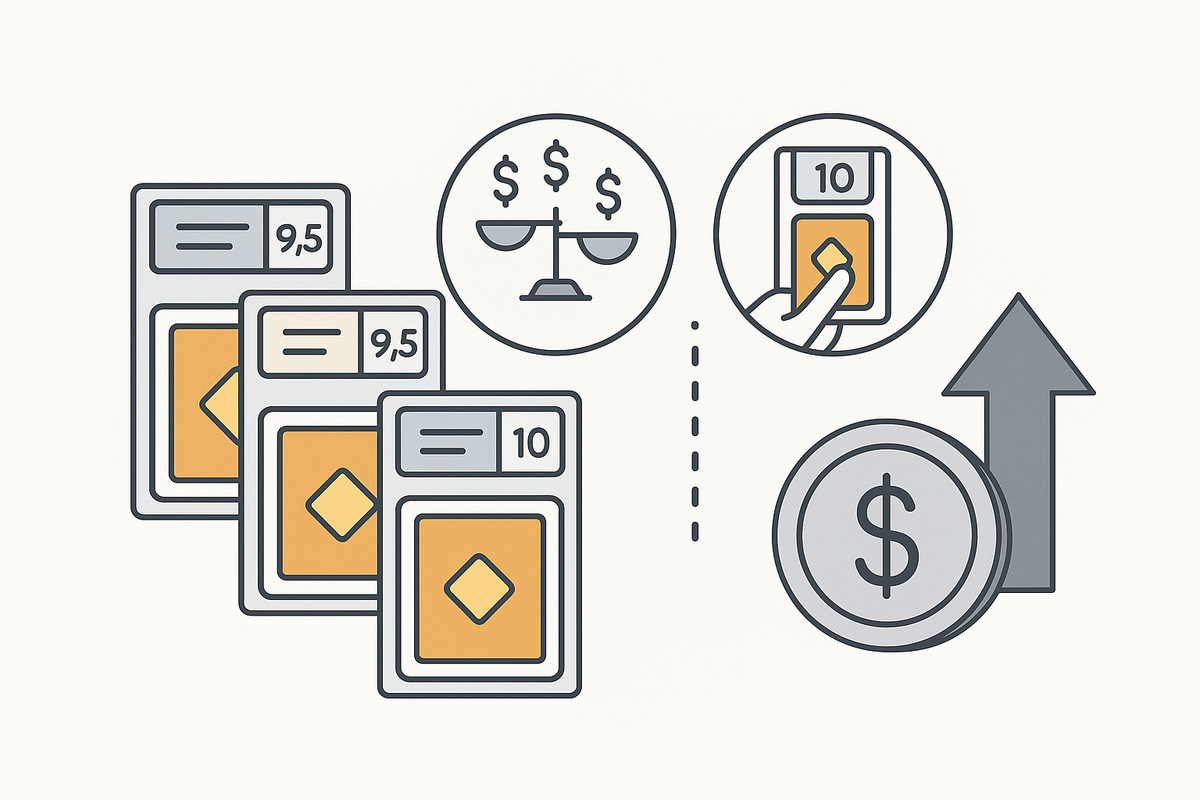
The jump from raw to graded can be significant. But the real price leap often comes at the highest grades. For example, a PSA 10 can fetch several times the price of a PSA 9, depending on the card. The premium may be even higher for Pristine or Black Label grades.
- PSA 10 vs PSA 9: Sometimes 2x–5x difference for modern sports and Pokémon cards.
- BGS Black Label: Can be significantly higher than a standard BGS 9.5.
- CGC Pristine 10 vs Gem Mint 10: Pristine can command a notable premium due to rarity.
These gaps reflect collector psychology, investment confidence, and market scarcity at the top grade levels.
Centering: The Silent Value Driver
Among grading criteria (centering, corners, edges, surface), centering is often the most visible and easiest for buyers to notice in photos. Poor centering can instantly drop a card from Gem Mint to Near Mint or lower, reducing resale value. Tools like Midpoint let you measure centering to the millimeter before spending on grading, helping you estimate likely outcomes.
Section 2: PSA, BGS, and CGC Grading Scales & Price Tiers
PSA: Simplicity and Market Dominance
PSA’s 1–10 scale is widely used, especially for sports and Pokémon cards. The PSA 10 “Gem Mint” is iconic—and often commands the highest resale value in many markets. PSA’s population reports (pop reports) give insight into scarcity at each grade, further impacting price.
- PSA 10: Gem Mint, strict centering standards (60/40 front, 75/25 back)
- PSA 9: Mint, still high value but usually half or less of PSA 10
- Lower grades: Value drops off sharply below PSA 8 for modern cards
BGS: Subgrades and the Black Label Chase
BGS (Beckett Grading Services) uses a 1–10 scale with half-point increments, but adds subgrades for centering, corners, edges, and surface. This detail can increase or decrease value, especially for high-end cards. BGS Black Label (all subgrades 10) is considered one of the most coveted—and rarest—grades in the hobby.
- BGS 10 Black Label: All subgrades perfect 10; sometimes sells for a significant premium over PSA 10 price
- BGS 10 Gold Label: At least one 9.5 subgrade; still a premium over PSA 10
- BGS 9.5 Gem Mint: Very common, priced similarly to PSA 10 for some cards, less for others
CGC: Popular for TCGs, Unique Pristine Tier
CGC’s scale mirrors BGS but is most popular among Pokémon and Magic collectors. CGC “Pristine 10” is generally considered tougher than BGS 10, with near-perfect standards; “Gem Mint 10” is slightly more attainable. The CGC Pristine 10 vs Gem Mint 10 price gap can be substantial for popular cards.
- CGC Pristine 10: Rarer than PSA 10 or BGS 10; can bring a significant price bump
- CGC Gem Mint 10: Comparable to PSA 10, but population is lower
- Lower CGC grades: Value drops off sharply, especially below 9
Which Grade Is Hardest to Get?
Generally, BGS Black Label and CGC Pristine 10 are among the rarest. PSA 10 is strict, but population is higher. For many cards, a BGS Black Label population can be in the single digits, resulting in large price premiums when they hit the market.
For an in-depth breakdown of centering’s impact on each grading scale, see How Centering Impacts Card Value: A Detailed Guide.
Section 3: Gem Mint vs Pristine vs Black Label: Grade Differences Explained
Gem Mint vs Pristine: Subtle but Expensive Distinctions
Not all “10s” are created equal. PSA 10 is “Gem Mint,” but BGS and CGC offer both Gem Mint and Pristine tiers. The difference? Perfection—often at the subgrade level. For example:
- PSA 10: Gem Mint; minor allowable flaws, especially on the back
- BGS 10: Pristine; nearly flawless, but not Black Label
- BGS Black Label: Pristine with all subgrades 10 (centering, corners, edges, surface)
- CGC Pristine 10: All subgrades 10, no visible flaws even under magnification
The jump from Gem Mint to Pristine or Black Label can be significant for resale value. For example, a modern Charizard in BGS Black Label can sell for much more than a BGS 9.5, though actual prices vary by card and market conditions.
PSA 10 vs BGS 10: Market Perceptions
Some collectors prefer the simplicity and liquidity of PSA 10, while others chase the prestige of BGS 10 or Black Label. In some markets (vintage sports), PSA 10 commands more; in modern Pokémon, a BGS Black Label is highly sought after. It’s important to research your card’s market before deciding whom to grade with.
CGC Pristine 10 vs Gem Mint 10: Rarity and Premiums
CGC’s Pristine 10 is extremely tough to attain. The price gap can be double or more compared to Gem Mint 10. For example, a CGC Pristine 10 Pikachu might sell for much more than Gem Mint 10, depending on demand and population. This makes centering—and pre-grading accuracy—critical if you’re aiming for the top.
Want to estimate your card’s grade across all major graders? Try the Free Centering Calculator at Midpoint.
Section 4: When Grading Adds Value—and When It Doesn’t
High-Value, High-Demand Cards: The Sweet Spot
Grading makes the most financial sense when:
- The raw card is already valuable (typically $100+)
- The card is rare or in high demand (e.g., rookie cards, iconic Pokémon)
- You have a realistic shot at PSA 9, PSA 10, BGS 9.5, or higher
For these cards, grading can multiply value—sometimes substantially at the highest tier.
When Grading Doesn’t Add Value
Not every card is a candidate for grading. Grading often does not add value when:
- The card is low value raw (under $30)
- Condition issues make a high grade unlikely (visible scratches, poor centering, whitening)
- The card is common or highly printed
In these cases, grading fees and shipping can outweigh any resale gain. It's better to sell raw or invest in higher-value candidates.
Pre-Grading: The Smart Collector’s Approach
Pre-grading—using tools and guides to estimate your card’s grade before submitting—is essential. Apps like Midpoint measure centering down to the millimeter, boosting your odds of a profitable grade. For a step-by-step approach, check out How to Pre-Grade Your Card: A Step-by-Step Guide.
Section 5: Raw vs Graded Card Price Comparison
Understanding the Multiplier Effect
The difference between raw and graded prices is often dramatic—if you hit a top grade. Consider these typical scenarios:
- Modern Charizard (raw): $200
- PSA 9: $350
- PSA 10: $1,000+
- BGS Black Label: $8,000–$15,000 (if it exists!)
But if the card gets a PSA 8 or lower, it may only sell for slightly above raw price, and possibly less after fees.
Real-World Examples: Sports and TCGs
For vintage sports, the multiplier can be even larger due to scarcity. A 1986 Fleer Michael Jordan rookie raw might sell for several thousand dollars—while a PSA 10 brings a much higher price. In Pokémon, modern chase cards can jump several times in value from PSA 9 to PSA 10.
Buyer Preferences: PSA vs BGS vs CGC
Market preference varies by hobby:
- Sports: PSA 10 is often most liquid, with a liquidity premium
- Pokémon: BGS Black Label and CGC Pristine 10 are highly coveted
- Magic/Yu-Gi-Oh: Mixed, but PSA and CGC both respected
This is why pre-grading and understanding grading company differences is so important. For tips on evaluating your card’s centering, see How to Measure Card Centering: Step-by-Step Precision Guide.
Section 6: Rarity, Population Reports, and Scarcity at Each Grade
Population Reports: Measuring True Scarcity
Every grading company publishes population reports showing how many cards have achieved each grade. This data directly influences resale value. For example, if only 10 copies of a card have a PSA 10 grade, the price will be much higher than if there are 2,000.
- Low population PSA 10s: Major premium for collectors seeking the best
- High population: Lower premium, especially for modern mass-printed cards
Effect of Scarcity at the Top Grade
Scarcity can multiply premiums at the Pristine, Gem Mint, and Black Label levels. A BGS Black Label with a population of five might sell for much more than the PSA 10, even if thousands exist at lower grades. For vintage cards, any high grade is scarce, making even PSA 8s valuable.
Why Centering Is Often the Deciding Factor
Many cards are pulled fresh from packs with perfect corners and surfaces, but centering issues (from print runs) are common. This is why centering often determines whether a card hits Gem Mint, Pristine, or misses entirely. Measuring centering precisely—using digital tools—can help target those top grades.
To learn how AI and digital tools are being used in card centering analysis, see AI-Focused Comparison: How AI Transforms Card Centering Analysis.
Section 7: Grading Math: Fees, Shipping, and Break-Even Analysis
Understanding the Cost Structure
Before submitting your card, calculate your break-even point. Typical costs include:
- Grading fees: $15–$100+ per card (PSA, BGS, CGC)
- Shipping and insurance: $10–$30+ round trip
- Upcharges for valuable cards (especially at PSA/BGS)
Total typical cost per card: $30–$70 for standard submissions. Premium services can cost $200+.
When Does Grading Make Financial Sense?
Use this general rule: Only grade if you expect the graded card to be worth at least $100 more than raw after all costs. If your card is likely to hit a top grade, the upside can be substantial. If not, you risk breaking even or losing money.
- Example: Raw card: $50. Graded PSA 10: $200. Fees: $35. Net gain: $115 (before selling fees).
- If the card only gets PSA 8: Value drops to $60—barely covers grading.
Pre-Grading Tools: Maximizing Your Odds
Digital apps like Midpoint let you measure key grading factors (centering, corners) and estimate likely outcomes, so you can avoid sending cards with low top-grade potential. For a practical workflow, see Estimate Your Card: A Practical Guide Before Grading.
Section 8: Vintage vs Modern: Grading’s Value Impact Over Time
Vintage Cards: Scarcity Across All Grades
With vintage cards (pre-1990s), even mid-range grades can command high prices. For example, a 1952 Topps Mickey Mantle in PSA 6 can sell for a substantial amount. The reason? True scarcity—few high-grade copies survived.
- PSA 8–9: Extremely rare, often with large premiums
- PSA 6–7: Still very valuable compared to raw
In vintage markets, grading is almost always worth it for any card in decent shape.
Modern Cards: All About the Top Grades
Modern cards are produced with better quality control, so mid-grades (PSA 7–8) are common and typically don’t add much value. Only PSA 9, PSA 10, or Pristine/Black Label grades deliver significant resale premiums.
- If your modern card won’t hit PSA 9 or better, grading may not be worth the cost.
- Modern “chase” cards (rare inserts, promos) are exceptions if demand is very high.
Strategy: Which Cards Are Worth Grading for Resale?
- Vintage: Grade any star, rarity, or iconic card in solid condition
- Modern: Only grade if centering and condition make a top grade realistic
- Use pre-grading and centering tools to maximize profit odds
For practical tips on using centering tools for pre-grading, see Card Centering Tool: Accurate Card Grading Estimates.
Conclusion
Understanding how card grades affect resale value is essential for any collector or investor. The gap between grades—especially at the PSA 10, BGS Black Label, and CGC Pristine 10 levels—can mean the difference between breaking even and major profit. Factors like centering, rarity, and market demand shape these price tiers. Tools like Midpoint make it easier to measure centering and estimate your card’s potential before investing in grading fees. Always do the math, use pre-grading tools, and target cards with genuine upside for grading and resale.
FAQ
Q: Does grading a card always increase its resale value?
A: No. Grading only increases value if your card achieves a high grade (typically PSA 9, PSA 10, BGS 9.5+, or CGC 9.5+). For low-value or heavily played cards, grading fees can outweigh any price bump.
Q: How much more is a PSA 10 worth than a PSA 9?
A: The price gap varies by card, but PSA 10s often sell for 2x–5x more than PSA 9s. For ultra-rare or in-demand cards, the difference can be even greater.
Q: What cards are worth grading for profit?
A: Cards worth grading typically are either rare/vintage in decent shape or modern cards with a realistic shot at a top grade (PSA 10, BGS Black Label, CGC Pristine 10). High demand and low population numbers also help.
Q: When does grading not add value to a card?
A: Grading usually doesn’t add value for low-value, mass-produced, or damaged cards. If a card can’t achieve a top grade, it’s often not worth the cost of grading.
Q: How do PSA, BGS, and CGC grades affect resale price differently?
A: PSA 10 is often the most liquid and can command the highest price in sports. BGS Black Label and CGC Pristine 10 are rarer and can exceed PSA 10 values for modern TCGs. Lower grades (below 9) from any company have less resale impact.
Q: Is it worth grading low-value cards for resale?
A: Usually not. Grading fees often exceed the resale premium for low-value cards. Focus grading efforts on cards with true upside at high grades.
Free to start
Try the Midpoint app
Grade any card from a photo, see its raw and PSA 10 value, and track what your collection is worth — free.
Get it on iPhoneGet it on Android