
Soccer Card Prices Dropping November 2026: 9 Things to Know
Soccer card prices dropping in November 2026? See why cards are losing value, which types are exposed, and how to buy the dip without catching a falling knife.

Estimated reading time: 9 min
Key Takeaways
- Soccer card prices dropping in November 2026 looks like a post-World Cup cooldown, likely driven by fading hype and rising supply, rather than a collapse of the whole hobby.
- Abundant cards (base, unnumbered, wide parallels, mid-tier rookies) are the most exposed. Scarce numbered cards and established stars tend to hold up better.
- Verify any drop with recent sold listings, sales volume, raw-versus-graded comps and a 30-day trend before you act.
- The smartest dip play is selective: target overlooked scarce cards, compare raw and PSA 10 spreads, and grade only a cheap copy that centers well.
If you have noticed soccer card prices dropping in November 2026, you are not imagining it. The tournament buzz has faded, new product keeps landing, and many collectors are asking whether their soccer cards are losing value or whether this is a buying window. The app's database tracks the 30-day moves in both raw and PSA 10 prices, and the table in this post shows them as of 2026-11-01. Below is how to read the soccer card market in November 2026 without panic.
30-day price movers — live data from Midpoint's card database, as of 2026-11-01. Prices move; Midpoint refreshes these daily.
| Card | Raw | PSA 10 | 30-day | |
|---|---|---|---|---|
 |
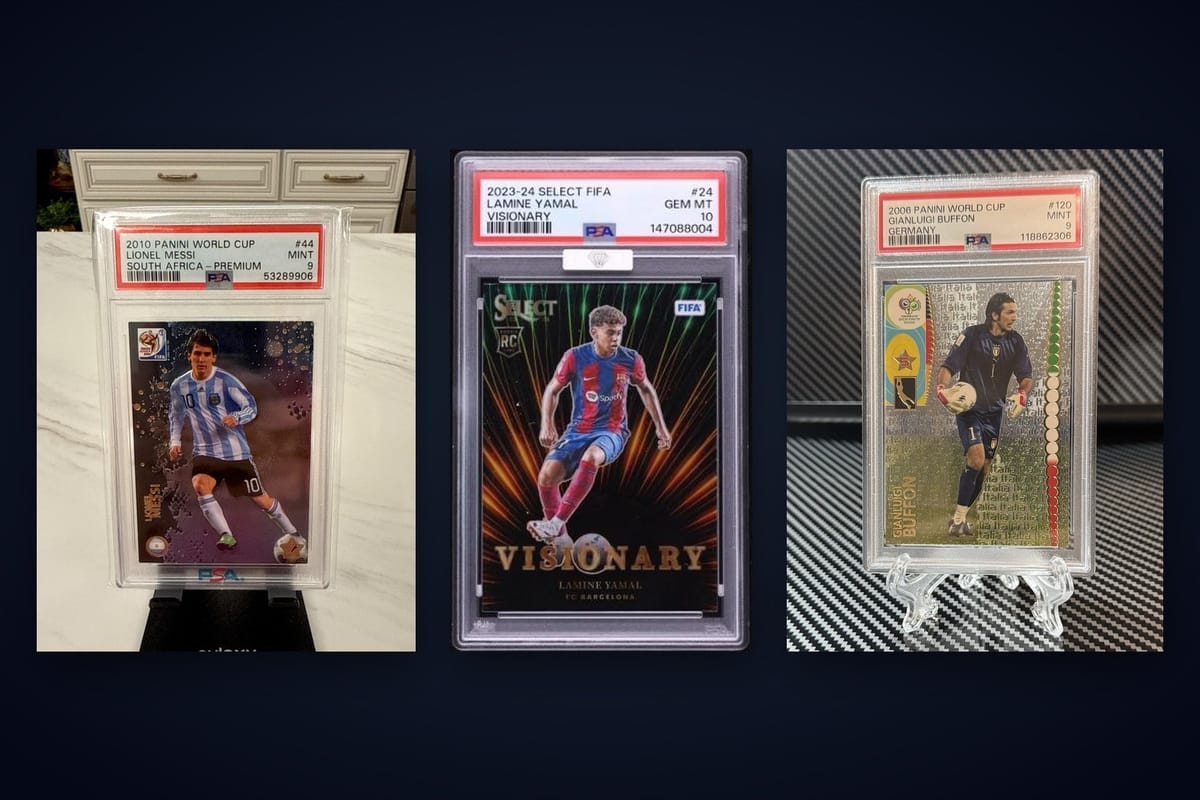
Lionel Messi #44 2010 Panini World Cup South Africa |
$251.57 | $1,763 | -1.2% |
 |
Lamine Yamal #24 2023 Panini Select FIFA Visionary |
$265.15 | $1,200 | 0% |
 |
Gianluigi Buffon #120 2006 Panini World Cup Germany |
$16.75 | $275.23 | 0% |
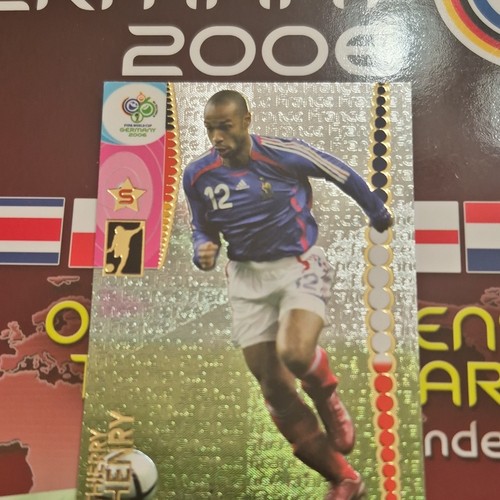 |
Thierry Henry #109 2006 Panini World Cup Germany |
$14.28 | $239.95 | 0% |
 |
David Beckham #93 2006 Panini World Cup Germany |
$15.38 | $170.00 | 0% |
 |
Lamine Yamal #108-BIS 2023 Panini Megacracks La Liga |
$536.11 | $10,100 | 0% |
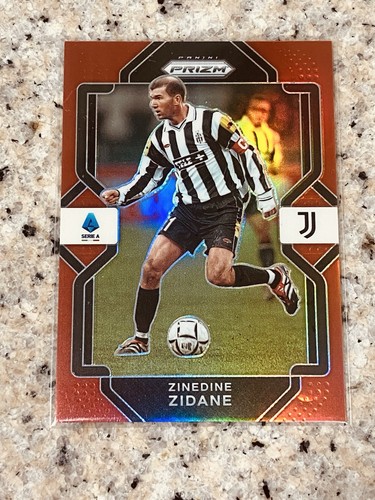 |
Zinedine Zidane [Gold] #206 2022 Panini Chronicles Serie A |
$2,964 | — | 0% |
 |
Zinedine Zidane #164 1998 Panini France World Cup Stickers |
$46.00 | $2,000 | 0% |
 |
Maradona #312 1979 Panini Calciatori |
$1,385 | $225,700 | 0% |
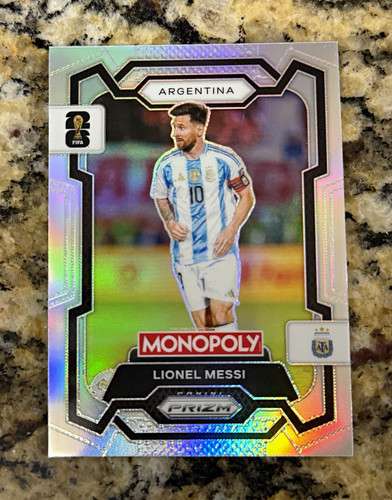 |
Lionel Messi [Silver] #1 2026 Panini Prizm Monopoly FIFA World Cup |
$37.50 | $625.00 | 0% |
 |
Zinedine Zidane #23 2024 Panini Donruss Kaboom |
$530.88 | $1,656 | 0% |
 |
Lamine Yamal #2 2025 Panini Select Road to FIFA Visionary |
$175.00 | $843.81 | 0% |
Look up any card's current raw and graded value in Midpoint — and get an estimated grade before you pay to submit.
1. The Soccer Card Market in November 2026: What the Dip Looks Like
The pattern in the data is broad but uneven. Plenty of soccer cards show falling prices over the last 30 days, in both raw and PSA 10 form, but the size of the drop varies a lot from card to card. Use the table in this post as your starting point, and note that every figure in it is dated as of 2026-11-01.
Three things to look for when you read it:
- Raw versus PSA 10 moves. A card whose raw price and PSA 10 price both slid is feeling real demand weakness. If only one moved, you may be seeing thin sales rather than a trend.
- Which players dominate the fallers. The biggest names from the 2026 World Cup product show up repeatedly, which suggests where the hype was concentrated.
- The spread. A wide gap between raw and PSA 10 can mean the graded premium is shrinking or that gem copies are simply scarce.
One month of movement is a snapshot, not a verdict. Treat it as a prompt to investigate, not a signal to trade.
2. Post-World Cup Demand Cooling: Hype Fades Fast
Tournament-driven demand is typically front-loaded. Collectors buy during the matches, when every goal creates a new headline. Once the final whistle blows and the news cycle moves on, the casual buyers tend to leave first.
That is a likely reason for falling soccer card prices right now. Speculators who bought on momentum may be selling into a market with fewer new buyers. Prices that were propped up by attention can drift back toward what long-term collectors will actually pay.
- Casual and gift buyers tend to drop out first.
- Flippers list at peak-era prices, then cut asking prices to get sales.
- Long-term collectors wait, which thins bids further in the short run.
This cooling is common after event-driven spikes. The question is not whether hype fades but which cards have a reason to hold their value after it does.
3. Supply Is Rising: New Releases, More Product
Price is demand meeting supply, and supply tends to keep growing. New releases and wider product availability put more copies of the same players in front of the same buyers. When a card is easy to find, sellers undercut each other.
Supply pressure can show up in a few ways:
- More listings. A flood of sellers on the same card pushes the lowest ask down, and recent solds follow.
- Fresh product competing for attention. Every new box gives collectors a new chase, pulling money away from older cards.
- More graded copies. As more cards get submitted, PSA 10 premiums can compress because gem copies become less rare.
If you want to understand how scarcity shapes value, our guide to grading low population cards explains why low supply carries such a premium.
4. Biggest Fallers: Musiala, Mbappé and Yamal in 2026 Panini Prizm FIFA World Cup
The cards leading the declines in the database are from 2026 Panini Prizm FIFA World Cup, and three names stand out: Jamal Musiala, Kylian Mbappé and Lamine Yamal. Check the table for their exact raw and PSA 10 moves as of 2026-11-01.
Why these three? These are plausible explanations, not proven causes:
- They likely carried the most hype. The most-chased players often see the biggest run-up, so they can have the furthest to fall.
- They are probably widely printed. Popular players tend to appear across many parallels and products, which means plenty of copies to sell.
- Young stars are priced on future expectations. Musiala and Yamal in particular are valued on what they might become, so any softening in sentiment can hit harder.
A big drop is not automatically a bargain. A card that fell sharply may still be priced above where long-term demand supports it. Compare the new price against pre-tournament levels before you call it cheap.
5. Card Types Most Exposed to Falling Soccer Card Prices
Not all soccer cards are losing value equally. The general pattern is that the more copies that exist, the more exposed the card.
- Common base cards. Huge supply and little collector urgency make these the first to slip.
- Unnumbered cards. With no print cap, supply can keep growing.
- Widely printed parallels. Colorful does not mean scarce. If a parallel is easy to find, it behaves like a base card.
- Hype-driven and mid-tier rookies. Players priced on tournament moments rather than sustained performance tend to cool fastest.
If your collection is heavy in these categories, expect more volatility. It is the strongest case for tracking value over time instead of checking prices only when you feel nervous.
6. Cards Showing Relative Resilience: Scarce Numbered Cards, PSA 10s and Messi and Ronaldo
The other side of the story is more encouraging. Cards with real scarcity often behave differently when the market softens.
- Scarce numbered cards. A hard print run caps supply, so even weak demand has less price pressure to work with.
- Strong PSA 10 examples. A genuinely clean gem on a desirable card tends to attract committed buyers who do not chase every dip.
- Established stars. Lionel Messi and Cristiano Ronaldo have deep, global, multi-year collector bases that do not depend on one tournament.
Resilience is relative, not immunity. Check the table for how Messi and Ronaldo cards actually moved over the last 30 days rather than assuming. A card can fall less than the market and still fall.
7. How to Verify a Real Price Decline
Before you buy or sell, confirm the drop is real. Asking prices can be misleading, and a single odd sale can look like a trend.
- Use sold listings, not active ones. On eBay, filter to sold items. Sellers can ask anything; buyers decide the price.
- Check sales volume. Three sales in a month tell you far less than thirty. Thin volume makes any price unreliable.
- Compare raw versus graded. If PSA 10 holds while raw falls, the story differs from both falling together.
- Look at the 30-day trend. One bad day is noise. A steady slope across several weeks is a signal.
- Match the exact card. Parallel, numbering and grade must all match, or you are comparing different products.
The same discipline applies in reverse when you consider selling: the last sold price is your real benchmark, not a hopeful listing.
8. Buy the Dip, Wait or Sell?
This is where most collectors get hurt, so be deliberate. There are three reasonable paths.
- Buy the dip if the card is scarce, the player has long-term demand and the new price is supported by multiple recent solds.
- Wait if prices are still sliding week over week. Catching a falling knife is expensive, and a cooling market can keep cooling before it stabilizes.
- Sell if you hold abundant, hype-driven cards you were only ever planning to flip, especially if you need the cash.
Panic buying is the main risk. A card that is down is not the same as a card that is cheap. If you cannot explain why it should recover, it is not a dip, it is a decline.
If you are weighing soccer cards to buy the dip, set a budget, buy in stages and avoid committing everything at once.
9. What Drives Recovery: Centering, Condition, Population and Scarcity
Some cards bounce back and others never do. The difference usually comes down to a handful of factors.
- Centering and condition. A well-centered, clean card has a realistic shot at a top grade, which supports a premium. Read how centering impacts card value to see how large that effect can be.
- Grading population. A high PSA 10 population means more competition at the top grade. A low one tends to keep premiums intact.
- Scarcity. Numbered or short-printed cards have natural price support.
- Player performance. Strong club and national-team seasons can rebuild demand. Quiet ones often do not.
- Future demand. Upcoming tournaments and new transfers can create the next wave of interest.
A card with scarcity, a proven player and gem potential is more likely to recover than an abundant base card of a trending name, though no recovery is guaranteed.
10. A Practical November Strategy: Scarce Cards, Spreads and Smart Grading
Put it all together with a simple plan for this market.
- Target overlooked scarce cards. Look for numbered cards and short prints that fell along with the market but have little supply.
- Compare raw and PSA 10 spreads. If the gap is wide and the card centers well, a raw copy graded successfully could be worth the fee. If the gap is narrow, buying raw to grade rarely makes sense.
- Avoid abundant inventory. If you can find dozens of identical listings, you do not need to rush.
- Grade a cheap copy that centers well. A dip lowers the cost of entry, so the real risk becomes the grade, not the card price.
This is where Midpoint helps. You can measure centering down to the millimeter, get an estimated PSA, BGS, CGC or TAG grade, and track your collection's value over time before paying $30 or more to submit. Our step-by-step pre-grading guide walks through the process, and the free centering calculator is a quick first check.

Conclusion
Soccer card prices dropping in November 2026 most likely reflects a post-World Cup cooldown: fading hype plus more supply. The cards most exposed are abundant ones, while scarce numbered cards, strong PSA 10s and established stars like Messi and Ronaldo tend to hold up better.
Verify every drop with sold listings and volume, resist panic buying, and focus on scarcity and condition. Measure centering first, grade only copies worth the fee, and let the data in the table guide you.
FAQ
Q: Why are soccer card prices dropping in November 2026?
A: Most likely because World Cup hype has cooled while supply has grown through new releases and wider product availability. Casual buyers tend to leave after the tournament, and more sellers end up competing for fewer purchases.
Q: Which soccer cards are losing the most value right now?
A: In the app's data as of 2026-11-01, 2026 Panini Prizm FIFA World Cup cards of Jamal Musiala, Kylian Mbappé and Lamine Yamal are among the biggest fallers. Common, unnumbered and widely printed cards are generally the most exposed types.
Q: Is it a good time to buy soccer cards after the November 2026 drop?
A: It can be, but only selectively. Focus on scarce cards with long-term demand, confirm the new price with recent sold listings, and avoid panic buying while prices are still sliding.
Q: Should I sell my soccer cards or wait for prices to recover?
A: It depends on the card. Abundant, hype-driven cards you only planned to flip may be worth selling, especially if you need the cash. Scarce numbered cards and established stars are often reasonable to hold, though recovery is not guaranteed.
Q: Are Messi and Ronaldo soccer cards holding their value better than newer players?
A: They tend to show more resilience because their collector bases are deep and not tied to one tournament. Still, check the 30-day moves for the specific card, since resilient does not mean immune.
Q: How can I tell whether a soccer card price drop is real?
A: Look at eBay sold listings rather than asking prices, check sales volume, compare raw and graded comps for the exact card, and review the 30-day trend. A steady decline across many sales is real; a single low sale is not.
Free to start
Try the Midpoint app
Grade any card from a photo, see its raw and PSA 10 value, and track what your collection is worth — free.
Get it on iPhoneGet it on Android


