1952 Bowman Baseball Cards Value: Price Guide by Grade
1952 Bowman baseball cards value explained: Mantle, Mays, Berra, Musial, Minoso, high-number scarcity, PSA 10 premiums, and which cards to grade.

Estimated reading time: 11 min
Key Takeaways
- 1952 Bowman baseball cards value is driven by three things: the player (Mantle #101, Mays #218, Berra #1, Musial #196, Minoso #5), the card number (high numbers #217–252 are scarcer), and the grade.
- The gap between a mid-grade copy and a gem is enormous on a 70+ year old issue, so the grading decision matters more here than on almost any modern set.
- Centering, print defects, and uneven cuts hold back many copies. Pre-checking these before you pay to submit saves money.
- Not every card is worth grading. Commons in low grades often cost more to slab than the slab adds in value.
- Prices cited here come from the Midpoint database as of 2026-11-15. Always confirm against recent sales before you buy or sell.
Card values — live data from Midpoint's card database, as of 2026-11-15. Prices move; Midpoint refreshes these daily.
| Card | Raw | PSA 10 | Gem premium | |
|---|---|---|---|---|
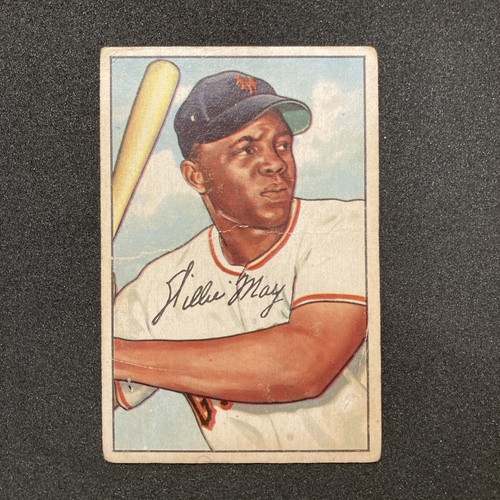 |
Willie Mays #218 1952 Bowman |
$1,200 | $264,288 | 220.2× |
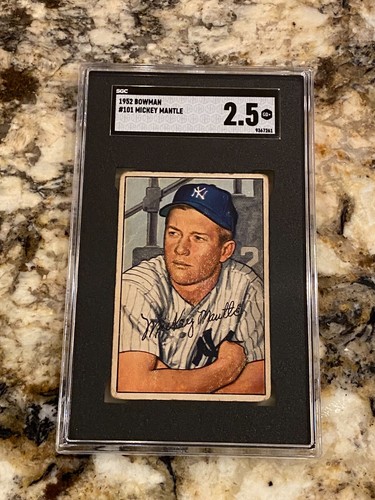 |
Mickey Mantle #101 1952 Bowman |
$2,907 | $184,640 | 63.5× |
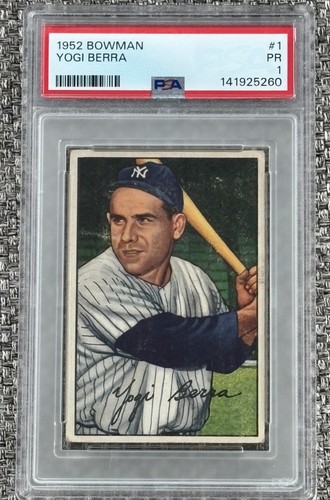 |
Yogi Berra #1 1952 Bowman |
$123.43 | $90,000 | 729.2× |
 |
Stan Musial #196 1952 Bowman |
$250.00 | $60,106 | 240.4× |
 |
Warren Spahn #156 1952 Bowman |
$66.00 | $22,373 | 339× |
 |
Orestes Minoso #5 1952 Bowman |
$84.52 | $21,270 | 251.7× |
 |
Duke Snider #116 1952 Bowman |
$81.19 | $17,614 | 217× |
 |
Roy Campanella #44 1952 Bowman |
$65.00 | $15,792 | 243× |
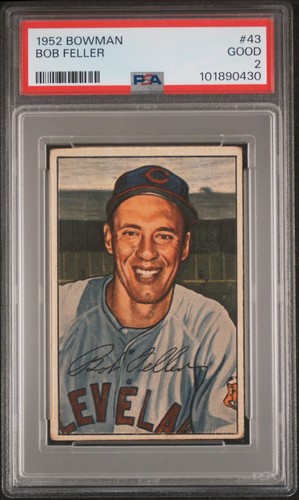 |
Bob Feller #43 1952 Bowman |
$52.25 | $12,642 | 241.9× |
 |
Larry Doby #115 1952 Bowman |
$50.43 | $12,324 | 244.4× |
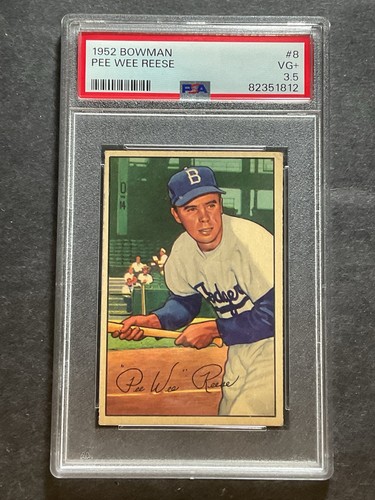 |
Pee Wee Reese #8 1952 Bowman |
$48.50 | $11,161 | 230.1× |
 |
Gil Hodges #80 1952 Bowman |
$42.53 | $10,474 | 246.3× |
Look up any card's current raw and graded value in Midpoint — and get an estimated grade before you pay to submit.
Table of Contents
- Section 1: The 1952 Bowman Set and What Drives Value
- Section 2: Most Valuable 1952 Bowman Cards
- Section 3: 1952 Bowman Price Guide: Raw vs Graded
- Section 4: High-Number Scarcity (#217–252)
- Section 5: How Condition Changes Value
- Section 6: Which 1952 Bowman Cards Are Worth Grading
- Section 7: Complete Sets, Authentication, Insurance, and Selling
Section 1: The 1952 Bowman Set and What Drives Value
If you are researching 1952 Bowman baseball cards value, start with the set itself. It contains 252 cards, numbered 1 through 252, and it is a cornerstone of postwar collecting. The cards feature painted-style color portraits with a facsimile signature on the front, and biography and statistics on the back.
Compared with its famous rival, the 1952 Topps set, Bowman is generally the more approachable vintage set. That accessibility is why collectors build it card by card.
Card Numbering and the High Series
The set runs in a single numerical sequence, but it is not equal in scarcity. Cards #217–252 make up the so-called high-number series. They are generally understood to have been produced and distributed in smaller quantities late in the season, so they are tougher to find, especially in sharp condition.
- #1–216: the base run, with stars like Yogi Berra (#1), Minnie Miñoso (#5), Mickey Mantle (#101), and Stan Musial (#196).
- #217–252: the high numbers, including Willie Mays at #218.
The Three Value Drivers
Every price you see for this set reduces to the same three questions:
- Who is on the card? Hall of Famers and iconic names carry the market.
- Where does it fall in the numbering? High numbers command a premium.
- What is the condition? Grade is the multiplier on everything else.
The table above pulls raw and graded figures from Midpoint's database, current as of 2026-11-15. Use it as a reference point, then read on to understand why the numbers move so sharply between grades.
Section 2: Most Valuable 1952 Bowman Cards
The most valuable 1952 Bowman cards are the names that anchor the hobby. Five cards define the top of the set, and each tells a slightly different value story.
Mickey Mantle #101
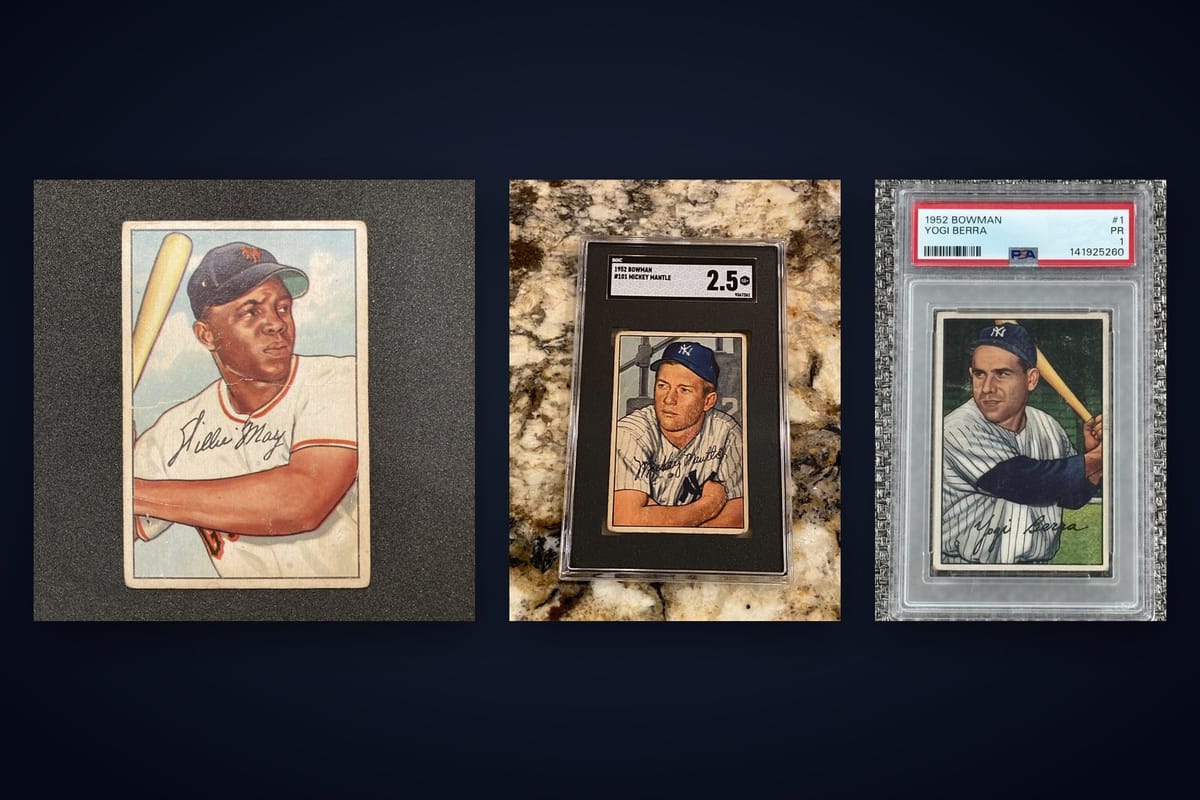
Mantle is the headline card. His 1952 Bowman is not his rookie card, but it sits at the center of the vintage market and consistently draws the strongest demand in the set. Mantle copies also attract a great deal of scrutiny for trimming and alteration, so authentic, problem-free examples are prized.
Willie Mays #218
Mays's 1952 Bowman is a high-number card, which stacks two premiums: a legendary player and a scarce series. That combination is why it ranks alongside Mantle at the top of the price guide, particularly in higher grades.
Yogi Berra #1, Stan Musial #196, Minnie Miñoso #5
- Yogi Berra #1: the first card in the set, so it is often said to have sat on top of stacks and bundles. Corner and edge wear is commonly cited, so sharp copies stand out.
- Stan Musial #196: an inner-circle Hall of Famer with steady collector demand across all grades.
- Minnie Miñoso #5: a popular early-numbered card with a loyal following, and a more attainable entry point among the stars.
Beyond these five, remember that price rank is not the same as grading rank. A mid-priced Hall of Famer in a gem holder can outperform a cheaper star in a lower holder by a wide margin. The data table shows the gaps between raw and graded figures for the entries Midpoint tracks.
- Top tier: Mantle and Mays.
- Second tier: Berra, Musial, Miñoso, and other Hall of Famers.
- Third tier: semi-stars and high-number commons.
Section 3: 1952 Bowman Price Guide: Raw vs Graded
A useful 1952 Bowman price guide separates raw (ungraded) cards from graded ones, and then separates graded cards by company and grade. Ignoring that split is a common mistake buyers make.
Raw Cards: Wide Ranges, Hidden Risks
Raw 1952 Bowman cards are sold with a seller's description, such as "VG-EX" or "looks NM." These labels are subjective. Two cards both described as "EX" can sell for very different prices once someone examines them closely.
- Raw cards in lower condition can trade relatively close to their graded equivalents, because the grade adds less certainty.
- Raw cards that look sharp are often sold at a discount to graded equivalents because of authenticity and trimming risk.
- Some raw cards are candidates for grading. Those are where the upside lives.
Graded Cards: PSA, SGC, and Others
PSA and SGC are two of the most common holders for vintage baseball. Collectors generally pay more for a PSA-graded card of the same numeric grade than for other holders, though SGC has a strong following in vintage. Prices for the same grade can differ by company, so compare like with like.
The Gem-Premium Gap
This is the central idea in the whole price guide. Value does not rise in a straight line with grade. It climbs gradually through the low and mid grades, then accelerates as you approach the top. That is the gem premium.
For a card this old, a top-grade example is rare precisely because the printing, cutting, and handling of the era worked against it. So the 1952 Bowman PSA 10 value, where a sale exists at all, is an outlier rather than a benchmark. Check the table above (as of 2026-11-15) and compare it to the next grade down to see the size of the jump.
When reading any sale record, note the sale date, the grade, the price, and whether it was an auction or a fixed-price listing. Auction results usually reflect competitive bidding. Fixed-price listings reflect asking prices and may not clear.
Section 4: High-Number Scarcity (#217–252)
So, are high-number cards more valuable? Generally, yes. The high-number series (#217–252) is generally regarded as the scarcest portion of the 252-card set, and that scarcity shows up in prices, especially in higher grades.
Why High Numbers Are Tougher
- Lower print and distribution: the final series is generally understood to have reached fewer packs and fewer collectors.
- Late-season timing: the cards came out late in the season, and fewer are thought to have been saved.
- Condition survival: sharp copies are scarcer because fewer were stored carefully.
Willie Mays at #218 is the headline example. Even the lesser names in this range tend to carry a premium relative to similar players in the base numbers, particularly once you reach EX and above.
A Practical Checklist Approach
When you work through the complete checklist by number, organize your list into three groups so you can budget correctly:
- Stars: Berra #1, Miñoso #5, Mantle #101, Musial #196, Mays #218.
- Base commons (roughly #1–216): the most affordable cards and the bulk of any set build.
- High numbers (#217–252): the most expensive per card among non-stars.
What This Means for Grading
Because supply is lower, a high-number card in a strong grade is more likely to be worth the grading fee than a base common. If you want to understand how population scarcity shapes the decision, read our guide to grading low-population cards.
Section 5: How Condition Changes Value
Condition is the multiplier on every 1952 Bowman card. Here are the factors that separate a modest card from a premium one.
Centering
The 1952 Bowman design has a white border, so off-center cuts are obvious. Many copies were cut unevenly at the factory. A card with a clean front and sharp corners can still lose a full grade because of poor centering. PSA's current standard for a gem grade (PSA 10) calls for roughly 55/45 or better front centering, a tough bar for this issue. For more depth, see how centering impacts card value.
Corners, Edges, and Surface
- Corners: rounding and fraying are the first signs of age.
- Edges: chipping shows clearly against the white border.
- Surface: look for scuffs, gloss loss, wax stains, and gum stains.
- Print defects: dots, snow, and registration issues can cap a grade.
Major Problems
Creases, stains, and paper loss can push a card into the lowest grades. Trimming and other alterations are the biggest red flag of all. Trimmed cards are generally returned as altered rather than graded, and they lose most of their value.
Measure Before You Submit
You can pre-check centering on a card at home. Midpoint's centering tool measures borders and gives an estimated grade before you pay a grading fee.
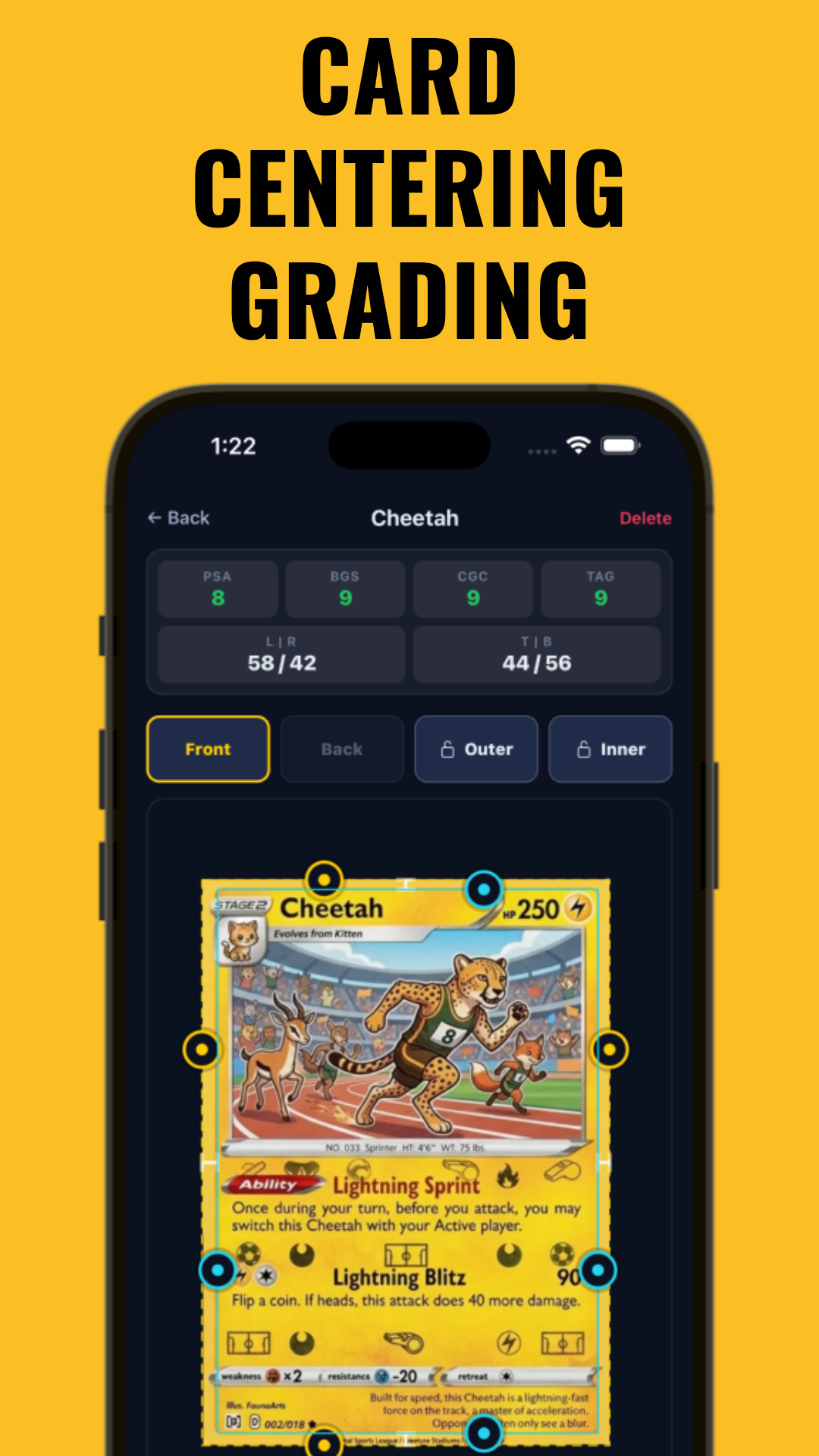
Try the free centering calculator to see where a card stands on the 55/45 to 60/40 range, then decide whether it is worth sending in.
Section 6: Which 1952 Bowman Cards Are Worth Grading
The question behind 1952 Bowman cards worth grading is a simple one: will the value after grading exceed the raw value plus the fee, shipping, and risk? Here is how to think about it.
Cards That Usually Justify Grading
- Stars with visually clean copies: Mantle, Mays, Berra, Musial, and Miñoso in sharp raw condition.
- High-number cards (#217–252): scarcity supports a premium in many grades.
- Raw cards sold as authentic but unverified: third-party authentication adds buyer confidence and resale liquidity.
Cards That Often Do Not
- Low-grade base commons, where the fee approaches the card's value.
- Cards with obvious creases, paper loss, or stains.
- Cards with visible off-center cuts, unless the player is a major star.
Running the Math
Use a simple framework:
- Look up the raw value and the graded values for each plausible grade in the table (as of 2026-11-15).
- Estimate the likely grade honestly, and assume one grade lower to be safe.
- Subtract the grading fee, shipping, insurance, and selling costs.
- Submit only if the downside case still makes sense.
A PSA 10 for this set is not a realistic planning assumption. Treat it as a bonus rather than a baseline, and focus your estimate on PSA 5 through 8 unless the card looks nearly flawless.
You can run a pre-grade by following this step-by-step pre-grading guide. With Midpoint, you can also scan a card and get an estimated PSA, BGS, CGC, or TAG grade from centering, corners, edges, and surface before spending $30 or more on a submission.
Section 7: Complete Sets, Authentication, Insurance, and Selling
Many collectors want to know what a complete 1952 Bowman set is worth. Here is how to approach it and how to protect what you own.
Complete-Set Values
A full 252-card set is usually described by overall condition: VG, EX, or NM. Each step up in condition raises the total sharply, because the high numbers and star cards dominate the cost. A set's price is not simply the sum of average card prices, so check recent sales of comparable complete sets.
- Buying a set whole: faster, but you may overpay for a few weak cards.
- Building card by card: slower and can cost more in total, but you control quality and can target the cards you want.
Either way, expect the five stars and the high-number series to take up the majority of your budget.
Identifying and Authenticating
- Check the card number and design against a trusted checklist.
- Inspect edges for signs of trimming under magnification.
- Compare card size and paper stock with known authentic examples.
- Buy high-value raw cards only from reputable sellers with return policies.
Insuring and Storing
A graded card's insured value usually tracks its grade. Learn how in our insurance value guide. Store raw vintage in semi-rigid holders, away from heat and humidity.
Selling
Graded stars generally sell best through auction houses or major marketplaces. Document the sale date, grade, and price, and track your collection's worth over time with Midpoint's portfolio feature.
Conclusion
1952 Bowman baseball cards value comes down to player, number, and grade. Mantle #101 and Mays #218 lead the set, Berra, Musial, and Miñoso follow, and the high numbers (#217–252) carry a scarcity premium that grows with condition. The gem-premium gap means a single grade can change a card's price dramatically, which is why disciplined pre-grading matters.
Use the table above (as of 2026-11-15) to compare raw and graded figures, be skeptical of raw cards that look too good, and grade only when the math still works if you land a grade lower than hoped. When you are ready to check a card, start with Midpoint for a quick centering measurement and an estimated grade.
FAQ
Q: How much is a 1952 Bowman Mickey Mantle card worth?
A: The Mantle #101 is one of the most valuable cards in the set, and its price depends heavily on grade and authenticity. Midpoint's table above lists raw and graded figures as of 2026-11-15. Compare sales at the same grade and holder, and be cautious about trimmed or altered copies.
Q: What is the most valuable 1952 Bowman baseball card?
A: Mickey Mantle #101 and Willie Mays #218 are the top two, with Mays benefiting from high-number scarcity. Yogi Berra #1, Stan Musial #196, and Minnie Miñoso #5 round out the main stars.
Q: How much is a 1952 Bowman Willie Mays card worth?
A: Mays #218 is a high-number card, so it carries both star power and scarcity. Its value rises steeply with grade. See the table for raw and graded figures as of 2026-11-15, and check recent comparable sales before buying or selling.
Q: Are 1952 Bowman high-number cards more valuable?
A: Generally, yes. Cards #217–252 are generally understood to have been produced and distributed in smaller quantities, so they are harder to find, especially in high grades. They usually command a premium over similar players in the lower numbers.
Q: What is a complete 1952 Bowman baseball card set worth?
A: A complete 252-card set is priced by overall condition (VG, EX, or NM), and the total rises sharply at each step. The five stars and the high-number series account for most of the cost. Building card by card can cost more than buying a set whole, but gives you control over quality.
Q: How do I determine the condition and value of a 1952 Bowman card?
A: Inspect centering, corners, edges, surface, print defects, creases, stains, and signs of trimming. Then match the likely grade to raw and graded figures in a price guide. A tool like Midpoint can measure centering and estimate a grade before you submit.
Free to start
Try the Midpoint app
Grade any card from a photo, see its raw and PSA 10 value, and track what your collection is worth — free.
Get it on iPhoneGet it on Android