1957 Topps Baseball Cards Value: What's Worth Grading
1957 Topps baseball cards value explained: most valuable cards, key rookies, the PSA 10 gem premium, and which cards are worth grading before you submit.

Estimated reading time: 11 min
Key Takeaways
- 1957 Topps baseball cards value depends on three things: the player, the card number (the high-number series is tougher), and the grade. Condition moves price more than almost anything else.
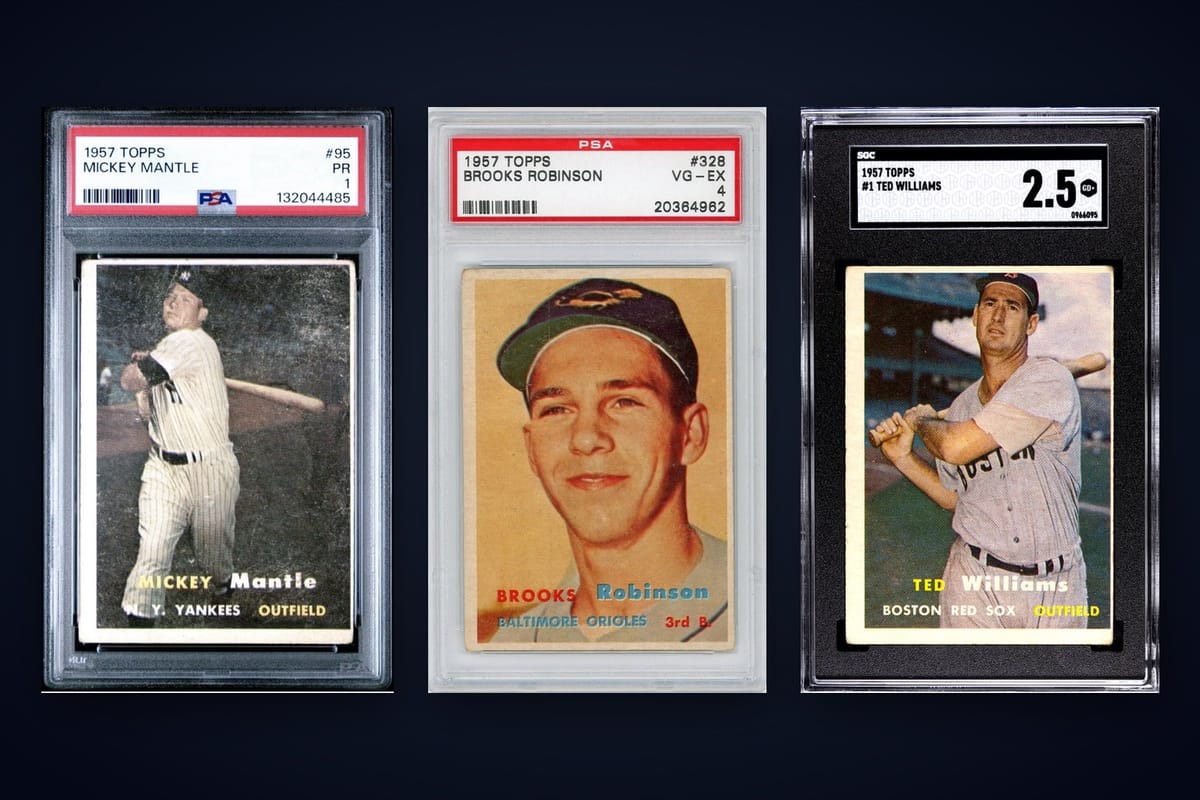
- The most valuable 1957 Topps cards are Mickey Mantle #95, Ted Williams #1, Willie Mays #10, Hank Aaron #20, Roberto Clemente #76, Sandy Koufax #302 and the high-number Dodgers Sluggers #400.
- Key rookies include Frank Robinson #35, Don Drysdale #18 and Brooks Robinson #328. Each typically carries a premium over a typical Hall of Famer from the set.
- The gem premium is steep. A PSA 10 sale on a 1950s card is rare, so treat any PSA 10 price as a single data point, not a market.
- Grading pays off mainly on stars, rookies and high numbers with strong centering and clean surfaces. Pre-check centering before you pay to submit.
Card values — live data from Midpoint's card database, as of 2026-11-08. Prices move; Midpoint refreshes these daily.
| Card | Raw | PSA 10 | Gem premium | |
|---|---|---|---|---|
 |
Mickey Mantle #95 1957 Topps |
$593.34 | $242,321 | 408.4× |
 |
Brooks Robinson #328 1957 Topps |
$715.00 | $146,252 | 204.6× |
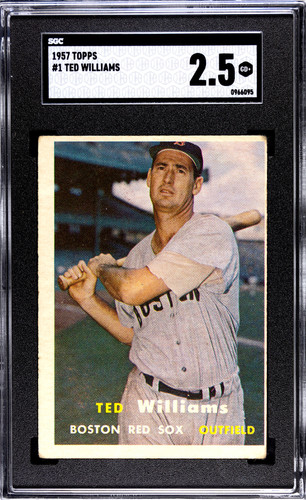 |
Ted Williams #1 1957 Topps |
$150.00 | $91,500 | 610× |
 |
Sandy Koufax #302 1957 Topps |
$277.73 | $56,615 | 203.9× |
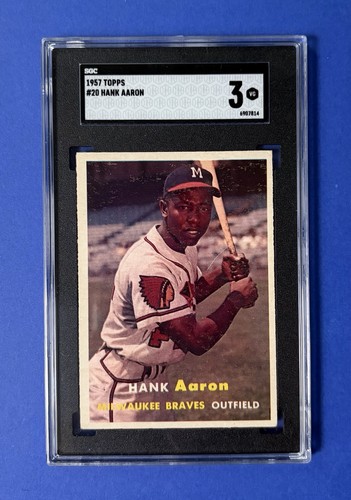 |
Hank Aaron #20 1957 Topps |
$166.71 | $56,160 | 336.9× |
 |
Berra, Mantle [Yankees Power Hitters] #407 1957 Topps |
$227.50 | $50,315 | 221.2× |
 |
Willie Mays #10 1957 Topps |
$178.75 | $37,860 | 211.8× |
 |
Don Drysdale #18 1957 Topps |
$108.08 | $30,744 | 284.5× |
 |
Frank Robinson #35 1957 Topps |
$176.53 | $30,691 | 173.9× |
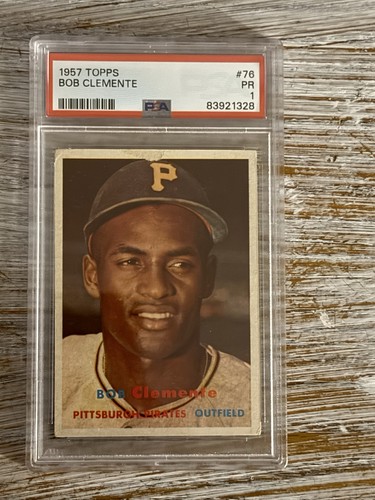 |
Bob Clemente #76 1957 Topps |
$135.70 | $27,694 | 204.1× |
 |
Bobby Richardson #286 1957 Topps |
$90.00 | $19,412 | 215.7× |
 |
Jim Bunning #338 1957 Topps |
$85.95 | $19,135 | 222.6× |
Look up any card's current raw and graded value in Midpoint — and get an estimated grade before you pay to submit.
Table of Contents
- Section 1: The 1957 Topps Set and What Drives Value
- Section 2: The Most Valuable 1957 Topps Cards
- Section 3: Rookies, Key Cards and Mid-Tier Hall of Famers
- Section 4: Condition, Grades and the PSA 10 Gem Premium
- Section 5: Which 1957 Topps Cards Are Worth Grading
- Section 6: Authenticity, Reprints and Altered Cards
- Section 7: Valuing, Photographing and Selling Your Collection
- Conclusion
- FAQ
Section 1: The 1957 Topps Set and What Drives Value
If you are researching 1957 Topps baseball cards value, start with the set itself. Topps issued 407 cards in 1957, and it was the year the company moved to the standard 2½-by-3½-inch size that collectors still associate with modern cardboard. Earlier sets used a different format. The 1957 design pairs clean color photography with a simple layout. Many collectors consider it one of the best-looking sets of the decade.
Low numbers vs. the high-number series
Like many 1950s sets, 1957 Topps was released in series. The later, high-number cards (roughly the 300s and 400s) were generally printed and sold later in the season, so they are harder to find in nice condition. A star in the high-number run, like the Dodgers Sluggers #400, can be tougher than a lower-number star of similar fame.
The four value drivers
- Player: Mantle, Williams, Mays, Aaron, Clemente and Koufax lead demand.
- Card number and series: Scarcity within the set matters.
- Eye appeal: Centering, color, gloss and print quality.
- Grade and grading company: A PSA label often brings a stronger resale premium than raw, though sometimes not enough to cover submission costs.
Price guides change constantly, so this post ranks the cards by tier and explains why prices differ rather than quoting fixed prices. For any specific card, run it through Midpoint's card lookup to see raw vs. graded values side by side before you buy, sell or submit.
The sections below cover the most valuable 1957 Topps cards, the rookies, how grade changes price, and how to decide what is worth grading.
Section 2: The Most Valuable 1957 Topps Cards
A 1957 Topps price guide is dominated by a short list of names. Here is how the top of the set breaks down, and why each card commands attention.
Mickey Mantle #95
Mantle is the face of 1950s collecting, and his 1957 card is the set's headline. Even low-grade copies draw strong interest. Mid-grade examples are the sweet spot for many buyers: they are affordable relative to high grades but still look good in a holder. At the top end, centering and surface issues separate a good card from a record-setting one.
Ted Williams #1
Being card #1 can cut both ways. Williams has huge name value, but the first card in a stack or bundle often took the most abuse from rubber bands, handling and storage. Corner wear and edge chipping can be common, so clean copies carry a real premium.
Mays #10, Aaron #20 and Clemente #76
- Willie Mays #10: Consistent demand across all grades.
- Hank Aaron #20: One of the set's most sought-after Hall of Famers, since Aaron collectors want every year.
- Roberto Clemente #76: Another icon with a passionate collector base, and often priced in the same range as Aaron and Mays.
Koufax #302 and Dodgers Sluggers #400
Sandy Koufax #302 sits in the later series, which makes high-grade copies hard to find. He is a perennial favorite, and this is not his rookie year, but demand has kept it strong. The Dodgers Sluggers #400 is a high-number multi-player card. It is a classic condition-sensitive key: scarcity in high grades matters more than the individual names.
For current numbers on each of these, compare with a live comparable sale from the same grade and grader.
Section 3: Rookies, Key Cards and Mid-Tier Hall of Famers
Below the Mantle-Williams-Mays tier is a deep group of cards that behave very differently on price. Understanding this middle layer is where many collectors find real value.
Key 1957 Topps rookie cards
- Frank Robinson #35: His true rookie card. Robinson was a Hall of Famer and a major player in both leagues, which keeps demand durable.
- Don Drysdale #18: The Dodgers pitcher's rookie. Rookies of Hall of Fame pitchers often sell above other Hall of Famers from the same set.
- Brooks Robinson #328: Brooks's rookie sits in the high-number series, which adds a scarcity bump on top of the player premium.
Watch for list errors: online lists sometimes muddle card numbers and which rookies share them. Always verify the card number and player on the front and back before you buy, list or compare prices.
Mid-tier Hall of Famers
The set also includes many Hall of Famers who are not household superstars to casual collectors. These cards often sell for far less than the top names but follow the same pattern: price climbs sharply with grade, particularly when copies are well centered with sharp corners.
Commons, semi-stars and team cards
Commons are the backbone of a set build. Low grades are inexpensive, but nice high-number commons can bring surprising money from set builders, because everyone building a registry set needs them. Team cards and checklists are condition-sensitive too, especially unmarked checklists.
How to think about tiers
- Tier 1: Mantle, Williams, Mays, Aaron, Clemente.
- Tier 2: Koufax, Frank Robinson, Drysdale, Brooks Robinson, Dodgers Sluggers.
- Tier 3: Other Hall of Famers and star players.
- Tier 4: Commons, with high numbers valued above low numbers.
If you own a Tier 2 rookie in strong shape, grading economics often work. For a typical Tier 4 common, they rarely do.
Section 4: Condition, Grades and the PSA 10 Gem Premium
Condition is the biggest swing factor in 1957 Topps baseball cards value. Two copies of the same card can differ by many multiples depending on grade.
What graders look at
- Centering: How evenly the border sits left to right and top to bottom. Off-center is one of the most common reasons vintage cards miss high grades.
- Corners: Softness, fraying and rounding.
- Edges: Chipping and roughness.
- Surface: Scratches, print dots, gloss loss, stains and wax or gum residue.
- Creases and trimming: Creases drop grade sharply. Trimmed cards can be rejected or labeled altered.
For a full breakdown of how border balance affects price, see how centering impacts card value.
Why PSA 10 is a different market
The 1957 Topps PSA 10 value question has an unusual answer: for most key cards in this set, PSA 10 copies are either nonexistent or so rare that there is no steady market. A single sale can reset the benchmark, and it may reflect two determined bidders rather than a repeatable price. For vintage, PSA 8 and PSA 9 are far more meaningful comps, and they are where most real trading happens.
The gem-premium gap
The gem premium is the jump between a card in decent shape (say PSA 5 to PSA 7) and one in top grades. On 1950s cardboard, that gap tends to widen with each step because fewer survivors exist at each level. Price movement from PSA 7 to PSA 8, or PSA 8 to PSA 9, can be dramatic for stars and keys, while commons barely budge.
Not every company uses the same standards, either. PSA, BGS and CGC differ in how they define top grades, so compare like with like, and never compare a PSA 8 sale with an SGC 8 sale as if they were identical.
Section 5: Which 1957 Topps Cards Are Worth Grading
Whether 1957 Topps cards are worth grading comes down to math: expected graded value minus raw value, minus costs. Submission fees vary by company, service level and declared value, and that is before shipping and insurance, so check current fee schedules.
A simple decision framework
- Grade it: Tier 1 and Tier 2 cards, rookies, and high numbers with sharp corners, decent centering and clean surfaces.
- Maybe: Mid-tier Hall of Famers that look like a solid 6 to 8 and have a meaningful graded premium.
- Skip: Commons with soft corners, creases, stains or heavy wear. Grading will not rescue them.
Centering first, then everything else
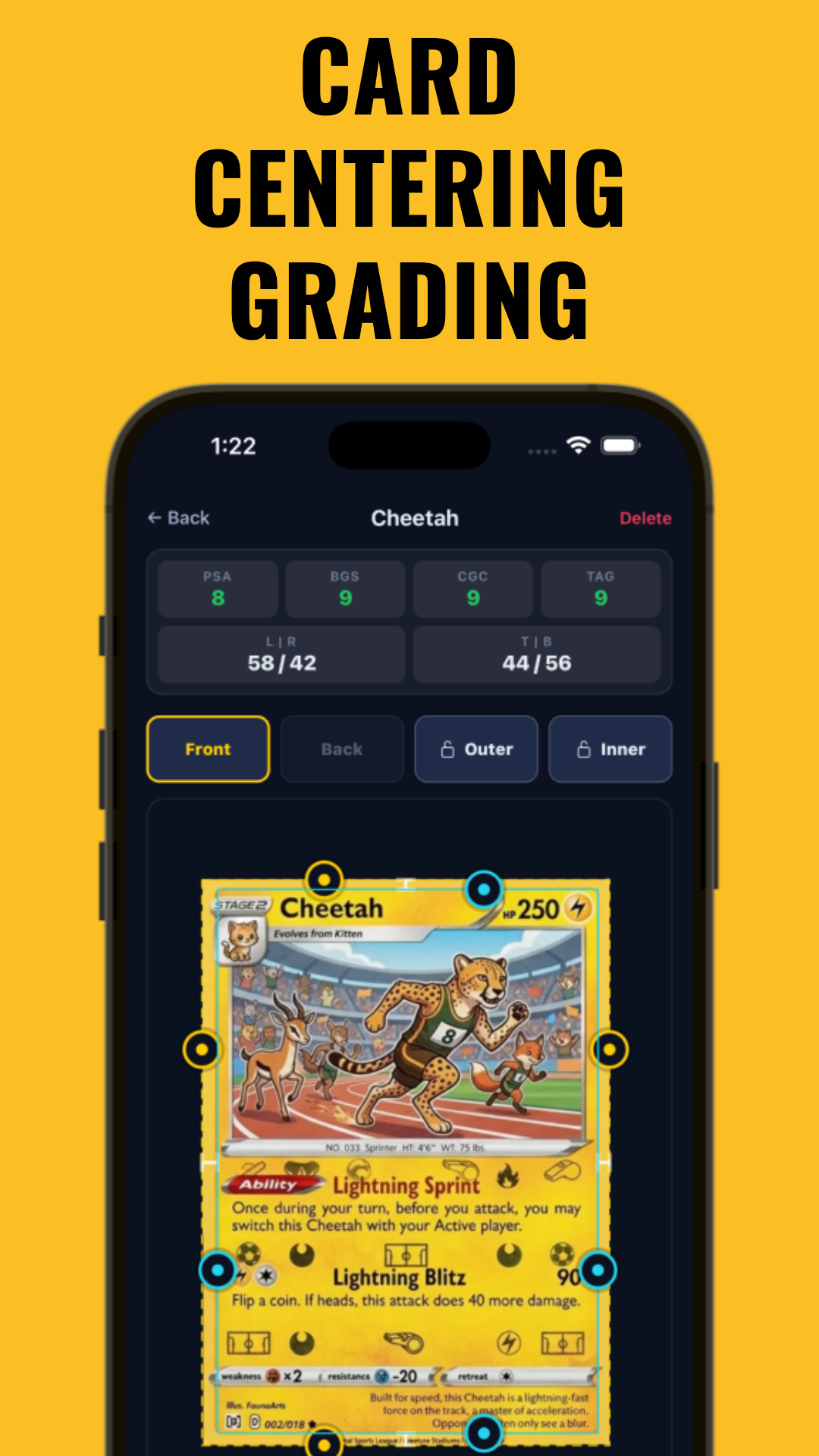
Centering is the easiest defect to check before you send anything in. Look at it first, because a card that is badly off-center will rarely reach the grade you need no matter how clean the surface. Midpoint's centering tool measures border ratios on both axes so you can see where a card stands. You can also use the free centering calculator for a quick check.
Pre-grade the whole stack
Work through your cards methodically: scan or photograph each, measure centering, inspect corners and surface under good light, and estimate a grade range. Our guide to pre-grading your card walks through the process. Midpoint adds AI-estimated PSA, BGS, CGC and TAG grades so you can compare your expected outcome against the raw vs. graded values for that exact card.
Run the numbers
- Estimate the probable grade, not the best-case one.
- Look at graded comps for that grade and the one below it.
- Subtract grading fees, shipping, insurance and selling fees.
- If the profit only exists at the best-case grade, the card is a gamble.
Sometimes the best answer is to keep the card raw. For vintage, a clean raw card sold with good photos can do well with buyers who like to judge the card themselves.
Section 6: Authenticity, Reprints and Altered Cards
High values attract bad actors. Before you pay up for a Mantle or Williams, make sure the card is real and unaltered.
Spotting reprints and counterfeits
Topps and other companies have issued reprints and tribute versions of classic designs over the years. Counterfeits also exist. Common warning signs include:
- Glossy, bright stock: Original 1950s cardboard typically has a slightly dull feel and a gray-toned stock on the back.
- Print pattern: Under magnification, genuine vintage printing shows a rosette dot pattern. Digital fakes often look blurry or show a uniform grid.
- Mismatched details: Wrong fonts, extra copyright text, or a card that looks too crisp for its age.
- Size: A card that is off-spec from the 2½-by-3½-inch standard may be trimmed or a replica.
Compare any suspect card against a known graded copy from a reputable source side by side. When in doubt, a professional authentication service is cheap insurance.
Altered and trimmed cards
Trimming sharpens edges and fixes centering. Look for:
- A card that measures noticeably smaller than others in the set.
- Edges that look too clean or uniformly cut, especially with no cutting or factory roughness.
- Color touch-ups on corners or edges, which can show under magnification or UV light.
Real variation vs. condition-related differences
Fading, toning, gum stains, wax stains and print snow are condition issues, not variations. They affect grade but do not create a different card. Do not assume an odd-looking copy is rare. Check a trusted checklist and population data before paying a variation premium.
Protect what you own
Once authenticated, store your cards correctly. Humidity, sunlight and loose stacking cause damage over time. Our guide on how to store valuable cards covers sleeves, top loaders, and climate considerations.
Section 7: Valuing, Photographing and Selling Your Collection
Once you know what you have, the next job is valuing and selling it well. A little organization pays off.
Organize and inventory
- Sort cards by number, 1 through 407, so you can spot gaps and doubles fast.
- Separate Tier 1 and Tier 2 cards, rookies and high numbers from the rest.
- Record player, card number, condition notes and a rough grade estimate for each card.
A collection tracker helps here. Midpoint's portfolio tracking shows your collection's value over time, so you can see how the set moves as comps change.
Valuing a complete set
A complete 1957 Topps set is a major undertaking because of the high-number series and the stars. Its value is not a simple sum of average prices. It depends on the condition of the key cards, how consistent the grades are across the set, and whether cards are graded or raw. Value the Tier 1 and Tier 2 cards individually, then price the rest in bulk by condition band. Sets assembled from mixed grades usually sell below the sum of high-grade parts.
Photograph for the sale
- Use soft, even light and a plain background. Avoid glare.
- Shoot the front and back square on, then add close-ups of corners and any flaws.
- Do not edit out defects. Honest photos reduce returns and disputes.
Choose where to sell
- Auction houses: Suited to top-tier keys and graded high-end cards.
- eBay: Broad reach for mid-tier and raw cards, and an easy source of recent comps.
- Consignment or direct sale: Useful for bulk lots and complete sets.
Check recent sold listings (not asking prices) at the same grade and grading company before you set a reserve. For insurance purposes, see how card grade impacts insurance value. You can also track and pre-grade your cards with Midpoint, which is free on iOS and Android.
Conclusion
The value of 1957 Topps baseball cards comes down to who is on the card, where the card sits in the set, and how well it survived. Mantle #95, Williams #1, Mays #10, Aaron #20, Clemente #76, Koufax #302 and the Dodgers Sluggers #400 lead the set. The Robinson and Drysdale rookies sit just behind them.
The gem premium is the key lesson. Price climbs steeply with each grade step, and PSA 10 examples are so rare that a single sale tells you little. Pay attention to PSA 7, 8 and 9 comps instead.
Before you submit anything, check centering, corners, edges and surface, then run the numbers on fees against the probable graded value. Start with your best cards, keep the rest raw, and use current comps rather than memory or old price guides.
FAQ
Q: How much are 1957 Topps baseball cards worth?
A: It varies enormously. Commons in low grades are inexpensive, mid-tier Hall of Famers sit in the middle, and stars like Mantle, Williams, Mays, Aaron and Clemente are far higher. Grade drives most of the difference, so check recent sold comps at the same grade, or look the card up in Midpoint for raw vs. graded values.
Q: What is the most valuable 1957 Topps baseball card?
A: Mickey Mantle #95 is generally regarded as the headline card of the set, followed by Ted Williams #1, Willie Mays #10, Hank Aaron #20 and Roberto Clemente #76. Sandy Koufax #302 and the high-number Dodgers Sluggers #400 are also major keys.
Q: How much is a 1957 Topps Mickey Mantle card worth?
A: It depends almost entirely on grade. Low-grade copies sell for a fraction of what high-grade copies bring, and each grade step up adds significantly. Check recent sales for the exact grade and company.
Q: What are the key rookie cards in the 1957 Topps set?
A: The main rookies are Frank Robinson #35, Don Drysdale #18 and Brooks Robinson #328. Brooks Robinson's high-number placement adds scarcity. Verify card numbers, since some online lists contain errors.
Q: How much is a complete 1957 Topps baseball card set worth?
A: There is no single number. Value depends on the condition of the key cards, the high-number series, and whether the cards are graded. Price the stars and rookies individually, then value the remaining cards by condition band. Mixed-grade sets typically sell for less than the sum of high-grade parts.
Q: Are 1957 Topps baseball cards rare or worth grading?
A: The set is not rare overall, but high-grade copies are scarce, especially in the high-number series. Grading is usually worth it for stars, rookies and high numbers with good centering and clean surfaces. Commons with visible wear generally are not worth the fee.
Free to start
Try the Midpoint app
Grade any card from a photo, see its raw and PSA 10 value, and track what your collection is worth — free.
Get it on iPhoneGet it on Android