1960 Topps PSA 9 vs PSA 10 Value: Is the 10 Worth It?
1960 Topps PSA 9 vs PSA 10 value explained: where the premium is biggest, how centering and population drive it, and when a PSA 9 is the smarter buy.

Estimated reading time: 9 min
Key Takeaways
- The 1960 Topps PSA 9 vs PSA 10 value gap is not a fixed multiplier. It varies by card, and it is usually widest on stars and key Hall of Famers.
- Centering and print quality often decide 1960 Topps 9-versus-10 outcomes, because the set's white borders and horizontal layout expose flaws.
- Bottom line: for most buyers a PSA 9 is the smarter buy. Pay the 1960 Topps PSA 10 premium only if you want a top-population trophy and can verify the price with recent realized sales.
- Do not trade off a PSA 9 for a PSA 10 gamble unless the raw card already looks Gem Mint on centering, corners and surface.
- Always compare recorded sales, not price-guide estimates or unsold auction estimates.
This guide compares a PSA 9 (Mint) with a PSA 10 (Gem Mint) across the 1960 Topps baseball set. That includes the Mickey Mantle #350, Willie Mays #200, Hank Aaron #300, Roberto Clemente #326, Carl Yastrzemski rookie star #148 and the Mickey Mantle All Star #563. The quick answer: the PSA 10 carries a real premium, but on vintage cards from this set it is often a scarcity premium for one specific copy, not a predictable step up from a 9.
A note on numbers: this article does not quote dollar prices or population counts for individual cards. Realized prices change with every sale, and a figure that is stale or unverified is worse than none. Instead you get the framework that determines the gap, plus a way to pull current numbers yourself.
Card values — live data from Midpoint's card database, as of 2026-11-15. Prices move; Midpoint refreshes these daily.
| Card | Raw | PSA 10 | Gem premium | |
|---|---|---|---|---|
 |
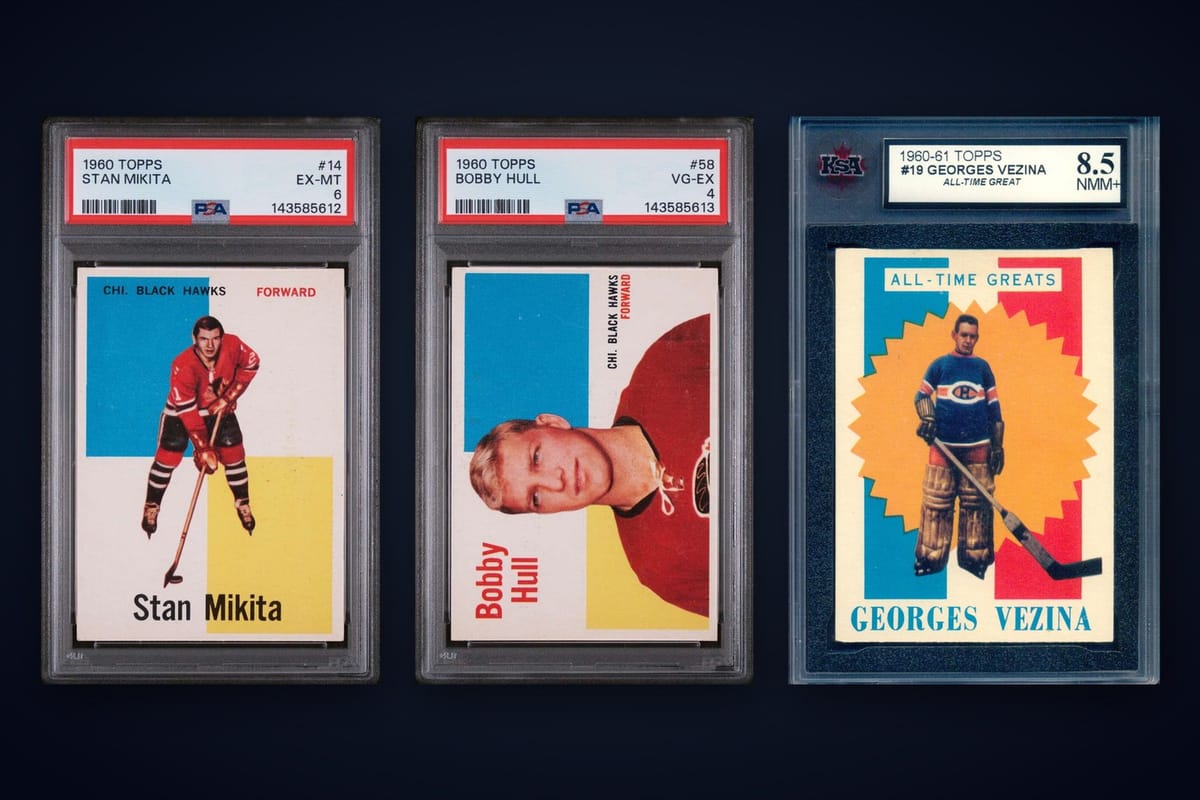
Stan Mikita #14 1960 Topps |
$207.00 | $40,503 | 195.7× |
 |
Bobby Hull #58 1960 Topps |
$113.93 | $23,641 | 207.5× |
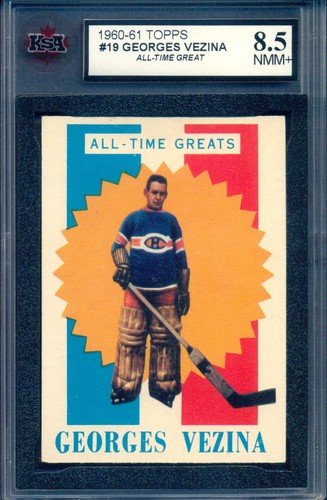 |
Georges Vezina #19 1960 Topps |
$66.00 | $12,488 | 189.2× |
 |
Eddie Shore #20 1960 Topps |
$34.99 | $6,594 | 188.5× |
 |
Gump Worsley #36 1960 Topps |
$33.48 | $6,441 | 192.4× |
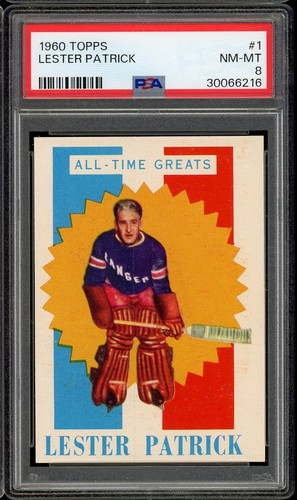 |
Lester Patrick #1 1960 Topps |
$31.00 | $5,846 | 188.6× |
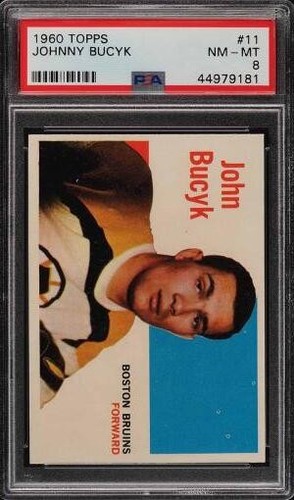 |
Johnny Bucyk #11 1960 Topps |
$30.75 | $5,800 | 188.6× |
 |
Cyclone Taylor #46 1960 Topps |
$23.10 | $4,441 | 192.2× |
 |
Howie Morenz #59 1960 Topps |
$22.50 | $4,252 | 189× |
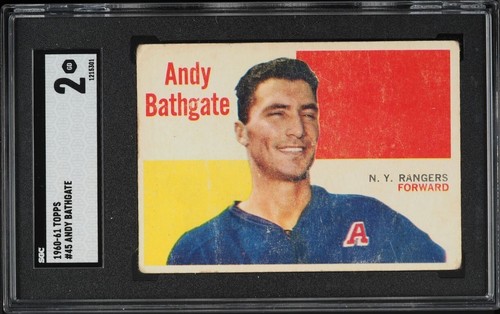 |
Andy Bathgate #45 1960 Topps |
$21.33 | $4,030 | 189× |
 |
King Clancy #47 1960 Topps |
$19.25 | $3,642 | 189.2× |
 |
Art Ross #27 1960 Topps |
$19.99 | $3,575 | 178.8× |
Look up any card's current raw and graded value in Midpoint — and get an estimated grade before you pay to submit.
Quick Comparison
| Dimension | PSA 9 (Mint) | PSA 10 (Gem Mint) |
|---|---|---|
| Typical price level | Strong, and often the more liquid price point | Premium over a 9; the size of the gap varies sharply by card |
| Premium behavior | Baseline for comparison | Usually widest on stars, Hall of Famers and key cards; often smaller on commons |
| Population | Generally far more copies than a 10 | Generally the scarcest tier; some cards have very few or no recorded sales |
| Centering tolerance | Looser; roughly 60/40 to 65/35 front per PSA's published guidance | Tighter; roughly 55/45 to 60/40 front per PSA's published guidance |
| Flaws allowed | One minor flaw | Essentially none visible beyond a slight print imperfection |
| Price reliability | More sales, so more reliable comps | Fewer sales, so wider swings and more guesswork |
| Upgrade economics | Hard to improve on | Only worth chasing if the raw card is already near-perfect |
1960 Topps PSA 9 vs PSA 10 Value: How Big Is the Gap?
The PSA 9 vs PSA 10 price difference on 1960 Topps depends on which card you hold. Three patterns show up across the set.
- Stars and key cards: the biggest jumps. The Mantle #350, Mays #200, Aaron #300 and Clemente #326 attract deep-pocketed buyers who want the single best example. When few 10s exist, one sale can set a price far above the 9 tier.
- Rookie and special cards: scarcity-driven. The Yastrzemski rookie star #148 and the Mantle All Star #563 are sought after for what they are, and the number of top-grade copies sets the premium.
- Commons and lesser players: compressed gaps. Demand is thinner, so a 10 may not command a dramatic multiple of a 9. Grading costs can eat the difference.
Anyone quoting a flat "10 is worth X times a 9" for 1960 Topps is oversimplifying. The multiplier is card-specific, and it can change from one sale to the next.
Use recorded sales, not estimates
For cards with few or no PSA 10 sales, price guides and unsold auction estimates are guesses. A reserve that did not meet, or a pre-auction estimate, is not a price. Weigh the three sources like this:
- Recorded sales: eBay completed sales and results from Heritage, Goldin, Memory Lane and similar houses. Note the date and the exact grade.
- Price-guide estimates: useful for direction, weak for thin populations.
- Unsold estimates: treat as marketing, not evidence.
You can check raw versus graded values for over 1.5 million cards in Midpoint before you buy, sell or submit.
Population Reports and the 1960 Topps PSA 10 Premium
Scarcity drives the gap more than anything else. Two cards with similar fame can show very different 9-to-10 spreads because their top-grade populations differ.
- Very low PSA 10 population: the 10 trades rarely, and each sale is a negotiation. The premium can be enormous, but it can also be unstable.
- Moderate PSA 10 population: a more consistent premium, because buyers have multiple comps.
- Large PSA 9 population: the 9 is the market's workhorse and the easier price to anchor on.
Check PSA's own Population Report for each card's current PSA 9 and PSA 10 counts. These numbers move as cards are submitted and crossed over, so do not rely on a number you saw last year. Also look at the numbers higher: a PSA 9 with no 10s above it is a different asset than a PSA 9 with dozens of 10s above it.
For more on how thin populations change the math, see this guide to card grading for low population cards.
1960 Topps Grading Value: What Separates a 9 from a 10
The 1960 Topps design is a horizontal format with white borders. That tends to expose problems quickly, and it is one reason true Gem Mint copies are hard to find. The main factors are below.
- Centering: a common reason a sharp-looking card lands at a 9. PSA's published guidance allows slightly tighter centering for a 10 than a 9. Measure both axes, left-right and top-bottom.
- Corners: sharp on all four, with no softening under magnification. White borders make even slight wear visible.
- Edges: chipping along the borders is a frequent 9-killer on vintage stock.
- Print defects and registration: focus, color alignment and print spots can hold back an otherwise clean card.
- Surface and color: gloss, scratches, creases and dull color all matter.
- Staining: wax or gum stains from the original packs are a classic issue and a firm barrier to a 10.
A 10 tolerates almost nothing. A 9 tolerates one minor flaw. That single-flaw difference is why centering is often decisive: if the card is 62/38, no amount of sharp corners will make it a 10 under PSA's guidance. For a deeper look, read how centering impacts card value.
Is Upgrading a PSA 9 to a PSA 10 Worth It?
Rarely. Before resubmitting a 9 hoping for a 10, count the real costs.
- Grading fees for the service tier the card's value requires.
- Shipping and insurance both ways.
- Selling fees if you list on eBay or consign through an auction house.
- Time out of the market, and market risk while it sits at PSA.
- The risk the card comes back as another 9, or lower.
Cracking out a slab means giving up its current PSA 9 grade, and it only makes sense with a flawless raw card. A 9 is already high on PSA's scale, and the odds of an actual improvement are low unless the original grade was clearly harsh. For the cost-versus-reward math, see how to pre-grade your card.
Evaluating raw 1960 Topps cards before you submit
If you hold raw cards, the question is different: is this a 9 candidate, a 10 candidate, or neither?
- Measure centering on the front and back. This is the quickest filter.
- Inspect all four corners and every edge under good light.
- Tilt the card to check for surface scratches, print lines and gloss loss.
- Look for wax or gum staining on the back and borders.
- Compare the likely grade outcomes against the raw price and grading cost.
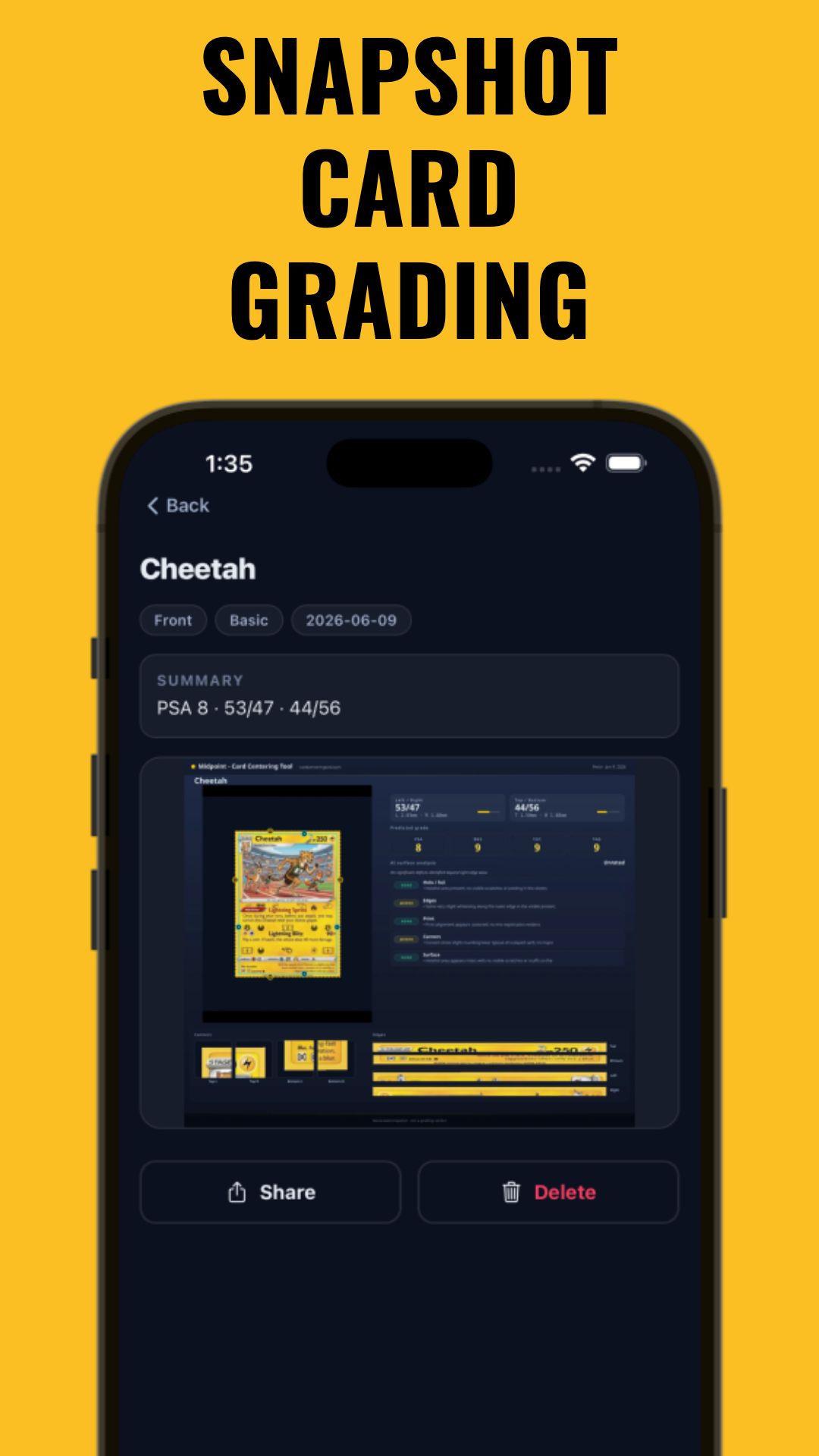
The free centering calculator handles step one, and Midpoint's AI grading estimate gives a PSA-style read before you spend money on submission.
When a PSA 9 Beats a PSA 10
A PSA 10 is not automatically the better purchase. A PSA 9 can be the smarter pick, or even outperform, in several situations.
- Thin 10 market: if only a few 10s have sold, a single price may reflect one motivated bidder rather than a stable market.
- Eye appeal: a well-centered PSA 9 with vivid color can look better than a borderline 10. Buy the card, not just the label.
- Low-population 9: a 9 with few copies at that grade can hold value against a 10 of a card with a bloated top population.
- Liquidity: more sales mean easier exits and more trustworthy comps.
- Volatility: the 10 tier can swing harder with buyer demand and with new submissions changing the population.
So is a PSA 9 worth it on 1960 Topps? For most collectors and most cards, yes. You get a high-grade, liquid card without paying a scarcity premium that may not hold. It also helps to know how company scales differ, covered in grading scale differences by company.
Which Should You Choose?
- Collectors building a set: choose PSA 9s. You will complete more of the set and keep your budget flexible.
- Investors focused on liquidity: choose PSA 9s on key cards like the Mantle #350 or Mays #200. Verify with recent realized sales before you pay.
- Trophy and registry collectors: a PSA 10 may be worth the premium, especially on a card with a very low top population. Confirm it with recorded sales, not estimates.
- Holders of raw cards: pre-grade first. Submit only cards with excellent centering, sharp corners and a clean surface.
- Owners of existing PSA 9s: keep them. Upgrading is rarely worth the cost and risk.
- Commons and lesser stars: a PSA 10 premium may not justify the cost. Pick the 9.
Whatever you hold, protect it: see how to store valuable cards. You can also track your collection's value over time in Midpoint, which is free on iOS and Android.
FAQ
How much is a PSA 9 1960 Topps card worth compared with a PSA 10?
It depends on the card. A PSA 10 usually carries a premium over a PSA 9, but the size of the gap varies widely. It is typically largest on stars and key cards and smaller on commons. Check recent realized sales for the exact card and grade rather than relying on a flat multiplier.
Which 1960 Topps cards have the biggest PSA 9 to PSA 10 price difference?
Generally the high-demand cards with very small top-grade populations, such as the Mickey Mantle #350, Willie Mays #200, Hank Aaron #300 and Roberto Clemente #326. Verify with current sales, since these gaps change.
What is the most valuable 1960 Topps card in PSA 9 and PSA 10?
The Mickey Mantle #350 is among the most sought-after cards in the set, alongside other Hall of Famers like Mays and Aaron. Check recent recorded sales for each grade, as values shift over time.
How many PSA 9 and PSA 10 copies exist for each 1960 Topps card?
Counts differ by card and change as new submissions arrive. Generally, PSA 9s far outnumber PSA 10s. Look up the current numbers in PSA's Population Report for the specific card, and note how many copies sit above the grade you are considering.
Is it worth upgrading a PSA 9 1960 Topps card to PSA 10?
Usually not. You would pay grading, shipping, insurance and selling costs, give up the current slab's grade, and risk getting another 9. It only makes sense if the raw card is truly Gem Mint quality, which is rare.
What condition does a 1960 Topps card need to receive PSA 10?
It needs tight centering (PSA's published guidance is roughly 55/45 to 60/40 on the front), four sharp corners, clean edges, strong color and gloss, and no staining or visible flaws beyond a slight print imperfection. Wax or gum stains rule out a 10.
Free to start
Try the Midpoint app
Grade any card from a photo, see its raw and PSA 10 value, and track what your collection is worth — free.
Get it on iPhoneGet it on Android