1968 O-Pee-Chee PSA 9 vs PSA 10 Value: Is the 10 Worth It?
Compare 1968 O-Pee-Chee PSA 9 vs PSA 10 value: where the 9→10 jump is biggest, why centering decides it, and when a PSA 9 is the smarter buy.

Estimated reading time: 9 min
Key Takeaways
- The 1968 O-Pee-Chee PSA 9 vs PSA 10 value gap is widest on star, Hall of Fame and rookie cards, and narrowest on commons.
- Centering and O-Pee-Chee's stock and printing quality often decide 9→10 outcomes, so a PSA 10 is genuinely scarce and typically carries a real premium.
- Bottom line: buy the PSA 9 for most cards and budgets. Pay for the PSA 10 only on key cards where you want the best-looking copy and can accept thin, volatile sales.
- Grade a raw card only if the expected PSA 10 payout, after fees, shipping, insurance and selling costs, beats the PSA 9 outcome. Don't count on a 10 on vintage OPC.
This guide compares PSA 9 and PSA 10 examples of 1968 O-Pee-Chee cards, covering the 1968 baseball set and the 1968-69 hockey set. The quick answer: the PSA 9 vs PSA 10 price difference for 1968 O-Pee-Chee is a premium for rarity, and it is biggest where the card is popular and hard to center. A PSA 9 is usually the better value. Exact dollar figures change with the market, so check recent sales for the specific card (this post was last reviewed as of 2026-11-15), and we focus here on how to read the gap.
Card values — live data from Midpoint's card database, as of 2026-11-15. Prices move; Midpoint refreshes these daily.
| Card | Raw | PSA 10 | Gem premium | |
|---|---|---|---|---|
 |
Bobby Orr #2 1968 O-Pee-Chee |
$99.67 | $14,063 | 141.1× |
 |
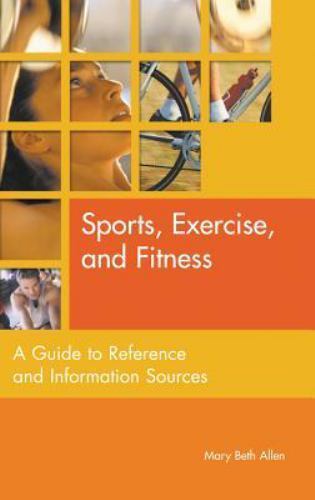
Gordie Howe #203 1968 O-Pee-Chee |
$63.67 | $9,721 | 152.7× |
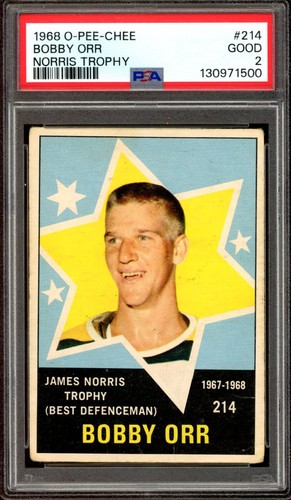 |
Bobby Orr [Norris Trophy] #214 1968 O-Pee-Chee |
$56.33 | $7,897 | 140.2× |
 |
Bernie Parent #89 1968 O-Pee-Chee |
$55.50 | $7,788 | 140.3× |
 |
Gordie Howe #29 1968 O-Pee-Chee |
$43.55 | $5,873 | 134.9× |
 |
Bobby Orr #200 1968 O-Pee-Chee |
$59.25 | $5,482 | 92.5× |
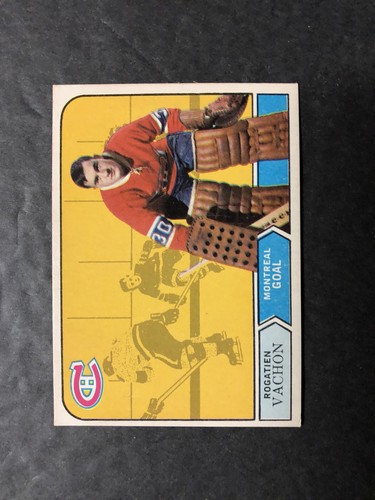 |
Rogatien Vachon #164 1968 O-Pee-Chee |
$25.77 | $3,411 | 132.4× |
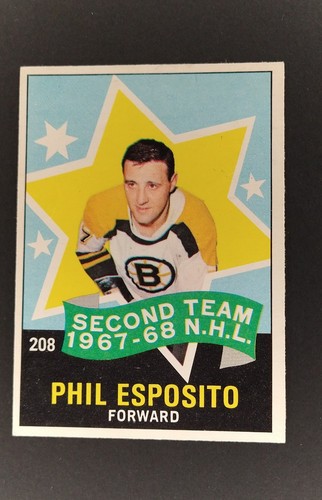 |
Phil Esposito #208 1968 O-Pee-Chee |
$23.48 | $3,309 | 140.9× |
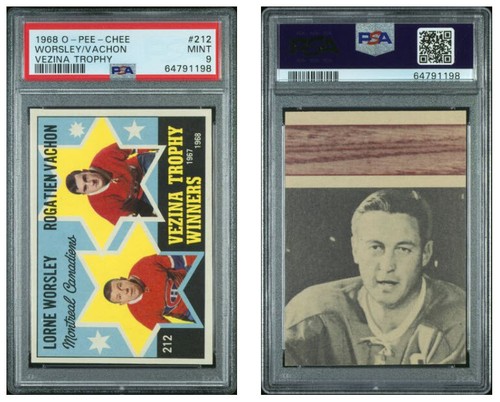 |
Vachon, Worsley [Vezina Trophy] #212 1968 O-Pee-Chee |
$29.97 | $3,228 | 107.7× |
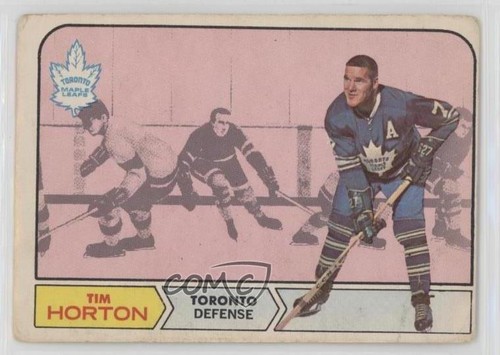 |
Tim Horton #123 1968 O-Pee-Chee |
$24.85 | $3,119 | 125.5× |
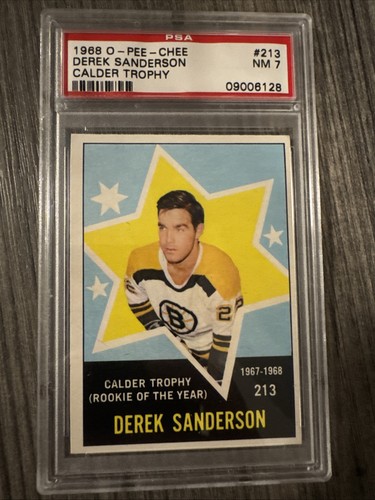 |
Derek Sanderson [Calder Trophy] #213 1968 O-Pee-Chee |
$21.72 | $3,085 | 142× |
 |
Bobby Hull #204 1968 O-Pee-Chee |
$21.82 | $3,068 | 140.6× |
Look up any card's current raw and graded value in Midpoint — and get an estimated grade before you pay to submit.
Quick Comparison: PSA 9 vs PSA 10 on 1968 O-Pee-Chee
| Dimension | PSA 9 (Mint) | PSA 10 (Gem Mint) |
|---|---|---|
| Availability | Scarce for a vintage set, but findable | Very scarce, with low populations on many cards |
| Price behavior | More sales, steadier pricing | Few sales, large swings between sales |
| Premium over the 9 | Baseline | Largest on stars, rookies and Hall of Famers |
| Centering needs | Tolerates modest off-centering | Needs near-perfect centering |
| Print and stock issues | Can tolerate a small flaw | Little room for print defects, rough edges or surface marks |
| Liquidity | Easier to find buyers and comps | Slower; the price depends on who is bidding |
| Grading ROI | Realistic target for a sharp raw card | A long shot, not a plan |
| Best for | Value-focused collectors and set builders | Registry builders and investors in key cards |
How Big Is the 1968 O-Pee-Chee PSA 10 Premium?
The 1968 O-Pee-Chee PSA 10 premium is not one number. It changes card by card, so a set-wide average hides what matters. Comparing recent PSA 9 and PSA 10 sales for individual cards shows a consistent general pattern.
- Stars and Hall of Famers: Hockey cards like Bobby Orr, or baseball cards like the Nolan Ryan rookie, tend to show the largest dollar jump between a 9 and a 10. Demand is deep, but the supply of 10s is tiny.
- Mid-tier cards: The gap is smaller in dollars, but the percentage jump can still be large.
- Commons and role players: The 10 premium is real but small in dollars. Often it doesn't justify the grading risk.
Two ways to read the gap:
- Dollar gap: What you pay extra for the 10. This matters when you are buying.
- Multiple of the 9: How many times more the 10 costs. This matters when you are deciding whether to grade a raw card.
Look at both. A card with a modest dollar gap can still have a high multiple, and the high-multiple cards are where PSA 10s tend to carry the most scarcity premium.
Why Centering and O-Pee-Chee Stock Decide the 9→10 Jump
PSA is strict on centering for a 10, and 1968 O-Pee-Chee is hard to grade well on every front. That's a big reason the 10 premium exists.
- Centering: Vintage OPC cards were often cut unevenly. Many otherwise clean cards miss a 10 on borders alone. PSA's 10 standard allows only slight off-centering, so a card can look sharp and still land at a 9. Our guide on how centering impacts card value explains the effect.
- Print defects: Fuzzy registration, print dots, snow and ink flaws are common in vintage sets.
- Corners and edges: Vintage OPC cards are commonly prone to chipping and edge wear, and nicks show on the borders.
- Surface: Wax stains, gloss loss, tiny dents and roller marks all hold a card back.
Cards that clear all four are rare. Those that miss a 10 often do so on one point, frequently centering, so the cards with the biggest 9→10 jump are also the ones where a small centering difference can decide the outcome.
Check this before you buy or submit. Midpoint's free centering calculator measures borders so you can see whether a card is a real 10 candidate or a likely 9.
PSA Population Reports: Reading Scarcity Before You Pay
The PSA population report is the best check on how rare a 10 really is. It lists how many copies PSA has graded, split by grade. For any card you're considering, look at these:
- Total graded: The size of the pool.
- PSA 9 population: How many comparable alternatives exist.
- PSA 10 population: How scarce a gem is.
- Population higher: If a 9's pop-higher count is tiny, the 9 is near the top of the grade ladder.
The gem rate is the PSA 10 count divided by total graded. A low rate usually backs a bigger premium, but not always. A low pop with no buyer interest doesn't command a premium. Reports change as cards are submitted, so check the live report instead of trusting old numbers. We don't quote counts here because they go stale quickly. For background on how thin populations change pricing and strategy, see our guide to grading low population cards.
1968 O-Pee-Chee vs 1968 Topps: Why OPC Costs More to Grade Well
O-Pee-Chee is the Canadian print of the Topps design. The 1968 baseball set follows the Topps look but is smaller and has differences such as different backs and some Canadian-specific text. The 1968-69 hockey set is the main O-Pee-Chee hockey release of that season. Collectors often pay more for high-grade OPC than for the equivalent Topps card, commonly because of:
- Scarcity: OPC generally had a smaller print and distribution footprint, so fewer copies are thought to survive in top grades.
- Harder to grade high: The stock and printing make clean, well-centered copies hard to find.
- Different buyer base: Canadian and registry collectors compete for the same limited supply.
This matters when you compare listings. A PSA 9 OPC card and a PSA 9 Topps card of the same player are not interchangeable, so make sure the comps you use are for the right brand.
How to Identify an Authentic 1968 O-Pee-Chee Card
- Check the card back. OPC backs differ from Topps in text and layout, including Canadian-specific elements.
- Confirm the card number and player against a trusted checklist for the right sport and year.
- Be careful with listings that say "1968 OPC" but show a Topps card. Misidentified listings are common.
- Be skeptical of reprints, trimmed cards and altered corners. A graded slab from a major company reduces authenticity risk, but still confirm the label matches the card.
Valuing Cards With Few Sales: Median vs Latest Sale
Many PSA 10 1968 OPC cards sell rarely, sometimes years apart. That makes pricing noisy.
- Latest sale: Shows the current market, but can be a one-off, depending on who showed up that day.
- Median of recent sales: Smooths out spikes and misses when several comps exist.
- Guide estimates: Useful as a starting point, but can lag the market or rely on thin data.
When comps are few, check auction house, sale date and whether the sale was an auction or a private deal. Treat a PSA 10 figure as a range, not a fixed price. PSA 9 comps are usually denser, which is another reason the 9 is a safer card to value and resell.
Market values move, so re-check live comps before any big purchase.
Is Grading or Upgrading Worth It? The 1968 O-Pee-Chee Grading Value Math
The 1968 O-Pee-Chee grading value question comes down to expected payout versus total cost. Grading fees depend on the service tier and declared value, and vintage or high-value cards often cost more, before shipping, insurance and selling fees. Check PSA's current fee schedule.
Use this check:
- Estimate the odds of a 10, a 9 and an 8 or lower based on centering and condition.
- Multiply each outcome by its likely sale value, using live comps.
- Subtract grading, shipping, insurance and selling costs.
- Compare that with the raw card's sale price today.
For vintage OPC, the odds of a 10 are low, so the plan should work even if you get a 9. If a 9 does not clear your costs, grading is a gamble. Pre-grading helps: our step-by-step pre-grading guide shows how to screen cards before you submit.
Is a PSA 9 worth it for 1968 O-Pee-Chee? Often yes. It's the realistic top outcome for a nice copy, it sells more easily, and you avoid paying a gem premium for a slight edge in a number on the label.
Upgrading a 9 to a 10? Cracking a slab and resubmitting is a long shot. The card already passed a strict review, and the grader may well score centering the same way again. Do it only when the 9→10 gap is large and the card truly looks 10-worthy.
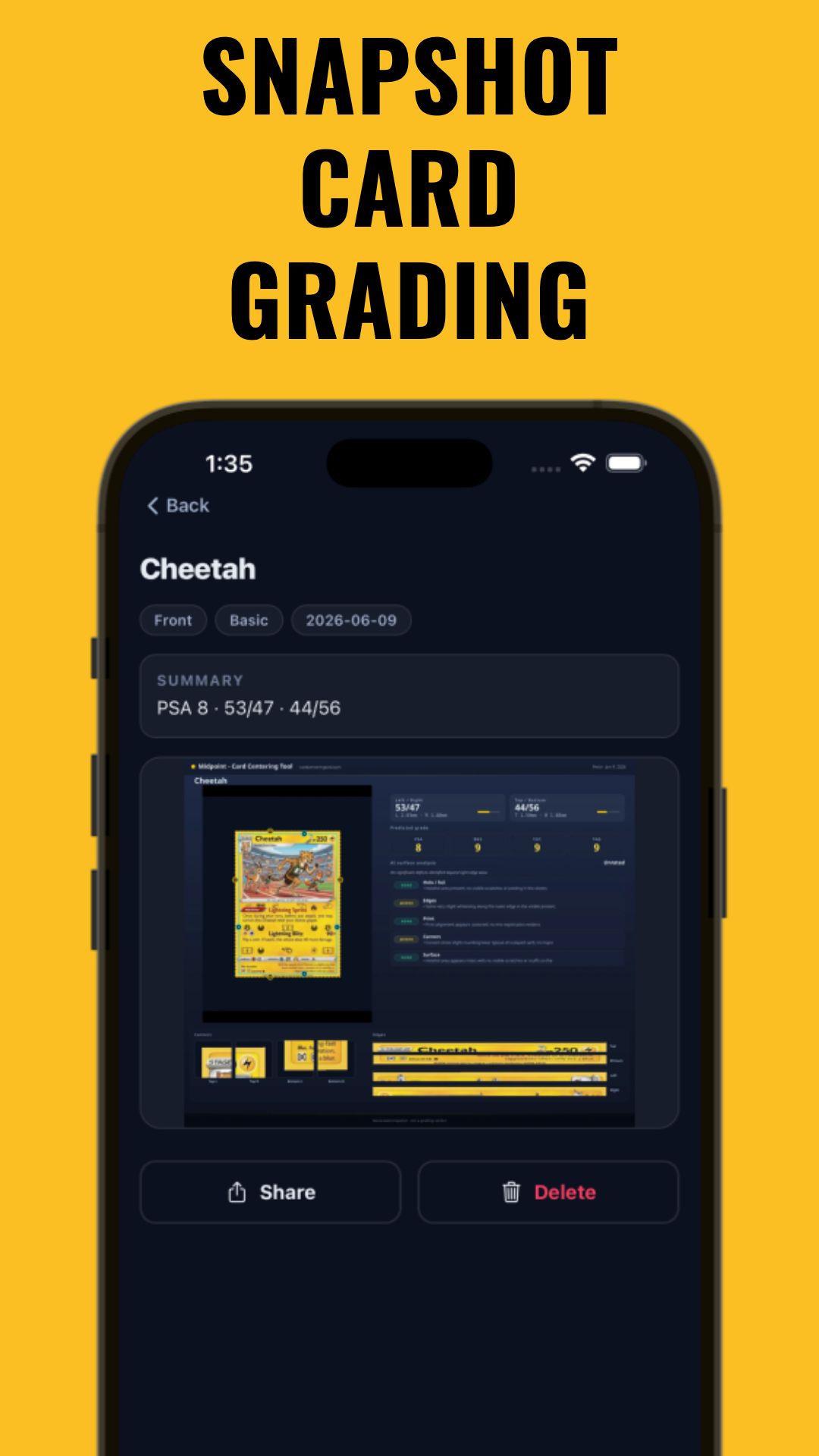
Midpoint's AI grading estimates a PSA, BGS, CGC or TAG grade from centering, corners, edges and surface before you pay to submit, which helps you tell likely 10s from likely 9s. Different companies also score differently, so see our breakdown of grading scale differences by company.
Which Should You Choose?
- Set builders and budget collectors: Buy PSA 9s. You get a high grade, easier resale and fewer pricing surprises.
- Collectors of stars like Orr or Ryan: A PSA 9 is the value pick. Buy the PSA 10 only if the gem matters to you, and expect to pay a large premium and wait for scarce copies.
- Registry builders: The PSA 10 is the goal. Verify authenticity, population and recent comps before you pay.
- Investors: The PSA 10 offers upside on key cards, but thin sales mean exit risk. Weigh the 10's premium against the 9's liquidity.
- Owners of raw copies: Measure centering first. If borders aren't close to even, a 10 is unlikely, and you should decide whether a 9 still pays after costs.
- Commons: Usually skip the 10 premium. The dollar gap rarely justifies the extra cost.
Keep your cards safe regardless of grade. Our guide to storing valuable cards covers protection. To check what a grade could be worth and track your collection over time, try Midpoint, which is free on iOS and Android.
FAQ
How much is a 1968 O-Pee-Chee card worth in PSA 9?
It depends on the card. Commons are modest, while stars, rookies and Hall of Famers are far higher. Check recent sales for the specific card and grade before you buy, since values change over time.
How much more is a PSA 10 1968 O-Pee-Chee card worth than a PSA 9?
The premium varies by card. It's largest in dollars on star and rookie cards and smaller on commons. Compare recent PSA 9 and PSA 10 sales for the specific card, keeping in mind that PSA 10 sales are rare and swing widely.
What is the most valuable 1968 O-Pee-Chee card?
It depends on whether you mean baseball or hockey and on the grade. Top stars and key rookies, such as Bobby Orr in hockey or the Nolan Ryan rookie in baseball, are typically among the leading cards. Check recent sales and auction results for current values.
How many PSA 10 copies exist for 1968 O-Pee-Chee cards?
Counts differ for every card and change as PSA grades more cards, so check the live PSA population report. For most cards in this set, PSA 10s are very scarce.
Are 1968 O-Pee-Chee cards rarer and more valuable than 1968 Topps cards?
Often, in high grades. O-Pee-Chee's smaller distribution and the difficulty of grading its stock and printing make top-grade copies harder to find, and OPC often carries a premium. It varies by card, so compare against OPC comps, not Topps ones.
Is it worth grading a 1968 O-Pee-Chee card or upgrading a PSA 9 to PSA 10?
Grading a raw card can be worth it if the likely outcome, usually a 9, clears your total costs. Upgrading a 9 to a 10 is a long shot, and it only makes sense when the gap is large and the card has near-perfect centering. Pre-grade first to avoid paying for a miss.
Free to start
Try the Midpoint app
Grade any card from a photo, see its raw and PSA 10 value, and track what your collection is worth — free.
Get it on iPhoneGet it on Android