1969 O-Pee-Chee PSA 9 vs PSA 10 Value: Is the Gap Real?
1969 O-Pee-Chee PSA 9 vs PSA 10 value explained: how to read the price gap card by card, why centering drives the 10 premium, and when a 9 is smarter.

Estimated reading time: 8 min
Key Takeaways
- The 1969 O-Pee-Chee PSA 9 vs PSA 10 value gap is not uniform. It is driven by the specific card number, the player and how scarce Gem Mint copies really are.
- Centering is a leading reason a 9 does not become a 10 on this set, so the 1969 O-Pee-Chee PSA 10 premium is a premium for centering luck as much as for condition.
- Check the premium as a multiple (PSA 10 price divided by PSA 9 price) and as a dollar gap. Stars can carry a large dollar gap, while commons can show a large multiple on a small dollar base.
- Bottom line: for most buyers a PSA 9 is the smarter buy, because it captures most of the eye appeal at a lower price. A PSA 10 only makes sense on cards where the premium is justified by low supply and strong player demand. Upgrading a 9 to a 10 rarely pays after fees and risk.
This guide compares the 1969 O-Pee-Chee PSA 9 vs PSA 10 value for the 1969-70 hockey set: what each grade means, how to read the price difference, which cards tend to show the biggest jump, and when a PSA 9 is worth it. The quick answer: the 10 is worth chasing on a few key cards, and a 9 is the value play on most of the rest.
A note on numbers: the specific PSA 9 and PSA 10 values for this set are in the data table that follows the first section, as of 2026-11-22. This article does not repeat or invent any other prices. It shows you how to read them.
Card values — live data from Midpoint's card database, as of 2026-11-22. Prices move; Midpoint refreshes these daily.
| Card | Raw | PSA 10 | Gem premium | |
|---|---|---|---|---|
 |
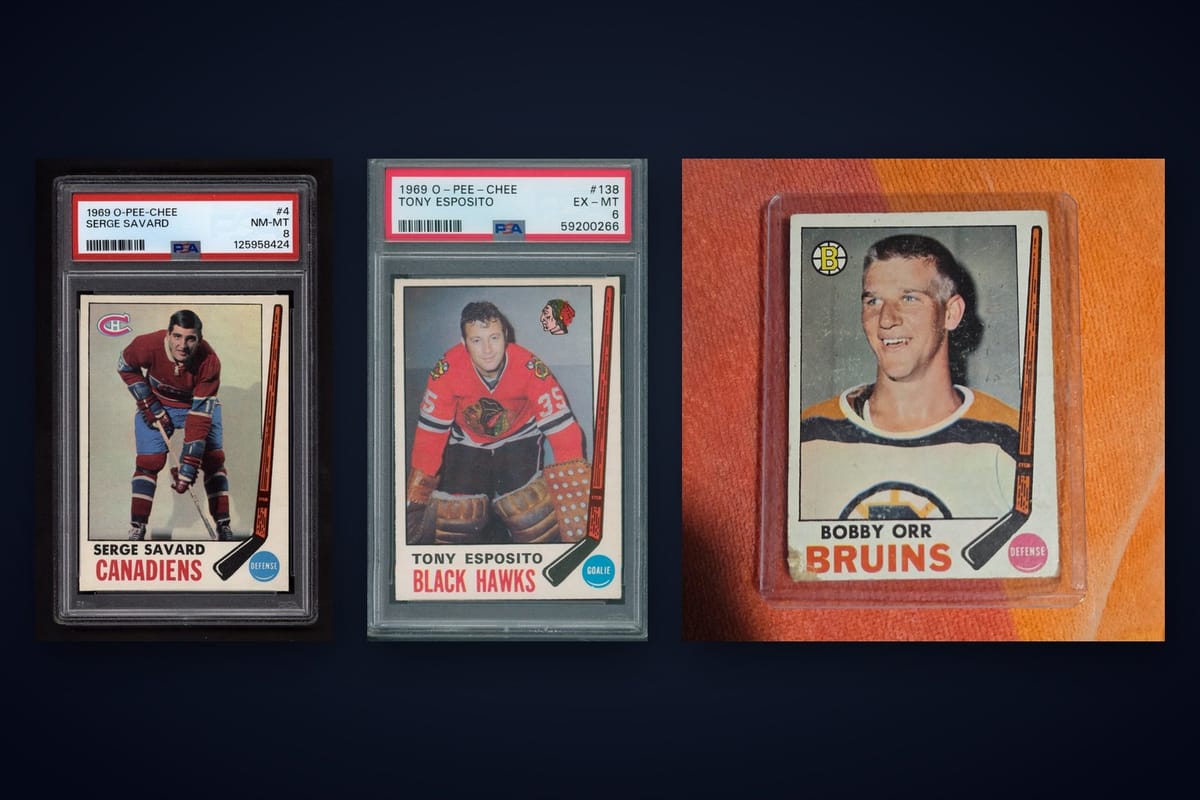
Serge Savard #4 1969 O-Pee-Chee |
$39.41 | $19,000 | 482.1× |
 |
Tony Esposito #138 1969 O-Pee-Chee |
$51.42 | $16,800 | 326.7× |
 |
Bobby Orr #24 1969 O-Pee-Chee |
$78.07 | $13,060 | 167.3× |
 |
Bobby Orr [Norris Trophy] #209 1969 O-Pee-Chee |
$33.52 | $4,535 | 135.3× |
 |
Bobby Orr #212 1969 O-Pee-Chee |
$40.67 | $4,240 | 104.3× |
 |
Stan Mikita #76 1969 O-Pee-Chee |
$8.26 | $4,026 | 487.4× |
 |
Gordie Howe [Mr. Hockey, No Number] 1969 O-Pee-Chee |
$29.08 | $3,935 | 135.3× |
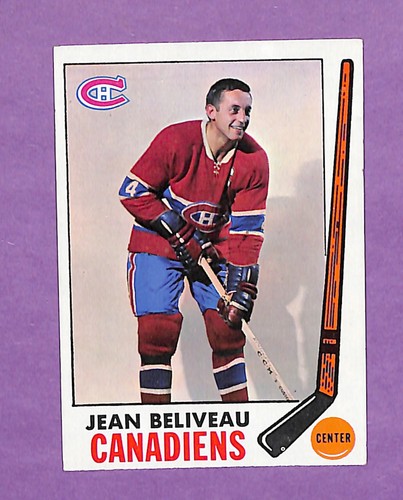 |
Jean Beliveau #10 1969 O-Pee-Chee |
$26.45 | $3,581 | 135.4× |
 |
Gordie Howe #215 1969 O-Pee-Chee |
$21.66 | $3,568 | 164.7× |
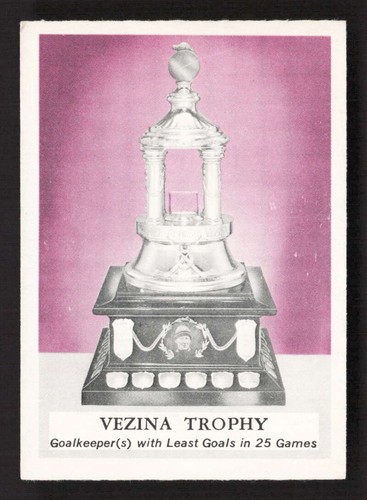 |
Vezina Trophy #226 1969 O-Pee-Chee |
$24.21 | $2,755 | 113.8× |
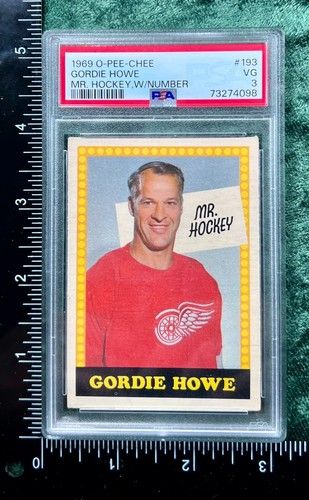 |
Gordie Howe [Mr. Hockey, w/ Number] #193 1969 O-Pee-Chee |
$18.71 | $2,592 | 138.5× |
 |
Prince of Wales [Trophy] #230 1969 O-Pee-Chee |
$18.90 | $2,568 | 135.9× |
Look up any card's current raw and graded value in Midpoint — and get an estimated grade before you pay to submit.
Quick Comparison
| Dimension | PSA 9 (Mint) | PSA 10 (Gem Mint) |
|---|---|---|
| Front centering (PSA published standard) | 60/40 or better | 55/45 or better |
| Back centering (PSA published standard) | 90/10 or better | 75/25 or better |
| Defects allowed | One minor flaw | Virtually none |
| Price | Lower entry point; see data table, as of 2026-11-22 | Premium that varies card by card; see data table, as of 2026-11-22 |
| Supply | Larger share of high-grade population | Scarcer, and the scarcity drives the premium |
| Liquidity | Easier to buy and sell on common cards | Fewer sales, so prices can swing between comps |
| Best for | Value-focused collectors and set builders | Registry collectors and investors on key stars |
1969 O-Pee-Chee PSA 9 vs PSA 10 Price Difference, Card by Card
The first rule: never quote a single set-wide multiple. The psa 9 vs psa 10 price difference 1969 o-pee-chee changes with every card number. Before you compare anything, identify the exact card, any variation or qualifier, and what the slab label says. A different card number or variation can mean a completely different market.
Here is how to read the data table for this set:
- Dollar premium: PSA 10 value minus PSA 9 value. This is what the upgrade is worth in cash terms.
- Multiple: PSA 10 value divided by PSA 9 value. This shows how aggressively the market rewards perfection on that card.
- Both together: a modest multiple on a star can still be a big dollar gap, and a big multiple on a common can still be a small dollar gap.
Stars: Bobby Orr and Tony Esposito
Bobby Orr and Tony Esposito, whose rookie card is in this set, are the names most buyers search for first. Star and Hall of Fame demand tends to create a deep bid at every grade, so a PSA 9 of these cards is already expensive. That means the PSA 10 premium is often the largest in dollar terms in the set, even if the multiple is not the highest. Look at their rows in the table (as of 2026-11-22) and compare the dollar gap against the common cards around them.
Commons and mid-tier cards
On commons, collectors mostly want the highest grade for set completion. Supply of Gem Mint copies is thin, but demand is thin too. The result can be a high multiple on a low dollar base, or sometimes a gap that barely covers the grading fee. Always check the dollar premium, not just the multiple.
Trophy and subject cards
Cards that feature award or trophy subjects, where the set has them, can carry extra collector interest beyond the player. Treat each as its own market, and confirm the exact card and slab label before comparing prices.
Why Centering Decides the 1969 O-Pee-Chee PSA 10 Premium
PSA's published standards allow a Gem Mint 10 up to 55/45 centering on the front and 75/25 on the back. A Mint 9 allows 60/40 on the front and 90/10 on the back. That sounds like a small difference. On a vintage set it is often decisive.
Why 1969 O-Pee-Chee cards can be hard to grade:
- Printing and cutting: vintage O-Pee-Chee stock is widely reported to have been cut unevenly, so off-center copies are common and truly well-centered copies are the exception.
- Borders: a border design makes any shift obvious to the eye and to the grader.
- Corners and edges: soft corners and chipping are easy to pick up on cards this age.
- Surface: print defects, gloss problems and staining can pull a card down even when it looks sharp.
The practical takeaway is that a PSA 9 is often a card with one small issue, and centering can well be that issue. If you want to understand how much that single factor moves price, read our guide on how centering impacts card value.
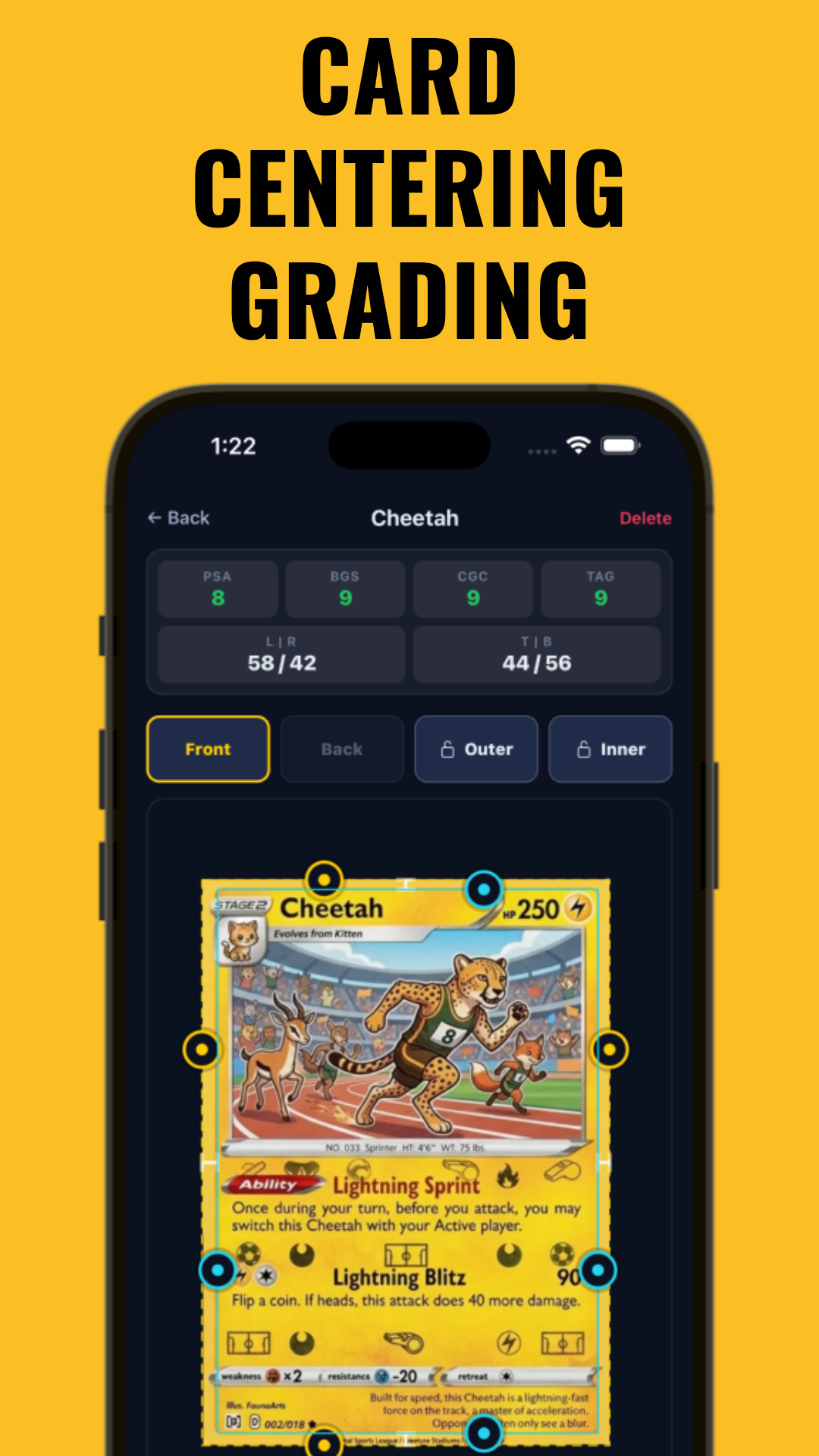
You can measure a card yourself before you buy or submit. The free centering calculator gives you the left/right and top/bottom ratios so you can compare them against the 55/45 and 60/40 front thresholds.
Population and Scarcity: How They Shape the 10 Premium
The premium for a PSA 10 is mostly a scarcity premium. Two things matter on the PSA population report:
- PSA 10 count: how many Gem Mint copies exist for that exact card number.
- Population higher: for a PSA 9, how many copies sit above it. If very few do, the 9 is close to the top of the market. If many do, the 9 is the common grade and the 10 is the prize.
A few patterns to watch for, without assuming specific numbers:
- A tiny PSA 10 population can push the premium up, but it can also mean few sales and unreliable comps.
- A large PSA 9 population relative to the PSA 10 population suggests the 10 is hard to get, which supports a wider gap.
- Populations change as cards are graded, so pull the current report for your exact card before you pay up.
For more on how supply affects grading decisions, see our guide to grading low population cards.
Price guides vs. completed sales
Price-guide estimates lag the market. For a high-end vintage card, one auction can reset the number. Compare the guide figure with recent completed sales, note the sale date and venue, and be careful with a single outlier. The values in this article's table are as of 2026-11-22, and you should treat them as a starting point rather than a quote.
Is a PSA 9 Worth It? The Upgrade Math
If you are asking whether a psa 9 is worth it on a 1969 O-Pee-Chee card, or whether to crack it out and resubmit for a 10, run the numbers honestly. The 1969 o-pee-chee grading value of an upgrade is:
- (Chance of a PSA 10 × PSA 10 value) + (chance of another 9 × PSA 9 value) + (chance of lower × lower-grade value)
- minus your current PSA 9 value, the grading fee (which varies by service tier, so check PSA's current pricing), shipping both ways, insurance and marketplace and selling fees.
Three things make this a hard bet on this set:
- Centering does not change. If your PSA 9 is a 9 because of off-center printing, a resubmission cannot fix it. Only a different grader's judgment on a borderline card can.
- You can end up with the same grade or lower. Then you have paid fees and gained nothing.
- Selling costs eat the gap. A modest dollar premium can disappear after fees.
Upgrading is most defensible when the card is a star with a large dollar premium (see the table), the centering is clearly within the 55/45 front standard, and the only reason for the 9 looks like a surface or corner call you can verify. For raw cards you have not graded yet, pre-grading step by step helps you decide whether to submit at all.
Midpoint can help here: Midpoint estimates a PSA grade from centering, corners, edges and surface before you pay, and its card lookup shows raw versus graded values so you can see the gap for your exact card.
Which Should You Choose?
- Set builder on a budget: buy PSA 9s. You get a clean, high-grade card for far less than the 10 on most of the set.
- Collector of Bobby Orr or Tony Esposito: buy the 9 if you want the card, and the 10 only if you value top-of-registry status and accept a large dollar premium. Compare both rows in the table as of 2026-11-22.
- Investor: favor cards where the PSA 10 population is low and demand is deep. Avoid paying a big multiple on a common with thin demand.
- Raw card owner: measure centering first. If the front is outside 60/40, a 9 is unlikely and a 10 is out of reach. See our write-up on grading scale differences by company if you are also weighing BGS or CGC.
- Seller of a PSA 9: keep it slabbed unless the numbers clearly support a resubmission after all costs.
Verdict: for most 1969 O-Pee-Chee buyers, the PSA 9 is the better value. Pay for a PSA 10 only where the dollar premium and the scarcity are both clear in the data.
FAQ
How much is a PSA 9 1969 O-Pee-Chee hockey card worth?
It depends heavily on the card. Stars such as Bobby Orr and Tony Esposito sit far above commons. Check the PSA 9 figure for your exact card number in the data table (as of 2026-11-22), then compare it with recent completed sales.
How much more is a PSA 10 1969 O-Pee-Chee card worth than a PSA 9?
There is no single multiple. Divide the PSA 10 value by the PSA 9 value for the exact card to get the multiple, and subtract for the dollar premium. Both vary by card, so use the per-card figures in the table.
What is the most valuable 1969 O-Pee-Chee card?
Star cards such as Tony Esposito's rookie and Bobby Orr are among the most in-demand cards in the set. Check the table (as of 2026-11-22) for the current highest values at PSA 9 and PSA 10.
What are the PSA populations for 1969 O-Pee-Chee cards in grades 9 and 10?
They differ for every card number and change as more cards are graded. Pull the current PSA population report for your exact card and look at both the PSA 10 count and the population higher than a 9.
Is it worth upgrading a 1969 O-Pee-Chee PSA 9 to a PSA 10?
Usually not. Grading fees, shipping, insurance and selling fees, plus the risk of getting another 9 or lower, often outweigh the premium. It can make sense on a star card with a large dollar gap and clearly strong centering.
Which 1969 O-Pee-Chee cards have the biggest PSA 9-to-PSA 10 price difference?
Rank the cards in the data table by both the multiple and the dollar gap. Stars tend to show the biggest dollar gaps, while some commons can show a high multiple on a small base. Centering difficulty is a common driver.
Free to start
Try the Midpoint app
Grade any card from a photo, see its raw and PSA 10 value, and track what your collection is worth — free.
Get it on iPhoneGet it on Android