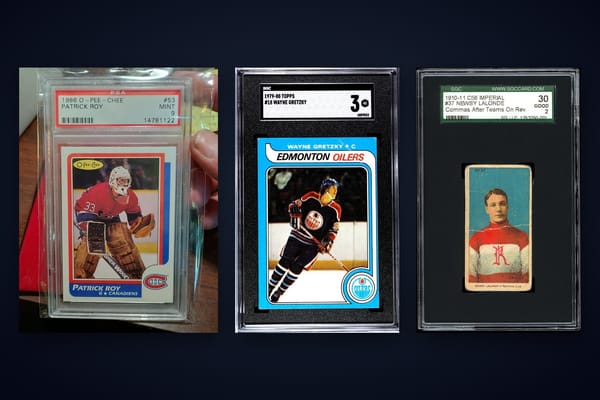
2009 Topps Chrome PSA 9 vs PSA 10 Value: Is 10 Worth It?
2009 Topps Chrome PSA 9 vs PSA 10 value: how the price gap works for Curry #101 and its parallels, why centering decides it, and when a 9 is smarter.

Estimated reading time: 9 min
Key Takeaways
- For 2009 Topps Chrome basketball, the PSA 10 premium over a PSA 9 is driven largely by centering, along with surface flaws that are common on Chrome stock.
- The dollar gap is typically widest on the headline rookies, especially the Stephen Curry rookie #101 and its Refractor, where a Gem Mint slab attracts a different buyer pool.
- Bottom line: buy the PSA 9 if you want exposure to the card at a lower entry price. Pay for the PSA 10 only if you want the top-pop slab or the strongest resale liquidity. Grade a raw copy only if it measures like a 10 before you submit.
- All dollar values referenced here come from the Midpoint database and are dated as of 2026-11-16. Always cross-check against fresh recorded sales before you buy or submit.
This guide compares 2009 Topps Chrome PSA 9 vs PSA 10 value card by card: what the price gap looks like, why it exists, and when it is worth paying. The quick answer: the PSA 10 premium on 2009 Topps Chrome is real, but it is not uniform. It is generally biggest where demand is highest and where a perfect-grade copy is hardest to produce.
Card values — live data from Midpoint's card database, as of 2026-11-16. Prices move; Midpoint refreshes these daily.
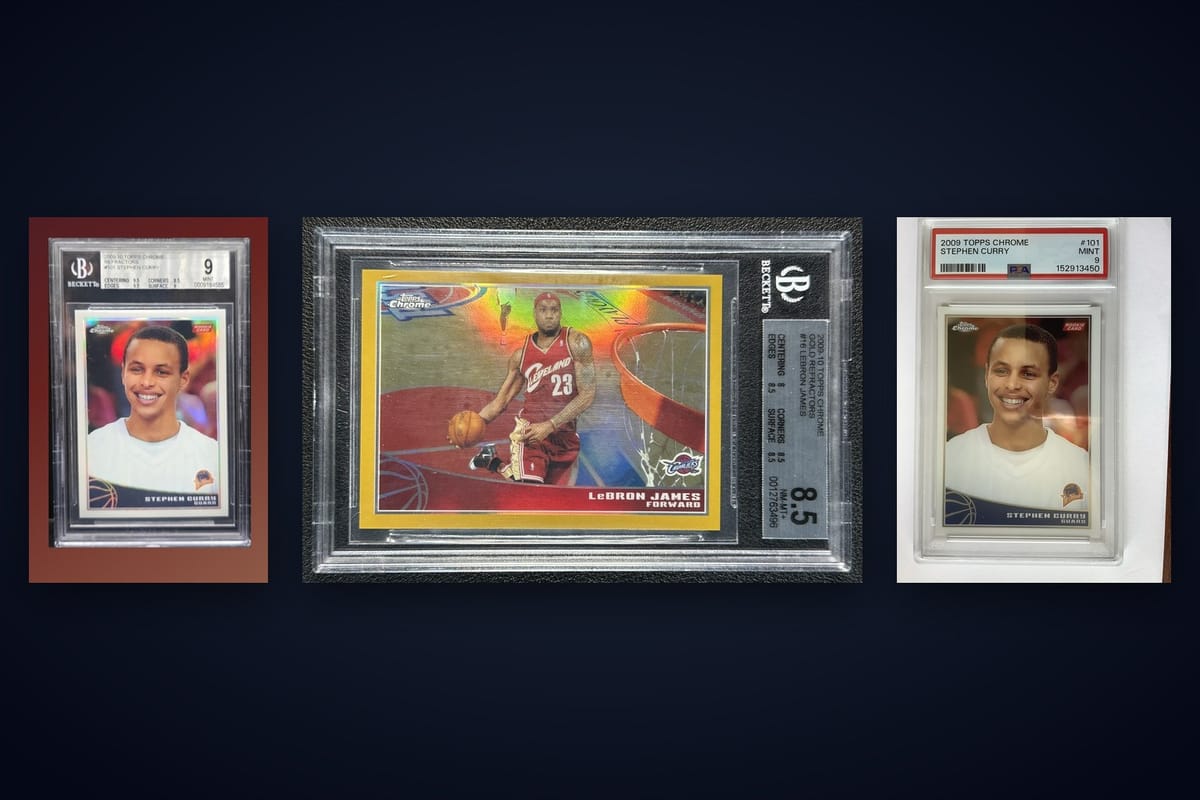
| Card | Raw | PSA 10 | Gem premium | |
|---|---|---|---|---|
 |
Stephen Curry [Refractor] #101 2009 Topps Chrome |
$9,100 | $103,200 | 11.3× |
 |
LeBron James [Gold Refractor] #16 2009 Topps Chrome |
$10,000 | $85,100 | 8.5× |
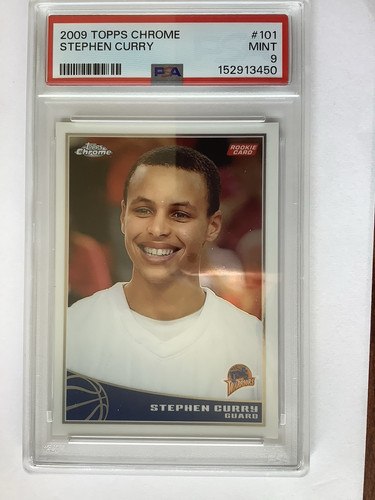 |
Stephen Curry #101 2009 Topps Chrome |
$10,356 | $59,325 | 5.7× |
 |
LeBron James [Refractor] #16 2009 Topps Chrome |
$1,465 | $6,858 | 4.7× |
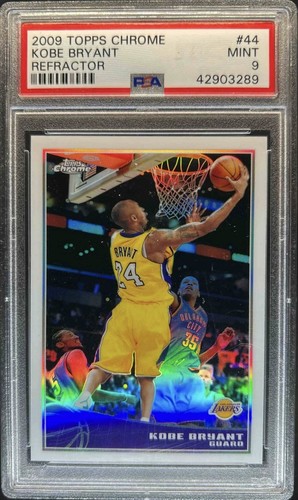 |
Kobe Bryant [Refractor] #44 2009 Topps Chrome |
$902.88 | $4,500 | 5× |
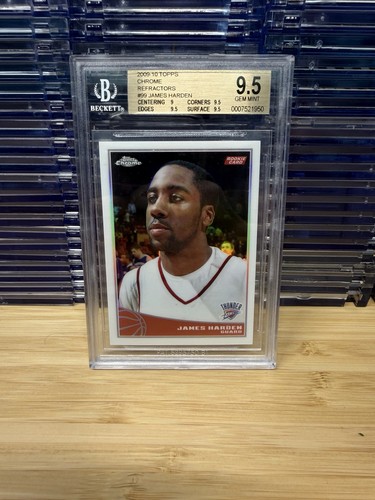 |
James Harden [Refractor] #99 2009 Topps Chrome |
$2,654 | $3,368 | 1.3× |
 |
James Harden #99 2009 Topps Chrome |
$311.43 | $2,027 | 6.5× |
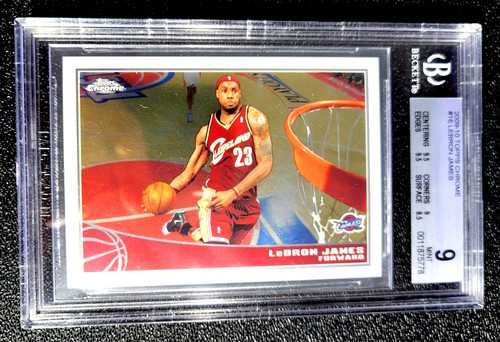 |
LeBron James #16 2009 Topps Chrome |
$350.00 | $1,967 | 5.6× |
 |
Kobe Bryant #44 2009 Topps Chrome |
$294.47 | $1,700 | 5.8× |
 |
Nate Robinson [Refractor] #66 2009 Topps Chrome |
$36.03 | $185.00 | 5.1× |
 |
Brandon Jennings [Refractor] #102 2009 Topps Chrome |
$21.36 | $150.00 | 7× |
 |
Tyreke Evans [Refractor] #107 2009 Topps Chrome |
$14.94 | $149.99 | 10× |
Look up any card's current raw and graded value in Midpoint — and get an estimated grade before you pay to submit.
Quick Comparison: PSA 9 vs PSA 10 on 2009 Topps Chrome
| Dimension | PSA 9 (Mint) | PSA 10 (Gem Mint) |
|---|---|---|
| Typical price level | Lower entry price; the value-oriented slab | Meaningful premium; see the values table (as of 2026-11-16) |
| Front centering (PSA standard) | Up to 60/40 | 55/45 or better |
| Back centering (PSA standard) | Up to 90/10 | 75/25 or better |
| Surface | May show one minor flaw, such as a faint print line or light scratch | Essentially clean under close inspection, with full gloss |
| Corners and edges | Sharp, with minimal wear tolerated | Sharp, with no visible wear |
| Scarcity | Far more copies graded | Fewer copies; check the live PSA population report |
| Resale appeal | Solid, with a broad buyer base | Strongest for premium rookies and parallels |
| Best for | Budget-conscious collectors and long holds | Registry builders and top-tier investors |
The centering numbers above are PSA's published tolerances. Everything else is a general pattern across the set rather than a guarantee for any single card.
The 2009 Topps Chrome PSA 10 Premium: How the Price Gap Works
The PSA 9 vs PSA 10 price difference on 2009 Topps Chrome is best understood as a multiple, not a flat dollar amount. Collectors usually look at how many times more a 10 costs than a 9. The dollar premium then scales with the card's base price.
That is why the same grade jump feels very different across the set:
- Stephen Curry #101 (base rookie): the flagship card. Even a modest multiple means a large dollar gap because the underlying price is high.
- Curry Refractor: a higher base price again, so the dollar premium for a 10 can be considerably larger.
- Other key rookies in the set: the gap exists, but the dollars at stake are smaller, which changes the grading math.
Check the values table in this guide for the PSA 9 and PSA 10 figures on each card, dated as of 2026-11-16. Treat them as a snapshot. Prices on a card this popular can move quickly when Curry is in the news or when the wider basketball market shifts.
Recorded sales vs price-guide estimates vs asking prices
Not every number you see is the same kind of number. This matters more for a PSA 10 than a PSA 9 because 10s trade less often.
- Recorded sales: what a buyer actually paid on eBay or at auction. This is the most reliable signal.
- Modeled estimates: a price guide's calculated value, often smoothed over several sales. Useful when sales are sparse, but it can lag a fast-moving market.
- Asking prices: what sellers hope to get. These tend to run above where cards really clear, especially for 10s.
A thin market makes the PSA 10 number more volatile. One strong auction can pull a modeled estimate up, and a quiet month can leave it stale. Compare at least a few recent sales for the exact card and grade before you act.
Which Cards Have the Biggest 9 to 10 Jump?
The largest jumps tend to show up where two things overlap: high demand and a low chance of producing a perfect copy. In 2009 Topps Chrome, that points to the Curry rookie family.
Stephen Curry rookie #101 and the Refractor
Curry's #101 is the rookie card most buyers mean when they say 2009 Topps Chrome. Because the card is so widely graded, a PSA 9 is easy to find and a PSA 10 is the trophy copy. The Refractor parallel adds a layer of difficulty. Refractor surfaces can show scratches and print lines readily, so clean 10s can be harder to come by.
Parallels: X-Fractor, Gold, Orange, Black and plates
The set has several parallels that affect value:
- Base: the most common version and the easiest benchmark for a 9 vs 10 comparison.
- Refractor: the first step up, with a distinct rainbow finish.
- X-Fractor: a different refractor pattern that collectors price separately.
- Gold, Orange and Black Refractors: color-coded, serial-numbered parallels. Lower print runs generally mean fewer graded copies and wider gaps between grades.
- Printing plates: typically one-of-one per color, so grade comparisons are rare and prices are driven by individual sales.
On rare serial-numbered cards, the PSA 9 vs PSA 10 gap can be dominated by scarcity rather than condition. When only a few copies exist, a single sale defines the market, so lean on recorded sales rather than a guide.
Identify the exact card before you compare prices
A wrong match is the quickest way to misread the premium. Confirm:
- Card number: Curry's rookie is #101 in the set.
- Parallel name: base, Refractor, X-Fractor, Gold, Orange, Black.
- Serial number: numbered parallels show it on the card. A missing or mismatched number is a red flag.
- Authenticity: buy graded copies from sellers with verifiable cert numbers, and match the label to the card.
Midpoint's card lookup shows raw and graded values together, which makes it easier to confirm you are comparing the right version. You can try it at Midpoint.
Why Centering Decides PSA 9 vs PSA 10
On chrome stock, centering is one of the clearest dividing lines. PSA's published standard allows a Gem Mint 10 up to 55/45 on the front and 75/25 on the back. A Mint 9 allows up to 60/40 on the front and 90/10 on the back. A card that looks fine to the naked eye can sit just outside the 10 tolerance. For a deeper explanation, see how centering impacts card value.
The other factors that separate a 9 from a 10
- Surface scratches: refractor and chrome finishes show hairline marks under angled light.
- Print lines: thin lines from the printing process are common on Chrome and can cap a card at a 9.
- Corners: even slight whitening or softness can cost a grade.
- Edges: chipping along the dark border is easy to spot on Chrome.
- Refractor flaws: clouding, dull spots, or inconsistent rainbow finish count against the surface.
This is why a PSA 9 is not a bad card. Often it is a very nice card with one small issue. The market simply pays a lot more for none.

Before you submit, you can measure your own copy. Midpoint's tools estimate the centering ratio and give an estimated grade, and the free centering calculator is a fast first check. For a full routine, follow this step-by-step pre-grading guide.
Population, Scarcity and Market Volatility
The grade premium is partly a scarcity premium. Curry's #101 has been graded in large numbers, so PSA 9s are plentiful relative to 10s. The ratio of 10s to 9s in the PSA population report is the best quick gauge of how rare a perfect copy is. Check PSA's live report for the exact card and parallel, since the counts change as new submissions come in.
Several forces move the premium over time:
- Player demand: Curry's career milestones and headlines can lift all grades.
- Rookie-card status: true rookies carry a premium over later cards of the same player.
- Serial numbering: lower print runs compress supply and can widen the gap.
- Market volatility: thinly traded 10s can swing more than 9s, in both directions.
- Rising population: as more 10s get graded, the premium can narrow. See grading for low population cards for how supply shapes value.
Is a PSA 9 Worth It? Grading Profit on a Raw 2009 Topps Chrome Card
The question behind 2009 Topps Chrome grading value is simple: does the expected payout beat your total cost? Build the math like this:
- Take the raw value of the card today.
- Estimate the odds of a 10, a 9, and lower grades.
- Multiply each outcome by its graded value (see the table, as of 2026-11-16).
- Subtract grading fees, shipping both ways, insurance, and your time.
If the probability-weighted result barely exceeds the raw price, grading is not a clear win. This is especially true when your copy is likely a 9, since you pay the full fee for the lower slab. For context on fees, grading company fees vary by service level and change over time, so check the current fee schedule and add shipping and insurance.
When a PSA 9 is the smarter buy
- You want the card for the collection, not for a flip.
- The 9 gives you the same rookie and image at a lower entry price.
- The 10 premium is steep relative to the visible difference.
- You would rather not risk overpaying for a 10 in a thin market.
When the PSA 10 is worth chasing
- Your raw card measures within PSA's 55/45 front and 75/25 back tolerances.
- Corners, edges and surface look clean under magnification and angled light.
- The card is a Curry key rookie or premium parallel, where 10s tend to have the best liquidity.
Pre-screening can save real money. Midpoint estimates PSA, BGS, CGC and TAG grades from centering, corners, edges and surface before you pay to submit. For how companies differ, see grading scale differences by company.
Which Should You Choose?
- Collector who loves the card: buy the PSA 9. You get the same rookie for less, and the visual difference is small.
- Investor or registry builder: buy the PSA 10. Top-grade slabs usually hold the strongest demand, but verify recent sales first.
- Holder of a raw Curry #101 or Refractor: measure centering and inspect the surface. Grade only if it looks like a 10. Otherwise the expected value may not justify the fee.
- Buyer of a rare parallel (Gold, Orange, Black, plate): rely on recorded sales and confirm the serial number. Scarcity matters more than the grade gap.
- Budget buyer: a clean PSA 9 on a lesser card in the set is often the best value per dollar.
Track what you own as prices move with Midpoint's portfolio tools at cardcenteringtool.com. If you plan to hold slabs long term, protect them with proper storage, covered in this storage guide.
FAQ
How much is a 2009 Topps Chrome Stephen Curry PSA 9 worth?
The Midpoint values table in this guide lists the PSA 9 figure for the Curry rookie #101 and its Refractor as of 2026-11-16. Because this card trades often, check the latest eBay and auction sales for the exact parallel before you buy or sell.
How much is a 2009 Topps Chrome Stephen Curry PSA 10 worth?
The PSA 10 values are also in the table as of 2026-11-16. They carry a clear premium over the 9, and since 10s trade less often, a single recent sale can move the price. Rely on recorded sales over asking prices.
What is the price difference between a PSA 9 and PSA 10 2009 Topps Chrome card?
It depends on the card. The gap is usually largest on the Curry rookie and its premium parallels, and smaller on lower-demand cards. Compare the PSA 9 and PSA 10 figures in the table to see both the multiple and the dollar difference.
Is it worth grading a 2009 Topps Chrome card if it might get a PSA 9?
Only if the expected value covers your costs. Add up grading fees, shipping, and insurance, then weigh the odds of a 10 against a 9. If your copy is more likely a 9, the math is tighter. Measuring centering first helps you decide.
Which 2009 Topps Chrome cards are worth the most in PSA 10?
The Stephen Curry rookie #101 and its parallels lead the set by demand. Serial-numbered parallels like Gold, Orange and Black Refractors, and one-of-one printing plates, can be the most valuable when they sell, because so few exist. See the table for the PSA 10 figures we track.
How many PSA 9 and PSA 10 copies exist for 2009 Topps Chrome Stephen Curry cards?
The exact counts change as cards are submitted, so check PSA's live population report for the specific card and parallel. In general, PSA 9s are much more common than PSA 10s, and that scarcity is part of the 10's premium.
Free to start
Try the Midpoint app
Grade any card from a photo, see its raw and PSA 10 value, and track what your collection is worth — free.
Get it on iPhoneGet it on Android