
Basketball Card Prices Rising November 2026: 11 Movers
Basketball card prices rising November 2026: which rookies, vintage stars and chase cards are climbing, plus what to buy, hold, sell or grade.

Estimated reading time: 9 min
Key Takeaways
- Basketball card prices may be rising in November 2026, but unevenly. Rookie hype, new-release excitement and holiday demand can lift some cards while others stall.
- The biggest gains tend to cluster in star rookies, low-numbered parallels, autographs and clean PSA 10 copies.
- Compare raw and PSA 10 values using recent sold comps, not asking prices. The data table in this guide shows as-of 2026-11-22 figures from the Midpoint database.
- A short-term spike is not a trend. Confirm it against a three-month view before you buy, sell or pay to grade.
If you have been watching basketball card prices rising in November 2026, you are not imagining it. Several corners of the hobby may be heating up at once. New-release hype, rookie-season buzz and holiday gift shopping can all push on the market in the same weeks.
This guide breaks the basketball card market in November 2026 into 11 practical pieces. It covers trending basketball cards, why basketball cards are going up in value, and how to decide whether to buy, hold, sell or grade. I use no invented numbers. For raw and PSA 10 values, refer to the data table in this post (as of 2026-11-22) and verify against recent sold listings before you act.
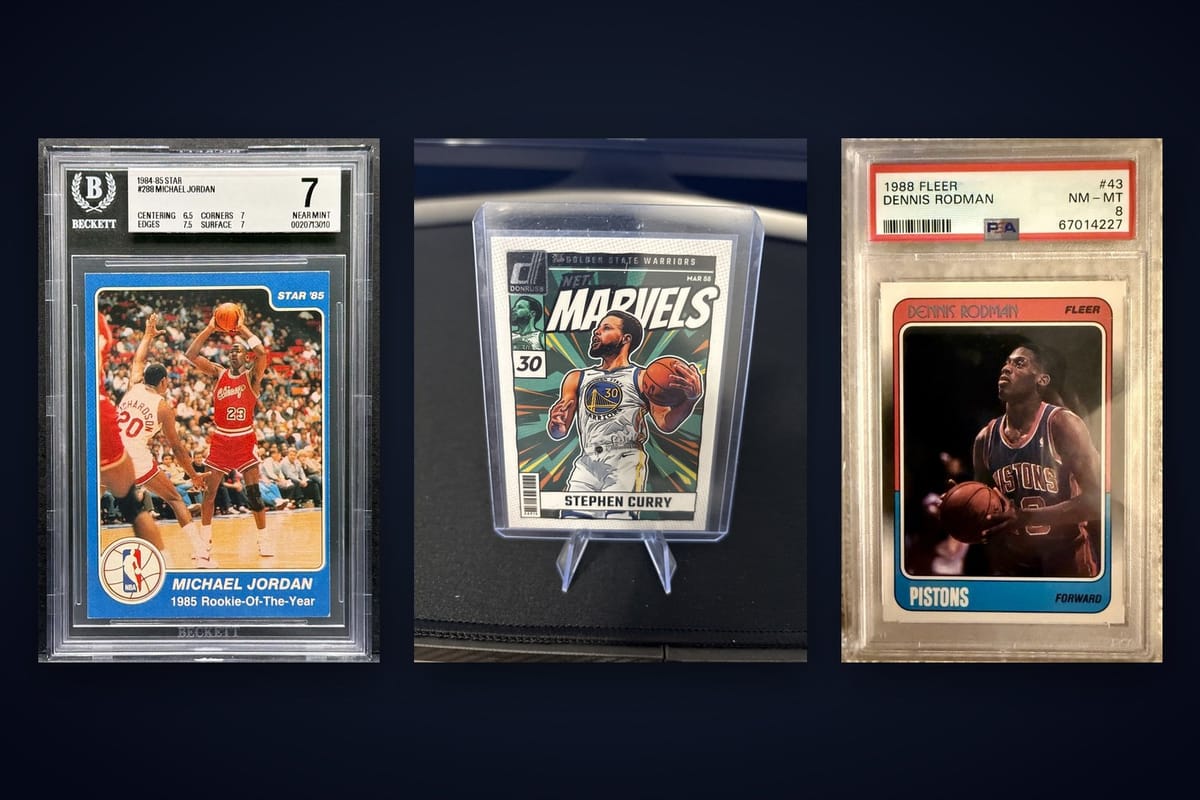
30-day price movers — live data from Midpoint's card database, as of 2026-11-22. Prices move; Midpoint refreshes these daily.
| Card | Raw | PSA 10 | 30-day | |
|---|---|---|---|---|
 |
Michael Jordan #288 1984 Star |
$9,500 | $248,508 | +141.3% |
 |
Stephen Curry #9 2024 Panini Donruss Net Marvels |
$13.62 | $201.25 | +57.9% |
 |
Dennis Rodman #43 1988 Fleer |
$25.00 | $3,872 | +10.6% |
 |
Michael Jordan #3 1989 Fleer Sticker |
$14.99 | $10,717 | +9.9% |
 |
Shaquille O'Neal #1 1992 Upper Deck |
$11.41 | $3,881 | +6.1% |
 |
Michael Jordan #4 1997 Hoops Frequent Flyer Club |
$300.00 | $2,301 | +3.3% |
 |
Michael Jordan #41 1990 Skybox Prototype |
$321.65 | $2,740 | +1.3% |
 |
Akeem Olajuwon #237 1984 Star |
$724.06 | $47,893 | +0.4% |
 |
Michael Jordan [Atomic Refractor] #96 1997 Bowman's Best |
$1,823 | $14,225 | 0% |
 |
Cooper Flagg #BCA-CF 2025 Bowman Chrome Sapphire Autograph |
$4,500 | $20,245 | 0% |
 |
Cooper Flagg [Refractor] #BCA-CF 2025 Bowman Chrome Autograph |
$1,313 | $5,339 | 0% |
 |
Shawn Kemp #6 1996 Skybox Premium Golden Touch |
$77.66 | $2,238 | 0% |
Look up any card's current raw and graded value in Midpoint — and get an estimated grade before you pay to submit.
1. Cooper Flagg Rookies and Key Parallels
Cooper Flagg is the headline name in any list of trending basketball cards right now. He is a modern-era franchise rookie, so demand is broad. Flagship collectors, parallel hunters and long-term holders are all competing for the same supply.
Not every Flagg card moves equally. The pattern usually looks like this:
- Base rookies: plentiful, so raw prices stay modest. The gap between raw and PSA 10 is where the opportunity (and the risk) sits.
- Numbered parallels and autographs: scarce, so they react fastest to hype.
- PSA 10 copies: carry a premium, and it widens when the raw card is easy to find.
Check the table in this guide for the as-of 2026-11-22 raw and PSA 10 values on the Flagg entries before you decide which version fits your budget.
2. AJ Dybantsa, Darryn Peterson and Cameron Boozer
This group is where speculation lives. Dybantsa, Peterson and Boozer are tied to the 2026 draft class, and their cards trade on potential as much as production. That makes them exciting and volatile.
Rising prices here mostly reflect expectations: draft position, early-season highlights and social media buzz. Those inputs can reverse quickly. A quiet month or a slow start can erase a rally.
- Favor cards you would still want to own if the price flattened.
- Avoid paying peak prices for base cards after a hype spike.
- Track each player's three-month trend, not just last week's sale.
3. Luka Dončić
Dončić is a proven star, so his cards behave differently from a pure prospect play. Demand is steadier and tends to follow on-court performance, MVP conversation and playoff runs.
When a veteran star surges in a given month, the move often shows up first in premium parallels and PSA 10 rookies, then may spread to cheaper cards. Because his supply is well established, the reliable approach is to compare against recent comps for the exact card and grade you want.
4. Victor Wembanyama
Wembanyama sits in a similar tier: a young superstar with a long runway. His cards tend to respond to breakout-season hype, All-Star and defensive award talk, and any MVP-odds movement.
That kind of narrative-driven demand can lift prices in bursts. If you are tempted by a sudden jump, ask whether it follows a real performance milestone or just a viral clip. Milestone-driven gains often hold better, though that is not guaranteed.
5. Vintage Stars: Jordan, Kobe, LeBron, Curry and Magic
Vintage and legacy names are drawing attention again. Michael Jordan, Kobe Bryant, LeBron James, Stephen Curry and Magic Johnson cards often act as the stable end of the hobby. They usually move less dramatically than rookies, but when collectors rotate money out of hype, vintage can quietly benefit.
For these cards, condition does most of the pricing work. Centering, corners and surface separate a premium copy from an average one. Our guide on how centering impacts card value explains why two cards of the same type can sell for very different amounts.
6. 1990s Inserts
1990s inserts keep drawing interest because they combine nostalgia, striking designs and often tough condition. Many were printed with delicate finishes that chip or scratch easily, so clean examples can be harder to find than the set's age suggests.
- What to look for: sharp corners, an unmarked surface and centered borders.
- What to avoid: assuming every insert is rare. Check population reports and recent sales.
- Why it matters now: collectors chasing Jordan, Kobe and Magic inserts may push up the prices of the best copies first.
7. The 2026-27 Topps Flagship Basketball Release
A new Flagship release can shift the market. It creates fresh rookie cards, new parallels and a wave of box-breaking activity. Hobby-box prices can rise on launch excitement, which may lift singles at the same time. Check the official release date and checklist, since timing and contents can change.
Be careful with the early weeks. Opening-month pricing is often inflated because supply has not fully reached the market. As more boxes are opened and listed, prices for common cards tend to settle, while genuinely scarce parallels often hold up better.
- Buying sealed product is a bet on pull rates and hype, not a sure return.
- Singles let you target the exact rookie and parallel you want.
- Print runs on numbered cards are printed on the card, so verify them rather than assuming.
8. Autographs, Serial-Numbered and Rare Parallels
If you are looking for basketball cards going up in value, scarcity is the pattern to watch. Autographs, low-numbered parallels and one-of-one style chase cards often outpace base cards in a hot month because supply is so limited.
The flip side is thinner trading. Fewer sales means each price is a less reliable signal, and a single outlier can mislead you.
- Look for at least two or three recent sales of the same card and grade.
- Discount any sale that looks like an unusual outlier.
- Remember that high-end cards can drop fast if sentiment cools.
If you are weighing whether to submit a scarce card, read our guide to grading low population cards first.
9. PSA 10 and Graded-Card Premiums
A PSA 10 usually sells for more than a raw copy of the same card, but the size of that premium changes by card, era and market mood. The table in this guide shows raw and PSA 10 values side by side as of 2026-11-22 so you can see the gap for each entry.
Centering is one common reason a card misses a 10. A card can look flawless to the eye and still fall short on the borders. Population reports tell you how common a 10 is. When many copies already hold the top grade, the premium often shrinks.

Before you pay to submit, use Midpoint to measure centering and get an estimated PSA, BGS, CGC or TAG grade. If the estimate lands below a 10, the math often changes. Our step-by-step pre-grading guide walks through the process.
10. How to Measure a Real Price Rise
Headlines about rising prices are easy to find. Verifying them takes a little discipline. Use this checklist:
- Recent comparable sales: same card, same parallel, same grade, sold rather than listed.
- Three-month trend: a 30-day jump means more when it sits on top of a steady climb.
- Market indexes: useful for direction, but short-term index performance can conflict with individual-card gains. An index can be flat while a specific rookie jumps.
- Marketplace data: check volume as well as price. A rise on two sales is weaker than one on twenty.
Midpoint's card lookup provides raw and graded values, and portfolio tracking shows how your own collection's value changes over time.
11. Sustainable Trend or Short-Term Speculation? Buy, Hold, Sell or Grade
Late November mixes real drivers with temporary ones. Holiday gift demand and new-release excitement are seasonal. Performance-based gains, such as a player's breakout, MVP odds or a playoff run, may be more durable, though still not guaranteed.
A practical approach for late November 2026:
- Modern rookies: be selective. Buy the cards you believe in at prices supported by several comps. Consider selling hype-driven spikes that outran the player's results.
- Vintage singles: hold or add slowly. Prioritize condition over bargains, and pay for sharp, well-centered copies.
- Grading: submit only when the estimated grade justifies the fee. Compare the raw and PSA 10 gap in the table against the cost and the risk of a lower grade. See the grading scale differences by company if you are choosing between PSA, BGS, CGC and TAG.
- Selling: if a card has risen well past its three-month trend, taking some profit is reasonable.
None of this is financial advice. Card prices can fall as easily as they rise, so only spend what you are comfortable holding.
Conclusion
Basketball card prices may be rising in November 2026, but not across the board. The strongest moves tend to come from star rookies, scarce autographs and parallels, vintage legends and well-graded copies, potentially helped along by new Topps releases and holiday demand.
The smart move is to confirm each rise with recent sold comps and a three-month view, then decide whether to buy, hold, sell or grade. To check a card's raw and graded values, estimate its grade and track your collection, try Midpoint for free on iOS and Android. You can also start with the free centering calculator.
FAQ
Q: Why are basketball card prices rising in November 2026?
A: Several factors can overlap: hype around star and draft-class rookies, new Topps basketball releases, hobby-box pricing and holiday demand. Some of these are seasonal, so verify any rise with recent sold comps.
Q: Which basketball cards are increasing in value right now?
A: Cards tied to Cooper Flagg, AJ Dybantsa, Darryn Peterson, Cameron Boozer, Luka Dončić and Victor Wembanyama are drawing attention, along with vintage Jordan, Kobe, LeBron, Curry and Magic cards. Scarce autographs and numbered parallels often move fastest. See the data table for as-of 2026-11-22 values.
Q: What basketball cards should I buy in November 2026?
A: Focus on cards with several recent comparable sales and a steady three-month trend. Favor players you believe in, and avoid chasing a sudden spike on a base card.
Q: Are 2026-27 Topps basketball cards worth buying or investing in?
A: They can be fun and rewarding, but opening-month pricing is often inflated. Singles of specific rookies and scarce parallels are usually a more controlled way in than sealed boxes. Treat it as speculation, not a guarantee.
Q: Are vintage basketball cards a better investment than modern rookie cards?
A: Neither is guaranteed. Vintage tends to be steadier and condition-driven, while modern rookies are more volatile and performance-driven. Many collectors hold some of each.
Q: How much more is a PSA 10 basketball card worth than an ungraded copy?
A: It varies by card, population and market conditions. Compare the raw and PSA 10 columns in the data table (as of 2026-11-22), then subtract grading costs and account for the chance of a lower grade.
Free to start
Try the Midpoint app
Grade any card from a photo, see its raw and PSA 10 value, and track what your collection is worth — free.
Get it on iPhoneGet it on Android


