Best 1961 Hockey Cards: Rookies, Stars & What to Grade
The best 1961 hockey cards ranked: Keon, Hull, Mikita and Rangers rookies, plus how Topps and Parkhurst differ and which are worth grading for PSA 10.

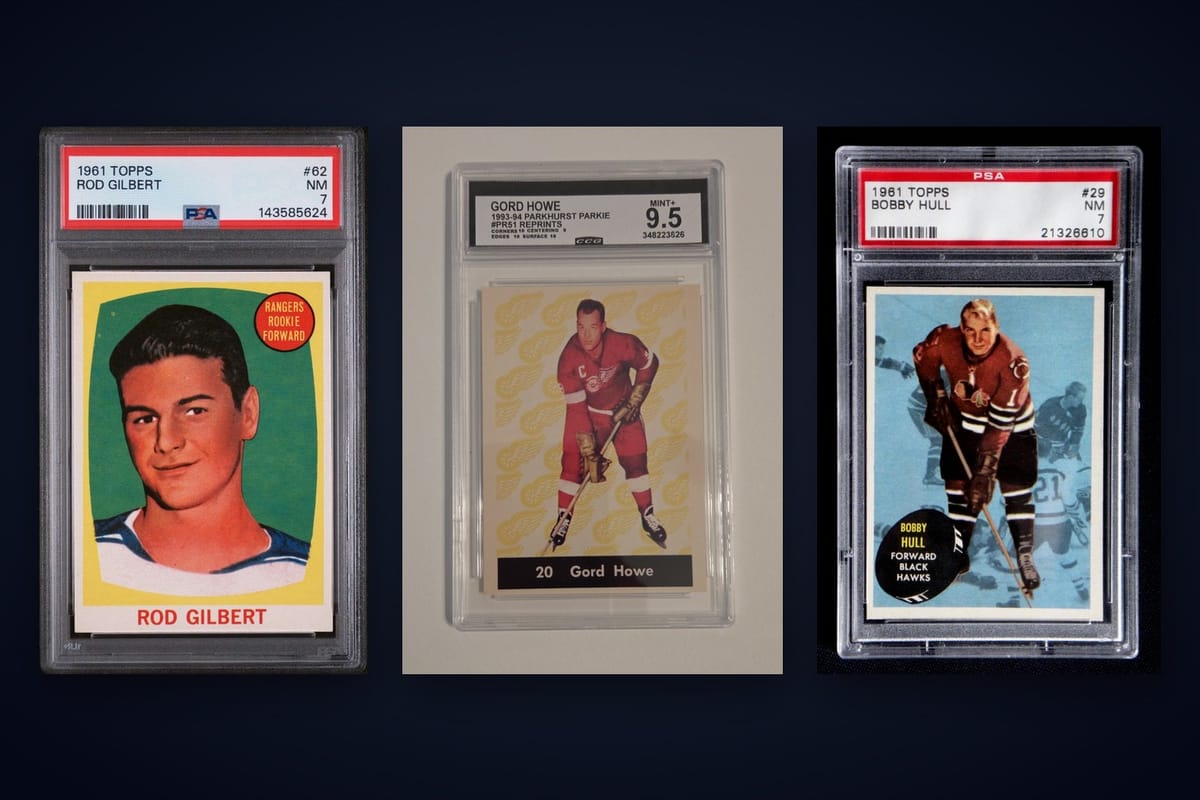
Estimated reading time: 9 min
Key Takeaways
- The best 1961 hockey cards come mainly from two sets: 1961-62 Parkhurst (51 cards) and 1961-62 Topps (66 cards).
- Rookie cards, led by Dave Keon's 1961-62 Parkhurst, are among the biggest drivers of value and long-term demand. Always confirm which set a player's rookie card belongs to before buying.
- 1961 hockey cards PSA 10 are extremely hard to find. Centering, gum stains, soft corners and print quality keep most copies far below gem grade.
- Check the values table in this guide (figures as of 2026-11-15) for raw versus graded numbers on specific cards.
- Pre-grade before you submit. Most vintage hockey cards only justify grading fees if centering and corners hold up.
If you want the best 1961 hockey cards to collect, grade or hold, the answer starts with a few rookies, a handful of future Hall of Famers and some Rangers cards worth a look. These 1961 hockey cards worth money sit in vintage sets with small checklists and fragile cardboard, so condition matters as much as the name on the front.
This guide ranks the most desirable cards from the year, explains which set each comes from and shows where the gap between a raw copy and a gem-grade copy gets wide. One caution on labeling: these sets are often written as 1961 Topps, 1961-62 Topps or 1961-62 Parkhurst, and the seasons overlap. The 1961-62 label is the safer way to separate them from 1960-61 issues.
Card values — live data from Midpoint's card database, as of 2026-11-15. Prices move; Midpoint refreshes these daily.
| Card | Raw | PSA 10 | Gem premium | |
|---|---|---|---|---|
 |
Rod Gilbert #62 1961 Topps |
$49.30 | $25,071 | 508.6× |
 |
Gordie Howe #20 1961 Parkhurst |
$71.38 | $13,809 | 193.5× |
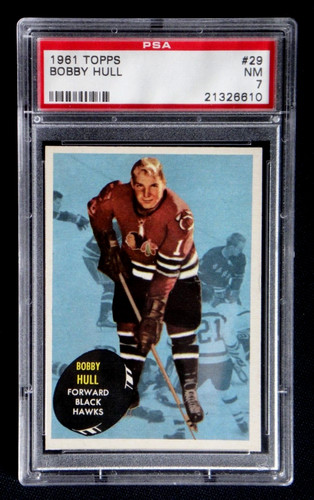 |
Bobby Hull #29 1961 Topps |
$56.04 | $10,189 | 181.8× |
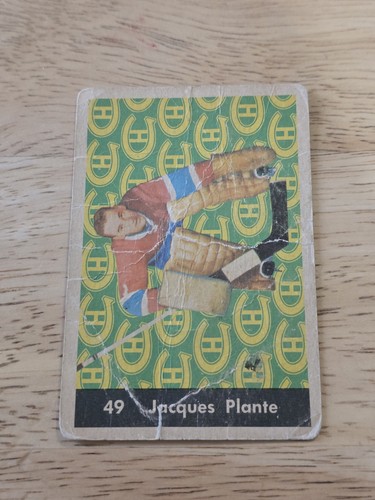 |
Jacques Plante #49 1961 Parkhurst |
$55.87 | $9,892 | 177.1× |
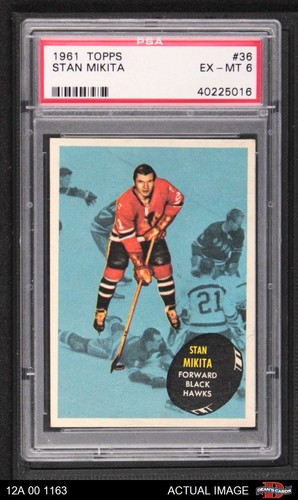 |
Stan Mikita #36 1961 Topps |
$44.94 | $8,222 | 183× |
 |
Jean Ratelle #60 1961 Topps |
$42.00 | $7,641 | 181.9× |
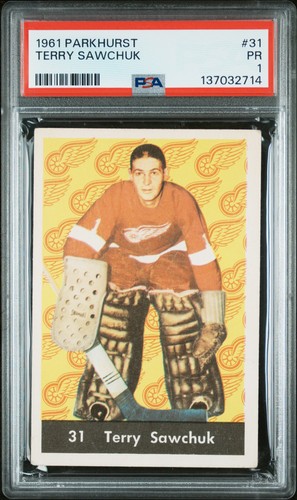 |
Terry Sawchuk #31 1961 Parkhurst |
$39.42 | $7,176 | 182× |
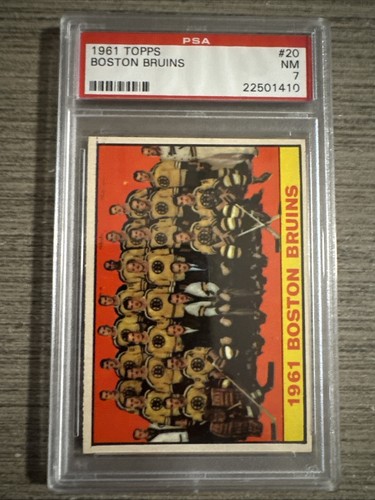 |
Boston Bruins #20 1961 Topps |
$37.80 | $6,878 | 182× |
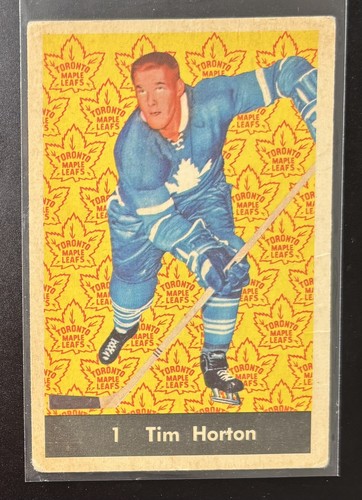 |
Tim Horton #1 1961 Parkhurst |
$26.90 | $6,200 | 230.5× |
 |
Johnny Bucyk #8 1961 Topps |
$23.40 | $4,390 | 187.6× |
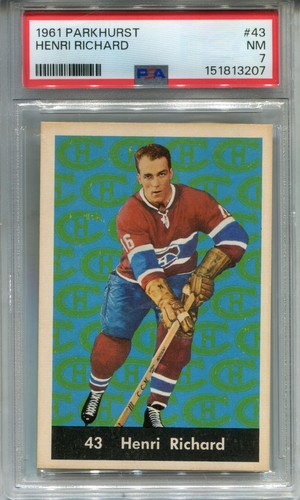 |
Henri Richard #43 1961 Parkhurst |
$17.97 | $3,233 | 179.9× |
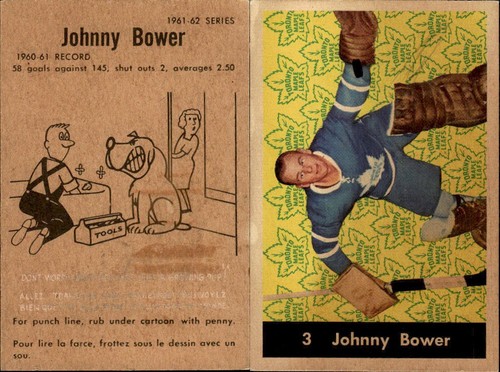 |
Johnny Bower #3 1961 Parkhurst |
$26.73 | $3,204 | 119.9× |
Look up any card's current raw and graded value in Midpoint — and get an estimated grade before you pay to submit.
1. Dave Keon, 1961-62 Parkhurst Rookie
Dave Keon is the headline card among 1961 hockey rookie cards. The Toronto Maple Leafs center won the Calder Trophy as the NHL's top rookie, was a cornerstone of the Leafs' 1960s Stanley Cup teams and is in the Hall of Fame. The Parkhurst set is generally associated with Toronto, Montreal and Detroit players, which suits a card of this stature.
For most buyers, this is the first card to price-check. Look it up in the values table for raw versus graded numbers. The spread between grades tells you how much condition is worth on this card.
- Check first: centering (borders are often uneven on vintage cards), corner wear and surface creasing.
- Why it ranks: Hall of Fame player, rookie card status and a small 51-card checklist.
2. Bobby Hull, Chicago Blackhawks
Bobby Hull, the "Golden Jet," is one of the most recognizable names in hockey card collecting. His early-1960s card captures him in his prime with the Chicago Blackhawks. Topps issues of this period are generally associated with Boston, Chicago and New York players, so Hull is a natural centerpiece.
Hull is not a rookie here, so his value rests on star power and demand rather than first-card status. That makes condition especially important. A sharp, well-centered copy stands out from the many worn ones.
- Look for clean borders and no gum stain on the back.
- Compare raw and graded values before paying a grading premium.
3. Stan Mikita, Chicago Blackhawks
Stan Mikita pairs with Hull as the other face of the early-1960s Blackhawks. A Hall of Fame center and a multi-time scoring champion, he is a staple of any serious vintage hockey collection.
Collectors often chase Hull and Mikita together because they define the Chicago side of the era. If you are building a set, they are two of the cards you will want.
- Best for: collectors who want a Hall of Fame star without paying rookie-level premiums.
- Watch for: off-center fronts and rough edges from cutting.
4. Jean Ratelle and Rod Gilbert, New York Rangers
Jean Ratelle and Rod Gilbert both became Rangers greats and Hall of Famers, and their early cards carry real significance for New York collectors. Check a current checklist or price guide to confirm which issue is each player's recognized rookie card, since that affects value.
Condition matters here more than usual. Clean, well-centered examples of vintage cards from this era are much harder to replace. Lower-grade copies can still be worth owning, but sharp examples are where premiums show up.
- Check the year and set on the card so you do not confuse it with a later issue.
- Pull the raw versus graded values from the table before you buy.
5. Ted Green and Dallas Smith, Boston Bruins
Ted Green and Dallas Smith were Boston Bruins defensemen of this era. Neither is in the Hall of Fame, but both were tough, productive players who helped bridge Boston to its Bobby Orr-era success. Confirm each player's rookie card year against a checklist before paying a rookie premium.
These cards fit collectors who want early cards of Bruins players without chasing the most expensive names. They are also useful if you are building a complete Bruins run.
- Good value angle: typically lower price points than Keon.
- Risk: common print flaws and soft corners on vintage cardboard.
6. Glenn Hall, Goaltender Card
Glenn Hall, "Mr. Goalie," is a Hall of Fame netminder known for his streak of consecutive starts and his butterfly style. Goalie cards from this era are popular because the mask-less photography is striking and the players were legends.
Hall's card is a good pick for collectors who value history over flash. It may be a more approachable entry into the era than the rookie cards, but check current sales to confirm.
7. Johnny Bucyk, Boston Bruins
Johnny "Chief" Bucyk was a Bruins franchise pillar and a Hall of Fame left winger who played into the 1970s. His 1961-era card represents a career that stretched across eras, from the Original Six to the expansion age.
For long-term holders, Bucyk is a steady choice. He may not command Keon money, but he has dependable demand, especially from Boston collectors.
- Check the back for stains and print dots.
- Centering on vintage Topps cards can vary a lot copy to copy.
8. Gump Worsley, New York Rangers
Lorne "Gump" Worsley, the Rangers goaltender, is another New York card that deserves attention. A Hall of Fame goalie with a famously easygoing personality, he played for the Rangers and Canadiens and won multiple Stanley Cups.
His Rangers card combines two appealing traits: a Hall of Fame name and appeal to New York collectors. If you find a nice copy at a fair price, it is worth considering.
9. Team and Checklist Cards
Team cards and checklists, where a set includes them, are easy to overlook, but vintage checklists can be hard to find in nice shape. Many were marked by kids tracking their collections, so unmarked copies can be scarce.
Do not assume a checklist is cheap just because it has no player on it. Check an unmarked copy against sales before you dismiss it. If you plan to grade one, inspect it closely for pen or pencil marks, which will hold it back.
- Look for: unchecked boxes, clean borders and no creases.
- Skip: heavily marked copies unless the price is very low.
10. Original Six Legends and How to Read the Set Labels
The Parkhurst set is generally associated with Montreal Canadiens, Toronto Maple Leafs and Detroit Red Wings stars, so legends such as Gordie Howe and Jean Béliveau are worth tracking down. Maurice Richard retired in 1960, so check a set checklist before hunting for a card from this season; retired-player cards carry their own nostalgia premium.
Labeling can be confusing, so keep it straight:
- 1961-62 Parkhurst: 51 cards, generally associated with Montreal, Toronto and Detroit players.
- 1961-62 Topps: 66 cards, generally associated with Boston, Chicago and New York players.
- 1960-61 issues: a separate season. Confirm the year on the card before you buy.
Before submitting any of these, measure centering. Our guide to how centering impacts card value explains why borders alone can decide a grade. For a quick check, the free centering calculator works well.

Conclusion
The best 1961 hockey cards blend rookies, Hall of Famers and star names. Keon leads the rookie class, Hull and Mikita anchor the stars, and the Rangers cards (Ratelle, Gilbert, Worsley) add New York appeal. Treat 1961 hockey cards PSA 10 as the rare exception rather than the goal, because vintage cardboard seldom survives in gem condition.
Before paying for grading, estimate the result. Midpoint measures centering and gives PSA, BGS, CGC and TAG estimates, so you can decide before you spend. For a step-by-step approach, see how to pre-grade your card, and protect what you keep with this card storage guide.
FAQ
Q: What are the most valuable 1961 hockey cards?
A: The Dave Keon 1961-62 Parkhurst rookie is generally the headliner, followed by Hall of Famers like Bobby Hull and Stan Mikita and cards of New York Rangers greats. Exact values depend on grade, so check the values table (as of 2026-11-15).
Q: Who are the key players in the 1961 Topps hockey set?
A: Collectors focus on stars such as Bobby Hull and Stan Mikita, plus Rangers and Bruins names like Jean Ratelle, Rod Gilbert, Ted Green and Dallas Smith. Confirm each player's rookie card year on a checklist. Dave Keon's rookie is the key card from the Parkhurst side.
Q: What is the difference between 1961 Topps and 1961-62 Topps hockey cards?
A: They usually refer to the same early-1960s Topps issue (66 cards), and the 1961-62 label is the more precise season label. Confirm the year and design on the card to separate it from 1960-61 issues.
Q: How much is a 1961-62 Parkhurst Dave Keon rookie card worth?
A: It varies widely by condition, with a big gap between raw and graded copies. Look up the card in Midpoint for raw and graded values rather than relying on asking prices.
Q: What are the best 1961 hockey cards to collect?
A: Start with Keon, then Hull, Mikita, Ratelle, Gilbert and Worsley. For budget-friendly options, look at Ted Green and Dallas Smith.
Q: How can you tell if a 1961 Topps hockey card is rare or valuable?
A: Check the player, whether it is a rookie, and the condition. Centering, corners, gum stains and surface wear all affect value, and our guide to grading low population cards explains how rarity affects grading decisions.
Free to start
Try the Midpoint app
Grade any card from a photo, see its raw and PSA 10 value, and track what your collection is worth — free.
Get it on iPhoneGet it on Android