Centering Differences Between TCG and Sports Cards: The Complete Guide
Learn the key centering differences between TCG and sports cards, grading standards for PSA/BGS/CGC, and how to measure centering for top grades.

Estimated reading time: 15 min
Key Takeaways
- Centering standards differ significantly between TCGs and sports cards, especially for modern vs. vintage issues.
- Front and back centering are judged separately, with stricter requirements for higher grades like Gem Mint 10.
- Grading companies (PSA, BGS, CGC, SGC, TAG) use different ratios and tolerances for centering.
- Tools like Midpoint provide centering measurements to help pre-grade cards before submitting for grading.
- Understanding centering is important for maximizing card value and grade potential, especially for Pokémon, MTG, sports, and One Piece cards.
Table of Contents
- Section 1: What is Card Centering and Why Does it Matter?
- Section 2: How Centering is Measured — Front vs. Back
- Section 3: Centering Standards for TCG Cards (Pokémon, MTG, Yu-Gi-Oh, One Piece)
- Section 4: Centering Standards for Sports Cards (Modern and Vintage)
- Section 5: Comparing Grading Companies — PSA, BGS, CGC, SGC, TAG
- Section 6: How to Measure Card Centering (Manual and Digital Tools)
- Section 7: Common Centering Challenges and Mistakes
- Section 8: How Centering Impacts Your Card's Grade and Value
- Conclusion
- FAQ
Section 1: What is Card Centering and Why Does it Matter?
Defining Card Centering
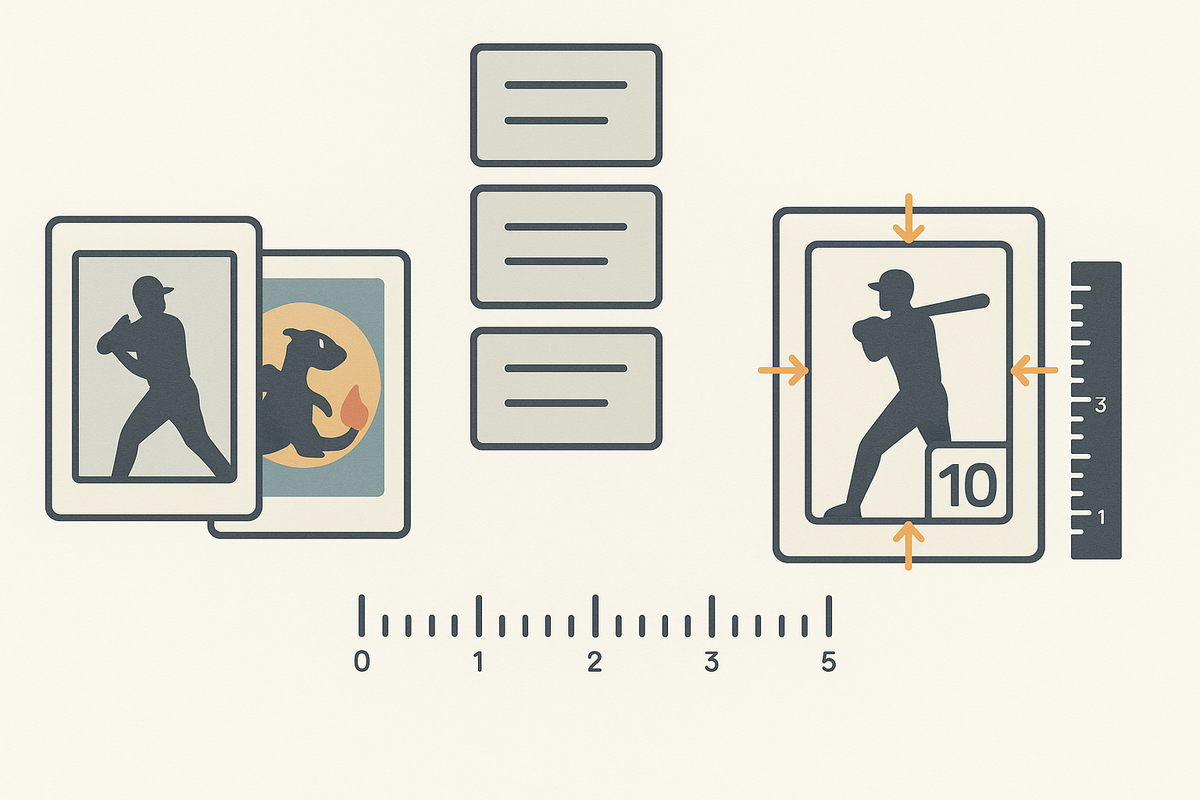
Card centering refers to how evenly the printed design is positioned on a trading card or sports card, relative to the card’s physical edges. Perfect centering means the borders are uniform on all sides; off-centering means one or more borders are noticeably thicker or thinner. Centering applies to both the front and back of the card, but the front is generally weighed more heavily by grading companies.
Why Centering Impacts Grades
Grading companies like PSA, BGS, CGC, SGC, and TAG assign centering subgrades or use centering as a ceiling for the overall grade. Poor centering can prevent a card from achieving Gem Mint 10 or Pristine status, even if the card is otherwise flawless. For collectors, especially those focused on Pokémon card centering or vintage card centering, this can mean the difference between a valuable investment and a common card.
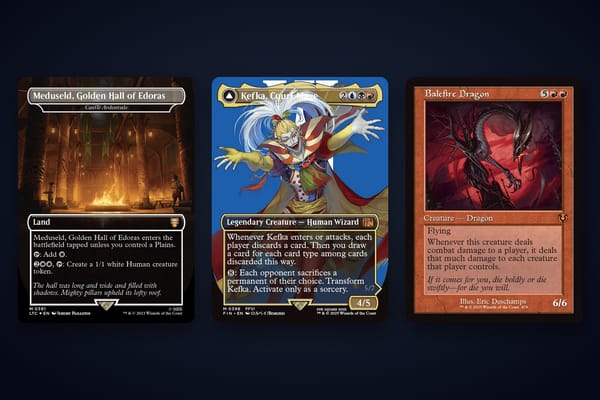
- TCG cards (Pokémon, MTG, Yu-Gi-Oh, One Piece) often have distinct design elements that make centering errors obvious—such as colored borders, asymmetric art, or text boxes.
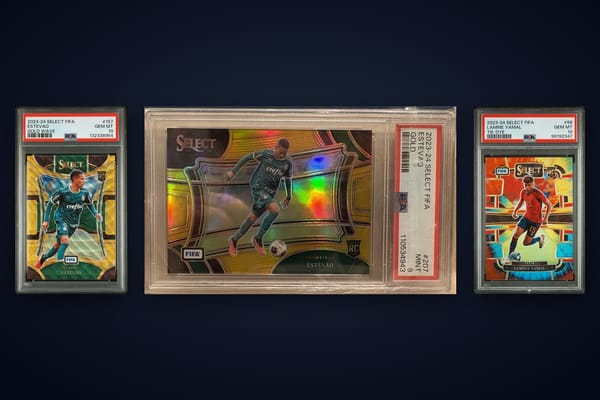
- Sports cards may feature player photos, team logos, and statistics, with varying border widths that can make centering harder to judge visually.
Why Collectors Care About Centering
Even small centering flaws can impact both the grade and market value, especially in high-demand cards. For example, a PSA 10 Pokémon card with strong centering can sell for more than a PSA 9 with off-centering.
For a detailed look at how centering affects value, see How Centering Impacts Card Value: A Detailed Guide.
Section 2: How Centering is Measured — Front vs. Back
Basic Measurement Method
Centering is typically expressed as a percentage ratio (e.g., 55/45 or 60/40), comparing the thickness of the left/right and top/bottom borders:
- Front centering: The border widths are measured from card edge to printed edge (artwork or frame) on all sides. The ratio is calculated for both left/right and top/bottom.
- Back centering: The process is similar, but the back is often printed with less precision, leading to looser requirements.
Front vs. Back Weighting
Most grading companies place more emphasis on front centering. For example, PSA allows stricter ratios on the front (e.g., 60/40) and looser ones on the back (e.g., 75/25) for certain grades. Back centering Pokémon cards, for instance, is often less critical for a PSA 10 than front centering.
Calculating Centering Ratios
Here’s how to calculate centering manually:
- Measure the border thickness on both sides (e.g., left and right).
- Add the two measurements.
- Divide each border by the total to get the percentage (e.g., left edge is 2mm, right edge is 3mm, total is 5mm. Left is 40%, right is 60%: 40/60 centering).
See the Free Centering Calculator for an instant ratio calculation.
Section 3: Centering Standards for TCG Cards (Pokémon, MTG, Yu-Gi-Oh, One Piece)
Pokémon Card Centering
Pokémon cards are known for centering challenges, especially in older sets. PSA’s standard for a Gem Mint 10 is typically 55/45 or better on the front, and 75/25 on the back. Centering is measured from the yellow border to the card edge and can vary by print run. Back centering Pokémon cards can be off yet still achieve a 10, as long as the front is within the stricter ratio.
MTG Card Centering
Magic: The Gathering (MTG) cards have colored borders that can make off-centering stand out. Centering requirements are similar to Pokémon, but certain sets (e.g., Alpha, Beta) are known for print variability, so vintage leniency may apply. For modern MTG, 60/40 or better is generally needed for a Gem Mint grade.
Yu-Gi-Oh and One Piece Card Centering
Yu-Gi-Oh and One Piece cards often have very thin borders, leaving little margin for error. Even minor misalignments are obvious and can disqualify a card from a top grade. For Gem Mint, expect 55/45 to 60/40 or better on the front.
- Some TCGs have asymmetrical artwork or off-center text boxes. Always measure from the main design border, not just the artwork.
For step-by-step grading tips, see How to Pre-Grade Your Card: A Step-by-Step Guide.
Section 4: Centering Standards for Sports Cards (Modern and Vintage)
Modern Sports Card Centering
Modern sports cards (post-1980) have tighter printing tolerances, so grading companies expect better centering. For Gem Mint 10 or Pristine grades, front centering is generally expected to be 55/45 or 60/40 at worst, and the back can be 75/25. Some ultra-modern brands (e.g., Panini Prizm) have bold borders that make centering issues obvious.
Vintage Card Centering
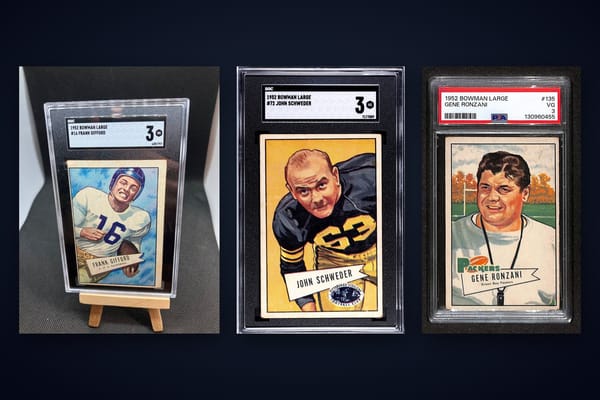
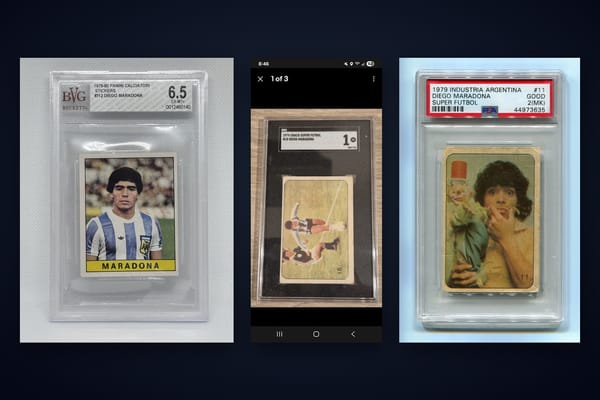
Vintage sports cards, such as 1950s Topps baseball, are graded with more leniency. PSA allows 65/35 or even 70/30 front centering for a PSA 8, and back centering can be as loose as 90/10 in some cases. This reflects the limitations of old printing technology. Vintage card centering is often the main reason for grade reductions, even when the card is otherwise in strong condition.
Differences vs. TCG Centering
- Sports cards may feature asymmetric elements like stats boxes, team logos, or player cutouts, complicating centering measurement.
- Vintage cards are judged less strictly than modern sports or TCG cards.
- For truly rare or low-population vintage cards, centering flaws are sometimes tolerated if the card is otherwise high-grade.
For more on grading nuances, check out Card Grading for Low Population Cards: The Complete Guide.
Section 5: Comparing Grading Companies — PSA, BGS, CGC, SGC, TAG
PSA Centering Standards
- Gem Mint 10: 55/45 or better front, 75/25 or better back
- Mint 9: 60/40 or better front, 90/10 or better back
- Vintage cards (pre-1980): can have 65/35 or even 70/30 for PSA 8
BGS and CGC Centering Subgrades
- BGS (Beckett) provides a centering subgrade (e.g., 9.5, 9, 8.5).
- Gem Mint (9.5): 50/50 to 55/45 front, 60/40 back (BGS is considered stricter than PSA for Pristine 10).
- CGC uses similar standards: 60/40 or better for a 9.5, 55/45 for a 10.
SGC and TAG
- SGC (Sportscard Guaranty): 55/45 or better for 10, similar to PSA.
- TAG (Technical Authentication & Grading): Uses automated, digital measurements for precision, with published centering thresholds.
For a detailed comparison, see Grading Scale Differences by Company: PSA, BGS, CGC & the True Meaning of Top Grades.
Section 6: How to Measure Card Centering (Manual and Digital Tools)
Manual Measurement
- Use a ruler or precision caliper to measure border thickness (to the nearest 0.1mm).
- Calculate the ratio for both left/right and top/bottom borders.
- Repeat the process for the back, noting that the design may be offset compared to the front.
Digital Centering Tools
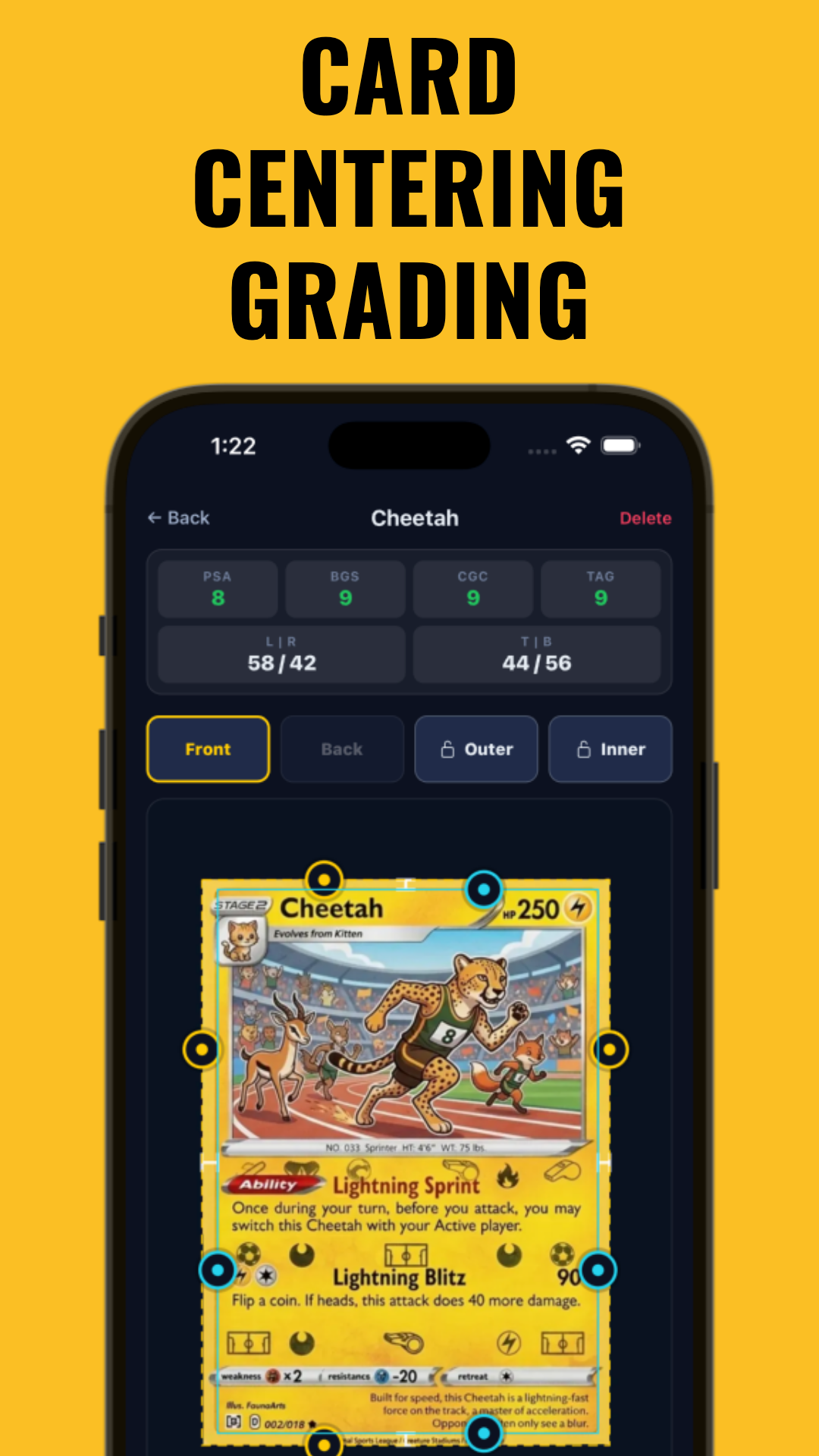
Apps like Midpoint allow you to upload a card scan or photo, automatically detect edges, and provide centering ratios. This can be useful for bulk grading and for cards with complex or asymmetrical artwork, like One Piece card centering or MTG card centering.
Centering Calculators
- Online calculators (like the Free Centering Calculator) simplify the math and help you quickly determine if your card meets Gem Mint thresholds.
- These tools are especially helpful for cards with uneven borders or non-symmetrical designs.
For collectors who want to improve grading accuracy before submitting cards, a tool like Midpoint can be helpful.
Section 7: Common Centering Challenges and Mistakes
Misjudging Which Border to Measure
Some cards (especially TCGs) have artwork that is not centered within the card frame. Always measure from the main printed design border to the card edge, not just the artwork or text box.
Ignoring Back Centering
Collectors often focus only on the front, but back centering can still limit your grade—especially for Mint 9 and Gem Mint 10 submissions. Back centering Pokémon and MTG cards is less strict, but severe misalignment can still hurt the grade.
Assuming Vintage Cards Are Automatically Lenient
- While vintage card centering is graded more generously, it is not ignored. A 1971 Topps baseball card with 80/20 centering will not receive a PSA 9, regardless of condition.
- Always check the published standards by year and set.
Bulk Grading Pitfalls
If sending in multiple cards, small errors in manual measurement can add up. Digital tools like Midpoint or AI-powered analysis (see AI-Focused Comparison: How AI Transforms Card Centering Analysis) can help minimize human error and improve pre-grading accuracy.
Section 8: How Centering Impacts Your Card's Grade and Value
Centering as a Grade Ceiling
Even if your card is strong in every other aspect—sharp corners, clean surface, no print defects—off-centering can cap the grade at a 9, 8.5, or lower. For Gem Mint 10 or Pristine 10, centering is often the most common disqualifier.
Examples of Centering Ratios and Grade Outcomes
- Pokémon TCG: 55/45 front, 75/25 back = eligible for PSA 10. 60/40 front, 90/10 back = likely PSA 9.
- Modern Sports: 60/40 front, 75/25 back = Mint 9. 65/35 front = likely PSA 8.
- Vintage Sports: 70/30 front, 90/10 back may still get PSA 7-8, depending on issue.
Market Value Impact
Cards with top grades (especially Gem Mint 10) can command significant premiums. A PSA 10 Pokémon or sports card may be worth considerably more than a PSA 9, and centering is often the only difference.
For more on the financial implications, read Card Grade Impact on Insurance Value: The Ultimate Guide.
Conclusion
Understanding the centering differences between TCG and sports cards is important for collectors aiming for top grades and maximum value. Whether you’re grading Pokémon, MTG, One Piece, Yu-Gi-Oh, or vintage sports cards, each card type and era comes with its own centering quirks and standards. Manual measurement is possible, but digital tools like Midpoint can offer precision and efficiency—especially as grading fees rise and standards tighten. By learning about centering, you can more confidently pre-grade your cards, set realistic expectations, and make informed collecting decisions.
FAQ
Q: What is the difference between TCG centering and sports card centering?
A: TCG centering (e.g., Pokémon, MTG, One Piece) typically involves stricter and more visible border requirements, with grading standards focused on colored frames. Sports cards, especially vintage, may use broader tolerances and often factor in asymmetric elements like stats boxes or logos. Grading companies adjust their standards to account for these design and print quirks.
Q: Is 55/45 centering good for PSA 10 on sports cards and Pokémon cards?
A: 55/45 centering (front) is generally acceptable for a PSA 10 on both modern sports and Pokémon cards. The back centering can be looser (up to 75/25) for a PSA 10. Always check the latest PSA standards for your specific set and year.
Q: Do grading companies use different centering standards for front and back?
A: Yes. The front is held to stricter standards (e.g., 55/45 or 60/40 for Gem Mint), while the back can often have much looser centering (75/25, even 90/10 for some vintage cards). The front is more heavily weighted in the overall grade.
Q: How do you measure card centering with a ruler or calculator?
A: Measure the distance from the card edge to the printed design border on both sides. Add both measurements, then divide each side by the total to get the percentage ratio (e.g., 2mm left, 3mm right = 40/60). Online centering calculators and digital tools can automate this process for accuracy.
Q: Why are vintage sports cards allowed more lenient centering than modern cards?
A: Vintage cards were produced with less precise printing technology, making perfect centering rare. Grading companies adjust standards for vintage cards (e.g., 70/30 or worse can still earn high grades) to reflect what was realistically possible at the time.
Q: What centering ratio is needed for a Gem Mint 10 or Pristine 10?
A: For most modern TCG and sports cards, the front centering must be 55/45 or better for a PSA 10, 50/50 to 55/45 for a BGS/CGC 10, and up to 75/25 on the back. Pristine 10 (BGS Black Label) may require 50/50 or 55/45 front centering.
Free to start
Try the Midpoint app
Grade any card from a photo, see its raw and PSA 10 value, and track what your collection is worth — free.
Get it on iPhoneGet it on Android