Football Card Prices Rising November 2026: 10 Movers to Know
Football card prices rising November 2026: how to read the 30-day movers, raw vs PSA 10 context, and how to decide whether to buy, hold, sell or grade.

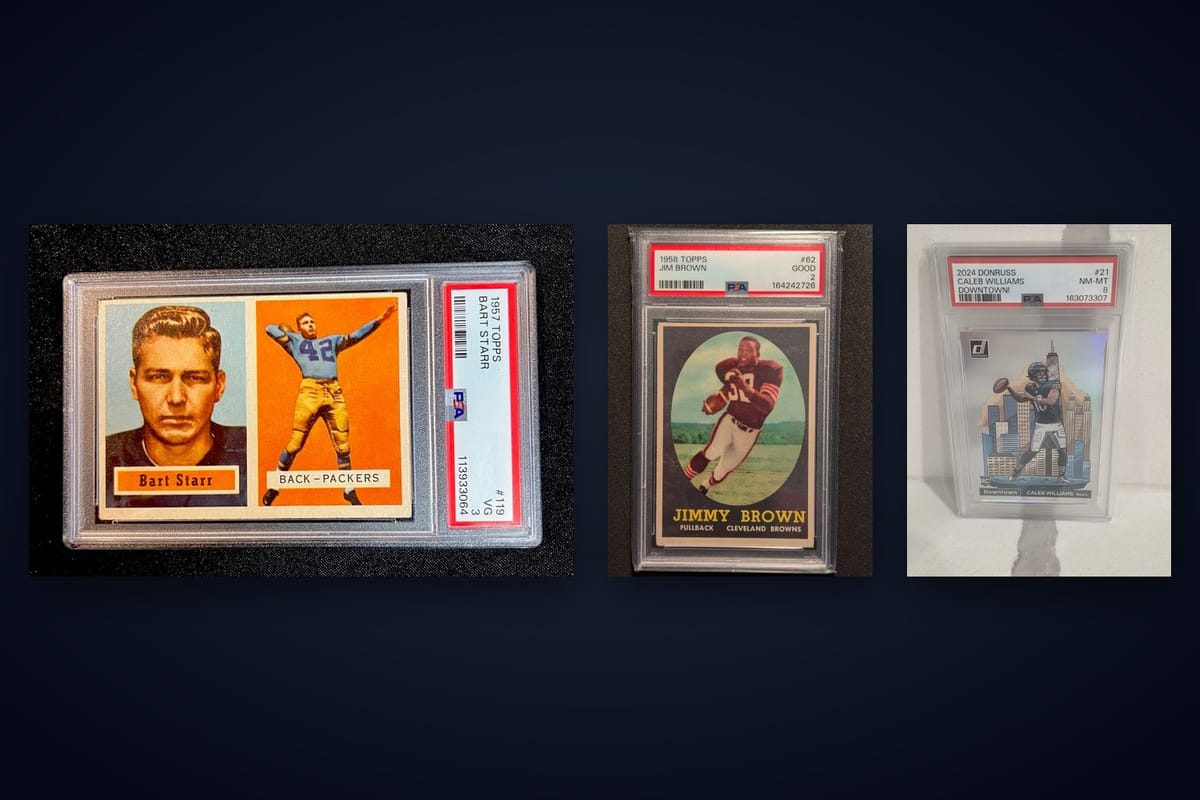
Estimated reading time: 9 min
Key Takeaways
- Football card prices rising in November 2026 is mostly a story of specific cards, not a rising tide. Players, parallels and grades move differently.
- Quarterbacks, rookies and scarce parallels and inserts (autos, low-numbered cards, Downtown, Kaboom) tend to drive the biggest short-term jumps.
- Completed sales are more reliable than asking prices. One outlier sale can fake a trend.
- PSA 10 only makes sense when the premium over raw clearly exceeds grading fees and the risk of a lower grade.
- Sustainable demand comes from performance and scarcity. Hype comes from a single viral game or listing.
If you are tracking football card prices rising in November 2026, the useful question is not whether the market is up. It is which cards are up, why, and whether you should act. This guide walks through what drives the football card market in November 2026, how to read trending football cards, and how to decide on football cards going up in value.
The 30-day movers table in this post uses Midpoint's own database, with figures as of 2026-11-22. Use it alongside the framework below, and treat any single number as a snapshot, not a promise.
30-day price movers — live data from Midpoint's card database, as of 2026-11-22. Prices move; Midpoint refreshes these daily.
| Card | Raw | PSA 10 | 30-day | |
|---|---|---|---|---|
 |
Bart Starr #119 1957 Topps |
$613.83 | $154,791 | +21.3% |
 |
Jim Brown #62 1958 Topps |
$472.68 | $95,282 | +8.7% |
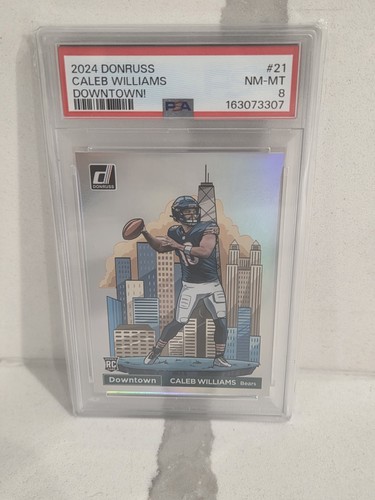 |
Caleb Williams #21 2024 Panini Donruss Downtown |
$1,052 | $3,393 | +7.5% |
 |
Ben Roethlisberger #23 2025 Panini Phoenix Color Blast |
$155.00 | $399.50 | +3.1% |
 |
Dan Marino #123 1984 Topps |
$43.00 | $6,651 | +3.1% |
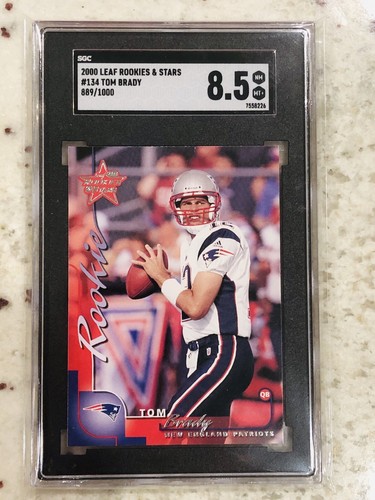 |
Tom Brady #134 2000 Leaf Rookies & Stars |
$1,354 | $17,219 | +1.2% |
 |
Jerry Rice [Refractor w/ Coating] #185 1995 Topps Finest Boosters |
$76.25 | $2,396 | +0.5% |
 |
Terrell Davis #19 2025 Panini Donruss Optic Uptown |
$126.02 | $932.00 | 0% |
 |
Joe Burrow [Gold] #4 2023 Panini Absolute Kaboom Horizontal |
$5,500 | — | 0% |
 |
Brock Purdy [Gold] #K33 2023 Panini Absolute Kaboom Vertical |
$5,239 | $20,044 | 0% |
 |
Troy Aikman #270 1989 Panini Score |
$13.36 | $675.00 | 0% |
 |
Walter Payton #J 1987 Topps Box Bottoms Hand Cut |
$51.00 | — | 0% |
Look up any card's current raw and graded value in Midpoint — and get an estimated grade before you pay to submit.
1. Start With the Big Picture: Broad Rally or Concentrated Gains?
The first thing to check in any football card market November 2026 review is breadth. A broad rally lifts most cards, including commons, base veterans and mid-tier parallels. A concentrated rally lifts a small group of players and formats while the rest of the market stays flat.
Football is often the second kind. Prices follow weekly performance, playoff races and rookie storylines, so gains tend to cluster around a handful of names. Look at the movers table and ask:
- Are the risers mostly the same few players, or spread across many?
- Are the gains in premium parallels and autographs, or in base cards too?
- Do PSA 10 copies and raw copies move together, or only one of them?
If the answers point to a narrow group, you are looking at a selective market. That changes how aggressive you should be about chasing it.
2. Rising Quarterback Cards: Rookies, Second-Year, Veterans and MVP Contenders
Quarterbacks anchor the hobby, so they tend to lead any list of trending football cards. But not all quarterback demand is the same:
- Rookie quarterbacks: Priced on potential. They swing hardest on a single big game or a starting-job announcement.
- Second-year quarterbacks: Often steadier. Demand rests on a full season of evidence rather than a debut.
- Veterans: Prices are often more stable and move mainly on legacy milestones and playoff runs.
- MVP contenders: Attract attention from casual buyers and media, which can pull prices up quickly in November.
When you scan the movers table, note which quarterback tier each riser belongs to. A rookie quarterback gaining in a month is a very different signal from a veteran MVP candidate doing the same.
3. Breakout Non-Quarterback Players: Performance, Playing Time and Injuries
Wide receivers, running backs, tight ends and defenders can spike fast, usually for four reasons:
- Performance: A multi-touchdown game or a streak of big outings sends collectors to search.
- Playing time: A player moving from backup to starter often sees demand rise before stats fully show it.
- Injuries: A star's injury can lower his prices while lifting a teammate who steps in.
- Media attention: Highlights, fantasy football buzz and national coverage widen the buyer pool.
Non-quarterback prices can be more volatile because a single injury can erase a run. Check the movers table for non-quarterbacks, then ask whether the rise is tied to a role change or just one game.
4. Rookie and Second-Year Cards With the Strongest Demand
Rookie cards remain the core of football card demand, and second-year cards often show interesting moves. A second-year player who confirms a rookie-year breakout can see demand shift from speculation to proof.
For rookies, focus on the flagship rookie card in the main sets, since that is where most buyers concentrate. For second-year players, compare current completed sales with the rookie-season lows. A player who dipped, then rebounded on performance, is a different story from one who never cooled.
Pay attention to sales volume too. A card with a handful of sales can show a big percentage move that means very little. A card with steady sales volume and a rising trend is more trustworthy.
5. Scarcity Premiums: Autographs, One-of-Ones, Low-Numbered Parallels, Downtown and Kaboom
Scarcity is a strong force behind football cards going up in value. Chase inserts and low-numbered cards have limited supply, so a small bump in demand can move the price sharply.
- Autographs: Buyers pay for the signature and the player. Both need to hold up.
- One-of-ones: Prices are set by a single buyer, so they are unpredictable and hard to compare.
- Low serial-numbered parallels: Numbers like /10, /25 or /49 add a clear scarcity premium.
- Downtown and Kaboom: These popular chase inserts command attention, especially for top quarterbacks.
The catch is liquidity. Rare cards can sell for a lot, but they sell rarely. If you are comparing grading decisions on scarce cards, see our guide on card grading for low population cards.
6. Graded vs Raw: Does PSA 10 Still Beat Raw After Grading Fees?
A PSA 10 usually sells for a premium over a raw copy, but the premium is not guaranteed to cover your costs. Work through the math before you submit:
- Take the PSA 10 completed-sale value and the raw value from the movers table (as of 2026-11-22).
- Subtract grading fees, shipping and insurance. Fees vary by service level and declared value, and the all-in cost per card adds up quickly.
- Factor in the chance of a PSA 9 or lower, which typically sells for much less than a 10.
For cheaper cards, the fee can swallow the whole premium. For high-end rookies and scarce parallels, grading often makes more sense. Condition decides it. Centering, corners, edges and surface all count, and centering alone can swing a card's value.
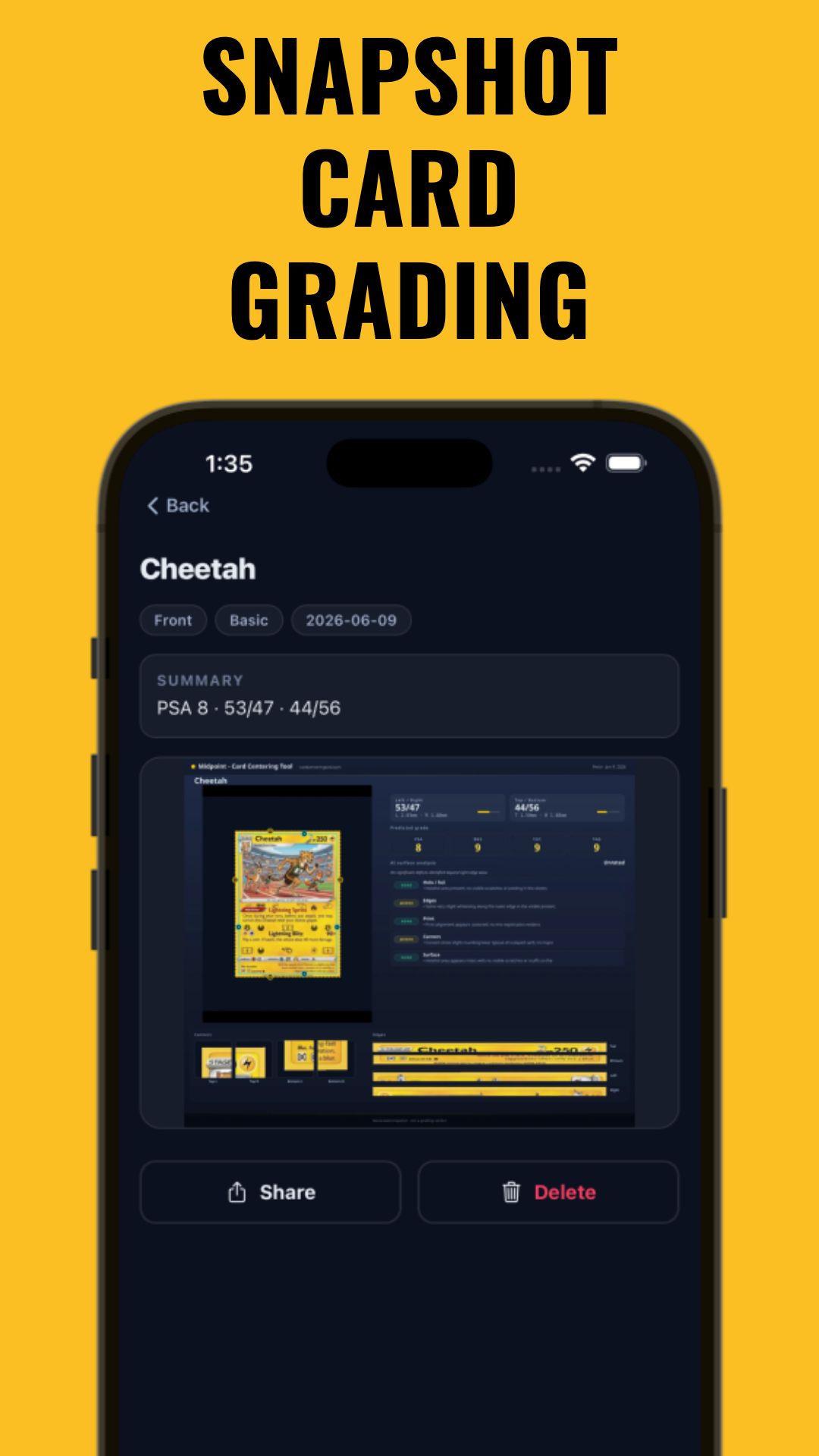
Before paying, you can pre-grade with Midpoint, which gives an estimated PSA, BGS, CGC and TAG grade from centering, corners, edges and surface. For a manual walkthrough, see how to pre-grade your card step by step.
7. Real Completed Sales vs Asking Prices
Asking prices are wishes. Completed sales show what buyers actually paid. A seller can list a card at any number, and a few inflated listings can make a card look like it is surging when nothing has actually sold.
To tell whether a price increase is real or caused by an outlier:
- Look at several recent completed sales, not just the latest one.
- Check whether the sales are the same grade and the same parallel.
- Be wary of a single jump with no follow-up sales at that level.
- Watch for repeat sales near the new price. That supports a new range.
When a percentage mover in the table shows a large gain, ask how many sales are behind it. Few sales mean the percentage is fragile.
8. New Releases: Topps Chrome Football, Heritage and Buyback Credits
Product releases can reshape the football card market in November 2026 in two directions. New supply of a player's cards can cool older prices, while new chase cards can pull attention to a player. Check current release calendars, since schedules and licensing can change.
- Topps Chrome Football: A major release for rookies when it arrives. Early pulls and hype can move rookie prices quickly, then they often settle as supply grows.
- Heritage Football: If available, its retro look draws a different buyer, and short prints can carry premiums.
- Buyback credits: Where a program offers credits or redemptions, they can add extra demand for specific cards.
The pattern to watch is early excitement fading as more copies reach the market. If a rise lines up with a release window, be careful before assuming it will last.
9. Playoff Positioning, Breakout Games and Seasonal News
November is when playoff races take shape, and card prices often respond. A team clinching a spot, a quarterback leading an MVP race, or a rookie delivering in a key game can lift prices within days.
The reverse is also true. A season-ending injury or a benching can drop prices quickly. Short-term spikes tied to one game often fade, while moves tied to a sustained role tend to hold better.
- Ask whether the news changes the player's long-term outlook or just this week.
- Check whether prices rose before or after the game. Prices that move ahead of news can reverse.
- Remember that the football season ends, and attention can shift quickly once playoffs finish.
10. Buy, Hold, Sell or Grade: Sustainable Demand vs Hype
Use the movers table as a starting point, then apply a simple framework.
- Buy: The player has sustained performance, steady sales volume and a price that has not yet run far ahead of completed sales.
- Hold: You own a card with solid fundamentals and no urgent reason to sell. Let it play out.
- Sell: The rise came from one game, one outlier sale or a release-window spike, and you have a profit worth taking.
- Grade: The raw copy looks clean, the PSA 10 premium clearly beats fees, and a pre-grade check supports a high grade.
Sustainable demand has multiple signals: performance, role, scarcity and repeat sales. Hype usually has one. If you are unsure about grading standards, our breakdown of grading scale differences by company helps you compare PSA, BGS, CGC and TAG. Track your holdings over time in Midpoint, which is free on iOS and Android.
Conclusion
Football card prices rising in November 2026 is a selective story. Gains cluster around specific quarterbacks, breakout players, rookies and scarce chase cards, while much of the rest of the market sits still. The smart approach is to read completed sales, compare raw and PSA 10 values after fees, and separate lasting demand from a one-week spike.
Use the table of movers as of 2026-11-22 as your starting point, check sales volume behind each number, and decide whether to buy, hold, sell or grade based on evidence rather than excitement.
FAQ
Q: Which football cards are rising in value in November 2026?
A: The movers table in this post lists the cards that moved up most over the last 30 days, with raw and PSA 10 values as of 2026-11-22. The gains tend to cluster in quarterbacks, rookies, breakout players and scarce parallels.
Q: Are football card prices actually going up, or are only certain players and cards rising?
A: Mostly specific players and cards. Football demand follows performance, playoff positioning and scarcity, so gains tend to be concentrated rather than market-wide.
Q: What quarterback football cards are worth buying right now?
A: Look for quarterbacks with sustained performance, steady completed sales and prices that have not already run far past recent sales. Compare rookie, second-year, veteran and MVP-contender cards, since each carries different risk.
Q: Should I buy, sell, hold or grade rising football cards in November 2026?
A: Buy when demand has multiple supporting signals, hold solid cards you already own, sell spikes driven by one game or an outlier sale, and grade only when the PSA 10 premium clearly exceeds fees and your pre-grade check looks strong.
Q: How can I tell whether a football card price increase is real or caused by an outlier sale?
A: Check several recent completed sales of the same grade and parallel. If prices repeat near the new level across multiple sales, the increase is likely real. A single jump with no follow-up is suspect.
Q: Do PSA 10 football cards still sell for more than raw cards after grading fees?
A: Often yes for higher-value cards, but not always for cheaper ones. Subtract grading fees, shipping and the risk of a lower grade from the PSA 10 premium before you submit.
Free to start
Try the Midpoint app
Grade any card from a photo, see its raw and PSA 10 value, and track what your collection is worth — free.
Get it on iPhoneGet it on Android