
Football Card Prices Rising November 2026: 10 Moves to Know
Football card prices rising November 2026: how to read the market, spot real gains vs outlier sales, and decide whether to buy, hold, sell or grade.

Estimated reading time: 9 min
Key Takeaways
- Football card prices rising in November 2026 is a story about specific cards, not a lift that touches every card equally.
- Quarterbacks, rookies, autographs and numbered parallels tend to lead; the table in this post shows the as-of 2026-11-20 raw and PSA 10 figures.
- One sale is not a trend. Look at several recent sold listings and the median before you believe a spike.
- The gap between raw and PSA 10 only pays off if the card actually grades well, so check centering first.
- Cheaper graded cards in the $30–$100 range are worth watching, because demand there may be steadier.
If you are tracking football card prices rising in November 2026, the hard part is separating real momentum from noise. Every week another card seems to be "going up," and the football card market in November can be especially jumpy: the season is in full swing, new product may be landing, and one big Sunday can move a player's cards quickly.
This guide gives you a 10-step framework for reading trending football cards and deciding what to do about them. It points you to the data table in this post for the exact raw and PSA 10 numbers (as of 2026-11-20) instead of repeating them, and it focuses on what those numbers mean. Use it as a checklist whenever you see a card flagged as going up in value.
30-day price movers — live data from Midpoint's card database, as of 2026-11-20. Prices move; Midpoint refreshes these daily.
| Card | Raw | PSA 10 | 30-day | |
|---|---|---|---|---|
 |
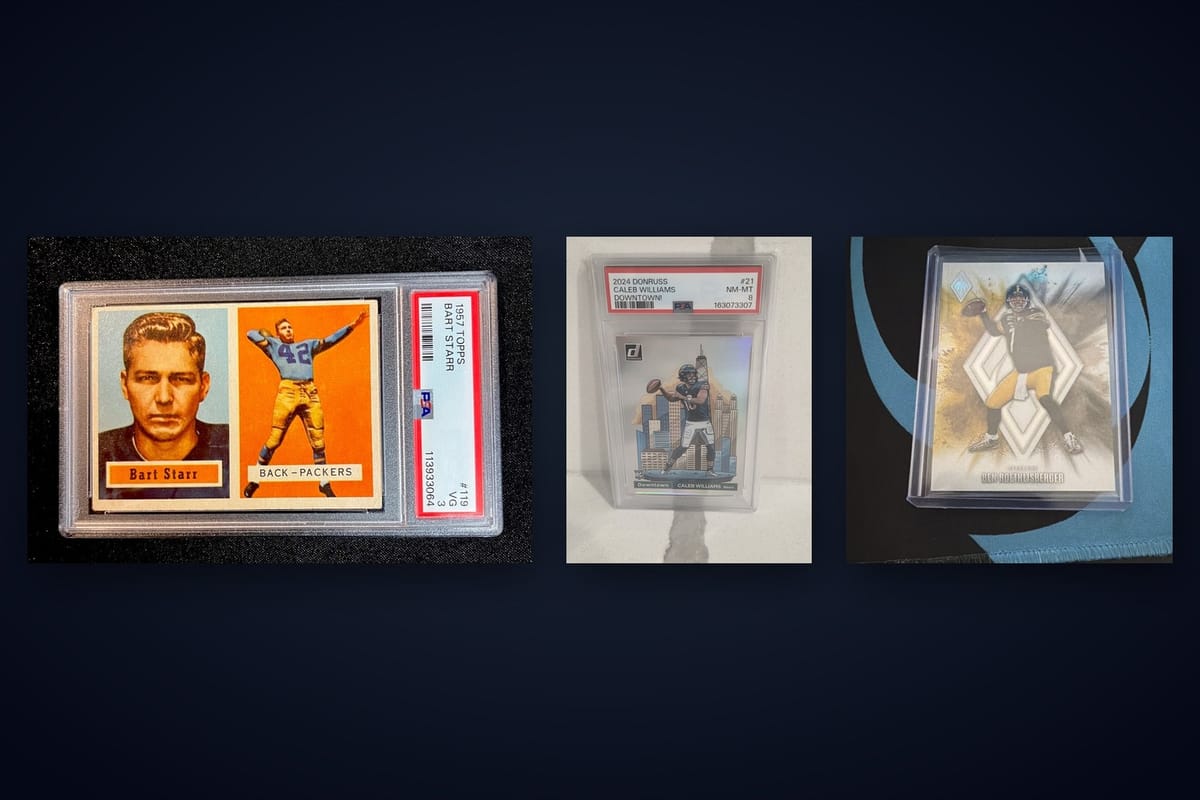
Bart Starr #119 1957 Topps |
$613.83 | $154,791 | +21.3% |
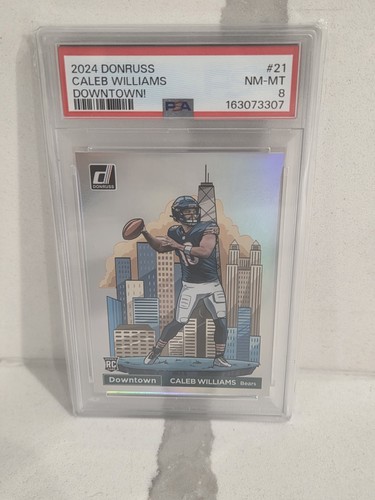 |
Caleb Williams #21 2024 Panini Donruss Downtown |
$1,052 | $3,393 | +7.2% |
 |
Ben Roethlisberger #23 2025 Panini Phoenix Color Blast |
$160.25 | $399.50 | +5.8% |
 |
Jim Brown #62 1958 Topps |
$472.68 | $95,282 | +4.3% |
 |
Dan Marino #123 1984 Topps |
$43.00 | $6,651 | +3.1% |
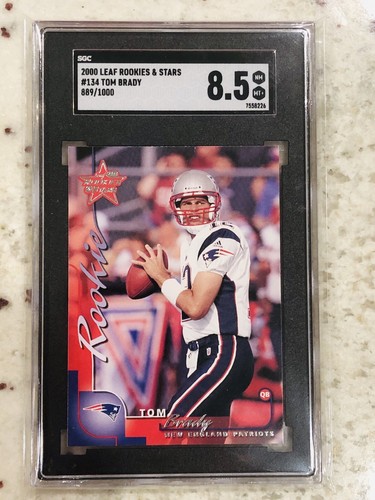 |
Tom Brady #134 2000 Leaf Rookies & Stars |
$1,354 | $17,219 | +1.2% |
 |
Jerry Rice [Refractor w/ Coating] #185 1995 Topps Finest Boosters |
$76.25 | $2,396 | +0.5% |
 |
Joe Burrow [Gold] #4 2023 Panini Absolute Kaboom Horizontal |
$5,500 | — | 0% |
 |
Brock Purdy [Gold] #K33 2023 Panini Absolute Kaboom Vertical |
$5,239 | $20,044 | 0% |
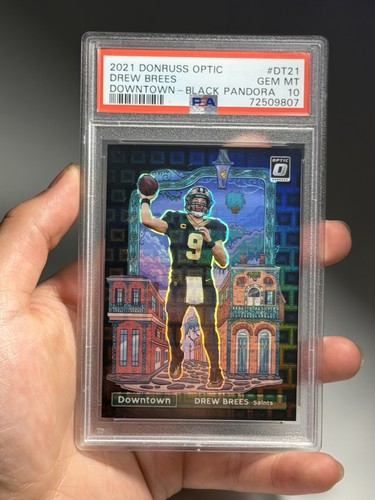 |
Drew Brees [Black Pandora] #DT-21 2021 Panini Donruss Optic Downtown |
$455.00 | $2,700 | 0% |
 |
Troy Aikman #270 1989 Panini Score |
$13.36 | $675.00 | 0% |
 |
Walter Payton #J 1987 Topps Box Bottoms Hand Cut |
$51.00 | — | 0% |
Look up any card's current raw and graded value in Midpoint — and get an estimated grade before you pay to submit.
1. Start With the Football Card Market in November 2026: Broad or Concentrated?
Before chasing any single card, ask a simple question: is the whole market lifting, or just a handful of names? When gains are market-wide, most cards in a category move up together, and the safest play is often to hold what you own. When gains are concentrated, a few players or card types are doing the heavy lifting, and everything else is flat.
Football is often the second kind. Prices tend to follow the player, so a quarterback in MVP talk can rise while a comparable card of a player on a losing team sits still. Treat any headline claim of "football cards are up" with caution until you check individual cards.
- Compare across tiers: look at a star, a mid-tier starter and a role player in the same set. If all three rose, that points to a broader move.
- Check both raw and graded: a lift in only one version can mean a grading-driven or supply-driven story, not demand.
- Note the date: the figures in this post are as of 2026-11-20, and football prices can shift within days.
2. Quarterback Cards: Williams, Burrow, Mahomes, Allen, Young and Stroud
Quarterbacks are the center of the hobby, so they are the first place most collectors look for football cards going up in value. Names that regularly dominate searches include Caleb Williams, Joe Burrow, Patrick Mahomes, Josh Allen, Bryce Young and C.J. Stroud. Each sits in a different spot on the price curve.
Established stars like Mahomes and Allen tend to move on sustained performance and MVP talk, and their top cards are already expensive, so percentage moves can look modest even when dollar moves are large. Younger quarterbacks like Williams, Young and Stroud are more sensitive to a single breakout game or a rough stretch. Burrow sits between the two, with health and playoff position often driving sentiment.
- Look at the percentage, not just the dollars: a small-dollar card rising sharply can matter less than a pricey card inching up.
- Match card to catalyst: a rookie card reacts to hype faster than a veteran's base card.
- Check the table: see which of these names actually appear in the as-of 2026-11-20 data and compare their raw and PSA 10 columns.
3. Rookie and Second-Year Cards, Including Breakout Non-Quarterbacks
Rookie and second-year cards usually have the most room to move because expectations are still being set. A good stretch can reprice a card quickly, and a slump can erase it just as fast. That is why the youngest players show up so often on lists of trending football cards.
Don't ignore non-quarterbacks. Wide receivers, running backs and defensive players can break out and lift their rookie cards, often from a much lower starting price. These are frequently the most accessible entries for newer collectors, since a breakout skill-position player can still be affordable compared with a franchise quarterback.
- Second-year players: cards often get a second look after a strong follow-up season.
- Breakout non-QBs: watch for a run of big games, since one outlier week is not enough.
- Risk: a card priced on hype can fall back quickly if the production fades.
4. Autographs, Serial-Numbered Parallels, Refractors and One-of-Ones
Card type matters as much as the player. Scarcity is the engine: autographs, serial-numbered parallels, refractors, one-of-ones and rare inserts all have fewer copies in circulation, so a small increase in demand can push prices harder than it would for a common base card.
The flip side is thin trading. A card numbered to a very small run might only sell a few times a year, so one sale can set the "price" for months. Treat prices on these cards as a range, not a fixed number, and lean on the table's as-of 2026-11-20 values for a snapshot. If you are weighing a low-supply card for grading, our guide to grading low population cards covers the extra considerations.
- Autographs: check that the signature is on-card and clean, since condition affects value.
- Serial-numbered parallels: lower numbers and key serials (like a jersey number match) can carry a premium.
- Refractors: sensitive to surface scratches and print lines, so inspect carefully.
- One-of-ones: almost no sales history, so expect wide price swings.
5. Raw vs PSA 10: Where the Premium Really Is
The most important column in the data table is the gap between raw and PSA 10. That gap is the reward for getting a card graded a perfect 10, and it is the reason collectors submit at all. But the reward only exists if the card earns the grade.
Remember the costs: grading fees (often $30 or more per card, depending on the service and tier), shipping, and waiting time. A big PSA 10 premium on paper means little if your card is likely to come back a 9 or lower. Centering is a common reason a good-looking card misses, and it is one thing you can measure before you pay. Our breakdown of how centering impacts card value explains why.

- Measure centering first: Midpoint can help you check it before you commit.
- Check corners, edges and surface: a 10 needs all four to hold up.
- Compare to the raw price: if the raw card already sells near the graded price, grading adds little.
6. Real Appreciation vs Outlier Sales
A single high sale can make a card look like it is surging. It might be a rare great copy, a bidding war, or a mistake. Real appreciation shows up as a pattern across many recent sold listings, not one eye-catching result.
Here is how to sanity-check a 30-day gain:
- Count the sales: more recent sold listings means a more reliable price.
- Use the median: it resists one unusually high or low sale far better than the average.
- Match the condition: compare PSA 10 to PSA 10, and raw to raw. Mixed grades distort the picture.
- Ignore asking prices: what sellers want and what buyers pay are different things.
- Watch low-volume cards: a big percentage gain on a handful of sales proves little.
7. Player Catalysts: Breakout Games, Injuries, MVP Talk and Playoff Races
Football card prices move on news. A breakout game, a hot streak, MVP contention, playoff positioning and heavy media attention can all push demand up within days. Injuries can do the reverse just as quickly, and a card that spiked on hype may give it all back.
November is when many of these stories come into focus, since the playoff picture starts to clarify. That makes it a good time to ask whether a price move is tied to something durable (a player consistently performing at a high level) or something fleeting (one big highlight).
- Durable: sustained production, a team in strong playoff position, a long-term role.
- Fleeting: one viral play, a single big game, short-lived headlines.
- Risk events: injuries and benchings can quickly cool demand.
8. New Releases: Topps Chrome and Chase-Card Liquidity
New products change the market. When a release like Topps Chrome hits, more copies of certain cards enter circulation, and attention shifts toward the new chase cards. That can add liquidity (more buyers and sellers) but also add supply that softens prices on comparable older cards.
Chase cards from a fresh release can trade at an early premium that often settles as more copies are opened and graded. If you are seeing a price jump on a card from a brand-new set, treat it carefully: early prices can reflect excitement more than lasting demand.
- Early weeks: prices can be volatile as supply arrives.
- Older cards: may get a halo from renewed attention, or lose buyers to the new set.
- Patience: waiting for the post-release dust to settle often gives a clearer price.
9. Affordable Graded Cards in the $30–$100 Range
Not every collector wants to spend big on a star quarterback. Graded cards in the $30–$100 range are popular with many collectors, with solid players, clean grades and approachable prices. They are often where newer collectors get started, which may keep demand steadier.
The catch is the grading math. If a card is worth only a modest amount raw, a $30+ grading fee can eat much of the upside. In this range, buying an already-graded copy can make more sense than submitting your own, unless your raw card is clearly gem-quality. Before you submit anything, our step-by-step pre-grading guide shows how to judge your odds honestly.
- Buy graded: skip the fee and the wait if the price is fair.
- Submit only strong candidates: centered, clean, sharp corners.
- Know the scale: a PSA 9 and a BGS 9.5 are not the same thing; see our guide to grading scale differences by company.
10. Buy, Hold, Sell or Grade: A Practical Strategy
With the framework above, decisions get simpler. Here is a straightforward way to think about each option when football card prices are rising in November 2026.
- Buy: when the gain shows up across multiple sales, the catalyst looks durable, and you are not paying a peak-hype price.
- Hold: when you own a card with a long-term story and the move is broad, not a one-week spike.
- Sell: when the price jump rests on a short-lived catalyst or thin sales, and you would be happy with today's number.
- Grade: when the card measures well on centering, corners, edges and surface, and the raw-to-PSA 10 gap clearly outweighs fees.
A simple habit helps: log your cards and track their value over time so you can see which ones actually earn their place. Midpoint lets you look up raw and graded values, estimate a PSA, BGS, CGC or TAG grade, and track your collection in one free app.
Conclusion
Football card prices rising in November 2026 is a real story, but a selective one. The football card market rewards collectors who check whether a gain is broad or concentrated, compare raw and PSA 10 values, and ask whether a price comes from many sales or one outlier. Use the table in this post for the as-of 2026-11-20 numbers, then test each card against the catalysts, card type and grading math above.
Before you pay to grade anything, measure the centering and estimate the grade first. It is the cheapest way to avoid a costly miss. You can also try the free centering calculator as a quick first check.
FAQ
Q: Which football cards are going up in value in November 2026?
A: The cards most likely to be moving are quarterbacks, rookies and second-year players, plus scarce card types like autographs and serial-numbered parallels. See the table in this post for the specific raw and PSA 10 figures as of 2026-11-20, and verify each move against several recent sales.
Q: What football rookie cards are rising the most right now?
A: Rookie and second-year cards tend to move the most because expectations are still forming. Quarterbacks like Caleb Williams, Bryce Young and C.J. Stroud draw heavy attention, and breakout non-quarterbacks can rise from lower starting prices. Check the table for which ones actually gained.
Q: Are football card prices actually rising, or is this just short-term hype?
A: It depends on the card. Real appreciation appears across many recent sold listings and in the median price. Hype often rests on one or two sales or a single big game. Compare like grades and look at sale counts before trusting a spike.
Q: Should I buy, sell, hold, or grade football cards in November 2026?
A: Buy when gains are broad and the catalyst looks durable, hold long-term favorites, sell when a rise depends on short-lived news, and grade only when the card measures well and the PSA 10 premium clearly beats fees.
Q: Which football cards are worth grading based on current PSA 10 prices?
A: Cards with a large gap between raw and PSA 10 values, and that also have strong centering, sharp corners, clean edges and a clean surface. Measure centering first, since it is a common reason cards miss a 10.
Q: What factors are causing football card prices to rise in November 2026?
A: Common drivers are breakout games, MVP contention, playoff positioning, media attention, and new releases like Topps Chrome that bring attention and liquidity. Scarcity in autographs, numbered parallels and refractors can also amplify moves.
Free to start
Try the Midpoint app
Grade any card from a photo, see its raw and PSA 10 value, and track what your collection is worth — free.
Get it on iPhoneGet it on Android


